
Instagram's New Bully Filter
Instagram has implemented a new technology that will not display comments considered bullying. The program, run by artificial intelligence (AI) technology, can detect “offensive and spammy” comments in English and in at least eight additional languages. Although the filter is set by default, users can "opt out" if they want to see such comments, or they can include specific words to screen out.
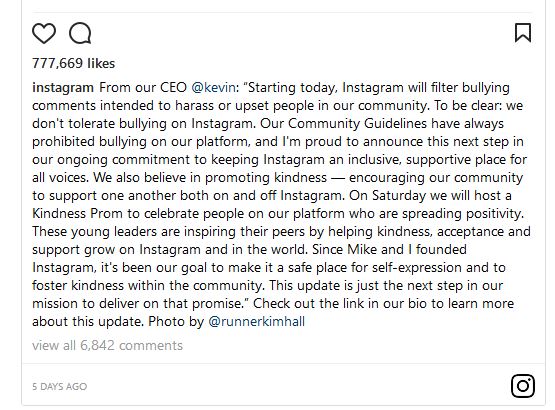
In an Instagram post, shown here, and in a longer post titled "Protecting Our Community from Bullying Comments," CEO and Co-Founder Kevin Systrom promised more diligence, particularly to protect young users:
We also believe in promoting kindness — encouraging our community to support one another both on and off Instagram. On Saturday we will host a Kindness Prom to celebrate people in our community who are spreading positivity. These young leaders are inspiring their peers by helping kindness, acceptance and support grow on Instagram and in the world.
Research shows the danger of online bullying: of 2,000 middle schoolers in the study, those who experienced cyberbullying were twice as likely to attempt suicide than those who did not experience cyberbullying.
Discussion:
- Analyze Instagram's announcement of the filter. Who are the audiences, and what are the communication objectives? How well does the message achieve those objectives?
- What's your view of Instagram's response to the problem of cyberbullying? Are the company leaders doing enough, or should they do more?
- How does this news relate to the leadership character dimension vulnerability?
MTA Criticized for Lack of Transparency

Commissioners at the New York Metropolitan Transportation Authority (MTA) questioned increasing costs and whether the agency has been transparent. Of particular concern are additional costs of about $1 billion and cost overruns for a project that resulted in 19 instead of 32 subway stations getting renovated. One commissioner said, “It is indefensible that we did not receive this information prior to it being reported in the press." The governing body discovered the information from a Wall Street Journal article.
Chairman Joe Lhota, who was appointed last summer, acknowledged that the agency has been working on being more transparent:
“Not a second in a day goes by when I don’t think about transparency at this agency and what we need to do to provide information to all of you."
NY Mayor Bill de Blasio and New York City Council Speaker Corey Johnson requested more transparency about spending and service improvement measurements and asked for monthly briefings and an "evaluation of efficacy."
Discussion:
- How would you define transparency, and how does it relate to accountability?
- After reading more about the situation, how would you assess the agency's actions? Do you agree with the commissioners' assessment? If you believe a lack of transparency exists, do you think it's intentional? Does it matter if it is?
- Why do organizations lack transparency? What do they potentially gain and lose?
- What do you think an "evaluation of efficacy" means?
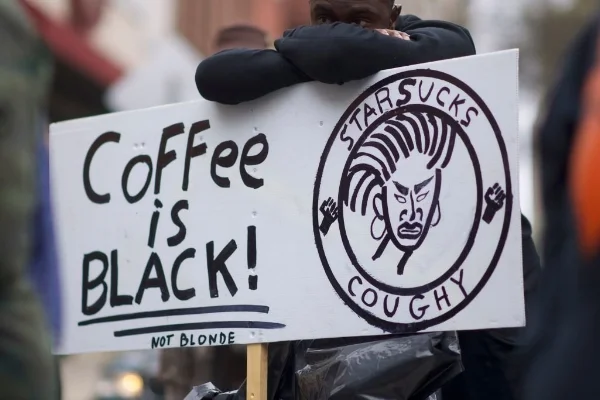
More About the Starbucks Bias Situation
After the arrest of two black men in a Philadelphia store, Starbucks announced that 8,000 stores will close on May 29 for racial-bias training. But are some skeptical about the impact that one day of training will have, and the company seems to be imitating Chipotle's decision to close stores for food safety training. On the other hand, the company could have blamed the employee who called the police, a crisis communication strategy we have seem in many other situations.

An article in the New York Times describes racial bias research in hospitality customer service and may tell us more about the incident in Philadelphia. In one study, researchers sent emails to hotels using different names that reflected gender and race, asking for restaurant recommendations. Responses indicated racial bias, as the authors describe: "Hotel employees were significantly more likely to respond to inquiries from people who had typically white names than from those who had typically black and Asian names."
In addition, researchers analyzed "politeness," for example, whether employees wrote "best" or "sincerely" before signing their name. They were more likely to use such words when responding to guests with names that sounded white, and the authors describe another finding for this group:
They were three times as likely to provide extra information — even when the initial inquiry was just about restaurants — to white than to black or Asian people.
In addition to training, the authors suggest periodic customer service audits and consistent scripts and policies.
In a turn, Philadelphia Police Commissioner Richard Ross has apologized to the two men who were arrested. In his original video, Ross defended the officers actions and said, based on a sergeant's experience at Starbucks, "they are at least consistent in their policy." But in the news conference, Ross says, "shame on me" and "I have to do better."
Discussion:
- What's your view of the research about customer service at hotels? What does the research potentially say about the situation at Starbucks?
- Have you experienced bias in a customer service setting? What was the situation, and how did you handle it?
- How well does Ross handle the apology in the news conference? How does his identity factor into his response? How does he demonstrate authenticity, vulnerability, and other leadership character dimensions?

Volkswagen Replaces Chairman

Three years after the emissions scandal, Volkswagen is replacing another chairman. Matthias Müller replaced Martin Winterkorn, who was ousted soon after the news broke in 2015. But Müller was another insider and hasn't led the turnaround the board expected.
Like Winterkorn, Müller struggled with public relations. During a 2016 NPR interview, Müller claimed the company misunderstood the American environmental law: “We didn’t lie. We didn’t understand the question [at] first.” After much criticism, VW’s communications department asked for another interview, which was granted. He delivered a better apology but blamed the first interview on “all these colleagues of yours and everybody shouting.” In other words, it was noisy.
As is customary in corporate change announcements, Chairman of the Supervisory Board Hans Dieter Pötsch spoke positively about the outgoing executive:
“Matthias Müller has done outstanding work for the Volkswagen Group. He assumed the chairmanship of the Board of Management in the fall of 2015 when the Company faced the greatest challenge in its history. Not only did he safely navigate Volkswagen through that time; together with his team, he also fundamentally realigned the Group’s strategy, initiated cultural change and, with great personal commitment, made sure that the Volkswagen Group not just stayed on track but is now more robust than ever before. For that, he is due the thanks of the entire Company.”
The new chairman, Dr. Herbert Diess, offers more hope. Diess joined the board in 2015 and is known for having conflicts with the union and for cost-cutting. He may shake up the status quo at VW and inspire real action. The company has aggressive plans, including building greener cars—for real this time.
Image source (VW cover).
Image source (Diess).
Discussion:
- Assess the company's statement about this change. Who are the primary and secondary audiences? What are the communication objectives? How well does the statement meet those objectives?
- Why do these statements typically include positive quotes about outgoing executives, even if they are asked to leave or, as this statement indicates, they leave "by mutual agreement"?
- What lessons do you think Volkswagen learned since the scandal?
- Why would the board appoint someone who is considered divisive?
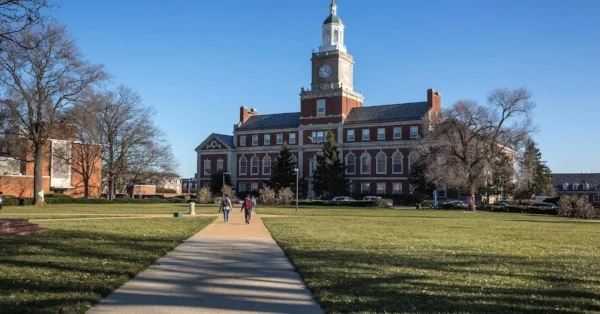
Howard University Reports on Misappropriated Funds

Howard University's investigation has concluded that $369,000 had been misappropriated by six employees who were terminated last year. A full report by the university identifies how they "double dipped" by receiving both tuition assistance and university grants between 2011 and 2016.
In a cover letter to the report, President Wayne A.I. Frederick wrote, “Howard University is committed to uncovering any impropriety in the administration of university-provided financial aid and federal student aid, to remediating all problems identified during this investigation, and to maintaining a robust compliance program to prevent any inappropriate dealings in the administration of financial aid."
A Washington Post article reports that the university tried to avoid going public before the review was completed, but an article posted online made this impossible. Student protests, which went on for more than a week, also may have sped up the timing.
Discussion:
- What business writing principles does the report demonstrate and fail to demonstrate? How could the report be improved?
- Assess the president's cover letter. Who are his primary and secondary audiences, and what are the communication objectives? How well does the letter achieve those objectives?
- What can the university do now to restore trust?
- How well does the university take responsibility for the situation?
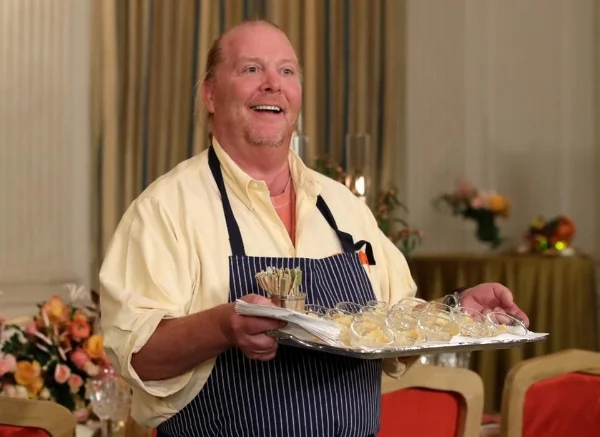
Mario Batali Wants to Move On

Is it too soon? Mario Batali, accused of sexual harassment and removed from the company bearing his name, is exploring a new venture. In December, reports of sexual misconduct rattled the Batali & Bastianich Hospitality Group, and Batali admitted that accusations “match up with ways” he behaved. At the time, he emailed an apology but lost ground when he included a "P.S." with a recipe for making cinnamon rolls.
Now, about four months later, people report that Batali is exploring his options. Reports say he is considering moving to the Amalfi Coast, aiding displaced Rwandans, or creating a new company.
A New York Times article speculates that Batali may be in a good position to return to public life:
He still has legions of fans and colleagues who admire and respect his generosity, culinary knowledge and charisma. Many still post their interpretations of his recipes on Instagram, ask him for selfies on the street or urge his return to “The Chew” on Facebook. His restaurants continue to attract customers.
Friends also say that he is truly taking time to be introspective and to learn from his mistakes. But not everyone agrees that a comeback would be appreciated. Anthony Bourdain, for example, isn't ready:
Retire and count yourself lucky, I say that without malice, or without much malice. I am not forgiving. I can’t get past it. I just cannot and that’s me, someone who really admired him and thought the world of him.
Discussion:
- What's your view? Is it too soon, or is the time right for a Batali return? What should he consider in making this decision? What are the potential implications for women who complained about his behavior and for the company?
- Batali mentions wanting to understand his "blind spots." What does he mean by this?

Facebook Under Scrutiny

Questions about Facebook's role in user privacy are getting increasingly serious, and shareholders are getting worried. Company shares fell 7% after the news that third-parties used FB users' personal information without permission.
Analysts say we know that Facebook monetizes users' data, but the number of people affected (50 million) and the extent of the violation is dramatic. One concern is how much additional regulation the company will face in the future. Already, the Federal Trade Commission (FTC) is investigating whether Facebook violated a 2011 settlement in which the company promised to get users' consent before changing certain privacy settings.
We have no comment yet from Mark Zuckerberg or Sheryl Sanberg, and critics say they need to be out in front of this.
Discussion:
- A Bloomberg reporter called the company "tone deaf," but others say it's an impossible situation to fully address at this point. What's your view?
- What, if anything, should company leaders say? What could explain their silence?
- In what ways is this situation an issue of integrity for the company?
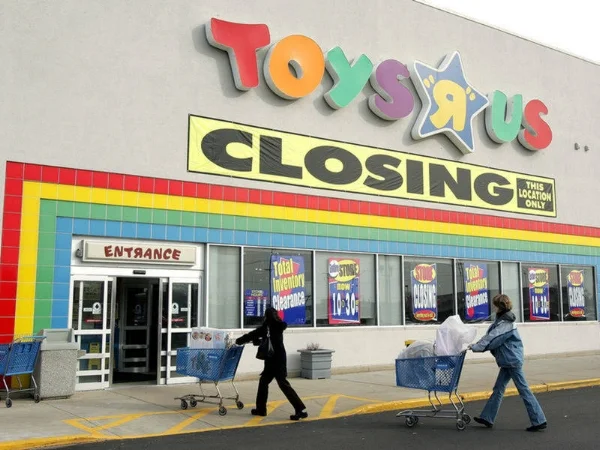
Toys R Us Closes

https://www.toysrusinc.com/restructuring
Toys R Us will close its remaining 735 U.S. stores and will lay off about 33,000 employees around the country. The company tried to survive after a bankruptcy filing in 2017, but the retailer can't compete with large stores, such as Walmart, and online sellers, such as Amazon.
Critics say Toys R Us failed to generate excitement, as one analyst describes in The Washington Post article:
“The liquidation of Toys R Us is the unfortunate but inevitable conclusion of a retailer that lost its way. Even during recent store closeouts, Toys R Us failed to create any sense of excitement. The brand lost relevance, customers and ultimately sales.”
A professor of brand management echoed this theme:
“We know that customers are willing to pay more for an enjoyable experience — just look at the lines at Starbucks every day — but Toys R Us has failed to give us anything special or unique. You can find more zest for life in a Walgreens.”
New York Senator Chuck Schumer is asking for the Federal Trade Commission (FTC) to ensure that customers aren't left "holding the bag" if they can't cash in or buy products with gift cards, particularly those recently received in December for Christmas.
Toys R Us has only a short statement on its website announcing the liquidation.
Discussion:
- Should the company leaders say more about the decision? What else, if anything, could be included in the statement?
- In addition to legal responsibilities, do company leaders have ethical responsibilities to make good on outstanding gift cards? Why or why not?
- In what ways has the company failed to learn from failure?

Fired by Tweet

According to an NBC report, Secretary of State Rex Tillerson learned he was fired when President Trump posted a tweet. The President did call Tillerson in for a face-to-face meeting, but this happened "several hours after the president had publicly announced Tillerson's firing on Twitter." The White House claims that Tillerson was put on notice that his time was coming to an end, but Tillerson says he was shocked at the news.
The relationship had been rocky. The two disagreed over policy issues, such as the Russian's government's involvement in U.S. elections and negotiations with North Korea. In July of last year, Tillerson referred to President Trump as a "moron."
Of his termination, Tillerson said,
"What is most important is to ensure an orderly and smooth transition during a time that the country continues to face significant policy and national security challenges."
Discussion:
- What is the best way to deliver bad news?
- We have heard of many business situations in which employees are fired by text message. How does this situation compare?
- In what ways is this situation a matter of leadership character, for example, compassion or integrity?

Bias in Online Courses
A Stanford University study found biases in how instructors interact with students in online courses. In a review of 124 Massive Open Online Courses (MOOCs) in a variety of subjects, researchers found that responses to comments vary by students' race and gender:
Each comment was randomly assigned a student name connoting a specific race and gender. We find that instructors are 94% more likely to respond to forum posts by White male students. In contrast, we do not find general evidence of biases in student responses. However, we do find that comments placed by White females are more likely to receive a response from White female peers.
The study is significant because it identifies teachers' potential responsibility for different student learning outcomes. In other words, it's difficult to isolate why teachers respond differently to students because the students may, for example, be less prepared or have less ability. But in this study, the issue is clearly isolated: teachers tend to favor students based on race and gender, which were randomly assigned by way of fictitious names.
Discussion:
- How well do these results match your own experience as a student?
- What are the implications of this study for instructors?
- What potential flaws or issues do you identify with this study?

United Backs Off of Bonus Plan
United announced moving to a lottery system for employee bonuses, but backlash caused management to rethink the plan. President Scott Kirby had distributed a memo describing the new process:
"As we look to continue improving, we took a step back and decided to replace the quarterly operational bonus and perfect attendance programs with an exciting new rewards program called 'core4 Score Rewards.' "
The new program would include cash and other prizes and one quarterly prize of $100,000, which would be given to a random, eligible employee. Following the criticism, a spokesperson tried to clarify:
"We announced a new internal program based on United meeting certain operational and dependability metrics as a way of offering meaningful rewards to our employees. We believe that this new program will build excitement and a sense of accomplishment as we continue to set all-time operational records that result in an experience that our customers value."
Employee comments were harsh:
"Why should I be happy watching another employee get rewarded for my hard work? How would you feel if Oscar (United CEO Oscar Munoz) played roulette with your incentive package and it went to another vice president through a lottery drawing."
"This is truly disappointing. The current program 'costs' the company approximately $150 per 75,000 employees per quarter, totaling over $11 million. This new 'improved' program that we are supposed to be so excited about will cost the company $3.5 million per quarter. This saves the company about $8 million per quarter. Does Willis Tower really think the average front-line employee is stupid?"
In a second memo three days later, Kirby announced a pause on the program, saying they would "consider the right way to move ahead" and "will be reaching out to work groups across the company, and the changes we make will better reflect your feedback."
Discussion:
- What went wrong? Was it the bonus/lottery plan, the way it was announced, both, or something else?
- One employee commented, "Wow. I thought our morale was already as low as it could go, but I guess that was naive thinking on my part. I'm finally starting to understand that there will always be room for management to make me feel even less appreciated than I already do. How many times must they be taught, that if the employees aren't happy, no one is happy." What should the company leaders do now?
- The memos and employee comments were on an internal United system. What are the ethics of forwarding internal communications to the media?

More Companies Take Action to Curb Gun Sales

Dick's Sporting Goods has taken a strong stance on gun control. In a statement, the company announced it will no longer sell assault-style rifles and will no longer sell firearms to people under 21 years of age. The statement dances the fine line between both sides of the gun control debate:
We support and respect the Second Amendment, and we recognize and appreciate that the vast majority of gun owners in this country are responsible, law-abiding citizens. But we have to help solve the problem that’s in front of us. Gun violence is an epidemic that’s taking the lives of too many people, including the brightest hope for the future of America – our kids.
Walmart also announced it will no longer sell to people under 21 years of age. The company ended some firearm sales in 2015, so this policy further restricts what people can purchase when.
Companies are in a tough spot. Dicks, Walmart, Delta, and other companies have suffered backlash for their decisions, including people promising to boycott.
Discussion:
- Compare Dick's and Walmart's statements. How do they differ? Which is more effective and why?
- Describe Dick's choices. What are the risks and rewards of the announcement?
- Should other CEOs jump into the controversy? How might the decision depend on industry, customer base, or the leader him- or herself?

Companies Distance Themselves from the NRA

Following the school shooting in Florida, several companies are distancing themselves from the National Rifle Association. The organization lists many member benefits on its website, including travel and insurance discounts, but these are shrinking as more companies are discontinuing services.
For example, several major car rental companies—Enterprise Rent-A-Car, Alamo Rent a Car, National Car Rental, Avis, Budget, and Hertz—and major airlines, such as United Air Lines and Delta, will eliminate discounts for NRA members.
The NRA posted a statement on its website to deflect blame, reinforce its mission, and deny the impact of these companies' actions:
FAIRFAX, VA – The more than five million law-abiding members of the National Rifle Association have enjoyed discounts and cost-saving programs from many American corporations that have partnered with the NRA to expand member benefits.
Since the tragedy in Parkland, Florida, a number of companies have decided to sever their relationship with the NRA, in an effort to punish our members who are doctors, farmers, law enforcement officers, fire fighters, nurses, shop owners and school teachers that live in every American community. We are men and women who represent every American ethnic group, every one of the world’s religions and every form of political commitment.
The law-abiding members of the NRA had nothing at all to do with the failure of that school’s security preparedness, the failure of America’s mental health system, the failure of the National Instant Check System or the cruel failures of both federal and local law enforcement.
Despite that, some corporations have decided to punish NRA membership in a shameful display of political and civic cowardice. In time, these brands will be replaced by others who recognize that patriotism and determined commitment to Constitutional freedoms are characteristics of a marketplace they very much want to serve.
Let it be absolutely clear. The loss of a discount will neither scare nor distract one single NRA member from our mission to stand and defend the individual freedoms that have always made America the greatest nation in the world.
Discussion:
- Did these companies make the right decision? Some NRA members are boycotting them as a result.
- In its statement, the NRA refers to companies' "shameful display of political and civic cowardice." Do you see their actions as cowardice, courageous, or something else? What is the difference?

Misleading Headlines About the Market Dip
The stock market took a dive this week, but headlines are making it sound worse than it is. Here are three examples:
- FoxNews: "Investors hope for reversal after biggest stock market dip of all time"
- The Guardian: "Australian and Asian stock markets slide after Dow suffers biggest one-day points fall – as it happened"
- CNBC: "Dow's nearly 1,600-point plunge marks its biggest one-day point drop ever"
The headlines are technically correct that a nearly 1,600 point decline is the largest in U.S. history, but looking at only the point value is misleading. A percentage drop would be a better indication of the effect. This table represents the largest daily stock market losses. The display below is sorted by point loss; the table at right is sorted by percentage. You can see that 2018-02-05 falls in rank when we look at the percentage.

Also, the stock market has had incredible gains this past year, so the 26,000+ value could be viewed as an anomaly, and most analysts didn't believe those gains were sustainable.
Discussion:
- What are the ethical considerations for news agencies publishing these headlines?
- What might be a more appropriate headline for the news?

Perhaps this one-year chart helps keep the loss in perspective. It includes today's rebound of 567 points.


Questions of Transparency
The long-awaited memo written by Republican staff members about potential impropriety from the Justice Department and F.B.I in the Russia investigation has been revealed. Now, The New York Times editorial board is calling, once again, for President Trump to reveal his tax returns:
Since the Republicans are now on board with greater transparency, they will no doubt push President Trump to release his tax returns, as every other major-party presidential nominee has done for the past four decades, won’t they?
How about the White House visitor logs, which the Trump administration started hiding from the public last year? Or, say, the names of all foreign governments and officials who have stayed — at their own or at American taxpayers’ expense — at Mr. Trump’s Washington hotel, at his Mar-a-Lago resort in Florida or at his golf courses and his other businesses since he became president? Or the names of every foreign business with which the Trump Organization has a financial relationship, especially in countries where America has sensitive foreign policy interests, like China, India, Russia, Turkey or Saudi Arabia?

The reasoning sounds like reciprocity, but the argument may not get no more traction now than it did during the presidential campaign. A Pew research study in January 2017 showed that 60% of those surveyed believed Trump "has responsibility" to release his returns. Although some were adamant about the release at the time, the Wall Street Journal, for example, reported that the returns wouldn't tell us much anyway.
Discussion:
- What are the advantages and downsides of President Trump revealing his tax returns?
- Read the entire opinion piece. What other arguments do the authors make?
- Do you agree with their reasoning? Why or why not?
- How would you describe the tone? Does the approach help or hurt the argument?

Penn Removes Several Recognitions of Steve Wynn

For the first time in more than 100 years, the University of Pennsylvania has revoked an honorary degree. Following accusations of sexual misconduct against Steve Wynn, the trustees announced the revocation in addition to plans for removing Wynn's name from "Wynn Commons" and from a scholarship fund.
The message, sent by email and posted on the school's website, explained the decision and announced that an honorary degree for Bill Cosby also will be revoked. University leaders were careful to describe their decision process as well as the delay in revoking Cosby's degree. This is a good example of anticipating and addressing potential criticism.
Judging by comments on Twitter, reactions to the university's decision to take a stand seem to be neutral or positive.
Discussion:
- Did UPenn make the right decision? Why or why not?
- Analyze the message. What principles of business are followed, and how can the message be improved? Consider the audience analysis, organization, tone, and so on.
- How is this an example of courage? What risks does the university face?

Call for Gymnastics Board to Resign

As female athletes are recognized in a full-page newspaper ad for their courage in telling their stories of abuse, the U.S. Olympics CEO is calling for the entire USA Gymnastics board to resign by Wednesday.
In an open letter to Team USA Athletes, CEO Scott Blackman apologized and identified four next steps:
1. We Must Change the Culture of the Sport.
2. We Must Change the Governance Structure of the NGB.
3. We Must Know Who Knew What and When.
4. We Must Support Safe Sport Victims and Survivors.
Three members of the board already resigned, but critics say that is not enough. Blackman doesn't accuse any board members of knowing about abuse, but he says the culture must change and this is the best way to achieve that change.
Discussion:
- What is the value of asking for the entire board's resignation? What, perhaps, are the limitations?
- What should the board do?
- How else can Blackman and the rest of the Olympics Committee make athletes feel safe again?

Fudging Numbers to Make the NYC Subway Look Better

New York Governor Andrew Cuomo's staff is criticized for inflating power-related issues as the cause of subway failures. Transit officials apparently broadened the definition of power issues so that Con Edison, the local utility company, would be given more of the blame when subways aren't running. Emails were discovered before Governor Cuomo was scheduled to give a breakfast talk, during which he said the number of outages due to power failures was 32,000 in the past year, while the actual number was more like 8,000:
When you we're a kid and you had a train set you had to plug it in. We have to plug in the MTA every morning and the MTA does not control the power supply to the MTA. Over the last 12 months, 32,000 delays because of power related issues and they can either be a power surge or power shortage, but 32,000 delays. The MTA doesn't control the power, Con Edison does. Con Edison has a duty to safely, prudently and effectively provide electricity that powers the subway system. Con Ed is a regulated utility under the state's Public Service Commission. April 21 after the last outage I ordered an investigation of the Con Ed infrastructure after a particularly devastating failure. The investigation goes on but PSC has already found that Con Ed must make immediate and significant improvements in this system because the reliability depends on it.
The chief of staff of the transit agency wrote in an email that they were "looking for a higher delay number for power." The expanded definition was that ConEd "caused or contributed to" delays. One example is when a person jumps or falls onto the tracks; ConEd will shut off the power for safety. With the new definition, the delay becomes ConEd's fault.
Discussion:
- We certainly can use numbers to our advantage when trying to persuade others. How does this situation "cross a line"?
- What should Governor Cuomo do now? What, if any, statement would be appropriate?
- Do you remember "Bridegate" in New Jersey? How is this situation similar or different?

Morgan Stanley Clarifies a Termination

In December, a female reporter accused a former congressman who was hired as a managing director at Morgan Stanley of sexual harassment. Morgan Stanley fired Harold Ford Jr., and he lost his gig as a frequent commentator on MSNBC.
Ford had maintained his innocence, and now, the company is saying Ford was not terminated for sexual harassment but was let go because of other misconduct:
" Morgan Stanley would like to clarify the circumstances of Mr. Ford’s departure. We take allegations of inappropriate conduct seriously, The press has reported that Mr. Ford was terminated for sexual misconduct. He was not. We have not received any internal allegations of sexual harassment or misconduct involving him either before or after his separation became public. As previously stated, his separation was based on corporate policy.”
The statement is curious because it mentions only internal allegations—or maybe I'm reading into it too much.
Discussion:
- How do you read the statement and possible distinction between internal and external?
- Why would Morgan Stanley issue such a statement two months after Ford's termination?
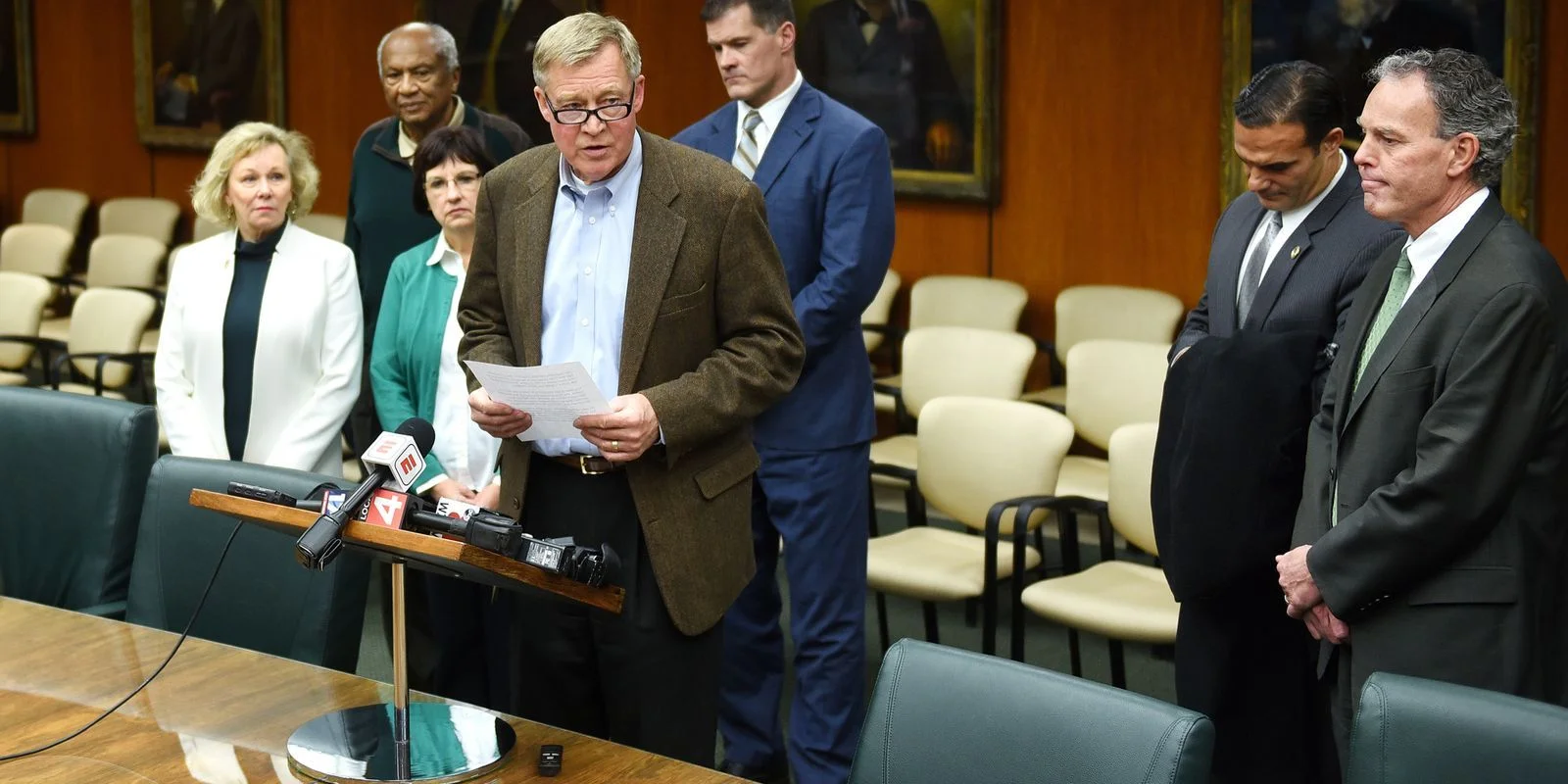
Calls for Michigan State President to Resign
Some believe it's a matter of integrity and accountability; others believe this will start the healing process. In addition to public demands, one Michigan State trustee says it's time for the university president to resign over Dr. Lawrence G. Nassar's sexual abuse of dozens of female athletes.
The rest of the university trustees have shown public support for the president, Lou Anna Simon. In a statement, they said, "President Simon is the right leader for the university, and she has our support." But the sole trustee, Mitch Lyons, disagrees:
“I don’t feel that President Simon can survive the public outcry that has been generated by this tragedy. I feel that our best recourse is for President Simon to resign immediately in order to allow the healing process to begin."
According to a Detriot News story, several university officials, including the president, heard complaints about Nassar. Simons admits, “I was informed that a sports medicine doctor was under investigation. I told people to play it straight up, and I did not receive a copy of the report. That’s the truth.” People question her judgment in not seeing the final report, particularly given the recent explosive case at Penn State University. We will see what happens next.
Discussion:
- Should Simon resign? Why or why not?
- What does it take for Lyons to break rank with the rest of the trustees? How would you describe the possible dynamics on the board?
- How does such abuse go on for so long? About 140 women complained about Nassar when he was working with Olympic athletes, and at least eight students came forward at the Michigan State.
- At the end of the trustees' statement, a reporter asks, "Why no questions?" But the board leaves the room without saying anything. Should they have taken questions? Why or why not?