

Feedback Might Not Be Generational
A Wall Street Journal headline, “The 20-Something Employees Who Want Feedback to Be Gentle,” exaggerates generational differences. The article body explains feedback guidelines for every generation.
Employees want direct feedback given in a kind way. They want clear direction and to know where they stand. Nothing new here—for people of any age.
Generational differences continue to be overstated. They make compelling news headlines and help us make sense of our reactions to others. Authors of a 2020 article in Journal of Business and Psychology argue against “the ubiquity of generations despite a lack of evidence for their existence and impact.” Instead, they propose a social constructionist perspective: we create generational differences and then reinforce their existence. In addition, the authors recommend a lifespan development perspective, viewing aging as a continuous process rather than focusing on distinct groups with arbitrary cutoffs. From this perspective, some characteristics we ascribe to Gen Z may have applied to Baby Boomers when they were young and new to the workforce too.
A common narrative is that Gen Zers are too delicate to receive feedback. Perhaps we perpetuate this idea by being too “gentle” or avoiding feedback for young employees. This avoidance deprives them of the opportunity to develop workplace skills of listening openly, receiving feedback gracefully, and making meaningful changes. Maybe we can stop imagining Gen Zers as feedback resistant. No one likes being criticized. Presenting feedback in a constructive and supportive way is different from being “gentle” and is good practice for all employees.
A 20-year-old at an AI startup quoted in the article suggests “pointing out mistakes and then offering a solution.” Instead, managers could give the direct feedback, but then encourage employees to come up with their own solutions first. This way, employees identify that works for them and become more committed to change. Let’s increase all employees’ accountability.

Cornell Comms About Rape Allegations
The Cornell University response to a sexual assault case hits close to home, but the messages provide lessons in communicating sensitive information during a crisis. As always, care must be taken in the classroom when discussing such topics; faculty might consider letting students know in advance what will be covered or including message analysis as an optional part of a project or exam.
A 2024 incident at Chi Phi fraternity led to a civil lawsuit by “Jane Doe” against seven students, the university, and others. The fraternity was banned from campus and two students were expelled, but no criminal charges were sought by the district attorney. Social media and news reports reveal public outrage about a perceived lack of accountability and justice.
Students might analyze the following.
Cornell University Communications
September 28, Statement. The first statement, from university relations, is titled “District Attorney’s investigation of 2024 sexual assault allegations”—an early attempt to shift blame and focus to the DA. The statement explains steps the university took, corrects misinformation (that fraternity members only wrote essays), and defends actions taken. The last paragraph digs in perhaps too early, before more information, including the tenor and severity of the public response became clear:
Any suggestion that the university did not impose consequential punishments for those involved is false. A continuation of the false narrative that there were minimal consequences in this case is irresponsible, will make survivors feel less safe and supported, and will perpetuate the underreporting of sexual assault.
September 29, Resources. The next day, the university posted “Resources and support for sexual assault and misconduct.” The page links to previous statements, including one from November 2024 about the incident, which was well known on campus at the time. The page describes a task force, including links to the final report and recommendations. A cynic (like me, today) might find the recommendations focused more on communication, understanding, and training than on substantive change. For example, one bullet point is, “Improve understanding about the Title IX process.” This focus is reflected in the initial statement that described the Title IX purpose and process. A different approach, of course, is to rethink the current Title IX process.
FAQ. As expected, the FAQ is mostly explanatory.
Survivor Support Letter. Not a new resource, this message focuses on students’ well-being. It’s written by healthcare professionals and student advocates, and it shows. One improvement might be to acknowledge how the “narrative” they mention may evolve over time as survivors’ understanding and feelings about an event shift, which seems particularly relevant in this case. With some distance and outside perspectives, people who experience trauma may come to understand it in new ways. Also, the page links to a Decision Tree showing where to report an incident—through the Title IX office, campus police, local police, or the New York State Campus Sexual Assault State Trooper (more accurately, the reporting channel is the Campus Sexual Assault Victims Unit). Students may question whether the outcome would have been different if Jane Doe had chosen another avenue for reporting.
Other Communications
Students might also explore the following:
Ithaca Mayor’s Statement. He writes “brutal rape,” whereas the word “rape” is rare in these messages. Students might consider whether his direct language is appropriate given that the facts are still contested.
Fraternities. Students can compare communications from their own campus fraternities; several “We stand with Jane Doe” messages have appeared at other colleges.
Communication Pause
During a crisis, an organization should probably pause routine social media activity. For example, publicizing work, no matter how groundbreaking, invites criticism. This LinkedIn post and comments illustrate the risk. Donor appeals should also wait.
When sending other messages, leaders need to be sensitive to the situation. An internal email about organizational changes starts, “While I recognize that this message comes in the midst of heightened communications across the university and in our college, we have important work to continue. . . .” This introduction acknowledges the timing and attempts to move forward as the crisis continues to unfold.

Comms Around Emailed Morgan Stanley Deal List
Morgan Stanley’s mistakenly emailed document listing financial sponsors and pipeline deals offers three business communication lessons for students: crisis communication messaging, communication planning, and email safeguards.
A senior-level banker accidentally sent an attachment revealing financial sponsors (mostly private equity firms) and more than 100 deals, including IPOs and mergers and acquisitions. Some deals were not yet public; some were marked “pitching” or “on hold.”
To be fair, as a Bloomberg analyst says, “This could have happened to anyone,” reminding us that we have all sent misdirected emails. His focus is on compassion for the banker. At the same time, he and his interviewers acknowledge serious consequences, and they joke, “This is bad for insider traders.”
Crisis Communication Messaging
Morgan Stanley issued a brief statement for news reports:
Morgan Stanley takes client confidentiality extremely seriously. We promptly took steps to address this inadvertent sharing of information and we continue to engage with relevant parties.
The statement could be improved. The formal tone and clichéd first sentence fail to recognize the impact of the error, which is quite serious. “Engaging” with relevant parties says nothing about the company’s accountability. “Promptly” sounds self-congratulatory and is expected.
The company confirmed personal messaging that the public wouldn’t see, which tells us a bit more about actions taken:
The banker later retracted the email and apologised for the mishap, urging recipients to delete copies of the attachment and refrain from circulating the document.
Morgan Stanley uses a familiar crisis communication strategy: blaming one employee. In this case, unlike the Volkswagen and Boeing cases, the error was one employee’s, so the strategy may be appropriate (although later we’ll discuss safeguards, which are the company’s responsibility). In similar situations, a company might say the employee was terminated (which clients may demand). But that probably wouldn’t restore public confidence or improve the situation for clients. The focus, as it should be, is on damage control.
No public statements are on the Morgan Stanley website or social media accounts, which makes sense for an error limited to relatively few clients and for a company not wanting to publicize the error further.
Communication Planning
Students may complete a communication plan for this situation. Who are the audiences? What is important to them? How might each react? Who is the best messenger? What are the communication objectives, message points, medium, and timing?
Each company affected by the leak likely has its own communication plan to manage the fallout.
Email Safeguards
The Bloomberg analyst may be correct that emails are often sent to unintended recipients, but safeguards should be in place. In this situation, the banker attached the wrong file to a client email list.
Claude offered the following safeguards. The two most relevant in this situation may be automatic scanning for confidential files and sharing links instead of attachments. Scanning would have prevented sending the file, and sending a link could have limited the damage significantly. If Morgan Stanley didn’t have these safeguards in place, then the company might take more responsibility.
Stop the mistake before it goes out
Label sensitive files. Internal documents like a deal list should be tagged "Confidential – Internal Only." Email software can then refuse to send a tagged file to outside addresses, or at least demand a second confirmation.
Data loss prevention (DLP) scanning. These tools check outgoing mail and attachments for things like client names, deal code names, or "internal only" markings. They can block or quarantine a suspicious email before it leaves.
Warnings for external recipients. A pop-up such as "You're sending an attachment to 40 external recipients. Continue?" makes the sender stop and look.
A short send delay. Holding outgoing external mail for a minute or two gives the sender time to catch the error. Once an email reaches an outside company, "recall" rarely works.
Change how client emails are sent
Keep regular client mailings off personal inboxes. Recurring updates like the weekly one in this case should go through an approved template or mailing platform where only pre-approved content can be attached.
A second reviewer for mass client emails. A colleague or compliance officer checks anything going to many clients before it's sent.
Share links instead of attachments. A link to a secure file can be switched off after a mistake. A sent attachment is out of the company's control for good.
Limit the damage when something slips through
Protect the files themselves. Rights-management encryption means a confidential document only opens for authorized employees, even if it's forwarded outside.
Limit who can access sensitive files. The fewer people who can download a full deal list, the fewer chances there are to mis-send it.
Have a response plan ready. Know in advance who contacts recipients, who notifies regulators and affected clients, and what the company says publicly. Morgan Stanley's quick public statement suggests it had some version of this.
Build the right culture
Train staff with realistic examples of near-misses.
Encourage people to report their own mistakes right away. A sender who flags an error within minutes can prevent far more damage than one who hopes nobody noticed.
Students may discuss strategies they have seen at school or work and assess the effectiveness of each.

Cantor’s Comms 25 Years After 9/11
Cantor (formerly Cantor Fitzgerald) suffered the largest loss of employees of any company on September 11, 2001. What the company communicates on this 25th anniversary offers lessons in segmenting audiences and commemorating a tragedy without exploiting it.
Cantor’s website has no special message today. On the “Who We Are” page, we see the story integrated into the company’s “six core pillars.”
No other Wall Street institution has a story like ours.
Our company was founded upon six core pillars . . .
They present the message subtly in the lead-in and describe it explicitly in this pillar:
Resilience and Perseverance
Not only have we persevered through every market fluctuation over the past seven decades, but we’ve built a global financial services powerhouse in the wake of unprecedented hardship. In 2001, we tragically lost 658 of our 960 New York-based colleagues in the 9/11 World Trade Center attacks. Due to the unwavering dedication, determination and ingenuity of our employees, we stand stronger now more than ever before.
The paragraph doesn’t mention the most emotionally compelling fact—that every one of its employees who was in the building on 9/11 was killed. Perhaps that’s just too gruesome to fathom, or maybe the individual numbers better respect the loss, as each of the 658 lived a life and left loved ones.
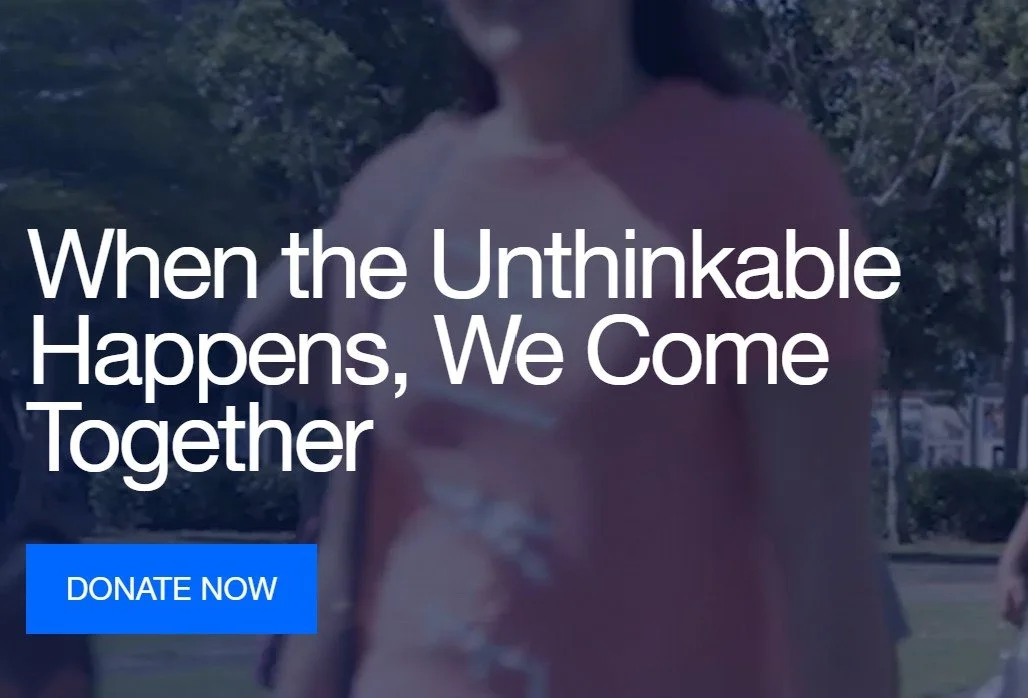
Cantor must be careful to avoid using the loss to benefit the company. Focusing on resilience and perseverance, leaders position the company as survivors of the tragedy, which helps deflect criticism of exploitation. Charitable work also can mitigate this risk. The challenge is using the tragedy to serve others—not the company itself, as the content block shown here does.
Under the Philanthropy tab, we find information about the Cantor Relief Fund, and “Donate Now” leads to another site: cantorrelief.org. This separation is important to segment audiences and recognizes that Cantor’s younger clients may not have a meaningful connection to the event. On this site, the company describes its Annual Charity Day, a book created by families affected by 9/11 losses, and a private area for families that requires login. This, too, reflects an ongoing commitment to serve rather than capitalize.
The Relief Fund site feels positive and hopeful. We see people marching, gathering, smiling—and a lot of little kids. Cantor isn’t asking for sympathy for itself, just support for others.

Miami Plane Crash Statements
The Amazon cargo flight crash at Miami International Airport provides a useful crisis communication case study. Here are statements as of September 8, 2026, from the many involved parties.
For students to analyze responses, they might review text from Business Communication and Character, Chapter 7:
How a company responds depends on the type of crisis—victim, accidental, or preventable. A victim crisis involves an event, for example, a hurricane, that is beyond a company’s control. In an accidental crisis, for example, an equipment failure, the company has more responsibility, and in a preventable crisis, for example, financial impropriety, the company has full responsibility (Tachkova and Coombs, Communicating in Extreme Crises: Lessons from the Edge, 2022, 35–42).
Investigations will reveal how to categorize the crisis but, regardless, we know that five people on the ground were killed and five injured (three in critical condition), so the reputational stakes are high for companies’ responses. Flight 7598A, operated by 21 Air LLC for Amazon Air, was a 32-year-old Boeing 767-33 (a converted freighter); because an operator, major brand, and manufacturer are involved, a lot of fingers could be pointed.
Here is what we see so far.
Local Authorities News Conference: The primary goal for this public news conference is to ensure safety. The first two speakers don’t introduce themselves, but they are the sheriff and mayor, who doesn’t add much except to thank people for their work. The fire chief provides more details, emphasizing his team’s work in rescue and fire safety in the “very complex situation.”
National Transportation Safety Board (NTSB): One communication goal is to build credibility for the investigation and, later, confidence in its findings. Chair Homendy leads the conference, first explaining who they are and what they do. At around 1:44, she stops to offer condolences. Demonstrating compassion, her delivery is heartfelt (much more so than in the local news conference). She also thanks first responders. She provides details about the situation, for example, that the aircraft struck the vehicles. She explains their process, emphasizing “fact-based information” and building credibility for the agency and their work. This part is rather detailed, listing which team will analyze which data. At about 15:00, she describes the scene as “utter devastation” and “hard to see.”
She doesn’t address a question about speed, but public information now shows the plane exited the runway at 112 knots, which is about 129 miles an hour.
Her response at 19:00 is masterful and worth watching. She balances reassuring people about safety with conveying compassion, while emphasizing that recommendations must be implemented.
Amazon: A primary communication objective may be to distance itself from the flight operator (that is, to shift blame). A company statement posted on the corporate news site mentions "operated by 21 Air” and plans to “coordinate with 21 Air.” Otherwise, the statement offers condolences, as it should, and little else at this point. The first statement includes, “This is a fast-moving situation,” which may be a poor choice of words considering the plane speed would be questioned.
21 Air: Like Amazon, the company says little but posts a notice (signed by the CEO) on its website—on the homepage. Clearly, it’s the most significant news for the company, which promises updates on that same page as information becomes available. The primary communication objectives may be to avoid drawing any more attention to itself than necessary and to reduce speculation before investigations are complete. Curiously, the statement says nothing about the pilots, who were trapped in the cockpit and hospitalized (and then released). Students might question the reason for the omission and draft ways the company might acknowledge the pilots’ condition without assigning responsibility for the crash.
Boeing: No stranger to a crisis, Boeing has no news release on its website and no post on X. Certainly, Boeing leaders would want to avoid the situation entirely and hope this plane isn’t to blame. Like 21 Air, leaders want to reduce speculation. A Reuters article includes only this: “Boeing and 21 Air said they would support the government investigations into the crash.”
A CBS News report questions 21 Air’s safety record. Pilots claim the company fails to provide enough rest between flights, discourages safety complaints, and defers plane maintenance. If these allegations are true, they might point to a preventable crisis for the company, which affects the communication strategy.
When asked about these claims, an Amazon spokesperson demonstrated a distancing strategy:
We'll defer to the NTSB regarding the circumstances of their investigation and to 21 Air regarding these allegations that pre-date our relationship with the company.
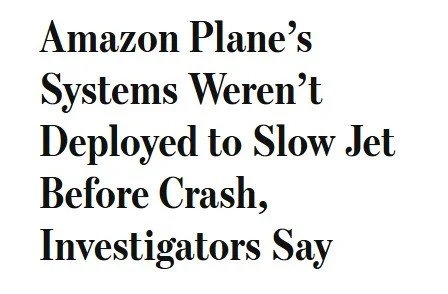
Article headlines like this Wall Street Journal’s indicate that Amazon has more work to do in distancing itself.
We’ll see what the NTSB concludes and what, if any, blame may rest with Amazon.

Neutrogena Says Little About Panettiere’s Death

Actress Hayden Panettiere’s death reignited criticism of Neutrogena’s contract termination a decade ago, which surfaced earlier this year. The company responded minimally and may need to do more to quell the backlash.
Before the 36-year-old’s death, Panettiere said in interviews that Neutrogena “fired” her back in 2015-2016 after she spoke about her postpartum depression. She said the company pointed to a “morals clause” after the ten-year relationship. Since her death, fans are calling for a boycott, which analysts say may hurt in the short term but rarely has lasting negative results on sales.
When she made the claims, Neutrogena said nothing; now leaders saying little. An Instagram post reflects a minimal, clichéd crisis communication response: say you’re sad, acknowledge that you didn’t support her (the best part), and say it’s not who you are or what you stand for. Neutrogena also promises to invest in women’s health through a partner to be announced later and says it didn’t respond earlier “out of respect,” which feels dishonest.
The carousel message on Instagram is an odd choice. The additional two screens are easy to miss, and Neutrogena’s “on-brand” font seems out of place. As Rolling Stone reports, the company “stops short of apologizing,” and comments are turned off, as though users wouldn’t comment elsewhere.
Students may discuss what else Neutrogena should have done and can still do. They also may discuss the company’s responsibility. Some may believe the company is being unfairly scapegoated for a decision made a decade ago.
We also don’t know the whole story of the contract termination. We know Panettiere connected the decision to her speaking openly about her depression, but maybe Neutrogena had other reasons. Certainly the company shouldn’t argue the point now; nothing leaders could say would sway fans in their favor.
What might be best is to rise above the noise and focus on the tragic death of a talented, young mother. She tried to raise awareness about her struggles, which were real for her and are for many women.

Confusing Cyclospora Lettuce Comms
Confusion abounds from both Taylor Farms and the U.S. Food and Drug Administration about lettuce contaminated by Cyclospora, which has sickened thousands of people. Students can analyze communications and identify failures of accountability.
The FDA and CDC traced the illness back to Taylor Farms de Mexico, but lab tests created what the FDA refers to as a “false positive.” Although one test came back positive, that didn’t prove the source of outbreak. However, the false positive didn’t change the epidemiological conclusion.
Here’s one opportunity for students to revise communications. The statement could be clearer, perhaps explaining terms like false positive and epidemiological.
Students also might question why the FDA communicated results before obtaining more evidence. That would avoid the agency’s need to backtrack with a statement like this:
Due to the complexity in detection of Cyclospora, FDA laboratory experts re-reviewed the sample results and have concluded that the finding does not represent true amplification and should be considered a false positive.
Otherwise, the recall is typical, stating which lettuce people should avoid eating, what symptoms to watch for, and how to get refunds.
Taylor Farms Statements
The company has a dedicated page with a notice and link on the homepage. It also posted a typical recall message, mirroring the FDA’s, but it includes more information.
Most recent as of today is the “Summary of Facts”:
We understand that there is significant confusion over outbreak communication. We want to provide a summary of the critical facts for your health:
On July 17 we voluntarily recalled all iceberg lettuce grown in central Mexico that was identified as the potential source of the Cyclospora outbreak.
This recall has been completed with products removed from the marketplace.
No Taylor Farms branded products are involved in this recall.
We are no longer sourcing iceberg lettuce grown in central Mexico for the remainder of the growing season.
We currently have experts on site in central Mexico investigating all potential sources of contamination.
We are committed to working closely with health officials during this ongoing investigation.
We remain deeply concerned for the health of those who are ill and will provide any updates relevant for your health.
Of course, the company employs the crisis communication strategy of distancing itself as much as possible, emphasizing products “grown in Mexico.”
This part is confusing and matters primarily to the company: “No Taylor Farms branded products are involved in this recall.” Students might flag this statement as a failure to take responsibility, and it is unlikely to inspire consumer confidence in any Taylor Farms products. A clearer approach might be to show pictures or list products unaffected.
Company leaders probably took great pleasure in these statements:
Yesterday, FDA informed Taylor Fresh Foods that one of its iceberg lettuce products from central Mexico tested positive for cyclospora. Today, we were informed that FDA made a mistake, and this was a false positive. To be clear, at this moment, FDA has not identified a single positive product test result for Cyclospora.
Based on initial information provided by health officials, in an abundance of caution, we completed a voluntary recall of iceberg lettuce from central Mexico. Recalled product was limited to iceberg lettuce grown and processed in central Mexico.
That statement leans into the FDA error and fails to convey the full picture. Company representatives also tried to delay the recall by appealing to the White House through a lobbyist. The executives wanted more evidence, which is somewhat understandable given the FDA’s missteps, but still demonstrates the company’s failure to take responsibility.
As we would expect, this “apology” is nowhere to be found in FDA communications. Also notable: Taylor fails to mention the epidemiological work; all roads led to Taylor’s lettuce.
Meanwhile, videos and memes on social media are hilarious, promoting diets of only processed foods for health and safety.

Comms Around Dad with Daughters in Bathroom
A viral video and the response illustrate the challenges of parenting and demonstrate how a “girl dad” handled a confrontation with grace.
A father was traveling from Florida to Oklahoma with his two daughters. Tyler Brodsky chose the women’s room at a QuikTrip in Alabama over the men’s room, which he said was dirty. (Police later said bringing the girls into the men’s room would have been equally problematic.)
The video, now with more than 4 million views, shows Brodsky incredibly calm while a man is yelling at them and threatening to call the police. Melissa, the store manager, is kind to the girls, but students might wonder why she didn’t do more to deter the man or call the police herself to deescalate the situation and protect the family.

In a follow-up video, Brodsky explains what happened at the time and raises bigger issues. He talks about the difficulty for parents and grandparents in this situation and says the he doesn’t condone harassment of anyone involved. He also expresses gratitude to Melissa, the police who said he did nothing wrong, and others who have reached out.
Overstreet Properties, which owns the QuikTrip, posted a statement. The language is fairly generic (“does not reflect the values” and “quality service”). The leaders could have said more, for example, to apologize more explicitly and acknowledge the challenge for families. (A family bathroom would solve the problem, but that might be too much to ask for this company and property.) They did admit that the man was affiliated with Overstreet and took action by cutting ties with him. Students might rewrite the statement to demonstrate more accountability and compassion.

UnitedHealthcare Ad Tries to Repair Image
Bruised by publicity around the murder of CEO Brian Thompson, UnitedHealthcare has a new ad focusing on employees. Students can analyze the ad as a strategy for repairing brand image.
With the title “Committed to Care,” the commercial shows a diversity of employees. They speak of their commitment to the company and to serving customers. They look like average people—like one of us—not polished executives in fancy offices wearing fancy clothes. They talk about the heartache and challenges in their own lives of being different and having family members with health problems. They (and their kids) get emotional.
Clearly, the purpose is to humanize UnitedHealthcare—to counter criticism, particularly about denying claims. Critics say the company relies on algorithms, so this ad emphasizes actual people and their feelings.
Students might identify primary and secondary audiences and communication objectives for the ad. They might cite specific objectives, for example, increasing enrollment and lowering cancellation rates, and broader objectives, for example, improving talent acquisition and ensuring executives’ safety.
Given the anger at UnitedHealthcare and support for Thompson’s alleged murderer, the company has a lot of work to do. Students might consider the timing of this ad, about 16 months after the shooting. That’s probably enough time to avoid criticism about reactivity and spin. With an immediate response, the company also might have appeared dismissive, lacking compassion for Thompson’s death. Yet not too much time has passed that the company has missed the moment—the opportunity to present another side of employees’ work.

Matthew Perry Defendant’s Claims

The live-in assistant who administered the ketamine that killed actor Matthew Perry argued he “only did what his boss said." The case raises issues of character and could spark a class discussion about ethics.
Kenneth Iwamasa pleaded guilty and was sentenced to 41 months in prison, but his attorney argued that he was carrying out his job. Prosecutors identify financial benefits for Iwamasa, as they have for other defendants, including Perry’s suppliers: the so-called “Ketamine Queen” and the doctor-dealer, who said, “I wonder how much this moron will pay” and “Lets [sic] find out.”
Perry’s stepfather accused Iwamasa of not wanting to sacrifice his personal income and “living like a king.” He said, “You kept injecting him with more. You could have made the phone call, but you were living a pretty dandy life.” Character dimensions at play are integrity and compassion.
Demonstrating strong character often means putting others’ interests ahead of our own. This is perhaps the biggest failing of those involved in Perry’s death. Iwamasa’s statement about how he loved and cared for Perry seems to contradict his actions. The accusation was illegal drug distribution, and Iwamasa admitted to breaking the law.
In her work on Giving Voice to Values, Mary Gentile offers a class activity for students to identify times at work when they did and did not speak up when a situation conflicted with their values. Students identify circumstances that made it possible and difficult for them to speak up. The hope is for students to learn from their past and to have courage in future situations, regardless of an employer’s demands.

UCF Commencement Speaker’s AI Talk Got Booed
A real estate executive addressed graduating students at the University of Central Florida about the promise of AI and got booed. Her audience analysis, the student’s reactions, and her recovery are worth class discussions.
Gloria Caulfield said, “The rise of artificial intelligence is the next industrial revolution.” “Boo!” from the crowd. She is surprised and looks back at others on stage, asking “What happened?” She is shaken. When she continues, her voice is unsteady, and more boos follow. Cheers follow when she says, “Only a few years ago, AI was not a factor in our lives.”
Perhaps most relevant is the audience. She’s speaking to graduates at UCF’s College of Arts and Humanities and its Nicholson School of Communication and Media—students who have faced challenging job prospects for years and are greatly affected by AI today. As one student said, “Talking about artificial intelligence at a college for arts and humanities can be, you know, a bit rough because it kind of goes against the humanities part.”
In addition, recent Gallup research shows a steep decline in young people’s confidence in AI. As of now, only 27% of people ages 14 to 29 feel hopeful about AI, and 48% of working Gen Zers in the workforce “believe the risks of AI in the workforce outweigh its benefits.”
The boos made headlines and took Caulfield off guard, but looking at the video of the crowd, we see a mixed response, with some students silent as others cheered loudly. Caulfield referred to the “bipolar topic”; another word choice might have been better.
LinkedIn comments give students a window into how academics and industry folks reacted to the commencement scene with some saying students need to face reality.
Students can discuss how Caulfield handled the situation. Was it a misjudgment for her to talk about AI as she did? Should she have anticipated the response? Should she have avoided the topic entirely? She did preface that part with a pep talk about change, but apparently, it wasn’t enough. Perhaps a softer approach, recognizing students’ vulnerabilities and fears would have been better—and solutions or suggestions.

Air Canada CEO’s Language Viewed as a Failure of Character
After a collision at LaGuardia airport, Air Canada’s CEO resigned because of his language—English. The situation demonstrates cultural communication issues for our classes.
Never mind the crash that killed two pilots and injured dozens of people at LaGuardia airport. The big news is that Air Canada CEO Michael Rousseau gave his condolence speech in English instead of in both French and English. Prime Minister Mark Carney said he was “disappointed,” and that his English showed “a lack of judgment or a lack of compassion.” Then he seems to settle on “lack of compassion.” Either way, he’s describing a failure of character. Others said Rousseau’s English demonstrated a “gross lack of respect.”
Context and history are important here. Rousseau faced similar criticism when he was hired in 2021. He didn’t speak French and said he didn’t think it was important for job. After backlash, he promised to learn, but here we are.
An op-ed by the President and CEO of the Association for Canadian Studies explains the situation more fully. He describes the Official Languages Act, which requires companies to offer bilingual services. Students might analyze his other arguments, including this one:
Some argue that this requirement is primarily symbolic. They are right—and that is precisely why it is essential.
In the end, Rousseau—or the Board—couldn’t stave off criticism. Curiously, the Air Canada statement gives no reason for his “retirement,” including only compliments about his contributions to the company. As is often the case, we’re left wondering exactly how the decision was made, but the political pressure is clear.

World Central Kitchen Video on Ukraine for Fundraising
In a World Central Kitchen (WCK) video about Ukraine, on the fourth anniversary of Russia’s invasion, students will see illustrations of emotional appeal, compassion, and themes for fundraising.
Here are a few points about the video for our students:
Starts with lessons learned. This approach is consistent with research showing better responses to LinkedIn profiles that balance the writer’s journey with outcomes. Describing learnings demonstrates humility and conveys what the study authors call “warmth,” a word used later in the WCK video. To contribute to a nonprofit organization, funders may want to be part of the journey—part of the story.
Emphasizes “long-term humanitarian aid.” From those lessons, the staff say they were able to adapt from emergency response to a longer-term solutions. They stress their commitment and the ongoing work involved, which requires funding.
Representatives speak Ukrainian. Of course, the spoken language is a practical decision so local staff can tell their own story, but it also conveys being “on the ground,” or as they say in the video, on “the frontline” and with “boots on the ground.”
Includes data. 40 kitchens opened illustrates reach, and 4,000+ vegetables seems like a lot, although that one is tough to comprehend without imagery or comparisons, as we teach for data communication.
Repeats the theme. A theme—”side by side”—shows how WCK staff work alongside those in need to provide not just food but emotional support. Images throughout emphasize this point—few talking heads, rather, people working together.
Showcases José Andrés. About halfway into the video, we hear from the famed chef, restaurateur, and WCK founder José Andrés: “We believe this is the future of humanitarian relief. This is the future of food relief. In the process of helping some people, don’t throw money at the problem; try to invest in the solutions.”
Stresses cultivation. Then we see people growing seeds, a greenhouse project—solutions for long-term self-sufficiency in addition to the hot meals WCK provides.
Balances imagery. We see several short videos of destruction in Ukraine, particularly bombed buildings, but we don’t see other realities of war. The prevailing message is of hope, and the focus is on people and food.
All this to say, WCK needs a lot of funding to achieve its mission. The work of being “on the ground,” working alongside people, and providing hot meals is expensive.
Students might analyze how the website images and text support these messages.

Tom Pritzker Resigns After Epstein Discovery

The list of executives resigning or losing positions after more Jeffrey Epstein files become public is growing. Students can read emails related to the latest: Tom Pritzer, Hyatt’s executive chairman.
Pritzer’s resignation letter to the board includes the following:
My job and responsibility is to provide good stewardship. That is important to me. Good stewardship includes ensuring a proper transition at Hyatt. Following discussions with my fellow Board members, I have decided, after serving as Executive Chairman since 2004, and with the company in a strong position, that now is the right time for me to retire from Hyatt.
Good stewardship also means protecting Hyatt, particularly in the context of my association with Jeffrey Epstein and Ghislaine Maxwell which I deeply regret.
I exercised terrible judgment in maintaining contact with them, and there is no excuse for failing to distance myself sooner.
I condemn the actions and the harm caused by Epstein and Maxwell, and I feel deep sorrow for the pain they inflicted on their victims.
The first line is performative and was omitted from most news reports. As an issue of integrity, good stewardship requires good behavior while serving in a role, not just when resigning.
Students might read the first and second lines as a push from the board rather than a true resignation. Either way, it explains what students often wonder about executive resignations for personal improprieties: they affect the company. At the same time, Pritzker’s were related to Hyatt business, with emails showing him facilitating travel and arranging an interview for “the girl from Romania.”
The second bullet illustrates classic crisis communication strategies of distancing and downplaying, as though “contact” were his only crime. We see a similar theme in all statements related to Epstein—little true accountability.
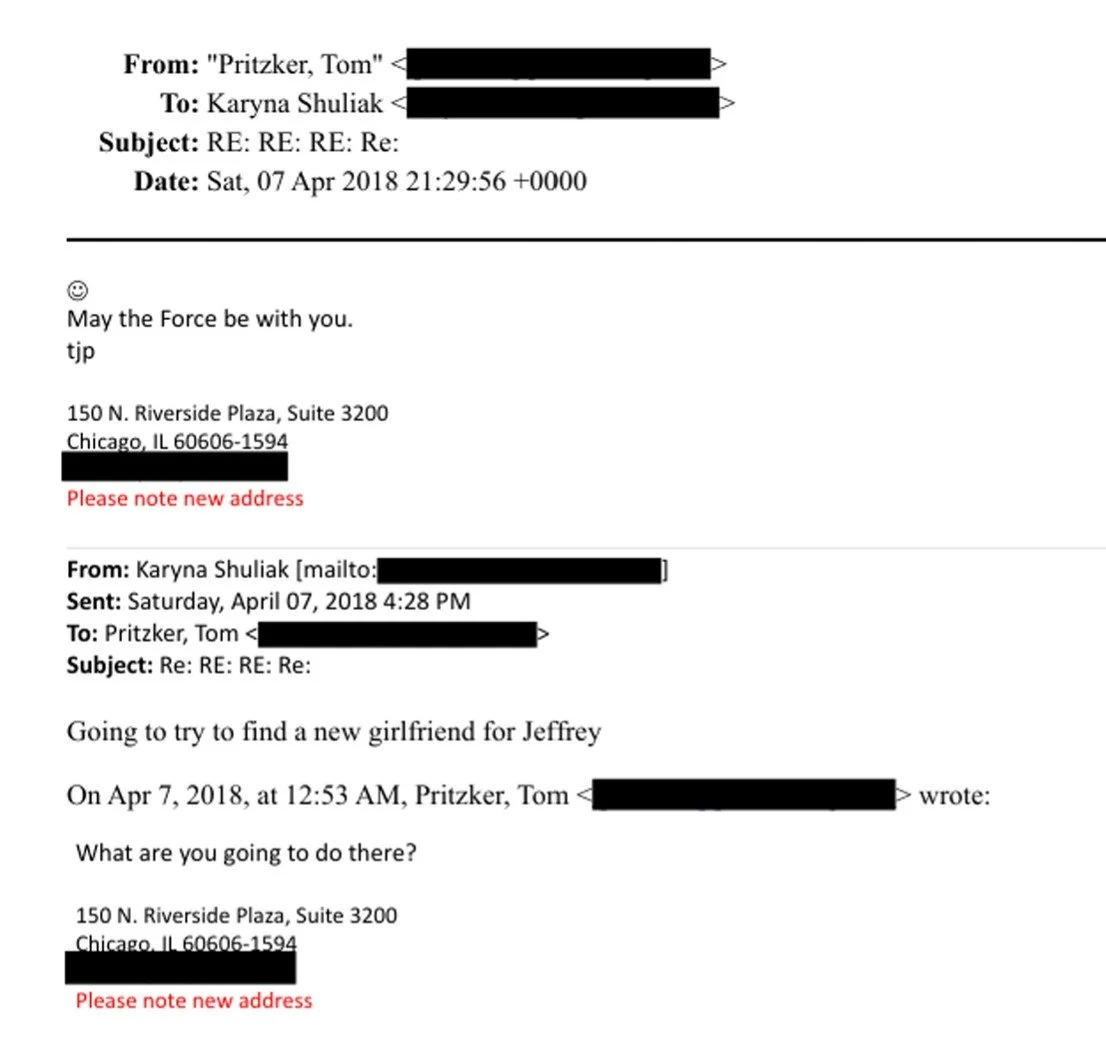
The third bullet reflects a false show of sympathy few would believe after reading emails like these, which were sent ten years after Epstein plead guilty for sex crimes in Florida and as accusations piled up throughout the next decade.
Students might discuss the best approach for these leaders. Another strategy is Lee Wexler’s. The billionaire and former CEO of Victoria's Secret said he “was duped by a world-class con man,” a tough claim to support.
Maybe this is one of those rare times when it’s better to say nothing at all.
The New York Times is tracking resignations and other fallout from the Epstein files.

Sondor Displaces Guests Without Warning
A hotel’s abrupt closure left guests stranded and offers communication planning lessons for students.
Short-term rental and boutique hotel company Sonder by Marriott Bonvoy filed for bankruptcy after Marriott pulled out of the agreement. Sonder communicated news by placing printed messages under hotel guests’ doors.
Trouble had been brewing, as the founder and former CEO chronicled in a LinkedIn post back in July. But, of course, guests don’t necessarily see “the writing on the wall”—and even his post ends on a positive note about the Marriott deal. So they booked stays expecting the company would honor its commitment, an issue of integrity. (Cue Seinfeld at the rental car counter.)

Marriott’s statement promises to help guests—or, those who booked through Marriott. This message (click to expand/download) was posted by a guest on Reddit. Imagine how a guest feels receiving this note: “[w]e are kindly requesting that you check out of the property as soon as you are able.”
Apparently, Sonder employees at hotel properties had no notice either, learning about the failure when guests told them. Corporate employees say the same:
Even most of us at the corporate level were left in the dark. We didn't find out anything until our city teams started messaging us for more information, which if course we didn't get.
We received notice Sunday that more information would be sent to us today (Monday the 10th), and literally senior leadership was silent ALL DAY.
The only thing we received was an email saying "thanks for your service to the company, here's a link to the DOL's unemployment website. Your employment is terminated effective immediately."
No email from SLT, no messages, nothing. Yet, Janice had enough time to go give out a press release.
The writer is correct that Sondor published a statement about the “Chapter 7 liquidation” plan but mentions nothing about current guests.
It’s time for another lesson in communication planning for any change but, particularly, for bad news. One of the most important lessons is that employees should be notified before customers or the public.
In addition to the communication issues, this situation raises questions about integrity and accountability. What is owed to guests who had reservations? Some guests received help rebooking; others did not. Some had to book at places far more expensive than their Sondor property. What is the right, compassionate thing to do?

Amazon’s Layoff Texts and Email to Employees

Students can analyze Amazon’s layoff email against principles for delivering bad-news messages. Let’s look at the reasons given for the downsizing and what the Economist called the “impersonal text-message blast.”
As always, context is important. In this case, the planned layoffs are not news to employees, as it’s not news to anyone who has seen the media reports about 30,000, about 10%, planned cuts. This week, 14,000 were laid off.
For the communication, this means that the Amazon statement, posted on the website for the public, is not delivering the news for the first time. Students will note that two previous messages (from last year and earlier this year) are linked to illustrate to employees—and the critical public—that they had ample warning. Still, of course, employees are feeling the pain.
In her email, Beth Galetti, Senior Vice President of People Experience and Technology, addressed the reason by first acknowledging skepticism:
Some may ask why we’re reducing roles when the company is performing well. Across our businesses, we're delivering great customer experiences every day, innovating at a rapid rate, and producing strong business results. What we need to remember is that the world is changing quickly. This generation of AI is the most transformative technology we’ve seen since the Internet, and it's enabling companies to innovate much faster than ever before (in existing market segments and altogether new ones). We’re convinced that we need to be organized more leanly, with fewer layers and more ownership, to move as quickly as possible for our customers and business.
CEO Andy Jassy also said the decision is not “really” financially or AI driven:
The announcement that we made a few days ago was not really financially driven, and it’s not even really AI driven—not right now, at least. Really—it’s culture.
If you grow as fast as we did for several years . . . you end up with a lot more people than what you had before, and you end up with a lot more layers. . . . When that happens, sometimes without realizing it, you can weaken the ownership of the people that you have who are doing the actual work.
We could argue that all decisions for a for-profit corporate are ultimately financially driven. Why do culture and too many layers matter? Why do they need to be more “nimble”? Sure, they want to make quicker decisions and get the right products to the right customers as quickly as possible (same-day paper towels!), but in the end, doesn’t that all serve the bottom line? Do they solely want people to feel “ownership” over their work?
Neither Galetti or Jassy say it explicitly, but AI might be replacing some of these roles. In a June email, Jassy wrote,
As we roll out more Generative AI and agents, it should change the way our work is done. We will need fewer people doing some of the jobs that are being done today, and more people doing other types of jobs. It’s hard to know exactly where this nets out over time, but in the next few years, we expect that this will reduce our total corporate workforce as we get efficiency gains from using AI extensively across the company.
Understandably, this talk makes people more nervous than they already are. But to not attribute some job loss today to AI seems inconsistent and dishonest.
Another business communication issue worth a class discussion is how some of the layoffs were communicated: through text message. These messages are highly criticized in an Economist article, but that might not be fair. First, we should consider how employees typically receive communication, which may be by text, particularly remote employees. Second, two messages ask them to check their email, and then, call the help desk if they didn’t receive an email, so the news isn’t actually delivered via text. Even more than email, texts are efficient methods to get a consistent message out to many people at the same time. The company is balancing compassion with fairness in addition to efficiency.
Students might conclude that texts are the best possible option. It’s simply not practical for managers to meet with 14,000 at the same time and deliver the same message: not to show up for work because they wouldn’t have access to the building. Now, that, too, sounds cold, but it’s a sound business decision to have people whose job was eliminated not work. Amazon is continuing to pay people, and they are encouraged to another job within the company, or they will receive severance pay.
Layoffs are messy in the best of situations. No one wants to see employees lose their jobs, particularly in an uneven labor market. But students might accept the process for what it is, while planning to include more transparency in their own bad-news messages.
Image source.

“Care and Connection” Webinar

My friend and colleague, Christy McDowell, and I will present, “Care and Connection” through eCornell. The webinar is scheduled for this Wednesday, November 5, and more than 800 people registered so far!
Here’s our focus:
How to approach everyday communication interactions with care for yourself and for others
Practical strategies to build meaningful connections and meet work challenges with ease
How greater calm keeps us agile and open to possibilities, yet grounded enough to avoid extreme reactions
You’re welcome to join! Register here.

Layoffs and Private Jets: Integrity Issue?
A Wall Street Journal article describes a lack of consistency, which students might identify as an integrity issue: employees are laid off while companies increase use of private jets for executives. Students may analyze the reasons provided and draw their own conclusions.

Although other executive perks have declined, private flights have increased 76.7% since 2020. The WSJ article cites safety as the most common justification, with the murder of UnitedHealth CEO Brian Thompson as an example.
The National Business Aviation Association (NBAA) helps companies with proactive messaging. A long webpage is titled, “Toot Your Own Horn: Bizav [business aviation] Operators Tell Their Own Stories,” with the subtitle, “The value of building a proactive internal campaign to support your flight operation.” Although we’re seeing more external criticism, the article focuses on internal communication:
Business aviation is often misrepresented in the mainstream media, cast as a villain for the sake of a soundbite. Are you prepared to share the value your flight department brings to the company and the community, whether to principals or shareholders?
Long-time business aviation professionals shared with Business Aviation Insider their business aviation “whys” and also offered suggestions on how to build a proactive internal campaign to support a flight operation.
The arguments are fascinating. Students can analyze the claims, including data comparisons, for example, these:
[Business aviation] actually contributes less than one-half of 1% of man-made global emissions.
The reality is only about 3% of the approximately 15,000 business aircraft registered in the U.S. are flown by Fortune 500 companies.
Although the percentages are small, the figures may not be convincing. Another claim, an environmental “goal,” doesn’t have much meaning:
In your environmental discussions, reinforce that business aviation has adopted the goal of net-zero carbon emissions by 2050.
Students can analyze other arguments about efficiency and do their own research to update the 2003 business aviation page. For example, the safety issue—the primary rationale given by executives interviewed in the WSJ article—isn’t included in this 2023 article. On the other hand, the WSJ article provides context of the recent economic environment—the contrast between cutting costs by layoffs and, presumably, increasing costs by adding private air travel.
Addressing the issue today, organizations might take a more balanced approach. They might explain the efficiencies and safety issues for executives, yet acknowledge that the “optics” aren’t good. In other words, private flights may appear to be an ethical failure, but the decision may be consistent with corporate goals for increasing efficiency and ensuring safety. Executives might convey the message themselves to demonstrate accountability for the decision. That would be a different approach than what the NBAA recommends.

Utah Valley Comms After Shooting of Charlie Kirk
Students might analyze crisis messages on the Utah Valley University website following the shocking murder of Charlie Kirk. This is a sensitive, painful topic, but the swift, apolitical messaging offers lessons for business communicators.
Today, two days after the shooting of the conservative activist, Utah Valley’s notice is prominent on the website. The pop-up, below, is also static at the top of the homepage.

The “info” page includes a chronology of messages beginning on Wednesday, September 10 at 12:48 pm:
UVU Alert: Police Investigating Shooting on UVU Orem Campus
UVU Alert: A single shot was fired on campus toward a visiting speaker. Police are investigating now, suspect in custody.
As expected in the early hours, the next messages are similar: short, matter-of-fact notices focusing on students’ safety and police activity. Several are posted through 2:52 pm, including announcements about campus closing and classes cancelled. Some notices are repeated, which communicates that the university has nothing new to report.
In these situations, the hope is to find the shooter quickly to ease worries about additional harm. The first message mentioned, “suspect in custody,” but now we know that the suspect (and, later, another) was released. None of the following messages mention suspects, presumably to stave off alarm.
At 4:39, we see a longer message, below, from University administrators—a fairly quick response and a typical crisis message to acknowledge what happened, offer condolences, and explain expectations. Three somewhat unusual points about this response are 1) different audiences are addressed directly, which is a useful, tailored approach, 2) we don’t yet see support, for example, a crisis hotline or mental health resources on campus—these come at 6:57, with updates the next day, and 3) five people signed the notice, which is more typically signed by one or two. The reason for multiple signatures is unclear. It sends a unified message but also might disperse responsibility in a politically charged situation and protect the president. Including the student body president is a nice touch, given how deeply this affects students, particularly those among the 3,000 or so who witnessed the shooting.
Overall, written messages were swift and did what they needed to do: demonstrate compassion and reassure the community.
Dear UVU Community,
On behalf of Utah Valley University, we are shocked and saddened by the tragic passing of Charlie Kirk, a guest to our campus. Our hearts go out to his family. As we grieve with our students, faculty, and staff who bore witness to this unspeakable tragedy, UVU campuses will be closed from September 11-14.
All classes (in-person or virtual), campus events, and administrative operations will be suspended during this time. Please plan accordingly and make any necessary adjustments to your schedules.
Students — coursework, assignment deadlines, and exams will be delayed to accommodate the campus closure.
Faculty and supervisors, thank you for being flexible as we navigate through this difficult time. We encourage you to reach out to your students and employees with updates about expectations.
All employees (full-time or part-time) will still receive regular compensation during the campus closure. Additional information will be forthcoming regarding mental health support to students, faculty, and staff.
We appreciate your understanding and invite the campus community to demonstrate exceptional care towards one another at this time.
Warm regards,
Astrid S. Tuminez
President, Utah Valley University
Wayne Vaught
Provost
Michelle Kearns
Vice President, Student Affairs
Kyle Cullimore
UVUSA Student Body President
Marilyn Meyer
Vice President, People & Culture

Lessons from Delta Comm Failures
A passenger describes a “total communication breakdown” before, during, and after an emergency Delta flight landing. Following are lessons for students from both the incident and from how the reporter addressed the passenger’s complaint.

On a flight from Madrid to New York City, an engine failed, requiring the plane to land on the island of Azores, a stunning place to visit but perhaps not following an emergency landing. After researching the situation, a New York Times reporter confirmed that “Delta’s crisis communications strategy failed badly.”
Lesson 1: Customers have more credibility when they report what happened accurately and objectively.
The reporter called out a few inaccuracies and generalizations in the passenger’s telling. Here’s one example:
“It is also not exactly true that Delta had no ‘ground support or personnel.’”
The reporter found that the airline contracted with locals who were lauded by other passengers. Delta doesn’t fly to that airport, so they can’t be expected to have their own staff.
As another example, the reporter refines the passenger’s note about compensation:
Marc, you called Delta’s approach “shady and evasive.” I would go with “incomplete and maladroit.”
“Shady and evasive” are character judgments, yet we have no idea whether malintent existed. The reporter sticks with behaviors: a failure of good practice and a lack of skill.
Lesson 2: Overcommunicate (within reason) during a crisis and ensure that all customers get the same message at the same time.
The reporter confirms that the wait for information, particularly whether passengers would have hotel rooms, was long and caused stress. Some got messages, while others did not.
Passengers also saw flight staff “whisked off” to a hotel with no explanation or communication. Turns out, rest was mandatory so the crew could fly the next day. But as business communication faculty know, frequent communication is essential. Passengers felt “in the dark.”
Lesson 3: Crisis situations are not the time for humor.
This next bit sounds outrageous from a crisis communication perspective. Passengers heard “loud, scary noises from the left side of the plane” and estimate that it wasn’t until 10 minutes later—10 minutes!—when they heard an announcement recalled this way (commentary is from the reporter):
“The pilot just woke up from his nap and is going to look into what is happening.” If true, wrote Mr. Durrant [a Delta spokesperson], the nap reference was “likely referring to planned rest periods for flight crew.”
Even if the pilot was napping for legitimate reasons, why share it with passengers? If it was a joke, passengers did not seem to find it funny.
Lesson 4: Demonstrate integrity (consistency, accuracy, and transparency) in all communications.
The pilot announced that another plane would arrive in 6 hours. Any reasonable, hopeful passenger would assume this means they would be leaving in 6 hours, but that wasn’t the case because of rest requirements. Passengers had to spend the night.
In addition, passengers seemed to be compensated different amounts at different times, despite an EU law regulating the amount. Some garnered more after writing a “measured” complaint letter.
In the end, this situation reflected poorly on Delta. A few simple changes would not have made the situation less scary or frustrating but could have reduced the reputational hit.