

JD.com CEO Arrested for Sexual Misconduct
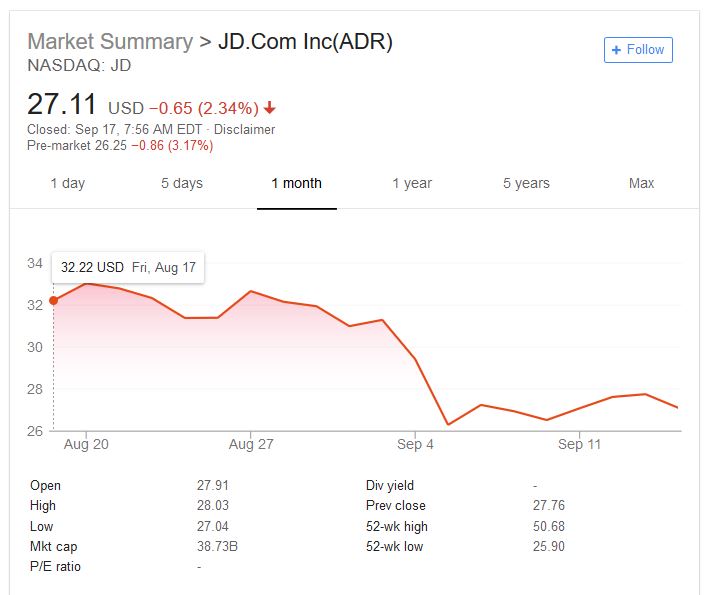
Richard Liu, founder and CEO of Chinese e-commerce company JD.com, was arrested in Minneapolis for sexual misconduct. Because of his high profile and billionaire status, Liu’s arrest was the most popular topic of conversation on social media in China last week.
Two people describe a case involving a student at the University of Minnesota, part of a joint doctoral program in business administration with Tsinghua University. Liu was released without bail and has returned to China. He denies any wrongdoing, and JD.com posted a statement in Chinese, translated by a student:
Sunday, Sep. 2, 2018
We have noticed that there are rumors and false accusations about Mr. Qiangdong Liu on Weibo (Chinese social media site, similar to Twitter) recently. We hereby declare as follows: Liu was falsely accused while in the US on a business trip, but the police investigators found no misconduct and that he would continue his journey as planned. The company will take necessary legal action against false reporting or rumors.
Monday, Sep. 3, 2018
So far as we know, Mr. Liu was arrested on Aug. 31, 2018 in Minneapolis for investigation. He was released from custody shortly. There was no accusation or bail required for the release. Mr. Liu has returned to China and will resume his business activities as originally planned.

In addition to the stock price drop and embarrassment this causes Liu and JD.com, the company may have a governance problem. Liu is required to attend board meetings in person (although he may be able to join via video or telephone). Without him, as an 80% voting rights owner, the board may be unable to make decisions for the business.
A New York Times article focuses on China’s fascination with self-made billionaires as celebrities. Online discussions featured photos of Jack Ma laughing at Liu’s trouble.
Discussion:
I don’t see a statement or press release from Liu or from the company in English. Should Liu or the company publish something at this point on the website? Why or why not?
What should the company do now to manage through this crisis?
How does the Chinese reaction compare to situations in the United States? Can you think of a similar situation when Americans were fascinated by a leader’s hardship?

Changes at Riot Games
Following allegations of sexism, Riot Games has apologized and is making changes. A long report by Kotaku placed blame mostly on the fast company growth and sexist working environment.
Trying to shed its “bro-culture” stigma, leaders have acknowledged that the company could be more inclusive. In a long statement last month titled, “Our First Steps Forward,” the company starts by apologizing to “to all those we’ve let down.” The statement then lists steps the company will take around inclusion initiatives, staffing, training, and so on

In a more recent statement, the company announced hiring a “leadership and strategy expert,” Frances Frei, who had also worked with Uber. The statement includes this quotation from Frei:
“After spending time with Riot’s leadership and many others across the organization, it became clear that Riot is truly putting everything on the table and committing to evolving its culture. In my interactions with Rioters, I’ve seen extraordinary levels of engagement on these issues across the company. Every Rioter with whom I’ve met truly cares about inclusion, which means real change is possible. Riot isn’t interested simply in fixing problems on the surface, it has the ambition to be an industry leader and to provide a roadmap for others to follow. I share that ambition and am eager to help Riot navigate this process.”
Discussion:
Read Kotaku’s report. How credible do you find the investigation and reporting? What could increase the credibility?
Assess Riot Games’ statement. Who is the audience and what are the communication objectives? How do the organization, writing style, and tone affect your assessment?
Now assess the statement about Frei. What’s your view of including Frei’s statement? What else, if anything, should be included in the statement?
Overall, how well is Riot Games demonstrating accountability? What other leadership character dimensions are demonstrated?

Disneyland Employees Speak Out

Disney employees are on screen in a New York Times op-ed video, "I Work at the Happiest Place on Earth. Why Can’t I Pay My Rent?" A 30-year concierge and a cosmetologist are featured more prominently. One is currently living in her car, and another says, tearfully, that she has spent time in her car. Both say they love their jobs, but along with 75% of Disneyland employees, they can't afford to pay "basic expenses every month." Data comes from a questionnaire and report, "Working for the Mouse."
The argument is for Disney to pay a living wage, and the call is for citizens to vote for an Anaheim proposal that affects Disneyland employees and some local hotel workers. In the video, one claim is that real wages have declined because of inflation—what $15 per hour bought seven years ago isn't the same today.
Business leaders who are fighting the measure say that the increase would hurt jobs. One local Chamber of Commerce member argued, "We estimate 3-4,000 jobs lost over next year or two by companies having to absorb this new increased cost. They're going to reduce hours and reduce jobs."
Senator and former presidential candidate Bernie Sanders is also featured in the video. He is proposing a bill he calls "Stop BEZOS" to tax Amazon and other large companies for public assistance received by their employees. The idea is for companies with 500 or more employees to pay the government back for support paid to their employees who cannot survive on earned wages.
Discussion:
- How well does the video make the case for higher wages? Which are logical and which are emotional appeals? What evidence is presented?
- Assess the credibility of the questionnaire and report, "Working for the Mouse." From your assessment, what makes the report both credible and questionable? In what ways does the report reflect business communication standards, and in what ways does it fall short?
- Research the impact of raising wages on industry, for example, this Cornell report. What's your view of this argument? It's a complicated question because of different industries, locations, labor supply, rates, etc.
- In what ways do the employees featured in the video demonstrate courage? What risks did they take in appearing on screen?
Archbishop Calls for Pope's Resignation
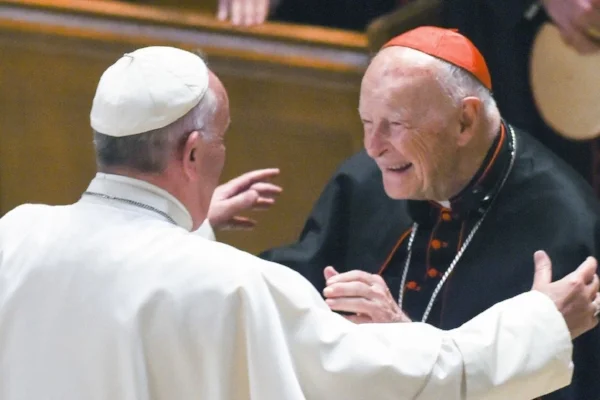
As more allegations of sexual abuse within the Catholic church become known, the most senior levels of the organization are facing new challenges. Last week, Pope Francis wrote a letter chastising abusers and calling on the Church to do better. Today, a former senior Vatican, who was an ambassador to the U.S., accused the pope of knowing about and covering up abuse cases since 2013. He is calling on the pope to resign.
The situation involves Archbishop McCarrick, who resigned as cardinal in July. McCarrick is accused of sexually abusing seminarians, and the Pope is accused of "rehabilitating" him rather than disciplining him and removing him from his position.
Archbishop Carlo Maria Viganò explains his reasoning in documented "testimony," including this segment:

Image source of Pope Francis and Archbishop McCarrick.
Discussion:
- Should the pope resign? Why or why not? How does this situation compare to corporate examples? Consider the hierarchy and relationships.
- In what ways is this situation a matter of integrity?
- Viganò uses the word parrhesia. What does this mean, and how does this relate to business communication?
- Which other leadership character dimensions are illustrated by this situation?

School Policy for "Natural" Hair

An 11-year-old black girl was sent home from school because her hair didn't fit guidelines for "natural" hairstyles. Over the summer, Christ the King Parish School in Terrytown, Louisiana, established a new policy, published in its handbook, banning hair extensions, which Faith Fennidy was wearing.
Videos show Fennidy crying, and critics called the policy discriminatory. But the Archdiocese of New Orleans defended the school's decision:
"This policy was communicated to all parents during the summer and again before the first day of school, and was applied to all students.
"The school offered the student's family an opportunity to comply with the uniform and dress policy and the family chose to withdraw the student; the student was not suspended or expelled."
A representative for the school also said, "We remain committed to being a welcoming school community that celebrates our unity and diversity." Fennidy decided not to return to the school.
Discussion:
- What's your view of the policy? Do you find it appropriate, discriminatory, or something else?
- How do attire policies in companies compare? What examples of similar policies have been problematic for companies?
- Read more about the situation on BusinessInsider. How well did the school handle the situation? What, if anything, could have been done differently?
Pope Francis's Letter
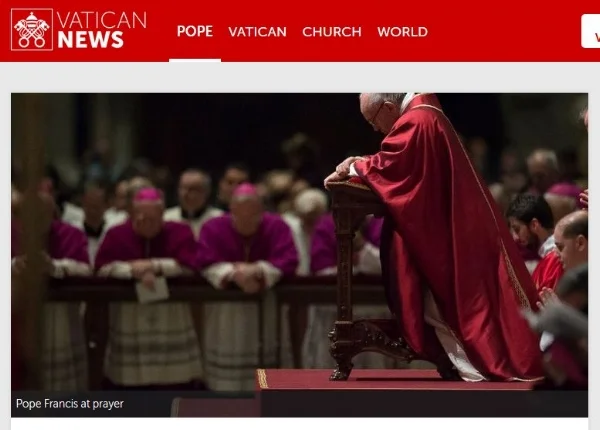
Pope Francis has joined the conversation about sexual abuse in the Catholic church after 1,000 victims and 300 perpetrators were identified by a grand jury investigation report in Pennsylvania. The report also revealed how the church systematically covered up the abuse over a 70-year period.
In an open letter, which is posted on Vatican News, expresses empathy early and often, for example, in this passage:
In recent days, a report was made public which detailed the experiences of at least a thousand survivors, victims of sexual abuse, the abuse of power and of conscience at the hands of priests over a period of approximately seventy years. Even though it can be said that most of these cases belong to the past, nonetheless as time goes on we have come to know the pain of many of the victims. We have realized that these wounds never disappear and that they require us forcefully to condemn these atrocities and join forces in uprooting this culture of death; these wounds never go away. The heart-wrenching pain of these victims, which cries out to heaven, was long ignored, kept quiet or silenced.
Pope Francis's letter follows one by Pope Benedict XVI in 2010, when abuse in Ireland became widely known.
Discussion:
- Compare the two letters. In what ways are they similar and different? How might the circumstance and timing affect each approach?
- How is the letter organized? How would you describe the tone?
- Which character dimensions does Pope Francis demonstrate in his letter?

What Is "Dehumanizing" Speech?
The New York Times reports Twitter's struggle to define what constitutes "dehumanizing" speech. Apparently, the only agreement among Twitter's team members is that the decision is "incredibly complex."

Categorization is critical, as the company has a reputation as a sometimes dark place of trolls and harassment. Yet this week, Apple, Facebook, YouTube have expunged content from Alex Jones's Infowars, which is known for spreading misinformation, including that the shooting at Sandy Hook was a hoax. You can imagine how this angered families of lost children.
In a tweet, CEO Jack Dorsey explained Twitter's decision to keep Infowars content, but employees, particularly, have not responded positively.
Twitter is in a difficult spot because, on the other hand, sites have been criticized for censoring conservative views. Del Harvey, the company's VP of Trust and Safety, wrote an email to employees further explaining the company's rationale.
Discussion:
- How would you define "dehumanizing" speech? What character dimensions are involved?
- What persuasive strategies does Harvey use in her email to employees? Which are most and least convincing and why?
- What is your view about Infowars content? Should Twitter remove it from the site as other social media companies have done? How might your own political views factor into your thinking?

More Research Support for Gratitude
New research, once again, illustrates the value of writing thank-you letters. A recent study shows that senders underestimate the impact of sending a letter of gratitude, which prevents them from writing one. People also worry that letters will be scrutinized and that receivers will feel awkward, but none of these perceptions align with the reality.
In their study, Amit Kumar and Nicholas Epley, at the University of Chicago, compared how "expressers" felt about writing a letter with how people felt receiving them. Receivers felt more surprised about receiving the letters and about the content, more positive, and less awkward than the senders thought they would be. Most expressers spent less than five minutes writing a letter.
Understandably, writers in the study doubted their own competence. Participants answered questions such as, “To what extent were you able to express your gratitude using words that were just right?” and “After your recipient reads your letter, how articulate do you believe they will think your expression of gratitude is?” People who received messages rated senders as more competent than senders rated themselves.
This study builds on Kumar's earlier work showing that reflecting on experiences rather than on material goods makes people feel better and act more generously toward others.
Discussion:
- Have you sent a letter of gratitude in the past couple of years? What inspired you to send it? How was it received?
- Have you thought about sending a letter but did not? What stopped you? Do the findings in this study encourage you now? The authors hope so!

Airline CEOs Defend Seat Size

American and Delta Airlines CEOs sit in small plane seats to explain the rationale and defend shrinking seat sizes. Doug Parker and Ed Bastian, both 6' 3" tall, agreed to talk to a WSJ writer, while United CEO Oscar Munoz declined.
Both CEOs say they fly coach for short trips. Bastian started a policy that Delta directors must fly coach when traveling less than three hours. Of course, as the article points out, suffering three hours in a small seat isn't quite the same as 24.
The executives say that flight amenities, such as WiFi, make up for any discomfort from smaller seats. American's Parker says that customers don't complain and that the airline hasn't "done anything that makes the main cabin product less desirable than it was before." The airlines are also focused on providing larger seats for higher fares.
Another WSJ article explains what airlines consider when making seats comfortable.
Discussion:
- How does this story illustrate character dimensions such as compassion, vulnerability, and humility?
- Did the CEOs do the right thing by agreeing to participate in the article? What are the risks and benefits?
- Why would United CEO Oscar Munoz decline? Was this the right decision for him and the airline?
- What persuasion tactics do the CEOs use to convince us that flying coach is not so bad?
- Do you agree with the CEOs' assessments about small seats? What has been your experience?

Tesla Layoff Memo
Tesla will cut about 9% of its staff, according to a memo sent to employees. In the message, CEO Elon Musk is direct about the decision, which he claims addresses some overlapping roles. Musk also says that profits haven't been a priority but that the company must now focus on profitability to be successful.
In the last paragraph, Musk expresses his gratitude to those leaving the company:
"To those who are departing, thank you for everything you’ve done for Tesla and we wish you well in your future opportunities. To those remaining, I would like to thank you in advance for ult job that remains ahead. We are a small company in one of the toughest and most competitive industries on Earth, where just staying alive, let alone growing, is a form of victory (Tesla and Ford remain the only American car companies who haven’t gone bankrupt). Yet, despite our tiny size, Tesla has already played a major role in moving the auto industry towards sustainable electric transport and moving the energy industry towards sustainable power generation and storage. We must continue to drive that forward for the good of the world."
A Bloomberg article criticizes the memo for burying news that it will end its partnership with Home Depot. Musk does address the issue, particularly how employees are affected, in the fifth paragraph.
Discussion:
- How clearly does Musk's memo communicate the news the employees?
- What organizational approach does Musk use in the memo? How effective is this approach given the situation and audience?
- What's your view of Bloomberg's criticism about the Home Depot decision? How, if at all, could Musk have handled this differently?
- What leadership character dimensions are demonstrated in Musk's memo? Where, if at all, does he fall short?

Tonys Recap: Speeches and Politics
As usual, the annual Tony awards was a star-studded night with fancy clothes and big celebrities. But this year, the show got political.
Most significantly—or most viral—was Robert De Niro's "F-bomb" preceding President Trump's name. He received a highly positive reaction from the Hollywood audience, with people cheering and standing. The comment, which De Niro repeated, was censored in the United States, but an Australian feed let it roll, so it's available in full on YouTube.
A highlight of the night was hearing graduating students from Marjory Stoneman Douglas High School in Parkland, FL, where a shooter recently killed 17 people and left more injured. Students sang "Seasons of Love" from "Rent" and encouraged us to "measure your life in love." A Washington Post article referred to this segment as "the most moving moment" of the night.
Discussion:
- What's your view of De Niro's outburst: inappropriate, inspiring, or something else?
- How would you respond to the same question about the high school students?
- One could argue that De Niro is "just being his authentic self." How would you respond to this perspective?

Communications About Cuba Plane Crash
A plane crashed near the Havana, Cuba, airport, leaving more than 100 people dead and only three survivors. Cuban President Miguel Diaz-Canel delivered the bad news:
"There has been an unfortunate aviation accident. The news is not very promising. It seems that there is a high number of victims."
The president also described recovery efforts:
"Things have been organised, the fire has been put out, and the remains are being identified,"
The reason is unknown, although an Al Jazeera article referred to the Boeing 737 as "aging." Aviation accidents are rare, but a BBC article chronicles several, including the previous crash in Cuba, in 1989, which killed 150 people.
Discussion:
- How well does the president communicate the events? We see only two short quotes here, so he may have said more. What else should he say? How can he communicate compassion?
- Research communications around other deadly plane crashes. How do the situations compare, and how should the communications differ?
- Should Boeing make a statement about the situation? Why or why not?

MSU's Denial as a Cultural Issue
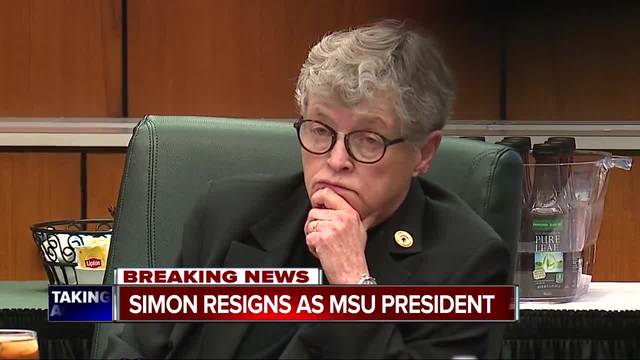
A Chronicle of Higher Ed article blames Michigan State University's ambitions and culture for their leaders' lack of response to years of sexual abuse on campus. More than 12 people knew of complaints against physician Larry Nassar, but the abuse continued for years.
Lou Anna K. Simon's leadership is questioned in the article. Although clearly a committed leader to the university, Simon is criticized for focusing so much on "two decades of status-climbing" that a culture of denying any wrongdoing evolved. One of the trustees summed up the issue in a letter and emphasized "We must embrace our obligation to apologize and offer justice."
Apologizing may be a sore subject for the trustees because Simon avoided it in the case of Larry Nassar's victims, according to the Chronicle article:
She talked about how “it is virtually impossible to stop a determined sexual predator and pedophile, that they will go to incomprehensible lengths to keep what they do in the shadows.” She often used “regret,” “sympathize,” and “acknowledge” in her written statements, but not “apologize.” She emphasized that sexual assault is a societal problem, not a Michigan State one. She highlighted all of the steps the university had taken to prevent sexual misconduct.
Discussion:
- Analyze the trustee's letter. What principles of business writing are followed? What are the strengths of the letter, and what could be improved?
- The trustee encourages MSU leadership to listen. What does he mean by this, and how would listening help the situation?
- What is the value of apologizing and admitting failure? What are the potential downsides, particularly for a university trying to improve its stature?
- This story illustrates several failings of leadership character. Which can you identify, and which do you think are most relevant here?
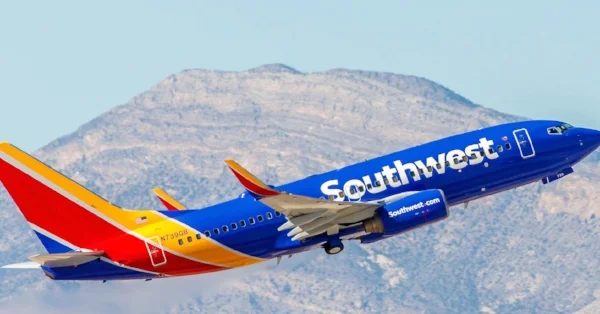
Behind the Scenes at Southwest's Crisis Response

A Wall Street Journal article describes the Southwest Airlines management team's quick response during the recent engine blowout that killed a passenger. The article describes a group of executives meeting and hearing their phones alert them to a plane in trouble.
CEO Gary Kelly said, "Everybody has a checklist" and “The protocol is well understood. It’s just to affirm that this is how we are going to work together. We are here to support the NTSB (National Transportation Safety Board)." Early steps included flying employees to the Jennifer Riordan's home to help the family manage travel arrangements and stopping all advertising on social media.
Airline employees also arranged for hotels or flights for other passengers and, for those staying in a hotel, left notes under their doors offering more assistance. Based on previous compensation to passengers in similar situations, the airline gave each traveler $5,000 an a $1000 travel voucher.
Discussion:
- Read the article and identify all of the positive steps the airline took.
- Reactions are consistently positive about the airline's response. What's your view? What were the strengths of their response and what, if anything, could the airline have done differently?
- What do you think will be the long-term impacts of this incident on the brand?
- To what extent do you think compassion played a role in how Southwest is perceived?
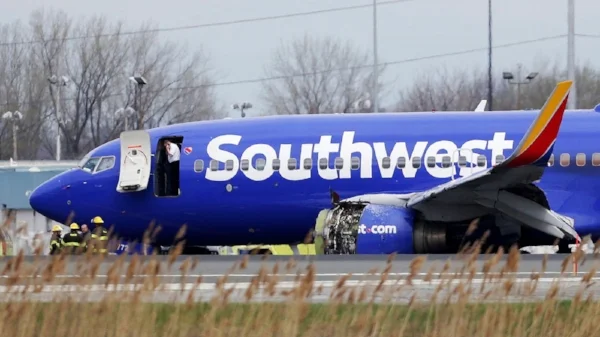
Passenger Dies on Southwest Flight
An engine exploded on a Southwest flight, which blew out a window and killed a passenger. The company has communicated about the tragedy consistently and in several forms.
On its website, Southwest posted several updates regarding the situation, starting with the initial event and ending with more information.

The second statement has the most detailed information and confirms the passenger's death:
Southwest Airlines Co. (NYSE: LUV) confirms an accident involving Southwest Airlines Flight 1380. The flight made an emergency diversion to Philadelphia International Airport (PHL) earlier today after the Crew reported issues with the number one engine which resulted in damage to the fuselage.
We are deeply saddened to confirm that there is one fatality resulting from this accident. The entire Southwest Airlines Family is devastated and extends its deepest, heartfelt sympathy to the Customers, employees, family members and loved ones affected by this tragic event. We have activated our emergency response team and are deploying every resource to support those affected by this tragedy. For a message from Gary Kelly, Southwest Chairman and Chief Executive Officer, please click here.
The aircraft involved today was a Boeing 737-700 (N772SW) and was enroute from New York LaGuardia (LGA) to Dallas Love Field (DAL). In total, the flight had 144 Customers and five Southwest Crewmembers onboard. We extend our heartfelt appreciation to the Southwest Pilots and Flight Attendants who acted professionally and swiftly to take care of our Customers during the emergency diversion and landing.
Finally, Southwest Airlines officials are in direct contact with the National Transportation Safety Board (NTSB) and the Federal Aviation Administration (FAA) to support an immediate, coordinated response to this accident. Southwest is in the process of gathering additional information regarding flight 1380 and will fully cooperate in an investigative process.
Please join the Southwest Family in keeping all of those affected by today's tragedy in your thoughts.
CEO Gary Kelly conveyed his sympathy in a video posted on the Twitter and during a news conference. Both are obviously scripted, but perhaps this is appropriate given the timing and severity of the situation.
Discussion:
- Assess Southwest's communications overall. What is they company doing well, and what could be improved?
- Now assess the news conference video, which is similar to the video message posted on Twitter. What delivery skills does the CEO demonstrate? What could be improved? Should he use a more natural style and "speak from the heart"? What are the potential downsides of this approach?
- How well does the company demonstrate compassion?
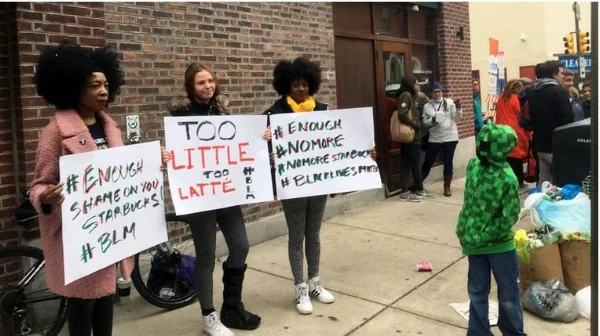
Starbucks Apologizes, Again

Two black men were arrested at a Philadelphia Starbucks. Witnesses say they were just waiting for a friend and asked to use the restroom. The reason for calling the police seemed to be the same: that they were just waiting for friend. But because they didn't order anything, they were asked to leave and did not. Other customers say this is common at Starbucks, and the only reason the police were called was because the two men were black.
The company, at first, gave a weak apology using unclear pronoun references (see "this" and "these"). A longer apology came from the CEO Kevin Johnson later. In the statement, he identified steps the company would take and closed with this paragraph:
Finally, to our partners who proudly wear the green apron and to customers who come to us for a sense of community every day: You can and should expect more from us. We will learn from this and be better.
Johnson also posted an apology video.
In a video statement, Philadelphia Police Commissioner Richard Ross explained the situation from his point of view and defended the officers' actions. He also said that all officers get implicit bias training and gave an example of a police sergeant who was also denied access to a Starbucks bathroom. Ross's conclusion was that "they are at least consistent in their policy." Of course, not everyone agrees.
Discussion:
- Analyze Johnson's statement. Who are his primary and secondary audiences? What are his communication objectives, and how well did he achieve them?
- What organizational strategy does Johnson's statement illustrate? How do you assess his tone and writing style?
- What is an unclear pronoun reference, and how are they used in the first apology?
- What's your view of the situation? Did Starbucks do wrong? If so, at what point(s)? Are you boycotting Starbucks, as some promote, as a result?
- Which leadership character dimensions are illustrated by this example?

Mariah Carey Talks About Having Bipolar Disorder
In 2001, singer Mariah Carey learned she had bipolar disorder, and now she is admitting it to the world. In an People magazine cover story, Carey talks about her initial denial and her decision to open up about her diagnosis:
“Until recently I lived in denial and isolation and in constant fear someone would expose me. It was too heavy a burden to carry and I simply couldn’t do that anymore. I sought and received treatment, I put positive people around me and I got back to doing what I love — writing songs and making music.”
“I’m just in a really good place right now, where I’m comfortable discussing my struggles with bipolar II disorder. I’m hopeful we can get to a place where the stigma is lifted from people going through anything alone. It can be incredibly isolating. It does not have to define you and I refuse to allow it to define me or control me.”
Bipolar disorder, also called manic-depressive disorder, affects about 5.7 million adults in the U.S., which is about 2.6% of the population.
Reactions to the news seem mostly positive, with comments such as this on Twitter:

This story reminds me of a TedX talk, "Everyone Is Hiding Something" about a woman's struggle with an eating disorder.
Discussion:
- What are the potential personal and professional consequences to Mariah Carey of going public with her diagnosis?
- What do you hide about yourself that might be useful for others to know?
- What is the value of admitting personal struggles in the workplace?
- How does Mariah Carey's story demonstrate leadership character dimensions, such as courage, compassion, authenticity, and vulnerability?
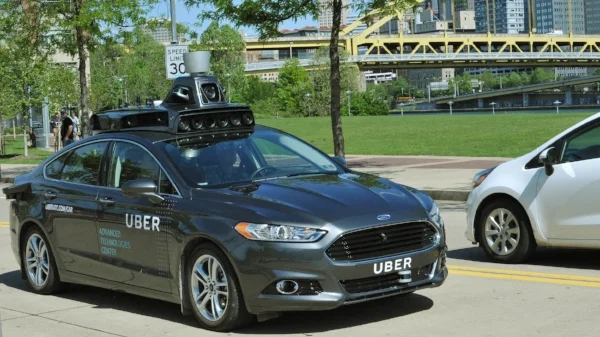
Uber Halts Self-Driving Cars Following Death

A self-driving Uber killed a pedestrian in Tempe, Arizona, and the company is trying to understand what happened. In the meantime, CEO Dara Khosrowshahi posted condolences on Twitter. An Uber spokesperson also made this statement:
“Our hearts go out to the victim’s family. We are fully cooperating with local authorities in their investigation of this incident.”
Apparently, a woman walked suddenly in front of the vehicle, and the local chief of police said, "It’s very clear it would have been difficult to avoid this collision in any kind of mode." A human backup driver, who was in the driver's seat without control over the car, confirmed the report. The first sign of trouble was the actual collision.
As a result of the accident, Uber announced it will stop all testing of autonomous cars. In California, autonomous Ubers were set to launch without human backups, but this may be delayed.
Discussion:
- Assess the company's response to the news. We don't see an apology, per se. Should we?
- How can the company rebuild trust in self-driving cars after this incident?

Fired by Tweet

According to an NBC report, Secretary of State Rex Tillerson learned he was fired when President Trump posted a tweet. The President did call Tillerson in for a face-to-face meeting, but this happened "several hours after the president had publicly announced Tillerson's firing on Twitter." The White House claims that Tillerson was put on notice that his time was coming to an end, but Tillerson says he was shocked at the news.
The relationship had been rocky. The two disagreed over policy issues, such as the Russian's government's involvement in U.S. elections and negotiations with North Korea. In July of last year, Tillerson referred to President Trump as a "moron."
Of his termination, Tillerson said,
"What is most important is to ensure an orderly and smooth transition during a time that the country continues to face significant policy and national security challenges."
Discussion:
- What is the best way to deliver bad news?
- We have heard of many business situations in which employees are fired by text message. How does this situation compare?
- In what ways is this situation a matter of leadership character, for example, compassion or integrity?

United Backs Off of Bonus Plan
United announced moving to a lottery system for employee bonuses, but backlash caused management to rethink the plan. President Scott Kirby had distributed a memo describing the new process:
"As we look to continue improving, we took a step back and decided to replace the quarterly operational bonus and perfect attendance programs with an exciting new rewards program called 'core4 Score Rewards.' "
The new program would include cash and other prizes and one quarterly prize of $100,000, which would be given to a random, eligible employee. Following the criticism, a spokesperson tried to clarify:
"We announced a new internal program based on United meeting certain operational and dependability metrics as a way of offering meaningful rewards to our employees. We believe that this new program will build excitement and a sense of accomplishment as we continue to set all-time operational records that result in an experience that our customers value."
Employee comments were harsh:
"Why should I be happy watching another employee get rewarded for my hard work? How would you feel if Oscar (United CEO Oscar Munoz) played roulette with your incentive package and it went to another vice president through a lottery drawing."
"This is truly disappointing. The current program 'costs' the company approximately $150 per 75,000 employees per quarter, totaling over $11 million. This new 'improved' program that we are supposed to be so excited about will cost the company $3.5 million per quarter. This saves the company about $8 million per quarter. Does Willis Tower really think the average front-line employee is stupid?"
In a second memo three days later, Kirby announced a pause on the program, saying they would "consider the right way to move ahead" and "will be reaching out to work groups across the company, and the changes we make will better reflect your feedback."
Discussion:
- What went wrong? Was it the bonus/lottery plan, the way it was announced, both, or something else?
- One employee commented, "Wow. I thought our morale was already as low as it could go, but I guess that was naive thinking on my part. I'm finally starting to understand that there will always be room for management to make me feel even less appreciated than I already do. How many times must they be taught, that if the employees aren't happy, no one is happy." What should the company leaders do now?
- The memos and employee comments were on an internal United system. What are the ethics of forwarding internal communications to the media?