
Ingrid Andress's Apology

Country singer Ingrid Andress promises to go to rehab after her off-key national anthem rendition at a Major League Baseball event. Are her apology and commitment enough?
Andress’s statement came quickly on Instagram. Looking at the criteria for apologies, students will see that Andress hit many of them—briefly: showing remorse (for example, saying, “I’m sorry” or “I apologize” instead of “I regret”), accepting responsibility (for example, saying, “It’s my fault,” or “I failed to”), saying what you did wrong, explaining what happened, acknowledging the impact, offering to fix it, saying what you’ll do differently, and requesting forgiveness.
She uses conversational language, which is probably appropriate in this situation. A legalistic statement never goes over well, and Andress sounds authentic. However, “that wasn’t me” isn’t typically well received. In a sense, this is the classic crisis communication strategy of distancing oneself, as we saw Microsoft do in the CrowdStrike situation this week. We could say that someone inebriated “isn’t herself,” but this part weakens her apology.
In response to Andress’s post, we see the expected, mean comments questioning her singing ability without alcohol and criticizing her quip about rehab being fun. Does the joke at the end diminish the seriousness of her message? I don’t think so, but students may have a different view.
AI Tools Help (a Lot) During Interviews
A Business Insider article says we shouldn’t call it “cheating,” but using these interview AI tools seems like cheating to me.
Final Round AI will revise a resume, generate a cover letter, and run mock interviews. After an interview, it will summarize, follow up, and somehow—coming later this year—negotiate a salary. But wait, there’s more: Its Copilot product (no relation to Microsoft’s) will transcribe the interview and, in real time, provide sample answers to questions. Cofounder and CEO Michael Guan says, "It can prompt the candidates with the right thing to say at the right time. Like a magical teleprompter, using AI."
Although intended only as a meeting transcription service, Otter.AI is being used as a "proxy interview" tool. This could involve the candidate lip-syncing as someone else answers questions for them. Other tools, like Interview Buddy, provide sample responses or bullet points for the candidate, but Interview Buddy stops short of technical questions, which the CEO says would be "kind of crossing the line, where it's not actually in the interest of the candidate or the employer if they're getting information that they don't actually know."
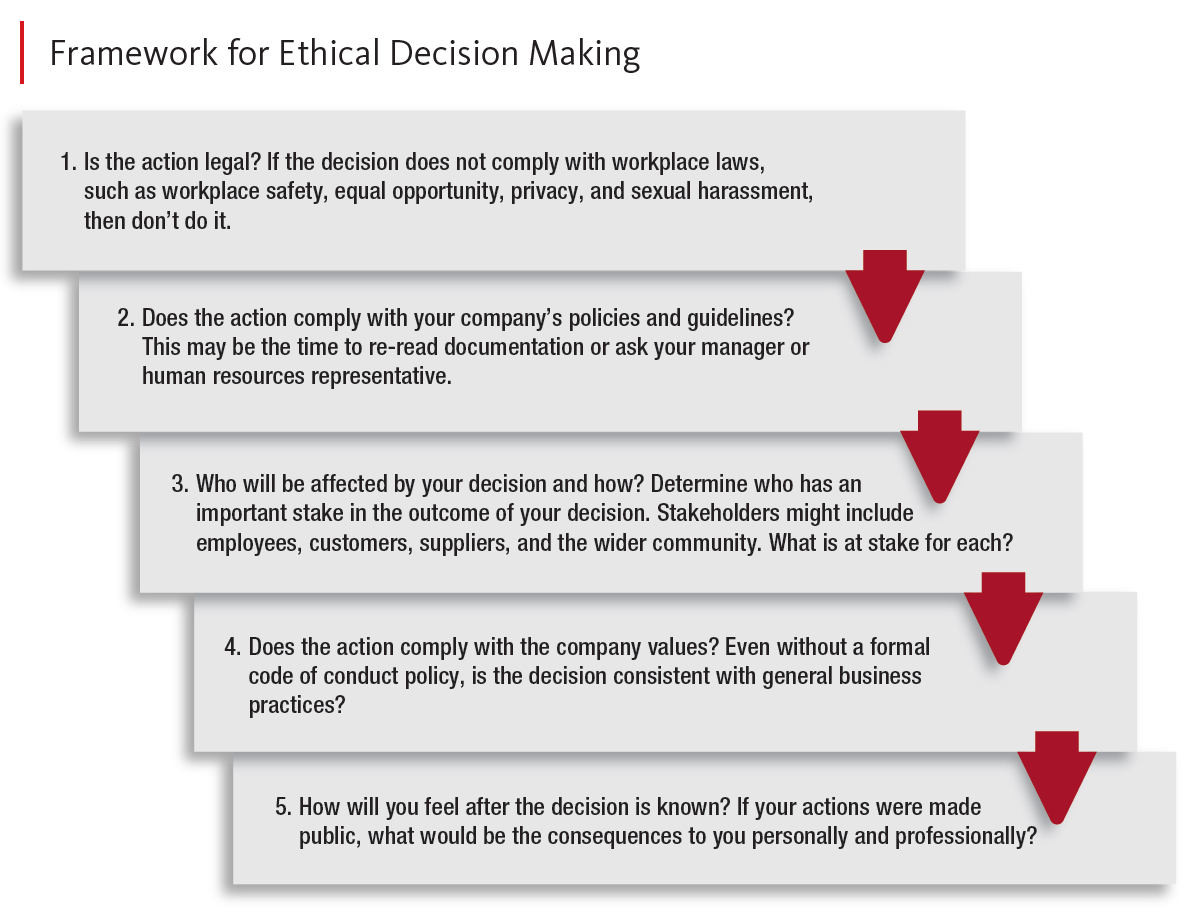
Students should consider ethical issues of using these types of tools. Where does AI assistance cross a line so that students are no longer representing themselves, which raises questions of integrity and authenticity? How would students answer questions from the Framework for Ethical Decision Making (Chapter 1 of Business Communication and Character, Figure 7)?
From a practical perspective, are students setting themselves up for failure in a job? Guan says using AI reflects a candidate’s “ingenuity,” and he isn’t concerned about results on the job: "If they can use AI to crush an interview, they can for sure continue using AI to become the top performer in their daily jobs.” Can they? Any job? Maybe they can perform only the type of job that is increasingly rare because AI is already doing the lower-end work.
OpenAI CTO's Video Introducing ChatGPT 4o

On a small living-room stage, Mira Murati, OpenAI’s chief technology officer, describes the company’s latest products. Students can analyze the video, “Spring Update,” against principles for business presentations.
We see no sign of Sam Altman, which is probably a good choice given his more political presence. This presentation is about the technology and allows Murati to shine.
Structure
Murati starts right in with her main points: “Today, I’m going to talk about three things. That’s it.” A few people laugh nervously, and I’m not sure why. Maybe she usually talks about a lot more and for longer than this 26-minute video? Or maybe it’s just the way she said it. She could have restarted because it feels awkward. Regardless, for the life of me, I cannot list what her three things are.

Visuals
The slides look odd to me. They are black and white, which is a fine choice, but they are so bare. Also, the alignment on the first slide, shown above, causes me to read down: Mira Chief, Murati Officer. Then, as Murati reviews her three points, we see five items on the slide, at left, which could cause the confusion in her structure.
Other slides are tech-cool minimalist, but the eye GIF looks creepy, and others seem unnecessary. Instead, visuals should support the message. Also, when I pause the video, I’m hoping to see a screenshot, but the video reverts to two guys sitting at a table. Around 5:15, a full-screen slide appears—entirely unnecessary because we see it clearly enough on the visuals to Murati’s side. Maybe this covers something to edit out? Did Murati sneeze? Trip? It doesn’t appear so.
The setting looks nice: tan with plants. It’s appropriate as a background that doesn’t detract from the speaker. In addition, the audience serves as cheer team, with only the back of their heads showing at times. Again, the focus is on Murati.
Content
Murati reinforces key points throughout her presentation: easier, more natural, free, collaborative. She repeats these words several times throughout. She also repeats the “big news” of releasing ChatGPT 4o to cheers among the crowd, who already heard this during the agenda, so obviously, the team was sitcom-audience prompted (“APPLAUSE!”).
At times, I want to see more, for example, when, for the first and only time, we see actual content and color on slides. Murati gives a couple of examples of using GPT for custom solutions, and apps scroll by quickly.
At about 8:15, Murati discusses the challenges of safety and how they’re working with partners. It sounds like a throwaway couple of lines, a mere nod, before the live demo starts next. Now we see the guys from the video-still table. Mark Chen starts by addressing a potential question, as we teach students to do: the wire is for “consistent internet”—easily understood.
Scarlett Johansson (or someone else) interacts with Chen during a conversation demo. The voice cuts in and out, which no one addresses, hoping, I guess, that it will even out since it’s impossible not to notice. At this point, Murati purses her lips, possibly a sign of nervousness. Fortunately, the voice does smooth out, and the demo achieves the purpose, which Chen explains as, for example, the ability to interrupt.
The next demo is math help, obviously to disprove the common thinking that GPT is bad at math. The beginning is a bit awkward, with another audio cut, GPT ready without seeing the equation, and Murati touching her knees. Berret Zoph handles this well, joking that he hasn’t written anything yet. The demo is simple but works well, showing GPT’s ability to tutor math students. A more complex coding example illustrates GPT’s advanced abilities, including vision, for example, seeing charts. GPT 4o can create charts, which isn’t covered, but would interest our students.
The demo also illustrates interpreting facial expressions as emotion and language translation—an Italian example, which Murati speaks.
Delivery
Murati’s delivery style is natural. She doesn’t appear to be working off a script and neither do the two researchers. We don’t know how many times their presentations were rehearsed or whether the video was edited, but they seem comfortable, using an appropriate style for the company, product, and purpose.
Overall, the video is a good example of a business presentation with a demo. The company certainly achieved its objective of conveying significant updates for GPT. Comparing this to Apple and Facebook demos from years ago could inspire a useful class discussion.
Discrimination Against Black Names on Resumes
Many studies have shown that employers are more likely to offer interviews to white than to Black applicants. New research may help prepare students.

Students have difficult decisions to make about how to present themselves in employment communications. In Chapter 13 of Business Communication and Character (11e), I wrote:
Applicants have a difficult choice in deciding whether to downplay their race and other affiliations. Some students choose to do so to avoid bias—to increase their chances of getting hired when they are at a disadvantage in the selection process. Others downplay their identities for a different reason: if an employer does want to increase diversity, they don’t want to be hired to “fill that quota.”
I reference an Administrative Science Quarterly article. This new research identifies companies by name, with some companies, for example, Kohl’s, Lowe’s, and Hilton, not discriminating, but AutoNation and GPC coming out at the bottom. This study also tested age and LGBTQ status and found low penalties for those over 40 and applicants with Black names who mentioned affiliations with LGBTQ groups, although the penalty was larger for applicants with white-sounding names.
The resumes in this study seem to be for lower, service-level jobs. It would be interesting to evaluate the effect for professional- and management-level jobs for which our students might apply. I’m cautious about assuming the same results.

Kate Middleton's Health Announcement
After weeks of silence and the predictable conspiracy theories, the Princess of Wales announced her cancer diagnosis in a video. Students can analyze the message and discuss issues of privacy and integrity, which I raised last week.
Kate Middleton likely chose a video message instead of the typical written statement because of rumors about her failing marriage and death. Royal family PR experts view the message positively, a way to take back the narrative. In part, her message explains her silence:
As you can imagine, this has taken time. It has taken me time to recover from major surgery in order to start my treatment. But, most importantly, it has taken us time to explain everything to George, Charlotte and Louis in a way that is appropriate for them, and to reassure them that I am going to be ok.
Where are the lines between privacy and public responsibility? We might see an analogy to U.S. Defense Secretary Lloyd Austin’s reluctance to disclose his health issues. Like most analogies, this one is imperfect. Secretary Austin has, dare I say, clearer job responsibilities with greater potential consequences than does Kate Middleton. The royal family’s silence seems to hurt only themselves, similar to the situation when Princess Diana died. Still, they are all public figures, paid by taxpayers.
Yet speculation about Kate Middleton has been brutal, and no one deserves that. Her appearance takes speculators to task. She demonstrates vulnerability as a strength, owning her illness and asking for what she and her family needs:
We hope that you will understand that, as a family, we now need some time, space and privacy while I complete my treatment. My work has always brought me a deep sense of joy and I look forward to being back when I am able, but for now I must focus on making a full recovery.
Her request is reasonable and, now that she has broken the silence, should be respected, but we’ll see.
Does a Brand Have a Soul? Does Starbucks?

Starbucks Founder Howard Schultz wrote a letter to Board about preserving the “soul” of the brand. Students can analyze his letter and discuss whether a company or a brand has a soul. Does Starbucks?
The context of Starbucks’ unionization efforts likely drove Schultz’s thinking. (All three Starbucks in Ithaca, NY, have come and gone because of unionization efforts, the company’s response, and local backlash. Costco may be a better role model for accepting and negotiating with unions. A useful project for students would be to analyze the effects of unions in the past several decades.)
Schultz writes that this definition of soul is from Webster, but it doesn’t match what I see in the dictionary listing, which is worth comparing. Here’s his list:
a) the moral and emotional nature of human beings
b) the quality that arouses emotion and sentiment
c) spiritual or moral force
Schultz then writes, “Webster did not anticipate the necessity to define soul in business terms for the very reason I am addressing it. It rarely exists, and it’s almost impossible to define.” Or, perhaps a business or brand cannot have a soul. Perhaps his view is an overreach, reflecting the exact arrogance for which Starbucks is criticized. After all, the company sells coffee. This is a cynical view, and students may believe, or feel, otherwise.
Also worth analyzing is the purpose of the letter. What are Schultz’s communication objectives? In addition to the Board audience, he forwarded the letter in an email to those of us on his former Schultz-for-president distribution list. After reading the letter, will the Board feel inspired, and if so, to do what, exactly?
Jelly Roll Speaks Out and Demonstrates Character
Not often do we see a rapper turned country music artist in front of congress. Students might be interested in discussing Jelly Roll’s character and analyzing his persuasive statement.
With a history of addiction, selling drugs, and jail time, Jelly Roll is open about his past. His hit “Save Me” (and others), his inspiring speech when he won the Country Music Award for New Artist of the Year, and his tearful video when he learned he received two Emmy nominations demonstrate his vulnerability and gratitude for his new life. We learn more about Jelly Roll during a CBS Sunday Morning interview, when he talks about being in therapy and says, “I think it’s cool to think about vulnerability that way—that we can all grow together, and that it’s OK to not have it figured out. . . .” Correspondent Kelefa Sanneh also noted his authenticity, among other character dimensions: “Songs like ‘Song of a Sinner’ and ‘Need a Favor’ make fans feel as if they really know him and believe in him.”
In his testimony to encourage lawmakers to pass a bill to sanction drug traffickers, Jelly Roll uses several persuasion strategies we teach in business communication classes. With a tattooed face, Jelly Roll started with a joke about having a microphone for performing. Then he captures attention with data about the number of people who will die from drug overdose during his five-minute testimony. He uses other logical appeals, including this poignant analogy about the average number of people who die every day in the United States of fentanyl overdose:
Could you imagine the national media attention it would get if they were reporting that a plane was crashing every single day and killing 190 people?
Students may have a lot to say about the speech, which demonstrates credibility, logical argument, and emotion appeal. In some respects, he risks little. He is vulnerable, speaking of his wife’s addiction and a past he might prefer to forget, but his advocacy is unlikely to affect his career negatively: he’s getting positive publicity and his role might endear people toward him. Still, he demonstrates integrity by being consistent in his music and in his life. He is making “living amends,” as people do in Twelve Step programs: taking positive steps when apologies aren’t possible or enough.
New Slack CEO's Message to Staff

A friend suggested I post more positive examples, and I’m glad for the challenge. If you find others, please send them along. This one appeared on LinkedIn from Slack’s new CEO Denise Holland Dresser as a summary of “what’s top of mind.”
With cute but tasteful emojis, Dresser writes about her gratitude for the team, productivity tools of the platform, happy customers, work efficiencies, and the future. Yes, it’s a feel-good, promotional message, but Dresser is concise and grounded. Her personality comes through just enough, without spilling over the screen. Her subheadings aren’t quite parallel, but I’m picky. Students benefit from seeing examples of positive messages, and this is a good one to share.
Dresser left Salesforce in November, along with several other departing executives and laid off employees in the past year. Slack, too, has had its share of turnover: Dresser will be the third CEO in about a year. But none of that matters now. Dresser is all-in at Slack or, at least, that’s what her message says.
Words of the Year
Every year, Oxford University Press and Merriam-Webster identify a “word of the year,” arrived at in different ways. This year’s winners are “rizz” (slang for charisma) and “authenticity,” respectively.
Oxford University Press describes the word of the year:
The Oxford Word of the Year is a word or expression reflecting the ethos, mood, or preoccupations of the past twelve months, one that has potential as a term of lasting cultural significance.
Oxford University Press’s process is more extensive than Merriam-Webster’s. The Word of the Year website, which updated a couple of days after the word was announced, asked the public to “Help us choose the four finalists, before the final word for Oxford Word of the Year 2023 is revealed by our language experts.” About 30,000 people voted on word pairings, for example, “Swiftie” vs. “de-influencing,” and “rizz” vs. “beige flag.”
On an FAQ page, the organization answers the question, “How is the word chosen?”:

The candidates for the Word of the Year are drawn from evidence gathered by our extensive language research program, including the Oxford Corpus, which gathers around 150 million words of current English from web-based publications each month. Sophisticated software allows our expert lexicographers to identify new and emerging words and examine the shifts in how more established words are being used.
Dictionary editors also flag notable words for consideration throughout the year and use other sources of data to identify contenders.
We regularly take into account the many suggestions sent to us via social media.
The final Word of the Year selection is made by the Oxford Languages team on the basis of all the information available to us.
How Merriam-Webster chooses the word of the year is more data-driven and relies only on the dictionary’s searches, which we might expect given the source:
A high-volume lookup most years, authentic saw a substantial increase in 2023, driven by stories and conversations about AI, celebrity culture, identity, and social media.
After digging for more information about the selection process, I found a 2018 video titled, “Behind the Scenes.” An editor-at-large provides a little more detail: “Merriam-Webster’s word of the year is determined by our online dictionary lookup data. The word must show both high volume of traffic and show year-over-year increase in lookups at Merriam-Webster.com.”
With its multiple, nebulous meanings, authentic, or authenticity, would inspire questions. The increase in searches particularly makes sense given one of the runners-up, deepfake. But the selection process could be more “worthy of acceptance,” one of the dictionary’s definitions of authentic.
Musk Apologizes and Curses Advertisers
After losing major advertisers on X, Elon Musk illustrates communication lessons about apologies and rebuilding image. At least two parts of an interview with Andrew Ross Sorkin are worthy of class discussion.
Starting Around 8:15
The first relates to Musk’s agreement with an X post about a antisemitic conspiracy theory. Musk tried to backtrack by posting explanations, which he said were “ignored by the media. And essentially, I handed a loaded gun to those who hate me and to those who are antisemitic, and for that I am quite sorry.” Entwined in his apology is Musk as victim, which typically doesn’t play well in rebuilding image. Apologies focus on those affected—not the actor.
Another good lesson for business communication students is Musk’s regret. He said he “should not have replied to that particular person, and I should have written in greater length as to what I meant.” A leader should know that even liking a post, no less writing, “You have said the actual truth,” carries tremendous weight. Perhaps X, with its entire founding based on short posts, is not the best medium to discuss theories of race. [Side note: Musk clarified during the interview that “tweets” were more appropriate when Twitter allowed only 140 characters. He prefers “posts” now.]
Musk visited Israel, a trip he said was planned before the X post incident. Still, the visit looked like, as Sorkin said, “an apology tour.” Musk denied the accusation, repeating the phrase “apology tour,” despite what crisis communicators might advise. Musk posted, “Actions speak louder than words." Yes, they do, so the post itself is odd. People can draw their own conclusions about his visit to Israel. The Washington Post reported that few advertisers have been positively moved by his visit.
Starting Around 11:15
When Sorkin started speaking about advertisers, Musk interrupted to say, “I hope they stop [advertising].” Understandably, Sorkin looked confused, but Musk continued, “Don’t advertise. . . . If someone is going to try to blackmail me with advertising, blackmail me with money? Go f—- yourself.” Sorkin was speechless at this point, and Musk repeated the command and asked, “Is that clear? I hope that it is.” We hear titters in the audience, a mix of shock and embarrassment.
Where’s the line between confidence and arrogance? Students certainly will have opinions on that topic. In fairness, Musk gets quite philosophical later in the interview. He comes across as authentic and somewhat vulnerable, revealing his personal struggles as well as his commitment to the environment and his business plans. He also expressed disappointment about OpenAI, having named the platform, which he said “should be renamed super-closed source for maximum profit AI.” That got a genuine laugh.
Is Snoop Dogg Vulnerable or Self-Promoting?

Snoop Dogg’s November 16 announcement that he’s quitting “smoke” sounds as though he’s struggling with a marijuana addiction. But further inspection raises questions about his intentions.
Snoop Dogg has a few cannabis-related businesses. He owns the marijuana brand Leafs by Snoop and Uncle Snoop’s, which launched Snazzle Os, onion-flavored, infused crispy snacks. Other planned projects include virtual cannabis items “authenticated by non-fungible tokens [NFTs].” A partnership with Martha Stewart produced Best Buds Bags, fancy bags to hold the duo’s BIC EZ Reach lighters on the outside.
One day (November 15) before his giving-it-up announcement, Snoop was quoted about the bag:
“This bag’s got it all. From my favorite lighter, favorite color, and dime-sized secret stash pockets to stash my favorite herbs.”
On November 19, he announced that he’s partnering with a smokeless fire pit maker, Solo Stove:
I love a good fire outside, but the smoke was too much. Solo Stove fixed fire and took out the smoke. They changed the game, and now I’m excited to spread the love and stay warm with my friends and family,
Vulnerability is great unless it’s used for personal gain; then, it’s inauthentic and more like persuasion or manipulation. To be fair, he didn’t specify what kind of smoke he was quitting, but X replies indicate I’m not the only one who drew the cannabis conclusion. Maybe this was intended as a joke, but I didn’t find it funny.
Tools for Managing Through Interpersonal Conflict
As students protest across campuses, faculty can help them manage through conflict. Here are two tools from the text chapter, “Communicating Across Differences,” and a few thoughts about character.
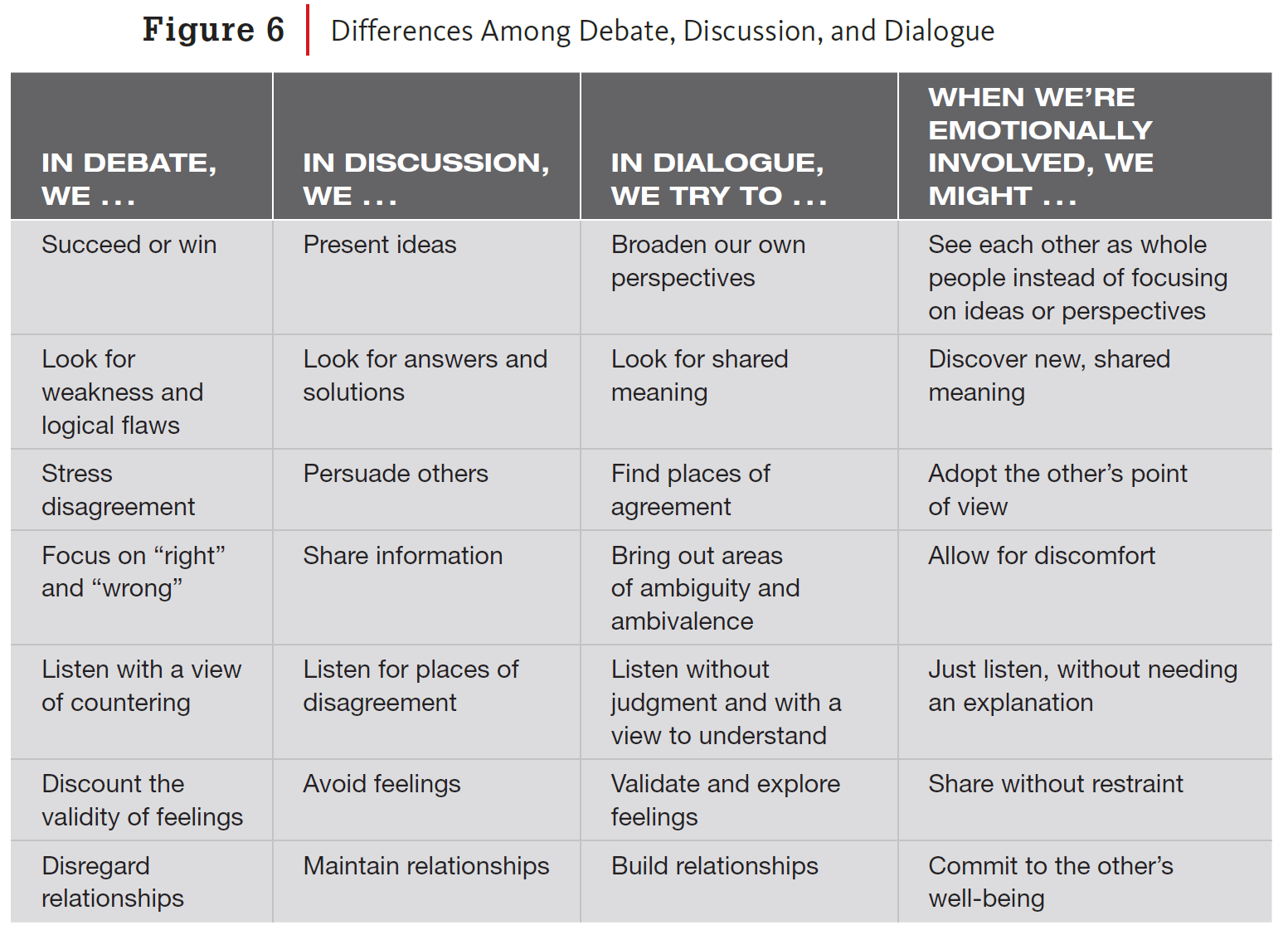
This matrix, adapted from other sources (see below), shows students how to move from debate to dialogue—and through emotional involvement, my addition for more personal and community conflicts.
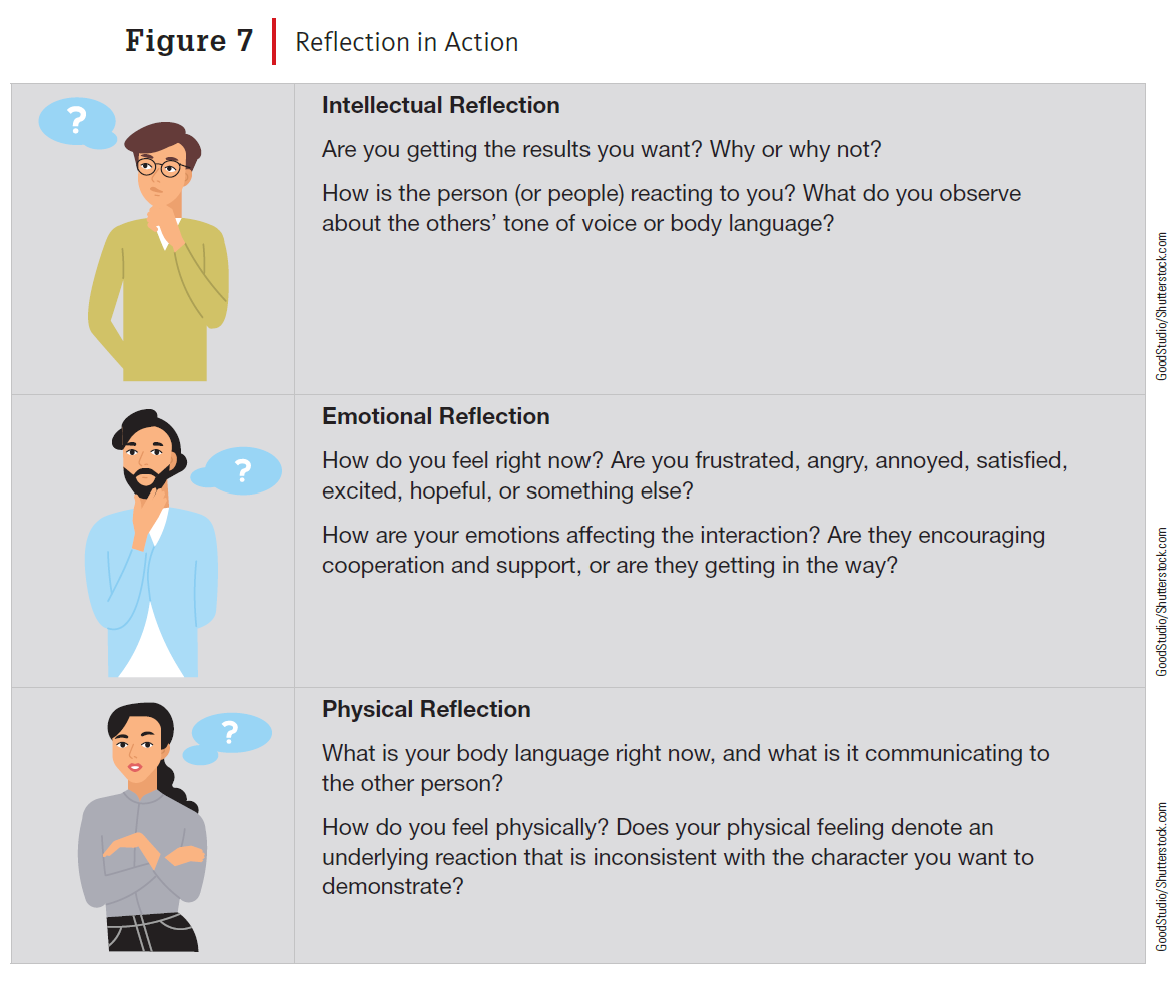
Students may practice reflection after presentations or activities, but reflecting “in action” is a way to zoom out and get perspective during an interaction that isn’t going well. Questions about emotional and physical reactions deepen students’ typical intellectual reflections in the classroom and encourage students to take action—even to support those who disagree with them.
Students also will learn from discussions about character. When they stand for their beliefs, they demonstrate courage, but changing their beliefs also takes courage (and humility). Protests also may veer from challenging injustice to self-righteousness, an extreme of courage that looks like moral superiority and absolute certainty.
Protesting demonstrates compassion for one side, but so does seeing the other side’s pain. In addition, students are vulnerable when they protest: they risk emotional exposure and being “doxxed,” identity exposure they might consider unbearable.
Figure 6 is adapted from “Creating Community Across Difference,” Intergroup Dialogue Project, Cornell University, 2018, which is adapted from University of Michigan Program on Intergroup Relations, 2008. Original source: Daniel Yankelovich, The Magic of Dialogue: Transforming Conflict into Cooperation (New York: Simon & Schuster, 1999). Adapted with Eric Clay, multi-faith and secular chaplain.
Small Talk Phrases

Matt Abrahams promotes his new book in an attention-grabbing CNBC headline: “The No. 1 phrase people who are good at small talk always use, says Stanford public speaking expert.” Of course, I was curious about the phrase, and it is . . . “Tell me more.”
Although the headline is hyperbolic (“No. 1” and “always”), Abrahams is encouraging what any business communication faculty member would encourage: use open-ended questions and phrases. He also recommends, “What excited you about that?” or “Wow, what happened next?” or “How did you feel when that happened?” Abrahams’ point is to avoid “shifting” the conversation to yourself. However, sometimes it’s useful to relate to a speaker by sharing your own experience. Also, these phrases are useful when, at times, you’re not sure what to say in response.
Students might choose phrases that feel more natural to them, for example, “I’d like to hear more about __,” “Say more about that,” or, simply, “Really?” I recently heard, “Can you take that thinking further along the track for me?” I liked that approach given the situation (a complex political idea). In similar situations, I’ve heard others offer a noncommittal “Interesting,” which felt like a polite, “Please stop talking now.”
In addition to “small talk” situations, students could practice these phrases during presentation Q&As.
New Euphemism for "Feedback"

A WSJ article reports that “feedback” causes anxiety, so companies are using “feedforward” instead. The latest in corporate euphemisms, feedforward could soften comments on students’ writing and presentations, but I’m skeptical.
Attempts for gentler language for “negative” feedback are nothing new. Managers (and business communication faculty) typically use “areas for improvement,” “development areas,” or “constructive feedback.” Now, apparently, “feedback” is itself causing problems.
Other terms are emerging. Microsoft is using “perspectives” instead of “feedback,” “performance development” is replacing “performance management,” and “connect” session is replacing a “review.” How long before the patina of these terms wears off and they, too, become anxiety producing?
What’s the problem companies are trying to solve with new terms? On the surface, ”feedforward” is more accurate, emphasizing changes for the future, so I get it. But I have to question whether the term is the issue. Aren’t the real issues that people have difficulty facing what needs to change and that managers continue to struggle with delivering feedback? I’m a fan of Kim Scott’s work and book, Radical Candor, which encourages a supportive environment that makes difficult feedback easier to swallow.
For now, I think our student “tutorials” or “coaching sessions” are safe.
The Art of the Business Leader Interview

David Rubenstein’s Peer to Peer show on Bloomberg TV is a window into business and political leaders’ lives—and how to approach such an interview. The website, also a YouTube channel, has dozens of interviews. I wish the representation were better, but students can watch someone who interests them and analyze the questions and answers.
In one recent clip, Galaxy Digital Founder and CEO Mike Novogratz refers to Sam Bankman-Fried as a “sociopath.” This segment illustrates how a leader admits his own failings: although he didn’t invest with with SBF, Novogratz acknowledges doing business with him and losing money. Then again, he says, “I just never assumed I’m dealing with a sociopath. It’s hard to risk-manage against that.”
Instructors might ask students to identify ways in which leaders demonstrates character dimensions, for example, authenticity, humility, integrity, and vulnerability.
Troublesome Article Headline About Women's Communication

A New York Times opinion piece by Adam Grant titled “Women Know Exactly What They’re Doing When They Use ‘Weak Language’” has been gnawing at me. What troubles me is not the advice but the headline, which sounds like women are purposely manipulating the situation—perhaps more so than any person would in a similar situation. I may be overly sensitive (disclaimer! weak language!), but “women know what they're doing" reminds me of a sexist throwback. Google the phrase and you’ll find references to leaning over a table for tips and other examples of how women dress and behave around men (for example, see this ESPN story).
Otherwise, Grant’s points are worth sharing with students. He summarizes:
Disclaimers (I might be wrong, but …), hedges (maybe, sort of), and tag questions (don’t you think?) can be a strategic advantage. So-called weak language is an unappreciated source of strength. Understanding why can explain a lot about the way women acquire power and influence — and how men do, too.
Grant offers good advice and cites several studies about hiring and promotion decisions:
By using a disclaimer (“I don’t know …”) and a hedge “(I hope …”), the women reinforced the supervisor’s authority and avoided the impression of arrogance. For the men who asked for a raise, however, weak language neither helped nor hurt. No one was fazed if they just came out and demanded more money.
I’m guessing that the headline-writer’s intention (not Adam Grant’s doing) was to capture attention—and perhaps the phrasing was harmless, complimenting women on using a strategy, whether purposeful or not, that works. But the phrase has a history, which is why I saved the article in a browser tab for more than a week.
One person who commented on the article pointed out inherent problems with the word “weak”:
I recommend we find an alternative to the phrase “weak language.” Weak language according to whom? A patriarchal world view? Let’s give it more dignity, the dignity it deserves. How about calling it “sensitivity to relationship” or “sensitivity to connection.” Something we need so much more of in our world today. (Anne Yeomans)
Others suggested “respectful” language. Some women lament being “between a rock and a hard place”—too weak or too assertive, nothing gets their voice heard.
Students will need to navigate these contradictions. Perhaps the best advice is to adapt to the industry, situation, and person—the same advice business communication faculty give to all students: to tailor to the context and audience as best they can.
Comms Related to the Supreme Court Decision

Business communication faculty brave enough to discuss the U.S. Supreme Court’s decision to restrict affirmative action in college admissions will find many communication examples for students to analyze. Here are a few to consider, and each requires careful facilitation. The first two are probably the easiest to manage and the most relevant to our courses.
Corporate responses: This article provides a few examples for students to analyze, considering the industry, customer base, mission, and other factors driving the response.
University responses: Cornell University’s president published a statement, and I imagine other university leaders have done the same. Students can analyze and compare messages.
Full text of the decision: This 237-page document is a bit overwhelming, but the document, in its entirety, illustrates one persuasive genre for a professional group.
Dissenting opinions: For more manageable reads, these two dissenting opinions serve as good examples of persuasive arguments.
Opinion letters: The WSJ and NY Times editorial board opinions offer useful contrasts. Students might find their own opinion articles to analyze.
Chronicle Recommendation for Full Disclosure Raises Character Questions

A Chronicle of Higher Education article suggests that academic leaders practice full disclosure when applying for jobs. The recommendation is to avoid issues later in the hiring process, and the decision tests candidates’ character, particularly integrity, courage, and authenticity. Our students face similar decisions.
Here’s the search consultants’ advice:
Be forthcoming and candid about any sensitive or confidential information that may affect your candidacy. Search committees and hiring managers—and I can’t stress this enough—hate surprises. So it’s critical to disclose a potential roadblock as soon as possible once you’ve decided to become a candidate.
Hiring managers “hate surprises” for a few reasons. First, no one wants to waste time. If a candidate, even at an entry-level, will be ruled out, HR wants to know early on. Students with a criminal record of theft should not bother applying for an auditing position. Second, employers want to hire people with integrity, which includes being honest up front. This takes courage, a worthy topic of discussion with our students. Yes, students risk missing out on a job offer, but better to remove themselves from the process early than wait until the third interview or, worse, after they’re hired. When I worked in HR, terminating hired employees after a discovery was a painful process, and this only makes it harder for someone to find another job.
In their list of disclosures, the search professionals include legal issues, negative publicity, barriers to relocating, and leaving previous employers on bad terms. Students might want to discuss gaps in employment, negative social media posts, family obligations, and job terminations—not all at once, of course. Depending on the situation, job market, industry, and so many other factors, students have difficult decisions to make about whether, how, how much, and when to disclose issues that might negatively affect their candidacy. Some of the advice in Business Communication and Character is rooted in Chalice Randazzo’s work: "A Framework for Resume Decisions: Comparing Applicants’ and Employers’ Reasons” (BPCQ, 2020).
Here’s an inspiring story about a researcher at Intel who decided to talk about his history of addiction during his job interview. In the end, what students choose to reveal reflects on their character. They might find this discussion and handout about the Character, Audience, Message (CAM) Model useful.
New Twitter CEO's First Email

With much-needed advertising experience, Linda Yaccarino joined Twitter and wrote her first email to staff, a good one for students to analyze. In addition to the email, below, Yaccarino posted her message in a Twitter thread.
Here are a few notes about the email:
Twitter employees are the primary audience. Secondary audiences might be Twitter users, the media, investors, and the public. As you’ll see, Elon Musk is significant too.
Yaccarino started on June 5, so it took a while for her first email. One meme shows a skeleton waiting for her second email.
She starts with a question designed to engage her readers. Then she compliments Elon Musk, her boss and a quite a force. For her first message, acknowledging him is probably important, although I found myself skimming this part. The next paragraph gushes on—in italics. Clearly, Yaccarino is speaking to Musk fans and free speech advocates with that last bit.
I’m wanting to know more about her: who is Linda Vaccarino? After her opening question, I expected something more personal, maybe about her background or her experience as a Twitter user.
The “global town square” refers to Musk’s goal for Twitter. After a quick mention, Yaccarino defines it after “Enter Twitter 2.0,” which, I guess, is a heading along with “The success . . .” That section loosely shifts to employees.
Her tone is enthusiastic, as we would expect. Morale has been low, with mass layoffs, harsh communication, and falling ad revenue.
As we see too often, her use of “literally” is colloquial and not quite right.
She uses a couple of rhetorical devices that I find: “wrapping your arms” and “heels” (the latter, a defined metaphor) and an attempt at alliteration: “person, partner, and creator on the planet.” We could call the “global town square” an allusion.
I’m not a fan of what I call random font enhancements: bold and italics in the middle of paragraphs or at the ends of sentences. Could she use better organization to emphasize key points?
I wonder how employees responded. Are they motivated? I’m not sure what anyone would do differently after reading the email? What was the purpose?
Building Twitter 2.0 Together
Hello Twitter!
People keep asking me: Why Twitter? So, I’ll tell you.
From space exploration to electric vehicles, Elon knew these industries needed transformation, so he did it. More recently it has become increasingly clear that the global town square needs transformation—to drive civilization forward through the unfiltered exchange of information and open dialogue about the things that matter most to us.
Have you ever been talking with someone particularly insightful and thought, You’re brilliant—everybody should get the chance to hear this. Or, I’m learning so much from you—can we do this again? Or maybe it’s as simple as, You should have the freedom to speak your mind. We all should.
Enter Twitter 2.0.
Twitter is on a mission to become the world’s most accurate real-time information source and a global town square for communication. We’re on the precipice of making history—and that’s not an empty promise. That’s OUR reality.
When you start by wrapping your arms around this powerful vision, literally everything is possible. You have to genuinely believe—and work hard for that belief. And in this moment of complete reinvention, we have the opportunity to reach across aisles, create new partnerships, celebrate new voices, and build something together that can change the world. And from what I can tell so far, you’re built for this.
The success of Twitter 2.0 is all of our responsibility.
We need to think big.
We need to transform.
We need to do it all together.
And we can do it all by starting from first principles – questioning our assumptions and building something new from the ground up. It’s rare to have the chance to put a new future into the hands of every person, partner, and creator on the planet.
That’s exactly why I’m here – with all of YOU.
So, let’s dig our heels in (4 inches or flat!) and build Twitter 2.0 together.
Linda
Another "I Wish You Well" Moment
Gwyneth Paltrow ended her headline-grabbing lawsuit with a whisper: “I wish you well.” Paltrow was sued by a retired optometrist for crashing into him on a ski slope. She defended herself, saying, “I felt that acquiescing to a false claim compromised my integrity.”
After the quick verdict in her favor, Paltrow leaned in and said quietly to her accuser: “I wish you well.” He responded, “Thank you, dear.”
I’ve been curious about this expression, which former President Trump said of Jeffrey Epstein’s partner, Ghislaine Maxwell. Trump defended his statement: “I'm not looking for anything bad for her. . . . I wish a lot of people well.” In other words, it’s just a nice thing to say.
But a Guardian article refers to Paltrow’s words as a “memorable kiss-off.” Urban Dictionary explains, “This is what privileged people say when they want you to forget you knew them. ‘I am sorry I have not responded. I have been very busy. I wish you well.’” A Quora user writes, “I use it only with people I never want to communicate with again. It's a hope they change, but I'm not going to stick around for it. It's a nice way of saying, ‘F#%# off.’”
Of course, tone and context matter. We don’t hear Paltrow’s voice, and the exchange is so short. Regardless, her accuser took it positively, as he described the exchange to reporters: “She said, ‘I wish you well.’” Then he said, “Very kind of her.”
We may never know whether she meant it a sincere wish for well-being. We do know that Paltrow was an actress before she started making Goop.
If you have nothing better to do today, you can read “The 9 Most Bizarre Moments” of the trial from The Hollywood Reporter.