

Chipotle CEO Generates Excitement

After a dismal three years of food-safety issues, Chipotle saw a strong first quarter, and CEO Brian Niccol is confident about the company's future. Since the outbreaks, part of Chipotle's turnaround plan was to introduce new menu items, but they did not prove successful.
In an interview, Niccol described new plans, which may include drive-thrus, longer hours, mobile ordering, or menu items that are more thoroughly tested. But Niccol resists offering deals and breakfast, despite what Bill Ackman, Chipotle's largest shareholder, advises:
“I’ve been very clear with him: Not now, Bill and I have had a couple of really good conversations. He may have some ideas that I don’t think are the right ones now.”
Here's the earnings call webcast. In the press release, Niccol further explained the company's plans:
"While the company made notable progress during the quarter, I firmly believe we can accelerate that progress in the future. We are in the process of forming a path to greater performance in sales, transactions, margins and new restaurants. This path to performance will be grounded in a strategy of executing the fundamentals while introducing consumer-meaningful innovation across the business. It will also require a structure and organization built for creativity, action and accountability. Finally, Chipotle will have a culture that is centered on running great restaurants, putting the customer first, innovating for today and tomorrow, supporting each other, and delivering on commitments. The future will be meaningful at Chipotle."
(Disclosure: I own a modest amount of Chipotle stock.) Image source.
Discussion:
- Assess the earnings call or press release. What business jargon do you identify? Is it too much, or is it appropriate for the situation and audience?
- Niccol is challenging Ackman's ideas, which is risky for a new CEO. How do you interpret his statement? Again, is what he says appropriate for the situation, or should he present his views differently?
- Would you say that Niccol is demonstrating courage in his statement about Ackman? Why or why not?
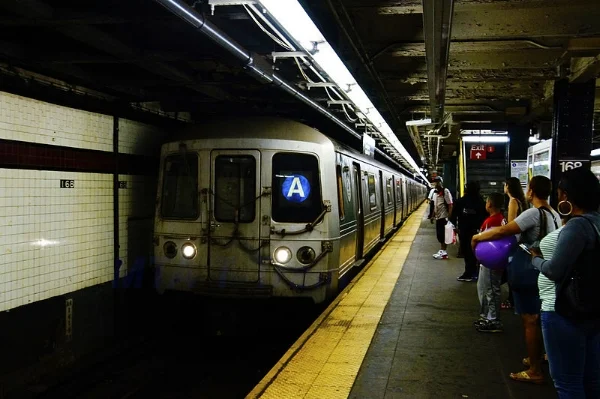
MTA Criticized for Lack of Transparency

Commissioners at the New York Metropolitan Transportation Authority (MTA) questioned increasing costs and whether the agency has been transparent. Of particular concern are additional costs of about $1 billion and cost overruns for a project that resulted in 19 instead of 32 subway stations getting renovated. One commissioner said, “It is indefensible that we did not receive this information prior to it being reported in the press." The governing body discovered the information from a Wall Street Journal article.
Chairman Joe Lhota, who was appointed last summer, acknowledged that the agency has been working on being more transparent:
“Not a second in a day goes by when I don’t think about transparency at this agency and what we need to do to provide information to all of you."
NY Mayor Bill de Blasio and New York City Council Speaker Corey Johnson requested more transparency about spending and service improvement measurements and asked for monthly briefings and an "evaluation of efficacy."
Discussion:
- How would you define transparency, and how does it relate to accountability?
- After reading more about the situation, how would you assess the agency's actions? Do you agree with the commissioners' assessment? If you believe a lack of transparency exists, do you think it's intentional? Does it matter if it is?
- Why do organizations lack transparency? What do they potentially gain and lose?
- What do you think an "evaluation of efficacy" means?
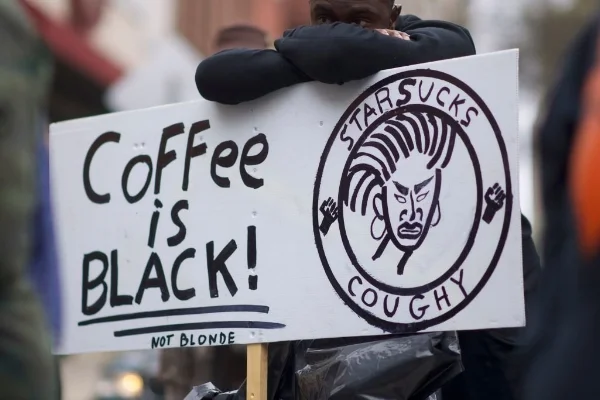
More About the Starbucks Bias Situation
After the arrest of two black men in a Philadelphia store, Starbucks announced that 8,000 stores will close on May 29 for racial-bias training. But are some skeptical about the impact that one day of training will have, and the company seems to be imitating Chipotle's decision to close stores for food safety training. On the other hand, the company could have blamed the employee who called the police, a crisis communication strategy we have seem in many other situations.

An article in the New York Times describes racial bias research in hospitality customer service and may tell us more about the incident in Philadelphia. In one study, researchers sent emails to hotels using different names that reflected gender and race, asking for restaurant recommendations. Responses indicated racial bias, as the authors describe: "Hotel employees were significantly more likely to respond to inquiries from people who had typically white names than from those who had typically black and Asian names."
In addition, researchers analyzed "politeness," for example, whether employees wrote "best" or "sincerely" before signing their name. They were more likely to use such words when responding to guests with names that sounded white, and the authors describe another finding for this group:
They were three times as likely to provide extra information — even when the initial inquiry was just about restaurants — to white than to black or Asian people.
In addition to training, the authors suggest periodic customer service audits and consistent scripts and policies.
In a turn, Philadelphia Police Commissioner Richard Ross has apologized to the two men who were arrested. In his original video, Ross defended the officers actions and said, based on a sergeant's experience at Starbucks, "they are at least consistent in their policy." But in the news conference, Ross says, "shame on me" and "I have to do better."
Discussion:
- What's your view of the research about customer service at hotels? What does the research potentially say about the situation at Starbucks?
- Have you experienced bias in a customer service setting? What was the situation, and how did you handle it?
- How well does Ross handle the apology in the news conference? How does his identity factor into his response? How does he demonstrate authenticity, vulnerability, and other leadership character dimensions?
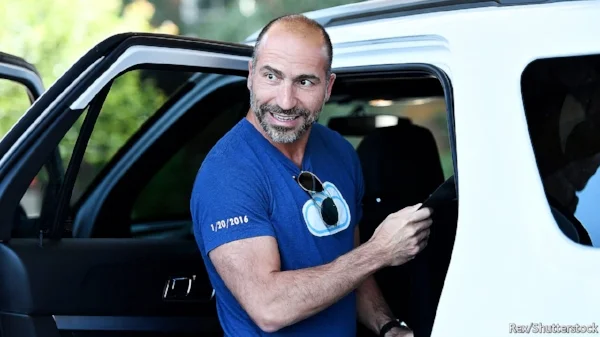
Uber CEO Compares Self-Driving Cars to Student Drivers
In defense of autonomous cars, Uber CEO Dara Khosrowshahi said, "Ultimately, self-driving cars will be safer than humans. But right now self-driving cars are learning. They’re student drivers.” On NBC's Today Show, Khosrowshahi confirmed that the company will continue its self-driving program despite a fatal crash last month in Arizona.
In the interview, when asked about Facebook and other technology companies facing privacy and safety issues, Khosrowshahi said he considers, "the challenges of technology getting into everyday life and the responsibilities that come with it." He repeated "responsibility" twice more within about the first minute of the interview. Like Mark Zuckerberg during the recent hearings on Capitol Hill, he said, "I welcome regulation," and "we're partnering with regulators."
Also as Zuckerberg clarified with lawmakers, Khosrowshahi said they don't sell data; however, he also said they don't "monetize data," which Facebook cannot say with its business model to sell ads.
Discussion:
- What principles of persuasion does Khosrowshahi demonstrate in this interview? Consider logical argument, emotional appeal, and credibility.
- What principles of leadership character does he demonstrate?
- What do you consider the strengths of this interview? What could Khosrowshahi improve?
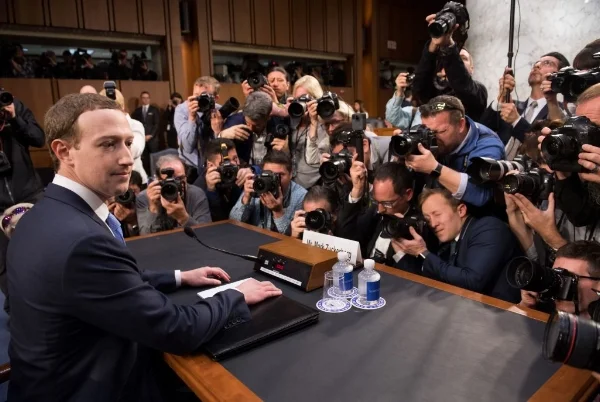
Zuckerberg Testifies Before Congress

In many hours of testimony, Facebook CEO Mark Zuckerberg did his best to address lawmakers' questions about data privacy and, surprisingly, how Facebook works. Senators and Members of Congress asked questions about texting, about how the company makes money without a subscription model (Zuckerberg: "We sell ads."), whether Facebook owns users' data, whether Facebook sells data, how many "data categories" Facebook collects, and so on. This video compilation does not reflect well on our lawmakers.
Zuckerberg himself seemed surprised by some of the questions and wasn't fully prepared to answer them. A reporter captures a photo of Zuckerberg's notes, which are what we would expect, but it's fun (in a voyeuristic way) to see them.
On the second day of testimony, questions improved, and many focused on Facebook's treatment of conservative political views. These were fair questions, and Zuckerberg admitted they had made mistakes in screening some content as inappropriate. But several representatives seemed to ask similar questions about this and about the consent agreement with the FCC, as if the question hadn't been asked just moments earlier.
In a New York Times Daily Podcast, reporters discussed Zuckerberg's continued references to starting Facebook in his dorm room. They believed the strategy was a good one for demonstrating his humanity (emotional appeal) but was potentially damaging for his credibility because it reminded lawmakers that he is only 33 years old. A seat chair, which internet trolls called a "booster seat," didn't help.
Wall Street responded well to Zuckerberg's testimony, with the stock price rising both days.
Discussion:
- What's your view of Zuckerberg's testimony? Watch as much as you can tolerate.
- Should lawmakers have a better understanding of Facebook? What is their level of responsibility?
- Identify a few specific questions and Zuckerberg's answers. What leadership character dimensions does he demonstrate, and how could he have improved?
- Watching the testimony, how would you assess his authenticity? Do you know more about him as a person? Should we?
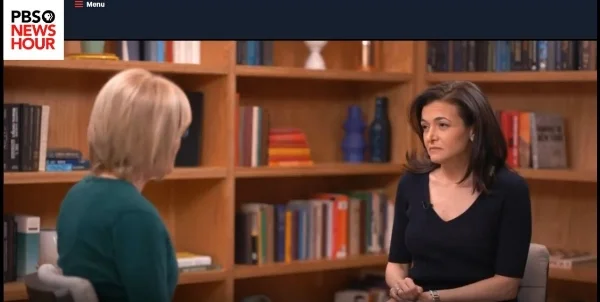
An Interview with Sheryl Sandberg

During an interview with Judy Woodruff on PBS NewsHour, Facebook COO Sheryl Sandberg admitted mistakes and discussed plans for improving users' privacy. Sandberg didn't shy away from tough questions about Facebook's role in protecting users' information and admitted that the site had an important role during the 2016 presidential election, at least to get people to register to vote.
On whether Cambridge Analytica still has data, Sandberg admitted, "We were given assurances by them years ago that they deleted the data. We should’ve followed up. That’s on us. We are trying to do a forensic audit to find out what they have." She also said the company had "under-invested" in ways to protect users' information.
Viewers may notice that Sandberg repeatedly says versions of "That's a very good question." This could be a tactic to delay responding, or it could be that Woodruff asks good questions! Sandberg would be the first to acknowledge that many of the questions are ones the company leaders are asking themselves at this point. As pioneers, Facebook executives are reconsidering how people use the site and for what purpose.
Discussion:
- Assess Sandberg's presentation skills. How well does she deliver her ideas and address questions?
- What principles of persuasion does Sandberg demonstrate in the interview?
- What else, if anything, could Sandberg have said during this interview to rebuild trust in the company?
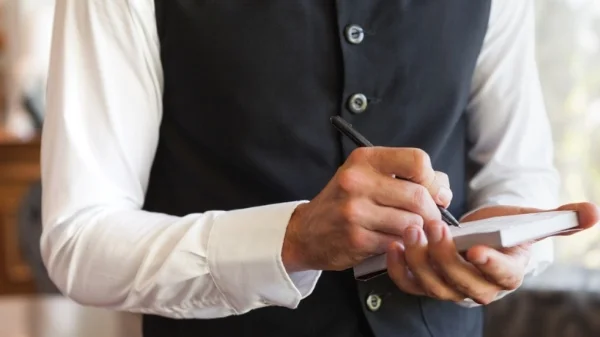
Defense for Rudeness: "I'm French"

A waiter in at Milestones Bar + Grill in Vancouver, British Columbia, was fired for being rude. Guillaume Rey doesn't argue the point, but he has filed a lawsuit claiming his termination is discriminatory.
As part of the suit against the parent company, Rey said the decision was "discrimination against my culture," which “tends to be more direct and expressive." On the other hand, Rey signed documentation with the restaurant that states, “intentionally speaking to a Guest or Associate in a rude or unfriendly manner" may be cause for termination.
The restaurant tried to get the case dismissed but failed. A judge explains the ruling:
Given that there is at least some evidence supporting an inference that Mr. Rey’s ancestry was a factor in the termination, and given how little other information I have about what happened, I cannot find that the Restaurant has met its burden on this application.
Discussion:
- Read the court's findings. What were the restaurant's arguments? What are Rey's arguments?
- Do you agree with the judge's decision at this point? Why or why not?
- How does this situation demonstrate humility or a lack of humility?

FB Admits Mistakes and Makes Promises

After five days of silence, Facebook CEO Mark Zuckerberg is addressing new criticism about privacy issues. Recent reports describe how Cambridge Analytica used data from about 50 million FB users without their permission, possibly to influence voters during the 2016 presidential campaign. Although some users gave permission for their information to be shared, their "friends" didn't, and this gave developers enormous amount of data about people's preferences. In addition, Cambridge claimed it had deleted data in 2014, but new reports indicate it did not.
Now Zuckerberg is visible in the media and has issued a statement that included the company's responsibility and failings:
We have a responsibility to protect your data, and if we can’t then we don’t deserve to serve you. I’ve been working to understand exactly what happened and how to make sure this doesn’t happen again. The good news is that the most important actions to prevent this from happening again today we have already taken years ago. But we also made mistakes, there’s more to do, and we need to step up and do it.
He also told CNN, "I'm really sorry that this happened." He promised to limit developers' access to data in the future.
Facebook also published a full-page newspaper ad in the New York Times on March 25.
Discussion:
- How does this situation represent issues of integrity and trust?
- Read Zuckerberg's full statement. Which parts do you find most and least convincing?
- How is the statement organized? Is this the best approach, or could other organizational strategies have worked better?
- Assess Zuckerberg's writing style. Which principles of business writing are followed, and which are not?

Turnaround for Martin Shkreli
We see a different Martin Shkreli from the one criticized for smirking during a congressional hearing on Capitol Hill in 2016. Shkreli ran Turing Pharmaceuticals when the company was accused of raising drug prices 5,000% in 2015. At the time, he was only 28 years old and was called "the most hated man in America."
Last week, Shkreli was sentenced to seven years in prison for fraud committed while he was a hedge fund manager and while running another drug company, Retrophin.
Shkreli pleaded for leniency. According to a CNBC report, he "broke down in tears." Another article summarizes his statements in court:
"The one person to blame for me being here today is me," a choked-up Shkreli told a judge before she imposed the prison term in Brooklyn, New York, federal court.
"Not the government. There is no conspiracy to take down Martin Shkreli."
"I took down Martin Shkreli with my disgraceful and shameful actions."
"This is my fault. I am no victim here," Shkreli said, before breaking down into tears as he promised not to let his lawyer Benjamin Brafman down in his efforts to contribute to society.
"Do not feel bad for me," Shkreli told a packed courtroom that included supporters and family members, many of whom had written letters asking Judge Kiyo Matsumoto to spare him from a harsh sentence.
And he had a message for the investors he duped: "I am terribly sorry I lost your trust. ... You deserve far better."
"I was never motivated by money," Shkreli said. "I wanted to grow my stature and my reputation."
"I am here because of my gross, stupid and negligent mistakes I made."
Discussion:
- Let's assume Shkreli's statements are sincere. How could you explain Shkreli's smirking in 2015 at such as serious hearing and his behavior more recently?
- Do you believe Shkreli's statements are sincere? Why or why not?

More Companies Take Action to Curb Gun Sales

Dick's Sporting Goods has taken a strong stance on gun control. In a statement, the company announced it will no longer sell assault-style rifles and will no longer sell firearms to people under 21 years of age. The statement dances the fine line between both sides of the gun control debate:
We support and respect the Second Amendment, and we recognize and appreciate that the vast majority of gun owners in this country are responsible, law-abiding citizens. But we have to help solve the problem that’s in front of us. Gun violence is an epidemic that’s taking the lives of too many people, including the brightest hope for the future of America – our kids.
Walmart also announced it will no longer sell to people under 21 years of age. The company ended some firearm sales in 2015, so this policy further restricts what people can purchase when.
Companies are in a tough spot. Dicks, Walmart, Delta, and other companies have suffered backlash for their decisions, including people promising to boycott.
Discussion:
- Compare Dick's and Walmart's statements. How do they differ? Which is more effective and why?
- Describe Dick's choices. What are the risks and rewards of the announcement?
- Should other CEOs jump into the controversy? How might the decision depend on industry, customer base, or the leader him- or herself?

Companies Distance Themselves from the NRA

Following the school shooting in Florida, several companies are distancing themselves from the National Rifle Association. The organization lists many member benefits on its website, including travel and insurance discounts, but these are shrinking as more companies are discontinuing services.
For example, several major car rental companies—Enterprise Rent-A-Car, Alamo Rent a Car, National Car Rental, Avis, Budget, and Hertz—and major airlines, such as United Air Lines and Delta, will eliminate discounts for NRA members.
The NRA posted a statement on its website to deflect blame, reinforce its mission, and deny the impact of these companies' actions:
FAIRFAX, VA – The more than five million law-abiding members of the National Rifle Association have enjoyed discounts and cost-saving programs from many American corporations that have partnered with the NRA to expand member benefits.
Since the tragedy in Parkland, Florida, a number of companies have decided to sever their relationship with the NRA, in an effort to punish our members who are doctors, farmers, law enforcement officers, fire fighters, nurses, shop owners and school teachers that live in every American community. We are men and women who represent every American ethnic group, every one of the world’s religions and every form of political commitment.
The law-abiding members of the NRA had nothing at all to do with the failure of that school’s security preparedness, the failure of America’s mental health system, the failure of the National Instant Check System or the cruel failures of both federal and local law enforcement.
Despite that, some corporations have decided to punish NRA membership in a shameful display of political and civic cowardice. In time, these brands will be replaced by others who recognize that patriotism and determined commitment to Constitutional freedoms are characteristics of a marketplace they very much want to serve.
Let it be absolutely clear. The loss of a discount will neither scare nor distract one single NRA member from our mission to stand and defend the individual freedoms that have always made America the greatest nation in the world.
Discussion:
- Did these companies make the right decision? Some NRA members are boycotting them as a result.
- In its statement, the NRA refers to companies' "shameful display of political and civic cowardice." Do you see their actions as cowardice, courageous, or something else? What is the difference?

Students Fight for Gun Control

After the school shooting that killed 17 people in Florida, students across the country are protesting for tighter gun control laws. High schoolers left their classes to confront politicians on their failure to change laws and for taking money from the National Rifle Association. Delaney Tarr was one of the vocal students:
"We've had enough of thoughts and prayers. ... If you supported us you would have made a change long ago and you would be making change now. So this is to every law maker out there. No longer can you take money from the NRA ... because we are coming after you."
Adding fuel to the controversy, some GOP members have accused students of being hired actors. Rep. Daryl Metcalfe criticized the protests:
“This morning I was working out and listening to the news about ‘students’ being bussed in to the Florida Capitol. The hypocrisy of the left struck me! They expect lawmakers to listen to the policy advice of 18 year old and younger ‘students’ who are advocating for gun control, but they do not believe 18 year olds who are old enough to serve on the battlefields of Afghanistan are old enough to purchase a rifle.”
Other Republicans, such as Marco Rubio, contradicted such messages, calling claims that students are actors “the work of a disgusting group of idiots with no sense of decency.”
Discussion:
- In what ways are students demonstrating courage? What obstacles do they face as they protest for greater gun control?
- Assess students' messaging. How do they balance emotional appeals and logical arguments? Which are most effective in this situation?
- What do Republicans want from this controversy? In other words, what are these lawmakers' interests? How do their criticisms of the students help or hurt their case?

Adam Rippon Demonstrates Authenticity and Questions Pence
U.S. Olympic figure skater Adam Rippon has been public about being gay and having a history of an eating disorder. Rippon says he felt pressure to fit a particularly body image and sometimes starved himself to achieve it.
In January, Rippon said he would refuse a meeting with Vice President Mike Pence because of his support of "conversion" therapies, attempts to change someone's sexual orientation or gender identity. Pence denied the claim and expressed support for all athletes:
“The accusation is totally false with no basis in fact," Alyssa Farah, Pence's press secretary, stated. "But despite these misinformed claims, the Vice President will be enthusiastically supporting all the U.S. athletes competing next month in Pyeongchang.”
However, an NBC article identifies a message on Pence's website that supports Rippon's claim:
Under the headline "Strengthening the American Family" and just below his stated opposition to same-sex marriage and anti-discrimination laws protecting "homosexuals," Pence's platform advocates that resources "be directed toward those institutions which provide assistance to those seeking to change their sexual behavior."
Discussion:
- What's your view of Rippon's statement?
- Explain VP Pence's statement given his documented platform? How do you reconcile the claims?
- In what ways does Rippon demonstrate authenticity?

Critics Say Bank of America Fees Hurt People with Less Income

Customers want Bank of America to stop charging fees for accounts with low balances. The company ended its free checking account and will start charging $12 per month.
Critics say the decision disproportionately hurts low-income consumers. The president of a financial advocacy organization explains the consequences:
“The debate over Bank of America’s accounts and fees points to a larger economic justice issue — people with less income pay more to get cash, make payments, and conduct their business. Without access to safe and affordable bank accounts, low-income consumers often turn to costly alternative financial services, such as currency exchanges or check-cashers. The bottom line is: the most financially vulnerable need more and better options to transact their business and participate in the financial mainstream.”
Few big banks still have free checking options because they are expensive to maintain. Banks prefer to move customers to digital solutions. But many low-income people don't have smartphones or reliable internet access. More than 287,000 people have signed a Change.org petition.
Discussion:
- What's your view? Is Bank of America being unfair, or is this just a good business decision?
- What is the value of a petition? On what principles of persuasion does a petition rely?
- How well does the image on the petition site, shown here, work? The emotional appeal is obvious. Does it help or detract from the message?

Best and Worst Super Bowl Commercials
The Washington Post published its list of best and worst commercials in the 2018 Super Bowl. As usual, all ads were heavy on humor and other forms of emotional appeal.
The most popular ad seems to be "It's a Tide Ad," which pokes fun at Super Bowl ads for beer, jewelry, cars, and so on.
"Alexa Loses Her Voice" was also popular. Alexa is sick (with the flu?), and replacement Alexas don't live up to her standards, failing to give directions, set the mood appropriately, and play country music.
In the Post's worst list is a Dodge Ram ad that used a Martin Luther King quote. The company confirmed that it worked with his estate for the appropriate approvals, but not everyone thinks it's wise to use MLK's words to sell cars.
Discussion:
- Which were your most and favorite Super Bowl commercials? On what do you base your assessment?
- What's your view of the Dodge Ram ad?

Questions of Transparency
The long-awaited memo written by Republican staff members about potential impropriety from the Justice Department and F.B.I in the Russia investigation has been revealed. Now, The New York Times editorial board is calling, once again, for President Trump to reveal his tax returns:
Since the Republicans are now on board with greater transparency, they will no doubt push President Trump to release his tax returns, as every other major-party presidential nominee has done for the past four decades, won’t they?
How about the White House visitor logs, which the Trump administration started hiding from the public last year? Or, say, the names of all foreign governments and officials who have stayed — at their own or at American taxpayers’ expense — at Mr. Trump’s Washington hotel, at his Mar-a-Lago resort in Florida or at his golf courses and his other businesses since he became president? Or the names of every foreign business with which the Trump Organization has a financial relationship, especially in countries where America has sensitive foreign policy interests, like China, India, Russia, Turkey or Saudi Arabia?

The reasoning sounds like reciprocity, but the argument may not get no more traction now than it did during the presidential campaign. A Pew research study in January 2017 showed that 60% of those surveyed believed Trump "has responsibility" to release his returns. Although some were adamant about the release at the time, the Wall Street Journal, for example, reported that the returns wouldn't tell us much anyway.
Discussion:
- What are the advantages and downsides of President Trump revealing his tax returns?
- Read the entire opinion piece. What other arguments do the authors make?
- Do you agree with their reasoning? Why or why not?
- How would you describe the tone? Does the approach help or hurt the argument?

Controversy About Apple's "What's a Computer?" Ad
Apple's upbeat "What's a Computer?" commercial isn't winning a lot of fans. The long version on YouTube shows a child using an iPad to video chat with a friend, send a picture, type a paper, take a picture, pay for food, draw, and read a comic book. When asked by a woman we assume is the mother, "What you doing on your computer?," the child responds, "What's a computer?"

Cute? Many people think not. According to a Business Insider article, some find the ad "infuriating."
Discussion:
- What did Apple hope to accomplish with this ad? To what extent did the company achieve its purpose?
- We might say this is a lesson in humility for Apple. How do you see it?
- Why do you think people are so angry about it?

Morgan Stanley Clarifies a Termination

In December, a female reporter accused a former congressman who was hired as a managing director at Morgan Stanley of sexual harassment. Morgan Stanley fired Harold Ford Jr., and he lost his gig as a frequent commentator on MSNBC.
Ford had maintained his innocence, and now, the company is saying Ford was not terminated for sexual harassment but was let go because of other misconduct:
" Morgan Stanley would like to clarify the circumstances of Mr. Ford’s departure. We take allegations of inappropriate conduct seriously, The press has reported that Mr. Ford was terminated for sexual misconduct. He was not. We have not received any internal allegations of sexual harassment or misconduct involving him either before or after his separation became public. As previously stated, his separation was based on corporate policy.”
The statement is curious because it mentions only internal allegations—or maybe I'm reading into it too much.
Discussion:
- How do you read the statement and possible distinction between internal and external?
- Why would Morgan Stanley issue such a statement two months after Ford's termination?

Shark Tank Episode Illustrates Lack of Listening and Humility

The owners of Birddogs didn't do very well on Shark Tank. In Season 9, Episode 14, investors grilled the makers of gym shorts with built-in underwear and were skeptical about their responses.
At some point, Kevin O'Leary stopped the discussion to ask how they thought things were going. They didn't say much at that point, but viewers knew the answer: they probably wouldn't get a deal. At the end, Daymond John, the clothing expert and most likely partner, said, "You were also telling us about how you're better than everybody else. . . . I think it's a very elitist attitude, and I just wouldn't be able to work with you."
The entrepreneurs spoke in generalities about how their marketing was better than that of anyone else. They also claimed a 40% email marketing open rate, while their competitors had only 4%, which the sharks didn't believe.
When Lori Greiner was asking questions, one of the owners kept trying to jump in. He didn't demonstrate good listening skills.
Perhaps the worst of it was at the end. In closing, one of the men was incredulous about why they didn't get a deal.
Discussion:
- Watch the episode (available on Hulu). How well do you think the team handled the pitch? Do you share the sharks' view that they were arrogant and that their numbers "didn't add up"?
- How do you assess their presentation skills? What would have improved their delivery?
- How could they have listened and demonstrated humility? Try to give specific examples.

Amtrak Leaders Take Responsibility
Amtrak's leaders have apologized for a train crash in Washington that left three people dead and about 100 more injured. Two of the men who died were train enthusiasts who traveled together to experience the new route.
In the past, Amtrak has been slow to apologize. This time, the response is better, yet not enough for some, as you see in this response on Twitter.

The president and CEO's full message is below:
To our customers,
On behalf of everyone at Amtrak, I want to share that we are deeply saddened by the tragic event involving train 501 on December 18th. We are profoundly sorry for those who have lost a loved one, were injured, or are otherwise impacted by this horrible event. At this time, our primary concern continues to be caring for our customers and employees, and we are using every available resource to assist those affected. We share everyone’s sense of urgency to identify exactly what caused this to happen, and we continue to fully cooperate with the investigation being led by the NTSB.
If you are traveling with us during the holiday season, I want to assure you that Amtrak remains committed to your safety. Our primary focus is and will always be getting you to your destination safely, comfortably, and efficiently. We are truly privileged to serve you and thank you for your continued patronage.
Richard Anderson
As always in these situations, Amtrak provided regular service updates on its website, and this apology is an improvement. But, after several similar crashes, including those involving MTA trains, people want to know what will be done to prevent this from happening again.
Discussion:
- What's your view of the president's message? How well does the message meet principles of apologies?
- What else should the organization do now? How can it rebuild its image and assure people that Amtrak trains are safe?