Corona and Other Brands Capitalize on Eclipse

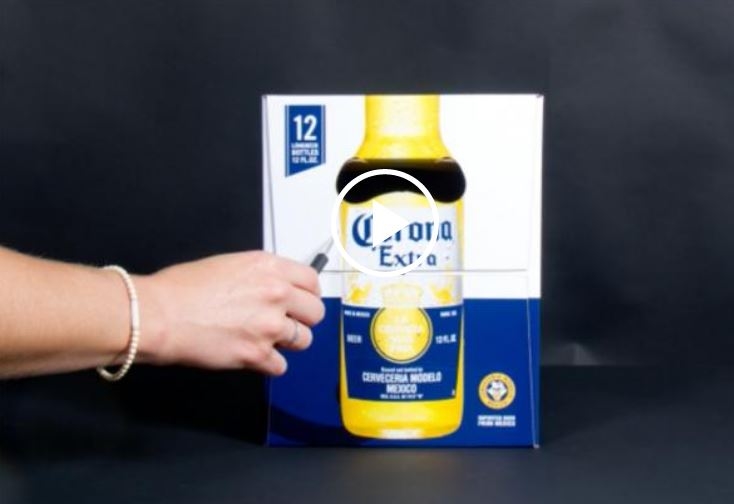
With the total eclipse coming Monday afternoon and glasses hard to come by, Corona is offering a solution. In a 35-second video, the company instructs us how to make a viewer from a beer box. TempApparently, solar corona is the beer's namesake, so the connection isn't entirely random. Ad agency Cramer-Krasselt created the campaign.

NASA Goddard posted a video to show how to make a viewer out of a cereal box, and a generic box is used as an example. But other companies have been using the eclipse to promote their brands.

A CNBC article identifies "17 clever ways brands are cashing in on the eclipse." Volvo, for example, designed a custom moon roof for viewing the eclipse from the road, but reports warn about traffic and accidents if people aren't careful while driving. Other companies are selling drinks, mattresses, train rides, houses, and a variety of food: half-moon cookies, donuts, pizza, and more.

Discussion:

  • What are potential downsides of a brand associating with the eclipse and using the event to promote products?
  • What is the most outrageous promotion you have seen related to the eclipse?
Read More

Irvine Finds Room for Admitted Students

TempUniversity of California, Irvine, is trying to do right by 800 students who accepted the college's admissions offer above the expected number. When making admissions decisions, colleges always consider their "yield," or the percentage of students who will enroll. Admissions officers admit more students than they have space for, assuming some won't come because of financial reasons or school preference.

Initially, Irvine rescinded offers from about 500 students, but it was too late for them to enroll in other schools by that time. They informed students during the summer about transcript and other issues, which happens in a few cases each year, but this is an extraordinary number.

Then university administrators began softening. They admitted that they used standards that were too strict in order to lower their enrollment numbers. The vice chancellor wrote a message to students, including this excerpt:

We heard from some students that this year's process was too stringent and our customer-service approach needs improvement. I acknowledge that we took a harder line on the terms and conditions this year and we could have managed that process with greater care, sensitivity, and clarity about available options. Also contributing to the angst many of you have experienced is our traditional communication and outdated telephone systems that did not serve us well in this circumstance. For those who felt ignored or mistreated, I sincerely apologize.

We are making every effort to do better, immediately. I have directed the admissions team to step up the personal outreach to notified students. We're bringing in more people to review appeals and answer phones. We are committed to correcting any errors swiftly and providing the help you need in an empathetic and understanding way.

A few days later, Irvine's chancellor also apologized, and the university found a way to accommodate 290 more students. His message included this excerpt:

The stories of our students whose college dreams were crushed by our decision to withdraw admissions to hundreds of students are heartbreaking. And unacceptable.

This process is not working. We are a university recognized for advancing the American Dream, not impeding it. This situation is rocking us to our core because it is fundamentally misaligned with our values.

The apology is notable because we see so few of them from university presidents. Writers for The New York Times and Insider Higher Ed commented on the rarity of apologies, partly because of the complexity of academic institutions.

Image source.

Discussion:

  • Analyze the chancellor's and vice chancellor's messages. What communication principles do they use? How do the messages compare in content, tone, word choice, and organization?
  • What should Irvine have done differently in this situation? What are all of the touch points with students that could have been improved?
Read More

BMW Denies Collusion

TempGerman automakers felt another blow this weekend when they were accused of colluding. The news came as Daimler recalls 3 million cars, and Audi recalls 850,000 to lower their emissions.

German officials found documents related to a potential technology cartel when looking for evidence about potential anti-trust issues related to steel. To avoid penalties, VW and Daimler admitted meeting regularly with competitors. Spiegel magazine quoted VW as saying five German carmakers met "several times a year" and had been "co-ordinating the development of their vehicles, costs, suppliers, and markets for many years, at least since the Nineties, to the present day."

One area of discussion was about the size of the technology to hold AdBlue, a chemical cleaning substance. Automakers agreed on a smaller tank to reduce costs and allow more room for accessories, such as audio, but this meant less efficient cleaning of exhaust gases.

In a statement, BMW denied the accusations:

"BMW vehicles are not manipulated and comply with respective legal requirements," and "The BMW Group categorically rejects accusations that Euro 6 vehicles sold by the company do not provide adequate exhaust gas treatment due to AdBlue tanks that are too small."

VW may have learned a lesson from the emissions scandal. A New York Times article summarizes how earlier admissions may have helped avoided trouble:

If Volkswagen had been honest with American officials [in May 2014 when Winterkorn received a memo about the inconsistent test results], the damage to the company's reputation and finances would very likely have been serious but not devastating. Similar cases suggest that Volkswagen would have paid a fine in the hundreds of millions of dollars.

Image source.

Discussion:

  • Assess BMW's strategy. What principles of persuasion is the company using? What crisis communication techniques would be useful to the company at this point?
  • To what, specifically, is VW admitting? What, specifically, is BMW denying?
  • Where's the line between meeting and collusion?
Read More

Walmart Apologizes for Racist Description

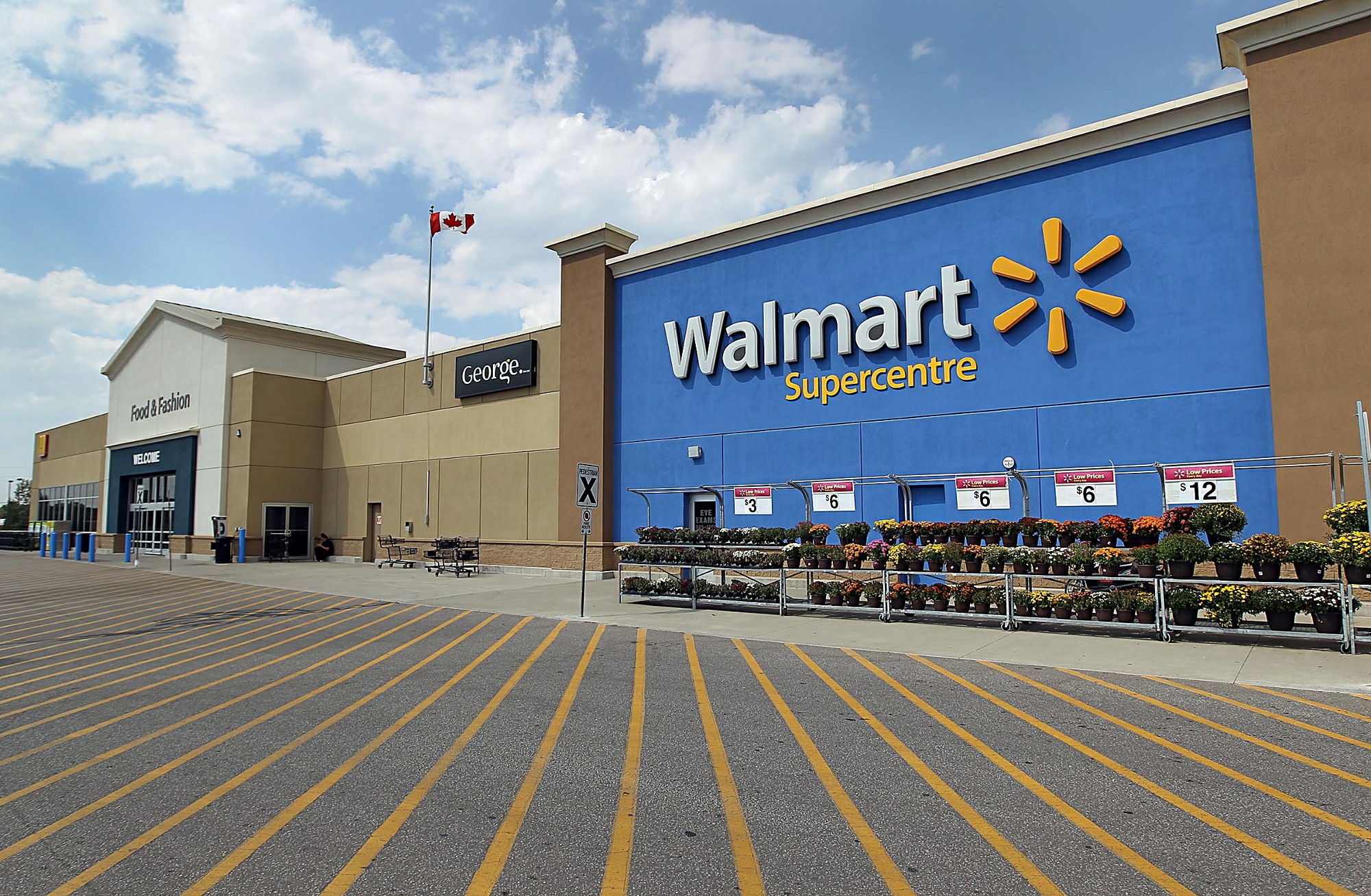
TempWalmart blamed a seller for a racist description of a hair weaving net. The blurb included the "N-word" as an adjective with "brown" for the product color.

Walmart removed the description and issued an apology, shown here.

TempThe seller, Jagazi in the United Kingdom, said someone was using its name to sell products on Walmart's website. Jagazi wrote a statement denying connection with the product but didn't mention the racial slur.

We woke up this morning to the news that someone has used our name, Jagazi, to list an item. Please beware that we are reporting this to as many people as we can and trying to get all the listings pulled down. The real Jagazi is a 100% black company for black people. People have often used our brand name to try and sell their products. Please be aware. Very sorry for all the distress this has caused. We are feeling the pain here as well. Most shocking!
 

An AOL article author criticizes Jagazi for "indicating some offense to the racial slur and much offense to someone selling fake Jagazi on Walmart's website." Do you agree or disagree?

Image source.

Discussion:

  • How does a mistake like this happen?
  • How well did Walmart handle the apology? Should the company take more responsibility? Why or why not?
  • Assess Jagazi's response. What, if anything, should Jagazi have done differently?
  • The AOL article has a punctuation error. Can you find it?
Read More

Did Ann Coulter Go Too Far?

 CoulterHave we had enough of customer complaints about airlines? The social media tenor seems to be trending in that direction, at least in the case of Ann Coulter and Delta Airlines.

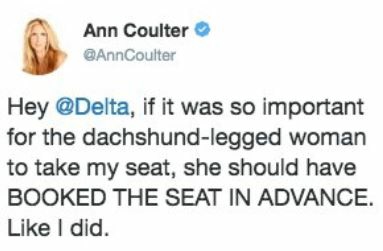
Author and media personality Ann Coulter paid $30 for a seat with more legroom but was "inadvertently" moved as the airline shuffled seats to accommodate other passengers. Coulter tweeted several attacks on the airline, including a couple about other passengers: the one at right and, in another tweet, "Immigrants take American jobs (& seats on @Delta)." Temp 2

Delta promised to refund Coulter's $30 and pushed back on her insults. In tweets and in a statement, the company admitted confusion:

We are sorry that the customer did not receive the seat she reserved and paid for. More importantly, we are disappointed that the customer has chosen to publicly attack our employees and other customers by posting derogatory and slanderous comments and photos in social media. Her actions are unnecessary and unacceptable.    

Each of our employees is charged with treating each other as well as our customers with dignity and respect. And we hold each other accountable when that does not happen.

Delta expects mutual civility throughout the entire travel experience.

We will refund Ms. Coulter's $30 for the preferred seat on the exit row that she purchased.

Brandwatch assessed sentiment on social media and found more negative responses to Coulter than to Delta.

TempImage source.

Discussion:

  • Do you find yourself sympathizing more with the airline or with Coulter? Why?
  • How does the timing (moving her seat within 24 hours of the flight) affect your response, if at all?
  • Where did Coulter perhaps cross a line? Read more tweets here.
  • How well did Delta handle the situation? What, if anything, should the airline have done differently on social media or in the statement?
Read More

Customer Service Gone Wrong

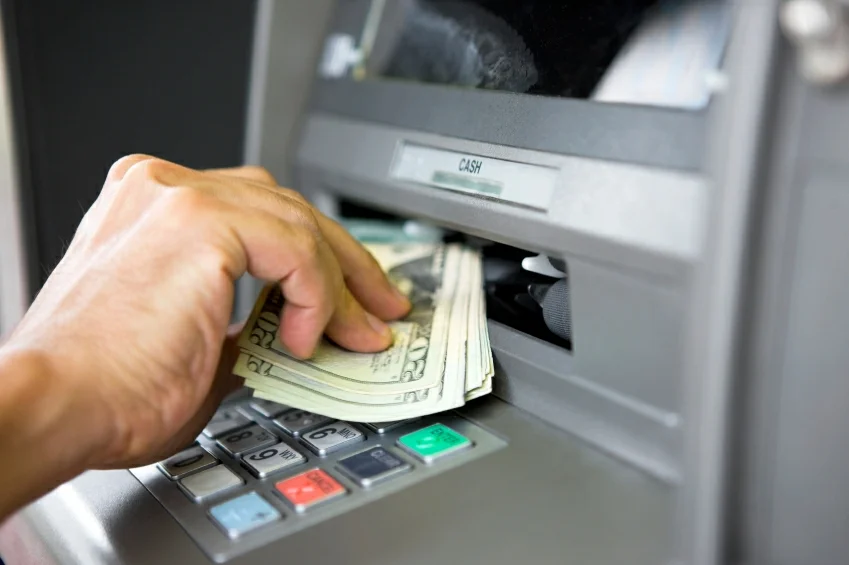
TempAn article in Ad Age details a scripted, annoying customer interaction at Chase bank. The customer waits on line for a teller and is encouraged to use an ATM instead (with a longer line). The conversation seems relentless:

"I can stand with you by the ATM and walk you through it -- it's really easy," he said.

Oh God. He was obviously working off some sort of script.

"Right, yeah," I said, "I've used them before. I'd just prefer to deal with a teller today." Head back down, eyes on my iPhone.

"Can I ask why?" (Oh jeez.)

The killer line was this rationale for using the machine: "You know, if you use one of the ATMs, you reduce stress for him [the teller]." Although the representative claimed the bank is adding tellers, it didn't take long for the writer to find headlines about Chase laying off 5,000 employees.

Encouraging people to use technology may be good for business, but customer service people need to read social cues to know when to end a conversation-and they should get the facts straight.

Image source.

Discussion:

  • Read the article for more detail. What verbal and body language cues did the bank representative miss?
  • What should the rep have said or done differently? What would have made the interaction sound less "scripted"?
  • Did the situation warrant the writer's reaction? Should he have simply done as suggested and used the ATM?
Read More

Women and People of Color Under-Represented in Technology Ads

TempA study published in Gender Issues analyzed video ads for technology products and services and found little diversity. The authors concluded that white men were most prevalent and women, people of color, older people, and children were missing or in lesser roles. 

The researchers also found that, when women were represented, they were portrayed as emotional or passive-not in control. In contrast, according to the authors, "technology itself is portrayed in masculinist terms-powerful, fast, strong, active-thereby reinforcing this association."

The results are interesting and perhaps a warning to technology companies who say they want to increase diversity among their employees. If companies want to boost the appeal of computer science degrees, they may look at how they present their products and services. 

Image source.

Discussion:

  • Do some research of your own. Watch a few technology product videos. Do you see what the authors found? 
  • Why do you think companies advertise their products and services in this way? Is it an oversight or intentional?
Read More

Gianforte Apologizes

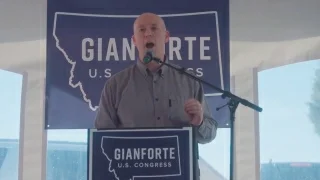
Greg Gianforte, the Montana Republican candidate running for Congress, "body-slammed" a reporter. The link to audio is at rightGianforte.

His apology letter has gotten high marks, and it does meet some of the criteria discussed in Chapter 7 for an effective apology. A professor emeritus of management and human resources at the Ohio State University's Fisher College of Business analyzed and annotated the letter for The Huffington Post:

Dear Mr. Jacobs: 

I write to express my sincere apology for my conduct on the evening of May 24. My physical response to your legitimate question was unprofessional, unacceptable, and unlawful [acknowledgement of responsibility]. As both a candidate for office and a public official, I should be held to a high standard in my interactions with the press and the public [acknowledgement of responsibility]. My treatment of you did not meet that standard [expression of regret].

Notwithstanding anyone's statements to the contrary, you did not initiate any physical contact with me, and I had no right to assault you. I am sorry for what I did and the unwanted notoriety this has created for you [expression of regret]. I take full responsibility [acknowledgement of responsibility]

I understand the critical role that journalists and the media play in our society. Protections afforded to the press through the Constitution are fundamental to who we are as a nation and the way government is accountable to the people. I acknowledge that the media have an obligation to seek information. I also know that civility in our public discourse is central to a productive dialogue on issues. I had no right to respond the way I did to your legitimate question about healthcare policy [declaration of repentance]. You were doing your job. 

In the hope that perhaps some good news can come of these events, I am making a $50,000 contribution to the Committee To Protect Journalists, an independent non-profit organization that promotes press freedom and that protects the rights of journalists worldwide [offer of repair].

I made a mistake and humbly ask for your forgiveness [request for forgiveness]

Sincerely, 

Greg Gianforte

On Twitter, @SorryWatch also compliments the letter, but she questions the source. The letter was part of a settlement, so perhaps the words aren't Gianforte's own? 

To me, the letter sounds a bit too perfect. Yes, it hits the right components but, for example, who says, "I....humbly ask for your forgiveness"? And some criteria for apologies discussed in the book are missing. It sounds like a lawyer wrote it.

Discussion:

  • Quiz question: Which criteria discussed in the book are missing from this apology? These may give us a clue about how the letter falls short overall.
  • What's your view of the letter? Is my assessment too harsh?
Read More
Vulnerability, 07: Persuasive Amy Newman Vulnerability, 07: Persuasive Amy Newman

Dove's Shampoo Bottles Touch a Nerve

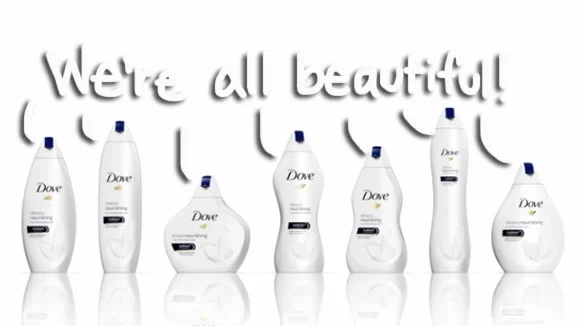
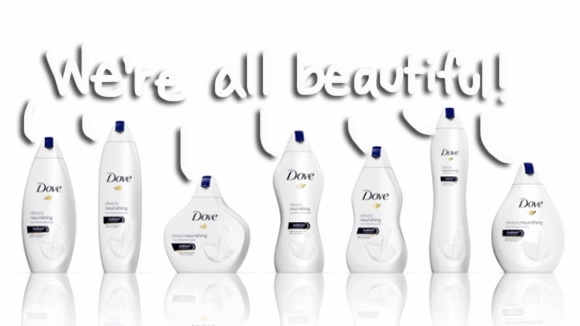
Dove-bottles__oPtDove's latest advertising from the "Real Beauty" campaign was mostly mocked. Shampoo bottles were designed to represent different body types, continuing with Dove's messaging about body positivity. Copy with the ad read,

From curvaceous to slender, tall to petite, and whatever your skin colour, shoe size or hair type, beauty comes in a million different shapes and sizes. Our six exclusive bottle designs represent this diversity: just like women, we wanted to show that our iconic bottle can come in all shapes and sizes, too.

Twitter responses were nasty, including Perez Hilton's round-up. (Read at your own risk.)

But an AdAge article reports little brand damage. A survey of 2,200 Americans found that 41% received a more favorable view of the brand, while only 9% felt less favorable. More people were likely to buy Dove products: 71% or 3 points higher than before seeing the ads.

Image source.

Discussion:

  • What's your view of the campaign? Is it "dumb," as Perez Hilton says, or something else?
  • How do you account for the disconnect between the nasty reaction (or should we say, the reports of the reaction) and the survey results about the brand?
  • Even the most cynical seem to agree that Dove is trying to do a good thing. Does no good deed go unpunished?
Read More
Courage, 07: Persuasive Amy Newman Courage, 07: Persuasive Amy Newman

United: It's Too Soon

Wendys-chicken-nuggets-promo_0United tried a fun Twitter campaign, but it failed. It's simply too soon after Dr. Dao was dragged off the plane to put themselves out there.

A 16-year-old from Nevada asked Wendy's how many retweets he would need to get free Chicken Nuggets for a year. The answer was 18 million.

Somewhere along the way, United jumped in and offered a free flight to the boy to any Wendy's in the country. It was a bold move, but people had fun at United's expense.

Discussion:

  • Do you agree with my assessment that it's too soon for United? What if they wanted a few weeks? Still too soon?
  • Or did the campaign backfire for other reasons?
  • How do you think Wendy's feels about the association with United?
  • What else should United be doing now to rebuild its brand?
Read More

DeVos Steps Up About Formatting Rules

Devos

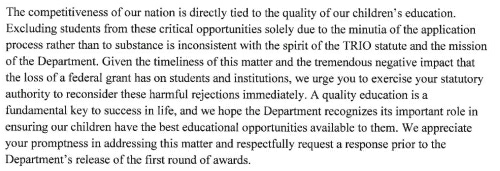
Two weeks ago, Upward Bound applications to help kids get into college were rejected for formatting errors such as line spacing. To protest, 32 members of the House of Representatives signed a letter asking the Department of Education to reconsider the grants that affected approximately 2,700 students; an excerpt is below.

Congress to DeVos

In response, Betsy DeVos, Secretary of Education, established a "new policy" that prevents program officers from using page limits and formatting as "mandatory requirements":

"Program offices may suggest page limits and formatting standards (such as font size, line spacing, and the like) but may not use ignoring these suggestions as a basis to reject grant applications."

In her letter, however, DeVos does not address the recently rejected applications.

Discussion:

  • What do you think DeVos should do at this point? What should she consider in her decision?
  • Assess the Representatives' letter. What principles of persuasion are used, and how could the letter be improved?
Read More
Integrity, 07: Persuasive Amy Newman Integrity, 07: Persuasive Amy Newman

Sunny Co. Renegs on a Freebie

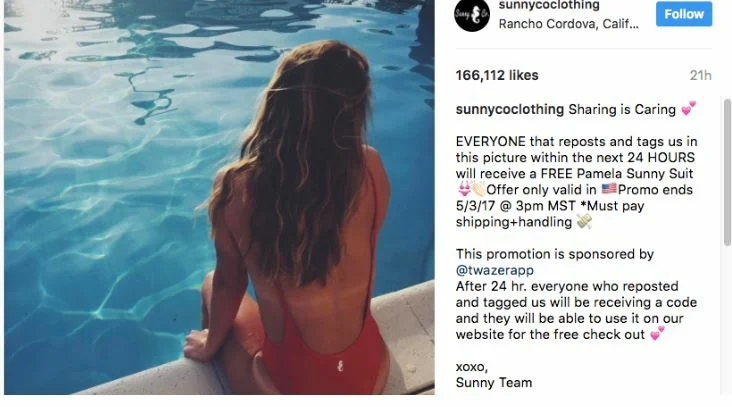
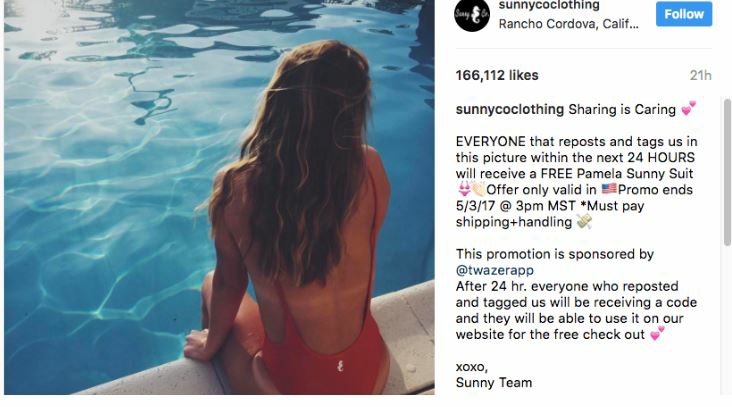
Sunny CoBe careful about offering unlimited free items. Sunny Co. Clothing company learned this lesson the hard way when it posted a message on Instagram.

Naturally, nearly "everyone" reposted the image hoping for a free suit, and people complained about their feeds being over-run with red bathing suits.

The company eventually posted some rules: "Due to the viral volume of participants, we reserve the right to cap the promotion if deemed necessary." They also warned of delays because of the "overwhelming volume of orders."

One good thing did come from the situation: Sunny Co.'s followers increased from 24.1 to 458,000. Now, whether that translates into sales is another question.

Discussion:

  • The company could have had some fun with this. What ideas do you have?
  • Should they have known better, or was the outcome too hard to predict?


Read More

Mall of America's Social Strategy

Mall of AmericaPR Daily News reports on Mall of America's successful "newsjacking," or taking advantage of news stories to promote business. Being close to the Mineapolis-St. Paul International Airport gives the mall the chance to lure travelers to shop when their flight is delayed.

Last summer, the mall wrote a blog post, "Flight delayed? 11 things to do at MOA," offering better options than wandering aimlessly like Tom Hanks in "The Terminal." Like a lot of malls these days (what's left of them), Mall of America is part amusement park.

Through social listening, the mall is responsive, but they also promote timely events, such as the mall's 25th anniversary, and greet people who announced celebrations at the mall. We can see the potential for creepiness here, but management believes people appreciate this.

The mall has a bunch of people writing posts, and manager Timothy Pate lets them have their own voice: "Mall of America happens to have a lot of quirky stories, and we aren't afraid to share those with our readers. We find when you really let your quirks shine through, readership goes up."

Image source.

Discussion:

  • From Chapter 3 in the text or from your own research, how would you define social listening?
  • I mentioned the concern about "creepiness." Where should social media managers draw the line? What are some examples of overstepping?
Read More

United Announces New Policies

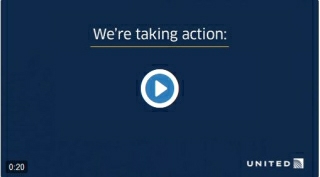
United actionUnited Airlines CEO Oscar Munoz has found some strength and a way out of the situation that angered so many around the world. The company admits that dragging a man off of a flight two weeks ago wasn't the best way to make room for four United employees.

The company has published "Changes We're Making" in an email to loyalty members, in videos, on its website, in a report, and in an interview with NBC News. The website statement begins as follows:

We are making changes to ensure that we always put customers first

By United Airlines

Earlier this month, we disappointed our customers and ourselves when a passenger was forcibly removed from one of our planes. We can never say we are sorry enough for what occurred, but we also know meaningful actions will speak louder than words.

We committed to take action as a result of this incident, and today marks the first step in changing how we fly, serve and respect our customers.

 In the email with the subject line, "Actions Speak Louder than Words," United summarized its most significant policy changes:

We will increase incentives for voluntary rebooking up to $10,000 and will be eliminating the red tape on permanently lost bags with a new "no-questions-asked" $1,500 reimbursement policy. We will also be rolling out a new app for our employees that will enable them to provide on-the-spot goodwill gestures in the form of miles, travel credit and other amenities when your experience with us misses the mark. 

The $10,000 offer for re-booking is particularly clever: it's a generous amount, and it's unlikely the airline will have to pay that much.

Meanwhile, the airline settled with Dr. Dao for an undisclosed amount. Good idea to end the nightmare. The last thing United needs is more publicity about the case.

Discussion:

  • How are they doing? Analyze the audience, communication objectives, content, and writing and presentation styles. Also consider the timing and policy changes.
  • Read the full report. Which principles of report writing are allowed, and what could be improved?
  • To what extent will these communications and policy changes affect United's image?
Read More

Adidas Apologizes for Congratulatory Message

Adidas
Adidas

Adidas may need a better review process. After the Boston Marathon, the company sent a congratulatory email about "surviving" the marathon, not thinking about the terrorist attack four years ago. During that event, two bombs killed three people and left several hundred injured.

The subject line to the marathoners read, "Congrats, you survived the Boston Marathon!"

Outrage was swift. People immediately saw that Adidas hadn't posted this intentionally but had failed to consider the connection and potential reaction. 

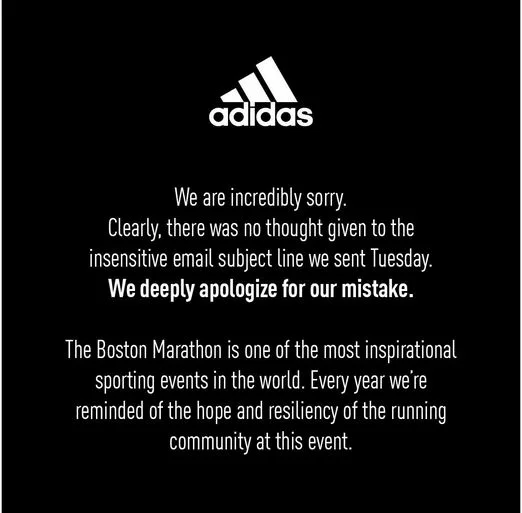
The apology also came quickly and did the job. Admitting that "no thought was given to the insensitive email subject line," the company didn't make excuses or apologize "if we offended anyone"; they said plainly that it was insensitive.

Discussion:

  • Are people too sensitive, or was this a real gaffe?
  • How does a mistake like this happen?
  • What makes this an effective apology?
Read More
Accountability, 07: Persuasive Amy Newman Accountability, 07: Persuasive Amy Newman

Facebook Responds to Video of a Murder

FB imageFacebook is on the defense after a video of a murder was posted to the site. Steven Stephens filmed himself shooting a 74-year-old man for no reason except a dispute with his girlfriend, and he said it was his fourteenth killing. Stephens shot himself as police where closing in after a tip from McDonald's drive-thru employees.

Facebook is criticized for taking more than two hours to remove the video. CEO Mark Zuckerberg extended his sympathy to the victim's family: "Our hearts go out to the family and friends of Robert Godwin Sr., and we have a lot of work - and we will keep doing all we can to prevent tragedies like this from happening."

On its website, the company posted an article, "Community Standards and Reporting," about the incident and included a message from Zuckerberg. "Mark Zuckerberg, speaking at F8, Facebook's developer conference said today, 'We have a lot more to do here. We're reminded of this this week by the tragedy in Cleveland. Our hearts go out to the family and friends of Robert Godwin Sr. We have a lot of work and we will keep doing all we can to prevent tragedies like this from happening.'" The article also listed a timeline of events:

Timeline of Events
11:09AM PDT - First video, of intent to murder, uploaded. Not reported to Facebook.

11:11AM PDT - Second video, of shooting, uploaded.
11:22AM PDT - Suspect confesses to murder while using Live, is live for 5 minutes.
11:27AM PDT - Live ends, and Live video is first reported shortly after.
12:59PM PDT - Video of shooting is first reported.
1:22PM PDT - Suspect's account disabled; all videos no longer visible to public.

Here's Facebook's commitment to improving its process: 

In addition to improving our reporting flows, we are constantly exploring ways that new technologies can help us make sure Facebook is a safe environment. Artificial intelligence, for example, plays an important part in this work, helping us prevent the videos from being reshared in their entirety. (People are still able to share portions of the videos in order to condemn them or for public awareness, as many news outlets are doing in reporting the story online and on television). We are also working on improving our review processes. Currently, thousands of people around the world review the millions of items that are reported to us every week in more than 40 languages. We prioritize reports with serious safety implications for our community, and are working on making that review process go even faster.

Keeping our global community safe is an important part of our mission. We are grateful to everyone who reported these videos and other offensive content to us, and to those who are helping us keep Facebook safe every day.

Image source.

Discussion:

  • In the post, Facebook says it disabled the man's account 23 minutes after the video was reported. What do you think of that time frame?
  • According to the post, the first video, in which Stephen says he plans to kill, wasn't reported until 1 hour and 50 minutes after it was posted. Why do you think it took so long?
Read More

United CEO Speaks Out

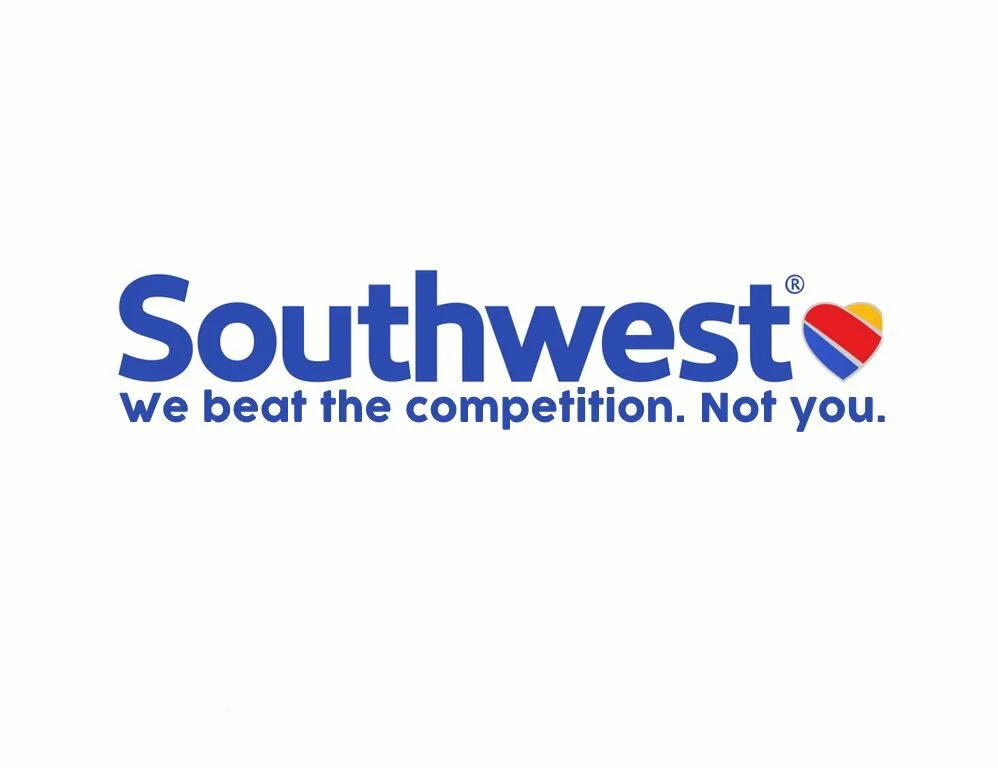
SW competitionAfter an insufficient apology, United CEO Oscar Munoz has changed his tune. In an interview with ABC News, Munoz said, "This first thing I think is important to say is to apologize to Dr. Dau, his family, the passengers on that flight, our customers, our employees. That is not who our family at United is. You saw us at a bad moment."

Munoz also changed his view of the passenger. In a letter to employees, he seemed to blame the passenger, but in the interview, he said Dr. Dau wasn't at fault at all, although he did pause before saying so.

When asked why he didn't communicate "that shame" (he said he was "ashamed"), Munoz said he wanted to get the "facts and circumstances first." He also said his words didn't reflect what they were really feeling.

He explained that the incentive model needs to be re-evaluated because it clearly works better before people have boarded. For the future, Munoz said they will never bring a law enforcement official on a flight to remove a paying passenger again.

Discussion:

  • How did Munoz do in the interview? What principles of crisis communication did he demonstrate, and where did he fall short?
  • What else should Munoz have said?
  • Analyze Munoz's delivery skills. How would you advise him to approach future interviews?

  • Southwest and other airlines are taking full advantage of the situation. What are the potential downsides of ads like the one here?
Read More

United Drags a Man Off the Plane

United tail
United tail

I'm not sure United thought this one through; people have cell phones. The airline needed to free up four seats so their employees could to get to Louisville. Attendants offered $400 and $800 but couldn't get people to relinquish their spots. Four people on the plane were approached; three left "without incident," as The New York Times reports.

United CEO
United CEO

But the fourth wouldn't budge. He said, "I'm not getting off the plane. I'm a doctor; I have to see patients in the morning." The Times reports the airline's perspective:

Charlie Hobart, a United spokesman, said in a telephone interview on Monday that "we had asked several times, politely," for the man to give up his seat before force was used.

"We had a customer who refused to leave the aircraft," he said. "We have a number of customers on board that aircraft, and they want to get to their destination on time and safely, and we want to work to get them there. "Since that customer refused to leave the aircraft, we had to call" the police, and they came on board, he said.

The man was removed by force, dragged down the aisle, and eventually carried out on a stretcher. A video shows the man, somehow, back on the plane, clearly upset, saying, "I have to go home." In this video, we see that his mouth is bleeding.

United issued a short statement from CEO Oscar Munoz on Twitter. Although Munoz apologizes for "re-accommodating" passengers, no public apologies have been made to the man or other passengers as yet.

UPDATE: Munoz issued a longer statement and, as NBC News tweeted, "found new words like 'disturbed' and 'horrific event'": 

"The truly horrific event that occurred on this flight has elicited many responses from all of us: outrage, anger, disappointment. I share all of those sentiments, and one above all: my deepest apologies for what happened. Like you, I continue to be disturbed by what happened on this flight and I deeply apologize to the customer forcibly removed and to all the customers aboard. No one should ever be mistreated this way."

Spokesperson Megan McCarthy also said, "We recognize that our response yesterday did not reflect the gravity of the situation," Ms. McCarthy said. "And for that we also apologize. Our focus now is looking ahead and making this right. Judging from a letter Munoz sent to his employees, he may have been supporting them, protecting them. But customers must come first in a situation like this. Meanwhile, the passenger, Dr. Dao, has hired lawyers, four senior senators wrote United a chastising letter, and the company has lost $255 million in value. What may be worse (or perhaps, all for the best) are grumblings about potential disruptors for the commercial airline industry.

Discussion:

  • What leadership lessons would you like to teach United's staff? What crisis communications lessons could they learn?
  • Where did the airline go wrong? Try to identify all steps in the process.
  • What's your view of the response so far? Should United say more?
Read More

Penn State Trustee Resigns After Putting Foot in Mouth

Penn-State-Indiana-2

Five or so years after the scandal at Penn State involving a football coach, young boys, and an inactive Administration, the university is still in the news for bad behavior. Former coach Jerry Sandusky was convicted of rape and child molestation and is serving prison time. You may remember that Joe Paterno was also accused of cover-ups, but he died of cancer soon after the scandal broke and he was dismissed from the university.

Al Lord
Al Lord

Last week, the former university president, Graham Spanier, was convicted of child endangerment. FBI director Louis Freeh wrote in a report that for more than 12 years, Spanier and other Administrators, "actively protected a notorious pedophile who inflicted irreparable harm on countless child victims on the campuses and locker rooms at PSU. Although these men had multiple opportunities to stop this vicious, serial predator from continuing to sexually assault children who trusted the PSU campuses and programs as safe havens, they decided together to protect this monster rather than report him to the police."

After the verdict, one of the Penn State trustees, Albert L. Lord, said, "Running out of sympathy for 35 yr old, so-called victims with 7 digit net worth," and "Do not understand why they were so prominent in trial. As you learned, Graham Spanier never knew Sandusky abused anyone."

Lord has since resigned from the board, and it's unclear whether he was asked to leave. He also issued an apology statement.

Image source.

Discussion:

  • If the board of trustees didn't ask Lord to resign, should they have?
  • Analyze Lord's statement. How well does this work to explain the comment, apologize, and rebuild Penn State's image?
Read More
07: Persuasive Amy Newman 07: Persuasive Amy Newman

Ackman Apologizes for Valeant

Pershing SquareActivist investor and hedge fund manager William A. Ackman made a surprise apology for an investment in Valeant Pharmaceuticals that didn't turn out well. The New York Times reports on an annual letter sent to investors of the hedge fund, Pershing Square Capital Management: 

It is rare that William A. Ackman, the brash activist investor, apologizes for anything. As a successful hedge fund manager, Mr. Ackman has made billions of dollars for himself and his investors with bold and counterintuitive bets.

But this week he conceded that his firm's biggest wager yet - on Valeant Pharmaceuticals International - was "a huge mistake" that has cost his hedge fund firm, Pershing Square Capital Management, "a tremendous amount."

Valeant was in the news for drug price hikes, including a drug taken by AIDS patients that increased 5,500% in one day. The stock dropped from $257 in 2015 to $12.11, leaving Ackman's firm with a $4 billion loss. 

Here are two significant quotations from the letter:

Clearly, our investment in Valeant was a huge mistake.  The highly acquisitive nature of Valeant's business required flawless capital allocation and operational execution, and therefore, a larger than normal degree of reliance on management.  In retrospect, we misjudged the prior management team and this contributed to our loss.  We deeply regret this mistake, which has cost all of us a tremendous amount, and which has damaged the record of success of our firm.

"My approach to mistakes is that I personally assume 100 percent of the responsibility on behalf of the firm while sharing the credit for our success. While I and the rest of the Pershing Square team have suffered significant losses from this failed investment as we are collectively the largest investors in the funds, it is much more painful to lose our shareholders' money, and for this I deeply and profoundly apologize.

Discussion:

  • Why do you think Ackman took this approach in his annual letter? Research the history of Valeant. Why didn't he apologize earlier?
  • Read the entire letter. What is the context for the apology, and how well does it fit?
  • What principles of an authentic apology, discussed in Chapter 7 of the book, does Ackman's apology demonstrate? Where does it fall short?
Read More