

Miracles Happen: An Apology from Uber
 The typically non-apologetic Uber is apologizing. Two factors likely caused the company's change: 1) a new CEO, and 2) losing its operating license in London.
The new CEO has already demonstrated his vulnerability by talking about his emotions and showing us more of who he is as a person. An article in The Guardian explains why the city decided not to renew the company's license, which expires September 30:
TfL [Tranport for London] said last week Uber was not a "fit and proper" private car-hire operator and cited four areas of concern, including its approach to reporting criminal offences and carrying out background checks on drivers. But sources close to TfL indicated that a change of conduct from the taxi firm, the culture of which is being reformed by its new chief executive, could leave the door open to a fresh licence application.
The London decision is a blow for the ride-sharing company, and Uber is doing what it can to rebuild its image.
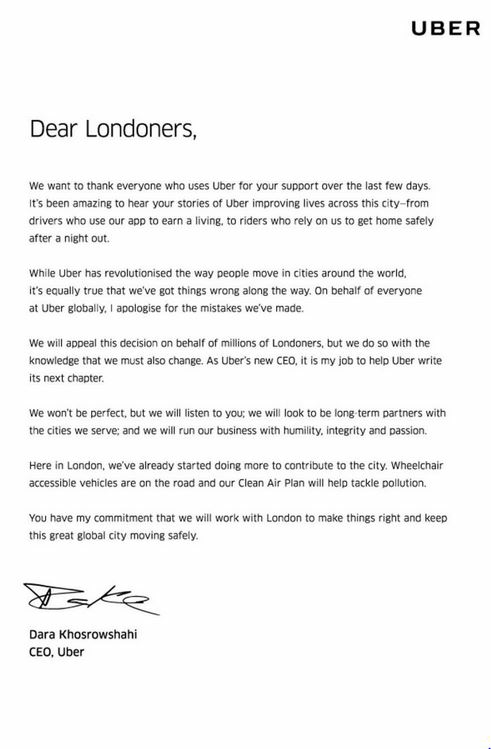
London Mayor Sadiq Kahn responded to the apology:
"I welcome the apology from Dara Khosrowshahi, the Uber CEO. Obviously I am pleased that he has acknowledged the issues that Uber faces in London. Even though there is a legal process in place, I have asked TfL to make themselves available to meet with him."
Discussion:
- Assess Khosrowshahi's apology. What works well, and what could be improved? (Hint: What organization principles apply?)
- What is the value of an apology? In this case, how does Uber's apology help its position with London?

President Trump Criticized for Incorrect Country Name
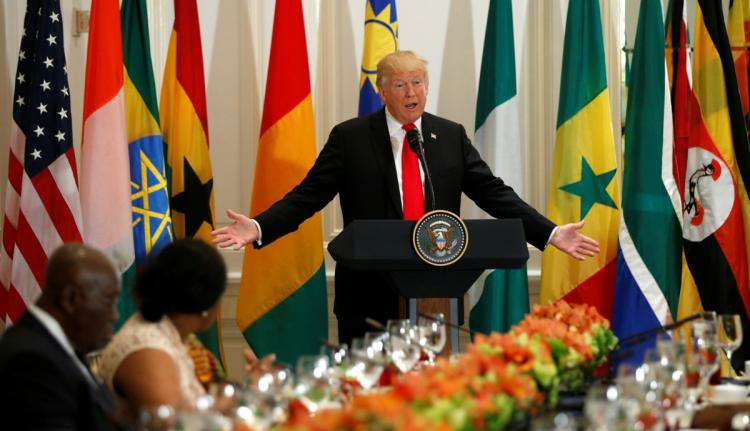 In a speech during a lunch with African leaders, President Trump mentioned the African country "Nambia," but no such country exists. Critics took to Twitter and other social sites to slam the president for "inventing" or "making up" a country. The reference in this tweet to Covfefe is a word President Trump used in a tweet earlier this year without explanation; it was likely a typo.
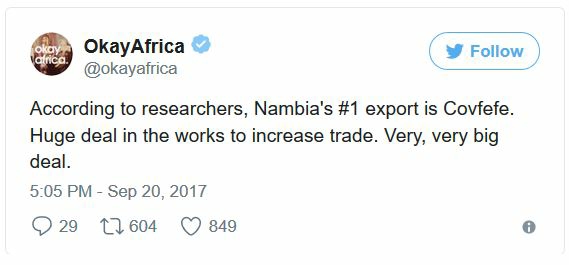 Yet the president's facts were correct for Namibia, and rather than "inventing" a country, the president likely just mispronounced its name.
Critics also took issue with the president's characterization of Africa as a business opportunity: "I have so many friends going to your countries trying to get rich. I congratulate you, they're spending a lot of money."
Discussion:
- Are we too harsh? Should we overlook the mispronunciation, or should the president be more careful?
- What's your view of the president's saying Africa is a "tremendous business opportunity"?
- Should President Trump correct the mistake? How?
- How does humility factor into this situation-both the public's and President Trump's?
Brother's Response to My Complaint
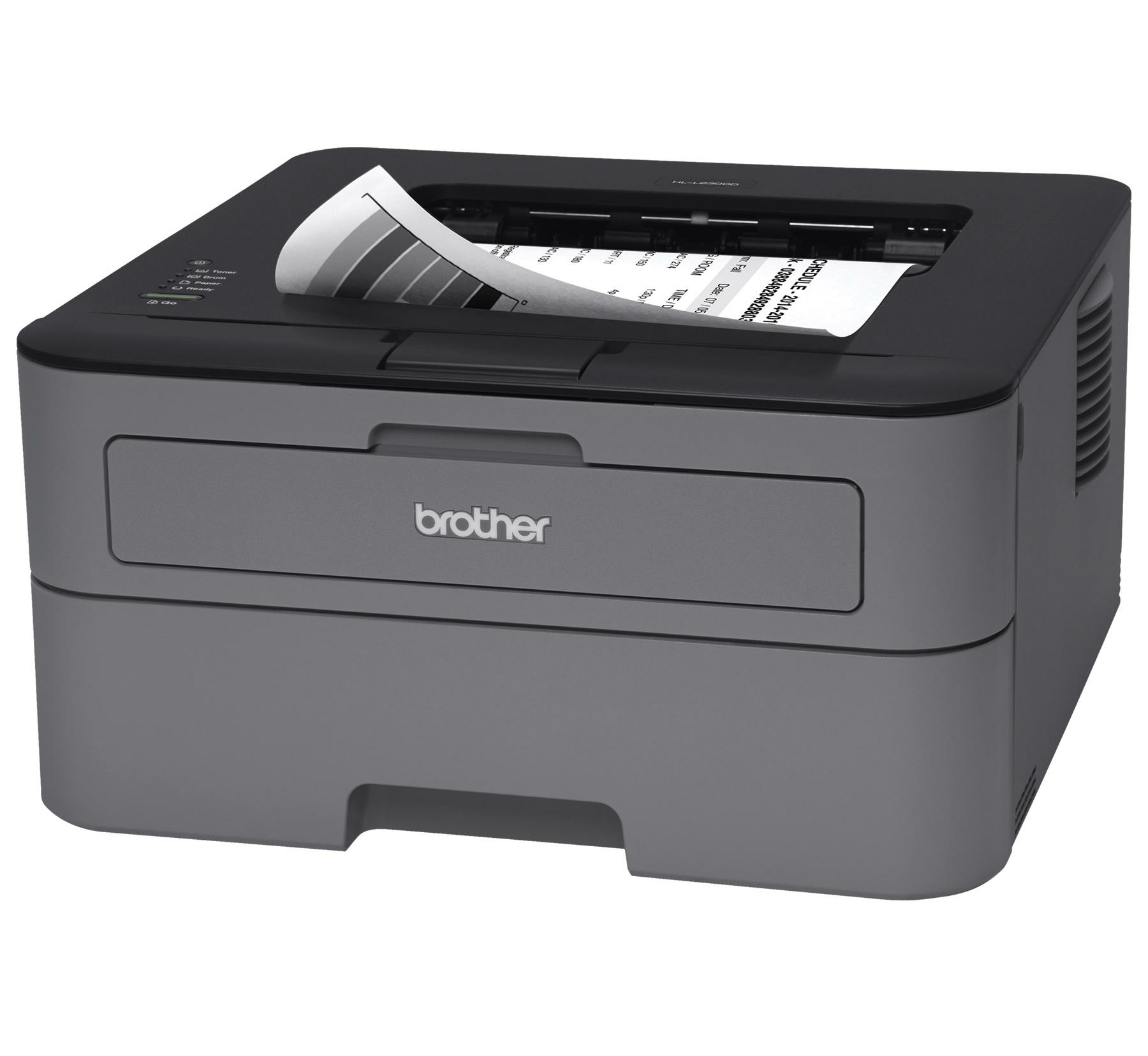
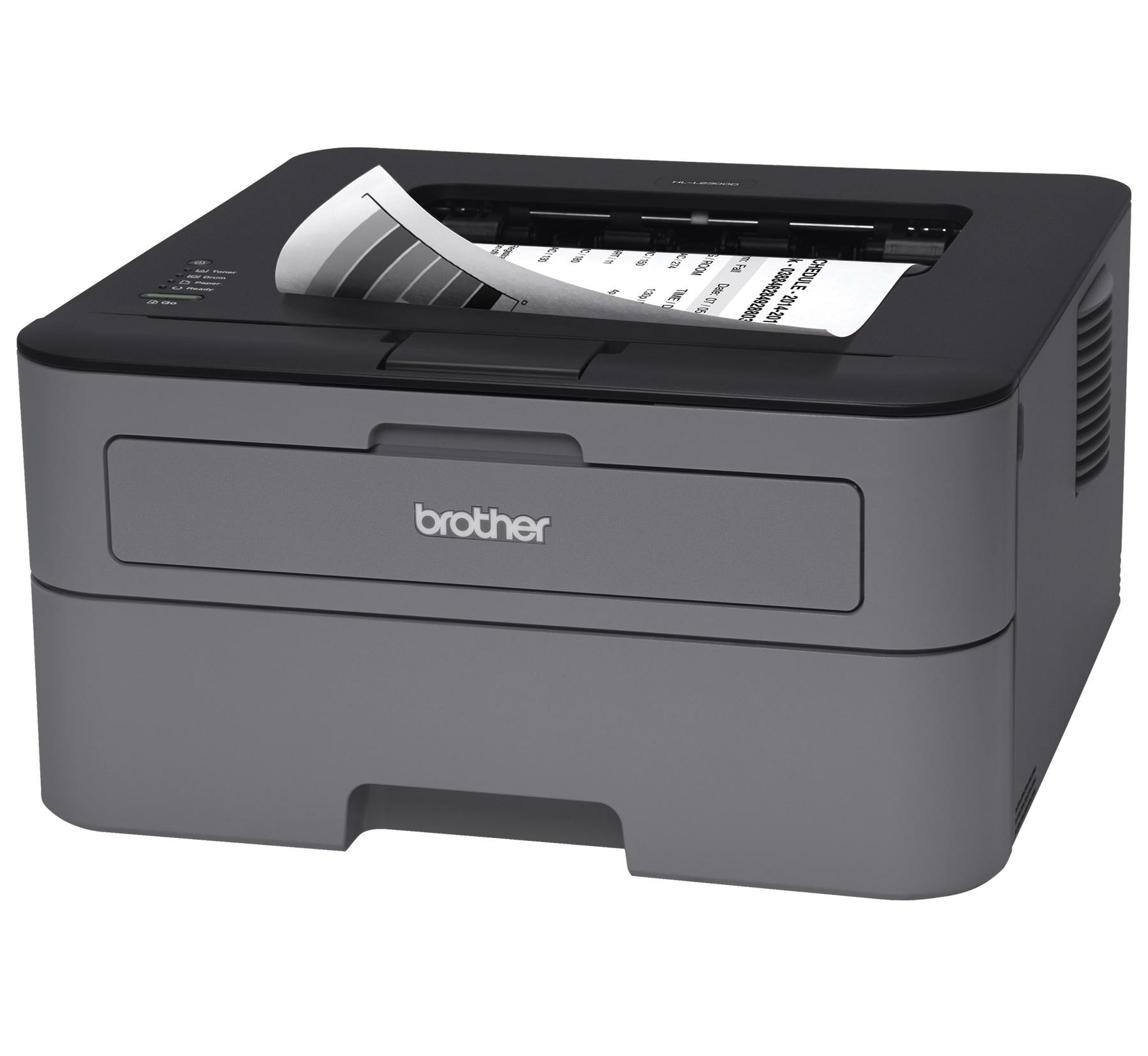 On my Brother printer, the "Toner Low" light came on, and I shook the toner, which always gives me several more pages of good quality printing. But at some point, the printer wouldn't print anymore. To my eye, the pages still looked good. I was printing pages of my new book to proofread and didn't notice a difference for my purpose.
I emailed Brother to see if I could override the function and get more out of my cartridge. (Replacements cost about $50.) I saw several YouTube videos with instructions, so clearly I'm not the only one who has this idea. But I couldn't find my model. I asked Brother for help, and this is the response I received: download Brother printer response.
I appreciate that the purpose is up front in the email and that my question is answered. But the email is so long and not very well organized. Also, the writer spends a lot of time defending why the printers are set up to stop. Of course, quality is important, but shouldn't I get to decide what is "good enough" for my print jobs? My HP printers keep going until they're grey and streaked.
Discussion:
- What's your view of the function to stop printing? Am I just cheap, or should Brother avoid the shutoff?
- What are the communication objectives for Bother's response? What is important for a customer in this situation?
- How could the writer have organized the email differently?
- How clear are the instructions?
- What else would improve the message?

Email Persists
 A survey shows that CIOs (73%) and office workers (53%) agree that email will continue as the primary internal communication tool through at least 2020. When instant messaging became popular around 2004, analysts predicted it would outpace email, which obviously hasn't happened. Reports of email's demise were common until about 2010, when people may have realized how stubborn the technology is.
Email's persistence isn't because it's a great tool. According to the MediaPost survey, CIOs did rate email best for daily communications (41%), but this is compared to other channels: in-person meetings (22%), instant messaging (13%), phone calls (9%), internal social networks (8%), and video conferencing (7%). I would argue that the channel depends on the purpose and audiences. Otherwise, this is a difficult question to answer.
The survey reporters criticized instant messaging because people expect an immediate response. But, again, this doesn't consider that IM has a different purpose and will often solve immediate problems. Academic research shows that people who use IM, perhaps paradoxically, feel they have more control over their work, possibly because they get work accomplished through IM instead of having to wait longer for an email response. Then again, in some circles, people are expected to respond to email immediately as well.
Discussion:
- What's your view of email compared to other communication tools, such as, instant messaging?
- What's the real value of email compared to other tools? Why do you think it has persisted?
- What's your biggest frustration with email?
- What, if any, tools, such as Slack, have you used to help manage email? What have you found helpful?
Comparing CEO Statements
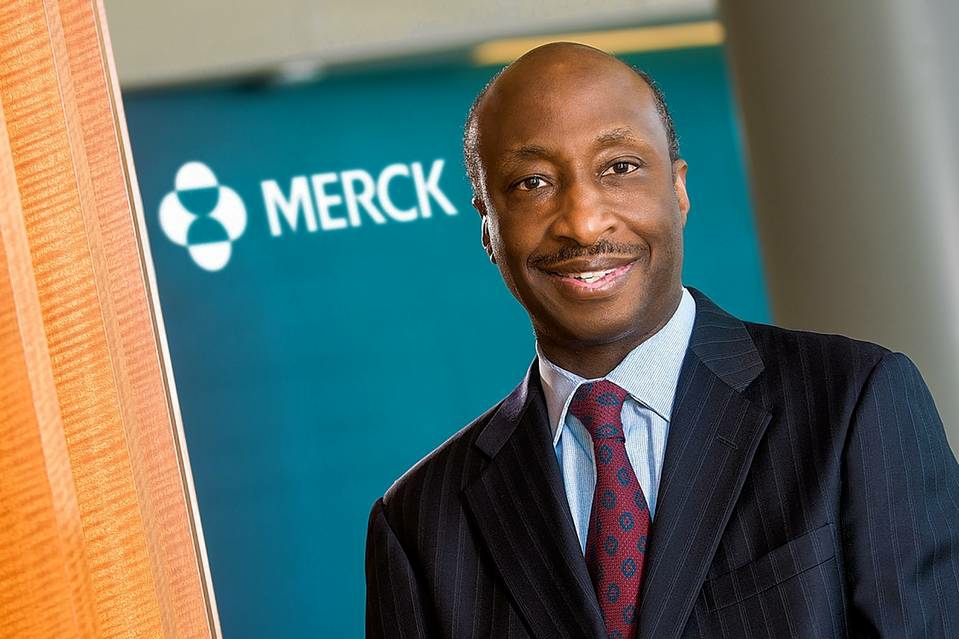
 A writer for The New York Times doesn't condemn CEOs for leaving President Trump's business advisory councils, but she says that we should expect more, particularly from those who gave what she considers vague statements. Zoe Greenberg writes,
It's fine to thank these executives for doing the right thing. But to look to these men as brave leaders? Let's not lower our standards, both politically and morally, so far that we're cheering for the absolute bare minimum of human decency.
She gives the example of Brain Krzanich of Intel's statement:
I resigned to call attention to the serious harm our divided political climate is causing to critical issues, including the serious need to address the decline of American manufacturing.
The Los Angeles Times rounded up 15 CEOs' statements about their decision to leave, some before the Charlottesville incident. Comparing the statements and the reasons they identified is an interesting exercise. Some executives used the opportunity to promote their companies, and some gave more specific reasons that others.
Discussion:
- Which executives most used the opportunity to promote their company?
- Which gave the most vague and most specific reasons for leaving?
- What other differences do you notice?
- Which statements do you find most effective and why?
Microsoft Lays Off up to 4,000 Employees
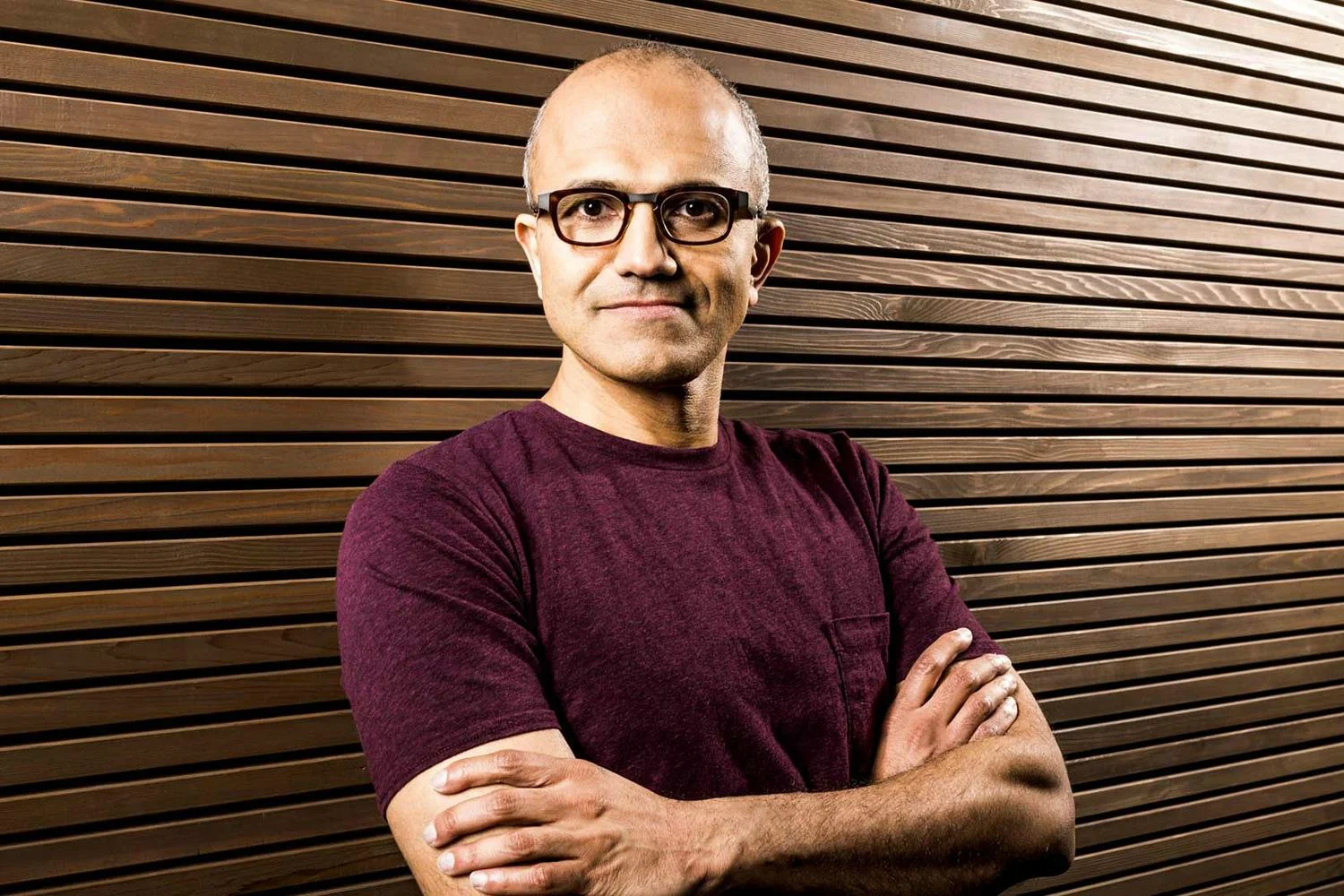
 Microsoft will cut thousands of sales and marketing employees in a company restructuring. Most are outside the U.S.
An internal memo describes Microsoft's new strategy for partners and customers but doesn't mention the layoffs specifically. The memo reminds me of a 2014 Microsoft layoff memo criticized for its jargon. Here's an excerpt from the recent one:
There is an enormous $4.5 trillion market opportunity across our Commercial and Consumer businesses. We are uniquely positioned to drive our customers' and partners' success by leading them through their digital transformations, and becoming their partner of choice. To help us do that, starting today, we begin to implement changes to our Commercial and Consumer models. These changes will position us to best meet the evolving needs of our customers and partners, and empower them to achieve more.
To lead this digital transformation and capture this opportunity, the changes we are announcing have been shaped on the following growth drivers, which will enable us to align the right resources for the right customer at the right time.
Research tells us that receivers prefer to hear bad news up front, although givers prefer to "ease" into it. In Microsoft's 2014 layoff memo and another in 2015, the news comes late. In this one, it doesn't come at all.
Discussion:
- Why do you think the email doesn't mention layoffs? What are some good reasons to avoid the decision here?
- Read the memo excerpts from Geekwire. How many jargon words do you count?
- Here's a fun activity: rewrite the memo in English.

YouTube Continues to Fight Extremist Videos
 Google announced new policies to fight offensive and inappropriate videos on YouTube and other sites. The company is responding most recently to videos promoting terrorism.
When videos violate community guidelines, they will be immediately removed. In addition, in a blog post, the company identified four new strategies: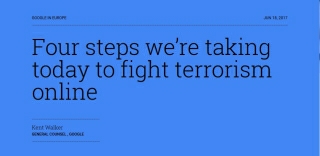
- Increasing technology to find terrorism-related videos
- Expanding the network of people and organizations to flag videos
- Applying restrictions to "inflammatory religious or supremacist content"
- Expanding its "role in counter-radicalization efforts"
The third point is interesting. Judging a video for removal is difficult, so Google will diminish potentially damaging content by posting a warning and not allowing comments, endorsements, or monetization (they can't accept advertising). General Counsel Kent Walker writes, "That means these videos will have less engagement and be harder to find. We think this strikes the right balance between free expression and access to information without promoting extremely offensive viewpoints."
Discussion:
- Analyze Walker's blog post. Who is the audience, and what are his communication objectives? How would you describe the writing style? What organizational strategy does he use?
- How well do you think Google is balancing freedom of expression with damage and complaints from advertisers?
- What are the potential dangers of Google's new policy? What are the benefits?

Amazon Announces Whole Foods Purchase
 A big move in the grocery market and a big threat to WalMart, Amazon will buy Whole Foods. The organic grocery has 460 locations, giving Amazon a strong launching pad to deepen its food delivery plans.
The company's press release states that John Mackey, co-founder and CEO, will continue in his role. A quote from Mackey emphasizes shareholder value and benefits to customers.
Other supermarket chains "put on a strong face," according to a NYT article. A spokesperson for Kroger sent an email: "As we've done in the past, we will evolve our business to deliver what our customers want and need today and into the future." But shares of Walmart, Target, Kroger and Costco all fell on the news.
Press Release
| << Back |
| Amazon to Acquire Whole Foods Market |
|
Whole Foods Market ranked #28 and Amazon ranked #2 on Fortune's 2017 list of World's Most Admired Companies SEATTLE & AUSTIN, Texas--(BUSINESS WIRE)--Jun. 16, 2017-- Amazon (NASDAQ:AMZN) and Whole Foods Market, Inc. (NASDAQ:WFM) today announced that they have entered into a definitive merger agreement under which Amazon will acquire Whole Foods Market for $42 per share in an all-cash transaction valued at approximately $13.7 billion, including Whole Foods Market's net debt. "Millions of people love Whole Foods Market because they offer the best natural and organic foods, and they make it fun to eat healthy," said Jeff Bezos, Amazon founder and CEO. "Whole Foods Market has been satisfying, delighting and nourishing customers for nearly four decades – they're doing an amazing job and we want that to continue." "This partnership presents an opportunity to maximize value for Whole Foods Market's shareholders, while at the same time extending our mission and bringing the highest quality, experience, convenience and innovation to our customers," said John Mackey, Whole Foods Market co-founder and CEO. Whole Foods Market will continue to operate stores under the Whole Foods Market brand and source from trusted vendors and partners around the world. John Mackey will remain as CEO of Whole Foods Market and Whole Foods Market's headquarters will stay in Austin, Texas. Completion of the transaction is subject to approval by Whole Foods Market's shareholders, regulatory approvals and other customary closing conditions. The parties expect to close the transaction during the second half of 2017. |
Discussion:
- Analyze the writing style, organization, and word choice in the press release. Who is the audience, and what are the objectives?
- It's short: should the companies say more?
- What's your view of Kroger's reaction? What else, if anything, should the company say in response to the news?
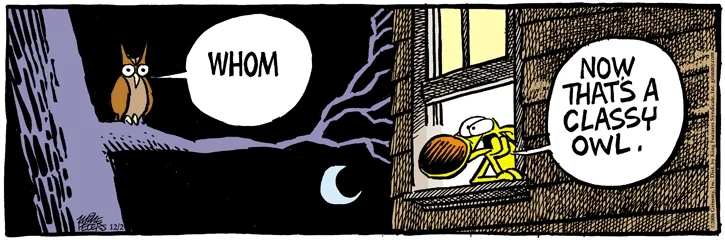
Is 'Whom' Dead?
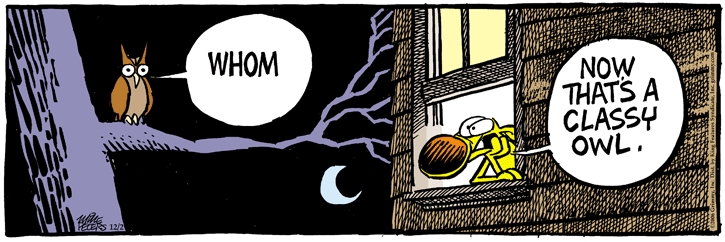 A front-page Wall Street Journal article explores the demise of "whom," which we have known for some time-some of us feeling joy, remorse, or indifference. Titled, "The Bell Tolls for 'Whom,' " the WSJ article tells us about Twitter's decision to post "Who to follow" instead of the grammatically correct "Whom to follow." Company representatives say a few people made the case for "whom," but it seems as though they quickly lost the argument.
The article gives us some fun examples of when "whom" just sounds silly: Ghostbusters' "Whom you gonna call" and the music group "The Whom" (well, that could go either way).
Men who used "whom" on their OK Cupid profiles had a 31% better chance of getting dates. (Let's assume they used it correctly.) We already know grammar is sexy. Women, particularly, are more turned off by bad grammar.
The article says that "whom" is still used when it's the object of a preposition, but the example is questionable: "To whom it may concern." That greeting went of out favor with "Dear Sir or Madam." It's best to find a real person or use "Dear Hiring Manager" or "Dear Recruiter" for cover letters.
My preference is to rewrite a sentence to avoid the whole issue, but I admit, in conversational writing, I might write, "Who are you going with?" committing two sins.
Discussion:
- What's the second "sin" in my last sentence, above?
- Describe the "correct" uses of whom.
- When, at all, do you use the word?
- What's your view: should we always use it correctly, kill it, or something in between?
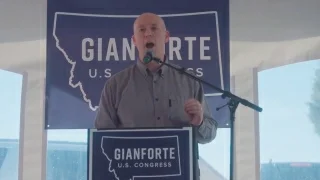
Gianforte Apologizes
Greg Gianforte, the Montana Republican candidate running for Congress, "body-slammed" a reporter. The link to audio is at right .
.
His apology letter has gotten high marks, and it does meet some of the criteria discussed in Chapter 7 for an effective apology. A professor emeritus of management and human resources at the Ohio State University's Fisher College of Business analyzed and annotated the letter for The Huffington Post:
Dear Mr. Jacobs:
I write to express my sincere apology for my conduct on the evening of May 24. My physical response to your legitimate question was unprofessional, unacceptable, and unlawful [acknowledgement of responsibility]. As both a candidate for office and a public official, I should be held to a high standard in my interactions with the press and the public [acknowledgement of responsibility]. My treatment of you did not meet that standard [expression of regret].
Notwithstanding anyone's statements to the contrary, you did not initiate any physical contact with me, and I had no right to assault you. I am sorry for what I did and the unwanted notoriety this has created for you [expression of regret]. I take full responsibility [acknowledgement of responsibility]
I understand the critical role that journalists and the media play in our society. Protections afforded to the press through the Constitution are fundamental to who we are as a nation and the way government is accountable to the people. I acknowledge that the media have an obligation to seek information. I also know that civility in our public discourse is central to a productive dialogue on issues. I had no right to respond the way I did to your legitimate question about healthcare policy [declaration of repentance]. You were doing your job.
In the hope that perhaps some good news can come of these events, I am making a $50,000 contribution to the Committee To Protect Journalists, an independent non-profit organization that promotes press freedom and that protects the rights of journalists worldwide [offer of repair].
I made a mistake and humbly ask for your forgiveness [request for forgiveness].
Sincerely,
Greg Gianforte
On Twitter, @SorryWatch also compliments the letter, but she questions the source. The letter was part of a settlement, so perhaps the words aren't Gianforte's own?
To me, the letter sounds a bit too perfect. Yes, it hits the right components but, for example, who says, "I....humbly ask for your forgiveness"? And some criteria for apologies discussed in the book are missing. It sounds like a lawyer wrote it.
Discussion:
- Quiz question: Which criteria discussed in the book are missing from this apology? These may give us a clue about how the letter falls short overall.
- What's your view of the letter? Is my assessment too harsh?
Covfefe!
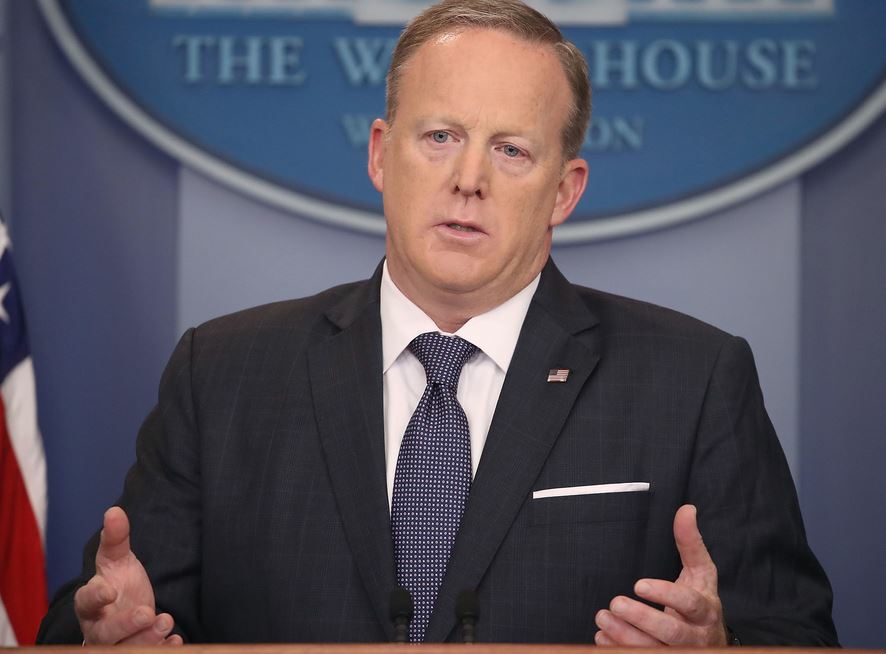 Our president will not admit a mistake. In a fit of early-morning tweeting, President Trump probably mis-typed "coverage" as "covfefe."
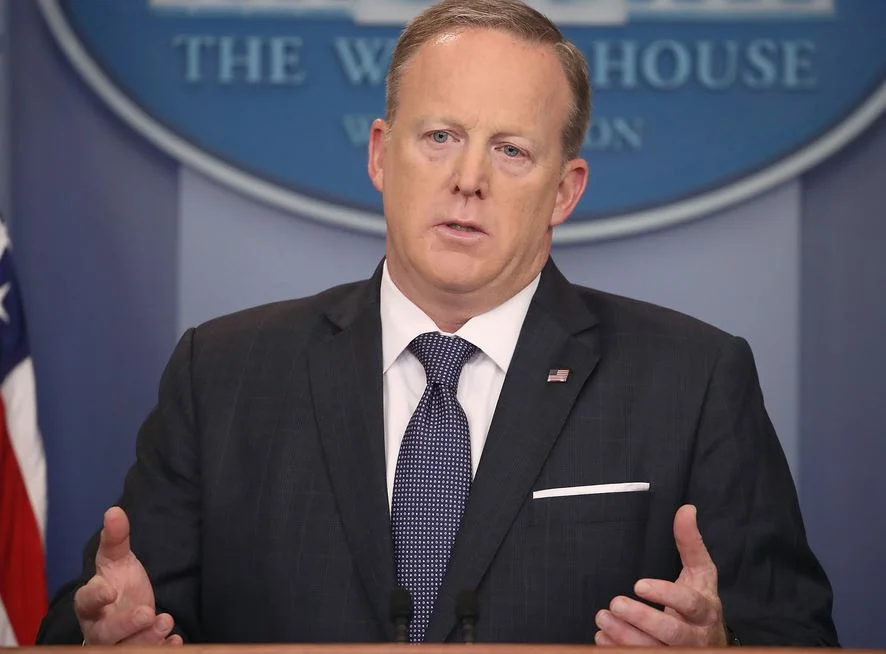
CNN editor Chris Cillizzi suggested how Sean Spicer might handle the situation when asked:
"The president made a typo. He meant to type 'coverage.' Raise your hand if you've never made a typo on Twitter."
Instead, Spicer said,
"A small group of people know exactly what he meant."
The president tweeted,
"Who can figure out the true meaning of 'covfefe' ??? Enjoy!"
The Administration's response protects the president and asserts his power: he doesn't have to apologize for anything. The tweet came amidst the president's withdrawal from the Paris Climate Accord, so the buzz didn't last long.
Discussion:
- What's your view of Sean Spicer's response?
- How about President Trump's?
- A New York Times article today says lawyers discouraging the president's tweeting. Why do you think that is? Should he follow the advice?
Uber CEO Tries to Change His Image
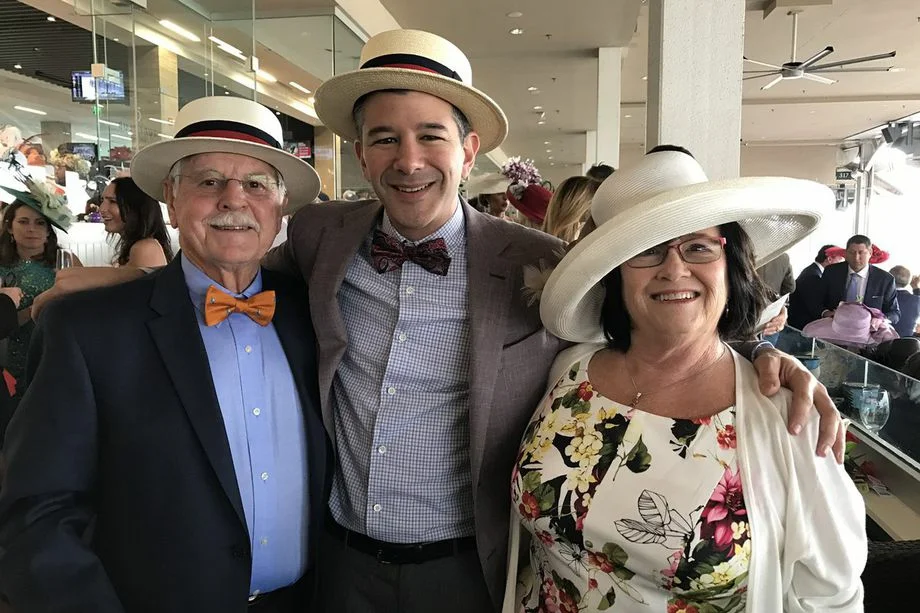
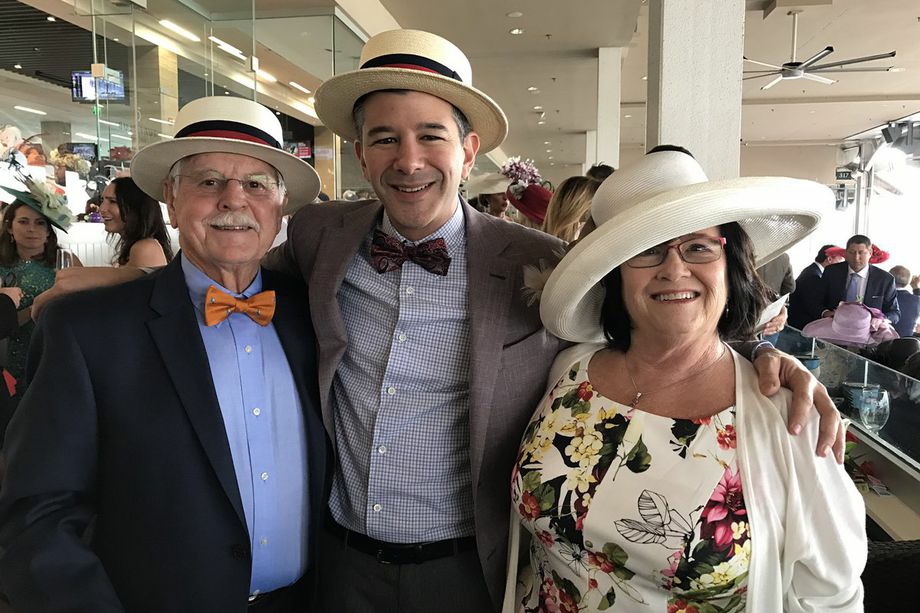 After many stories of Uber's questionable practices with reporters, employees, drivers, and technology, CEO Travis Kalanick is trying to change his image. A Recode author writes, "A more cuddly Uber CEO Travis Kalanick has returned to social media."
After a Twitter hiatus in 2016, Kalanick is back on, as Recode reports, "as the nicest CEO in the whole wide world." We see pictures of Kalanick with his mom on Mother's Day, with his parents at the Kentucky Derby wearing hats, and of his grinning face while he touches his heart.
Recode reminds us this isn't the first time Kalanick has taken to social media to try to change the company's and his own image:
After the media furor around whatever scandal of the moment died down, Kalanick tried to humanize himself - and, by virtue, the company - and often turned to puppies or children to do that.
After we saw a video of Kalanick arguing with an Uber driver over declining wages, he promised to improve. But the promise was about his leadership style. This seems like a PR fix.
Discussion:
- Assess Kalanick's approach. Who is his audience, and what are his objectives?
- Am I justified in questioning Kalanick's sincerity or too harsh?
- What else could he do to improve the company's image and his own image?
Ford Announces New CEO
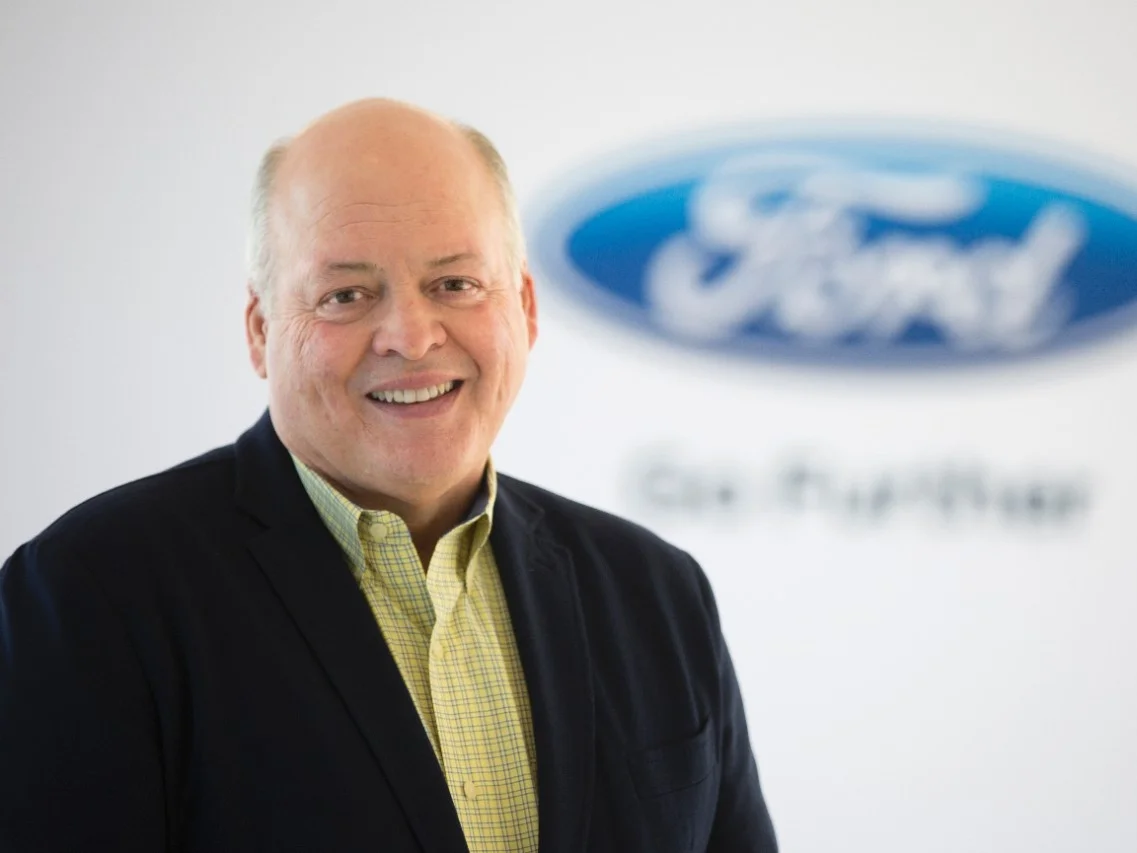
 Ford has appointed a new CEO to replace Mark Fields, who had been with the company for 28 years. Jim Hackett joined Ford's board in 2013 from Steelcase, and he'll have three new leaders reporting to him. A New York Times article describes Fields' less-than-stellar performance as CEO:
During Mr. Fields's three-year tenure - a period when Ford's shares dropped 40 percent - he came under fire from investors and the company's board for failing to expand the company's core auto business and for lagging in developing the high-tech cars of the future. . . .
The board's decision to change management was made on Friday, eight days after Mr. Fields had been sharply criticized during the company's annual shareholders' meeting for Ford's deteriorating financial results.
Ford has faced safety recalls and has been struggling against GM and Google to develop a self-driving car. The board said Fields' retirement decision was mutual.
The company's news release included this quote from the chairman about Fields: 
Mark Fields has been an outstanding leader and deserves a lot of credit for all he has accomplished in his many roles around the globe at Ford," Bill Ford said. "His strong leadership was critical to our North American restructuring, our turnaround at the end of the last decade, and our record profits in the past two years.
Discussion:
- Read the full press release. Describe the audience, objectives, and structure. What's the purpose of the summary bullets at the top?
- Should the company's press release have said more or something different about Fields? Does the quotation seem to reflect reality?

Chobani Claim Dropped and a Muddy Apology
 Right-wing radio host Alex Jones admitted he "mischaracterized" Chobani when he posted negative messages to social media. Chobani had sued Jones for false and defamatory comments when Jones wouldn't remove posts or retract the comments. You may remember Jones for the "Pizzagate" hoax, which linked Hillary Clinton with a child sex ring at a restaurant.
This time, Jones posted on Twitter, "Idaho Yogurt Maker Caught Importing Migrant Rapists."
Jones issued this apology, and the case is said to be closed. @SorryWatch posted this commentary on the writing. Passive voice is useful for avoiding responsibility.

Discussion:
- What examples of passive voice do you see in this paragraph?
- How would you rewrite Alex Jones' apology if he wanted to take responsibility?
DeVos Steps Up About Formatting Rules
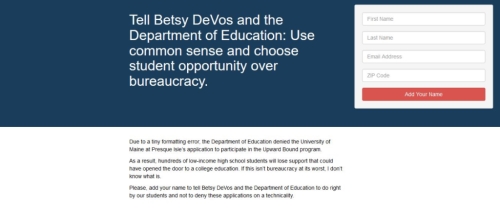
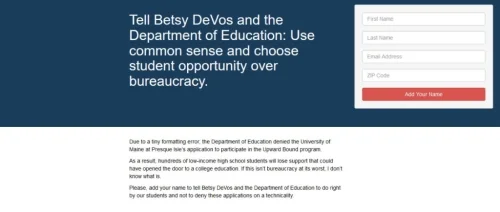
Two weeks ago, Upward Bound applications to help kids get into college were rejected for formatting errors such as line spacing. To protest, 32 members of the House of Representatives signed a letter asking the Department of Education to reconsider the grants that affected approximately 2,700 students; an excerpt is below.
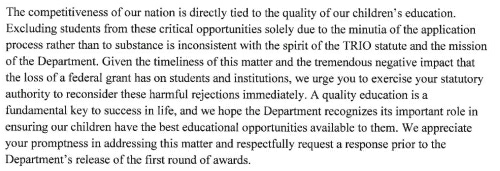
In response, Betsy DeVos, Secretary of Education, established a "new policy" that prevents program officers from using page limits and formatting as "mandatory requirements":
"Program offices may suggest page limits and formatting standards (such as font size, line spacing, and the like) but may not use ignoring these suggestions as a basis to reject grant applications."
In her letter, however, DeVos does not address the recently rejected applications.
Discussion:
- What do you think DeVos should do at this point? What should she consider in her decision?
- Assess the Representatives' letter. What principles of persuasion are used, and how could the letter be improved?
LinkedIn's Updated Terms of Service
 LinkedIn has updated its terms of service, including its privacy policy and user agreement. In an email to users and posted on its website, the company promises a shorter privacy policy that's easier to understand. Highlights follow:
- Increased visibility of your LinkedIn profile
- Easier to share accomplishments with your network
- Productivity bots and similar tools to improve communication
- Easily meet up with other members
- Keep learning new skills on Lynda
We see some problems with this bullet list. Besides a lack of clarify of what's new, the items aren't parallel.
In the post, LinkedIn reminds us that the site is part of Microsoft even though these terms are separate.
Discussion:
- Writing quiz: make the list items parallel. Also explain why this is important-or do you think it's too nitpicky?
- Read the full post. What else could be improved?
Discussion:
College Prep Denied for Failing to Double Space Applications
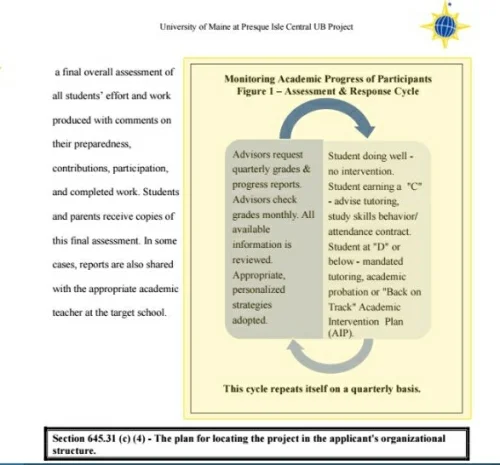
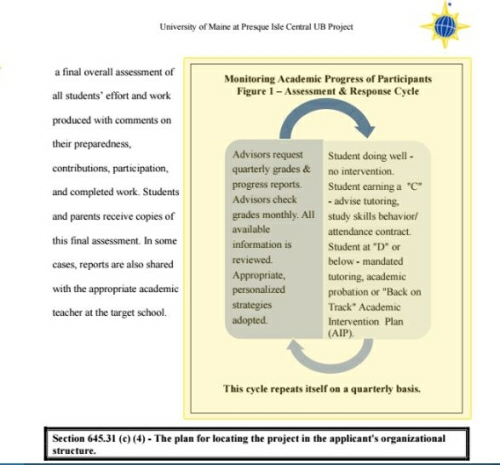 Dozens of colleges and organizations won't receive funding for Upward Bound programs because their grant applications failed to meet formatting requirements. The U.S. Department of Education, now led by Betsy deVos, rejected applications that would have served at least 2,400 low-income students who would have received tutoring and counseling to help prepare them for college.
Applications missed the requirements because they weren't double spaced, used the wrong font, or forgot other formatting details.
Although members of Congress have appealed to Department of Education representatives, the decision seems to stand. The acting deputy assistant secretary said, "A rule is a rule. . . . I, too, have to abide by the rules." One rule is for "no more than three lines per vertical inch." In one application, shown here, an infographic contained text spaced one-and-a-half lines apart instead of two.
Discussion:
- What's your view of this situation? Is the Department of Education being too harsh, or is "a rule a rule"?
- How does this compare to grading of your writing assignments? Have you felt that instructors have been too nitpicky? What's the value of an instructor calling out formatting errors?
- The Chronicle says this decision doesn't seem motivated by the Trump Administration's cost-cutting plans. Still, what could be the political fallout if the Department of Education doesn't change its mind?
Poorly Written Shareholder Reports Reduces Value
 A study found that poorly written shareholder reports cause stocks to trade at lower values. In an upcoming article in the Journal of Financial Economics, the authors describe their process for evaluating disclosure documents and the results:
Using a copy-editing software application that counts the pervasiveness of the most important ‘writing faults' that make a document harder to read, our analysis provides evidence that issuing financial disclosure documents with low readability causes firms to trade at significant discounts relative to the value of their fundamentals. Our estimates suggest that a one-standard-deviation decrease in readability decreases firm value by a full 2.5%. Our results are particularly strong in situations in which investors are more likely to rely on annual reports.
The study looked at closed-end funds, which have little public information and typically are owned by individual investors. So the authors mention the caveat, "We're actually not sure to what degree our findings extend to large, visible firms, such as Apple Inc."
Morningstar summarizes the significance:
Their data suggest that "higher readability generates more trust and higher perceived managerial skill," Messrs. Hwang and Kim say. They write, "When a firm's annual report becomes difficult to read, investors become suspicious, perceive the firm and its managers to be of lower quality or subconsciously develop negative sentiments."
"The results strongly suggest that investors value clear and concise communication," says Mr. Kim. "If annual reports or corporate disclosure documents are written in a complex way, investors will trade the firm at a discount."
The authors used the program StyleWriter, which I hope is better than Grammarly. I wrote an analysis of that software last year.
Discussion:
- The Morningstar article suggests avoiding these "traps": legal words, hidden verbs, passive verbs, overwriting and wordy phrases. What other advice would you offer authors of disclosure statements?
- How do you think this study might translate to larger companies? What other factors are involved?
Choate Apologizes for Sexual Abuse

Private school Choate Rosemary Hall, in Wallingford, CT, has uncovered sexual abuse by 12 faculty members. According to a report commissioned by the board of trustees, abuse going back to the 1960s was mishandled:
"Sexual misconduct matters were handled internally and quietly. Even when a teacher was terminated or resigned in the middle of the school year because he or she had engaged in sexual misconduct with a student, the rest of the faculty was told little and sometimes nothing about the teacher's departure and, when told, was cautioned to say nothing about the situation if asked."
Some faculty were given recommendations to transfer to other schools.
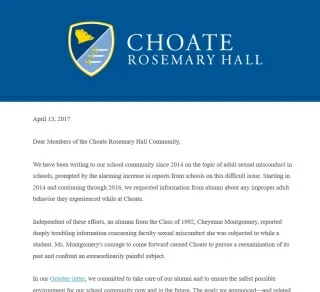
In a "Message to the Choate Rosemary Hall Community," posted on the website, the board chair and headmaster review the facts, thank the victims for coming forward, apologize, and promise action. The school hired Rape, Abuse & Incest National Network (RAINN) to review its policies and make recommendations. One conclusion in the letter follows:
RAINN has noted the strength of Choate's current confidentiality, amnesty, retaliation, and mandatory reporting policies; progressive training and education for students; and faculty and staff who are caring, empathetic, and supportive while preventing and responding to sexual misconduct on campus. Their recommendations call for continued codification of policies and procedures for reporting and investigating incidents, further review and refinement of adjudication processes, and additional training for faculty and staff who respond to incidents of sexual misconduct. We believe a commitment to constantly improving standards will provide more understanding and protection for our students.
Discussion:
- I'm skeptical reading the excerpt above. So, your policies are great? You just need to follow them? And of course, you need to do training, which everyone seems to say in these situation. Read the entire letter and form your own opinion. Am I too harsh?
- Should Choate have this letter prominently on its website? I followed a link from The New York Times, but I don't see any reference to the statement. What are the arguments for and against posted something, say, on the home page?
Richard Branson's Letter About Virgin America
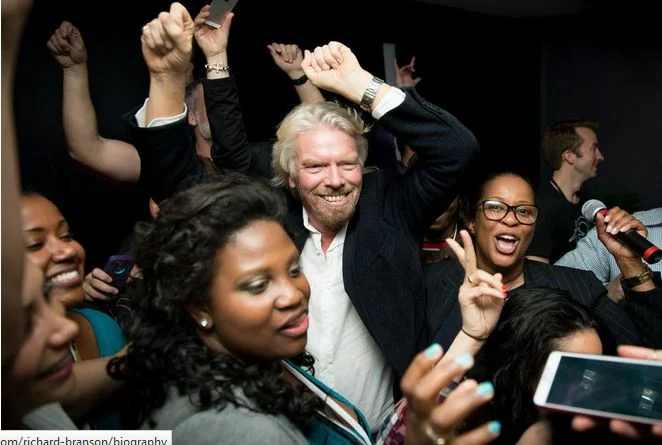
 Richard Branson wrote an open letter lamenting the end of Virgin America. Alaska Air Group purchased the company in 2016 and, only three months later, decided to retire the brand. An Alaska Air official said, "We are going to be able to create a real, strong, integrated airline for travelers on the West Coast." Brandon says, "It has a very different business model and sadly, it could not find a way to maintain its own brand and that of Virgin America."
Branson uses emotional language to describe the decision and the demise of Virgin Records:
With a lot of things in life, there is a point where we have to let go and appreciate the fact that we had this ride at all. Many years ago, I shed tears over selling my beloved Virgin Records for $1 billion, which we needed to fight off British Airways' Dirty Tricks campaign to try to put Virgin Atlantic out of business. Many tears are shed today, this time over Alaska Airlines' decision to buy and now retire Virgin America.
Branson compliments the airline's employees and customers and includes memories:
Every market was hard-won. The launch parties, the networking, the productivity on flights, the live concerts at 35,000 feet, the marriage proposals, the first in-flight wedding, the Oprah Skype to the plane!
As you might expect from a big personality like Branson, he ends the letter on a dramatic note:
George Harrison once said, "All Things Must Pass." This was the ride and love of a lifetime. I feel very lucky to have been on it with all of you. I'm told some people at Virgin America are calling today "the day the music died." It is a sad (and some would say baffling) day. But I'd like to assure them that the music never dies.
Discussion:
- Analyze Branson's letter. Who are the primary and secondary audiences? What are the communication objectives? What is the organizational strategy?
- Given your analysis, how well does the letter meet its objectives?