

Whistleblowers at Boeing
On The Daily podcast, a former quality manager at Boeing describes safety concerns and efforts to report them. He is one of more than 12 employees the New York Times reporter interviewed who had raised issues internally and with the Federal Aviation Administration (FAA) before the 737 MAX crashes—and dating back to the 787 Dreamliner, which was introduced in 2007.
Employees complained about debris left inside aircrafts, even as planes were going on test flights and getting ready for delivery, and about missing and doctored defective parts. The reporter describes a company under pressure taking serious safety shortcuts.
According to U.S. Department of Labor data, whistleblowers have little success. This chart shows a very small percentage of government-reported cases considered of “merit,” although in the table below the chart, the author tells us that cases that are “settled” or “settled other” (a nonstandard procedure) should also be considered winners. Still, it’s a small percentage in light of what it takes to come forward to file a complaint.

Discussion:
What’s your view of Boeing? Some employees say they felt proud when they first worked at the company, and now they are embarrassed. How, if at all, does this news change your perception of the company?
What does it take to be a whistleblower? What is at stake, and what are the potential rewards?
Assess the chart. Who is the audience, and what are the communication objectives? How could you change the chart to improve readability? For example, consider how the 3D effect might change how we interpret the data.

Philippines Town Bans Gossip
Could this work at companies? Or schools? Binalonan, a small town in the Philippines, passed an ordinance that bans idle gossip. Locals say the summer heat drives people beneath acacia trees to chismis, or gossip. Offenders are charged the equivalent of about $10 and will have to pick up trash if they repeat the crime.
Local officials believe much of the gossip is caused by conflicts, and they are trying to encourage people to resolve differences directly instead. I’m not sure it’s the same in organizations, where people tend to gossip when they have idle time and are missing more meaningful communication from company leaders.
Of course, gossip has a few positive benefits, including increasing our knowledge and understand of others and improving social relationships.
Discussion:
Seriously, could a gossip ban work in companies? What could be the benefits and downsides? How could it be enforced?
When have you seen gossip used negatively and positively?
What are, perhaps, better ways to communicate?
What leadership character dimensions may be failing if we rely too much on gossip?

OurBus Handles a Mistake with Humor

OurBus sent an email with a link that wasn’t yet working and quickly corrected the mistake with some fun. The company offered a $7 discount for rides booked on St. Patrick’s Day and corrected the link with the subject line, “Our Bad. That code doesn't quite work yet...”
In the first email, the date is clearly March 17, but the subject line, “It's your lucky day. Our flash sale starts NOW,” is certainly deceiving.
Discussion:
Assess the second message from OurBus. How well did the company handle the situation? What changes would you suggest? (Hint: alignment.)
Are people still saying “my bad”? Did they intend to play on “OurBus” with “Our bad”? If so, would it have been better to write, “OurBad”?
Which leadership character dimensions does this situation illustrate?

Don't Ignore Email
A New York Times opinion piece by Adam Grant warns us not to ignore emails because it’s rude. He compares ignoring email to not acknowledging someone who says hello when walking by you in a hallway. He cites a survey that, on average, employees have 199 unread messages in their inbox.
But Grant addresses people who say they’re “too busy” to answer emails, and he makes several exceptions:
You should not feel obliged to respond to strangers asking you to share their content on social media, introduce them to your more famous colleagues, spend hours advising them on something they’ve created or “jump on a call this afternoon.” If someone you barely know emails you a dozen times a month and is always asking you to do something for him, you can ignore those emails guilt-free.
I wrote an article last summer encouraging people to respond to any email, including the type he says we can ignore. I’m not Adam Grant, so I’m sure I don’t get his volume of messages. I see responding to an inappropriate or misguided request as a learning opportunity for the sender. For most of us, a short response doesn’t take too long and, as Grant says, is the civil thing to do.
Discussion:
How do you handle emails such as those Grant describes? How many do you receive?
Describe an email you sent that was ignored. In retrospect, was it appropriate to send? Why do you think the receiver didn’t respond?

Updates on the Virginia Govenor

Whether Virginia Governor Ralph Northam resigns just got more complicated. If Northam steps down because of racist photos in his yearbook, the lieutenant governor would replace him. But Justin Fairfax faces his own challenges: a woman accused him of sexual assault.
Fairfax denies the claims and refers to the incident at the 2004 Democratic National Convention in Boston as consensual sex. To complicate matters further, Fairfax has accused Northam’s supporters of a “smear” campaign:
“Does anybody think it’s any coincidence that on the eve of potentially my being elevated that that’s when this uncorroborated smear comes out?”
Fairfax also questioned whether Mayor Levar Stoney of Richmond may have been involved in the accusation to which Stoney responded, “The insinuation is 100 percent not true, and frankly it’s offensive.”
For its part, Eastern Virginia Medical School is investigating how the racist photos got into the 1984 yearbook.
Discussion:
What’s your view of Fairfax’s response?
Should a 2004 sexual assault charge prevent Fairfax from replacing Northam?
Should the replacement issue drive whether Northam resigns?
What is the medical school’s responsibility in this situation?

Emails to International Duke Students Sparks Controversy

Faculty at Duke University Medical Center have been criticized for asking international students to speak only English. The controversy started when an administrator of the biostatistics program sent an email after hearing complaints from faculty members that Chinese students were speaking “VERY LOUDLY” in their native language in “student lounge/study areas.” The faculty expressed concern that students “were not taking the opportunity to improve their English and were being so impolite.”
Also in the email, the administrator said that faculty asked for students’ names so that they might deny them job and project opportunities.
Students took offense and started a petition. In response, the administrator of the program stepped down from her position, and the university posted a letter to students in the program.
Discussion:
What’s your view of international students speaking in their native language at an American University?
Was the administrator out of line? Why or why not?
How do you assess the university’s response to the controversy?
What leadership character dimensions are at play?

Law Firm Faces Backlash About Diversity

When a law firm announced its 2019 partners, they didn’t expect such a strong reaction. A photo shows the 12 members of the new group—all white and only one woman. Paul Weiss is an elite firm in midtown Manhattan and claims that this year is unusual.
The firm has since removed the photo from LinkedIn, where it drew attention. About 170 lawyers across the country wrote an open letter to express their wishes for a more diverse legal community.
Paul Weiss leaders took quick action to address the controversy and held a town hall meeting for employees. Firm leaders also say this group is unusually not diverse. In fact, the firm was recognized by a Microsoft initiative that offers bonuses to diverse law firms. In addition, 23% of the firm’s partners are women compared to about 18% of other law firms’ top leaders. The firm’s website boasts additional awards for diversity, including being ranked #16 in The American Lawyer’s 2018 Diversity Scorecard.
An email to Paul Weiss employees shows the words “diversity” and “associate professional satisfaction” in quotes, and a writer for the website Above the Law warns,
“…maybe there’s still some work to be done in mastering how to talk about these subjects. In general, don’t put anything in quotation marks that you wouldn’t be willing to sarcastically put air quotes around in conversation. That’s my advice.”
Discussion:
What’s your view of the photo and the reaction: should the firm have avoided the composite, did people overreact, or something else?
How do you assess the firm’s response? What else, if anything, should the firm leaders do to improve its image?
What persuasive strategies do the attorneys use in their open letter? Which are most and least effective for the situation?
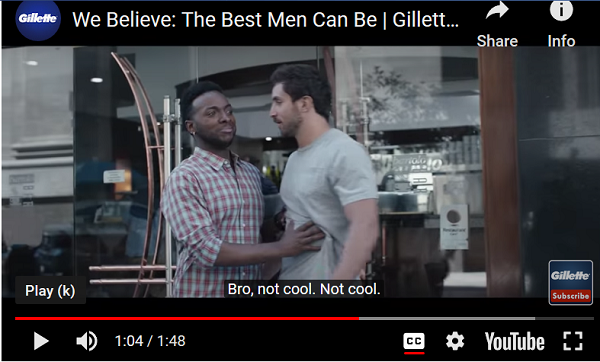
Gillette Ad Gets Mixed Reviews
Gillette took a risk with its new ad campaign. Spinning its 30-year slogan, “The Best a Man Can Get,” the company introduced, “The Best a Man Can Be.” A new video references sexual harassment, challenges the expression “boys will be boys,” and encourages men to “hold other men accountable.”
Gillette explains the rationale in a press release. In addition, the URL thebestamancanbe.org redirects to https://gillette.com/en-us/the-best-men-can-be, where the company explains the campaign:
Thirty years ago, we launched our The Best A Man Can Get tagline.
Since then, it has been an aspirational statement, reflecting standards that many men strive to achieve.
But turn on the news today and it’s easy to believe that men are not at their best. Many find themselves at a crossroads, caught between the past and a new era of masculinity. While it is clear that changes are needed, where and how we can start to effect that change is less obvious for many. And when the changes needed seem so monumental, it can feel daunting to begin. So, let’s do it together.
It’s time we acknowledge that brands, like ours, play a role in influencing culture. And as a company that encourages men to be their best, we have a responsibility to make sure we are promoting positive, attainable, inclusive and healthy versions of what it means to be a man. With that in mind, we have spent the last few months taking a hard look at our past and coming communication and reflecting on the types of men and behaviors we want to celebrate. We’re inviting all men along this journey with us – to strive to be better, to make us better, and to help each other be better.
From today on, we pledge to actively challenge the stereotypes and expectations of what it means to be a man everywhere you see Gillette. In the ads we run, the images we publish to social media, the words we choose, and so much more.
As part of The Best Men Can Be campaign, Gillette is committing to donate $1 million per year for the next three years to non-profit organizations executing programs in the United States designed to inspire, educate and help men of all ages achieve their personal “best” and become role models for the next generation.
Our tagline needs to continue to inspire us all to be better every day, and to help create a new standard for boys to admire and for men to achieve… Because the boys of today are the men of tomorrow.
We’ve all got work to do. And it starts today.
Not everyone appreciates the new campaign. The YouTube video received 582,000 likes and 1 million dislikes. Some feel that the video unfairly accuses all men of not doing better.
A Gillette spokesperson said the campaign “is much more than a video—it is a commitment to spark and contribute to positive change through our voice as an advertiser and our actions as a brand and a company.” Analysts say the current boycotts probably won’t last long and will have little bottom-line effect on the company.
Discussion:
What’s your view of the video? Do you appreciate the message, find it offensive, or something else?
What else, if anything, should the company say in response to the controversy?
Which leadership character dimensions are illustrated by this story?

MSU Gets Another New Interim President

Michigan State University hired a second interim president. First, President Lou Anna Simon resigned after 13 years following criticism that she didn’t do enough to stop Dr. Larry Nassar from abusing girls. John Engler replaced her as interim president in 2018, but he, too, faced criticism for insensitivity to Nassar’s victims.
Most recently, Engler commented after a $425 million fund was approved for 332 current claimants and another $75 million was approved for additional victims. Engler said, “The people who got the $425 million are probably OK." Engler said he was thinking more about the potential additional victims who haven’t been part of the process yet. He made things worse when he said more:
"You’ve got people, they are hanging on and this has been … there are a lot of people who are touched by this, survivors who haven’t been in the spotlight. In some ways they have been able to deal with this better than the ones who’ve been in the spotlight who are still enjoying that moment at times, you know, the awards and recognition. And it’s ending. It’s almost done.”
People took great offense to his implication that the earlier claimants have “enjoyed the spotlight.” So now, MSU has a new interim president, Satish Udpa.
Discussion:
Try to see Engler’s point of view. What was he trying to convey with his comments?
We might say that Engler’s comments lacked compassion. What else is problematic about his comments?
What’s your view? Was forcing Engler’s resignation the right thing to do? Why or why not?

Starbucks CEO Draws His Own Path

Starbucks CEO Kevin Johnson is identifying his own vision for the company—apart from Howard Schultz’s plan. In an interview with the Wall Street Journal, Johnson said that the previous plan to open about 1,000 Reserve cafes will be piloted with just a few stores. Reserve stores deliver a higher-end experience, selling artisanal products and cocktails.
The change is one example of how Johnson is distinguishing himself from Schultz, who was the company CEO for about 30 years. According to the article, Johnson often started meetings with, “I’m not Howard. I’m Kevin.” A couple of weeks after Schultz left, Johnson said about the business strategy, “Certainly, I tend to bring a much more disciplined approach to picking the priorities.”
Starbucks Reserve image source.
Kevin Johnson image source.
Discussion:
Is it important for Johnson to distinguish himself from Schultz? Why or why not?
Read more about Johnson as the new CEO. How well is he handling the transition? What, if anything, should he do differently? He’s in a tough spot, wanting to create his own path but needing to be respectful to the previous leadership.

Robots Screen Candidates' Social Media

A Wall Street Journal video explains how DeepSense uses artificial intelligence to analyze a job candidate’s personality. When companies post a job, recruiters or hiring managers identify what is most important for success; for example, how important is teamwork or project management? DeepSense then looks at a candidate’s social media profile to assess personality.
Founder Amarpreet Kalkat explains that the system may review a social media profile for only six seconds and will generate a report about the applicant’s DISC profile (a personality assessment) and “Big Five” personality traits. Using psycholinguistics, the computer analyzes language the candidate uses.
Kalkat says their results are 75% accurate, while traditional personality tests are 82% accurate.
Discussion:
What’s your view of using AI in this way? How confident would you be applying for a job that uses this technology?
How relevant is personality to a position? What are the advantages to a company of using such a system, and what are the potential disadvantages?
The video refers to “DeepSense,” but the website shows “DeeperSense.” How do you explain the discrepancy?

McKinsey PPT Slide Causes Problems
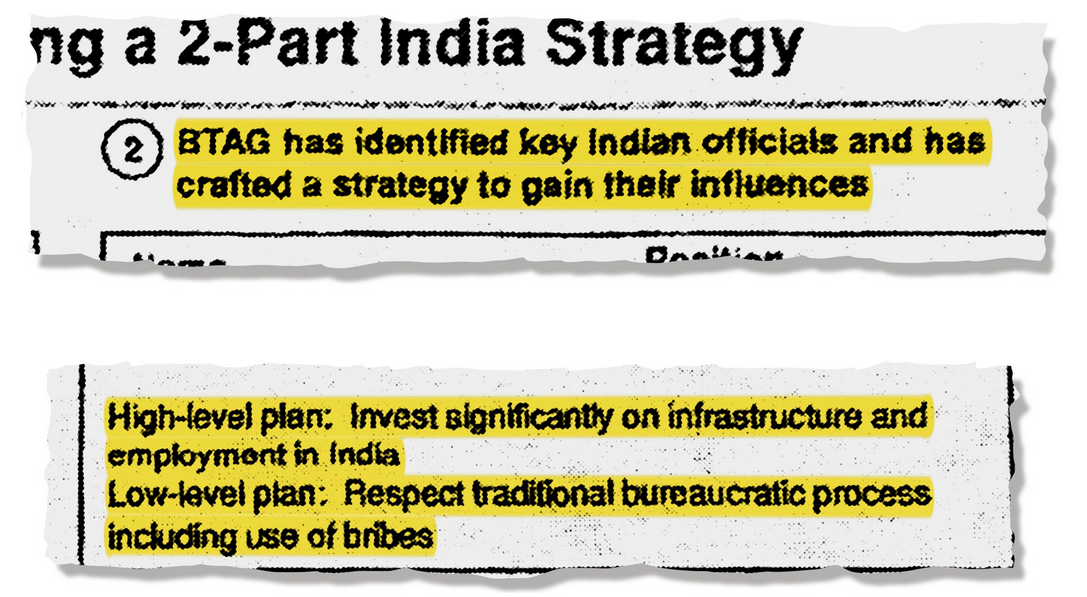
Back in 2006, Boeing hired management consultancy McKinsey to help the company launch its 787 Dreamliner despite rising titanium prices. According to a New York Times article, McKinsey evaluated a proposal for Boeing “to mine titanium in India through a foreign partnership financed by an influential Ukrainian oligarch.”
On a PowerPoint slide, the consultancy suggested that Boeing “respect traditional bureaucratic process including use of bribes.” Included on the slide were names of eight “key Indian officials.” As the article notes, “Nowhere in the slide did McKinsey advise that such a scheme would be illegal or unwise.”
McKinsey admitted authoring the report only after learning that the Times had a copy. Details are fuzzy, and McKinsey isn’t offering more explanation.
Discussion:
What’s your view of McKinsey’s responsibility in this situation? Do you believe they encouraged illegal activity, were just doing the job of management consultant firm and considering cultural realities, or something else?
The PPT slide seems to have implicated McKinsey. Should the consultants have been more careful about what was documented? Why or why not?
What character issues may be at play in this situation?
The NYT author wrote, “Nowhere in the slide…” I would say, “Nowhere on the slide…” Which is correct—or are both acceptable?

Facebook's Rules for Managing Political Speech

A New York Times article describes a complex rulebook to help employees decide whether to address political speech on the site. The decision process is daunting, and guidelines include extensive examples of content—text and visuals—that may indicate hate or inspire violence.
The author questions whether Facebook employees are making rational, consistent decisions:
The guidelines for identifying hate speech, a problem that has bedeviled Facebook, run to 200 jargon-filled, head-spinning pages. Moderators must sort a post into one of three “tiers” of severity. They must bear in mind lists like the six “designated dehumanizing comparisons,” among them comparing Jews to rats.
Others say Facebook has too much power because the company controls speech in international political situations. For example, before an election in Pakistan, during a 24-hour media blackout, Facebook may have been the go-to source. Before this time, Facebook distributed 40 pages of “political parties, expected trends, and guidelines” to its employees. But guidelines sometimes contradict each other, and Facebook relies of Google Translate, which may not be accurate or precise enough.
Discussion:
When Facebook faced criticism about sharing information with technology partners, company leaders responded in a blog post. If they were to do something similar in this case, what should they say to rebuild confidence in the site?
Although the rules can be a “bit baffling,” as the author says, Facebook is trying to address other criticism about its response to hate and violence on the site. What, if anything, can the company do differently to accept accountability?

Juul Employees Can't Juul at Work
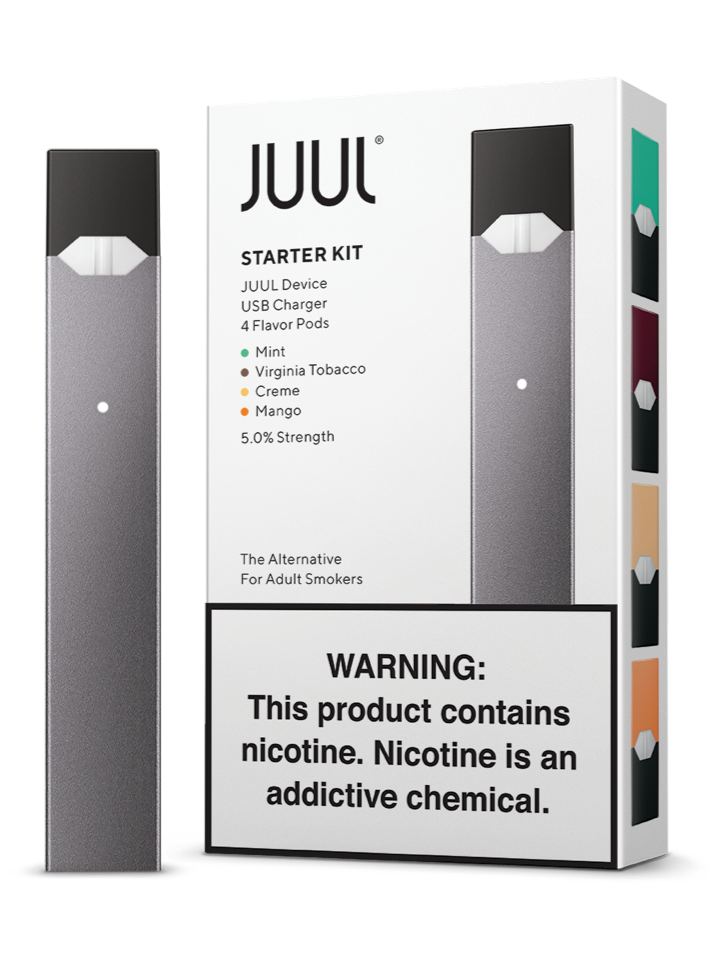
The e-cigarette company has decided to follow the law and prohibit its employees from Juuling at work. The law isn’t new: The California law against vaping in the workplace has been on the books since 2016.
A Wall Street Journal article describes vaping etiquette from the American Vaping Association:
There is etiquette for in-office vaping, says Gregory Conley, president of the American Vaping Association. Foremost: Don’t blow clouds. Take a puff and hold your breath for three to five seconds, and the vapor evaporates in your mouth. “If it’s 10 degrees outside and I want a single puff, I just take a puff and hold my breath” when indoors, he says. “Ninety-nine percent of people don’t care so long as they don’t see anything.”
Meanwhile, the U.S. Surgeon General just released a warning against vaping. Experts say e-cigarettes have toxic chemicals, and users are at higher risk for a heart attack. Studies indicate that teens who vape are more likely to smoke cigarettes later on.
Discussion:
The situation is a confusing issue of integrity. Some might question why employees were allowed to Juul, against the 2016 law. What’s your view of their decision?
Juul is popular among young people even though the product is intended for people 21-and-over. To what extent is that the company’s responsibility?

Report on Larry Nassar

A new report on the former Olympics coach and doctor, Larry Nassar, blames officials at Michigan State University, the U.S. Olympics Committee (USOC), and USA Gymnastics for allowing his abuse of hundreds of girls over decades. The investigators concluded, “Numerous institutions and individuals enabled his abuse and failed to stop him.”
In some cases when officials learned of an abuse allegation against Nassar, they waited weeks or months to report to; in other cases, officials reported claims but didn’t do enough to follow up. In still other cases, officials did nothing at all.
Nassar was finally convicted and sentenced to what will be life in prison. With the report results, some hope the USOC will now be investigated.
The report aligns with an NPR podcast, Believed, tracing claims against Nassar and his medical defense, which was accepted by too many for too long.
Discussion:
How do you think the abuse continued for so long? If you listen to the podcast Believed, you’ll hear Nassar’s defense during police interviews.
Analyze the report. What business communication principles are followed, and in what ways could the report be improved?

Trump Undocumented Workers Speak Out

Employees of Trump National Golf Club in Bedminster, NJ, say they are undocumented in the U.S. and express disappointment at the president’s comments about immigrants. For five years, Victorina Morales has worked at the property, and her responsibilities sometimes include providing housekeeping services for the president’s private quarters.
Although the president may not have known about their status, Morales and a former employee say several within the housekeeping, maintenance, and landscaping crews don’t have papers to work legally in the U.S.
Morales said her status is known at the club, and she was hurt when she heard the president comparing recent immigrants to criminals:
“We are tired of the abuse, the insults, the way he talks about us when he knows that we are here helping him make money. We sweat it out to attend to his every need and have to put up with his humiliation.”
During the presidential campaign, President Trump said of his businesses, “We didn’t have one illegal immigrant on the job.”
Discussion:
What risks does Morales take by speaking out? Why might she forge ahead and not be deterred by those risks?
How is this a potential issue of integrity for President Trump?
Should President Trump be held accountable for undocumented workers on his properties? Why or why not?

Student Is Escorted Out of Class
A biology lecturer at University of Texas at San Antonio called campus police about a student’s behavior. Another student in the class tweeted, “So this happened today in class, a girl had her feet up and the professor called the police after calling our class uncivil.” A video shows an African-American student being escorted out of the classroom.
The University posted a tweet soon after the incident:

Later, President Taylor Eighmy sent a letter to students announcing that the instructor will be replaced for the rest of the term and that the student will be welcomed back. The university is investigating the incident, including potential racial bias, because the student is African-American.
Discussion:
A student in the class posted that the instructor referred to the class as “uncivil.” What’s your view of civility in a classroom setting? What examples would describe an uncivil classroom?
Did the instructor do the right thing by calling campus police? Did campus police do the right thing by escorting the student out?
What other options are available to an instructor wanting to manage classroom behavior?
One Way to Increase Understanding
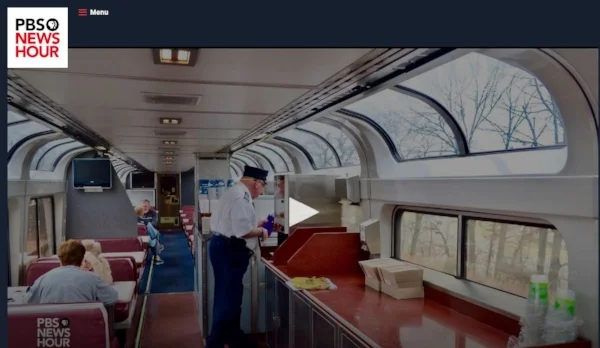
Wanting a break from technology, singer and songwriter Gabriel Kahane traveled the United States by train, meeting people and hearing their stories. Right after the 2016 presidential election, Kahane rode Amtrak trains for almost 9,000 miles to understand how people across the country think and feel.
Kahane describes his strategy for what he calls “radical empathy”:
I set some ground rules for myself when I was on the train. One of the things that I was really interested in doing wasn't arguing with people. And I think that that is sort of one of the fundamental problems that we face right now, is this idea we all sort of have contempt for the other side.
We say, well, I just can't engage with that person. And there were some cases where I failed, and I would then go back to my sleeper car and write in my journal: You argued. You said you weren't going to do that.
Kahane challenges how much importance we place on “efficiency.” He says that downtime gives us space to reflect about shared, complex problems: “I think there's a real consequence to not having that space to just sit silently and think, what is it to be in this other person's body.”
Discussion:
What’s your view of “radical empathy,” as Kahane describes it? What is the value, and what are the downsides of his approach?
What character dimensions does Kahane illustrate in this story?
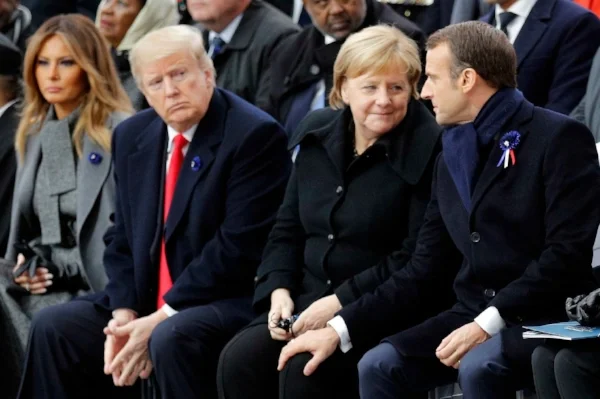
Cultural Differences: Putting Your Hand on Someone's Knee

On the front page of today’s Wall Street Journal, we see French President Emmanuel Macron’s hand on German Chancellor Angela Merkel’s knee. A online WSJ article is titled, “Merkel and Macron got along so well in Paris that a 100-year-old woman thought they were married.” The two looked affectionately at each other and held hands during a weekend in Paris at a World War I commemorative event.
Physical touching in U.S. companies is generally frowned upon and could inspire sexual harassment claims. But in Europe, the cultural norms and laws are different.
An image search for “Merkel and Macron” shows embraces and touching throughout the years.
Cover image source. Embrace image source.
Discussion:
Describe the cultural differences from your own experience and knowledge.
What’s your personal view of this type of touching at work among colleagues?

Elementary Teachers Dress as Border Wall

For Halloween, elementary school teachers in Middleton, Idaho, wore costumes portraying parts of a border wall and depicting stereotypes of Mexicans. Pictures showing them smiling as a group with the slogan, “Make America Great Again,” were posted to a Facebook page.
The teachers dressed up during school hours, and parents alerted the school administrators to the problem. In addition to their complaints, 12 local advocacy organizations wrote a letter to the superintendent, including this statement:
“The intent or misjudgments of the individuals involved does not undo the trauma experienced by students, families and communities. The impact on these students does not stay only with them but has lasting effects beyond the school or classroom. We believe the school and classrooms have now become hostile environments that are not conducive to the education of the students.”
In response, the school district posted a statement on its website:
The events that took place at Heights Elementary School in Middleton on Halloween are disturbing and inappropriate. The teachers involved, as well as school administrative personnel, and the Middleton School District showed extremely poor judgment.
The messages conveyed are the antithesis of the beliefs and values of the Idaho Education Association and its dedicated members throughout the state.
The IEA and the Middleton Education Association stand ready, willing, and able to assist the district in providing diversity and cultural competency training for Middleton School District employees. As troubling as the situation is, it does provide us with an opportunity for education and growth so that people can be made more aware of how hurtful these kinds of insensitive behaviors can be.
Discussion:
What’s your view of the teachers’ costumes: harmless fun, insensitive, hurtful, or something else?
Assess the district’s statement. Who is the audience and what are the communication objectives? How well does it achieve its purpose.
Write a better apology. How can you demonstrate humility and address concerns more specifically? Include consequences: what should the district do as a result?