

Confusing Pie Chart
A former student sent me this chart, and he didn’t have a source, but it’s a good example of what not to do when creating pie charts. What problems can you identify?

Discussion:
What principles of creating pie charts are followed, and how does the chart fall short?
Is the pie chart the best choice for this data? What would be a better choice and why?
What does the text imply?

More Toyota Recalls

About a month after the last recall, Toyota announced another recall for a total of 1.8 million vehicles. The issue is a fuel pump that fails, causing the car to stall and possibly not restart.
In both statements, Toyota calls the recall “voluntary,” but the number of models is significant, dating back to 2013. Like most recall messages, Toyota’s is straightforward and focuses on affected vehicles and the remedy—in this case a new fuel pump for free.
Discussion:
Analyze the recall message. Who are the primary and secondary audiences, and what are the communication objectives?
Analyze Toyota’s website. How easy is it to find information about the recalls? What, if anything, could be improved?
Email Scammers
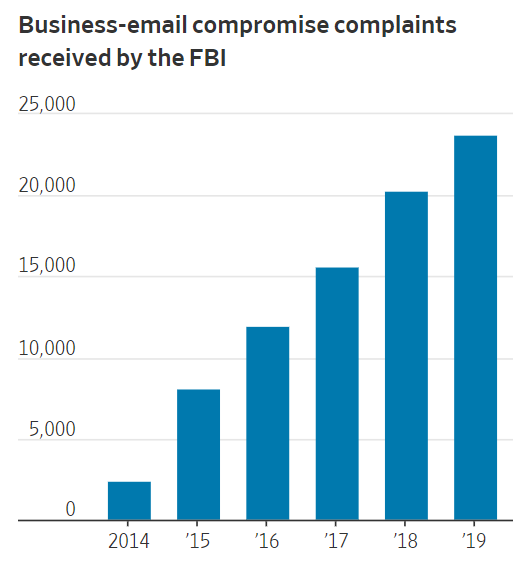
Remember those quaint email scams that were riddled with grammatical errors? A Wall Street Journal article describes new, sophisticated training for email scammers in Africa. A Nigerian is quoted: “You know how you guys play baseball when you are growing up? Here many of us learn fraud.”
Former scams involved people sending email asking for money for people in trouble or promising big returns on small funds. Today’s scams involve hacking into accounts and people learning about connections, for example, what vendors a company uses. A fake invoice to a known vendor is more likely to get paid. Using a grandson’s real name could lead a grandmother to Wal-Mart to send money to him, which happened to my friend’s mother.
About $1.7 billion was lost to email scams in 2019, and complaints are rising steadily. The article describes a “grooming” process “like organized crime.”
Discussion:
We hear a lot about victims’ vulnerability, but what creates a culture of scammers? What makes people vulnerable to commit this fraud? For more about this, watch The Weekly documentary about love scams on Facebook.
What’s your view of the bar chart in the WSJ article? How could it be improved? Would you prefer a more creative graphic, or does this work as is?
Comparing Headlines About the Market

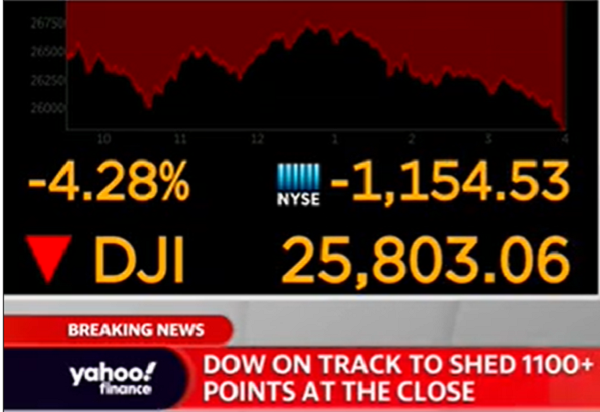
How does the media describe the recent stock market decline? Let’s compare a few headlines:
Dow falls 1,191 points -- the most in history (CNN)
Coronavirus Drives Stocks Down for 6th Day and Into Correction (New York Times)
U.S. Stocks Slide Into a Correction as Virus Fears Show No Sign of Easing (Wall Street Journal)
Dow's point drop worst on record as stocks fall into correction (Fox News)
Dow drops 1190 points amid coronavirus fears, S&P 500 sees fastest correction in history (Yahoo Finance)
Of the five, Fox is the only one that didn’t place a headline about the market at the top of its web page.
Discussion:
What do you make of these headline choices, including placement? What might the wording indicate about the media group’s beliefs or audience?
In class after a previous decline, I took issue with headlines like CNN’s. Do you see an issue? (Hint: What does a raw number tell us?)

Quantifying a Tweet
When someone in an organization goes rogue and sends a tweet, what’s the potential damage? The NBA found out the hard way that the financial impact could be significant.
In October 2019, Houston Rockets General Manager Daryl Morey supported Hong Kong protests in a tweet. As a result, Chinese advertisers pulled their ads and broadcasters wouldn’t air games. Now, NBA commissioner Adam Silver admits the loss will total “hundreds of millions” of dollars and “probably less than $400 million.” Silver expanded on the damage:

“It’s substantial. I don’t want to run from that. We were taken off the air in China for a period of time, and it caused our many business partners in China to feel it was therefore inappropriate to have ongoing relationships with us. But I don’t have any sense that there’s any permanent damage to our business there.”
Discussion:
Review the situation from October. What lessons can managers learn?
What’s your view of Silver admitting the loss? What are the arguments for and against his honesty?

Report Criticizes Airline Safety and Oversight

A U.S. Department of Transportation report criticizes the Federal Aviation Association and Southwest Airlines for lax safety standards. A New York Times article summarizes the report findings:
“The report found that the Federal Aviation Administration had allowed Southwest to routinely provide inaccurate data to pilots and to operate more than 150,000 flights on planes whose airworthiness had not been confirmed.
“The agency also failed to investigate concerns raised by its own representatives ‘ranging from senior executives to local inspectors’ over Southwest’s safety culture.”
The DOT includes “Four SMS Components,” the FAA’s own description to fault safety culture in both organizations.
Discussion:
What business communication principles are illustrated in the report? Who are the primary and secondary audiences, and how well does the report meet its communication objectives?
The report does a particularly good job of using “message titles” (also called “talking headings”). What are some examples?
What else do you notice about the report? Consider the writing style, organization, and other features. What could be improved?

Wells Fargo Former CEO Banned

In what the Wall Street Journal calls “unprecedented” and “an extraordinary sanction for a top executive at a large bank,” former CEO John Stumpf has been barred from the banking industry. The decision—and a $17.5 million fine—were part of a settlement between Stumpf and the Office of the Comptroller of the Currency (OCC) for millions of fake bank accounts created at Wells Fargo.
The OCC concluded that Stumpf should have known of the systemic problems and that “there was a culture in the Community Bank that resulted in systemic violations of laws and regulations.” When the scandal became public, employees complained of extreme stress because of pressure to sell more bank products. This pressure led employees to create fake accounts for customers.
Other Wells Fargo executives have been fined and charged, but none have been banned from the industry.
Discussion:
Do you think the decision is fair? Why or why not?
This decision represents a shift from the 2008/2009 financial crisis, when banks paid significant fines but very few individuals were charged. What’s your view of the change?

Emails Show USC's Potential Role in the Admissions Scandal

Actress Lori Loughlin and her fashion-designer husband Mossimo Giannulli have been charged with bribing University of Southern California athletic officials to get their daughter admitted. Now emails from USC show that the school was courting them by asking for donations and arranging for personalized campus tours. In one email, a university official wrote, “I’d also be happy to flag her application.”
A New York Times article summarizes how accused parents plan to defend themselves against charges:
Motions by several of the defendants suggest they will argue, essentially, that they could not have defrauded the university, as prosecutors say, because the university was actively seeking such donations and offering a leg-up in admissions in return.
In a statement, USC downplayed the special treatment:
“What was being offered to the Giannullis was neither special nor unique. Tours, classroom visits and meetings are routinely offered. The primary purpose of a flag is to be able to track the outcome of the admission review process. It is not a substitute for otherwise being qualified for admission to USC.”
Parents are expected to say that their donations were legitimate, but USC is expected to say that the bribery was specific to the crew team official, who “agreed to pass the couple’s two daughters off as coxswains.”
Discussion:
What’s your view of this situation? Do you agree more with the parents’ or with the school’s perspective?
What, if anything, do the school’s emails reveal? Consider this message to the parents: “Please let me know if I can be at all helpful in setting up a 1:1 opportunity for her, customized tour of campus for the family, and/or classroom visit?”

WSJ Opinion About Boeing Emails

A Wall Street Journal writer argues that Boeing employee emails “explain nothing.” A previous WSJ article concluded that emails demonstrated a “cavalier attitude towards safety,” and a Reuters article concluded that employees “distrust the 737 MAX” and “mock regulators.”
The opinion writer, Holman Jenkins Jr., argues, “all of corporate America, not just Boeing, lives these days by employing creative, freethinking people who spout off acerbically, critically and colorfully in electronic messages.” Jenkins questions the reporting of these emails and what is omitted.
Jenkins also asks why these employees didn’t write about MCAS design flaws: “If the hypercritical people seen in these messages had known about MCAS’s design flaws, it never would have gotten through.” He also notes that the only emails referring to MCAS were from 2013, although system changes were made in 2016.
Discussion:
Read Jenkins’ article. What do you consider to be his strongest and weakest arguments?
Based on his argument and your own reading of media reports, what’s your opinion about the significance of the emails?
What issues of integrity does this situation raise?
Boeing's Crisis Communication Plan

During the holiday break, several news items about Boeing were relevant to business communication and character. In one article, the New York Times revealed internal Boeing documents showing a company trying to rebuild its image after two MAX crashes within a year..
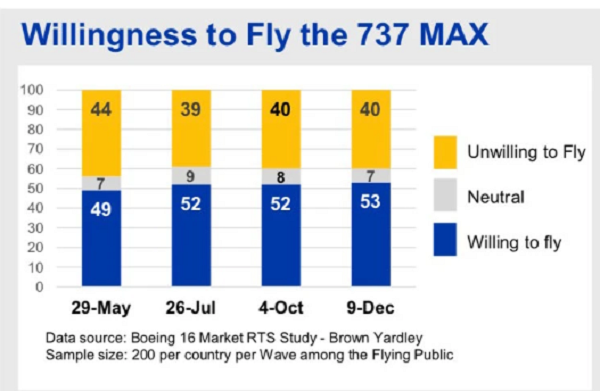
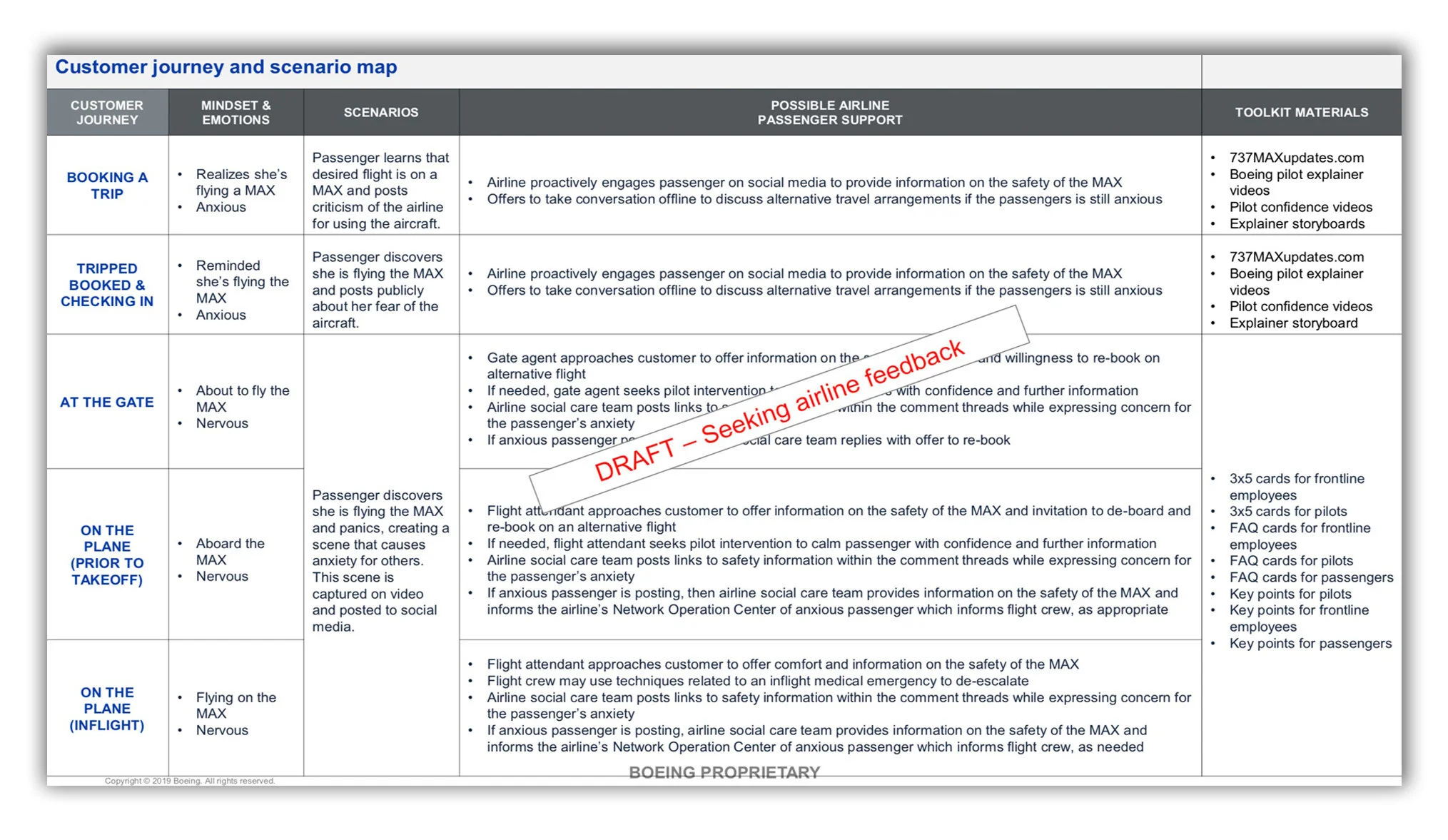
The documents give us an inside view of how the company plans to use persuasive strategies to win back customers. In one graphic, we see customers’ willingness to fly. In another, we see customer concerns and ways Boeing can address them, for example, with FAQ cards, “pilot confidence videos,” or personal connections (for example, “Flight attendant offers comfort and information on the safety of the MAX”).
Discussion:
What persuasive strategies does the company plan? Try to find examples of logical argument, emotional appeal, and credibility.
What are the consequences of this information becoming public? Does it likely endear the public to the company’s concerns, embarrass the company, or something else?

Data in the Uber's Safety Report
Uber published its first safety report, and the company is lauded for its transparency. A Wall Street Journal article leads with the number of sexual assaults reported during the last two years: 5,981. Of course, any number is too many—no one should be assaulted in an Uber or anywhere else. And sexual assaults are notoriously underreported, so we have no idea how many have actually occurred.
At the same time, a skeptic might want to know the total number of rides in order to put the number of reports in context. The report does provide this information (see the report for footnotes):
The report makes additional attempts to put the numbers in context:
All of that work culminates in the Safety Report that we are sharing with you, the public, today. To put US safety challenges in context:
• In 2018, over 36,000 people lost their lives in car crashes in the United States alone (3)
• Approximately 20,000 people were the victims of homicide in 2017(4)
• Nearly 44% of women in the US have been a victim of sexual violence in their lifetime—which means that more than 52 million women live with that experience every day (5)
Every form of transportation is impacted by these issues. For example, the NYPD received 1,125 complaints of sex offenses in the transit system during the same time period covered by this report.(6,7) In the United States alone, more than 45 rides on Uber happen every second. At that scale, we are not immune to society’s most serious safety challenges, including sexual assault. Yet when collecting data for that portion of our report, we found there was no uniform industry standard for counting and categorizing those types of incidents.
The 84-page report is incredibly detailed and includes external reports for credibility and the number of charges for various types of assaults.
Discussion:
Analyze the report: the audience, communication objectives, organization, writing style, format. What works well, and what could be improved?
Does the context in these examples convince you that the numbers aren’t so bad? Why or why not?
Otherwise, how well does Uber address the safety issues? How do you assess the report credibility? What other questions do you have?
Microsoft's Diversity and Inclusion Report

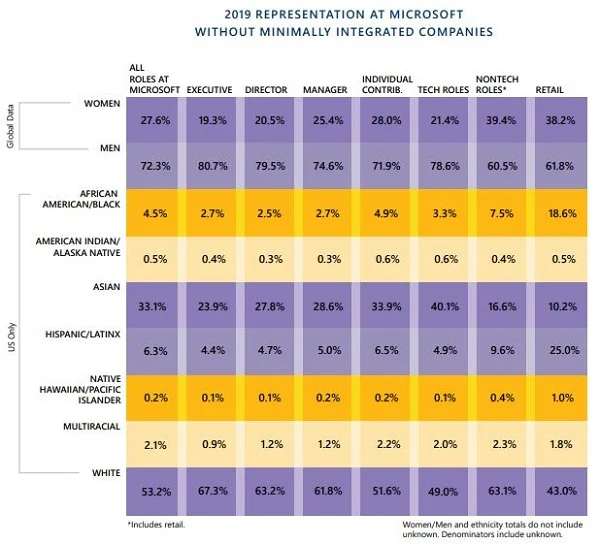
Microsoft’s 2019 Diversity and Inclusion report is the company’s sixth since 2014.
In the introductory letter, we learn about positive changes in demographic data:
In technical roles alone, we have 49% more women, 48% more Hispanic/Latinx, and 67% more African American/Black employees than we did three years ago. And beyond population growth, this year’s snapshot shows diversity representation has risen in every demographic category we track.
The report includes a few dazzling graphics, such as the one shown here.
Discussion:
Read the entire report. What principles of business communication are followed?
What suggestions for improvement would you suggest to the report authors?
What’s your view of the graphic shown here? What is the main point? How else could the data be shown?
Although the report writers acknowledge that some of the diversity increase in technical roles is attributed to employee growth, what other questions might a skeptic ask?
SoftBank's Vague WeWork Slides
SoftBank already took a financial hit because of its investment in WeWork. Now, the company is facing criticism about its data analysis and presentation.
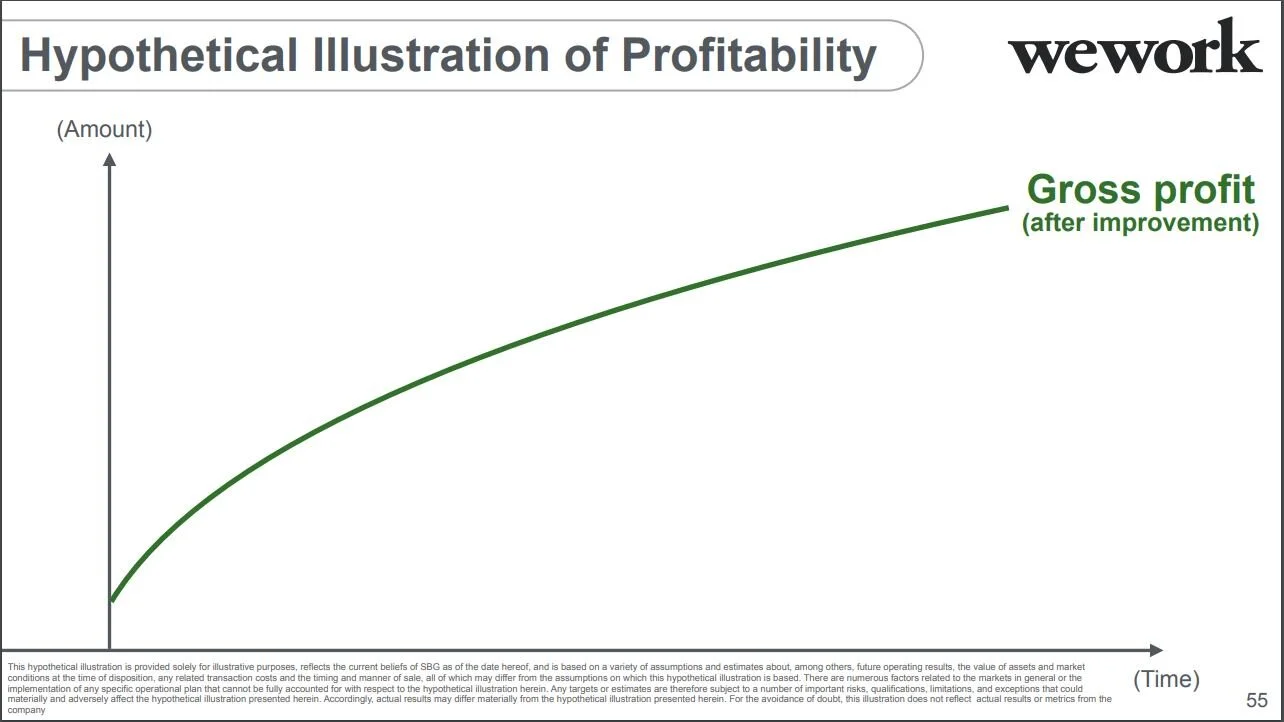
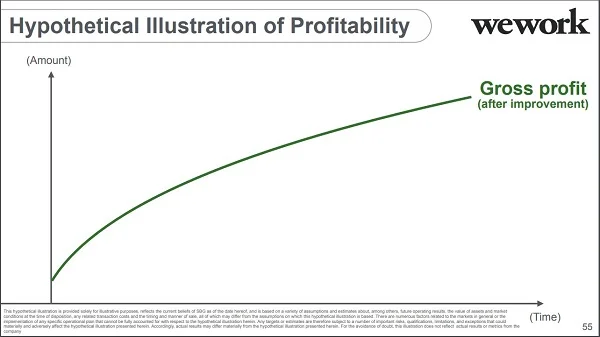
A deck SoftBank Group (SBG) used to justify its WeWork investment includes several “hypothetical” and vague slides, like this one.
If you’re having trouble reading the footnote, here it is:
This hypothetical illustration is provided solely for illustrative purposes, reflects the current beliefs of SBG as of the date hereof, and is based on a variety of assumptions and estimates about, among others, future operating results, the value of assets and market conditions at the time of disposition, any related transaction costs and the timing and manner of sale, all of which may differ from the assumptions on which this hypothetical illustration is based. There are numerous factors related to the markets in general or the implementation of any specific operational plan that cannot be fully accounted for with respect to the hypothetical illustration herein. Any targets or estimates are therefore subject to a number of important risks, qualifications, limitations, and exceptions that could materially and adversely affect the hypothetical illustration presented herein. Accordingly, actual results may differ materially from the hypothetical illustration presented herein. For the avoidance of doubt, this illustration does not reflect actual results or metrics from the company.
The slide title is also odd: the illustration isn’t hypothetical, but the profitability is.
Discussion:
How might this chart affect SoftBank’s credibility?
What other examples in the SoftBank deck are problematic?
What leadership character dimensions are illustrated by this situation?

Letter from WeWork Employees
As WeWork plans layoffs, employees are asking for input into what happens to them and their peers. Referring to themselves as WeWorkers Coalition, the employees wrote a letter to the management team.
To the We Company Management Team:
WeWork’s company values encourage us to be “entrepreneurial, inspired, authentic, tenacious, grateful and together.” Today, we are embracing these qualities wholeheartedly as we band together to ensure the well-being of our peers.
We come from many departments across the company: building maintenance, cleaning, community, design, product, engineering and more. We believe that in the upcoming weeks we have the unique opportunity to demonstrate our true values to the world. This is a company that has inspired many of us, challenged us, and has been a formative personal and professional experience for those of us who began our careers here. WeWork has been not just a workplace, but a source of friendships and inspiration along the way.
We also believe our product can have a lasting positive impact on the world. We want to improve workplace happiness for millions of office workers and support small and medium sized businesses in their entrepreneurial efforts. We have been proud to support these goals and dedicate our time and talent to achieve them. This has been our story so far.
Recently, however, we have watched as layers are peeled back one-by-one to reveal a different story. This story is one of deception, exclusion and selfishness playing out at the company’s highest levels. This is a story that reads as a negation of all our core values. But this story is not over.
Thousands of us will be laid off in the upcoming weeks. But we want our time here to have meant something. We don’t want to be defined by the scandals, the corruption, and the greed exhibited by the company’s leadership. We want to leave behind a legacy that represents the true character and intentions of WeWork employees.
In the immediate term, we want those being laid off to be provided fair and reasonable separation terms commensurate with their contributions, including severance pay, continuation of company-paid health insurance and compensation for lost equity. We are not the Adam Neumanns of this world — we are a diverse work force with rents to pay, households to support and children to raise. Neumann departed with a $1.7 billion severance package including a yearly $46 million “consulting fee” (higher than the total compensation of all but nine public C.E.O.s in the United States in 2018). We are not asking for this level of graft. We are asking to be treated with humanity and dignity so we can continue living life while searching to make a living elsewhere. In consideration of recent news, we will also need clarity around the contracts our cleaning staff will be required to sign in order to keep their jobs, which are being outsourced to a third party. Those of us who have visas through WeWork need assistance and adequate time to find a new employer to sponsor our respective visas.
In the medium term, employees need a seat at the table so the company can address a broader range of issues. We’ve seen what can happen when leadership makes decisions while employees have no voice. We will need to see more transparency and more accountability.
We also need the thousands who maintain our buildings and directly service members to receive full benefits and fair pay, rather than earning just above minimum wage.
We need allegations of sexual misconduct and harassment to be taken seriously, acted on immediately and resolved with transparency.
We need diversity and inclusion efforts to materialize into real actions, not just talking points at company meetings.
We need salary transparency so we can surface and address systemic inequalities.
We need an end to forced arbitration contracts, which strip employees of their right to pursue fair legal action against the company.
We need all of this, and more.
In the long term, we want the employees who remain at WeWork, and those who join in the future, to inherit something positive we left behind. We want them to never find themselves in this position again, and for that to happen, they need a voice.
With this letter we are introducing ourselves, the WeWorkers Coalition. We are taking full advantage of our legal right to establish this coalition, and in doing so, we hope to give the future employees of WeWork the voice we never had.
We want to work with you. Please join us in writing a better ending to this chapter of the WeWork story.
By this Thursday at 5:00 p.m. EST, we would like to receive confirmation of your receipt of this letter and an indication of your willingness to meet us.
The WeWorkers Coalition
@weworkersco • info@weworkersco.org • #weworkers-coalition
Discussion:
What principles of business writing do the employees follow?
What persuasive strategies do they use in the letter? Find examples of logical argument, emotional appeal, and credibility.
What do you consider the strongest and weakest arguments?
What leadership character dimensions are illustrated in this situation?

Boeing CEO Responds to Questions
This week, Boeing CEO Dennis Muilenburg answered lawmakers’ questions about the two Max 737 plane crashes in the past year. Facing families of deceased passengers, Muilenburg began his testimony with an apology:
“I’d like to begin by expressing my deepest sympathies to the families and loved ones of those who were lost in the Lion Air Flight 610 and Ethiopian Airlines Flight 302 accidents, including those who are here in the room today. I wanted to let you know, on behalf of myself and all of the men and women of Boeing, how deeply sorry I am. As we observe today the solemn anniversary of the loss of Lion Air Flight 610, please know that we carry the memory of these accidents, and of your loved ones, with us every day. They will never be forgotten, and these tragedies will continue to drive us to do everything we can to make our airplanes and our industry safer.”
One of the most tense moments was when Senator Ted Cruz questioned Muilenburg (see video). Muilenburg also faced criticism as he was leaving. The mother of a victim of the second crash responded to his invoking his Iowa farm background:
“Go back to Iowa. Do that.” She also said, “I don't feel like you understand. It's come to the point where you're not the person anymore to solve the situation."
Discussion:
Watch more of Muilenburg’s testimony. What are some examples of questions he addressed well, and how could he have done better?
How well does Muilenburg balance emotional appeals, logical arguments, and credibility in his testimony?
What leadership character dimensions are illustrated by this situation and by Muilenburg’s testimony?
Muilenburg’s interaction with the mother is a difficult situation for anyone to handle, and we can certainly understand her grief and anger. How would you have responded?
CNN reports:
“In response, Muilenburg said he respects her viewpoint. "But I want to tell you the way I was brought up. And I'm just being honest here about it. I learned from my father in Iowa ... when things happen on your watch you have to own them and you have to take responsibility for fixing them," he said.

Plain Language from Financial Advisers

A Wall Street Journal writer asks financial advisers to speak to us in plain English. A new Securities and Exchange Commission rule—described in 564 pages—calls for simpler writing. But the author wants advisers to go further, for example, to use more visuals and categories: “color-coded from red to green, for instance, or arrayed on a scale from 1 to 10.”
Fortunately, the rule includes a summary, although students of business communication will find problems:
The Securities and Exchange Commission (the “Commission” or the “SEC”) is adopting new rules and forms as well as amendments to its rules and forms, under both the Investment Advisers Act of 1940 (“Advisers Act”) and the Securities Exchange Act of 1934 (“Exchange Act”) to require registered investment advisers and registered broker-dealers (together, “firms”) to provide a brief relationship summary to retail investors. The relationship summary is intended to inform retail investors about: the types of client and customer relationships and services the firm offers; the fees, costs, conflicts of interest, and required standard of conduct associated with those relationships and services; whether the firm and its financial professionals currently have reportable legal or disciplinary history; and how to obtain additional information about the firm. The relationship summary will also reference Investor.gov/CRS, a page on the Commission’s investor education website, Investor.gov, which offers educational information to investors about investment advisers, broker-dealers, and individual financial professionals and other materials. Retail investors will receive a relationship summary at the beginning of a relationship with a firm, communications of updated information following a material change to the relationship summary, and an updated relationship summary 2 upon certain events. The relationship summary is subject to Commission filing and recordkeeping requirements.
Plain language in government documents started as an initiative in the 1990s, and the group highlights before-and-after examples.
Discussion:
How could you rewrite the summary, above, for easier reading?
Review the Plain Language website. What are your impressions of the group’s work?

Business Leaders Sign Letter to Top Officials

Fifty CEOs and business school leaders signed a letter to President Trump and other top-ranking politicians urging action to allow for more international applications. The letter comes after a report by the Graduate Management Admissions Council showing declining applications.
Report conclusions follow:
[A]llowing top talent to study and work in the country of their choice helps create jobs, not take them. It offers insight into changing trends for historically talent-attracting and talent-supplying countries. Business school applications are a powerful metric—and forecast—of the success of individual economies in prioritizing talent and therefore leading innovation and growth. A survey of these latest metrics shows change in our midst—and for certain economies, warning signs for the future.
In their letter, the business leaders write that the U.S. is “needlessly capping our growth and can do better.” They urge U.S. politicians to allow more movement by taking the following action:
Removing “per-country” visa caps, modernizing our visa processing system, and reforming the H-1B visa program to make it possible for the most talented people to have a reasonable chance of gaining entry to the United States.
Creating a “heartland” visa that encourages immigration to the regions of the United States that could most use the vitality of these talented individuals.
Discussion:
Analyze the letter. Who are the primary and secondary audiences? What are the communication objectives? How do you assess the organization and writing style?
What persuasive communication strategies do the writers use? Which are most and least effective?
Analyze the report using the same questions.
How well does the infographic summarize the report conclusions? What could be improved?
Reciprocity in the News
Students of persuasion likely learned about reciprocity. In my class, we discuss reciprocity as a logical reasoning type and as one of Cialdini’s six principles of persuasion. We also talk about quid pro quo, meaning “this for that,” as a type of sexual harassment.
Steven Pinker, a cognitive scientist at Harvard, wrote an opinion piece in the New York Times titled, “A Linguist’s Guide to Quid Pro Quo,” referring to the discussions between President Trump and Ukrainian President Volodymyr Zelensky.
President Trump and his supporters have gone to the heart of the issue, denying any quid pro quo. Senator Lindsey Graham of South Carolina tweeted, “What a nothing (non-quid pro quo) burger.” Defenders also say that this type of reciprocity is common for political leaders.
Pinker believes that an explicit “if,” “then” construction isn’t necessary for a quid pro quo agreement:
It’s true that the transcript of the reconstructed conversation does not reveal a smoking sentence with an “if” and a “then.” But to most readers, Mr. Trump’s claim that he was merely musing about his druthers does not pass the giggle test. That is because people in a social relationship rarely hammer out a deal in so many words but veil their offers in politeness and innuendo, counting on their hearers to listen between the lines.
More typically, we see politeness in reciprocal transactions. During the call, President Trump said, “I would like you to do us a favor though.”
This article also raises issues about a “transcript,” which he describes as a reconstructed conversation. The summary isn’t verbatim, and it’s unclear whether a recording exist.
Discussion:
Describe reciprocity as a method of influence. What is the value to business relationships, and what dangers should be avoided?
Talk about a time when you practiced reciprocity, but it felt imbalanced—either for you or for the other person? How did it feel? How can avoid this in the future?
In this case, do you think President Trump crossed a line, or do you believe his statement, “There was no quid pro quo”?

LeBron James Enters the Tweet Debate
As the NBA struggles to recover after Houston Rockets General Manager Daryl Morey tweeted in support of Hong Kong protesters, LeBron James questioned Morey’s choice:
“Yes, we all do have freedom of speech. But, at times, there are ramifications for the negative that can happen when you’re not thinking about others, when you’re only thinking about yourself. . . . I believe he wasn’t educated on the situation at hand, and he spoke. And so many people could have been harmed, not only financially, but physically, emotionally, spiritually. So just be careful. . . .”
The Wall Street Journal reports that people were “stunned” by his comment because James is typically careful about his public comments.
Discussion:
What’s your view of James’ commenting on the situation? Should he have avoided commenting? Why or why not?
What’s your view of his comments? How well did he handle the situation?
What leadership character dimensions are illustrated by James’ comments?

NBA Tweetstorm
The NBA is thrust into a political quagmire after Houston Rockets general manager Daryl Morey tweeted in support of the Hong Kong protesters: '“Fight for Freedom. Stand with Hong Kong.” The tweet has since been deleted.
NBA Commissioner Adam Silver is dancing a line between protecting Morey’s free speech and staving off China’s backlash. Critics say the league is driven by profit instead of principle. He has tried to clarify his position:
“It is inevitable that people around the world — including from America and China — will have different viewpoints over different issues. It is not the role of the NBA to adjudicate those differences. However, the NBA will not put itself in a position of regulating what players, employees and team owners say or will not say on these issues. We simply could not operate that way.”
At this point, The Wall Street Journal reports better news:
“The situation appears to have de-escalated. After a week of blistering anti-NBA rhetoric in Chinese media, the government is signaling that it’s time to cool it, a message that includes the vitriol directed at the Rockets, according to one person familiar with the situation.”
But the Journal also acknowledges: “China’s love affair with the Rockets might not be the same again.”
Discussion:
Should Morey have avoided sending the tweet? Why or why not?
How do you assess the league’s response to the situation?
Analyze Silver’s news conference. What did he do well, and what could he have done differently?