
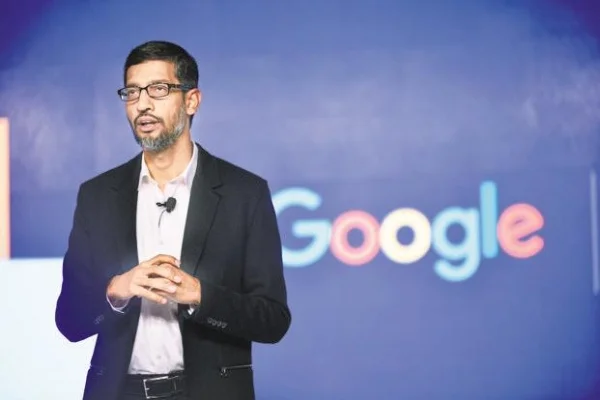
Google Admits Sexual Harassment Incidents
It’s been quiet until now, but Google has fired 48 employees for sexual harassment. A New York Times article exposed a number of high-profile departures dating back to 2014, including Andy Rubin, who developed the Android.
Rubin was paid $90 million when the company asked for his resignation, but executives never told the entire truth: that Rubin left because he was accused of sexual misconduct. Instead, then-CEO Larry Page, complimented him: “I want to wish Andy all the best with what’s next,” and “With Android, he created something truly remarkable—with a billion-plus happy users.” Rubin denies the claim and the circumstances of his termination.
In addition to this situation, the Times article cites a number of relationships between senior-level managers and employees. An email from CEO Sundar Pichai and the VP of people operations to staff acknowledges the 48 departures, including 13 “senior managers and above.”
Hi everyone,
Today's story in the New York Times was difficult to read.
We are dead serious about making sure we provide a safe and inclusive workplace. We want to assure you that we review every single complaint about sexual harassment or inappropriate conduct, we investigate and we take action.
In recent years, we've made a number of changes, including taking an increasingly hard line on inappropriate conduct by people in positions of authority: in the last two years, 48 people have been terminated for sexual harassment, including 13 who were senior managers and above. None of these individuals received an exit package.
In 2015, we launched Respect@ and our annual Internal Investigations Report to provide transparency about these types of investigations at Google. Because we know that reporting harassment can be traumatic, we provide confidential channels to share any inappropriate behavior you experience or see. We support and respect those who have spoken out. You can find many ways to do this at go/saysomething. You can make a report anonymously if you wish.
We've also updated our policy to require all VPs and SVPs to disclose any relationship with a co-worker regardless of reporting line or presence of conflict.
We are committed to ensuring that Google is a workplace where you can feel safe to do your best work, and where there are serious consequences for anyone who behaves inappropriately.
Sundar and Eileen
Discussion:
Should Google have been more transparent about the previous departures? Why or why not?
Should the executives say more in the email about the specific departures mentioned in the Times article? Why or why not?
Assess the email for audience analysis, objectives, tone, organization, and style. What works well, and what could be improved?
Which leadership character dimensions does Pichai demonstrate and fail to demonstrate?

Teacher Recommendation Letters Influence Harvard Decision

Details about Harvard’s admissions process are surfacing during the trial about how the university’s “race-conscious” decision policy may adversely affect Asian-Americans. The entire guidebook for admissions decisions in 2014 was entered into evidence.
This week, Harvard revealed that white students typically receive “somewhat stronger” recommendation letters from teachers and guidance counselors than Asian-American students, which affects each group’s “personal rating.” The personal ratings on based on characteristics such as kindness, courage, and leadership. When writing letters, reviewers are asked to assess “consistent testimony of an applicant’s unusual effervescence, charity, maturity, or strength of character.”
Back in 1990, the US Department of Education’s Office of Civil Rights criticized Harvard’s practice of using a personal rating and admissions officers’ stereotypical comments of Asian-American students. The same issue seems to be presented here, with comments from teachers and guidance counselors.
Discussion:
How valuable do you think teacher and guidance counselor letters of recommendation are in the admissions process? How much weight should they carry in the overall decision?
By definition, the personal rating includes subjective evaluations. Should universities try to avoid subjectivity in the admissions process? Why or why not?

Facebook's Messaging Over Time
The Wall Street Journal reports how Facebook has repositioned itself since its founding in 2004.
In 2005, at Harvard, founder Mark Zuckerberg said Facebook’s purpose is to ”look people up” and for “connecting to people.” In 2008, Facebooke expands and messages focus on helping people “share information. . . and share parts of their identity with each other.” In 2010, Zuckerberg’s vision enlarged: “People can have instantly social and personalized experiences everywhere that they go.” Soon after, Zuckerberg focused on problem solving.
In 2012, Zuckerberg said, “Our mission isn’t to be a public company. Our mission is to make the world more open and connected.” By 2013, Zuckerberg was seeing Facebook’s role in selecting governments, getting healthcare access—improving people’s lives.
More recently, given concerns about privacy and misinformation, Zuckerberg’s messages focus on responsibility.
Discussion:
The WSJ video has a negative connotation about Facebook’s changing message, particularly in light of today’s news about shareholder proposals to split Zuckerberg’s roles. Do you agree with this assessment?
How well has Zuckerberg handled messages about the evolution of Facebook in the past 14 years? What, if anything, can he do differently now?
Do you agree with the proposal to split the CEO and chairman jobs? In other words, does Zuckerberg have too power? Does he need help at this point?
How is Facebook’s evolving messaging a potential matter of integrity?
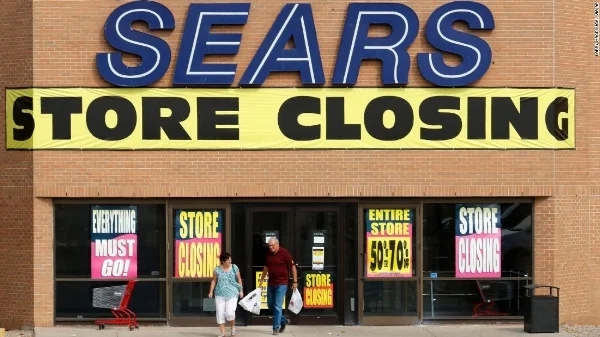
Bad News at Verizon and Sears
Verizon and Sears employees are facing job loss in the coming months.

Verizon is outsourcing some technology functions to Infosys, resulting in 2,500 jobs leaving the company.
At first, Verizon wasn’t planning to offer severance, but pressure from employees caused company leaders to change the approach. Timing was part of the problem: last month, 44,000 Verizon managers were offered a voluntary severance package to leave the company. Now, about 1,000 employees have a choice of whether to work for Infosys or accept severance pay.
Sears is declaring Chapter 11 bankruptcy after years of attempts to save the department store. The company has been steadily shedding stores. Only 700 are left, down from 1,000 in February, and more than 3,000 about a decade ago.
CNN reports that Sears has been warning investors that they may go out of business, and suppliers are requiring payment up front.
Discussion:
What’s your view of Verizon’s severance plans: unfair, discriminatory, financially necessary, based on sound principles, or something else?
Sears investors and suppliers recognize the likely fate of Sears. How prepared do you think employees are? What could the company do to help employees at this point?

Senators Send Harsh Letter to Google

The U.S. Committee on Commerce, Science, and Transportation sent a strongly worded letter to Google CEO Sundar Pichai. The senators question what the company has done to protect 500,00 users whose profile information was stolen in 2015. Their anger stems from knowledge of an internal memo, cited in a Wall Street Journal article, discouraging disclosure because of fear of “immediate regulatory interest” and the requirement for Pichai to testify before Congress.
In the letter, the senators compare Google’s response to Facebook’s in light of the Cambridge Analytica breach:
“At the same time that Facebook was learning the important lesson that tech firms must be forthright with the public about privacy issues, Google apparently elected to withhold information about a relevant vulnerability for fear of public scrutiny.”
The senators then list specific information about vulnerabilities for Google to provide by October 30.
Discussion:
Read the Wall Street Journal article for more background information. Did the senators respond appropriately? Why or why not?
What is Google’s accountability in this situation? What is the committee’s accountability?
In addition to responding to the senators’ requests, what, if anything, should Google communicate to the public at this point?
Google may have been avoiding its own vulnerability.

Amazon Loses Favor After Announcing $15 Wage

Amazon received good press for announcing employees would earn a minimum of $15/hour. But today’s news tells a different story.
Although the hourly wage will increase, Amazon is cutting bonuses and stock options, and employees fear it will cost them thousands of dollars in total compensation. The stock options, according to employees’ online posts, gave them a sense of company ownership. Some proposed walking out on Black Friday, the biggest shopping day of the year. Amazon had also granted bonuses for attendance and productivity, called Variable Compensation Plan, or V.C.P.
In response, company leaders said they would look at employees’ total compensation to make sure no one would be worse off after the changes. A spokesperson also released this statement:
"The significant increase in hourly cash wages more than compensates for the phase out of incentive pay and [restrictive stock units]. We can confirm that all hourly Operations and Customer Service employees will see an increase in their total compensation as a result of this announcement. In addition, because it's no longer incentive-based, the compensation will be more immediate and predictable."
Box image source. Cart image source.
Discussion:
This is quite possibly a miscommunication or, more to the point, poor communication from Amazon officials to employees. How could the company have done a better job?
How well does the statement address the criticism? What else should the company communicate at this point?
How is this an issue of integrity for the company?
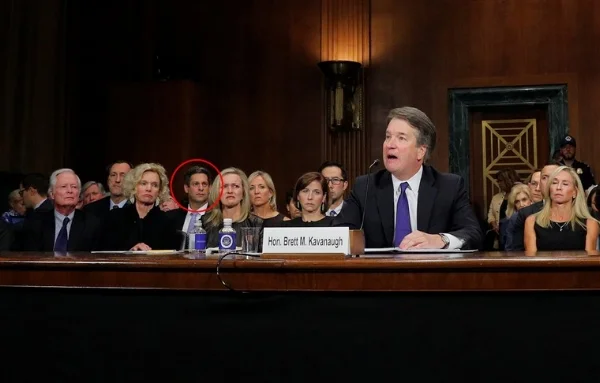
Facebook Policy Executive Sat Behind Kavanaugh

Joel Kaplan, Facebook’s vice president for global public policy, sat behind his friend, Brett Kavanaugh, during the charged hearings to determine whether he would win support as the next Supreme Court justice. Because of his position at Facebook, employees questioned his loyalties and whether it was appropriate for him to be so visible during the judge’s testimony about whether he sexually assaulted a woman as a teenager.
His appearance was a “surprise” to employees, and hundreds wrote about their concerns on Facebook’s intranet site. One employee wrote, perhaps expressing the sentiment of Facebook’s liberal employees:
“Let’s assume for a minute that our VP of Policy understands how senate hearings work. His seat choice was intentional, knowing full well that journalists would identify every public figure appearing behind Kavanaugh. He knew that this would cause outrage internally, but he knew that he couldn’t get fired for it. This was a protest against our culture, and a slap in the face to his fellow employees.”
Kaplan defended participating, referring to their 20-year friendship, and CEO Mark Zuckerberg said he didn’t violate any company policies by attending, although he did say he would not have made the same decision. Employees wanted to hear from COO Sheryl Sanberg about Ford’s accusations, and she was not forthcoming, according to a Times article. But she did comment on Kaplan’s attendance:
“As a woman and someone who cares so deeply about how women are treated, the Kavanaugh issue is deeply upsetting to me. I’ve talked to Joel about why I think it was a mistake for him to attend given his role in the company.”
Discussion:
Read additional Facebook messages in the Times article. How would you summarize employees’ concerns?
What’s your view of Kaplan’s attendance? Consider the “optics” in addition to company policy.
Some might say that Kaplan was being authentic by sitting behind his friend. Do you agree with this view? Why or why not?
Which character dimensions are illustrated by this story?

Crisis at Sloan Kettering
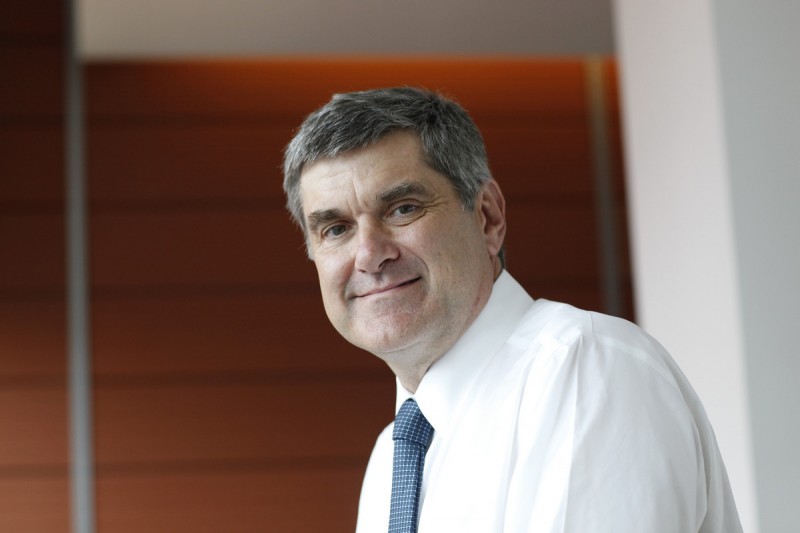
Memorial Sloan Kettering (MSK) Cancer Center’s chief executive, Craig Thompson, has resigned from two boards, Merck and Charles River Laboratories, following investigations of conflicts of interest. Thompson issued a statement about his decision to resign:
“I have taken feedback from our staff and faculty seriously and intend to lead by example. I believe this is the right decision for Memorial Sloan Kettering and will allow me to redouble my focus on MSK priorities: quality patient care, faculty, scientists and staff.”
Sloan Kettering’s chief medical officer, Jose Baselga, was accused of not reporting millions of dollars he received from pharmaceutical companies for his research articles. Baselga previously resigned from Memorial Sloan Kettering as well as Bristol-Myers Squibb, where he served on the board. As one former patient wrote, failing to disclose payments gives “the appearance of influence is troubling. It highlights ineffective oversight, with the potential to cast a shadow on the center’s other excellent doctors.”
When the story first broke, Memorial Sloan Kettering leadership wrote a letter stating, “MSK and our faculty need to do a better job.”
Discussion:
Analyze the MSK letter. Who is the audience, and what are the communication objectives? How do you assess the organization and writing style?
Should Thompson also resign his chief executive position at MSK? Why or why not?
How well does MSK leadership take responsibility for the problems? How is this an issue of integrity for MSK?

Amazon Increases Pay to $15/Hour
Starting November 1, Amazon will pay 250,000 and 100,000 seasonal workers at least $15 an hour. A blog post quoted CEO Jeff Bezos:
“We listened to our critics, thought hard about what we wanted to do, and decided we want to lead. We’re excited about this change and encourage our competitors and other large employers to join us.”
The post include a video, “Amazon associates react to $15 minimum wage announcement”:
The company also they would work to increase the federal minimum wage, which, as an Amazon SVP says, could improve from the “current rate $7.25 [which] was set nearly a decade ago,”
One analyst predicted that, after taxes, Amazon’s operating profit will take a hit of 1 of 2%. But the move is being well received. For example, Senator Bernie Sanders, a former critic, complimented the decision:
“What Mr. Bezos has done today is not only enormously important for Amazon’s hundreds of thousands of employees, it could well be a shot heard around the world. I urge corporate leaders around the country to follow Mr. Bezos’s lead.”
Discussion:
Assess Amazon’s blog post and video. How well does the company use the news to improve the company’s image?
What’s your view of the move: the right thing to do, a bad financial decision, or something else?
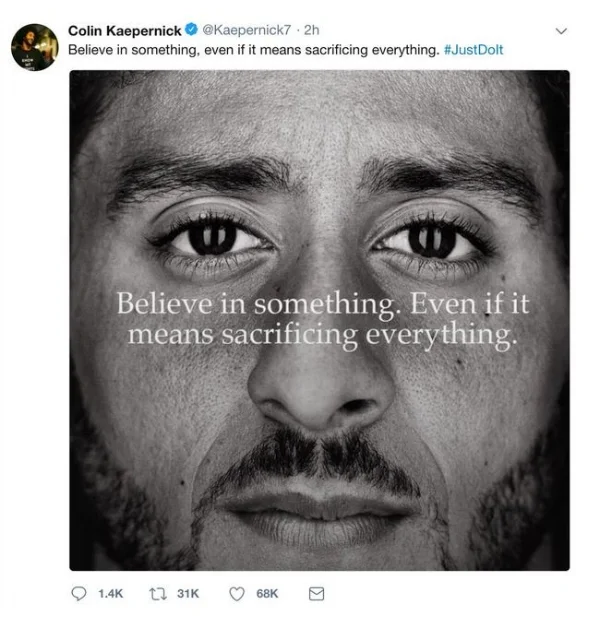
Nike Takes a Chance on Kaepernick
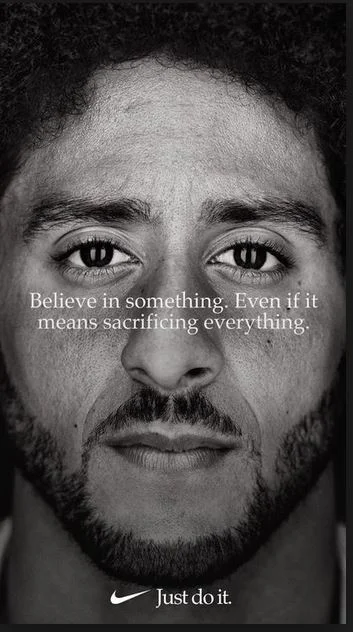
Former National Football League quarterback Colin Kaepernick will be the new celebrity face of Nike's "Just Do It" campaign. Kaepernick was the center of controversy when players were both complimented and criticized for "taking a knee" to protest racism and promote social justice.
Nike and Kaepernick already had a sponsorship deal, but this new contract extends it. The deal may be "awkward," to use The New York Times's phrase, because the NFL has not been able to stop player protests, to the dismay of President Trump and others.
Also, Kaepernick hasn't played in the league since 2016 and has an active grievance, accusing the league of conspiring to prevent him from playing.
But neither Nike nor Kaepernick are shying away from the message. The first ad shows Kaepernick with the caption, "Believe in something. Even if it means sacrificing everything."
As part of the deal, Nike will contribute to "Know Your Rights," Kaepernick's foundation to "fight oppression of all kinds globally, through education and social activism.
Discussion:
What risks is Nike taking with this contract? Do you believe the campaign will be well received, divisive, or something else?
Nike didn't respond to The New York Times for comment about the story. Should the company include a comment or make a statement? Why or why not?
What leadership character dimensions are illustrated by this story?

President Trump Criticizes Google
In two tweets, President Trump criticized Google and other technology companies of "suppressing voices of Conservatives and hiding information and news that is good." Calling the situation "very serious" and "very dangerous," he claims that "fake" liberal news is elevated in search engines, while "fair" Republican/Conservative perspectives are suppressed.
The president's evidence is based on searching for "Trump News," which he claims resulted in 96% of stories from "National Left-Wing Media." The data came from Lou Dobbs' reporting on Fox Business Network about an "unscientific study" by PJ Media, a conservative organization.
It's also unclear which news organizations Fox and President Trump put in the "left-wing" category. A Wall Street Journal article explains that the president considers even mainstream media outlets to be "fake news," so what he calls unfair representation may not align with a "statistically neutral news aggregator."
Yet the article acknowledged that the search engine algorithm for Google News is "opaque." In addition, Facebook was questioned during Congressional Hearings about suppressing conservative views, and several technology companies did recently close accounts belonging to Alex Jones and InfoWars, a conservative organization, for violating terms of agreement. Social media sites (except Twitter, which has retained Jones's account) provide reasons for closing Jones's account such as his claiming that the shooting at Sandy Hooks Elementary School in 2013 was a hoax.
A spokesperson for Google denies biased search results:
"We continually work to improve Google Search and we never rank search results to manipulate political sentiment."
Discussion:
- Try to find evidence on both sides of this argument: that Google News is unbiased against President Trump and that his claims are unfounded.
- What's your view about Google Search results? How might your own political perspective factor into your view?
- How can you ensure that you're getting the most balanced news possible? (Hint: Don't rely on your Facebook feed.)
Archbishop Calls for Pope's Resignation
As more allegations of sexual abuse within the Catholic church become known, the most senior levels of the organization are facing new challenges. Last week, Pope Francis wrote a letter chastising abusers and calling on the Church to do better. Today, a former senior Vatican, who was an ambassador to the U.S., accused the pope of knowing about and covering up abuse cases since 2013. He is calling on the pope to resign.
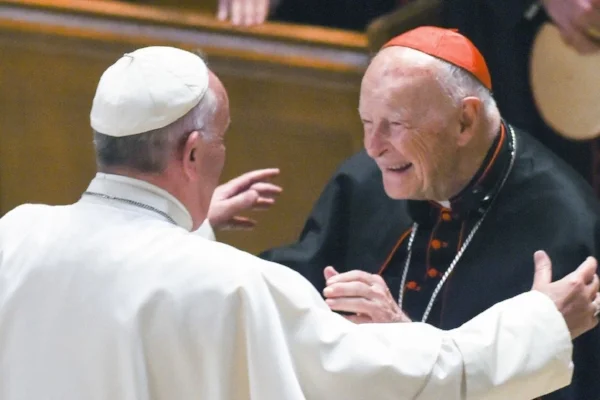
The situation involves Archbishop McCarrick, who resigned as cardinal in July. McCarrick is accused of sexually abusing seminarians, and the Pope is accused of "rehabilitating" him rather than disciplining him and removing him from his position.
Archbishop Carlo Maria Viganò explains his reasoning in documented "testimony," including this segment:

Image source of Pope Francis and Archbishop McCarrick.
Discussion:
- Should the pope resign? Why or why not? How does this situation compare to corporate examples? Consider the hierarchy and relationships.
- In what ways is this situation a matter of integrity?
- Viganò uses the word parrhesia. What does this mean, and how does this relate to business communication?
- Which other leadership character dimensions are illustrated by this situation?
Ohio Football Coach: Another Case of Deleted Messages
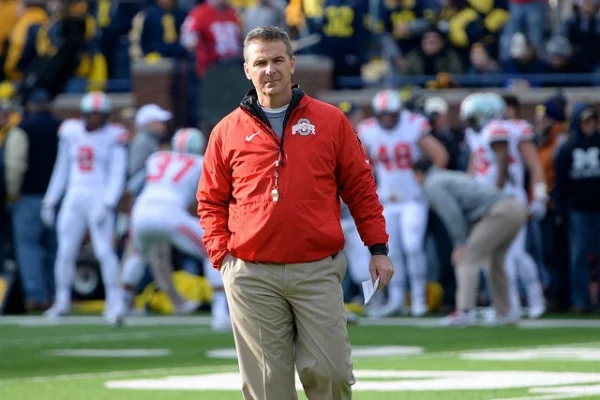
Ohio State football coach Urban Meyer will forgo pay and the ability to coach three games because of his failure to appropriately handle a staff member's misconduct. A New York Times article chronicles issues with Zach Smith's behavior, including paying $600 at a strip club during a recruiting event, a domestic violence charge, and an affair with a staff member.
During a press conference, Meyer apologized, saying, "I should have done more, and I am sorry for that," and "I followed my heart and not my head."
The Times article also describes a conversation between Meyer and Smith about deleting text messages. I should count the number of stories on this blog since 2010 illustrating that deleting texts and emails fail to get the desired result. These messages are almost always recoverable, and the act of deletion makes the accused look even more guilty.
In addition, in this situation, Ohio State officials at first failed to produce messages requested by the school newspaper. Worse, several staff knew about the request, but no one even approached Coach Meyer to retrieve them.
Discussion:
- Once again, where are the many places deleted messages may be stored? How else can they be retrieved?
- What's your view of the strip club visits? Could Meyer reasonably argue that this is just part of the recruiting process? After all, no students were invited—only university and high school coaches.
- Assess the press conference. How well did university officials, including Meyer, respond to reporters' questions? Did the team appropriately take accountability?

The Debate Over Quarterly Reporting
President Trump is asking the SEC to no longer require report quarterly earnings. Instead, companies would report results every six months.

This may be good news for those who believe that publishing frequent earnings reports encourage a short-term focus. The idea is that investors make rash decisions based on the results from only three months.
One downside of the change could be less transparency. The value of quarterly reports is that investors are more aware of what's happening. In addition, the process itself may be useful internally, as a former investment banker explains:
"What I see from the inside of the quarterly earnings cycle is that there’s actually a lot of discipline in it. That process of having to prepare it, release it, explain it and answer questions has real value.”
Also, not everyone agrees that eliminating the report will foster longer-term thinking. As a compromise, some are proposing that reports are still published, but that specific earnings-per-share guidance information isn't included.
Discussion:
- Describe the importance of transparency in financial reporting. How does this relate to accountability?
- What's your view of the proposal to eliminate quarterly reports? Do you see additional benefits or downsides than what is mentioned here?
- In his tweet, President Trump refers to making "business (jobs) even better." How do you see this as a result of his proposal?

What Is "Dehumanizing" Speech?
The New York Times reports Twitter's struggle to define what constitutes "dehumanizing" speech. Apparently, the only agreement among Twitter's team members is that the decision is "incredibly complex."

Categorization is critical, as the company has a reputation as a sometimes dark place of trolls and harassment. Yet this week, Apple, Facebook, YouTube have expunged content from Alex Jones's Infowars, which is known for spreading misinformation, including that the shooting at Sandy Hook was a hoax. You can imagine how this angered families of lost children.
In a tweet, CEO Jack Dorsey explained Twitter's decision to keep Infowars content, but employees, particularly, have not responded positively.
Twitter is in a difficult spot because, on the other hand, sites have been criticized for censoring conservative views. Del Harvey, the company's VP of Trust and Safety, wrote an email to employees further explaining the company's rationale.
Discussion:
- How would you define "dehumanizing" speech? What character dimensions are involved?
- What persuasive strategies does Harvey use in her email to employees? Which are most and least convincing and why?
- What is your view about Infowars content? Should Twitter remove it from the site as other social media companies have done? How might your own political views factor into your thinking?

CEO Activism
Weber Shandwick's third annual report explores CEO activism, which Brian Moynihan, CEO Bank of America, defines and supports:
“Our jobs as CEOs now include driving what we think is right. It’s not exactly political activism, but it is action on issues beyond business.”
The report found that almost half of Americans "believe CEO activism influences the decisions and actions of government," and almost half of consumers "would be more likely to buy from a company led by a CEO who speaks out on an issue they agree with." Millennials, particularly, prefer CEOs to speak out on issues, and CEOs with more social media accounts have better stock performance for their company.
A Wall Journal Street writer observes that leaders rarely make a business case for issues, even if their company would benefit. Instead, they are speaking to consumers directly to change hearts and minds.
Top issues for CEOs include training, equal pay and sexual harassment, and CEOs are avoiding gun control, nationalism, marijuana legalization, and abortion."
A Forbes article offers this advice for CEOs:
- Develop an authentic voice and quick actions
- Connect your customers with your activism efforts
- Align activism efforts with a company’s mission
- Be willing to act against your own self-interest
Discussion:
- What are the risks and rewards of activism to a CEO and to the company? How does integrity factor in?
- What examples have you seen of CEOs speaking out? How do you assess the situations? How did you feel about the gestures?
- Read the Weber PPT deck. What principles of business report writing are followed, and what could be improved?

Scott Pruitt Resigns
Environmental Protection Agency (EPA) head Scott Pruitt resigned after months of accusations of overspending and other ethical issues. Questions about Pruitt's judgment involved expensive travel, getting a job for his wife, and underpaying for an apartment.
President Trump had supported Pruitt, but the controversy may have reached a tipping point. Discovery of secret calendars could have been the last straw. A whistleblower said Pruitt kept three different calendars to hide meetings.
In his resignation letter to the president, Pruitt referred to "unrelenting attacks on me personally, [sic] my family, are unprecedented and have taken a sizable toll on all of us." In a tweet, President Trump was gracious and complimentary.
Discussion:
- If you're familiar with Pruitt's history in the position, which of his alleged ethical lapses do you consider more serious? Which are less serious?
- On balance, do you agree with Pruitt that he was attacked? How might your own political views affect your perspective?
- Did he do the right thing by resigning? Why or why not?
- How does Pruitt's resignation letter differ from resignation letters written for corporate jobs?


Intel CEO Resigns Over Relationship With Employee

A Wall Street Journal article describes events leading to the Intel CEO's resignation. Brian Krzanich had an affair with a mid-level manager at the company, but the relationship ended years ago. Still, the affair became public when the woman told a co-worker who, citing the company's strict policy, reported it to the board of directors.
Intel has a particularly tough policy, which bans any relationships among managers and any employees and requires employees to report known relationships.
In a news release, the company announced the news in the first paragraph and then quickly moved to the future: the appointment of an interim CEO and expressions of confidence for Intel's strategy. Still, the stock fell 3.5% on the news.
Discussion:
- Did Krazanich do the right thing by resigning? Why or why not?
- What are the advantages and downsides of Intel's strict policy? "Non-fraternization" seems dated and odd, doesn't it? Why would a company use this title?
- Consider the employees who discussed the affair. We might assume that one confided in the other. What were the steps along the way that led to Krazanich's resignation? Who is accountable for the result?

Valedictorian's Speech About Sexual Assault Is Cut Short
Just as a high school valedictorian started talking about sexual assault at the school, her mic was cut off. Lulabel Seitz, in Petaluma, CA, had planned to discuss issues of students, including herself, being silenced after reporting incidents of sexual misconduct. The school administration warned her to avoid the topic in her speech: “For weeks, they have threatened me against ‘speaking against them’ in my speech. Sometimes we know what’s right and have to do it despite the threats.”
When the time came for her speech, Seitz said, “Because the class of 2018 has demonstrated time and time again that we may be a new generation, but we are not too young to speak up, to dream and to create change, which is why even when some people on this campus, those some people..." And then there was silence from the podium as her classmates cheered her on: "Let her speak."
She did continue, on YouTube, where she uploaded her complete speech and the ending to her sentence: “And even learning on a campus in which some people defend perpetrators of sexual assault, and silence their victims, we didn’t let that drag us down.”
This story exemplifies the Streisand Effect, which The Economist describes as demonstrating "how efforts to suppress a juicy piece of online information can backfire and end up making things worse for the would-be censor." The Effect was named when performer Barbra Streisand sued the California Coastal Records Project for including pictures of her Malibu house. The suit was considered frivolous, and photos of the home went viral, giving Streisand far more attention than she would have otherwise received from the Coastal Project.
In the case of the high school student, the administration silenced her during the ceremony, but her YouTube video, as of this writing, received almost 230,000 views, far more than the number of people who attended graduation. Also, now the school's handling of sexual misconduct situations is on full display.
The school responded with a short statement:
"Administrators and staff in Petaluma City Schools care deeply about the safety and well being of our students. Due to student privacy issues, we cannot and should not respond with specific information. We can say that when issues of sexual assault come to our attention, local law enforcement has initial jurisdiction and determines the course of action."
Discussion:
- What, if anything, should the school administrators have done differently before Seitz's speech?
- What is Seitz's responsibility? Should she have avoided discussion of sexual assault, as she was instructed by school officials?
- What else should school officials say now? How can they repair the district's image and address issues raised?
- How is this an issue of integrity for the school and for Seitz?

Analyzing Communications Around the USC Crisis
After the University of Southern California's president resigned last month, crisis communication experts analyzed university messaging. When a gynecologist was accused of inappropriate exams and comments over decades working for the university, 200 faculty called for President C.L. Max Nikias's resignation. Faculty wrote that they believed Dr. Nikias "has lost the moral authority to lead the University.” Although the Administration denies any type of coverup, the gynecologist was allowed to continue in his job even after many allegations in 2016. Dr. Nikias did resign.
A Wall Street Journal article chronicles the following university communications:
A May 21 statement from university Provost Michael Quick denied university leadership knew of the doctor’s improper behavior, stating: “It is true that our system failed, but it is important that you know that this claim of a cover-up if patently false.” Prior to that, the university issued statements about the matter from Mr. Nikias on May 18 and May 15, and statements from other university officials on May 15 and May 16. University administrators also are contacting students.
Criticism of the communication includes sounding defensive, not completing the investigation quickly enough, and failing to report investigation results to those affected. One writer complimented the statement by the chair of the university's executive committee.
Discussion:
- How does this situation illustrate character dimensions such as vulnerability, accountability, and integrity?
- Read the executive committee chair's statement. In what ways does the statement illustrate authenticity? What other character dimensions are illustrated?
- Assess the university's other statements. What's your assessment of each?
- What should the university do at this point to rebuild trust?