

Starbucks Clarifies Policy

Following criticism for arresting two black men in a Philadelphia store, Starbucks has set a new policy for bathroom use. Company leaders decided to adopt a more open policy, allowing anyone to use a store bathroom without purchasing products.
But people questioned the effect on Starbucks locations, worrying the policy would invite homeless people and drug users. Customers want space available for themselves. Employees, particularly, complained that the policy didn't have enough guidance for them to know, for example, when to call the police.
The new policy lists the following expectations for people in their stores:
- Using spaces as intended
- Being considerate of others
- Communicating with respect
- Acting responsibly
The policy also refers to "Addressing Disruptive Behaviors" procedures and clarifies, "If a situation presents an immediate danger or threat to partner or customer safety, Starbucks partners should call 911."
I'm struggling with the term "customer." The policy uses this terminology, and the WSJ article refers to paying and non-paying customers. To me, the latter is an oxymoron, but perhaps it is not given the company's mission to create a "third place."
Discussion:
- What benefits and potential downsides do you see from Starbucks' open policy?
- How could Starbucks further clarify the policy to address customers' and employees' concerns?
- One point of clarification, if you haven't mentioned it, is about timing. How long should people be permitted to stay without purchasing an item? What are your thoughts about what is fair?
- What's your view of the term "customer" in this context?

MSU's Denial as a Cultural Issue
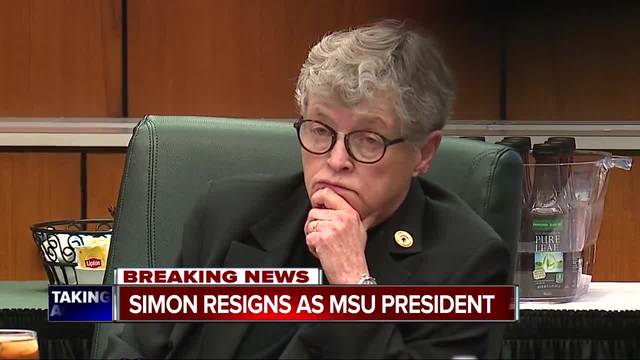
A Chronicle of Higher Ed article blames Michigan State University's ambitions and culture for their leaders' lack of response to years of sexual abuse on campus. More than 12 people knew of complaints against physician Larry Nassar, but the abuse continued for years.
Lou Anna K. Simon's leadership is questioned in the article. Although clearly a committed leader to the university, Simon is criticized for focusing so much on "two decades of status-climbing" that a culture of denying any wrongdoing evolved. One of the trustees summed up the issue in a letter and emphasized "We must embrace our obligation to apologize and offer justice."
Apologizing may be a sore subject for the trustees because Simon avoided it in the case of Larry Nassar's victims, according to the Chronicle article:
She talked about how “it is virtually impossible to stop a determined sexual predator and pedophile, that they will go to incomprehensible lengths to keep what they do in the shadows.” She often used “regret,” “sympathize,” and “acknowledge” in her written statements, but not “apologize.” She emphasized that sexual assault is a societal problem, not a Michigan State one. She highlighted all of the steps the university had taken to prevent sexual misconduct.
Discussion:
- Analyze the trustee's letter. What principles of business writing are followed? What are the strengths of the letter, and what could be improved?
- The trustee encourages MSU leadership to listen. What does he mean by this, and how would listening help the situation?
- What is the value of apologizing and admitting failure? What are the potential downsides, particularly for a university trying to improve its stature?
- This story illustrates several failings of leadership character. Which can you identify, and which do you think are most relevant here?
Layoffs at Qualcomm
A Business Insider headline puts the news and purpose right up front:
Qualcomm is reportedly laying off as many as 1,000 employees as part of a $1 billion cost savings plan
The decision comes after a hostile takeover bid from Broadcom, a competitor in Singapore. Qualcomm made a commitment to save costs to its shareholders and appears to be following through, despite that the failing takeover bid.
A Bloomberg report reminds us that the company cut jobs in 2015, as well, in response to an activist investor's interests. A New York Times article calls Qualcomm "collateral damage" in "a looming trade war between the United States and China" that may impinge the company's growth.
The company declined to comment on news stories, and nothing related to layoffs is posted on its website.
Discussion:
- Should Qualcomm executives be more forthright about the change? What, if anything, should they communicate to the public and how?
- How do you assess the admission that the layoffs are intended to ward off hostile takeovers and reduce costs? How do you think these reasons would be received by shareholders? the press? customers? employees?
- How are the news and the company's communication an issue of integrity for Qualcomm?
Starbucks Apologizes, Again

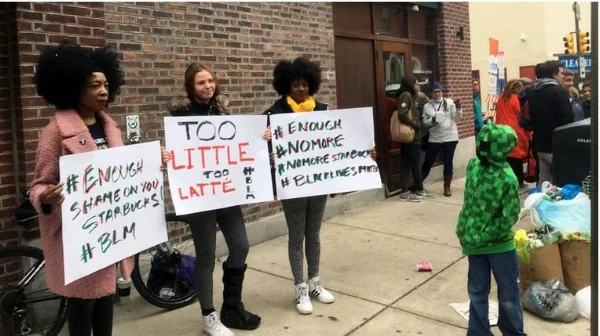
Two black men were arrested at a Philadelphia Starbucks. Witnesses say they were just waiting for a friend and asked to use the restroom. The reason for calling the police seemed to be the same: that they were just waiting for friend. But because they didn't order anything, they were asked to leave and did not. Other customers say this is common at Starbucks, and the only reason the police were called was because the two men were black.
The company, at first, gave a weak apology using unclear pronoun references (see "this" and "these"). A longer apology came from the CEO Kevin Johnson later. In the statement, he identified steps the company would take and closed with this paragraph:
Finally, to our partners who proudly wear the green apron and to customers who come to us for a sense of community every day: You can and should expect more from us. We will learn from this and be better.
Johnson also posted an apology video.
In a video statement, Philadelphia Police Commissioner Richard Ross explained the situation from his point of view and defended the officers' actions. He also said that all officers get implicit bias training and gave an example of a police sergeant who was also denied access to a Starbucks bathroom. Ross's conclusion was that "they are at least consistent in their policy." Of course, not everyone agrees.
Discussion:
- Analyze Johnson's statement. Who are his primary and secondary audiences? What are his communication objectives, and how well did he achieve them?
- What organizational strategy does Johnson's statement illustrate? How do you assess his tone and writing style?
- What is an unclear pronoun reference, and how are they used in the first apology?
- What's your view of the situation? Did Starbucks do wrong? If so, at what point(s)? Are you boycotting Starbucks, as some promote, as a result?
- Which leadership character dimensions are illustrated by this example?
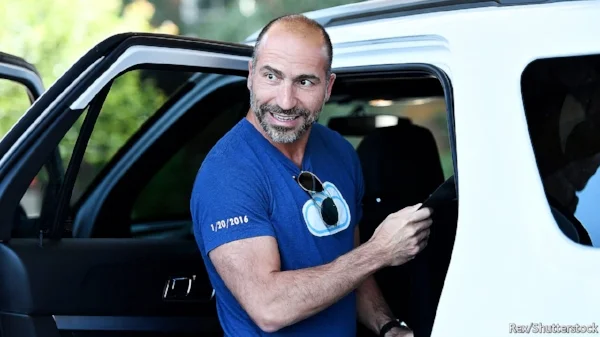
Uber CEO Compares Self-Driving Cars to Student Drivers
In defense of autonomous cars, Uber CEO Dara Khosrowshahi said, "Ultimately, self-driving cars will be safer than humans. But right now self-driving cars are learning. They’re student drivers.” On NBC's Today Show, Khosrowshahi confirmed that the company will continue its self-driving program despite a fatal crash last month in Arizona.
In the interview, when asked about Facebook and other technology companies facing privacy and safety issues, Khosrowshahi said he considers, "the challenges of technology getting into everyday life and the responsibilities that come with it." He repeated "responsibility" twice more within about the first minute of the interview. Like Mark Zuckerberg during the recent hearings on Capitol Hill, he said, "I welcome regulation," and "we're partnering with regulators."
Also as Zuckerberg clarified with lawmakers, Khosrowshahi said they don't sell data; however, he also said they don't "monetize data," which Facebook cannot say with its business model to sell ads.
Discussion:
- What principles of persuasion does Khosrowshahi demonstrate in this interview? Consider logical argument, emotional appeal, and credibility.
- What principles of leadership character does he demonstrate?
- What do you consider the strengths of this interview? What could Khosrowshahi improve?
Zuckerberg Testifies Before Congress

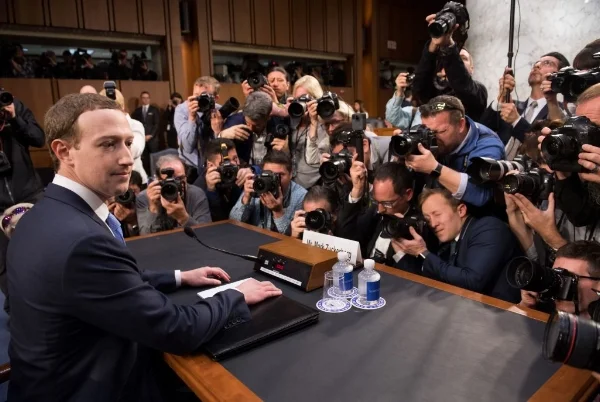
In many hours of testimony, Facebook CEO Mark Zuckerberg did his best to address lawmakers' questions about data privacy and, surprisingly, how Facebook works. Senators and Members of Congress asked questions about texting, about how the company makes money without a subscription model (Zuckerberg: "We sell ads."), whether Facebook owns users' data, whether Facebook sells data, how many "data categories" Facebook collects, and so on. This video compilation does not reflect well on our lawmakers.
Zuckerberg himself seemed surprised by some of the questions and wasn't fully prepared to answer them. A reporter captures a photo of Zuckerberg's notes, which are what we would expect, but it's fun (in a voyeuristic way) to see them.
On the second day of testimony, questions improved, and many focused on Facebook's treatment of conservative political views. These were fair questions, and Zuckerberg admitted they had made mistakes in screening some content as inappropriate. But several representatives seemed to ask similar questions about this and about the consent agreement with the FCC, as if the question hadn't been asked just moments earlier.
In a New York Times Daily Podcast, reporters discussed Zuckerberg's continued references to starting Facebook in his dorm room. They believed the strategy was a good one for demonstrating his humanity (emotional appeal) but was potentially damaging for his credibility because it reminded lawmakers that he is only 33 years old. A seat chair, which internet trolls called a "booster seat," didn't help.
Wall Street responded well to Zuckerberg's testimony, with the stock price rising both days.
Discussion:
- What's your view of Zuckerberg's testimony? Watch as much as you can tolerate.
- Should lawmakers have a better understanding of Facebook? What is their level of responsibility?
- Identify a few specific questions and Zuckerberg's answers. What leadership character dimensions does he demonstrate, and how could he have improved?
- Watching the testimony, how would you assess his authenticity? Do you know more about him as a person? Should we?
Howard University Reports on Misappropriated Funds

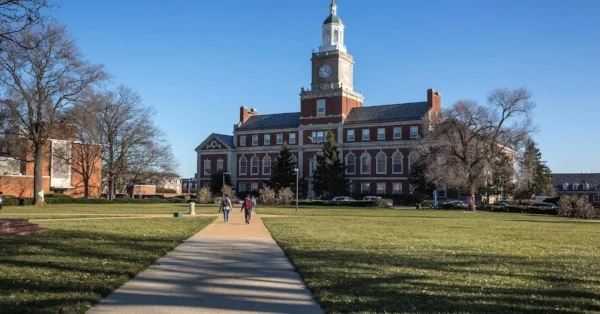
Howard University's investigation has concluded that $369,000 had been misappropriated by six employees who were terminated last year. A full report by the university identifies how they "double dipped" by receiving both tuition assistance and university grants between 2011 and 2016.
In a cover letter to the report, President Wayne A.I. Frederick wrote, “Howard University is committed to uncovering any impropriety in the administration of university-provided financial aid and federal student aid, to remediating all problems identified during this investigation, and to maintaining a robust compliance program to prevent any inappropriate dealings in the administration of financial aid."
A Washington Post article reports that the university tried to avoid going public before the review was completed, but an article posted online made this impossible. Student protests, which went on for more than a week, also may have sped up the timing.
Discussion:
- What business writing principles does the report demonstrate and fail to demonstrate? How could the report be improved?
- Assess the president's cover letter. Who are his primary and secondary audiences, and what are the communication objectives? How well does the letter achieve those objectives?
- What can the university do now to restore trust?
- How well does the university take responsibility for the situation?
An Interview with Sheryl Sandberg

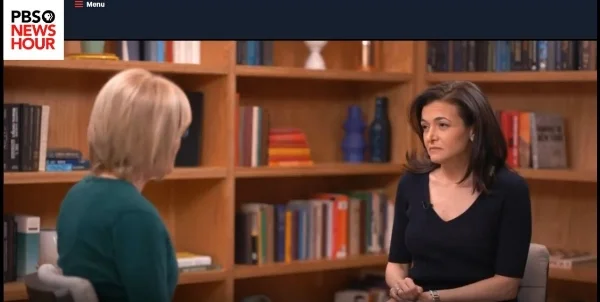
During an interview with Judy Woodruff on PBS NewsHour, Facebook COO Sheryl Sandberg admitted mistakes and discussed plans for improving users' privacy. Sandberg didn't shy away from tough questions about Facebook's role in protecting users' information and admitted that the site had an important role during the 2016 presidential election, at least to get people to register to vote.
On whether Cambridge Analytica still has data, Sandberg admitted, "We were given assurances by them years ago that they deleted the data. We should’ve followed up. That’s on us. We are trying to do a forensic audit to find out what they have." She also said the company had "under-invested" in ways to protect users' information.
Viewers may notice that Sandberg repeatedly says versions of "That's a very good question." This could be a tactic to delay responding, or it could be that Woodruff asks good questions! Sandberg would be the first to acknowledge that many of the questions are ones the company leaders are asking themselves at this point. As pioneers, Facebook executives are reconsidering how people use the site and for what purpose.
Discussion:
- Assess Sandberg's presentation skills. How well does she deliver her ideas and address questions?
- What principles of persuasion does Sandberg demonstrate in the interview?
- What else, if anything, could Sandberg have said during this interview to rebuild trust in the company?
Mario Batali Wants to Move On

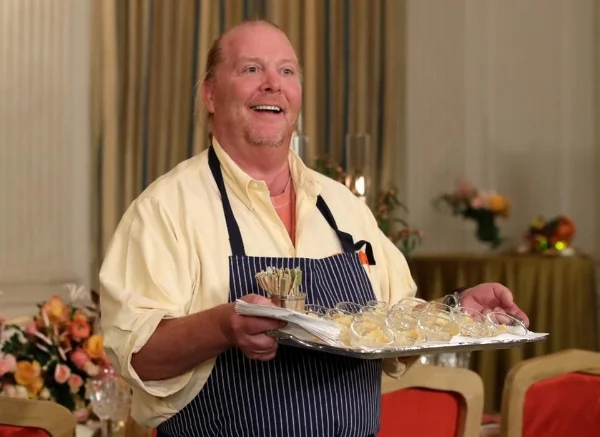
Is it too soon? Mario Batali, accused of sexual harassment and removed from the company bearing his name, is exploring a new venture. In December, reports of sexual misconduct rattled the Batali & Bastianich Hospitality Group, and Batali admitted that accusations “match up with ways” he behaved. At the time, he emailed an apology but lost ground when he included a "P.S." with a recipe for making cinnamon rolls.
Now, about four months later, people report that Batali is exploring his options. Reports say he is considering moving to the Amalfi Coast, aiding displaced Rwandans, or creating a new company.
A New York Times article speculates that Batali may be in a good position to return to public life:
He still has legions of fans and colleagues who admire and respect his generosity, culinary knowledge and charisma. Many still post their interpretations of his recipes on Instagram, ask him for selfies on the street or urge his return to “The Chew” on Facebook. His restaurants continue to attract customers.
Friends also say that he is truly taking time to be introspective and to learn from his mistakes. But not everyone agrees that a comeback would be appreciated. Anthony Bourdain, for example, isn't ready:
Retire and count yourself lucky, I say that without malice, or without much malice. I am not forgiving. I can’t get past it. I just cannot and that’s me, someone who really admired him and thought the world of him.
Discussion:
- What's your view? Is it too soon, or is the time right for a Batali return? What should he consider in making this decision? What are the potential implications for women who complained about his behavior and for the company?
- Batali mentions wanting to understand his "blind spots." What does he mean by this?
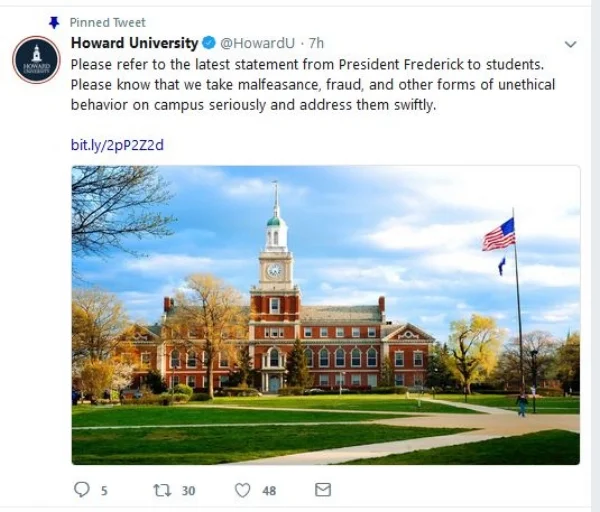
Howard University Responding to Embezzlement

Six student employees were terminated by Howard University for embezzling financial aid funds. The students made up fake scholarships and found other ways to steal what could be more than $1 million.
On Twitter, the student association unleashed its frustration with the university's response. In a statement, President Wayne Frederick expressed empathy for this frustration and for other reactions:
Hearing about the mishandling of funds at the University can be difficult to process. I can also understand how upsetting it is to feel that the University has not communicated with you regarding this incident. The goal established at the onset of this investigation was to conduct it in a confidential manner that ensured a thorough examination of the issues without jeopardizing the integrity of the findings. However, that does not mitigate the sense of mistrust that many students and members of our community feel right now. We understand that and we hear you.
The statement also describes plans for investigating the charges and ends on a positive note.
Discussion:
- The above paragraph from the president's statement raises an interesting conundrum: how do leaders ensure both privacy and transparency? The same issue is relevant to investigating sexual harassment claims. What are your thoughts? How, if at all, is it possible to achieve both?
- Assess the president's statement. Who is the audience, and what are the communication objectives? How is the statement organized? How would you describe the writing style, tone, and so forth?
- How well does the president's statement demonstrate accountability?

FB Admits Mistakes and Makes Promises

After five days of silence, Facebook CEO Mark Zuckerberg is addressing new criticism about privacy issues. Recent reports describe how Cambridge Analytica used data from about 50 million FB users without their permission, possibly to influence voters during the 2016 presidential campaign. Although some users gave permission for their information to be shared, their "friends" didn't, and this gave developers enormous amount of data about people's preferences. In addition, Cambridge claimed it had deleted data in 2014, but new reports indicate it did not.
Now Zuckerberg is visible in the media and has issued a statement that included the company's responsibility and failings:
We have a responsibility to protect your data, and if we can’t then we don’t deserve to serve you. I’ve been working to understand exactly what happened and how to make sure this doesn’t happen again. The good news is that the most important actions to prevent this from happening again today we have already taken years ago. But we also made mistakes, there’s more to do, and we need to step up and do it.
He also told CNN, "I'm really sorry that this happened." He promised to limit developers' access to data in the future.
Facebook also published a full-page newspaper ad in the New York Times on March 25.
Discussion:
- How does this situation represent issues of integrity and trust?
- Read Zuckerberg's full statement. Which parts do you find most and least convincing?
- How is the statement organized? Is this the best approach, or could other organizational strategies have worked better?
- Assess Zuckerberg's writing style. Which principles of business writing are followed, and which are not?
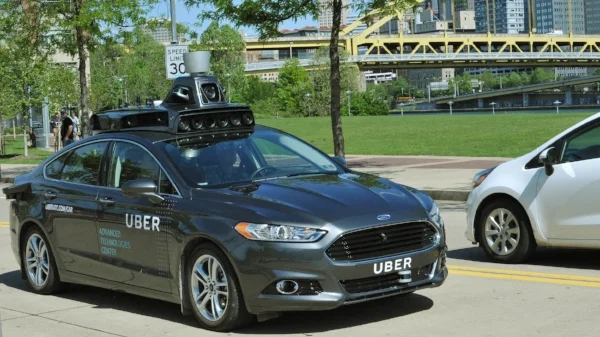
Uber Halts Self-Driving Cars Following Death

A self-driving Uber killed a pedestrian in Tempe, Arizona, and the company is trying to understand what happened. In the meantime, CEO Dara Khosrowshahi posted condolences on Twitter. An Uber spokesperson also made this statement:
“Our hearts go out to the victim’s family. We are fully cooperating with local authorities in their investigation of this incident.”
Apparently, a woman walked suddenly in front of the vehicle, and the local chief of police said, "It’s very clear it would have been difficult to avoid this collision in any kind of mode." A human backup driver, who was in the driver's seat without control over the car, confirmed the report. The first sign of trouble was the actual collision.
As a result of the accident, Uber announced it will stop all testing of autonomous cars. In California, autonomous Ubers were set to launch without human backups, but this may be delayed.
Discussion:
- Assess the company's response to the news. We don't see an apology, per se. Should we?
- How can the company rebuild trust in self-driving cars after this incident?

Facebook Under Scrutiny

Questions about Facebook's role in user privacy are getting increasingly serious, and shareholders are getting worried. Company shares fell 7% after the news that third-parties used FB users' personal information without permission.
Analysts say we know that Facebook monetizes users' data, but the number of people affected (50 million) and the extent of the violation is dramatic. One concern is how much additional regulation the company will face in the future. Already, the Federal Trade Commission (FTC) is investigating whether Facebook violated a 2011 settlement in which the company promised to get users' consent before changing certain privacy settings.
We have no comment yet from Mark Zuckerberg or Sheryl Sanberg, and critics say they need to be out in front of this.
Discussion:
- A Bloomberg reporter called the company "tone deaf," but others say it's an impossible situation to fully address at this point. What's your view?
- What, if anything, should company leaders say? What could explain their silence?
- In what ways is this situation an issue of integrity for the company?
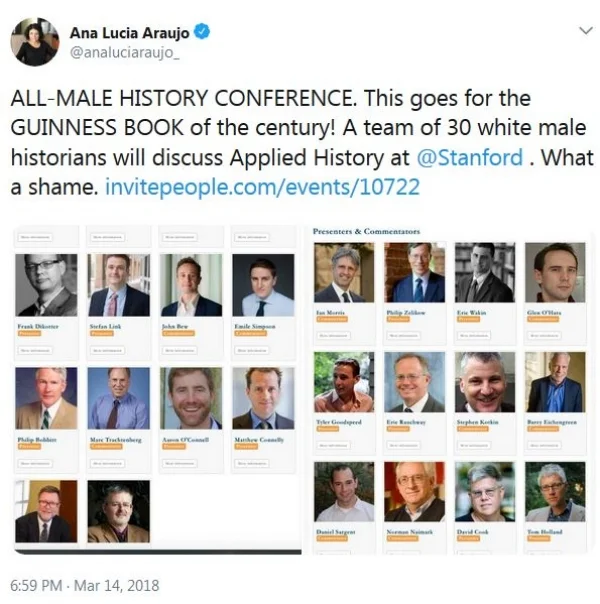
Stanford Event Criticized as "Too White and Too Male"

The organizer of a history conference at Stanford admitted to having trouble identifying a more diverse panel of speakers. All 30 are white men.
Priya Satia, history professor at Stanford said, “Given how prevalent women are in the history department, you’d have to try really hard to come up with a roster of speakers that looks like that." Satia also leads the history department's diversity committee.
Referred to as a "conservative British historian" by the New York Times, Niall Ferguson says he invited women, but only one could attend. Ferguson also said, "We all agreed that we must redouble our efforts to represent diverse viewpoints in future conferences."
Discussion:
- What are some possible reasons for the lack of diversity?
- Should Ferguson have done more to recruit women and people of color? How could he approach the conference planning differently?
- What is Stanford's responsibility? I don't see a statement from the university.
- In what ways does Ferguson demonstrate vulnerability, and in what ways does he fall short?
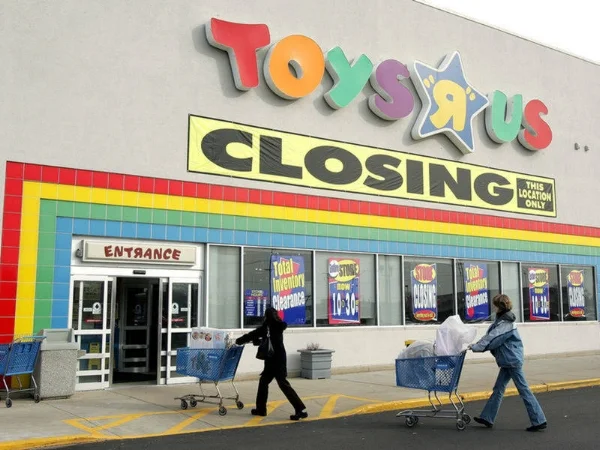
Toys R Us Closes

https://www.toysrusinc.com/restructuring
Toys R Us will close its remaining 735 U.S. stores and will lay off about 33,000 employees around the country. The company tried to survive after a bankruptcy filing in 2017, but the retailer can't compete with large stores, such as Walmart, and online sellers, such as Amazon.
Critics say Toys R Us failed to generate excitement, as one analyst describes in The Washington Post article:
“The liquidation of Toys R Us is the unfortunate but inevitable conclusion of a retailer that lost its way. Even during recent store closeouts, Toys R Us failed to create any sense of excitement. The brand lost relevance, customers and ultimately sales.”
A professor of brand management echoed this theme:
“We know that customers are willing to pay more for an enjoyable experience — just look at the lines at Starbucks every day — but Toys R Us has failed to give us anything special or unique. You can find more zest for life in a Walgreens.”
New York Senator Chuck Schumer is asking for the Federal Trade Commission (FTC) to ensure that customers aren't left "holding the bag" if they can't cash in or buy products with gift cards, particularly those recently received in December for Christmas.
Toys R Us has only a short statement on its website announcing the liquidation.
Discussion:
- Should the company leaders say more about the decision? What else, if anything, could be included in the statement?
- In addition to legal responsibilities, do company leaders have ethical responsibilities to make good on outstanding gift cards? Why or why not?
- In what ways has the company failed to learn from failure?

Fired by Tweet

According to an NBC report, Secretary of State Rex Tillerson learned he was fired when President Trump posted a tweet. The President did call Tillerson in for a face-to-face meeting, but this happened "several hours after the president had publicly announced Tillerson's firing on Twitter." The White House claims that Tillerson was put on notice that his time was coming to an end, but Tillerson says he was shocked at the news.
The relationship had been rocky. The two disagreed over policy issues, such as the Russian's government's involvement in U.S. elections and negotiations with North Korea. In July of last year, Tillerson referred to President Trump as a "moron."
Of his termination, Tillerson said,
"What is most important is to ensure an orderly and smooth transition during a time that the country continues to face significant policy and national security challenges."
Discussion:
- What is the best way to deliver bad news?
- We have heard of many business situations in which employees are fired by text message. How does this situation compare?
- In what ways is this situation a matter of leadership character, for example, compassion or integrity?

Adam Rippon Demonstrates Authenticity and Questions Pence
U.S. Olympic figure skater Adam Rippon has been public about being gay and having a history of an eating disorder. Rippon says he felt pressure to fit a particularly body image and sometimes starved himself to achieve it.
In January, Rippon said he would refuse a meeting with Vice President Mike Pence because of his support of "conversion" therapies, attempts to change someone's sexual orientation or gender identity. Pence denied the claim and expressed support for all athletes:
“The accusation is totally false with no basis in fact," Alyssa Farah, Pence's press secretary, stated. "But despite these misinformed claims, the Vice President will be enthusiastically supporting all the U.S. athletes competing next month in Pyeongchang.”
However, an NBC article identifies a message on Pence's website that supports Rippon's claim:
Under the headline "Strengthening the American Family" and just below his stated opposition to same-sex marriage and anti-discrimination laws protecting "homosexuals," Pence's platform advocates that resources "be directed toward those institutions which provide assistance to those seeking to change their sexual behavior."
Discussion:
- What's your view of Rippon's statement?
- Explain VP Pence's statement given his documented platform? How do you reconcile the claims?
- In what ways does Rippon demonstrate authenticity?

L.L. Bean: Return Doesn't Mean Lifetime Replacement
L.L. Bean has had it with customers who abuse their generous return policy. The company is making two major changes: customers must return products within one year unless they are damaged, and customers must produce a receipt.
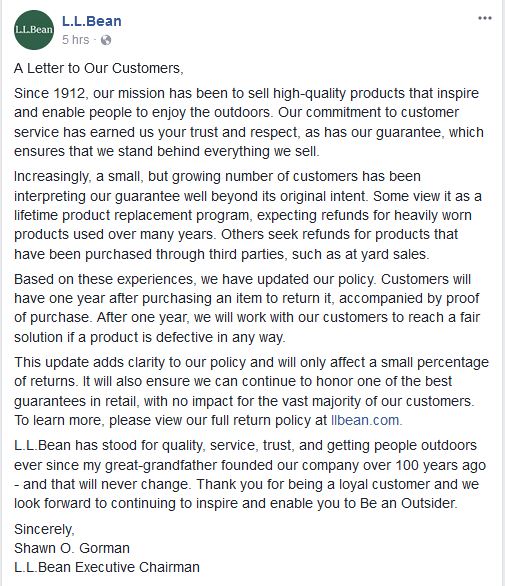
A company spokesperson explained the decision:
"If it's been over a year and someone is able to provide a proof of purchase and if the product does not fall within one of our Special Conditions such as products damaged by misuse, abuse, pet damage, personal reasons unrelated to product performance or satisfaction and more, we would honor the return."
Although it was a small percentage of customers, some had taken advantage of the product "guarantee." The question we might ask is, Why did it take so long? Or, why now?
Discussion:
- Why do you think L.L. Bean waited until now to tighten the return policy? What are the potential consequences of the decision?
- Assess the message to customers. Who are the primary and secondary audiences? How well does the message meets its objectives?
- How do you see this as an issue of integrity? How is L.L. Bean demonstrating learning from failure?

Misleading Headlines About the Market Dip
The stock market took a dive this week, but headlines are making it sound worse than it is. Here are three examples:
- FoxNews: "Investors hope for reversal after biggest stock market dip of all time"
- The Guardian: "Australian and Asian stock markets slide after Dow suffers biggest one-day points fall – as it happened"
- CNBC: "Dow's nearly 1,600-point plunge marks its biggest one-day point drop ever"
The headlines are technically correct that a nearly 1,600 point decline is the largest in U.S. history, but looking at only the point value is misleading. A percentage drop would be a better indication of the effect. This table represents the largest daily stock market losses. The display below is sorted by point loss; the table at right is sorted by percentage. You can see that 2018-02-05 falls in rank when we look at the percentage.

Also, the stock market has had incredible gains this past year, so the 26,000+ value could be viewed as an anomaly, and most analysts didn't believe those gains were sustainable.
Discussion:
- What are the ethical considerations for news agencies publishing these headlines?
- What might be a more appropriate headline for the news?

Perhaps this one-year chart helps keep the loss in perspective. It includes today's rebound of 567 points.


Questions of Transparency
The long-awaited memo written by Republican staff members about potential impropriety from the Justice Department and F.B.I in the Russia investigation has been revealed. Now, The New York Times editorial board is calling, once again, for President Trump to reveal his tax returns:
Since the Republicans are now on board with greater transparency, they will no doubt push President Trump to release his tax returns, as every other major-party presidential nominee has done for the past four decades, won’t they?
How about the White House visitor logs, which the Trump administration started hiding from the public last year? Or, say, the names of all foreign governments and officials who have stayed — at their own or at American taxpayers’ expense — at Mr. Trump’s Washington hotel, at his Mar-a-Lago resort in Florida or at his golf courses and his other businesses since he became president? Or the names of every foreign business with which the Trump Organization has a financial relationship, especially in countries where America has sensitive foreign policy interests, like China, India, Russia, Turkey or Saudi Arabia?

The reasoning sounds like reciprocity, but the argument may not get no more traction now than it did during the presidential campaign. A Pew research study in January 2017 showed that 60% of those surveyed believed Trump "has responsibility" to release his returns. Although some were adamant about the release at the time, the Wall Street Journal, for example, reported that the returns wouldn't tell us much anyway.
Discussion:
- What are the advantages and downsides of President Trump revealing his tax returns?
- Read the entire opinion piece. What other arguments do the authors make?
- Do you agree with their reasoning? Why or why not?
- How would you describe the tone? Does the approach help or hurt the argument?