

United Airlines Message
The COVID-19 messages keep coming from airlines and other companies. Here’s one from United Airlines, encouraging us to fly by offering flexibility and promising cleanliness.
Dear Amy,
As we all adjust to this new normal, my thoughts are with you and your families and I hope you're staying safe and healthy. The last several weeks have been emotional and trying for all of us, but I continue to be inspired by the goodness in people and the genuine acts of kindness, large and small, that I see every day. These gestures of warmth, strength and caring give me the confidence that in time, we will emerge more United Together than ever before.
It's in that spirit that I wanted to share with you some good news about what the 100,000 family members of United Airlines have been doing for you as we tackle the biggest and most disruptive crisis we've faced in our 94‑year history.
Good news as you're making travel plans
Life is unpredictable in lots of ways right now. We know many of you started the year planning to fly with us to visit family, go to a game or concert, attend a trade show or just get away. And you might be feeling anxious about what to do about your upcoming travel plans. That's why we've waived the fees to change or cancel any trip with us through the end of 2020, including travel that was already planned as well as trips that you're hoping to take in the future. Every customer now has until May 31 to make changes to current reservations or book new flights that can be changed or canceled without a fee, and you'll be able to reschedule your trip for anytime in the next 12 months. So take the next few weeks and do what's best for you, your family and your work.
Good news for when you choose to fly
Safety has always been our top priority, and because of that, the social distancing and cleaning procedures that have become a way of life for all of us are now staples of the way we run our airline. When you're ready to fly, you'll see that a lot has changed at the airport and on board our aircraft. We're boarding fewer customers at a time and starting from the back of the plane to avoid crowding in the gate area, on the jet bridge and in the aisle. We're automatically blocking middle seats to give you enough space on board, requiring all our employees on board, including our flight attendants, to wear masks and, in early May, making masks available to our customers. Of course, these measures are in addition to our state‑of‑the‑art sanitization procedures like cleaning our aircraft with electrostatic sprayers, and extra precautions like taking our employees' temperatures before they start work to protect the well‑being of our customers and colleagues. Find a complete overview of what's changed at United to adapt to this new normal.
Good news for our communities
While we wait to welcome you back, we've been using our time and resources to do our part and support those on the frontlines of this crisis as well as the millions of families who have been affected by the most dramatic disruption of the labor market since the Great Depression. Leveraging the full power of our airline to do the right thing, we've flown more than 1,000 medical volunteers for free; donated 170,000 pounds of food; and used our fleet to get close to 20,000 stranded people home and medical supplies to the places that need them most. Here are just a few examples of how we're contributing in the fight against COVID‑19:
I'll end where I started: I hope you and your family continue to be well. This crisis has revealed a great deal about who we are as people and I'm moved by your continued resilience and resolve. We look forward to welcoming you the next time you take to the friendly skies.
Stay safe and be well,
Toby Enqvist
Chief Customer Officer
United Airlines
Discussion:
What principles of business communication does the United message follow? What could be improved?
How does this message compare to others you received recently?
After reading the Morning Consult report about messaging during COVID-19, what recommendations would you make to United?
Similar COVID-19 Ads
Are all COVID-19 ads the same? A digital marketer compiled excerpts from recent ads showing similar images, music, and phrases. He titled his video, “Every Covid-19 Commercial Is Exactly the Same.”
Sean Haney describes why so many ads are the same:

What's the deal? In reality, many companies have found themselves short on cash, almost overnight. They needed to get a message out - and quick. They asked their teams to throw something together. Since they can't film a new ad because of social distancing, they compiled old stock b-roll footage and found the most inoffensive royalty-free piano track they could find. This, combined with a decade of marketing trends dictated by focus groups and design-by-committee, released a tsunami of derivative, cliche ads all within a week of one another. It's not a conspiracy - but perhaps a sign that it's time for something new.
A Morning Consult report offers guidance for companies. From 2,200 Americans at the end of March, we learn how companies should communicate. For example, people say they are more likely to purchase from a company that provides “a public statement about support being given to laid-off employees” compared to other types of statements.
Discussion:
What’s your view of these company ads? How do you react when you see them? Do you react differently to different companies’ ads?
Read the report. Analyze the audience, objectives, tone, organization, visuals, and so on. What principles of business communication are followed?
What else do you learn from the report about how companies should communicate during COVID-19?

What Not to Say

An article posted on Medium, “11 Things Socially Aware People Don’t Say,” offers good advice during this crisis—and for other times. Michael Thompson suggests avoiding the following: “I told you so,” “I know how you feel,” “Good luck with that,” “It’s not my fault,” “It’s all in your head,” “That was stupid,” “You always/You never,” “Everything happens for a reason,” “As I said before,” and “With all due respect.”
I would add one: “Frankly” or “Honestly.” When people introduce a statement this way, I find myself disbelieving them and questioning what they say typically. Without the preface, I’ll assume you’re speaking frankly and honestly.
Discussion:
Many of these phrases have a positive or harmless intent, but how could the impact be harmful?
What could you say instead of these expressions?
What would you add to this list?

Governor Cuomo's Leadership
A Wall Street Journal article analyzes NY Governor Cuomo’s leadership during the coronavirus pandemic. Crisis communication experts conclude that, although he’s not a naturally gifted orator, he is doing what the public needs now.
People appreciate the governor’s focus on facts and his direct style as well as his discussions of emotion and his brother’s illness, which “humanize” him.
The article sites Cuomo’s current popularity: “Gov. Andrew Cuomo’s job-performance rating soared in March to its highest level ever, according to a poll conducted by the Siena College Research Institute.”
Performer Randy Rainbow produced a funny video, “ANDY!” to the tune of “Sandy” from the musical Grease about his appreciation.
Discussion:
Read the article for other conclusions about the governor’s leadership style. With which ideas do you agree and disagree?
What other examples have you seen of people stepping up when the situation required them to be leaders? How did they do?

FreshDirect Message

Dear FreshDirect Team Members, Suppliers, and Customers,
In the past few weeks, our community has come together in an extraordinary way as we navigate this ‘new normal’ of everyday life for the foreseeable future. Our team members, our suppliers, and our customers are all part of this evolving conversation so I thought it appropriate to address everyone together.
Thank you, first and foremost, to our remarkable FreshDirect employees who are receiving, preparing, packing and delivering food during this extremely challenging time, and working around the clock to serve even more customers. Your dedication and perseverance is inspiring, and I’m privileged and proud to be on your team. You are true heroes.
Thank you to all of our suppliers, particularly our food suppliers on farms, boats and ranches, who, even with their own challenges, tell us that they will stop at nothing to not let us down. Grocers are now being called heroes, but know that we consider all of you heroes as well – boots on the ground, ensuring that the quality food that you grow continues to roll.
Thank you to our loyal customers, for trusting us to serve you and your family during this unimaginable time, and for continually asking about our team members, sharing encouragement and appreciation for all they are doing to provide food. The shift of virtually all food consumption into the home has strained the entire food industry, and we are all working tirelessly to address the resulting shortage in time slots.
Together, as a community, we are going to be doing even more to help others.
In just the last 10 days, the FreshDirect customer community has donated over $75,000 to the NY Common Pantry, an organization that for years has been helping others and now needs a helping hand. The FreshDirect employee community continues to support them as well, by packing and delivering thousands of boxes every week.
And this week, we are launching a new public/private partnership with the five NYC Borough Presidents, which we’ve dubbed Operation 5 Borough Food Drive. Starting Tuesday, the FreshDirect team will be donating and packing 2,000 boxes of food staples each weekday. These boxes will be delivered at the direction of each Borough President to those in need, free of charge, thanks to the generosity of our suppliers.
Thank you, and stay healthy and strong.
David
Discussion:
Analyze the message: the audiences, communication objectives, and so on.
What works well, and what could be improved?
How do you assess the message, given criticism of the Fast Company article?
Starbucks Communication
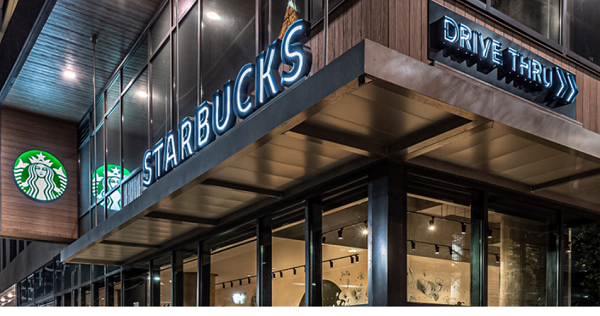
The Starbucks website has been updated regularly with news about the company’s response to COVID-19. Near the top of the page is a link to “At-a-glance: What customers need to know about Starbucks response to COVID-19.”

The big news is that stores will offer only drive-thru service for the next two weeks. In a letter to Starbucks partners (employees), the company promised 30 days of pay whether they work or not.
Discussion:
Analyze both the public website and the letter to partners. Describe the audiences and communication objectives of each.
What organizational structure is used for these bad-news messages?
What does Starbucks do well in its communications? How can communications be improved?
How well does the company balance emotional appeal and logical arguments?
In this post, you see “Starbucks response” on the company’s website and “Starbucks partners” in my text. Neither has an apostrophe. Is that correct?
Singapore PM Lee Hsien Loong
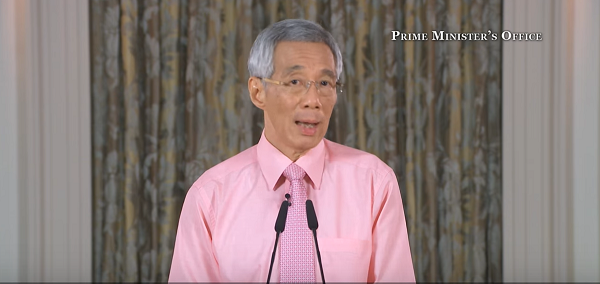
Two students sent me Singapore Prime Minister Lee Hsien Loong’s news conference as a positive example. I can see why: he gives a model speech, balancing emotional appeal and straight talk. He is proud of Singapore’s response, and yet he is honest about the challenges ahead. The PM also gives examples from other countries and the lessons learned.
Discussion:
What are the strengths of the Prime Minister’s speech?
Assess his delivery skills.
How have leaders in other countries followed this example—or how have they fell short?
Which leadership character dimensions does the PM demonstrate in his speech?

Comparing Airlines Messages About COVID-19

Transportation companies would like to see more people travel, yet people are wary of COVID-19. Compare these emails to travelers:
Discussion:
Analyze the messages: audience, communication objectives, organization, writing style, etc.
In what ways are the messages similar and different? How might the travel mode—airline or bus—affect the communication choices?
Which messages are most and least effective and why?
What’s your view of the American Airlines video? How does the media choice affect the message?

Communications About Kobe Bryant
NBA superstar Kobe Bryant, his daughter, and seven others died in a helicopter crash, and many are mourning the loss. At the Emmy’s, celebrities paid tribute to his life, and the NBA postponed a Lakers—Clippers game.
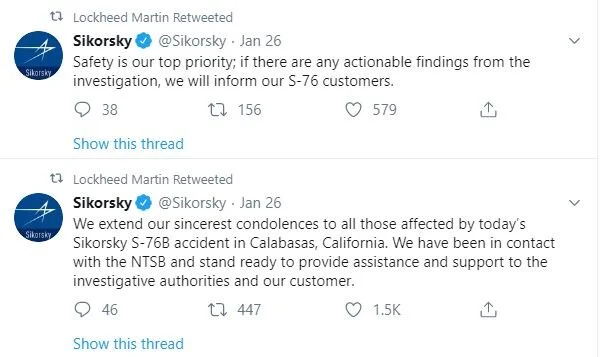
The helicopter company, Sikorsky, owned by Lockheed Martin, posted two tweets and a short statement on its website:
We extend our sincerest condolences to all those affected by the January 26th Sikorsky S-76B accident in Calabasas, California. We have been in contact with the NTSB and stand ready to provide assistance and support to the investigative authorities and our customer. Safety is our top priority; if there are any actionable findings from the investigation, we will inform our S-76 customers.
Discussion:
Analyze the Sikorsky messages. Who are their primary and secondary audiences? What are the communication objectives, and how well did the company achieve them?
Have you seen other communications from Sikorsky? Should the company do or say more? If so, what?
Boeing's Crisis Communication Plan

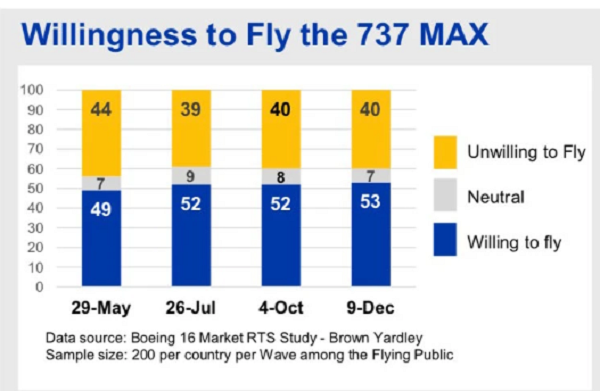
During the holiday break, several news items about Boeing were relevant to business communication and character. In one article, the New York Times revealed internal Boeing documents showing a company trying to rebuild its image after two MAX crashes within a year..
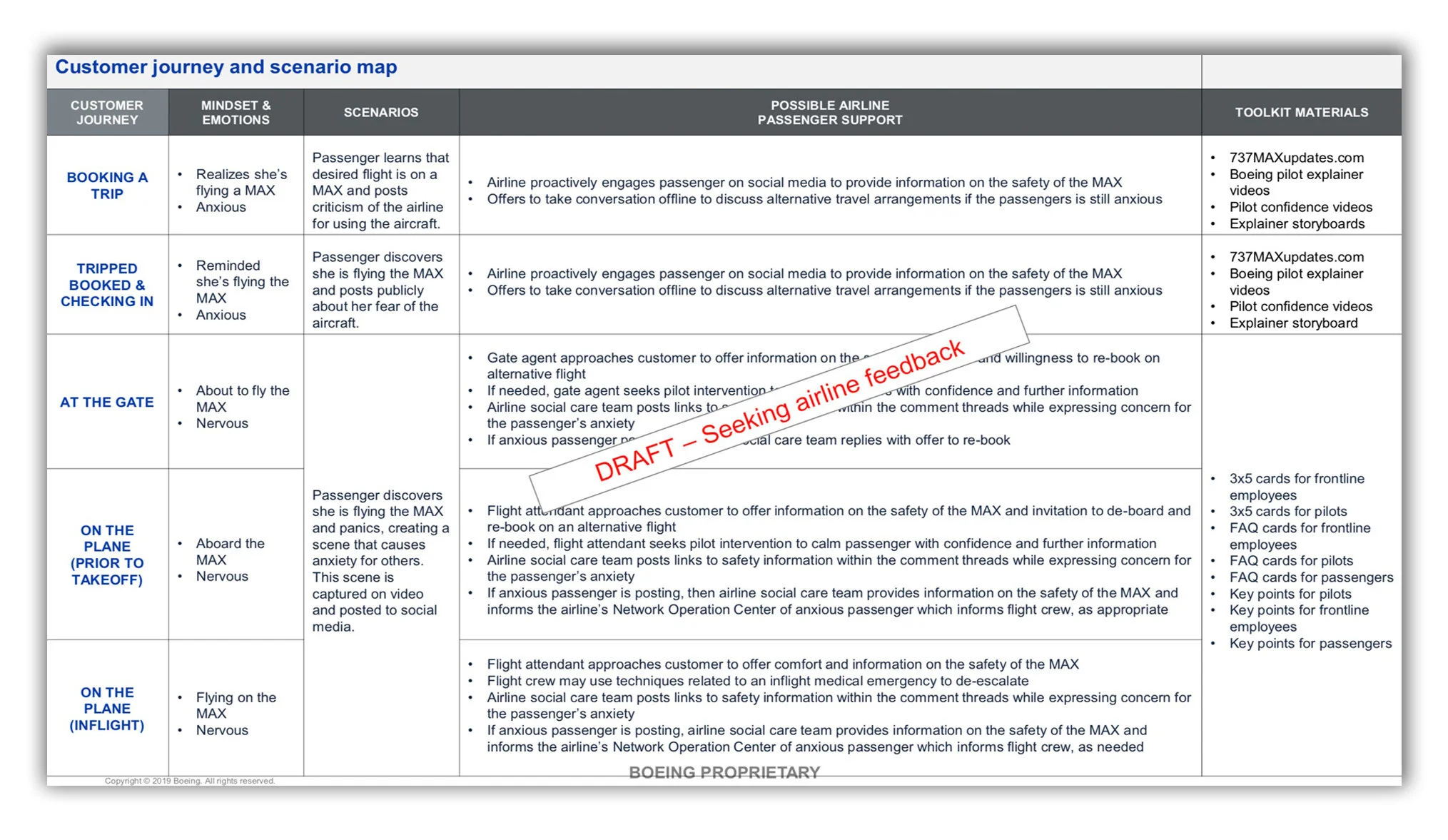
The documents give us an inside view of how the company plans to use persuasive strategies to win back customers. In one graphic, we see customers’ willingness to fly. In another, we see customer concerns and ways Boeing can address them, for example, with FAQ cards, “pilot confidence videos,” or personal connections (for example, “Flight attendant offers comfort and information on the safety of the MAX”).
Discussion:
What persuasive strategies does the company plan? Try to find examples of logical argument, emotional appeal, and credibility.
What are the consequences of this information becoming public? Does it likely endear the public to the company’s concerns, embarrass the company, or something else?
JPMorgan Recorded Phone Conversation
Jimmy Kennedy, an African-American former National Football League player, tried to open a private wealth account at JPMorgan but had trouble getting attention. He recorded a conversation with an African-American employee, Richardo Peters, who said, “You’re bigger than the average person, period. And you’re also an African-American. We’re in Arizona. I don’t have to tell you about what the demographics are in Arizona. They don’t see people like you a lot.”
In a New York Times article that published the recording, Peters recounted a specific example of discrimination against a Black customer. When he was trying to bring on another new client, who had received a large settlement, his manager said, “You’ve got somebody who’s coming from Section 8, never had a nickel to spend, and now she’s got $400,000, What do you think’s going to happen with that money? It’s gone.” His manager’s position was that the customer would not invest money with the bank.
Other incidents at the bank led to Peters’ termination, and he is suing for racial discrimination. JPMorgan also recently settled a class-action lawsuit for $24 million to Black employees who claimed discrimination: according to a New York Times report, “in some cases by isolating them from colleagues and dumping them in poorer branches.”
A few days later, CEO Jamie Dimon addressed the situation in a memo to employees.
Discussion:
How do you assess this situation at JPMorgan? Read more in the NYT article.
A February Essence article describes and praises JPMorgan’s Advancing Black Pathways program to support the Black community. What’s your view of the effort in light of this news?
How do you assess CEO Jamie Dimon’s response in the memo? We don’t see the entire memo, but CNBC posted quotes.

Letter from WeWork Employees
As WeWork plans layoffs, employees are asking for input into what happens to them and their peers. Referring to themselves as WeWorkers Coalition, the employees wrote a letter to the management team.
To the We Company Management Team:
WeWork’s company values encourage us to be “entrepreneurial, inspired, authentic, tenacious, grateful and together.” Today, we are embracing these qualities wholeheartedly as we band together to ensure the well-being of our peers.
We come from many departments across the company: building maintenance, cleaning, community, design, product, engineering and more. We believe that in the upcoming weeks we have the unique opportunity to demonstrate our true values to the world. This is a company that has inspired many of us, challenged us, and has been a formative personal and professional experience for those of us who began our careers here. WeWork has been not just a workplace, but a source of friendships and inspiration along the way.
We also believe our product can have a lasting positive impact on the world. We want to improve workplace happiness for millions of office workers and support small and medium sized businesses in their entrepreneurial efforts. We have been proud to support these goals and dedicate our time and talent to achieve them. This has been our story so far.
Recently, however, we have watched as layers are peeled back one-by-one to reveal a different story. This story is one of deception, exclusion and selfishness playing out at the company’s highest levels. This is a story that reads as a negation of all our core values. But this story is not over.
Thousands of us will be laid off in the upcoming weeks. But we want our time here to have meant something. We don’t want to be defined by the scandals, the corruption, and the greed exhibited by the company’s leadership. We want to leave behind a legacy that represents the true character and intentions of WeWork employees.
In the immediate term, we want those being laid off to be provided fair and reasonable separation terms commensurate with their contributions, including severance pay, continuation of company-paid health insurance and compensation for lost equity. We are not the Adam Neumanns of this world — we are a diverse work force with rents to pay, households to support and children to raise. Neumann departed with a $1.7 billion severance package including a yearly $46 million “consulting fee” (higher than the total compensation of all but nine public C.E.O.s in the United States in 2018). We are not asking for this level of graft. We are asking to be treated with humanity and dignity so we can continue living life while searching to make a living elsewhere. In consideration of recent news, we will also need clarity around the contracts our cleaning staff will be required to sign in order to keep their jobs, which are being outsourced to a third party. Those of us who have visas through WeWork need assistance and adequate time to find a new employer to sponsor our respective visas.
In the medium term, employees need a seat at the table so the company can address a broader range of issues. We’ve seen what can happen when leadership makes decisions while employees have no voice. We will need to see more transparency and more accountability.
We also need the thousands who maintain our buildings and directly service members to receive full benefits and fair pay, rather than earning just above minimum wage.
We need allegations of sexual misconduct and harassment to be taken seriously, acted on immediately and resolved with transparency.
We need diversity and inclusion efforts to materialize into real actions, not just talking points at company meetings.
We need salary transparency so we can surface and address systemic inequalities.
We need an end to forced arbitration contracts, which strip employees of their right to pursue fair legal action against the company.
We need all of this, and more.
In the long term, we want the employees who remain at WeWork, and those who join in the future, to inherit something positive we left behind. We want them to never find themselves in this position again, and for that to happen, they need a voice.
With this letter we are introducing ourselves, the WeWorkers Coalition. We are taking full advantage of our legal right to establish this coalition, and in doing so, we hope to give the future employees of WeWork the voice we never had.
We want to work with you. Please join us in writing a better ending to this chapter of the WeWork story.
By this Thursday at 5:00 p.m. EST, we would like to receive confirmation of your receipt of this letter and an indication of your willingness to meet us.
The WeWorkers Coalition
@weworkersco • info@weworkersco.org • #weworkers-coalition
Discussion:
What principles of business writing do the employees follow?
What persuasive strategies do they use in the letter? Find examples of logical argument, emotional appeal, and credibility.
What do you consider the strongest and weakest arguments?
What leadership character dimensions are illustrated in this situation?

Boeing CEO Responds to Questions
This week, Boeing CEO Dennis Muilenburg answered lawmakers’ questions about the two Max 737 plane crashes in the past year. Facing families of deceased passengers, Muilenburg began his testimony with an apology:
“I’d like to begin by expressing my deepest sympathies to the families and loved ones of those who were lost in the Lion Air Flight 610 and Ethiopian Airlines Flight 302 accidents, including those who are here in the room today. I wanted to let you know, on behalf of myself and all of the men and women of Boeing, how deeply sorry I am. As we observe today the solemn anniversary of the loss of Lion Air Flight 610, please know that we carry the memory of these accidents, and of your loved ones, with us every day. They will never be forgotten, and these tragedies will continue to drive us to do everything we can to make our airplanes and our industry safer.”
One of the most tense moments was when Senator Ted Cruz questioned Muilenburg (see video). Muilenburg also faced criticism as he was leaving. The mother of a victim of the second crash responded to his invoking his Iowa farm background:
“Go back to Iowa. Do that.” She also said, “I don't feel like you understand. It's come to the point where you're not the person anymore to solve the situation."
Discussion:
Watch more of Muilenburg’s testimony. What are some examples of questions he addressed well, and how could he have done better?
How well does Muilenburg balance emotional appeals, logical arguments, and credibility in his testimony?
What leadership character dimensions are illustrated by this situation and by Muilenburg’s testimony?
Muilenburg’s interaction with the mother is a difficult situation for anyone to handle, and we can certainly understand her grief and anger. How would you have responded?
CNN reports:
“In response, Muilenburg said he respects her viewpoint. "But I want to tell you the way I was brought up. And I'm just being honest here about it. I learned from my father in Iowa ... when things happen on your watch you have to own them and you have to take responsibility for fixing them," he said.

Forever 21 Files for Bankruptcy

Retailer Forever 21 has filed for bankruptcy, and employees are not happy. In its Letter to Customers, posted on the website, the company explains the process:
This does NOT mean that we are going out of business – on the contrary, filing for bankruptcy protection is a deliberate and decisive step to put us on a successful track for the future.
Hundreds of employees are planning to unionize with United for Respect, which also represented employees from Sears and Toys R Us during their bankruptcies.
The Washington Post reports employees’ reactions to the Forever 21 decision:
[S]everal employees cited past instances where Forever 21 swiftly closed stores with little warning or explanation, which prompted their concerns over how the company would treat employees amid bankruptcy.
Unions are seeing opportunities in retail employees. Private-section union membership has been shrinking in the U.S. and is now only 6.4%, compared to 33.9% of government workers. As retail employees get discouraged by their employers, union organizing activity has been increasing.
Discussion:
Analyze the Letter to Customers. Which principles of communicating bad news are followed? How could the message be improved?
Explain the ethics of a company filing for bankruptcy. Use an ethical decision-model, such as that in Chapter 1, to determine the effects.
What’s your view of retail employees unionizing? What are the benefits to employees and potential downsides of union activity and of forming a union?

CEOs Advocate for Gun Safety
CEOs are encouraging senators to pass stricter gun regulations, such as background checks and a “Red Flag” law that allows guns to be taken from someone who poses a threat. The leaders of 145 companies sent a letter asking for the following:
“That’s why we urge the Senate to stand with the American public and take action on gun safety by passing a bill to require background checks on all gun sales and a strong Red Flag law that would allow courts to issue life-saving extreme risk protection orders.”
The Trump Administration has implemented a ban on bump stock devices, which allows a shooter to fire in more rapid succession, and President Trump has supported more thorough background checks for gun buyers.
Discussion:
What’s your view of CEOs taking on this activist role? What is driving them, and what are the potential risks?
What observations do you have about the companies that are represented—and perhaps about those that are not?
Analyze the letter by considering the audience, communication objectives, organization, writing style, and so on. What works well, and what could be improved?

United Air Kerfuffle
A United Airlines representative participated in an entertaining Twitter exchange about seat prices. The customer has a point: it’s silly to have empty seats on a plane. But United also has a point: the seats are more expensive, and this customer didn’t pay the extra fee.
The Lexus analogy is a curious one. The better analogy may be stadiums or theaters. In some cases, we will see people move closer to a field or a stage, but I understand (although I’ve never been) that this isn’t allowed at the U.S. Open.
Discussion:
What’s your view of United Airlines’ policy? What other examples are similar? Can you think of a better analogy?
What’s your view of the Twitter exchange? Is the customer right, antagonistic, rude, or something else? How about the United rep?

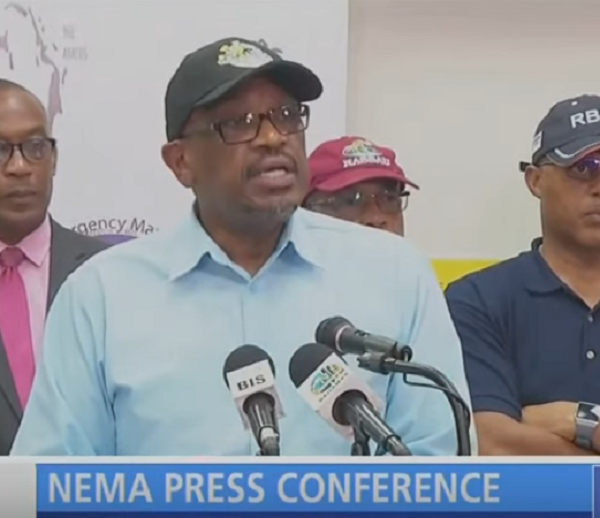
Dorian News Conferences
Local officials are holding news conferences about the impact of Hurricane Dorian.
Miami Mayor Francis Suarez announced mostly good news for the city, but he also addresses the terrible impact on the Bahamas.
Bahamas Prime Minister Hubert Minnis announced worse news: five fatalities. Since then, the number has risen to 30.
Discussion:
Compare these two presentations, particularly the content and tone. What differences do you notice?
How effectively did each government official convey the news?
What leadership character dimensions did they demonstrate?

Employees Pressure Walmart to Consider Role in Gun Violence

Walmart is in a tough spot after recent shootings. Some employees are pressing the company to do more to fight gun violence, but no policy changes are planned. After previous attacks, Walmart stopped selling assault-style weapons and raised the minimum age to purchase guns and ammunition, but it’s unclear whether the leaders will do more. Employees are asking Walmart to stop selling firearms and to disallow customers from carrying guns into the stores.
The company seems divided about employees’ activism. Chief Executive Doug McMillon wrote, ”We are proud to be woven into the American fabric as a place for all people. We are more resolved than ever to foster an inclusive environment where all people are valued and welcomed.” At the same time, the company blocked two employees’ access to Slack, encouraging employees to use “more constructive ways for associates to offer feedback such as emails or conversations with leaders.”
A study recently published in the International Journal of Business Communication found that employees are more likely to “express dissent to managers and coworkers” when they are more socialized in the company and when they believe their company is “more ethical and reputable.”
A Wall Street Journal article explains the risk for Walmart to take more action against gun sales:
“[A]ny change to its gun policies risks alienating Walmart’s core customers, who often live in more conservative-leaning rural and suburban communities. The company faced some consumer backlash after raising the minimum age to purchase guns to 21.”
Discussion:
How can the company balance employees’ and customers’ perspectives? What else, if anything, should company leaders say and do?
Did the company do the right thing by blocking Slack access? In what ways are email and conversations more or less “constructive”?
What leadership character dimensions are illustrated by this situation?

How to Deal with Being "Ghosted"
Too often, employers stop responding to candidates. Even after an in-person interview, candidates never hear back. The CEO of a job search platform advises people to follow up in a few ways:

Send one email a week. Be thoughtful about your messages to express interest; maybe share new research about the company .
Try different channels. For example, send a LinkedIn message instead of email, but only once.
Reach out to others. Contact another recruiter or the hiring manager directly.
All of these actions come with risk, but the writer argues, and I agree, that the risk is worth it. None of these follow-ups are too annoying, and you may turn the tide in your favor.
Discussion:
Why do you think employers ghost applicants? Consider what incentive they have to follow up.
What’s your view of these follow-up approaches? Which are you more or less comfortable doing?

Suicide Among France Télécom Employees

Management couldn’t fire employees at France Télécom, so, according to critics, they harassed them hoping they would quit. But at least 35 committed suicide under the pressure, and some reports claim the number is closer to 60.
France Télécom was privatized and rebranded as Orange in July 2013. The company wasn’t keeping up with technological changes and, according to executives, were saddled with state employees, who are protected from termination. In 2007, Didier Lombard, the former chief executive of France Télécom, said they would get to their ideal number of layoffs “one way or another, by the window or by the door.”
A New York Times article describes the environment: “A grim universe of underemployment, marginalization, miscasting and systematic harassment was established at the huge company, according to testimony at the trial.” Managers tried changing job responsibilities for some workers, but employees were left without tasks or with tasks they couldn’t do.
With France’s high unemployment rate, employees felt they had few options. Union members, shown here, express their support during the trial in Paris. We’ll see whether the judges find company executives guilty.
Discussion:
How did management justify its practices? On the other hand, how could they have acted differently?
What experience do you have with international labor laws? Describe differences and how they might affect business decisions.
Should France reconsider its lifetime employment protections?
What leadership character dimensions are illustrated by this situation?