
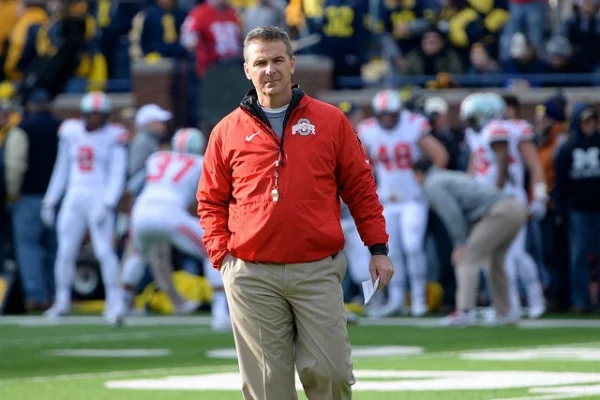
Ohio Football Coach: Another Case of Deleted Messages
Ohio State football coach Urban Meyer will forgo pay and the ability to coach three games because of his failure to appropriately handle a staff member's misconduct. A New York Times article chronicles issues with Zach Smith's behavior, including paying $600 at a strip club during a recruiting event, a domestic violence charge, and an affair with a staff member.
During a press conference, Meyer apologized, saying, "I should have done more, and I am sorry for that," and "I followed my heart and not my head."
The Times article also describes a conversation between Meyer and Smith about deleting text messages. I should count the number of stories on this blog since 2010 illustrating that deleting texts and emails fail to get the desired result. These messages are almost always recoverable, and the act of deletion makes the accused look even more guilty.
In addition, in this situation, Ohio State officials at first failed to produce messages requested by the school newspaper. Worse, several staff knew about the request, but no one even approached Coach Meyer to retrieve them.
Discussion:
- Once again, where are the many places deleted messages may be stored? How else can they be retrieved?
- What's your view of the strip club visits? Could Meyer reasonably argue that this is just part of the recruiting process? After all, no students were invited—only university and high school coaches.
- Assess the press conference. How well did university officials, including Meyer, respond to reporters' questions? Did the team appropriately take accountability?
Pope Francis's Letter
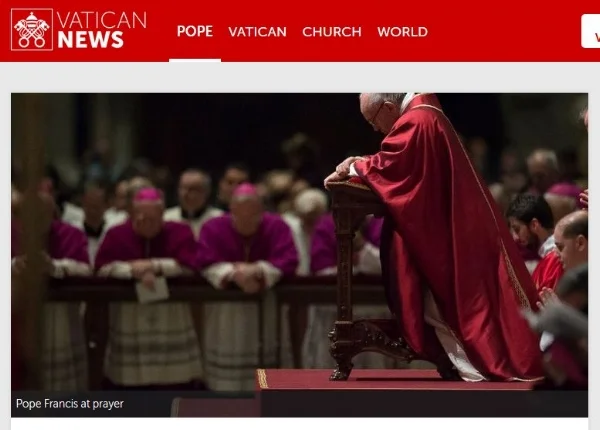
Pope Francis has joined the conversation about sexual abuse in the Catholic church after 1,000 victims and 300 perpetrators were identified by a grand jury investigation report in Pennsylvania. The report also revealed how the church systematically covered up the abuse over a 70-year period.
In an open letter, which is posted on Vatican News, expresses empathy early and often, for example, in this passage:
In recent days, a report was made public which detailed the experiences of at least a thousand survivors, victims of sexual abuse, the abuse of power and of conscience at the hands of priests over a period of approximately seventy years. Even though it can be said that most of these cases belong to the past, nonetheless as time goes on we have come to know the pain of many of the victims. We have realized that these wounds never disappear and that they require us forcefully to condemn these atrocities and join forces in uprooting this culture of death; these wounds never go away. The heart-wrenching pain of these victims, which cries out to heaven, was long ignored, kept quiet or silenced.
Pope Francis's letter follows one by Pope Benedict XVI in 2010, when abuse in Ireland became widely known.
Discussion:
- Compare the two letters. In what ways are they similar and different? How might the circumstance and timing affect each approach?
- How is the letter organized? How would you describe the tone?
- Which character dimensions does Pope Francis demonstrate in his letter?

The Debate Over Quarterly Reporting
President Trump is asking the SEC to no longer require report quarterly earnings. Instead, companies would report results every six months.

This may be good news for those who believe that publishing frequent earnings reports encourage a short-term focus. The idea is that investors make rash decisions based on the results from only three months.
One downside of the change could be less transparency. The value of quarterly reports is that investors are more aware of what's happening. In addition, the process itself may be useful internally, as a former investment banker explains:
"What I see from the inside of the quarterly earnings cycle is that there’s actually a lot of discipline in it. That process of having to prepare it, release it, explain it and answer questions has real value.”
Also, not everyone agrees that eliminating the report will foster longer-term thinking. As a compromise, some are proposing that reports are still published, but that specific earnings-per-share guidance information isn't included.
Discussion:
- Describe the importance of transparency in financial reporting. How does this relate to accountability?
- What's your view of the proposal to eliminate quarterly reports? Do you see additional benefits or downsides than what is mentioned here?
- In his tweet, President Trump refers to making "business (jobs) even better." How do you see this as a result of his proposal?

Alaska Airlines Responds to Rogue Employee Takeoff
Without authorization, an employee manned an Alaska Airlines plane, operated by Horizon Air in Seattle, and took off. In audio files from the plane, the employee mentions his experience playing video games and wonders whether the airline will employ him if he lands well. Sadly, he didn't: the plane crashed.
On its website, Alaska Air posted a statement, "Information on Horizon Air Aircraft." Included is a quotation from Alaska Air CEO Brad Tilden including this paragraph:
“We are still gathering facts, but at this point we understand there was only one person aboard, an employee of Horizon Air, who was operating the aircraft. I want to share how incredibly sad all of us at Alaska are about this incident. Our heart is heavy for the family and friends of the person involved."
The Horizon Air CEO also included a statement, and COO Constance von Muehlen created a video.
Discussion:
- Why does Alaska Air title the web page, "Information on the Horizon Air Aircraft"?
- Review the message sequence on Alaska Air's site. How well is the company communicating information about the incident?
- How well do the three executives communicate the news? What, if anything, should they change? What is the value of von Muehlen's video compared to the written statements?

Communicating Strategy at HBO
A New York Times article gives us a window into how leaders are telling employees about the future of HBO. The article describes a town hall meeting John Stankey, an AT&T executive, held for about 150 employees. When AT&T acquired Time Warner in 2016, HBO was part of the deal, so employees are likely anxious to know the company's plans. The Times article describes the meeting as "a straight-shooting, hourlong talk."
Stankey communicated a clear theme throughout his talk: increasing viewer engagement:
We need hours a day. It’s not hours a week, and it’s not hours a month. We need hours a day. You are competing with devices that sit in people’s hands that capture their attention every 15 minutes.
Perhaps understandably, the talk may have included some contradictions. Here are two subsequent paragraphs in the Times article:
They pledged to take a hands-off approach to the company’s crown jewel, HBO, which has won endless Emmys while generating billions in profits.
But the town hall meeting suggested that AT&T would not be a passive corporate parent.
Attempting to quell employees' fears about layoffs, Stankey noted the lack of duplication between HBO and AT&T.
Discussion:
- How do you explain the two statements above? How might HBO employees perceive the talk?
- Read more in the article. What else strikes you as important from an employee perspective?
- Overall, how transparent would you describe the executive's approach?
- What are the advantages and drawbacks of a town hall meeting? What other communication channels would be helpful during an acquisition?

Scott Pruitt Resigns
Environmental Protection Agency (EPA) head Scott Pruitt resigned after months of accusations of overspending and other ethical issues. Questions about Pruitt's judgment involved expensive travel, getting a job for his wife, and underpaying for an apartment.
President Trump had supported Pruitt, but the controversy may have reached a tipping point. Discovery of secret calendars could have been the last straw. A whistleblower said Pruitt kept three different calendars to hide meetings.
In his resignation letter to the president, Pruitt referred to "unrelenting attacks on me personally, [sic] my family, are unprecedented and have taken a sizable toll on all of us." In a tweet, President Trump was gracious and complimentary.
Discussion:
- If you're familiar with Pruitt's history in the position, which of his alleged ethical lapses do you consider more serious? Which are less serious?
- On balance, do you agree with Pruitt that he was attacked? How might your own political views affect your perspective?
- Did he do the right thing by resigning? Why or why not?
- How does Pruitt's resignation letter differ from resignation letters written for corporate jobs?


Intel CEO Resigns Over Relationship With Employee

A Wall Street Journal article describes events leading to the Intel CEO's resignation. Brian Krzanich had an affair with a mid-level manager at the company, but the relationship ended years ago. Still, the affair became public when the woman told a co-worker who, citing the company's strict policy, reported it to the board of directors.
Intel has a particularly tough policy, which bans any relationships among managers and any employees and requires employees to report known relationships.
In a news release, the company announced the news in the first paragraph and then quickly moved to the future: the appointment of an interim CEO and expressions of confidence for Intel's strategy. Still, the stock fell 3.5% on the news.
Discussion:
- Did Krazanich do the right thing by resigning? Why or why not?
- What are the advantages and downsides of Intel's strict policy? "Non-fraternization" seems dated and odd, doesn't it? Why would a company use this title?
- Consider the employees who discussed the affair. We might assume that one confided in the other. What were the steps along the way that led to Krazanich's resignation? Who is accountable for the result?

Tesla Employee Accused of Sabotage
A Tesla employee is accused of hacking into the computer system and changing code that affected the manufacturing process of the Model 3 car. The company believes this is the reason for the production delays.
CEO Elon Musk sent an email to employees, explaining the situation and asking them to report anything that looks "suspicious." He also writes, "This can be done in your name, which will be kept confidential, or completely anonymously." Musk blames an employment dispute:
"The full extent of his actions are not yet clear, but what he has admitted to so far is pretty bad. His stated motivation is that he wanted a promotion that he did not receive. In light of these actions, not promoting him was definitely the right move."
Musk gives other possible explanations for the deceit. He mentions short-sellers and members of the oil and gas industry who "don't love the idea of Tesla advancing the progress of solar power & electric cars."
The employee, Martin Tripp, disputes the claim, saying he was a "whistle blower." According to Tripp, he merely sent a query to a database to confirm waste and safety issues he saw at the company. Tripp has worked for Tesla since 2007.
Meanwhile, an email exchange between Musk and Tripp has become public:
Tripp: “Don’t worry, you have what’s coming to you for the lies you have told to the public and investors.”
Musk: “Threatening me only makes it worse for you”
Tripp: “I never made a threat. I simply told you that you have what’s coming. Thank you for this gift!!!!”
Musk: “You should ashamed of yourself for framing other people. You’re a horrible human being.”
Tripp: “I NEVER ‘framed’ anyone else or even insinuated anyone else as being involved in my production of documents of your MILLIONS OF DOLLARS OF WASTE, Safety concerns, lying to investors/the WORLD. Putting cars on the road with safety issues is being a horrible human being!”
Musk: “There are literally injuries[sic] with Model 3. It is by far the safest car in the world for any midsize vehicle. And of course a company with billions of dollars in product is going to have millions of dollars in scrap. This is not news.
“However, betraying your word of honor, breaking the deal you had when Tesla gave you a job and framing your colleagues are wrong and some come with legal penalties. So it goes. Be well.”
Discussion:
- I'm curious about the possibility of employees reporting anonymously when Musk gives an email address. How is this possible?
- Have you been in a situation where you were unhappy with how you were treated by management? What resources were available to you?
- Assess Musk's email to employees: the audience focus, organization, tone, and so forth. What works well, and what could be improved?
- What's your view of the dispute between the company and the employee? With whom do you side, and why?

Tesla Layoff Memo
Tesla will cut about 9% of its staff, according to a memo sent to employees. In the message, CEO Elon Musk is direct about the decision, which he claims addresses some overlapping roles. Musk also says that profits haven't been a priority but that the company must now focus on profitability to be successful.
In the last paragraph, Musk expresses his gratitude to those leaving the company:
"To those who are departing, thank you for everything you’ve done for Tesla and we wish you well in your future opportunities. To those remaining, I would like to thank you in advance for ult job that remains ahead. We are a small company in one of the toughest and most competitive industries on Earth, where just staying alive, let alone growing, is a form of victory (Tesla and Ford remain the only American car companies who haven’t gone bankrupt). Yet, despite our tiny size, Tesla has already played a major role in moving the auto industry towards sustainable electric transport and moving the energy industry towards sustainable power generation and storage. We must continue to drive that forward for the good of the world."
A Bloomberg article criticizes the memo for burying news that it will end its partnership with Home Depot. Musk does address the issue, particularly how employees are affected, in the fifth paragraph.
Discussion:
- How clearly does Musk's memo communicate the news the employees?
- What organizational approach does Musk use in the memo? How effective is this approach given the situation and audience?
- What's your view of Bloomberg's criticism about the Home Depot decision? How, if at all, could Musk have handled this differently?
- What leadership character dimensions are demonstrated in Musk's memo? Where, if at all, does he fall short?

Valedictorian's Speech About Sexual Assault Is Cut Short
Just as a high school valedictorian started talking about sexual assault at the school, her mic was cut off. Lulabel Seitz, in Petaluma, CA, had planned to discuss issues of students, including herself, being silenced after reporting incidents of sexual misconduct. The school administration warned her to avoid the topic in her speech: “For weeks, they have threatened me against ‘speaking against them’ in my speech. Sometimes we know what’s right and have to do it despite the threats.”
When the time came for her speech, Seitz said, “Because the class of 2018 has demonstrated time and time again that we may be a new generation, but we are not too young to speak up, to dream and to create change, which is why even when some people on this campus, those some people..." And then there was silence from the podium as her classmates cheered her on: "Let her speak."
She did continue, on YouTube, where she uploaded her complete speech and the ending to her sentence: “And even learning on a campus in which some people defend perpetrators of sexual assault, and silence their victims, we didn’t let that drag us down.”
This story exemplifies the Streisand Effect, which The Economist describes as demonstrating "how efforts to suppress a juicy piece of online information can backfire and end up making things worse for the would-be censor." The Effect was named when performer Barbra Streisand sued the California Coastal Records Project for including pictures of her Malibu house. The suit was considered frivolous, and photos of the home went viral, giving Streisand far more attention than she would have otherwise received from the Coastal Project.
In the case of the high school student, the administration silenced her during the ceremony, but her YouTube video, as of this writing, received almost 230,000 views, far more than the number of people who attended graduation. Also, now the school's handling of sexual misconduct situations is on full display.
The school responded with a short statement:
"Administrators and staff in Petaluma City Schools care deeply about the safety and well being of our students. Due to student privacy issues, we cannot and should not respond with specific information. We can say that when issues of sexual assault come to our attention, local law enforcement has initial jurisdiction and determines the course of action."
Discussion:
- What, if anything, should the school administrators have done differently before Seitz's speech?
- What is Seitz's responsibility? Should she have avoided discussion of sexual assault, as she was instructed by school officials?
- What else should school officials say now? How can they repair the district's image and address issues raised?
- How is this an issue of integrity for the school and for Seitz?

Analyzing Communications Around the USC Crisis
After the University of Southern California's president resigned last month, crisis communication experts analyzed university messaging. When a gynecologist was accused of inappropriate exams and comments over decades working for the university, 200 faculty called for President C.L. Max Nikias's resignation. Faculty wrote that they believed Dr. Nikias "has lost the moral authority to lead the University.” Although the Administration denies any type of coverup, the gynecologist was allowed to continue in his job even after many allegations in 2016. Dr. Nikias did resign.
A Wall Street Journal article chronicles the following university communications:
A May 21 statement from university Provost Michael Quick denied university leadership knew of the doctor’s improper behavior, stating: “It is true that our system failed, but it is important that you know that this claim of a cover-up if patently false.” Prior to that, the university issued statements about the matter from Mr. Nikias on May 18 and May 15, and statements from other university officials on May 15 and May 16. University administrators also are contacting students.
Criticism of the communication includes sounding defensive, not completing the investigation quickly enough, and failing to report investigation results to those affected. One writer complimented the statement by the chair of the university's executive committee.
Discussion:
- How does this situation illustrate character dimensions such as vulnerability, accountability, and integrity?
- Read the executive committee chair's statement. In what ways does the statement illustrate authenticity? What other character dimensions are illustrated?
- Assess the university's other statements. What's your assessment of each?
- What should the university do at this point to rebuild trust?

Communications About Cuba Plane Crash
A plane crashed near the Havana, Cuba, airport, leaving more than 100 people dead and only three survivors. Cuban President Miguel Diaz-Canel delivered the bad news:
"There has been an unfortunate aviation accident. The news is not very promising. It seems that there is a high number of victims."
The president also described recovery efforts:
"Things have been organised, the fire has been put out, and the remains are being identified,"
The reason is unknown, although an Al Jazeera article referred to the Boeing 737 as "aging." Aviation accidents are rare, but a BBC article chronicles several, including the previous crash in Cuba, in 1989, which killed 150 people.
Discussion:
- How well does the president communicate the events? We see only two short quotes here, so he may have said more. What else should he say? How can he communicate compassion?
- Research communications around other deadly plane crashes. How do the situations compare, and how should the communications differ?
- Should Boeing make a statement about the situation? Why or why not?

MSU's Denial as a Cultural Issue
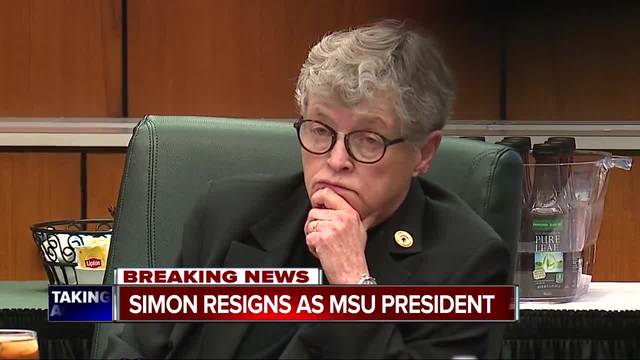
A Chronicle of Higher Ed article blames Michigan State University's ambitions and culture for their leaders' lack of response to years of sexual abuse on campus. More than 12 people knew of complaints against physician Larry Nassar, but the abuse continued for years.
Lou Anna K. Simon's leadership is questioned in the article. Although clearly a committed leader to the university, Simon is criticized for focusing so much on "two decades of status-climbing" that a culture of denying any wrongdoing evolved. One of the trustees summed up the issue in a letter and emphasized "We must embrace our obligation to apologize and offer justice."
Apologizing may be a sore subject for the trustees because Simon avoided it in the case of Larry Nassar's victims, according to the Chronicle article:
She talked about how “it is virtually impossible to stop a determined sexual predator and pedophile, that they will go to incomprehensible lengths to keep what they do in the shadows.” She often used “regret,” “sympathize,” and “acknowledge” in her written statements, but not “apologize.” She emphasized that sexual assault is a societal problem, not a Michigan State one. She highlighted all of the steps the university had taken to prevent sexual misconduct.
Discussion:
- Analyze the trustee's letter. What principles of business writing are followed? What are the strengths of the letter, and what could be improved?
- The trustee encourages MSU leadership to listen. What does he mean by this, and how would listening help the situation?
- What is the value of apologizing and admitting failure? What are the potential downsides, particularly for a university trying to improve its stature?
- This story illustrates several failings of leadership character. Which can you identify, and which do you think are most relevant here?

MTA Criticized for Lack of Transparency

Commissioners at the New York Metropolitan Transportation Authority (MTA) questioned increasing costs and whether the agency has been transparent. Of particular concern are additional costs of about $1 billion and cost overruns for a project that resulted in 19 instead of 32 subway stations getting renovated. One commissioner said, “It is indefensible that we did not receive this information prior to it being reported in the press." The governing body discovered the information from a Wall Street Journal article.
Chairman Joe Lhota, who was appointed last summer, acknowledged that the agency has been working on being more transparent:
“Not a second in a day goes by when I don’t think about transparency at this agency and what we need to do to provide information to all of you."
NY Mayor Bill de Blasio and New York City Council Speaker Corey Johnson requested more transparency about spending and service improvement measurements and asked for monthly briefings and an "evaluation of efficacy."
Discussion:
- How would you define transparency, and how does it relate to accountability?
- After reading more about the situation, how would you assess the agency's actions? Do you agree with the commissioners' assessment? If you believe a lack of transparency exists, do you think it's intentional? Does it matter if it is?
- Why do organizations lack transparency? What do they potentially gain and lose?
- What do you think an "evaluation of efficacy" means?

More About the Starbucks Bias Situation
After the arrest of two black men in a Philadelphia store, Starbucks announced that 8,000 stores will close on May 29 for racial-bias training. But are some skeptical about the impact that one day of training will have, and the company seems to be imitating Chipotle's decision to close stores for food safety training. On the other hand, the company could have blamed the employee who called the police, a crisis communication strategy we have seem in many other situations.

An article in the New York Times describes racial bias research in hospitality customer service and may tell us more about the incident in Philadelphia. In one study, researchers sent emails to hotels using different names that reflected gender and race, asking for restaurant recommendations. Responses indicated racial bias, as the authors describe: "Hotel employees were significantly more likely to respond to inquiries from people who had typically white names than from those who had typically black and Asian names."
In addition, researchers analyzed "politeness," for example, whether employees wrote "best" or "sincerely" before signing their name. They were more likely to use such words when responding to guests with names that sounded white, and the authors describe another finding for this group:
They were three times as likely to provide extra information — even when the initial inquiry was just about restaurants — to white than to black or Asian people.
In addition to training, the authors suggest periodic customer service audits and consistent scripts and policies.
In a turn, Philadelphia Police Commissioner Richard Ross has apologized to the two men who were arrested. In his original video, Ross defended the officers actions and said, based on a sergeant's experience at Starbucks, "they are at least consistent in their policy." But in the news conference, Ross says, "shame on me" and "I have to do better."
Discussion:
- What's your view of the research about customer service at hotels? What does the research potentially say about the situation at Starbucks?
- Have you experienced bias in a customer service setting? What was the situation, and how did you handle it?
- How well does Ross handle the apology in the news conference? How does his identity factor into his response? How does he demonstrate authenticity, vulnerability, and other leadership character dimensions?
Starbucks Apologizes, Again

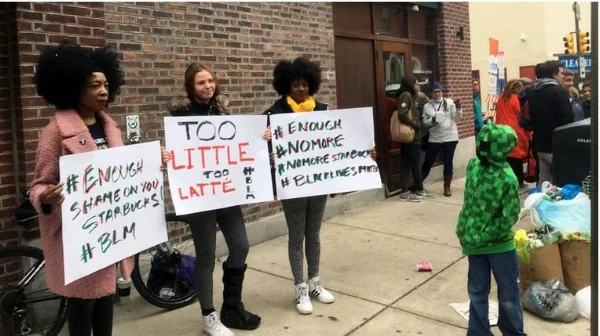
Two black men were arrested at a Philadelphia Starbucks. Witnesses say they were just waiting for a friend and asked to use the restroom. The reason for calling the police seemed to be the same: that they were just waiting for friend. But because they didn't order anything, they were asked to leave and did not. Other customers say this is common at Starbucks, and the only reason the police were called was because the two men were black.
The company, at first, gave a weak apology using unclear pronoun references (see "this" and "these"). A longer apology came from the CEO Kevin Johnson later. In the statement, he identified steps the company would take and closed with this paragraph:
Finally, to our partners who proudly wear the green apron and to customers who come to us for a sense of community every day: You can and should expect more from us. We will learn from this and be better.
Johnson also posted an apology video.
In a video statement, Philadelphia Police Commissioner Richard Ross explained the situation from his point of view and defended the officers' actions. He also said that all officers get implicit bias training and gave an example of a police sergeant who was also denied access to a Starbucks bathroom. Ross's conclusion was that "they are at least consistent in their policy." Of course, not everyone agrees.
Discussion:
- Analyze Johnson's statement. Who are his primary and secondary audiences? What are his communication objectives, and how well did he achieve them?
- What organizational strategy does Johnson's statement illustrate? How do you assess his tone and writing style?
- What is an unclear pronoun reference, and how are they used in the first apology?
- What's your view of the situation? Did Starbucks do wrong? If so, at what point(s)? Are you boycotting Starbucks, as some promote, as a result?
- Which leadership character dimensions are illustrated by this example?
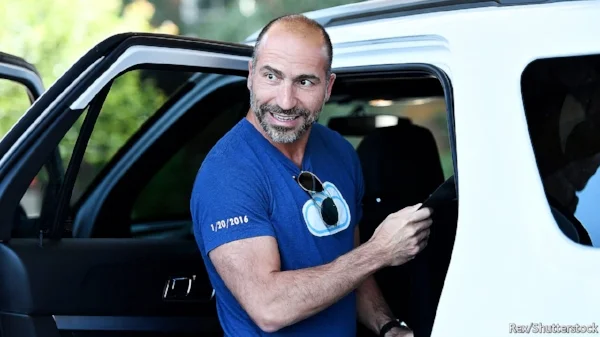
Uber CEO Compares Self-Driving Cars to Student Drivers
In defense of autonomous cars, Uber CEO Dara Khosrowshahi said, "Ultimately, self-driving cars will be safer than humans. But right now self-driving cars are learning. They’re student drivers.” On NBC's Today Show, Khosrowshahi confirmed that the company will continue its self-driving program despite a fatal crash last month in Arizona.
In the interview, when asked about Facebook and other technology companies facing privacy and safety issues, Khosrowshahi said he considers, "the challenges of technology getting into everyday life and the responsibilities that come with it." He repeated "responsibility" twice more within about the first minute of the interview. Like Mark Zuckerberg during the recent hearings on Capitol Hill, he said, "I welcome regulation," and "we're partnering with regulators."
Also as Zuckerberg clarified with lawmakers, Khosrowshahi said they don't sell data; however, he also said they don't "monetize data," which Facebook cannot say with its business model to sell ads.
Discussion:
- What principles of persuasion does Khosrowshahi demonstrate in this interview? Consider logical argument, emotional appeal, and credibility.
- What principles of leadership character does he demonstrate?
- What do you consider the strengths of this interview? What could Khosrowshahi improve?
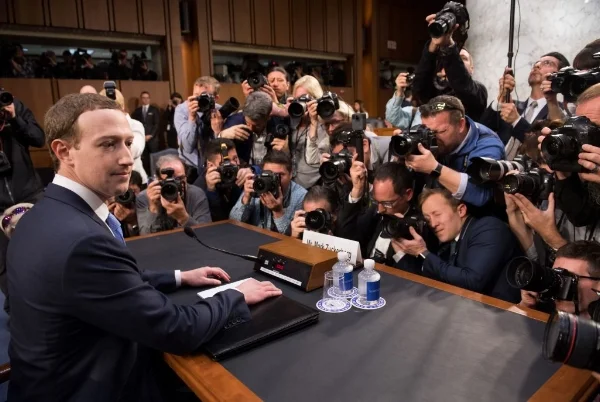
Zuckerberg Testifies Before Congress

In many hours of testimony, Facebook CEO Mark Zuckerberg did his best to address lawmakers' questions about data privacy and, surprisingly, how Facebook works. Senators and Members of Congress asked questions about texting, about how the company makes money without a subscription model (Zuckerberg: "We sell ads."), whether Facebook owns users' data, whether Facebook sells data, how many "data categories" Facebook collects, and so on. This video compilation does not reflect well on our lawmakers.
Zuckerberg himself seemed surprised by some of the questions and wasn't fully prepared to answer them. A reporter captures a photo of Zuckerberg's notes, which are what we would expect, but it's fun (in a voyeuristic way) to see them.
On the second day of testimony, questions improved, and many focused on Facebook's treatment of conservative political views. These were fair questions, and Zuckerberg admitted they had made mistakes in screening some content as inappropriate. But several representatives seemed to ask similar questions about this and about the consent agreement with the FCC, as if the question hadn't been asked just moments earlier.
In a New York Times Daily Podcast, reporters discussed Zuckerberg's continued references to starting Facebook in his dorm room. They believed the strategy was a good one for demonstrating his humanity (emotional appeal) but was potentially damaging for his credibility because it reminded lawmakers that he is only 33 years old. A seat chair, which internet trolls called a "booster seat," didn't help.
Wall Street responded well to Zuckerberg's testimony, with the stock price rising both days.
Discussion:
- What's your view of Zuckerberg's testimony? Watch as much as you can tolerate.
- Should lawmakers have a better understanding of Facebook? What is their level of responsibility?
- Identify a few specific questions and Zuckerberg's answers. What leadership character dimensions does he demonstrate, and how could he have improved?
- Watching the testimony, how would you assess his authenticity? Do you know more about him as a person? Should we?
Howard University Reports on Misappropriated Funds

Howard University's investigation has concluded that $369,000 had been misappropriated by six employees who were terminated last year. A full report by the university identifies how they "double dipped" by receiving both tuition assistance and university grants between 2011 and 2016.
In a cover letter to the report, President Wayne A.I. Frederick wrote, “Howard University is committed to uncovering any impropriety in the administration of university-provided financial aid and federal student aid, to remediating all problems identified during this investigation, and to maintaining a robust compliance program to prevent any inappropriate dealings in the administration of financial aid."
A Washington Post article reports that the university tried to avoid going public before the review was completed, but an article posted online made this impossible. Student protests, which went on for more than a week, also may have sped up the timing.
Discussion:
- What business writing principles does the report demonstrate and fail to demonstrate? How could the report be improved?
- Assess the president's cover letter. Who are his primary and secondary audiences, and what are the communication objectives? How well does the letter achieve those objectives?
- What can the university do now to restore trust?
- How well does the university take responsibility for the situation?
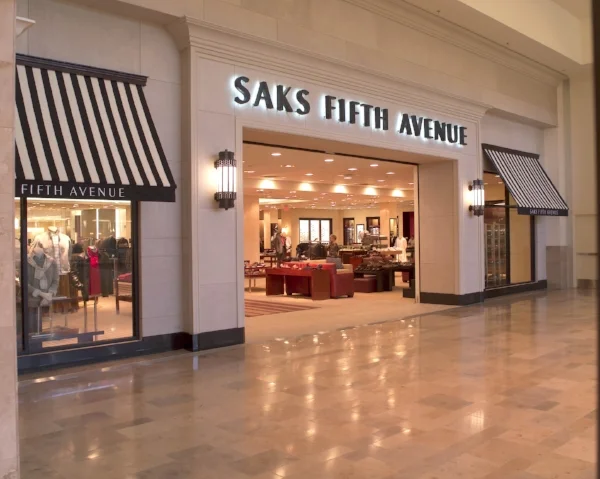
Major Retailers Respond to Data Breach
Retailers Saks Fifth Avenue and Lord & Taylor experienced a data breach affecting about 5 million customers. Hackers JokerStash Syndicate (also known as Fin 7) stole and resold credit and debit card information retrieved during the sales process.
Both companies are owned by Hudson's Bay Co., and we see that their customer messages have been coordinated. On both retailers' websites, text appears at the top of the page in a yellow box. When you click on the "Important Message" link, you see two statements dated one day apart and a list of FAQs.

The second message is below:
April 2, 2018 Statement
Updated Statement
We recently became aware of a data security issue involving customer payment card data at certain Saks Fifth Avenue, Saks OFF 5TH, and Lord & Taylor stores in North America. We identified the issue, took steps to contain it, and believe it no longer poses a risk to customers shopping at our stores. While the investigation is ongoing, there is no indication that this affects our e-commerce or other digital platforms, Hudson's Bay, Home Outfitters, or HBC Europe. We deeply regret any inconvenience or concern this may cause.
We wanted to reach out to our customers quickly to assure them that they will not be liable for fraudulent charges that may result from this matter. Once we have more clarity around the facts, we will notify our customers quickly and will offer those impacted free identity protection services, including credit and web monitoring. We encourage our customers to review their account statements and contact their card issuers immediately if they identify activity or transactions they do not recognize.
We are working rapidly with leading data security investigators to get our customers the information they need, and our investigation is ongoing. We also are coordinating with law enforcement authorities and the payment card companies. For further information, please visit https://www.saksfifthavenue.com/security-information/notice.html, https://www.saksoff5th.com/security-information/notice.html, or https://www.lordandtaylor.com/security-information/notice.html. To speak with a dedicated call center representative, beginning April 4, 2018, you can call 1-855-270-9187, Monday - Saturday, 8 am - 8 pm CT.
Discussion:
- Read the statements on the retailers' websites. Identify the primary and secondary audiences and communication objectives.
- How well do the statements achieve their objectives? What else, if anything, should the companies communicate at this point?
- To what extent are the retailers holding themselves accountable for the breach?