

McKinsey PPT Slide Causes Problems
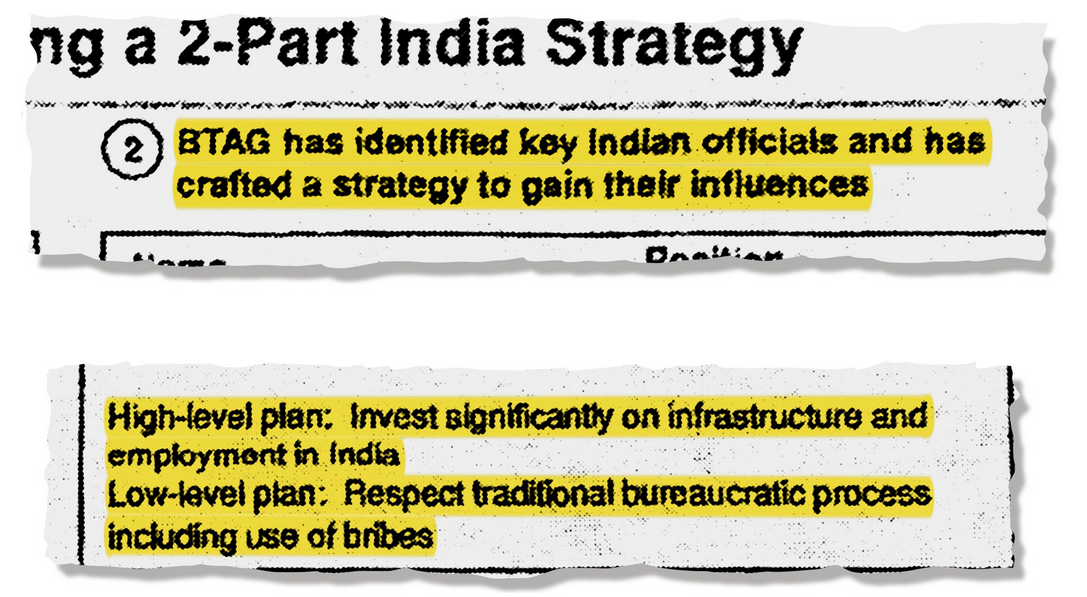
Back in 2006, Boeing hired management consultancy McKinsey to help the company launch its 787 Dreamliner despite rising titanium prices. According to a New York Times article, McKinsey evaluated a proposal for Boeing “to mine titanium in India through a foreign partnership financed by an influential Ukrainian oligarch.”
On a PowerPoint slide, the consultancy suggested that Boeing “respect traditional bureaucratic process including use of bribes.” Included on the slide were names of eight “key Indian officials.” As the article notes, “Nowhere in the slide did McKinsey advise that such a scheme would be illegal or unwise.”
McKinsey admitted authoring the report only after learning that the Times had a copy. Details are fuzzy, and McKinsey isn’t offering more explanation.
Discussion:
What’s your view of McKinsey’s responsibility in this situation? Do you believe they encouraged illegal activity, were just doing the job of management consultant firm and considering cultural realities, or something else?
The PPT slide seems to have implicated McKinsey. Should the consultants have been more careful about what was documented? Why or why not?
What character issues may be at play in this situation?
The NYT author wrote, “Nowhere in the slide…” I would say, “Nowhere on the slide…” Which is correct—or are both acceptable?

Lettuce Recall Data

An opinion piece in the Wall Street Journal highlights the value data for decision making. With the article title, “Lettuce Try Not to Panic,” Jim Prevor criticizes the Centers for Disease Control and Prevention’s (CDC) edict that “U.S. consumers not eat any romaine lettuce, and retailers and restaurants not serve or sell any”:
There are 43 people known to be infected with the outbreak strain of E. coli 0157:H7. The CDC interviewed 25 of them. Eighty-eight percent of those 25 people, as opposed to 47% of the general population, said they ate romaine lettuce in the week before they got sick.
From population data, the Prevor concludes that you have a 1 in 11 million chance of getting sick from Romain lettuce, and a 1 in 28 million chance of ending up in the hospital. The author makes the odds even more concrete:
If this outbreak were active every day, and you ate one salad a day, on average you would be hospitalized for E. coli once every 77,000 years.
Even these data, Prevor argues, are overstated for most of us. Children, older people, and people with compromised immune systems are far more likely to get sick than the average adult. As a result of the CDC warning, the author estimates “tens of millions of dollars in losses.”
On the CDC website, a “Food Safety Alert” details the investigation results and advice.
Discussion:
What’s your view of the CDC’s recommendation: better safe than sorry or overblown?
How well does Prevor argue his point? What persuasive strategies does he use? Which are his strongest and weakest arguments? What may be missing from his argument?
Help an audience visualize some of the data in Prevor’s article. What charts or graphs would be useful to help consumers make an informed decision?

Good News, Bad News About Student Preparation for Work
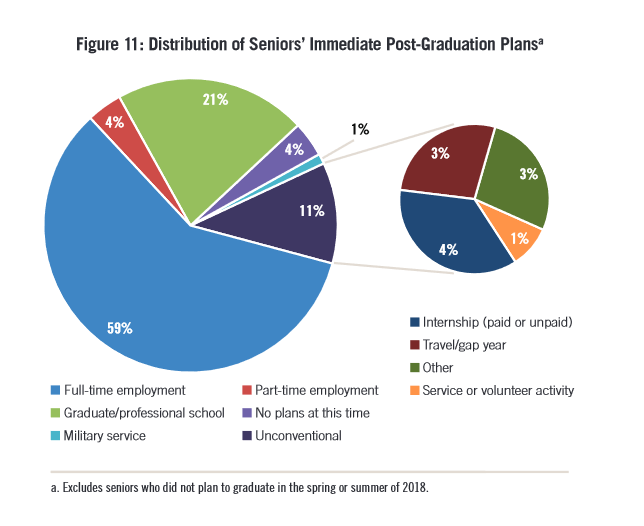
A survey of freshmen and seniors at 500 U.S. colleges shows that students feel positively about their career preparation. The According to the National Survey of Student Engagement (NSSE), 93% of students say what they learned in school is relevant to their future career, and perhaps surprisingly, students with professional majors agree only slightly more than students in arts and sciences programs.
This is good news. But a Chronicle of Higher Education article identifies a disconnect: employers aren’t so confident about graduates’ preparation. Employers want students to immediately apply skills on the job, but faculty may not be teaching specific work-related skills, such as running a meeting or writing memos—two examples from the Chronicle article.
Discussion:
Students of business communication certainly know how to write a memo—or more accurately, an email. What other skills should be included in a college curriculum for any major?
One argument is that employers are responsible for skills training, while the university teaches critical-thinking skills. What’s your view?
What report writing principles does the NSSE follow, and how could it be improved? Particularly analyze the charts and graphs, such as the one shown here.
White House Tweets Doctored Video
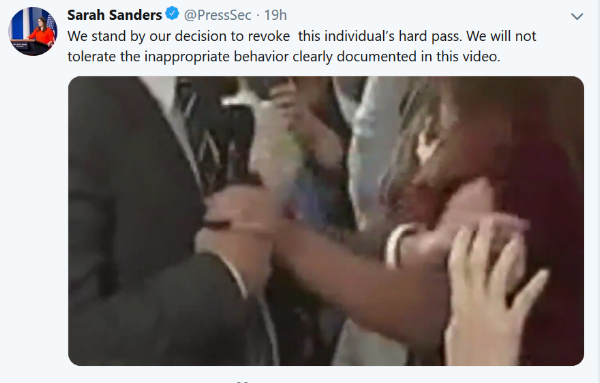
There is no love lost, as they say, between President Trump and CNN Correspondent Jim Acosta. Now, Acosta has been suspended from the White House because of what Press Secretary Sarah Sanders described as “a reporter placing his hands on a young woman just trying to do her job as a White House intern.”
However, Sanders posted a video that Storyful compared to C-SPAN’s, and a different story emerges. In the C-SPAN version, Acosta’s hand inadvertently touches the intern’s arm. The White House version omits three frames, misleading viewers to see more aggressive touching—a “chop.”

A Wall Street Journal article and a Wired report show the videos frame by frame, side by side.
CNN posted that the news organization stands by Acosta, and Sanders tweeted that the White House stands by its decision.
Discussion:
One theory is that the White House obtained the doctored video from InfoWars, a conservative news organization. If this is true, should the White House staff have done a better job vetting the source?
Assuming the White House didn’t know the video was edited, what should they do or say now?
Analyze the unedited video. What, if any, responsibility does Acosta have for the incident?
#MicrophoneMeghan is trending. Who’s responsible for the (probably) unwanted attention?
Climate Change Report

If you weren’t already concerned about climate change, a new UN report may change your thinking. The extraordinary report, written by dozens of scientists from 40 countries who reviewed more than 6,000 studies, reveals a bleak picture for the Earth’s future. The introduction, titled “Chapter 1: Framing and Context” is 61 pages, and the rest of the report is a long, deep dive into the data.
The most significant conclusion is that global warming must be limited quickly. The authors write with great urgency that the Earth’s temperature has already increased and that further increases will create heatwaves, eliminate ice in the Arctic Ocean, melt massive ice sheets, devastate coral reefs, and produce intense storms. Further, global warming will result in more poor people: "Climate change is projected to be a poverty multiplier, which means that its impacts make the poor poorer and increase the total number of people living in poverty.”
The authors suggest limiting the planet's warming to 1.5 degrees Celsius (2.7 degrees Fahrenheit) above pre-Industrial Revolution temperatures to avoid catastrophic results. They also warn that this requires "rapid, far-reaching, and unprecedented changes in all aspects of society."
A New York Times article, “Dire Climate Warning Lands With a Thud on Trump’s Desk,” describes President Trump’s disinterest in the report findings. Similarly, a text search on today’s Wall Street Journal home page finds an article about Exxon but nothing about the UN report.
Discussion:
Analyze the report audience, objectives, writing style, and organization. Which business writing principles are followed?
What improvements would you make to improve report readability?
What are your views about climate change? What evidence leads to your conclusions?

Uber Rebranding
In the past, Uber had been criticized for questionable business practices and ethics, and the company is still trying a turnaround. They hired Dara Khosrowshahi in August 2017 and distanced themselves from founder Travis Kalanick.
Now Uber has a new branding initiative. The marketing campaign, "Doors Are Always Opening,” is credited to 72andSunny, a Los Angeles firm.
A video shows significant events in people’s lives—giving birth, meeting your partner’s parents—and how people rely on Uber.
Paulie Dery, Uber's executive creative director, describes the objectives as follows:
"What we are really saying is opportunity happens everywhere if you are willing to move. You know what happens when you sit still? Nothing. And I think that is a great Uber story. We've always had a certain amount of hustle and belief that movement creates something better for everybody, and that's really at the center of the idea."
The company also has a new logo: simply the company name, which insiders hope will become a verb, like Google.
Discussion:
Uber’s previous campaign was called “Moving Forward” to distinguish the company’s controversial past with its future. How well do you think this new campaign will accomplish its objectives?
What’s your view of the new logo, simply the company name?

Disneyland Employees Speak Out

Disney employees are on screen in a New York Times op-ed video, "I Work at the Happiest Place on Earth. Why Can’t I Pay My Rent?" A 30-year concierge and a cosmetologist are featured more prominently. One is currently living in her car, and another says, tearfully, that she has spent time in her car. Both say they love their jobs, but along with 75% of Disneyland employees, they can't afford to pay "basic expenses every month." Data comes from a questionnaire and report, "Working for the Mouse."
The argument is for Disney to pay a living wage, and the call is for citizens to vote for an Anaheim proposal that affects Disneyland employees and some local hotel workers. In the video, one claim is that real wages have declined because of inflation—what $15 per hour bought seven years ago isn't the same today.
Business leaders who are fighting the measure say that the increase would hurt jobs. One local Chamber of Commerce member argued, "We estimate 3-4,000 jobs lost over next year or two by companies having to absorb this new increased cost. They're going to reduce hours and reduce jobs."
Senator and former presidential candidate Bernie Sanders is also featured in the video. He is proposing a bill he calls "Stop BEZOS" to tax Amazon and other large companies for public assistance received by their employees. The idea is for companies with 500 or more employees to pay the government back for support paid to their employees who cannot survive on earned wages.
Discussion:
- How well does the video make the case for higher wages? Which are logical and which are emotional appeals? What evidence is presented?
- Assess the credibility of the questionnaire and report, "Working for the Mouse." From your assessment, what makes the report both credible and questionable? In what ways does the report reflect business communication standards, and in what ways does it fall short?
- Research the impact of raising wages on industry, for example, this Cornell report. What's your view of this argument? It's a complicated question because of different industries, locations, labor supply, rates, etc.
- In what ways do the employees featured in the video demonstrate courage? What risks did they take in appearing on screen?

SodaStream Acquisition Communications
Pepsi will acquire SodaStream, which makes sense given declining sales of sugary drinks and bottled water, and increasing sales of sparkling water.

As we might expect, the press release focuses on Pepsi's "growing water portfolio" and its goal of "reducing the amount of waste generated." Incoming CEO and President Ramon Laguarta emphasized the strategic match between the two companies:
"SodaStream is highly complementary and incremental to our business, adding to our growing water portfolio, while catalyzing our ability to offer personalized in-home beverage solutions around the world. From breakthrough innovations like Drinkfinity to beverage dispensing technologies like Spire for foodservice and Aquafina water stations for workplaces and colleges, PepsiCo is finding new ways to reach consumers beyond the bottle, and today's announcement is fully in line with that strategy."
A Wall Street Journal article included a clear, simple column chart showing the dramatic increase in seltzer water.
Discussion:
- What is not said in the press release? What, if anything else, should be included?
- Pepsi's former CEO was Indra Nooyi, one of the few women running Fortune 500 companies, just announced her departure after 12 years. How, if at all, do you think the acquisition timing is relevant?
- What visual design principles are illustrated in the column chart?

The Debate Over Quarterly Reporting
President Trump is asking the SEC to no longer require report quarterly earnings. Instead, companies would report results every six months.

This may be good news for those who believe that publishing frequent earnings reports encourage a short-term focus. The idea is that investors make rash decisions based on the results from only three months.
One downside of the change could be less transparency. The value of quarterly reports is that investors are more aware of what's happening. In addition, the process itself may be useful internally, as a former investment banker explains:
"What I see from the inside of the quarterly earnings cycle is that there’s actually a lot of discipline in it. That process of having to prepare it, release it, explain it and answer questions has real value.”
Also, not everyone agrees that eliminating the report will foster longer-term thinking. As a compromise, some are proposing that reports are still published, but that specific earnings-per-share guidance information isn't included.
Discussion:
- Describe the importance of transparency in financial reporting. How does this relate to accountability?
- What's your view of the proposal to eliminate quarterly reports? Do you see additional benefits or downsides than what is mentioned here?
- In his tweet, President Trump refers to making "business (jobs) even better." How do you see this as a result of his proposal?

CEO Activism
Weber Shandwick's third annual report explores CEO activism, which Brian Moynihan, CEO Bank of America, defines and supports:
“Our jobs as CEOs now include driving what we think is right. It’s not exactly political activism, but it is action on issues beyond business.”
The report found that almost half of Americans "believe CEO activism influences the decisions and actions of government," and almost half of consumers "would be more likely to buy from a company led by a CEO who speaks out on an issue they agree with." Millennials, particularly, prefer CEOs to speak out on issues, and CEOs with more social media accounts have better stock performance for their company.
A Wall Journal Street writer observes that leaders rarely make a business case for issues, even if their company would benefit. Instead, they are speaking to consumers directly to change hearts and minds.
Top issues for CEOs include training, equal pay and sexual harassment, and CEOs are avoiding gun control, nationalism, marijuana legalization, and abortion."
A Forbes article offers this advice for CEOs:
- Develop an authentic voice and quick actions
- Connect your customers with your activism efforts
- Align activism efforts with a company’s mission
- Be willing to act against your own self-interest
Discussion:
- What are the risks and rewards of activism to a CEO and to the company? How does integrity factor in?
- What examples have you seen of CEOs speaking out? How do you assess the situations? How did you feel about the gestures?
- Read the Weber PPT deck. What principles of business report writing are followed, and what could be improved?
Narrative Alternatives to PPT at Amazon and Google
In his annual letter, Amazon CEO Jeff Bezos wrote that he has banned PPT:
"We don’t do PowerPoint (or any other slide-oriented) presentations at Amazon. Instead, we write narratively structured six-page memos. We silently read one at the beginning of each meeting in a kind of 'study hall.'"
Nancy Duarte describes the value of a narrative or storytelling approach: "storytelling in presentations is a powerful way to grab attention, hold attention, and to change beliefs." She gives examples from our favorite books and movies, which build suspense over time. Stories are also a good way to inspire empathy and other emotional reactions. This is difficult to achieve with traditional PowerPoint bullets.
A Harvard Business Review article, "Structure Your Presentation Like a Story," provides more guidance and summarizes the approach with a graphic:

For Bezos, the narrative style means that points are connected and organized in a logical sequence with some resolution, conclusion, or outcome. GeekWire created this six-page memo in Amazon's style as an example.
At Google, CEO Sundar Pichai also emphasizes storytelling with pictures:
"Since stories are best told with pictures, bullet points and text-heavy slides are increasingly avoided at Google."
Both executives are warning against the type of communication that is overly concise and missing context, connections, and cohesiveness. A ZDNet article summarizes some of the issues with PowerPoint and describes the now-infamous role of PPT in a U.S. disaster:
"'[B]ulletized' thinking contributed to the Challenger disaster, where 7 crew members died and a multi-billion dollar craft destroyed due to an O-ring failure. The big problem was that NASA management wasn't really listening to the engineers—and breaking issues up into bullets helped them do that."
Pichai's design approach aligns with PPT trends over the past few years. We're seeing much less text, fewer bullets, and more images, and this style follows the evolution of web design. On websites, we see many more background videos and photos and not much text, particularly on consumer websites.
Discussion:
- What are the advantages and downsides to the narrative memo? For what types of situations do you think this approach would work well? For what situations might PPT be a better choice?
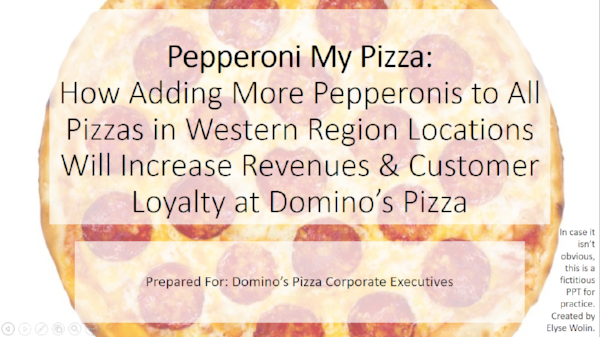
- For practice, try to convert this terrible PPT presentation to one with less text and more meaningful images. Clean up the design, add charts to help your audience visualize data, and of course, correct the grammar.

Bias in Online Courses
A Stanford University study found biases in how instructors interact with students in online courses. In a review of 124 Massive Open Online Courses (MOOCs) in a variety of subjects, researchers found that responses to comments vary by students' race and gender:
Each comment was randomly assigned a student name connoting a specific race and gender. We find that instructors are 94% more likely to respond to forum posts by White male students. In contrast, we do not find general evidence of biases in student responses. However, we do find that comments placed by White females are more likely to receive a response from White female peers.
The study is significant because it identifies teachers' potential responsibility for different student learning outcomes. In other words, it's difficult to isolate why teachers respond differently to students because the students may, for example, be less prepared or have less ability. But in this study, the issue is clearly isolated: teachers tend to favor students based on race and gender, which were randomly assigned by way of fictitious names.
Discussion:
- How well do these results match your own experience as a student?
- What are the implications of this study for instructors?
- What potential flaws or issues do you identify with this study?

Is Blankfein Leaving Goldman?

It's big news on Wall Street: the 12-year CEO of Goldman Sachs is leaving the company. But Lloyd Blankfein and other Goldman executives say they were surprised to read the Wall Street Journal report.
CNBC's Jim Cramer said the news made sense because Goldman has two co-presidents who are vying for the position: "Blankfein is deeply committed to letting a newer generation" lead.
Blankfein tackled some tough times at the investment bank. The firm managed well through the Great Recession despite criticism for misleading customers, for which Goldman paid $550 million to the SEC as a settlement. In 2009, Blankfein faced criticism when he, perhaps jokingly, told a reporter Goldman was "just doing God's work." He was positioning the firm as having a "social purpose." Finally, in 2012, a Goldman executive wrote a scathing report about the company in a New York Times opinion piece, "Why I Am Leaving Goldman Sachs."
For now, we don't know how true the WSJ report is.
Discussion:
- The Wall Street Journal report is very clear, although it doesn't identify sources, but that is typical. How do news reports like this happen? Who is responsible if it is a mistake?
- How well did Blankfein handle the situation? What, if anything, should Goldman communicate as a company at this point?

Facebook Under Fire for Russian Interference

Facebook is facing more criticism following detailed reports of how the Russian government infiltrated U.S. social media platforms during the 2016 election. The report cites Facebook as the target for Russian bots far more than any other social media site.
Since the Florida school shooting last week, we see evidence of Russian bots weighing in on gun control. Experts say these efforts are to divide the American people on political issues and are "casting public doubt on institutions such as the police or the media."
Facebook is taking action, but it's been slow, and experts wonder how much the company can do at this point. A Wired article details Facebook's journey to accountability, with much time spent in denial. Now, Facebook promises to verify accounts for election ads, but critics say it won't be enough.
In a report, Facebookers point to inherent problems with the platform:
“The central problem of disinformation corrupting American political culture is not Russian spies or a particular social media platform,” they write. “The central problem is that the entire industry is built to leverage sophisticated technology to aggregate user attention and sell advertising.
“There is an alignment of interests between advertisers and the platforms. And disinformation operators are typically indistinguishable from any other advertiser. Any viable policy solutions must start here.”
Discussion:
- What's your view of the situation and Facebook's responsibility. Is the company doing enough?
- How could Facebook re-envision its platform to avoid the problem of infiltrators on the site?
- Read the report, Digital Deceit. What business communication principles are followed, and how could the report be improved?

Adam Rippon Demonstrates Authenticity and Questions Pence
U.S. Olympic figure skater Adam Rippon has been public about being gay and having a history of an eating disorder. Rippon says he felt pressure to fit a particularly body image and sometimes starved himself to achieve it.
In January, Rippon said he would refuse a meeting with Vice President Mike Pence because of his support of "conversion" therapies, attempts to change someone's sexual orientation or gender identity. Pence denied the claim and expressed support for all athletes:
“The accusation is totally false with no basis in fact," Alyssa Farah, Pence's press secretary, stated. "But despite these misinformed claims, the Vice President will be enthusiastically supporting all the U.S. athletes competing next month in Pyeongchang.”
However, an NBC article identifies a message on Pence's website that supports Rippon's claim:
Under the headline "Strengthening the American Family" and just below his stated opposition to same-sex marriage and anti-discrimination laws protecting "homosexuals," Pence's platform advocates that resources "be directed toward those institutions which provide assistance to those seeking to change their sexual behavior."
Discussion:
- What's your view of Rippon's statement?
- Explain VP Pence's statement given his documented platform? How do you reconcile the claims?
- In what ways does Rippon demonstrate authenticity?

Missed Opportunity for a Graphic
A Business Insider article compares state income tax rates in a list of pictures and data points. The beginning of the article conveys the main point: how much you pay depends on where you live. As you might expect, rates are highest in California.
The site offers the list of city photographs and numbers on one page or as a sequence of slides. Both versions emphasize pretty pictures but make it difficult to compare data from different states.

Also, the range for each state is so broad that the information makes meaningful comparisons difficult.
Discussion:
- Should pictures get most of the attention? Why or why not?
- What are better ways for Business Insider to represent this information graphically?

Misleading Headlines About the Market Dip
The stock market took a dive this week, but headlines are making it sound worse than it is. Here are three examples:
- FoxNews: "Investors hope for reversal after biggest stock market dip of all time"
- The Guardian: "Australian and Asian stock markets slide after Dow suffers biggest one-day points fall – as it happened"
- CNBC: "Dow's nearly 1,600-point plunge marks its biggest one-day point drop ever"
The headlines are technically correct that a nearly 1,600 point decline is the largest in U.S. history, but looking at only the point value is misleading. A percentage drop would be a better indication of the effect. This table represents the largest daily stock market losses. The display below is sorted by point loss; the table at right is sorted by percentage. You can see that 2018-02-05 falls in rank when we look at the percentage.

Also, the stock market has had incredible gains this past year, so the 26,000+ value could be viewed as an anomaly, and most analysts didn't believe those gains were sustainable.
Discussion:
- What are the ethical considerations for news agencies publishing these headlines?
- What might be a more appropriate headline for the news?

Perhaps this one-year chart helps keep the loss in perspective. It includes today's rebound of 567 points.


Critics Say Bank of America Fees Hurt People with Less Income

Customers want Bank of America to stop charging fees for accounts with low balances. The company ended its free checking account and will start charging $12 per month.
Critics say the decision disproportionately hurts low-income consumers. The president of a financial advocacy organization explains the consequences:
“The debate over Bank of America’s accounts and fees points to a larger economic justice issue — people with less income pay more to get cash, make payments, and conduct their business. Without access to safe and affordable bank accounts, low-income consumers often turn to costly alternative financial services, such as currency exchanges or check-cashers. The bottom line is: the most financially vulnerable need more and better options to transact their business and participate in the financial mainstream.”
Few big banks still have free checking options because they are expensive to maintain. Banks prefer to move customers to digital solutions. But many low-income people don't have smartphones or reliable internet access. More than 287,000 people have signed a Change.org petition.
Discussion:
- What's your view? Is Bank of America being unfair, or is this just a good business decision?
- What is the value of a petition? On what principles of persuasion does a petition rely?
- How well does the image on the petition site, shown here, work? The emotional appeal is obvious. Does it help or detract from the message?

Controversy About Apple's "What's a Computer?" Ad
Apple's upbeat "What's a Computer?" commercial isn't winning a lot of fans. The long version on YouTube shows a child using an iPad to video chat with a friend, send a picture, type a paper, take a picture, pay for food, draw, and read a comic book. When asked by a woman we assume is the mother, "What you doing on your computer?," the child responds, "What's a computer?"

Cute? Many people think not. According to a Business Insider article, some find the ad "infuriating."
Discussion:
- What did Apple hope to accomplish with this ad? To what extent did the company achieve its purpose?
- We might say this is a lesson in humility for Apple. How do you see it?
- Why do you think people are so angry about it?

Fudging Numbers to Make the NYC Subway Look Better

New York Governor Andrew Cuomo's staff is criticized for inflating power-related issues as the cause of subway failures. Transit officials apparently broadened the definition of power issues so that Con Edison, the local utility company, would be given more of the blame when subways aren't running. Emails were discovered before Governor Cuomo was scheduled to give a breakfast talk, during which he said the number of outages due to power failures was 32,000 in the past year, while the actual number was more like 8,000:
When you we're a kid and you had a train set you had to plug it in. We have to plug in the MTA every morning and the MTA does not control the power supply to the MTA. Over the last 12 months, 32,000 delays because of power related issues and they can either be a power surge or power shortage, but 32,000 delays. The MTA doesn't control the power, Con Edison does. Con Edison has a duty to safely, prudently and effectively provide electricity that powers the subway system. Con Ed is a regulated utility under the state's Public Service Commission. April 21 after the last outage I ordered an investigation of the Con Ed infrastructure after a particularly devastating failure. The investigation goes on but PSC has already found that Con Ed must make immediate and significant improvements in this system because the reliability depends on it.
The chief of staff of the transit agency wrote in an email that they were "looking for a higher delay number for power." The expanded definition was that ConEd "caused or contributed to" delays. One example is when a person jumps or falls onto the tracks; ConEd will shut off the power for safety. With the new definition, the delay becomes ConEd's fault.
Discussion:
- We certainly can use numbers to our advantage when trying to persuade others. How does this situation "cross a line"?
- What should Governor Cuomo do now? What, if any, statement would be appropriate?
- Do you remember "Bridegate" in New Jersey? How is this situation similar or different?