

Boeing Internal Documents Don't Reflect Well on Safety

The lead article in today’s The Wall Street Journal is titled, “Internal Boeing Documents Show Cavalier Attitude to Safety.” In 150 pages of emails and other documentation, employees worry that they don’t have enough time to correct safety issues and refer to regulators as “morons” and “stupider.”
In February 2018, one employee wrote, “Would you put your family on a MAX simulator trained aircraft? I wouldn’t.” A pilot wrote, “I still haven’t been forgiven by god for the covering up I did last year. Can’t do it one more time. Pearly gates will be closed.” Still another employee wrote, “This airplane is designed by clowns, who in turn are supervised by monkeys.”
A defense attorney argues that employees were just “blowing off steam” in their emails.
In the past few months, Boeing’s culture has come to light—once lauded as a place where people felt proud to work but now a place where people feel stressed and remorseful. CEO Doug Muilenberg has since been terminated and replaced temporarily by CFO Doug Smith.
Discussion:
Read more about the internal communications. What lessons can employees and their managers take away from this story?
What’s your view of the emails? Do they indicate big problems at the company, or is the attorney right that employees are just venting to each other? How does the concept of “cherry picking” come into play?
What should Boeing do to manage this situation? Consider this news in light of the company’s crisis communication planning you read about in another post.
JPMorgan Recorded Phone Conversation
Jimmy Kennedy, an African-American former National Football League player, tried to open a private wealth account at JPMorgan but had trouble getting attention. He recorded a conversation with an African-American employee, Richardo Peters, who said, “You’re bigger than the average person, period. And you’re also an African-American. We’re in Arizona. I don’t have to tell you about what the demographics are in Arizona. They don’t see people like you a lot.”
In a New York Times article that published the recording, Peters recounted a specific example of discrimination against a Black customer. When he was trying to bring on another new client, who had received a large settlement, his manager said, “You’ve got somebody who’s coming from Section 8, never had a nickel to spend, and now she’s got $400,000, What do you think’s going to happen with that money? It’s gone.” His manager’s position was that the customer would not invest money with the bank.
Other incidents at the bank led to Peters’ termination, and he is suing for racial discrimination. JPMorgan also recently settled a class-action lawsuit for $24 million to Black employees who claimed discrimination: according to a New York Times report, “in some cases by isolating them from colleagues and dumping them in poorer branches.”
A few days later, CEO Jamie Dimon addressed the situation in a memo to employees.
Discussion:
How do you assess this situation at JPMorgan? Read more in the NYT article.
A February Essence article describes and praises JPMorgan’s Advancing Black Pathways program to support the Black community. What’s your view of the effort in light of this news?
How do you assess CEO Jamie Dimon’s response in the memo? We don’t see the entire memo, but CNBC posted quotes.

Data in the Uber's Safety Report
Uber published its first safety report, and the company is lauded for its transparency. A Wall Street Journal article leads with the number of sexual assaults reported during the last two years: 5,981. Of course, any number is too many—no one should be assaulted in an Uber or anywhere else. And sexual assaults are notoriously underreported, so we have no idea how many have actually occurred.
At the same time, a skeptic might want to know the total number of rides in order to put the number of reports in context. The report does provide this information (see the report for footnotes):
The report makes additional attempts to put the numbers in context:
All of that work culminates in the Safety Report that we are sharing with you, the public, today. To put US safety challenges in context:
• In 2018, over 36,000 people lost their lives in car crashes in the United States alone (3)
• Approximately 20,000 people were the victims of homicide in 2017(4)
• Nearly 44% of women in the US have been a victim of sexual violence in their lifetime—which means that more than 52 million women live with that experience every day (5)
Every form of transportation is impacted by these issues. For example, the NYPD received 1,125 complaints of sex offenses in the transit system during the same time period covered by this report.(6,7) In the United States alone, more than 45 rides on Uber happen every second. At that scale, we are not immune to society’s most serious safety challenges, including sexual assault. Yet when collecting data for that portion of our report, we found there was no uniform industry standard for counting and categorizing those types of incidents.
The 84-page report is incredibly detailed and includes external reports for credibility and the number of charges for various types of assaults.
Discussion:
Analyze the report: the audience, communication objectives, organization, writing style, format. What works well, and what could be improved?
Does the context in these examples convince you that the numbers aren’t so bad? Why or why not?
Otherwise, how well does Uber address the safety issues? How do you assess the report credibility? What other questions do you have?

Fabricated Letters to the SEC

The U.S. Securities and Exchange Commission is planning a policy change that, as a Bloomberg article describes, “would shift power from investors to corporate boards” and “limit[s] the power of dissenting shareholders.” Unfortunately, when Chairman Jay Clayton announced the change, he cited several fabricated letters of support to the SEC.
The SEC failed to recognize that many letters followed a similar template and included a random line in the mailing address—“A Coalition of Growth Companies.”
Clayton was impressed that the SEC heard from such a variety of people, such as veterans and retired police officers, but people contacted said they didn’t write the letter or agreed to having their name on a letter without understanding the implications.
The Bloomberg article reports Clayton’s response:
The SEC declined to comment on any irregularities with the letters. In a Tuesday interview, Clayton sidestepped a question about how the agency ensures comment letters are genuine. He did emphasize that the regulator’s potential revamp of shareholder voting rules are proposals, adding that there will be ample time for people on both sides to weigh in before any changes are finalized.
“We welcome input in all ways,” Clayton said in the interview with Bloomberg Television’s David Westin. “On this issue, where there are a lot of different views and a lot of different interests, we encourage people to come in and talk to us, send us their comments.”
Discussion:
How does something like this happen? Who is responsible?
Assess Clayton’s response. How well is he handling the situation? What, if anything, should he do differently?
What leadership character dimensions are illustrated by this situation?

T-Mobile's Full-Page Ad
In signature pink, T-Mobile ran a full-page ad in Sunday’s New York Times. The ad also feels like T-Mobile because we see “From the desk of John Legere,” the charismatic CEO and frequent tweeter with comments such as, “One of our best weapons is the ineptness of the competition. #sorrynotsorry.”
For a persuasive message, the ad is curious and a good example for business communication students to analyze.

Discussion:
Who are the primary and secondary audiences for this ad?
What are T-Mobile’s communication objectives, and how well does this message achieve them?
If you were advising the company, what suggestions would you have for revisions?
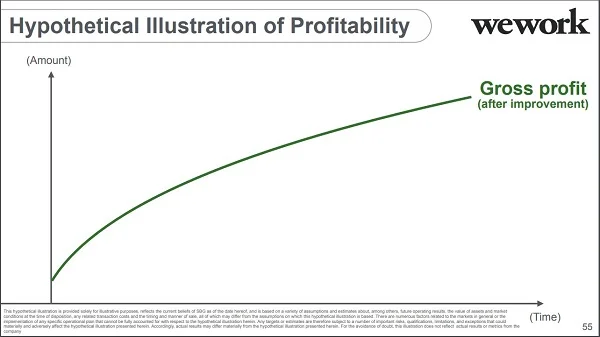
SoftBank's Vague WeWork Slides
SoftBank already took a financial hit because of its investment in WeWork. Now, the company is facing criticism about its data analysis and presentation.
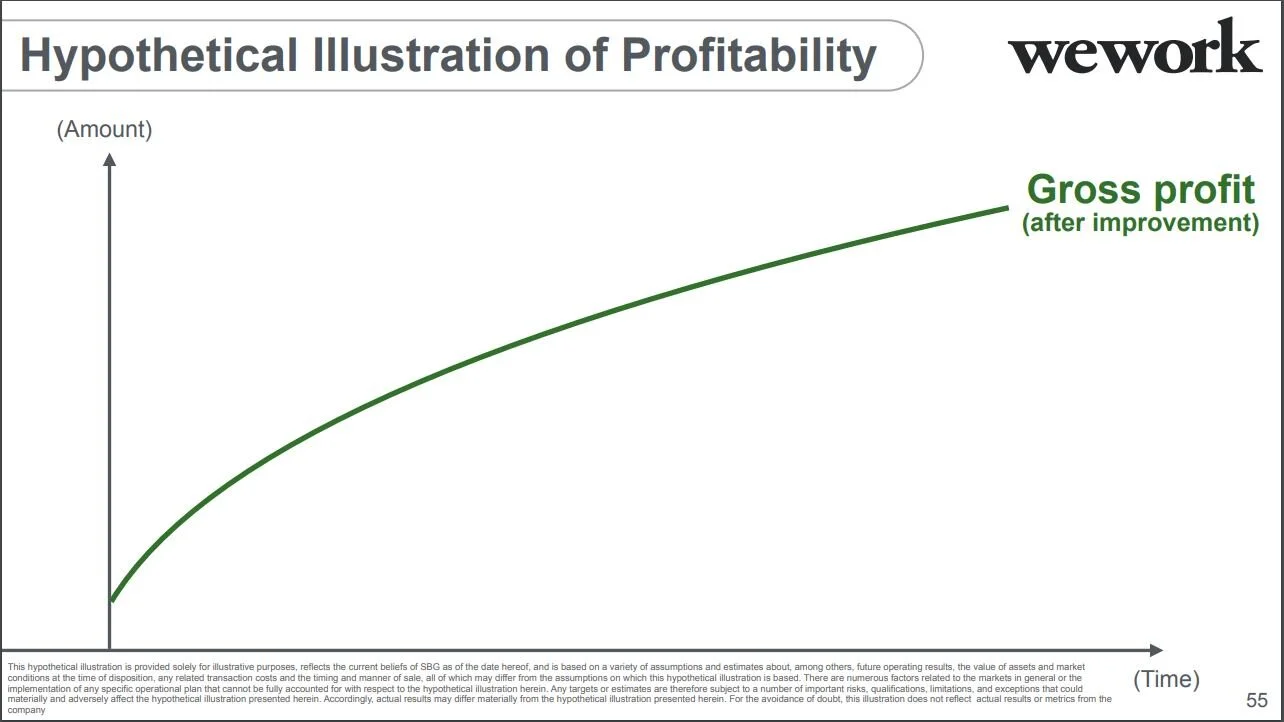
A deck SoftBank Group (SBG) used to justify its WeWork investment includes several “hypothetical” and vague slides, like this one.
If you’re having trouble reading the footnote, here it is:
This hypothetical illustration is provided solely for illustrative purposes, reflects the current beliefs of SBG as of the date hereof, and is based on a variety of assumptions and estimates about, among others, future operating results, the value of assets and market conditions at the time of disposition, any related transaction costs and the timing and manner of sale, all of which may differ from the assumptions on which this hypothetical illustration is based. There are numerous factors related to the markets in general or the implementation of any specific operational plan that cannot be fully accounted for with respect to the hypothetical illustration herein. Any targets or estimates are therefore subject to a number of important risks, qualifications, limitations, and exceptions that could materially and adversely affect the hypothetical illustration presented herein. Accordingly, actual results may differ materially from the hypothetical illustration presented herein. For the avoidance of doubt, this illustration does not reflect actual results or metrics from the company.
The slide title is also odd: the illustration isn’t hypothetical, but the profitability is.
Discussion:
How might this chart affect SoftBank’s credibility?
What other examples in the SoftBank deck are problematic?
What leadership character dimensions are illustrated by this situation?

Letter from WeWork Employees
As WeWork plans layoffs, employees are asking for input into what happens to them and their peers. Referring to themselves as WeWorkers Coalition, the employees wrote a letter to the management team.
To the We Company Management Team:
WeWork’s company values encourage us to be “entrepreneurial, inspired, authentic, tenacious, grateful and together.” Today, we are embracing these qualities wholeheartedly as we band together to ensure the well-being of our peers.
We come from many departments across the company: building maintenance, cleaning, community, design, product, engineering and more. We believe that in the upcoming weeks we have the unique opportunity to demonstrate our true values to the world. This is a company that has inspired many of us, challenged us, and has been a formative personal and professional experience for those of us who began our careers here. WeWork has been not just a workplace, but a source of friendships and inspiration along the way.
We also believe our product can have a lasting positive impact on the world. We want to improve workplace happiness for millions of office workers and support small and medium sized businesses in their entrepreneurial efforts. We have been proud to support these goals and dedicate our time and talent to achieve them. This has been our story so far.
Recently, however, we have watched as layers are peeled back one-by-one to reveal a different story. This story is one of deception, exclusion and selfishness playing out at the company’s highest levels. This is a story that reads as a negation of all our core values. But this story is not over.
Thousands of us will be laid off in the upcoming weeks. But we want our time here to have meant something. We don’t want to be defined by the scandals, the corruption, and the greed exhibited by the company’s leadership. We want to leave behind a legacy that represents the true character and intentions of WeWork employees.
In the immediate term, we want those being laid off to be provided fair and reasonable separation terms commensurate with their contributions, including severance pay, continuation of company-paid health insurance and compensation for lost equity. We are not the Adam Neumanns of this world — we are a diverse work force with rents to pay, households to support and children to raise. Neumann departed with a $1.7 billion severance package including a yearly $46 million “consulting fee” (higher than the total compensation of all but nine public C.E.O.s in the United States in 2018). We are not asking for this level of graft. We are asking to be treated with humanity and dignity so we can continue living life while searching to make a living elsewhere. In consideration of recent news, we will also need clarity around the contracts our cleaning staff will be required to sign in order to keep their jobs, which are being outsourced to a third party. Those of us who have visas through WeWork need assistance and adequate time to find a new employer to sponsor our respective visas.
In the medium term, employees need a seat at the table so the company can address a broader range of issues. We’ve seen what can happen when leadership makes decisions while employees have no voice. We will need to see more transparency and more accountability.
We also need the thousands who maintain our buildings and directly service members to receive full benefits and fair pay, rather than earning just above minimum wage.
We need allegations of sexual misconduct and harassment to be taken seriously, acted on immediately and resolved with transparency.
We need diversity and inclusion efforts to materialize into real actions, not just talking points at company meetings.
We need salary transparency so we can surface and address systemic inequalities.
We need an end to forced arbitration contracts, which strip employees of their right to pursue fair legal action against the company.
We need all of this, and more.
In the long term, we want the employees who remain at WeWork, and those who join in the future, to inherit something positive we left behind. We want them to never find themselves in this position again, and for that to happen, they need a voice.
With this letter we are introducing ourselves, the WeWorkers Coalition. We are taking full advantage of our legal right to establish this coalition, and in doing so, we hope to give the future employees of WeWork the voice we never had.
We want to work with you. Please join us in writing a better ending to this chapter of the WeWork story.
By this Thursday at 5:00 p.m. EST, we would like to receive confirmation of your receipt of this letter and an indication of your willingness to meet us.
The WeWorkers Coalition
@weworkersco • info@weworkersco.org • #weworkers-coalition
Discussion:
What principles of business writing do the employees follow?
What persuasive strategies do they use in the letter? Find examples of logical argument, emotional appeal, and credibility.
What do you consider the strongest and weakest arguments?
What leadership character dimensions are illustrated in this situation?

Boeing CEO Responds to Questions
This week, Boeing CEO Dennis Muilenburg answered lawmakers’ questions about the two Max 737 plane crashes in the past year. Facing families of deceased passengers, Muilenburg began his testimony with an apology:
“I’d like to begin by expressing my deepest sympathies to the families and loved ones of those who were lost in the Lion Air Flight 610 and Ethiopian Airlines Flight 302 accidents, including those who are here in the room today. I wanted to let you know, on behalf of myself and all of the men and women of Boeing, how deeply sorry I am. As we observe today the solemn anniversary of the loss of Lion Air Flight 610, please know that we carry the memory of these accidents, and of your loved ones, with us every day. They will never be forgotten, and these tragedies will continue to drive us to do everything we can to make our airplanes and our industry safer.”
One of the most tense moments was when Senator Ted Cruz questioned Muilenburg (see video). Muilenburg also faced criticism as he was leaving. The mother of a victim of the second crash responded to his invoking his Iowa farm background:
“Go back to Iowa. Do that.” She also said, “I don't feel like you understand. It's come to the point where you're not the person anymore to solve the situation."
Discussion:
Watch more of Muilenburg’s testimony. What are some examples of questions he addressed well, and how could he have done better?
How well does Muilenburg balance emotional appeals, logical arguments, and credibility in his testimony?
What leadership character dimensions are illustrated by this situation and by Muilenburg’s testimony?
Muilenburg’s interaction with the mother is a difficult situation for anyone to handle, and we can certainly understand her grief and anger. How would you have responded?
CNN reports:
“In response, Muilenburg said he respects her viewpoint. "But I want to tell you the way I was brought up. And I'm just being honest here about it. I learned from my father in Iowa ... when things happen on your watch you have to own them and you have to take responsibility for fixing them," he said.

Astros Executive Fired After Yelling at Female Reporters

Brandon Taubman, assistant manager of the Houston Astros baseball team, was fired after comments made to female reporters. The situation became more complicated because the team, at first, criticized a Sports Illustrated reporter, Stephanie Apstein, and called her article, “misleading and irresponsible” and a “fabrication.”
In the team club house, after a game, Taubman yelled at the female reporters, “Thank God we got Osuna. I’m so f------ glad we got Osuna!” The MLB suspended Osuna for 75 games because of a domestic violence charge, and the Astros took a PR risk in hiring him. A Sports Illustrated writer criticizes the team’s decision:
But in truth, the Astros' front office acts as if it is tired of being yelled at about this subject. They want to be allowed to play their baseball games and pop their champagne without being forced to think about anything that happened away from the ballpark.
The team’s first response of defending Taubman didn’t stick. They later issued a statement apologizing to both the group of female reporters and Apstein.
Ernst & Young is scrubbing its website of ties to Taubman, who worked for the firm. EY is facing its own trouble following criticism about a training program for women.
Discussion:
What’s your view of the situation—both Taubman’s outburst and the Astros’ response?
Analyze the team’s statement. What leadership character dimensions does this illustrate, and how does it fall short? What could be improved?
Did EY do the right thing by trying to disassociate with Taubman? Why or why not?

LeBron James Enters the Tweet Debate
As the NBA struggles to recover after Houston Rockets General Manager Daryl Morey tweeted in support of Hong Kong protesters, LeBron James questioned Morey’s choice:
“Yes, we all do have freedom of speech. But, at times, there are ramifications for the negative that can happen when you’re not thinking about others, when you’re only thinking about yourself. . . . I believe he wasn’t educated on the situation at hand, and he spoke. And so many people could have been harmed, not only financially, but physically, emotionally, spiritually. So just be careful. . . .”
The Wall Street Journal reports that people were “stunned” by his comment because James is typically careful about his public comments.
Discussion:
What’s your view of James’ commenting on the situation? Should he have avoided commenting? Why or why not?
What’s your view of his comments? How well did he handle the situation?
What leadership character dimensions are illustrated by James’ comments?

NBA Tweetstorm
The NBA is thrust into a political quagmire after Houston Rockets general manager Daryl Morey tweeted in support of the Hong Kong protesters: '“Fight for Freedom. Stand with Hong Kong.” The tweet has since been deleted.
NBA Commissioner Adam Silver is dancing a line between protecting Morey’s free speech and staving off China’s backlash. Critics say the league is driven by profit instead of principle. He has tried to clarify his position:
“It is inevitable that people around the world — including from America and China — will have different viewpoints over different issues. It is not the role of the NBA to adjudicate those differences. However, the NBA will not put itself in a position of regulating what players, employees and team owners say or will not say on these issues. We simply could not operate that way.”
At this point, The Wall Street Journal reports better news:
“The situation appears to have de-escalated. After a week of blistering anti-NBA rhetoric in Chinese media, the government is signaling that it’s time to cool it, a message that includes the vitriol directed at the Rockets, according to one person familiar with the situation.”
But the Journal also acknowledges: “China’s love affair with the Rockets might not be the same again.”
Discussion:
Should Morey have avoided sending the tweet? Why or why not?
How do you assess the league’s response to the situation?
Analyze Silver’s news conference. What did he do well, and what could he have done differently?
WeWork: "Humbler"
Several articles in the past few weeks have scolded WeWork CEO Adam Neumann and the investors who followed his story.
The Wall Street Journal was the first to describe Neumann’s odd behavior and published another article, “WeWork Investors Turned Off by ‘Sloppy’ IPO Filings.” The recent article explains one problem in the filings (shown below):
“A section headed ‘illustrative annual economics’ that assumed 100% workstation utilization vanished, for example, as did two graphs portraying a typical location going from ‘-$’ to ‘+$,’ with no y-axis showing the actual dollar amounts being depicted.”
A New York Times article, “Was WeWork Ever Going to Work?” criticizes investors for missing obvious problems with the company’s initial business plan, such as the reliance on start-up revenue when most entrepreneurial ventures fail. According to this report, it took people finally looking at the data to realize how much We is losing and how hard it will be for the company to succeed.

The article includes other examples of investors’ blind exuberance:
“It is not merely money that separates the ruling class from the rest of the country. Often it seems as if it is the gaping difference in the application of common sense. Ultimately, it was the bankers, technocrats, statesmen and acolytes of the data-junkie class who were willing to believe that Elizabeth Holmes, a 19-year-old college dropout who thought a black turtleneck would make her Steve Jobs, was going to revolutionize blood-testing. It didn’t seem to matter that she could not deliver any real evidence to prove it.”
An Inc. article, “The Future of WeWork: Leaner, Humbler, and Duller,” suggests a new path for We. The author suggests less hype, fewer employees, and more discipline for the company to survive.
Discussion:
Who do you blame for WeWork’s failed IPO?
If you believe the New York Times article, investors are gullible. Do you agree with this assessment? If so, why might this be the case?
Read the “Note”—the fine print—under the table, shown above. How do you interpret this information?
What should We do now to build credibility and save the business?

Forever 21 Files for Bankruptcy

Retailer Forever 21 has filed for bankruptcy, and employees are not happy. In its Letter to Customers, posted on the website, the company explains the process:
This does NOT mean that we are going out of business – on the contrary, filing for bankruptcy protection is a deliberate and decisive step to put us on a successful track for the future.
Hundreds of employees are planning to unionize with United for Respect, which also represented employees from Sears and Toys R Us during their bankruptcies.
The Washington Post reports employees’ reactions to the Forever 21 decision:
[S]everal employees cited past instances where Forever 21 swiftly closed stores with little warning or explanation, which prompted their concerns over how the company would treat employees amid bankruptcy.
Unions are seeing opportunities in retail employees. Private-section union membership has been shrinking in the U.S. and is now only 6.4%, compared to 33.9% of government workers. As retail employees get discouraged by their employers, union organizing activity has been increasing.
Discussion:
Analyze the Letter to Customers. Which principles of communicating bad news are followed? How could the message be improved?
Explain the ethics of a company filing for bankruptcy. Use an ethical decision-model, such as that in Chapter 1, to determine the effects.
What’s your view of retail employees unionizing? What are the benefits to employees and potential downsides of union activity and of forming a union?
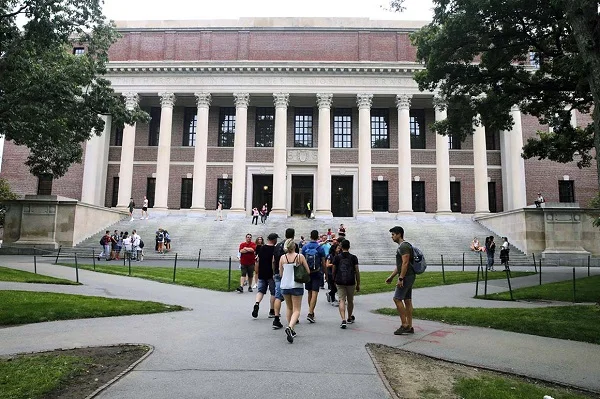
Harvard Admissions Decision

A federal judge has decided that Harvard did not discriminate against Asian students during the admissions process. The Crimson, Harvard’s student newspaper, provides an analysis of the case.
In its defense, Harvard revealed its admissions process, which included personality ratings. The plaintiff group, Students for Fair Admissions, criticized the system as disadvantaging Asian students. However, in her decision, the judge cited testimony from admissions counselors, shown here.
The judge explained the role of diversity in her decision:
Ensuring diversity at Harvard relies, in part, on race-conscious admissions. The use of race benefits certain racial and ethnic groups that would otherwise be underrepresented at Harvard and is therefore neither an illegitimate use of race or reflective of racial prejudice.
Although she decided in Harvard’s favor, the judge did provide recommendations to Harvard:
She recommended that admissions officers participate in implicit bias trainings, maintain clear guidelines on the use of race, and monitor any race-related statistical disparities.
She said the task of considering race in admissions is a “a particularly delicate job” to execute lawfully.
Discussion:
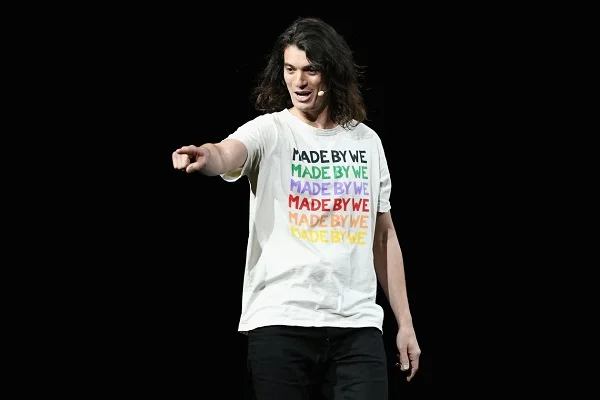
WeWork Co-Founder and CEO Steps Down

WeWork announced that Adam Neumann will leave his position after controversy about the company’s financial situation and the co-founder and CEO’s behavior. Within a week, the company went from preparing for an IPO to facing criticism that led to this ouster and a delayed public offering.
The company valuation has been reduced from about $47 to $15 billion based on governance issues and what the Wall Street Journal calls “ballooning losses.” The Journal also reported on Neumann’s “eccentric behavior,” including a heavy-party lifestyle that recently involved bring marijuana on a plane to Israel and saying that he might like to be the prime minister.
In its news release, WeWork provided scant information and a few quotations, including this from Neumann:
“As co-founder of WeWork, I am so proud of this team and the incredible company that we have built over the last decade. Our global platform now spans 111 cities in 29 countries, serving more than 527,000 members each day. While our business has never been stronger, in recent weeks, the scrutiny directed toward me has become a significant distraction, and I have decided that it is in the best interest of the company to step down as chief executive. Thank you to my colleagues, our members, our landlord partners, and our investors for continuing to believe in this great business.”
Discussion:
Compare the company’s news release to others announcing CEO departures. How does this one differ, and why would the company take this approach?
What are the communication objectives of Neumann’s statement? How well does his quote meet those objectives? What else, if anything, should Neumann say or do?
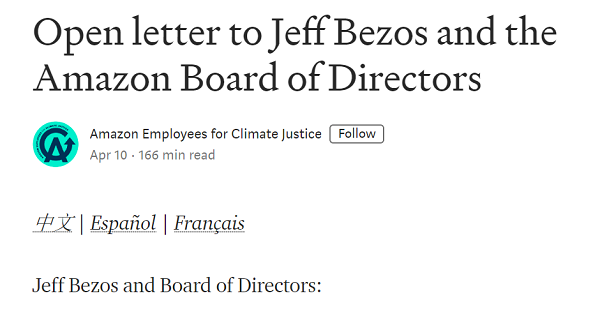
Amazon Response to Employee Walkout
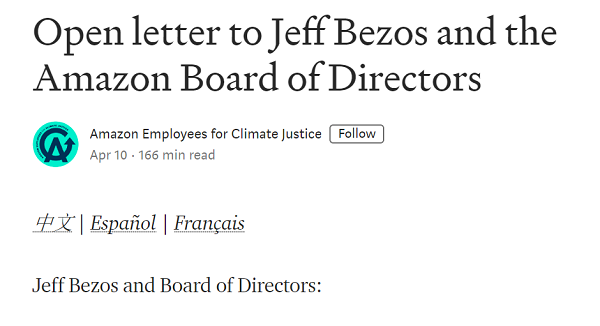
Like many around the world during the Global Climate Strike, hundreds of Amazon employees walked out of their offices yesterday. Employees have been urging Amazon leaders to take more steps to reduce fossil fuel dependency and wrote an open letter back in April. The pressure seems to be working.
On Thursday, CEO Jeff Bezos announced The Climate Pledge, with the following commitments:
Commits to net zero carbon by 2040 and 100% renewable energy by 2030
Orders 100,000 fully electric delivery vehicles, the largest order ever for electric delivery vehicles
Invests $100 million in reforestation projects around the world to begin removing carbon from the atmosphere now
Launches new sustainability website to report progress on commitments
The Pledge encourages other businesses to sign on, with Amazon leading the way. Bezos said, “We’re done being in the middle of the herd on this issue — we’ve decided to use our size and scale to make a difference.” Amazon employees reacted positively.
Discussion:
Analyze the employees’ open letter. What persuasive strategies do they use? Look for examples of logical argument, emotional appeal, and credibility. What organizational strategies do the writers use?
The Amazon announcement doesn’t mention employees’ influence in the decision, although news articles and employees make the connection. Should Bezos include this recognition? Why or why not?
Describe a CEO’s dilemma in situations like these. When is it appropriate for leaders to meet their employees’ demands, and when should they resist? Did Bezos take the best course of action?

CEOs Advocate for Gun Safety
CEOs are encouraging senators to pass stricter gun regulations, such as background checks and a “Red Flag” law that allows guns to be taken from someone who poses a threat. The leaders of 145 companies sent a letter asking for the following:
“That’s why we urge the Senate to stand with the American public and take action on gun safety by passing a bill to require background checks on all gun sales and a strong Red Flag law that would allow courts to issue life-saving extreme risk protection orders.”
The Trump Administration has implemented a ban on bump stock devices, which allows a shooter to fire in more rapid succession, and President Trump has supported more thorough background checks for gun buyers.
Discussion:
What’s your view of CEOs taking on this activist role? What is driving them, and what are the potential risks?
What observations do you have about the companies that are represented—and perhaps about those that are not?
Analyze the letter by considering the audience, communication objectives, organization, writing style, and so on. What works well, and what could be improved?
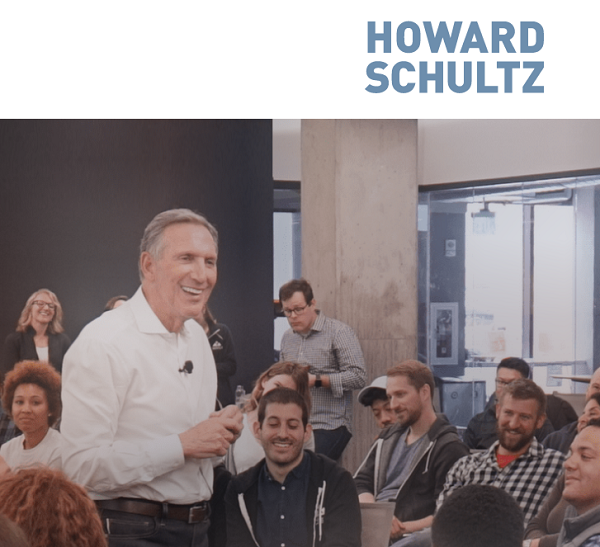
Howard Schultz Update

Former Starbucks CEO Howard Schultz has decided not to run for president, after all. He communicated the news in an email and on his website. In the email, fonts changed in the middle, but it looks better online. At right are the first few paragraphs.
The full message explains his reasons, which include the election process and his health.
Discussion:
Analyze the message. Consider the audience, communication objectives, writing style, organization, and reasoning. What works well, and what can be improved?
At what point does he announce the news?
What are his strongest and weakest arguments for not running for president?
What causes fonts to change in the middle of an email, and how can you avoid this in your own writing?
Creative Charts
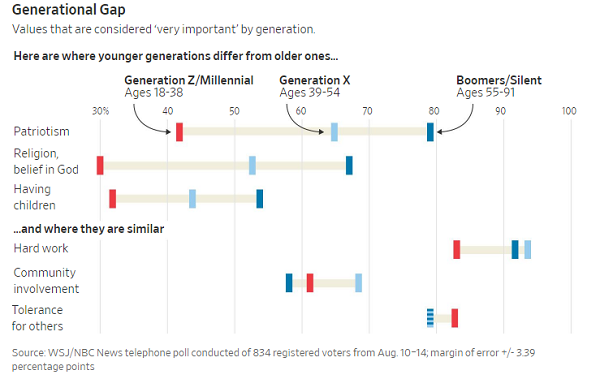
The Wall Street Journal created a chart to show what Americans value—and how those values have shifted over time. The graphic is a variation on a line chart with generations represented by color.
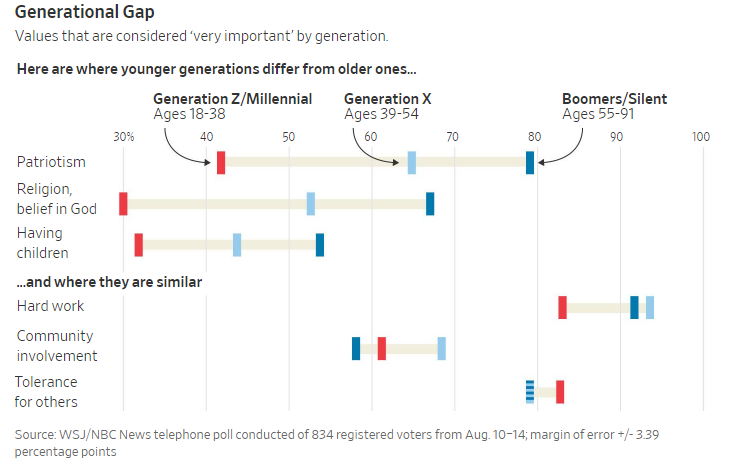
Understanding the chart may take a while. At first glance, the generation identifiers at the top look like headings, but they point to small bar colors.
The information is interesting, and some points probably aren’t surprising. Older Americans value patriotism, religion (which the poll describes as “belief in God”), and having children more highly than do younger Americans.
Discussion:
Assess the graphic design. How intuitive do you find the chart? What works well, and what could be improved?
What are your reactions to the data? What do you find surprising—and not?
What implications do you see for companies’ attempts to keep employees engaged at work?

The Purpose of the Corporation

The Business Roundtable published a statement, The Purpose of the Corporation, signed by 181 of its 193 members. The Roundtable, a corporate lobbying group, includes CEOs of the largest U.S. companies.
In essence, the CEOs write that they have responsibilities beyond shareholders—to customers, employees, suppliers, and communities (including the environment). The statement is a step to improving the perception of businesses as solely driven by creating shareholder value through short-term profits.
Skeptics abound. A writer for the Washington Post called the statement a “truism”:
“What’s significant about the statement is what it does not say. The corporate signatories do not suggest in any way weakening the fiduciary duties of the boards and managers of ordinary for-profit shareholder corporations to manage such companies’ affairs for shareholders’ benefit.”
The CEO of Allstate and head of the U.S. Chamber of Commerce wrote an opinion piece in the New York Times encouraging businesses to pay people more if they’re serious about serving more stakeholders.
A writer for Forbes argued that these companies are multinationals and have global responsibilities as well. He also accused the executives of being self-serving, warding off criticism about executive compensation.
Others noted company CEOs who didn’t sign, for example, Alcoa, Blackstone, GE, NextEra, Parker Hannifin, and Wells Fargo (whose representative said the CEO is interim and wasn’t asked to sign). Some companies, for example, Kaiser and State Farm, say they didn’t sign because they don’t have shareholders.
Discussion:
What’s your view of the statement: significant, placating, diverting, or something else?
Assess the statement itself. Consider the audience, purpose, writing style, organization, and so on. What works well, and what could be improved? What’s extraneous and what’s missing?