
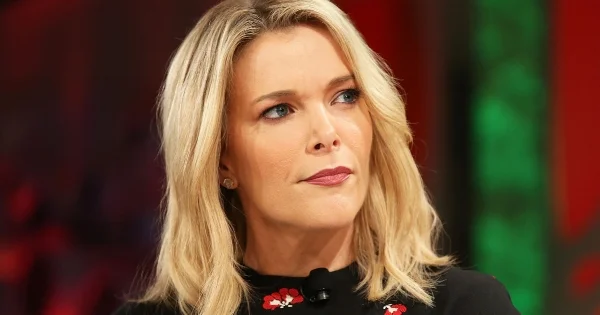
Megyn Kelly Terminated from NBC
NBC Today Show host Megyn Kelly said she thought it was acceptable to wear blackface for Halloween. Kelly might need to brush up on the history of blackface, which started in minstrel shows in the 1800s. Then, like now, blackface reinforced racial stereotypes and was terribly demeaning to black people.
Kelly apologized on the show, but people were still upset. Her colleague, Al Roker, said “she owes a bigger apology to folks of color around the country.” NBC waited two days, but insiders say she will be terminated.
Here’s the full text of her email to NBC staff:
Dear friends & teammates –
One of the wonderful things about my job is that I get the chance to express and hear a lot of opinions. Today is one of those days where listening carefully to other points of view, including from friends and colleagues, is leading me to rethink my own views.
When we had the roundtable discussion earlier today about the controversy of making your face look like a different race as part of a Halloween costume, I suggested that this seemed okay if done as part of this holiday where people have the chance to make themselves look like others. The iconic Diana Ross came up as an example. To me, I thought, why would it be controversial for someone dressing up as Diana Ross to make herself look like this amazing woman as a way of honoring and respecting her?
I realize now that such behavior is indeed wrong, and I am sorry. The history of blackface in our culture is abhorrent; the wounds too deep.
I’ve never been a “pc” kind of person — but I understand that we do need to be more sensitive in this day and age. Particularly on race and ethnicity issues which, far from being healed, have been exacerbated in our politics over the past year. This is a time for more understanding, love, sensitivity and honor, and I want to be part of that. I look forward to continuing that discussion.
I’m honored to work with all of you every day.
Love,
Mk
Discussion:
What’s your view of Kelly’s original comments?
Assess Kelly’s email. Do you find her apology meaningful, insincere, or something else?
Did NBC do the right thing by firing her? Why or why not?
We await a statement from NBC. Draft one on behalf of the company.
Which leadership character dimensions are illustrated by this situation?

Teacher Recommendation Letters Influence Harvard Decision

Details about Harvard’s admissions process are surfacing during the trial about how the university’s “race-conscious” decision policy may adversely affect Asian-Americans. The entire guidebook for admissions decisions in 2014 was entered into evidence.
This week, Harvard revealed that white students typically receive “somewhat stronger” recommendation letters from teachers and guidance counselors than Asian-American students, which affects each group’s “personal rating.” The personal ratings on based on characteristics such as kindness, courage, and leadership. When writing letters, reviewers are asked to assess “consistent testimony of an applicant’s unusual effervescence, charity, maturity, or strength of character.”
Back in 1990, the US Department of Education’s Office of Civil Rights criticized Harvard’s practice of using a personal rating and admissions officers’ stereotypical comments of Asian-American students. The same issue seems to be presented here, with comments from teachers and guidance counselors.
Discussion:
How valuable do you think teacher and guidance counselor letters of recommendation are in the admissions process? How much weight should they carry in the overall decision?
By definition, the personal rating includes subjective evaluations. Should universities try to avoid subjectivity in the admissions process? Why or why not?
Senators Send Harsh Letter to Google

The U.S. Committee on Commerce, Science, and Transportation sent a strongly worded letter to Google CEO Sundar Pichai. The senators question what the company has done to protect 500,00 users whose profile information was stolen in 2015. Their anger stems from knowledge of an internal memo, cited in a Wall Street Journal article, discouraging disclosure because of fear of “immediate regulatory interest” and the requirement for Pichai to testify before Congress.
In the letter, the senators compare Google’s response to Facebook’s in light of the Cambridge Analytica breach:
“At the same time that Facebook was learning the important lesson that tech firms must be forthright with the public about privacy issues, Google apparently elected to withhold information about a relevant vulnerability for fear of public scrutiny.”
The senators then list specific information about vulnerabilities for Google to provide by October 30.
Discussion:
Read the Wall Street Journal article for more background information. Did the senators respond appropriately? Why or why not?
What is Google’s accountability in this situation? What is the committee’s accountability?
In addition to responding to the senators’ requests, what, if anything, should Google communicate to the public at this point?
Google may have been avoiding its own vulnerability.
Facebook Policy Executive Sat Behind Kavanaugh

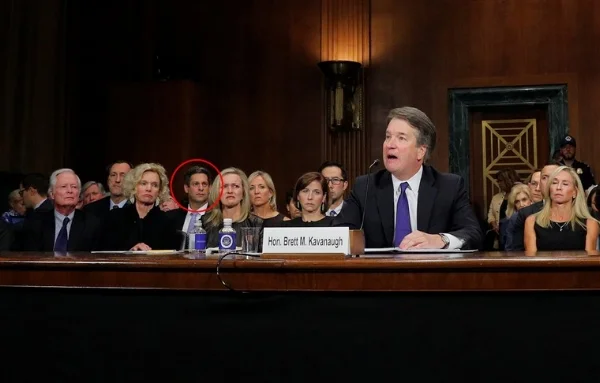
Joel Kaplan, Facebook’s vice president for global public policy, sat behind his friend, Brett Kavanaugh, during the charged hearings to determine whether he would win support as the next Supreme Court justice. Because of his position at Facebook, employees questioned his loyalties and whether it was appropriate for him to be so visible during the judge’s testimony about whether he sexually assaulted a woman as a teenager.
His appearance was a “surprise” to employees, and hundreds wrote about their concerns on Facebook’s intranet site. One employee wrote, perhaps expressing the sentiment of Facebook’s liberal employees:
“Let’s assume for a minute that our VP of Policy understands how senate hearings work. His seat choice was intentional, knowing full well that journalists would identify every public figure appearing behind Kavanaugh. He knew that this would cause outrage internally, but he knew that he couldn’t get fired for it. This was a protest against our culture, and a slap in the face to his fellow employees.”
Kaplan defended participating, referring to their 20-year friendship, and CEO Mark Zuckerberg said he didn’t violate any company policies by attending, although he did say he would not have made the same decision. Employees wanted to hear from COO Sheryl Sanberg about Ford’s accusations, and she was not forthcoming, according to a Times article. But she did comment on Kaplan’s attendance:
“As a woman and someone who cares so deeply about how women are treated, the Kavanaugh issue is deeply upsetting to me. I’ve talked to Joel about why I think it was a mistake for him to attend given his role in the company.”
Discussion:
Read additional Facebook messages in the Times article. How would you summarize employees’ concerns?
What’s your view of Kaplan’s attendance? Consider the “optics” in addition to company policy.
Some might say that Kaplan was being authentic by sitting behind his friend. Do you agree with this view? Why or why not?
Which character dimensions are illustrated by this story?

Crisis at Sloan Kettering
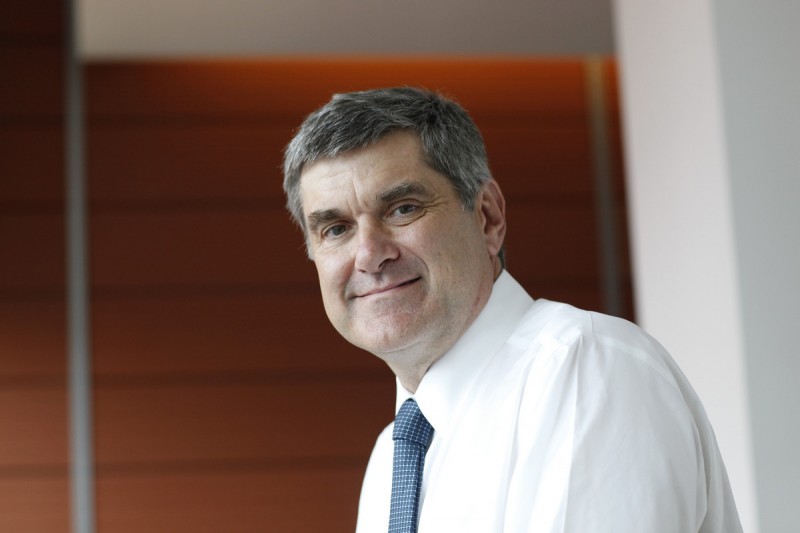
Memorial Sloan Kettering (MSK) Cancer Center’s chief executive, Craig Thompson, has resigned from two boards, Merck and Charles River Laboratories, following investigations of conflicts of interest. Thompson issued a statement about his decision to resign:
“I have taken feedback from our staff and faculty seriously and intend to lead by example. I believe this is the right decision for Memorial Sloan Kettering and will allow me to redouble my focus on MSK priorities: quality patient care, faculty, scientists and staff.”
Sloan Kettering’s chief medical officer, Jose Baselga, was accused of not reporting millions of dollars he received from pharmaceutical companies for his research articles. Baselga previously resigned from Memorial Sloan Kettering as well as Bristol-Myers Squibb, where he served on the board. As one former patient wrote, failing to disclose payments gives “the appearance of influence is troubling. It highlights ineffective oversight, with the potential to cast a shadow on the center’s other excellent doctors.”
When the story first broke, Memorial Sloan Kettering leadership wrote a letter stating, “MSK and our faculty need to do a better job.”
Discussion:
Analyze the MSK letter. Who is the audience, and what are the communication objectives? How do you assess the organization and writing style?
Should Thompson also resign his chief executive position at MSK? Why or why not?
How well does MSK leadership take responsibility for the problems? How is this an issue of integrity for MSK?
Are U.S. Campuses Coddling Students?

A new book, The Coddling of the American Mind: How Good Intentions and Bad Ideas Are Setting Up a Generation for Failure, explores the impact of political discourse on U.S. college campuses. The book is an expansion of an Atlantic article in which Jonathan Haidt, one of the book authors, disputed “trigger warnings” and other anxiety-avoiding tactics.
The authors are clear that harassment and discrimination are wrong, and that students who experience them should report the incidents. But, according to a Bloomberg article, we may lose the ability to communicate with each other:
“They worry about the What worries him is the looseness of the term ‘bias’ and the idea that students are urged not to work out their concern with the alleged perpetrator but to report it directly to the authorities.”
Also concerning the authors is the high percentage of liberal faculty members. A recent study shows that 39% of the most elite liberal arts schools have no Republican professors. The Bloomberg writer notes the possible negative effect:
"Critics argue that the atmosphere of liberal orthodoxy increases the risk that graduates will enter the workforce without knowing how to confront political viewpoints different from their own.”
Discussion:
What’s your view? Are we coddling students, or do they need more protection and “safe spaces”?
How would you describe the differences among discrimination, harassment, and bias?
How might the issue of protecting people from bias contribute to sexual harassment in the workplace? How can we help people sort out problems at an interpersonal level?
Serena Williams Controversy
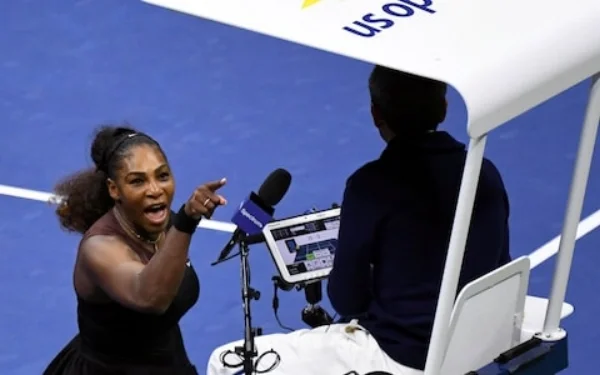
Serena Williams lost the U.S. Open women’s final tennis match and criticized umpire Carlos Ramos. A Washington Post article delves into “whether sexism, conscious or not, skews the playing field.”
The writer offers the following evidence:
Ramos still has support from the International Tennis Federation.
London Telegraph published data showing that, for the past 20 years, men received code violation fines almost three times as often as women. The writer acknowledges that men’s games are longer, but she says this doesn’t account for the entire difference.
An Australian newspaper criticized for what some consider a racist image of Williams boldly republished it on the cover with the headline, “Welcome to the PC World.”
The writer offers more evidence on both sides of the issue and suggests changes within the association.
Discussion:
Read more about the situation if you are unfamiliar. What could Williams and Ramos each have done differently?
What’s your view overall? Was Williams treated unfairly? Did she react appropriately?
How do you assess Williams’ response after the incident? How well did she recover from the so-called “outburst”?
What leadership character dimensions are illustrated by this situation?
JD.com CEO Arrested for Sexual Misconduct
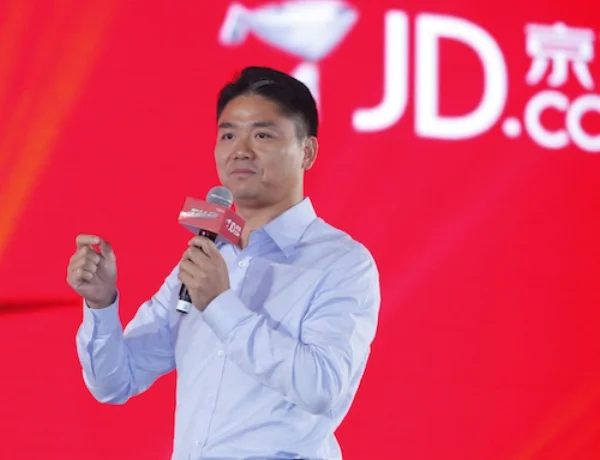
Richard Liu, founder and CEO of Chinese e-commerce company JD.com, was arrested in Minneapolis for sexual misconduct. Because of his high profile and billionaire status, Liu’s arrest was the most popular topic of conversation on social media in China last week.
Two people describe a case involving a student at the University of Minnesota, part of a joint doctoral program in business administration with Tsinghua University. Liu was released without bail and has returned to China. He denies any wrongdoing, and JD.com posted a statement in Chinese, translated by a student:
Sunday, Sep. 2, 2018
We have noticed that there are rumors and false accusations about Mr. Qiangdong Liu on Weibo (Chinese social media site, similar to Twitter) recently. We hereby declare as follows: Liu was falsely accused while in the US on a business trip, but the police investigators found no misconduct and that he would continue his journey as planned. The company will take necessary legal action against false reporting or rumors.
Monday, Sep. 3, 2018
So far as we know, Mr. Liu was arrested on Aug. 31, 2018 in Minneapolis for investigation. He was released from custody shortly. There was no accusation or bail required for the release. Mr. Liu has returned to China and will resume his business activities as originally planned.

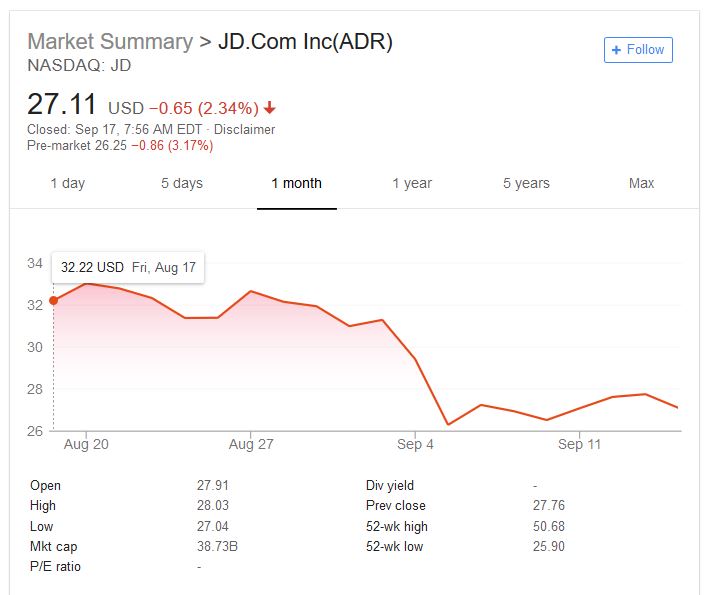
In addition to the stock price drop and embarrassment this causes Liu and JD.com, the company may have a governance problem. Liu is required to attend board meetings in person (although he may be able to join via video or telephone). Without him, as an 80% voting rights owner, the board may be unable to make decisions for the business.
A New York Times article focuses on China’s fascination with self-made billionaires as celebrities. Online discussions featured photos of Jack Ma laughing at Liu’s trouble.
Discussion:
I don’t see a statement or press release from Liu or from the company in English. Should Liu or the company publish something at this point on the website? Why or why not?
What should the company do now to manage through this crisis?
How does the Chinese reaction compare to situations in the United States? Can you think of a similar situation when Americans were fascinated by a leader’s hardship?

Disneyland Employees Speak Out

Disney employees are on screen in a New York Times op-ed video, "I Work at the Happiest Place on Earth. Why Can’t I Pay My Rent?" A 30-year concierge and a cosmetologist are featured more prominently. One is currently living in her car, and another says, tearfully, that she has spent time in her car. Both say they love their jobs, but along with 75% of Disneyland employees, they can't afford to pay "basic expenses every month." Data comes from a questionnaire and report, "Working for the Mouse."
The argument is for Disney to pay a living wage, and the call is for citizens to vote for an Anaheim proposal that affects Disneyland employees and some local hotel workers. In the video, one claim is that real wages have declined because of inflation—what $15 per hour bought seven years ago isn't the same today.
Business leaders who are fighting the measure say that the increase would hurt jobs. One local Chamber of Commerce member argued, "We estimate 3-4,000 jobs lost over next year or two by companies having to absorb this new increased cost. They're going to reduce hours and reduce jobs."
Senator and former presidential candidate Bernie Sanders is also featured in the video. He is proposing a bill he calls "Stop BEZOS" to tax Amazon and other large companies for public assistance received by their employees. The idea is for companies with 500 or more employees to pay the government back for support paid to their employees who cannot survive on earned wages.
Discussion:
- How well does the video make the case for higher wages? Which are logical and which are emotional appeals? What evidence is presented?
- Assess the credibility of the questionnaire and report, "Working for the Mouse." From your assessment, what makes the report both credible and questionable? In what ways does the report reflect business communication standards, and in what ways does it fall short?
- Research the impact of raising wages on industry, for example, this Cornell report. What's your view of this argument? It's a complicated question because of different industries, locations, labor supply, rates, etc.
- In what ways do the employees featured in the video demonstrate courage? What risks did they take in appearing on screen?
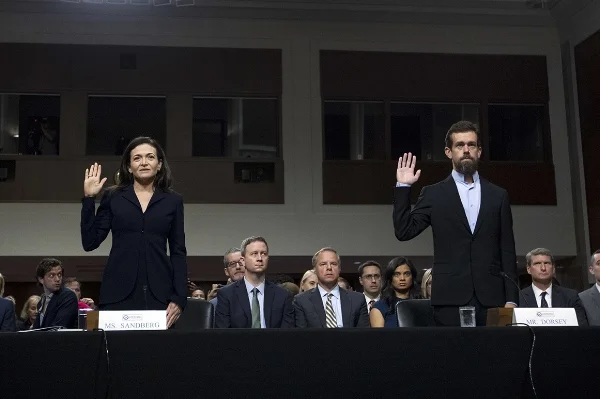
Twitter Denies Shadow Banning
"Shadow Banning" was a big topic at yesterday's Senate Intelligence Committee hearings with Facebook and Twitter. Twitter CEO Jack Dorsey denied the claim that tweets are suppressed based on political ideology. But he did admit that candidates' tweets were affected in search results.
In a blog post, Twitter executives explained the definition of shadow banning and denied the practice. The post also explains how search results are ranked:
- Tweets from people you’re interested in should be ranked highly
- Tweets that are popular are likely to be interesting and should be higher ranked
- Tweets from bad-faith actors who intend to manipulate or divide the conversation should be ranked lower
The executives confirm a technical issue that prevented Republican politicians tweets from showing up in searches, but they write, "some Democratic politicians were not properly showing up within search auto-suggestions as result of this issue." Like Dorsey, they don't specify numbers affected on each side.
Discussion:
- Assess Dorsey's response to Representative Joe Barton's questions. How well did he respond? How do you assess his delivery skills?
- How well does Twitter take responsibility in the blog post?
- How well does the blog post explain the situation and defend the search results?

President Trump Criticizes Google
In two tweets, President Trump criticized Google and other technology companies of "suppressing voices of Conservatives and hiding information and news that is good." Calling the situation "very serious" and "very dangerous," he claims that "fake" liberal news is elevated in search engines, while "fair" Republican/Conservative perspectives are suppressed.
The president's evidence is based on searching for "Trump News," which he claims resulted in 96% of stories from "National Left-Wing Media." The data came from Lou Dobbs' reporting on Fox Business Network about an "unscientific study" by PJ Media, a conservative organization.
It's also unclear which news organizations Fox and President Trump put in the "left-wing" category. A Wall Street Journal article explains that the president considers even mainstream media outlets to be "fake news," so what he calls unfair representation may not align with a "statistically neutral news aggregator."
Yet the article acknowledged that the search engine algorithm for Google News is "opaque." In addition, Facebook was questioned during Congressional Hearings about suppressing conservative views, and several technology companies did recently close accounts belonging to Alex Jones and InfoWars, a conservative organization, for violating terms of agreement. Social media sites (except Twitter, which has retained Jones's account) provide reasons for closing Jones's account such as his claiming that the shooting at Sandy Hooks Elementary School in 2013 was a hoax.
A spokesperson for Google denies biased search results:
"We continually work to improve Google Search and we never rank search results to manipulate political sentiment."
Discussion:
- Try to find evidence on both sides of this argument: that Google News is unbiased against President Trump and that his claims are unfounded.
- What's your view about Google Search results? How might your own political perspective factor into your view?
- How can you ensure that you're getting the most balanced news possible? (Hint: Don't rely on your Facebook feed.)
Archbishop Calls for Pope's Resignation
As more allegations of sexual abuse within the Catholic church become known, the most senior levels of the organization are facing new challenges. Last week, Pope Francis wrote a letter chastising abusers and calling on the Church to do better. Today, a former senior Vatican, who was an ambassador to the U.S., accused the pope of knowing about and covering up abuse cases since 2013. He is calling on the pope to resign.
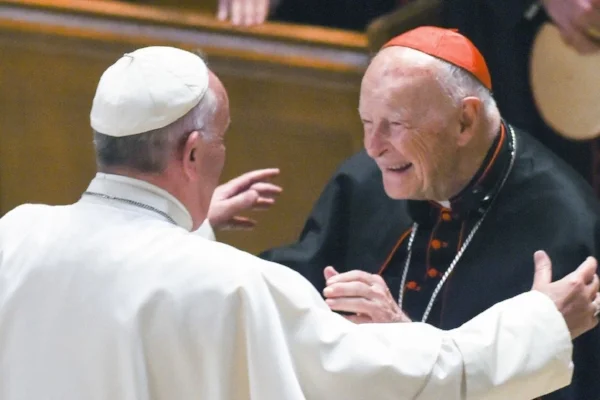
The situation involves Archbishop McCarrick, who resigned as cardinal in July. McCarrick is accused of sexually abusing seminarians, and the Pope is accused of "rehabilitating" him rather than disciplining him and removing him from his position.
Archbishop Carlo Maria Viganò explains his reasoning in documented "testimony," including this segment:

Image source of Pope Francis and Archbishop McCarrick.
Discussion:
- Should the pope resign? Why or why not? How does this situation compare to corporate examples? Consider the hierarchy and relationships.
- In what ways is this situation a matter of integrity?
- Viganò uses the word parrhesia. What does this mean, and how does this relate to business communication?
- Which other leadership character dimensions are illustrated by this situation?
Ohio Football Coach: Another Case of Deleted Messages
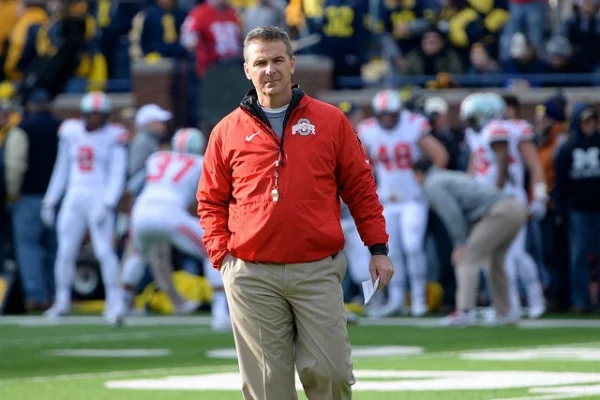
Ohio State football coach Urban Meyer will forgo pay and the ability to coach three games because of his failure to appropriately handle a staff member's misconduct. A New York Times article chronicles issues with Zach Smith's behavior, including paying $600 at a strip club during a recruiting event, a domestic violence charge, and an affair with a staff member.
During a press conference, Meyer apologized, saying, "I should have done more, and I am sorry for that," and "I followed my heart and not my head."
The Times article also describes a conversation between Meyer and Smith about deleting text messages. I should count the number of stories on this blog since 2010 illustrating that deleting texts and emails fail to get the desired result. These messages are almost always recoverable, and the act of deletion makes the accused look even more guilty.
In addition, in this situation, Ohio State officials at first failed to produce messages requested by the school newspaper. Worse, several staff knew about the request, but no one even approached Coach Meyer to retrieve them.
Discussion:
- Once again, where are the many places deleted messages may be stored? How else can they be retrieved?
- What's your view of the strip club visits? Could Meyer reasonably argue that this is just part of the recruiting process? After all, no students were invited—only university and high school coaches.
- Assess the press conference. How well did university officials, including Meyer, respond to reporters' questions? Did the team appropriately take accountability?

School Policy for "Natural" Hair

An 11-year-old black girl was sent home from school because her hair didn't fit guidelines for "natural" hairstyles. Over the summer, Christ the King Parish School in Terrytown, Louisiana, established a new policy, published in its handbook, banning hair extensions, which Faith Fennidy was wearing.
Videos show Fennidy crying, and critics called the policy discriminatory. But the Archdiocese of New Orleans defended the school's decision:
"This policy was communicated to all parents during the summer and again before the first day of school, and was applied to all students.
"The school offered the student's family an opportunity to comply with the uniform and dress policy and the family chose to withdraw the student; the student was not suspended or expelled."
A representative for the school also said, "We remain committed to being a welcoming school community that celebrates our unity and diversity." Fennidy decided not to return to the school.
Discussion:
- What's your view of the policy? Do you find it appropriate, discriminatory, or something else?
- How do attire policies in companies compare? What examples of similar policies have been problematic for companies?
- Read more about the situation on BusinessInsider. How well did the school handle the situation? What, if anything, could have been done differently?
Pope Francis's Letter
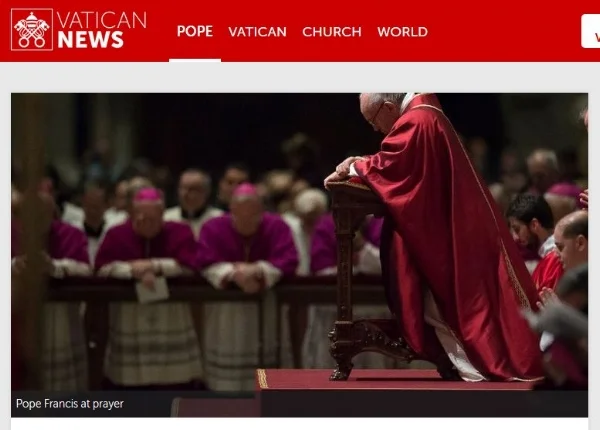
Pope Francis has joined the conversation about sexual abuse in the Catholic church after 1,000 victims and 300 perpetrators were identified by a grand jury investigation report in Pennsylvania. The report also revealed how the church systematically covered up the abuse over a 70-year period.
In an open letter, which is posted on Vatican News, expresses empathy early and often, for example, in this passage:
In recent days, a report was made public which detailed the experiences of at least a thousand survivors, victims of sexual abuse, the abuse of power and of conscience at the hands of priests over a period of approximately seventy years. Even though it can be said that most of these cases belong to the past, nonetheless as time goes on we have come to know the pain of many of the victims. We have realized that these wounds never disappear and that they require us forcefully to condemn these atrocities and join forces in uprooting this culture of death; these wounds never go away. The heart-wrenching pain of these victims, which cries out to heaven, was long ignored, kept quiet or silenced.
Pope Francis's letter follows one by Pope Benedict XVI in 2010, when abuse in Ireland became widely known.
Discussion:
- Compare the two letters. In what ways are they similar and different? How might the circumstance and timing affect each approach?
- How is the letter organized? How would you describe the tone?
- Which character dimensions does Pope Francis demonstrate in his letter?

The Debate Over Quarterly Reporting
President Trump is asking the SEC to no longer require report quarterly earnings. Instead, companies would report results every six months.

This may be good news for those who believe that publishing frequent earnings reports encourage a short-term focus. The idea is that investors make rash decisions based on the results from only three months.
One downside of the change could be less transparency. The value of quarterly reports is that investors are more aware of what's happening. In addition, the process itself may be useful internally, as a former investment banker explains:
"What I see from the inside of the quarterly earnings cycle is that there’s actually a lot of discipline in it. That process of having to prepare it, release it, explain it and answer questions has real value.”
Also, not everyone agrees that eliminating the report will foster longer-term thinking. As a compromise, some are proposing that reports are still published, but that specific earnings-per-share guidance information isn't included.
Discussion:
- Describe the importance of transparency in financial reporting. How does this relate to accountability?
- What's your view of the proposal to eliminate quarterly reports? Do you see additional benefits or downsides than what is mentioned here?
- In his tweet, President Trump refers to making "business (jobs) even better." How do you see this as a result of his proposal?

What Is "Dehumanizing" Speech?
The New York Times reports Twitter's struggle to define what constitutes "dehumanizing" speech. Apparently, the only agreement among Twitter's team members is that the decision is "incredibly complex."

Categorization is critical, as the company has a reputation as a sometimes dark place of trolls and harassment. Yet this week, Apple, Facebook, YouTube have expunged content from Alex Jones's Infowars, which is known for spreading misinformation, including that the shooting at Sandy Hook was a hoax. You can imagine how this angered families of lost children.
In a tweet, CEO Jack Dorsey explained Twitter's decision to keep Infowars content, but employees, particularly, have not responded positively.
Twitter is in a difficult spot because, on the other hand, sites have been criticized for censoring conservative views. Del Harvey, the company's VP of Trust and Safety, wrote an email to employees further explaining the company's rationale.
Discussion:
- How would you define "dehumanizing" speech? What character dimensions are involved?
- What persuasive strategies does Harvey use in her email to employees? Which are most and least convincing and why?
- What is your view about Infowars content? Should Twitter remove it from the site as other social media companies have done? How might your own political views factor into your thinking?

CEO Activism
Weber Shandwick's third annual report explores CEO activism, which Brian Moynihan, CEO Bank of America, defines and supports:
“Our jobs as CEOs now include driving what we think is right. It’s not exactly political activism, but it is action on issues beyond business.”
The report found that almost half of Americans "believe CEO activism influences the decisions and actions of government," and almost half of consumers "would be more likely to buy from a company led by a CEO who speaks out on an issue they agree with." Millennials, particularly, prefer CEOs to speak out on issues, and CEOs with more social media accounts have better stock performance for their company.
A Wall Journal Street writer observes that leaders rarely make a business case for issues, even if their company would benefit. Instead, they are speaking to consumers directly to change hearts and minds.
Top issues for CEOs include training, equal pay and sexual harassment, and CEOs are avoiding gun control, nationalism, marijuana legalization, and abortion."
A Forbes article offers this advice for CEOs:
- Develop an authentic voice and quick actions
- Connect your customers with your activism efforts
- Align activism efforts with a company’s mission
- Be willing to act against your own self-interest
Discussion:
- What are the risks and rewards of activism to a CEO and to the company? How does integrity factor in?
- What examples have you seen of CEOs speaking out? How do you assess the situations? How did you feel about the gestures?
- Read the Weber PPT deck. What principles of business report writing are followed, and what could be improved?

Scott Pruitt Resigns
Environmental Protection Agency (EPA) head Scott Pruitt resigned after months of accusations of overspending and other ethical issues. Questions about Pruitt's judgment involved expensive travel, getting a job for his wife, and underpaying for an apartment.
President Trump had supported Pruitt, but the controversy may have reached a tipping point. Discovery of secret calendars could have been the last straw. A whistleblower said Pruitt kept three different calendars to hide meetings.
In his resignation letter to the president, Pruitt referred to "unrelenting attacks on me personally, [sic] my family, are unprecedented and have taken a sizable toll on all of us." In a tweet, President Trump was gracious and complimentary.
Discussion:
- If you're familiar with Pruitt's history in the position, which of his alleged ethical lapses do you consider more serious? Which are less serious?
- On balance, do you agree with Pruitt that he was attacked? How might your own political views affect your perspective?
- Did he do the right thing by resigning? Why or why not?
- How does Pruitt's resignation letter differ from resignation letters written for corporate jobs?


Intel CEO Resigns Over Relationship With Employee

A Wall Street Journal article describes events leading to the Intel CEO's resignation. Brian Krzanich had an affair with a mid-level manager at the company, but the relationship ended years ago. Still, the affair became public when the woman told a co-worker who, citing the company's strict policy, reported it to the board of directors.
Intel has a particularly tough policy, which bans any relationships among managers and any employees and requires employees to report known relationships.
In a news release, the company announced the news in the first paragraph and then quickly moved to the future: the appointment of an interim CEO and expressions of confidence for Intel's strategy. Still, the stock fell 3.5% on the news.
Discussion:
- Did Krazanich do the right thing by resigning? Why or why not?
- What are the advantages and downsides of Intel's strict policy? "Non-fraternization" seems dated and odd, doesn't it? Why would a company use this title?
- Consider the employees who discussed the affair. We might assume that one confided in the other. What were the steps along the way that led to Krazanich's resignation? Who is accountable for the result?