
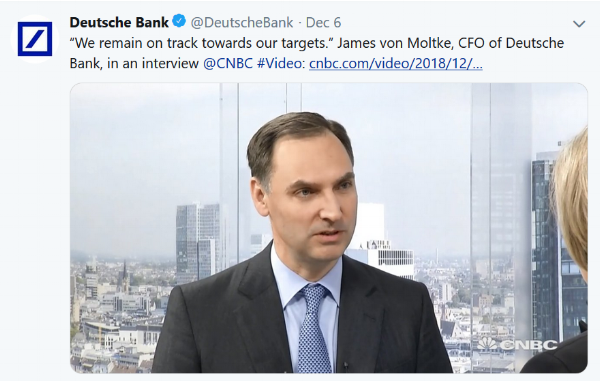
Deutsche Bank on the Defense

With stock at an all-time low and a German government raid last week, Deutsche Bank is trying to reassure customers and shareholders. Finance chief James von Moltke said on CNBC, “To date, we’re not aware of any wrongdoing on our part.” The investigation relates to the Panama Papers, which are documents made public in 2016 that revealed tax havens for individuals from more than 200 countries.
Throughout the CNBC interview, von Moltke tries to put the issue into perspective. He says the investigation involves a small, trust services business that the bank sold earlier this year. However, some of the money laundering accusations involve current managers. Still, von Moltke claims that new precautions are in place today.
Deutsche Bank stock fell further on the news, losing 51% of its value this year.
Discussion:
Assess the CFO’s video interview with CNBC. What persuasive communication strategies do you observe?
Which are his strongest and weakest arguments?
Also assess his delivery skills: tone, rapport, volume, pace, and so on.

Marriott Security Breach

Personal information of more than 500,00 guests was stolen from the Starwood reservation system. Exposed data includes payment card information, and critics say the company could have avoided the breach years ago. In 2015, Starwood announced a small breach, which cybersecurity experts say should have inspired the company to do more at the time. Starwood argues it didn’t realize the risk, and Marriott leaders argue that they had not yet acquired Starwood. On Friday, Marriott shares were down 5.6%.
A notice at the top of the Marriott homepage reads, “For more information on the Starwood guest reservation database security incident, please click here.” Although the breach was from a Starwood database, the media is consistently reporting the news as “Marriott.” That link and a press release on the website both go to legal sounding statements, although they do provide FAQs at the bottom.
Lawsuits have already been filed against the company for failing to protect users’ data.
Discussion:
Is the company taking adequate responsibility for the breach? Explain your response.
How can Marriott respond to this crisis and protect the brand at this point?
How can the website information be improved? Consider the primary and second audiences, communication objectives, organization, writing style and so on.

Prep School Criticized for Abuse and False Apps

College prep school T.M. Landry has garnered national attention for helping Black students get into college, but all has not been well at the school. Students are speaking out about emotional and physical abuse as well as falsified college applications.
According to a New York Times report, examples of physical abuse include “forced to kneel on rice, rocks, or hot concrete for hours” and being “choked, yelled at, and berated.” Students report being told to lie on college applications about classes they took and the conditions under which they grew up, for example, exaggerating their poverty.
The Landrys, a married couple who run the school, defended their actions, saying they push kids to their limits. Mr Landry admits to physical contact, and he said, “Oh, I yell a lot.” Since a 2013 case against him that included probation, Landry says he no longer practices physical punishment. He also denied falsifying students’ applications.
College results have not been great. Students who spent more time at the prep school are more likely to withdraw or transfer to less demanding programs. The New York Times article describes an unaccredited school with little traditional programming, so students may not be academically prepared for the schools that admit them.
Discussion:
Assess the school website. The opening video features Mr. Landry, and the rest of the site boasts college acceptances. How convincing might families find the way the school is promoted? Other than admitting abuse, should the site say more to give parents and prospective students a more accurate picture of the school philosophy and practice?
How is this situation an example of failing integrity? Also consider intent versus impact. What could the founders' intent, and how is that different from the impact?

Lettuce Recall Data
An opinion piece in the Wall Street Journal highlights the value data for decision making. With the article title, “Lettuce Try Not to Panic,” Jim Prevor criticizes the Centers for Disease Control and Prevention’s (CDC) edict that “U.S. consumers not eat any romaine lettuce, and retailers and restaurants not serve or sell any”:
There are 43 people known to be infected with the outbreak strain of E. coli 0157:H7. The CDC interviewed 25 of them. Eighty-eight percent of those 25 people, as opposed to 47% of the general population, said they ate romaine lettuce in the week before they got sick.
From population data, the Prevor concludes that you have a 1 in 11 million chance of getting sick from Romain lettuce, and a 1 in 28 million chance of ending up in the hospital. The author makes the odds even more concrete:
If this outbreak were active every day, and you ate one salad a day, on average you would be hospitalized for E. coli once every 77,000 years.
Even these data, Prevor argues, are overstated for most of us. Children, older people, and people with compromised immune systems are far more likely to get sick than the average adult. As a result of the CDC warning, the author estimates “tens of millions of dollars in losses.”
On the CDC website, a “Food Safety Alert” details the investigation results and advice.
Discussion:
What’s your view of the CDC’s recommendation: better safe than sorry or overblown?
How well does Prevor argue his point? What persuasive strategies does he use? Which are his strongest and weakest arguments? What may be missing from his argument?
Help an audience visualize some of the data in Prevor’s article. What charts or graphs would be useful to help consumers make an informed decision?

Nissan Chairman Is Arrested
Nissan’s chairman was arrested for financial misconduct, including under-reporting his income in securities fillings. Carlos Ghosn may have been engaging in improprieties for years.

The news came as a surprise to many. Ghosn is a popular business figure, credited with turning around Nissan, Renault, and Mitsubishi by forming an alliance and directing cost-cutting and layoffs. According to a Wall Street Journal article, the shock is felt particularly at Renault; a union leader described the reaction as “a feeling of stupefaction and a lot of anger.”
The French government has a 15% state in Renault, so President Emmanuel Macron also weighed in: “As a shareholder, the French state will remain extremely vigilant regarding the stability of the alliance.” At this point, officials are still trying to sort out the news and determine leadership going forward.
Nissan CEO Hiroto Saikawa delivered a news statement, translated in English on Bloomberg. The company also issued this matter-of-fact statement.
Nissan image source. Ghosn image source.
Discussion:
Why would a successful business executive engage in financial misconduct? What leadership character dimensions are lacking?
How does financial impropriety go on for years in a situation like this? Who should be accountable for the misconduct?
Assess Saikawa’s news statement. What works well to improve brand image, and what could be improved?
Student Is Escorted Out of Class
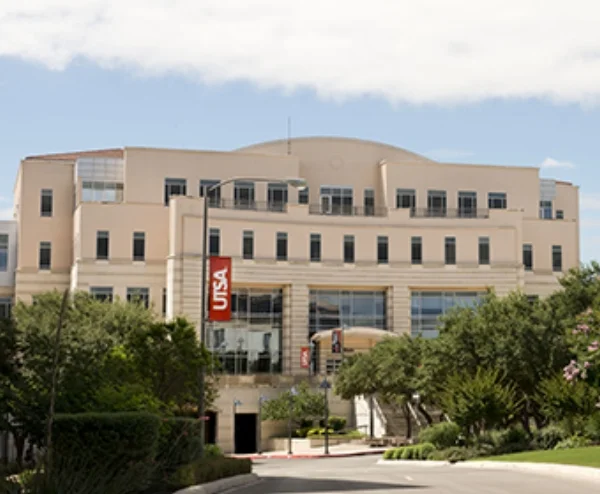
A biology lecturer at University of Texas at San Antonio called campus police about a student’s behavior. Another student in the class tweeted, “So this happened today in class, a girl had her feet up and the professor called the police after calling our class uncivil.” A video shows an African-American student being escorted out of the classroom.
The University posted a tweet soon after the incident:

Later, President Taylor Eighmy sent a letter to students announcing that the instructor will be replaced for the rest of the term and that the student will be welcomed back. The university is investigating the incident, including potential racial bias, because the student is African-American.
Discussion:
A student in the class posted that the instructor referred to the class as “uncivil.” What’s your view of civility in a classroom setting? What examples would describe an uncivil classroom?
Did the instructor do the right thing by calling campus police? Did campus police do the right thing by escorting the student out?
What other options are available to an instructor wanting to manage classroom behavior?
White House Tweets Doctored Video
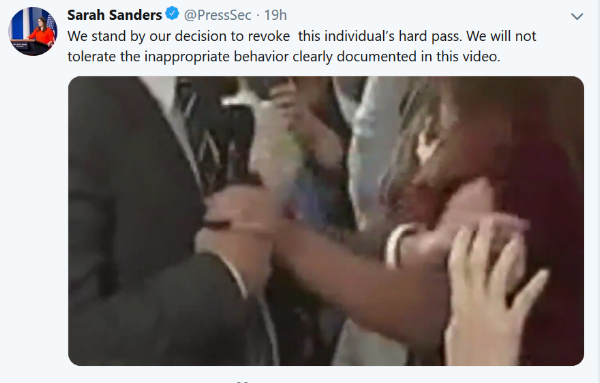
There is no love lost, as they say, between President Trump and CNN Correspondent Jim Acosta. Now, Acosta has been suspended from the White House because of what Press Secretary Sarah Sanders described as “a reporter placing his hands on a young woman just trying to do her job as a White House intern.”
However, Sanders posted a video that Storyful compared to C-SPAN’s, and a different story emerges. In the C-SPAN version, Acosta’s hand inadvertently touches the intern’s arm. The White House version omits three frames, misleading viewers to see more aggressive touching—a “chop.”

A Wall Street Journal article and a Wired report show the videos frame by frame, side by side.
CNN posted that the news organization stands by Acosta, and Sanders tweeted that the White House stands by its decision.
Discussion:
One theory is that the White House obtained the doctored video from InfoWars, a conservative news organization. If this is true, should the White House staff have done a better job vetting the source?
Assuming the White House didn’t know the video was edited, what should they do or say now?
Analyze the unedited video. What, if any, responsibility does Acosta have for the incident?
#MicrophoneMeghan is trending. Who’s responsible for the (probably) unwanted attention?
Timing Bad-News Messages
This week, we saw two examples of timing communications to improve image.

President Trump waited until after the important mid-term elections to fire Attorney General Jeff Sessions. President Trump wasn’t happy with Sessions since he recused himself from the Russia election interference investigation back in 2017.
Although Sessions did technically “resign,” he did so at the President’s request. Sessions confirms this in his resignation letter, which begins, “At your request, I am submitting my resignation.”
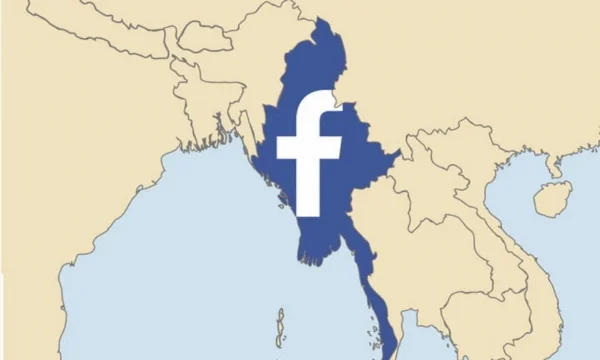
Facebook capitalized on a busy news day to announce bad news: a report that the company didn’t do enough to stop anti-Rohingya propaganda on its platform. The site may have contributed to escalated violence in Myanmar. Skimm writers joked, “What to say when the midterms are dominating the headlines… Time to drop some bad news. Right, Facebook?”
Discussion:
Why didn’t President Trump fire Jeff Sessions after he recused himself? Why is the timing better now, more than a year later?
What other examples have you seen of companies taking advantage of news cycles?
The benefits of reporting bad news on a slow news day may be obvious. What are the risks?
Google Employees Protest Sexual Harassment
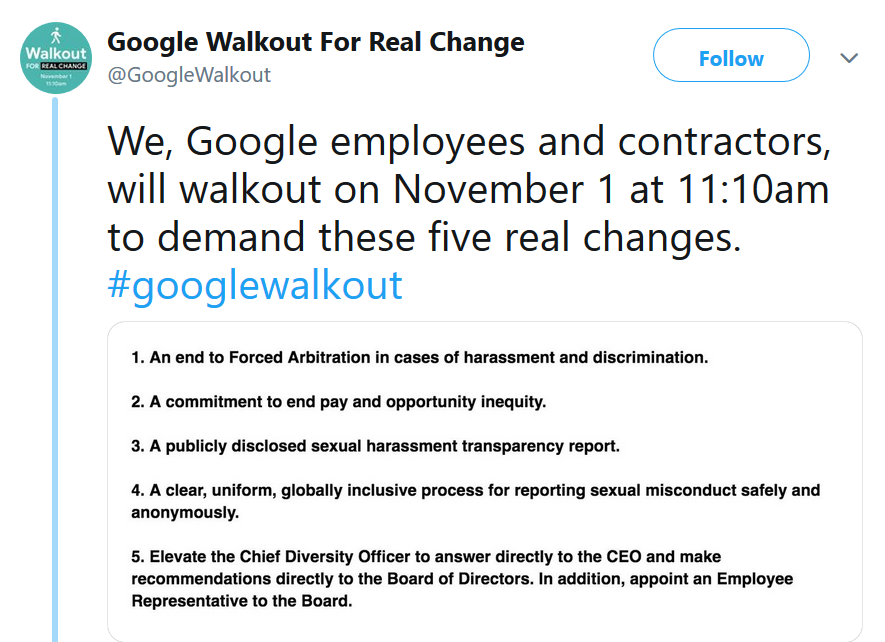
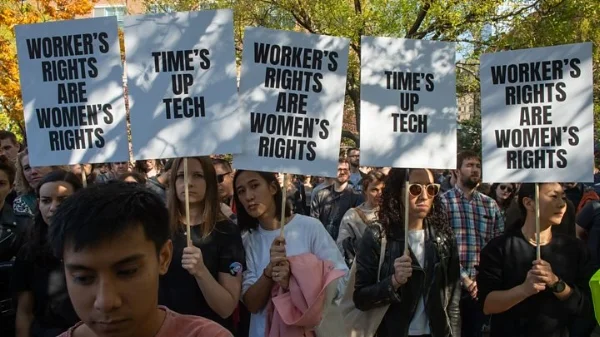
Thousands of employees walked out of more than 20 Google offices around the world on Thursday to protest how the company handled sexual harassment charges. Employees in California, Berlin, Dublin, London, Singapore, Tokyo, Zurich, and other locations organized under the group, “Google Walkout For Real Change.”
The reaction came after a New York Times article revealed several senior-level managers left the company, quietly, because of sexual harassment. Some were given large financial payouts.
In addition to a more transparent process, employees are asking for an end to pay equity and forced arbitration, which requires employees to settle cases within the company and denies them the right to sue.
In response to the walkouts, CEO Sundar Pichai said, “Employees have raised constructive ideas for how we can improve our policies and our processes going forward. We are taking in all their feedback so we can turn these ideas into action.”
Discussion:
How do you view the walkouts: a waste of time, overstepping, a productive way to protest, or something else? Respond to the same question for their list of demands.
What, if any, impact do you think the walkouts will have on company practices? Googlers did encourage the company’s decision to end an artificial intelligence contract with the Defense Department.
What leadership character dimensions are illustrated by the situation?
GM Offers Employee Buyouts
To cut costs, General Motors is offering voluntary severance packages to 18,000 employees. The company is taking this path before mandatory layoffs, which could happen if not enough people leave voluntarily.

To receive an offer, employees must have been with GM for at least 12 years and be on salary (not an hourly wage), which means more senior-level employees will be leaving. Typically, these employees are in managerial positions and are paid more highly, so the move means more savings.
The company is focusing on its most profitable regions and already cut salaried staff from about 90,000 to 77,000 after selling off its European divisions. At the same time, GM is staffing up technology functions to compete in the self-driving car market. Through its Cruise division, GM is planning to introduce a ride-sharing, autonomous vehicle in 2019.
Office image source. Cruise image source.
Discussion:
Why would a company choose a voluntary severance model instead of mandatory layoffs?
What factors should employees consider before deciding to take a package?
Reversal at Maryland

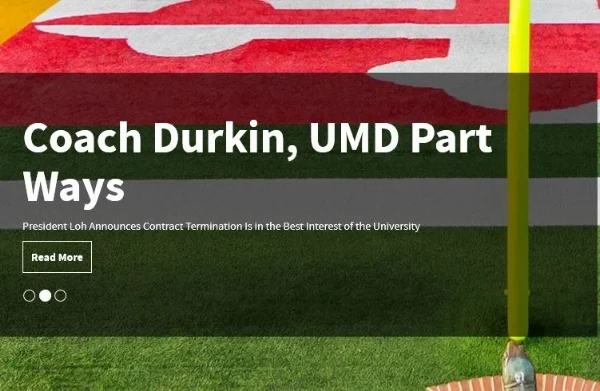
The University of Maryland has reversed its position on keeping football coach DJ Durkin. At first, Durkin was reinstated after a damning report about player abuse which resulted in the death of a student, Jordan McNair. Critics say the University’s Board of Regents overstepped in disallowing Loh to terminate the coach.
Now, pressure from students, players, the McNair family, and politicians left the University with no choice but to fire Coach Durkin. In a letter, President Loh explained the decision, including his previous concerns about Durkin’s return.
McNair’s father made a statement, including a message to President Loh when asked:
“The same thing I’ve always said to Dr. Loh. I’ve always commended Dr. Loh for having a level of integrity and doing the right thing even since he first initially came to the hospital, and secondly, when he came to us as a family to apologize and to take full moral and legal responsible for the tragic events that happened.”
In the meantime, Maryland players were involved in an altercation. It seems as though this situation has divided the team as well.
UPDATE: James T. Brady, chairman of the University System of Maryland’s Board of Regents, resigned last week, and President Loh is winning back his power. A Chronicle article notes that Loh won the “battle waged in the court of public opinion,” and whether he will leave the University as planned is now unclear. In a statement, Brady explained his decision and, using the word “proud” three times, cites board accomplishments during his tenure.
Discussion:
How is this situation an issue of integrity?
The regents had planned to terminate President Loh. Should they reverse this position too?
What should the University do now to repair its image?
We have heard nothing that I found from the regents (except their confidence in Coach Durkin). Should they communicate something now? What could they say that could help instead of hurt the situation?

Tesla Investigated for Fraud
Tesla is facing a new challenge this week: a U.S. Federal Bureau of Investigation (FBI) criminal probe into whether the company misstated production data and therefore misled investors. The investigation will focus on Model 3 sedans.
A Wall Street Journal article explains part of the issue. CEO Elon Musk tweeted on July 2, 2017, “Looks like we can reach 20,000 Model 3 cars per month in Dec.“ But reports at the time showed a less optimistic picture. The result was only 2,700 cars produced for the entire year.
A spokesperson said the FBI document requests were voluntary and defended the company:
“When we started the Model 3 production ramp, we were transparent about how difficult it would be, openly explaining that we would only be able to go as fast as our least lucky or least successful supplier, and that we were entering ‘production hell.’ Ultimately, given difficulties that we did not foresee in this first-of-its-kind production ramp, it took us six months longer than we expected to meet our 5,000 unit per week guidance. Tesla’s philosophy has always been to set truthful targets –- not sandbagged targets that we would definitely exceed and not unrealistic targets that we could never meet. While Tesla gets criticized when it is delayed in reaching a goal, it should not be forgotten that Tesla has achieved many goals that were doubted by most. We are enormously proud of the efforts of the whole company in making it through this difficult ramp and getting us to volume production.”
Discussion:
What’s your view of Musk’s statement compared to the result: arrogance, entrepreneurial optimism, or something else?
How well does the Tesla spokesperson address the investigation? What else, if anything, should the company say at this point?
In what ways does the company demonstrate a lack of vulnerability in this situation?
Google Admits Sexual Harassment Incidents
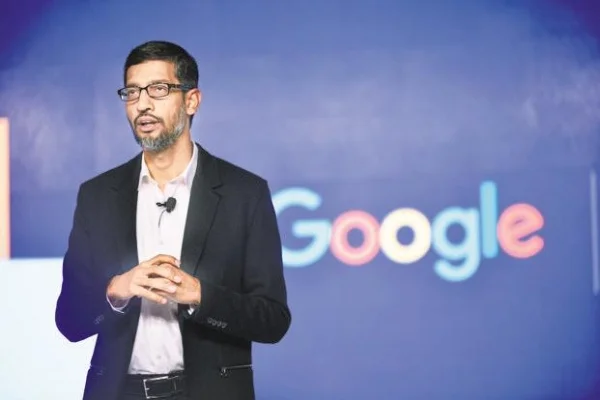
It’s been quiet until now, but Google has fired 48 employees for sexual harassment. A New York Times article exposed a number of high-profile departures dating back to 2014, including Andy Rubin, who developed the Android.
Rubin was paid $90 million when the company asked for his resignation, but executives never told the entire truth: that Rubin left because he was accused of sexual misconduct. Instead, then-CEO Larry Page, complimented him: “I want to wish Andy all the best with what’s next,” and “With Android, he created something truly remarkable—with a billion-plus happy users.” Rubin denies the claim and the circumstances of his termination.
In addition to this situation, the Times article cites a number of relationships between senior-level managers and employees. An email from CEO Sundar Pichai and the VP of people operations to staff acknowledges the 48 departures, including 13 “senior managers and above.”
Hi everyone,
Today's story in the New York Times was difficult to read.
We are dead serious about making sure we provide a safe and inclusive workplace. We want to assure you that we review every single complaint about sexual harassment or inappropriate conduct, we investigate and we take action.
In recent years, we've made a number of changes, including taking an increasingly hard line on inappropriate conduct by people in positions of authority: in the last two years, 48 people have been terminated for sexual harassment, including 13 who were senior managers and above. None of these individuals received an exit package.
In 2015, we launched Respect@ and our annual Internal Investigations Report to provide transparency about these types of investigations at Google. Because we know that reporting harassment can be traumatic, we provide confidential channels to share any inappropriate behavior you experience or see. We support and respect those who have spoken out. You can find many ways to do this at go/saysomething. You can make a report anonymously if you wish.
We've also updated our policy to require all VPs and SVPs to disclose any relationship with a co-worker regardless of reporting line or presence of conflict.
We are committed to ensuring that Google is a workplace where you can feel safe to do your best work, and where there are serious consequences for anyone who behaves inappropriately.
Sundar and Eileen
Discussion:
Should Google have been more transparent about the previous departures? Why or why not?
Should the executives say more in the email about the specific departures mentioned in the Times article? Why or why not?
Assess the email for audience analysis, objectives, tone, organization, and style. What works well, and what could be improved?
Which leadership character dimensions does Pichai demonstrate and fail to demonstrate?

Teacher Recommendation Letters Influence Harvard Decision

Details about Harvard’s admissions process are surfacing during the trial about how the university’s “race-conscious” decision policy may adversely affect Asian-Americans. The entire guidebook for admissions decisions in 2014 was entered into evidence.
This week, Harvard revealed that white students typically receive “somewhat stronger” recommendation letters from teachers and guidance counselors than Asian-American students, which affects each group’s “personal rating.” The personal ratings on based on characteristics such as kindness, courage, and leadership. When writing letters, reviewers are asked to assess “consistent testimony of an applicant’s unusual effervescence, charity, maturity, or strength of character.”
Back in 1990, the US Department of Education’s Office of Civil Rights criticized Harvard’s practice of using a personal rating and admissions officers’ stereotypical comments of Asian-American students. The same issue seems to be presented here, with comments from teachers and guidance counselors.
Discussion:
How valuable do you think teacher and guidance counselor letters of recommendation are in the admissions process? How much weight should they carry in the overall decision?
By definition, the personal rating includes subjective evaluations. Should universities try to avoid subjectivity in the admissions process? Why or why not?

Facebook's Messaging Over Time
The Wall Street Journal reports how Facebook has repositioned itself since its founding in 2004.
In 2005, at Harvard, founder Mark Zuckerberg said Facebook’s purpose is to ”look people up” and for “connecting to people.” In 2008, Facebooke expands and messages focus on helping people “share information. . . and share parts of their identity with each other.” In 2010, Zuckerberg’s vision enlarged: “People can have instantly social and personalized experiences everywhere that they go.” Soon after, Zuckerberg focused on problem solving.
In 2012, Zuckerberg said, “Our mission isn’t to be a public company. Our mission is to make the world more open and connected.” By 2013, Zuckerberg was seeing Facebook’s role in selecting governments, getting healthcare access—improving people’s lives.
More recently, given concerns about privacy and misinformation, Zuckerberg’s messages focus on responsibility.
Discussion:
The WSJ video has a negative connotation about Facebook’s changing message, particularly in light of today’s news about shareholder proposals to split Zuckerberg’s roles. Do you agree with this assessment?
How well has Zuckerberg handled messages about the evolution of Facebook in the past 14 years? What, if anything, can he do differently now?
Do you agree with the proposal to split the CEO and chairman jobs? In other words, does Zuckerberg have too power? Does he need help at this point?
How is Facebook’s evolving messaging a potential matter of integrity?
Bad News at Verizon and Sears
Verizon and Sears employees are facing job loss in the coming months.

Verizon is outsourcing some technology functions to Infosys, resulting in 2,500 jobs leaving the company.
At first, Verizon wasn’t planning to offer severance, but pressure from employees caused company leaders to change the approach. Timing was part of the problem: last month, 44,000 Verizon managers were offered a voluntary severance package to leave the company. Now, about 1,000 employees have a choice of whether to work for Infosys or accept severance pay.
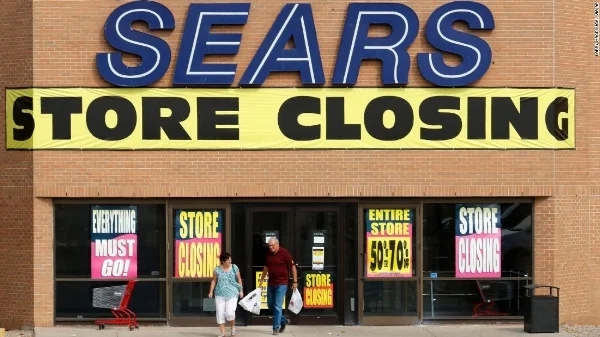
Sears is declaring Chapter 11 bankruptcy after years of attempts to save the department store. The company has been steadily shedding stores. Only 700 are left, down from 1,000 in February, and more than 3,000 about a decade ago.
CNN reports that Sears has been warning investors that they may go out of business, and suppliers are requiring payment up front.
Discussion:
What’s your view of Verizon’s severance plans: unfair, discriminatory, financially necessary, based on sound principles, or something else?
Sears investors and suppliers recognize the likely fate of Sears. How prepared do you think employees are? What could the company do to help employees at this point?

Senators Send Harsh Letter to Google

The U.S. Committee on Commerce, Science, and Transportation sent a strongly worded letter to Google CEO Sundar Pichai. The senators question what the company has done to protect 500,00 users whose profile information was stolen in 2015. Their anger stems from knowledge of an internal memo, cited in a Wall Street Journal article, discouraging disclosure because of fear of “immediate regulatory interest” and the requirement for Pichai to testify before Congress.
In the letter, the senators compare Google’s response to Facebook’s in light of the Cambridge Analytica breach:
“At the same time that Facebook was learning the important lesson that tech firms must be forthright with the public about privacy issues, Google apparently elected to withhold information about a relevant vulnerability for fear of public scrutiny.”
The senators then list specific information about vulnerabilities for Google to provide by October 30.
Discussion:
Read the Wall Street Journal article for more background information. Did the senators respond appropriately? Why or why not?
What is Google’s accountability in this situation? What is the committee’s accountability?
In addition to responding to the senators’ requests, what, if anything, should Google communicate to the public at this point?
Google may have been avoiding its own vulnerability.

Amazon Loses Favor After Announcing $15 Wage

Amazon received good press for announcing employees would earn a minimum of $15/hour. But today’s news tells a different story.
Although the hourly wage will increase, Amazon is cutting bonuses and stock options, and employees fear it will cost them thousands of dollars in total compensation. The stock options, according to employees’ online posts, gave them a sense of company ownership. Some proposed walking out on Black Friday, the biggest shopping day of the year. Amazon had also granted bonuses for attendance and productivity, called Variable Compensation Plan, or V.C.P.
In response, company leaders said they would look at employees’ total compensation to make sure no one would be worse off after the changes. A spokesperson also released this statement:
"The significant increase in hourly cash wages more than compensates for the phase out of incentive pay and [restrictive stock units]. We can confirm that all hourly Operations and Customer Service employees will see an increase in their total compensation as a result of this announcement. In addition, because it's no longer incentive-based, the compensation will be more immediate and predictable."
Box image source. Cart image source.
Discussion:
This is quite possibly a miscommunication or, more to the point, poor communication from Amazon officials to employees. How could the company have done a better job?
How well does the statement address the criticism? What else should the company communicate at this point?
How is this an issue of integrity for the company?
Facebook Policy Executive Sat Behind Kavanaugh

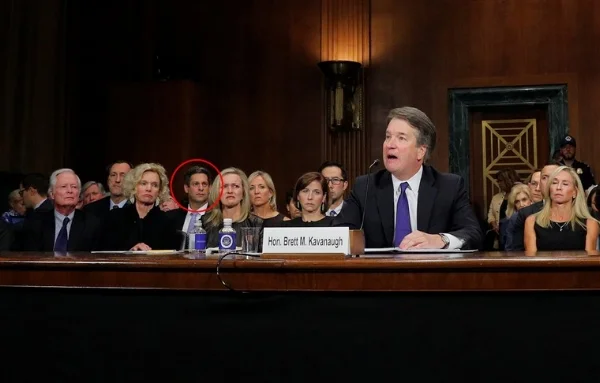
Joel Kaplan, Facebook’s vice president for global public policy, sat behind his friend, Brett Kavanaugh, during the charged hearings to determine whether he would win support as the next Supreme Court justice. Because of his position at Facebook, employees questioned his loyalties and whether it was appropriate for him to be so visible during the judge’s testimony about whether he sexually assaulted a woman as a teenager.
His appearance was a “surprise” to employees, and hundreds wrote about their concerns on Facebook’s intranet site. One employee wrote, perhaps expressing the sentiment of Facebook’s liberal employees:
“Let’s assume for a minute that our VP of Policy understands how senate hearings work. His seat choice was intentional, knowing full well that journalists would identify every public figure appearing behind Kavanaugh. He knew that this would cause outrage internally, but he knew that he couldn’t get fired for it. This was a protest against our culture, and a slap in the face to his fellow employees.”
Kaplan defended participating, referring to their 20-year friendship, and CEO Mark Zuckerberg said he didn’t violate any company policies by attending, although he did say he would not have made the same decision. Employees wanted to hear from COO Sheryl Sanberg about Ford’s accusations, and she was not forthcoming, according to a Times article. But she did comment on Kaplan’s attendance:
“As a woman and someone who cares so deeply about how women are treated, the Kavanaugh issue is deeply upsetting to me. I’ve talked to Joel about why I think it was a mistake for him to attend given his role in the company.”
Discussion:
Read additional Facebook messages in the Times article. How would you summarize employees’ concerns?
What’s your view of Kaplan’s attendance? Consider the “optics” in addition to company policy.
Some might say that Kaplan was being authentic by sitting behind his friend. Do you agree with this view? Why or why not?
Which character dimensions are illustrated by this story?

Crisis at Sloan Kettering
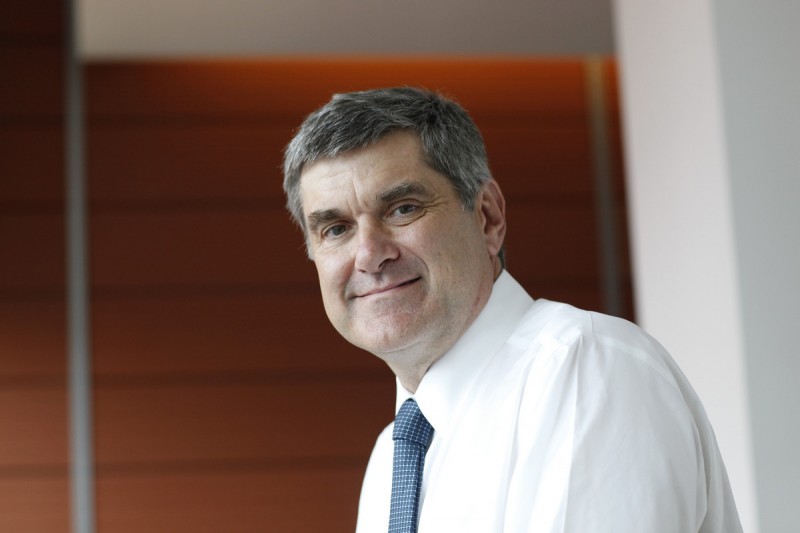
Memorial Sloan Kettering (MSK) Cancer Center’s chief executive, Craig Thompson, has resigned from two boards, Merck and Charles River Laboratories, following investigations of conflicts of interest. Thompson issued a statement about his decision to resign:
“I have taken feedback from our staff and faculty seriously and intend to lead by example. I believe this is the right decision for Memorial Sloan Kettering and will allow me to redouble my focus on MSK priorities: quality patient care, faculty, scientists and staff.”
Sloan Kettering’s chief medical officer, Jose Baselga, was accused of not reporting millions of dollars he received from pharmaceutical companies for his research articles. Baselga previously resigned from Memorial Sloan Kettering as well as Bristol-Myers Squibb, where he served on the board. As one former patient wrote, failing to disclose payments gives “the appearance of influence is troubling. It highlights ineffective oversight, with the potential to cast a shadow on the center’s other excellent doctors.”
When the story first broke, Memorial Sloan Kettering leadership wrote a letter stating, “MSK and our faculty need to do a better job.”
Discussion:
Analyze the MSK letter. Who is the audience, and what are the communication objectives? How do you assess the organization and writing style?
Should Thompson also resign his chief executive position at MSK? Why or why not?
How well does MSK leadership take responsibility for the problems? How is this an issue of integrity for MSK?