
Twitter Layoff Messages
Perhaps the best example of a bad-news message is a layoff memo (below), and Elon Musk’s Twitter email doesn’t disappoint. Just days after the purchase went through and after a deafening silence, the new CEO sent a short message confirming what employees expected.

The email is classic Musk: direct and decisive, without a lot of compassion. He makes the news extra painful by expressing his distrust: cutting people off from offices and systems and reminding people not to share confidential information (which at least one person did by sharing the internal email).
Layoff messages are typically softer, with more specific reasons for the decision, a rationale for who goes and who stays, more gratitude to those leaving, more information about what people can expect, and more optimism about the future of the company. They are also a chance for leaders to demonstrate their own humility and vulnerability. But that’s not Elon Musk. (That describes Brian Chesky, whose Airbnb layoff message—posted publicly—is still one of my favorites.)
The actual layoffs the next day didn’t go much better. “Confusion” prevailed as 50% were laid off, some losing access in the middle of meetings. Now Musk is left with what he called a “massive drop in revenue” and class-action lawsuits from employees.
Team,
In an effort to place Twitter on a healthy path, we will go through the difficult process of reducing our global workforce on Friday. We recognize that this will impact a number of individuals who have made valuable contributions to Twitter, but this action is unfortunately necessary to ensure the company's success moving forward.
Given the nature of our distributed workforce and our desire to inform impacted individuals as quickly as possible, communications for this process will take place via email. By 9AM PST on Friday Nov. 4th, everyone will receive an individual email with the subject line: Your Role at Twitter. Please check your email, including your spam folder.
If your employment is not impacted, you will receive a notification via your Twitter email.
If your employment is impacted, you will receive a notification with next steps via your personal email.
If you do not receive an email from twitter-hr@ by 5PM PST on Friday Nov. 4th, please email xxxxxxxx.
To help ensure the safety of each employee as well as Twitter systems and customer data, our offices will be temporarily closed and all badge access will be suspended. If you are in an office or on your way to an office, please return home.
We acknowledge this is an incredibly challenging experience to go through, whether or not you are impacted. Thank you for continuing to adhere to Twitter policies that prohibit you from discussing confidential company information on social media, with the press or elsewhere.
We are grateful for your contributions to Twitter and for your patience as we move through this process.
Thank you.
Prime Minister's Resignation Speech
After a mere 45 days in office, British Prime Minister Liz Truss resigned. She gave a short speech, giving context about the challenges she faced, the tax plan she enacted, and the agreement for her to resign.
What’s missing is the turmoil that ensued, including how her economic plan rocked the markets. We see little humility and vulnerability, except of course, in the decision to resign—but that hardly seems her choice. She was terribly unpopular, with only 10% approval, the lowest of any PM.
The day before her resignation, Truss faced jeers from House of Commons members. How anyone maintains their composure during such political theater is beyond me. Robin Williams joked, "The House of Commons is like Congress with a two-drink minimum."
I’m all for putting our students in challenging speaking situations, for example, interrupting them or changing the audience or conditions for a planned speech, but this kind of response would rattle anyone. What Truss lacks in humility she makes up for in courage—at least stamina.
Patagonia Letter with Indirect Structure

Using an indirect structure, Patagonia founder Yvon Chouinard wrote an open letter to explain his decision to transfer company ownership to two trusts. One trust is controlled by the family and another, which will have 98% of the stock, is controlled by Holdfast Collective, an organization dedicated to the environment. With these entities, Yvon Chouinard maintains control of the company but donates all profits not reinvested in the company.
Chouinard’s letter illustrates a positive message and demonstrates character, particularly compassion, humility, and integrity. Although the move could be viewed as a marketing ploy, Patagonia’s leadership has a history of taking ethical stances despite the impact on profits; for example, the company has donated 1% of all sales and 100% of sales on Black Friday.
The letter does not follow typical business communication principles, particularly, putting main points up front. Chouinard starts with his personal view, explains options he considered, and then describes the new ownership arrangement. Business communication students can analyze whether this structure works, given the purpose and audience. My view is that it generally works. The letter is short and emphasizes emotional appeal rather than logical argument. If this were written to employees, they might read the beginning and worry about their future. But the audience is the public, who probably already heard the news, so the letter serves more as an explanation than an announcement.
Columbia’s Ranking, Data, and Communication Issues

The news of Columbia University’s tumble in college rankings from 2 to 18 offers business communication lessons for reporting data—and for persuasive arguments. In February 2022, Professor of Mathematics Michael Thaddeus identified discrepancies in how the Columbia reported data for U.S. News’s annual list. His analysis resulted in a persuasive argument with the following main points summarized in the introduction:
In sections 2 through 5, we examine some of the numerical data on students and faculty reported by Columbia to U.S. News—undergraduate class size, percentage of faculty with terminal degrees, percentage of faculty who are full-time, and student-faculty ratio—and compare them with figures computed by other means, drawing on information made public by Columbia elsewhere. In each case, we find discrepancies, sometimes quite large, and always in Columbia’s favor, between the two sets of figures.
In section 6, we consider the financial data underpinning the U.S. News Financial Resources subscore. It is largely based on instructional expenditures, but, as we show, Columbia’s stated instructional expenditures are implausibly large and include a substantial portion of the $1.2 billion that its medical center spends annually on patient care.
Finally, in section 7, we turn to graduation rates and the other “outcome measures” which account for more than one-third of the overall U.S. News ranking. We show that Columbia’s performance on some, perhaps even most, of these measures would plunge if its many transfer students were included.
New reports about Columbia’s fall credit Thaddeus’s analysis. The argument serves as an excellent example for our students, who might also explore their own views about the college rankings. In addition to data integrity, Thaddeus questions the value of these rankings and the influence they have on students’ college choice.
Students can also analyze the university’s response. In a statement posted on September 9, Provost Mary Boyce admitted, “we had previously relied on outdated and/or incorrect methodologies.” She also expressed “regret”:
The Columbia undergraduate experience is and always has been centered around small classes taught by highly accomplished faculty. That fact is unchanged. But anything less than complete accuracy in the data that we report—regardless of the size or the reason—is inconsistent with the standards of excellence to which Columbia holds itself. We deeply regret the deficiencies in our prior reporting and are committed to doing better.
The statement is more about future plans, for example, participating in the Common Data Set initiative, than about acknowledging wrongdoing. A fuller apology, including the impact of the inaccuracies and posted earlier than just days before rankings were published, would have demonstrated more humility and integrity.
Google Employee Petition

Google employees are petitioning for the company to stop collecting abortion-related data. The concern comes after Roe v. Wade was overturned, which could put women who search for abortion services in jeopardy.
Launched in January 2021, Alphabet Workers' Union is driving the petition, now signed by more than 650 employees. The group is asking Google to refrain from turning data about searches and illegal abortions over to authorities, as Facebook did; to omit “misleading ‘pregnancy crisis centers’” in search results, including maps, which often lead to anti-abortion centers; to stop donations and lobbying entirely; and more.
As tech employee activism becomes more prevalent, employees feel more empowered to demonstrate courage. I don’t see the entire petition, but I wonder whether employees are asking for too much, particularly an end to all lobbying and political donations. A more focused, realistic request of actions that show the company’s leadership among tech companies could be more effective.
Although the petition was sent to CEO Sundar Pichai and other executives on Monday, the group hadn’t received a response by Thursday. Company leaders are called on to demonstrate integrity—transparency in communication and consistency with company principles. This is also an opportunity to lead with humility and to show a willingness to be vulnerable because this is a highly sensitive issue with no clear answers. Although a difficult situation to address, leaders must respond, particularly before the story becomes about the lack of response.
Robinhood Layoff Message

Robinhood attracted retail investors during the pandemic but is facing losses as users leave the platform. In Business Communication and Character, I criticized Robinhood’s aggressive marketing tactics to lure inexperienced investors. Now, the company is doing its second round of layoffs: 9% of staff in April and another 23% in August. Lucky for us, the message to staff is posted on the Robinhood blog—a smart move because notes like are typically leaked, anyway.
Overall, CEO Vlad Tenev’s message meets criteria for bad-news communications. The main point is upfront, as I suggest for layoff messages because employees should know the news already. According to this message, they do: Tenev refers to All-Hands meetings before and after the written message. We get the sense that internal communication has been ongoing and that decisions have been transparent.
The message tells employees what’s next and that they will hear the news quickly: “Everyone will receive an email and a Slack message with your status—with resources and support if you are leaving. We’re sending everyone a message immediately after this meeting so you don’t have to wait for clarity.” The better approach would be individual, in-person (or Zoom) meetings, but this isn’t always practical.
Tenev described part of the reasons for the reductions but omitted a recent $30 million fine and increased regulatory pressure. Yet he demonstrated accountability and humility by admitting bad decisions. He wrote, “As CEO, I approved and took responsibility for our ambitious staffing trajectory—this is on me.” In addition, on a press call, Tenev admitted, “The reality is that we over-hired, in particular in some of our support functions.”
Tenev also demonstrated compassion. He sounds human, saying goodbye to people who will leave and encouraging people who will stay, without being too positive, which could be off-putting.
In sum, this isn’t the best layoff message example we have, but it’s certainly not the worst. I would share this with students as a positive example.
Blame Game for United Airlines

United Airlines CEO Scott Kirby apologized for blaming regulators for contributing to the airline’s flight delays. In a memo to employees, COO Jonathan Roitman, who has been removed from his role, indicated that FAA actions caused half of the delays:
“We estimate that over 50% of our delay minutes and 75% of our cancels in the past four months were because of FAA traffic management initiatives—those have been particularly acute in Newark and Florida. These ATC challenges can not only disrupt the schedule, but they also cause us to burn crew time throughout the month.”
The FAA responded by blaming the airline for mismanaging operations during weather conditions. After that, on an earnings call, Kirby said, “I apologized to [Transportation Secretary Pete] Buttigieg because that is not what we intended.”
All this comes after Buttigieg criticized the airlines for cancelling flights and not offering refunds. This is a complicated issue, likely caused by several factors, including staffing issues on both sides. Although Kirby didn’t take full responsibility, he demonstrated some humility and vulnerability in admitting that attacking regulators is not a useful argument, particularly when an internal memo goes public, which is always to be expected.
TikTok Announces Security Officer Change

Following pressure from U.S. lawmakers to increase security, TikTok announced a new Global Chief Security Officer, although the company denies a connection between data concerns and the decision. The company statement is unusual in that it’s written by the outgoing officer, Roland Cloutier. It’s not until the penultimate paragraph of the statement, in a section labeled, “A Message from TikTok CEO Shou Zi Chew and ByteDance VP of Technology Dingkun Hong,” that Kim Albarella is announced as the interim head.
Cloutier will stay on in a “strategic advisory role,” and Albarella’s position is interim, but still, similar leader change announcements tend to have the main voice as the CEO or board chair with quotes from outgoing leaders. This approach could reflect TikTok’s organizational structure—being owned by ByteDance, a Chinese multinational company, which is causing particular alarm about data security.
The announcement is a public post from an internal message to employees, in which case, having Cloutier author the statement may make sense. Still, we read very little about Albarella, and I wonder why that is. Overall, the message focuses much more on past accomplishments than future plans, and Cloutier writes nothing about her at all.
New Uber Document Leaks

Internal Uber documents from 2013 - 2017 prove what many have thought about the company under the leadership of founder and former CEO Travis Kalanick. More than 124,000 illustrate how Uber, according to a Guardian article, “louted laws, duped police, exploited violence against drivers and secretly lobbied governments during its aggressive global expansion.” Company executives admitted to acting like “pirates.” One wrote, “We’re just f—ing illegal.”
In Building Leadership Character, I profiled Kalanick’s leadership as a example of failing humility. As a dimension of character, humility is being “rightsized”—believing you’re neither below nor above others. Bragging about skirting the law is an obvious illustration of a lack of humility.
A spokesperson for Kalanick responded to what is called the “Uber files.” The message itself demonstrates failing humility, including an inability to learn from mistakes. (Of course Kalanick may face legal in addition to image challenges.) Instead of taking responsibility, the spokesperson questions the authenticity of the documents and tries to distance Kalanick from them:
In pressing its false agenda that Mr Kalanick directed illegal or improper conduct, the ICIJ [International Consortium of Investigative Journalists] claims to have documents that Mr Kalanick was on or even authored, some of which are almost a decade old.
As a crisis communication strategy, distancing is often effective. Uber employs the same strategy in its statement, for example, “When we say Uber is a different company today, we mean it literally: 90 percent of current Uber employees joined after Dara became CEO.” The company admits mistakes and uses that fact as the impetus for change: “It’s also exactly why Uber hired a new CEO, Dara Khosrowshahi, who was tasked with transforming every aspect of how Uber operates.”
Business communication students can analyze both responses as crisis and persuasive communications. Which is more effective in restoring image?
Business Communication and Character Lessons from Jan. 6 Hearings
Not every faculty member will want to talk about the United States House Select Committee hearings about the January 6, 2021, attack on the capitol. At the time, some public school teachers were instructed not to “wade into” the events. But for faculty who are willing to take a degree of risk, the hearings serve as excellent illustrations of business communication principles and leadership character dimensions. Following are a few examples.
BUSINESS COMMUNICATION
Media Choice: The committee chooses different media for different purposes. Students can evaluate why they might have chosen text, interviews, scripts, live or recorded witness testimony, video, etc. and how effective each is for the purpose.

Delivery Style: Committee representatives and witnesses demonstrate a variety of delivery styles. Some are more natural/conversational or scripted than others. What is the impact of William Barr’s use of a profanity (“b—s—”)?
Claims and Evidence: The committee uses a variety of evidence to prove their claims about former President Trump’s role in trying to overturn the election. For example, the fourth hearing describes voting data in Georgia and Arizona. Students could evaluate, for any of the seven claims, which evidence was strongest and weakest. We also see examples of balancing emotional appeal (for example, Ruby Freeman’s and Shaye Moss’s testimony in the fourth hearing), logical arguments (for example, the testimony in the second hearing about laws and constitutional restrictions on former Vice President Pence’s ability to refuse to certify votes), and credibility (for example, the committee shows a link for viewers to see witness bios online). See a summary of evidence here.
Organization: The committee is trying to prove that former President Trump had a seven-part plan (listed below) to overturn the election. The points are written using message titles (or talking headings) and serve as the committee’s claims. At the beginning of each hearing, committee leaders preview the claim and evidence.
Q&A: Although some of the questions are clearly scripted, students can analyze types of questions asked and how witnesses respond. They may find notable differences between recorded and live testimony.
Email Privacy: Once again, we learn the lesson that emails, text messages, and voicemails may be made public during legal investigations; any communication is discoverable.
CHARACTER
Vulnerability: Several witnesses demonstrate vulnerability; they risk emotional exposure in addition to the targeting and harassment they already experienced.
Humility: We see former President Trump’s lack of humility in his unwillingness to accept failure or defeat.
Compassion: Committee members are compassionate when interacting with witnesses, although we see minimal emotion.
Integrity: The committee contrasts integrity of witnesses with that of former President Trump.
Courage: By participating on the committee, Republican members risk backlash from colleagues and constituents; witnesses demonstrate courage by contradicting former President Trump’s claims and, in some cases, his demands.
Accountability: Witnesses stand by their decisions, for example, in refusing to overturn election results.
Authenticity: Some witnesses and committee members come across as more “genuine” than others.
Here are the committee’s main claims:
Trump attempted to convince Americans that significant levels of fraud had stolen the election from him despite knowing that he had, in fact, lost the 2020 election:
1. Trump had knowledge that he lost the 2020 election, but spread misinformation to the American public and made false statements claiming significant voter fraud led to his defeat;
2. Trump planned to remove and replace the Attorney General and Justice Department officials in an effort to force the DOJ to support false allegations of election fraud;
3. Trump pressured Vice President Pence to refuse certified electoral votes in the official count on January 6th, in violation of the U.S. Constitution;
4. Trump pressured state lawmakers and election officials to alter election results in his favor;
5. Trump’s legal team and associates directed Republicans in seven states to produce and send fake "alternate" electoral slates to Congress and the National Archives;
6. Trump summoned and assembled a destructive mob in Washington and sent them to march on the U.S. Capitol; and
7. Trump ignored multiple requests to speak out in real-time against the mob violence, refused to instruct his supporters to disband and failed to take any immediate actions to halt attacks on the Capitol.
Elon Musk's Harsh Emails
Elon Musk wants employees to work in the office, and he doesn’t waste words in getting his message across. In two emails, below, to Tesla and SpaceX employees, Musk requires at least 40 hours of work in a company main office.
First email:
Subject: Remote work is no longer acceptble [sic]
Anyone who wishes to do remote work must be in the office for a minimum (and I mean *minimum*) of 40 hours per week or depart Tesla. This is less than we ask of factory workers.
If there are particularly exceptional contributors for whom this is impossible, I will review and approve those exceptions directly.
Moreover, the “office” must be a main Tesla office, not a remote branch office unrelated to the job duties, for example being responsible for Fremont factory human relations, but having your office be in another state.
Thanks,
Elon
Second email:
Subject: To be super clear
Everyone at Tesla is required to spend a minimum of 40 hours in the office per week. Moreover, the office must be where your actual colleagues are located, not some remote pseudo office. If you don’t show up, we will assume you have resigned.
The more senior you are, the more visible must be your presence. That is why I lived in the factory so much – so that those on the line could see me working alongside them. If I had not done that, Tesla would long ago have gone bankrupt.
There are of course companies that don’t require this, but when was the last time they shipped a great new product? It’s been a while.
Tesla has and will create and actually manufacture the most exciting and meaningful products of any company on Earth. This will not happen by phoning it in.
Thanks,
Elon///
In case it wasn’t clear, Musk tweeted consequences for employees who fail to follow his rules: “They should pretend to work somewhere else.” Musk is known for being demanding and direct. I refer to his emails as “harsh,” but not everyone will agree.
Musk has reasons for his decision, but he doesn’t include them. His strategy is coercion (implied, and then explicit in his tweet). He will get compliance, but I wonder how motivated and satisfied employees will be to work long hours in an office after having the flexibility to work from home.
Walmart Apologizes for Commercializing Juneteenth

Walmart is facing backlash for using the Juneteenth holiday to market its products. The new U.S. federal holiday on June 19 commemorates the emancipation of enslaved African-Americans. Walmart took the opportunity to promote clothing, books, and food.
A particularly painful example is a container of red-velvet ice cream showing the Pan-African flag with the text, “Share and celebrate African-American culture, emancipation, and enduring hope.” Twitter users point to a similar ice cream at the Black-owned company Creamalicious. As one Twitter user wrote, “Walmart could have used this opportunity to highlight this brand instead of making a cheap copycat for OUR Independence Day.”
Walmart published a statement to several news organizations:
"Juneteenth holiday marks a commemoration and celebration of freedom and independence. However, we received feedback that a few items caused concern for some of our customers and we sincerely apologize. We are reviewing our assortment and will remove items as appropriate."
Does the statement meet criteria for a “good” apology: express regret, explain what went wrong, acknowledge responsibility, declare repentance, offer reparation, and request forgiveness? I would say only minimally. It does use the word “apologize,” acknowledge what went wrong, and promise to take action, but the statement doesn’t identify why the promotion might “cause concern.” Notice a glaring logical leap between the first and second sentences. Leaders could demonstrate more humility and accountability by explaining how the decision fell short and what damage it caused.
What New Grads Want

A Wall Street Journal article raises questions about how employers communicate jobs and whether new grads are realistic. The survey results of this graduating class are not surprising, for example, that they want to move up quickly. For as long as I remember, young, new hires have expected to advance in an organization as they have advanced through their school years. This study revealed that “40% of respondents want to earn a promotion in their first year on the job,” and the author suggests ways for employers to sell promotion opportunities during the interview process and on its website. But that percentage of students will not advance as quickly as they hope: the organization chart narrows at the top.
Two other results are mildly interesting: that 80% of students want to work in the office, and that they want to feel that they belong at work—that they can be themselves. Both make sense considering that this group was isolated during the pandemic and spent some of their precious college time alone.
Career management offices may need to counsel students to prioritize what is most important to them. For example, they may need to sacrifice upward mobility for a supportive, inclusive work environment. This, too, is nothing new.
McKinsey Testifies About Role in Opioid Crisis
McKinsey’s managing partner testified about what the U.S. Oversight Committee considers a conflict of interest and issue of integrity: consultants worked for drug manufacturers like Purdue Pharma while working for the federal government. Several communication examples illustrate business communication principles:
The Committee’s full report, a 53-page analysis of the situation
The Committee’s press release about the hearing, which includes a summary of the report
Both persuasive communication examples use descriptive message titles throughout the report and provide evidence under each claim. The claims (main points) focus on McKinsey’s questionable actions, particularly how its private and public work may have influenced the other and how the company may have failed to disclose conflicts of interest.
Testimony during the hearing also illustrates persuasion communication. Here are two examples:
Jessica Tillipman, Assistant Dean for Government Procurement Law Studies, George Washington University Law School
Bob Sternfels, Global Managing Partner, McKinsey & Company
In addition to integrity, as Carolyn B. Maloney said in her opening, this situation is also about accountability and humility. Of course, compassion is a subcurrent throughout, with several impassioned comments about the toll of opioids, including Fentanyl.
Will Smith's Apology
The 2022 Academy Awards ceremony was eventful, with Chris Rock referencing Jada Smith’s appearance and her husband, Will Smith, hitting Rock on stage. Jada Smith has spoken openly about having alopecia, a hair loss condition. Rock’s joke clearly hit a nerve with her husband.
From the audience, Smith cursed at Rock, who continued with his presentation. Later, Smith gave a tearful acceptance speech for Best Actor in a Leading Role, comparing himself to the character he played, Serena and Venus Williams’ father: they both protected their family. He apologized to his fellow nominees and the Academy but not to Rock. The next day, he posted a fuller apology on Instagram, mentioning Rock first.
The Academy tweeted a pat response, “The Academy does not condone violence of any form. Tonight we are delighted to celebrate our 94th Academy Awards winners, who deserve this moment of recognition from their peers and movie lovers around the world.” I don’t see any response from Rock yet.
The rest of the ceremony was awkward, and host Amy Schumer made a joke, “Did I miss something? There's like, a different vibe in here....” Her idea was probably to call out what was obvious.
Everyone seems to have an opinion on the situation. Was Rock’s joke about “G.I. Jane 2” over the top? Was Smith’s response appropriate? Should he have been prevented from speaking after that point? Should the Academy do more?
The situation is complex and calls us to explore issues of character, for example, compassion, courage, authenticity, accountability, and vulnerability.
Confusing Airbnb Message


Informational messages should be straightforward, but Airbnb sent one that confused hosts and former hosts. I received this email about taxes with the subject, “Action required: Provide missing taxpayer info.” The tone is threatening, and I wasn’t sure whether this applied to my recent international booking or a remnant from my hosting days, although I stopped in 2018.
Apparently, I wasn’t alone. Within two days, I received the second message, “Clarification regarding taxpayer information request.”
My guess is that the message inadvertently went to people who are no longer hosting. The second message could have admitted the mistake but didn’t. Instead of demonstrating accountability and humility, the author wrote, “We wanted to clarify that this action is not required for everyone.”
Doodle Explains Outage

Doodle, the meeting scheduler, gives us a good example of a bad-news message. In this short email, CEO Renato Profico apologizes and explains a recent outage. Having Profico craft the message with an apology that doesn’t deflect blame demonstrates accountability.
I would suggest two changes to the message. I would have liked for Profico to acknowledge the impact on users—how it may have affected them. Also, I note a couple of grammatical errors and hope that business communication students can spot them.
Advice for Resignation Emails

A Wall Street Journal article suggests ways to resign from your job gracefully. With a wave of post-pandemic departures, we’re seeing all sorts of resignation messages, some more appropriate than others. The string of emails can be disheartening for people who decide to stay, and leavers should be mindful of burning bridges they may want to walk across in the future.
A law career coach advises that people “Let it rip. Let everything out”—in a document that you don’t send. Then, send an email that respects the workplace and the people you’ll leave behind:
“For the real deal, be gracious and express gratitude. Include up to three career highlights. (Any more and you risk being seen as a braggart.) And skip the passive-aggressive jabs.”
I hadn’t thought about including career highlights, and I wonder whether coworkers would appreciate reading them. Instead, I suggest observing what other resignation emails include and following suit. Every workplace has its own norms around these types of messages.
I do agree with this advice:
“By giving your notice, ‘the power dynamic has been leveled.’ Use that new sense of control and confidence to share more authentically about yourself, not torpedo your relationships on the way out the door.”
The coach is right: you made your decision and are burdening your manager and coworkers who will pick up the slack. Now’s the time to demonstrate humility instead of rubbing it in and causing more hurt feelings.
Peloton's New Ad Campaign

Peloton is trying for a comeback with a new ad campaign. After losing market share, market value, a CEO, a couple of fictional characters, and about 2,800 jobs, the company needs a boost, but the latest campaign feels, to me, defensive and, dare I say, desperate.
Ads quote negative views of the company and counter with positive quotes, presumably from people who have been converted. For persuasive communication, research supports acknowledging opposing sides, even hostile points of view, and then arguing against them. But the counter-quotes in these ads represent one person’s opinion and may not provide enough evidence to outweigh the introductory quote, which seems to represent many.
I also wonder whether Peloton—without providing more evidence—might inadvertently reinforce negative perceptions of the company and products. Introductory quotes refer to Peloton as a fad, a cult, elitist, a scam, an easy workout, and an overpriced coatrack. These are all good reasons for me to never buy a Peloton.
The ads seem to disregard real challenges. The quotes represent good feedback for company leaders who, in response, defend rather than try to change the brand.
Encouraging Humility
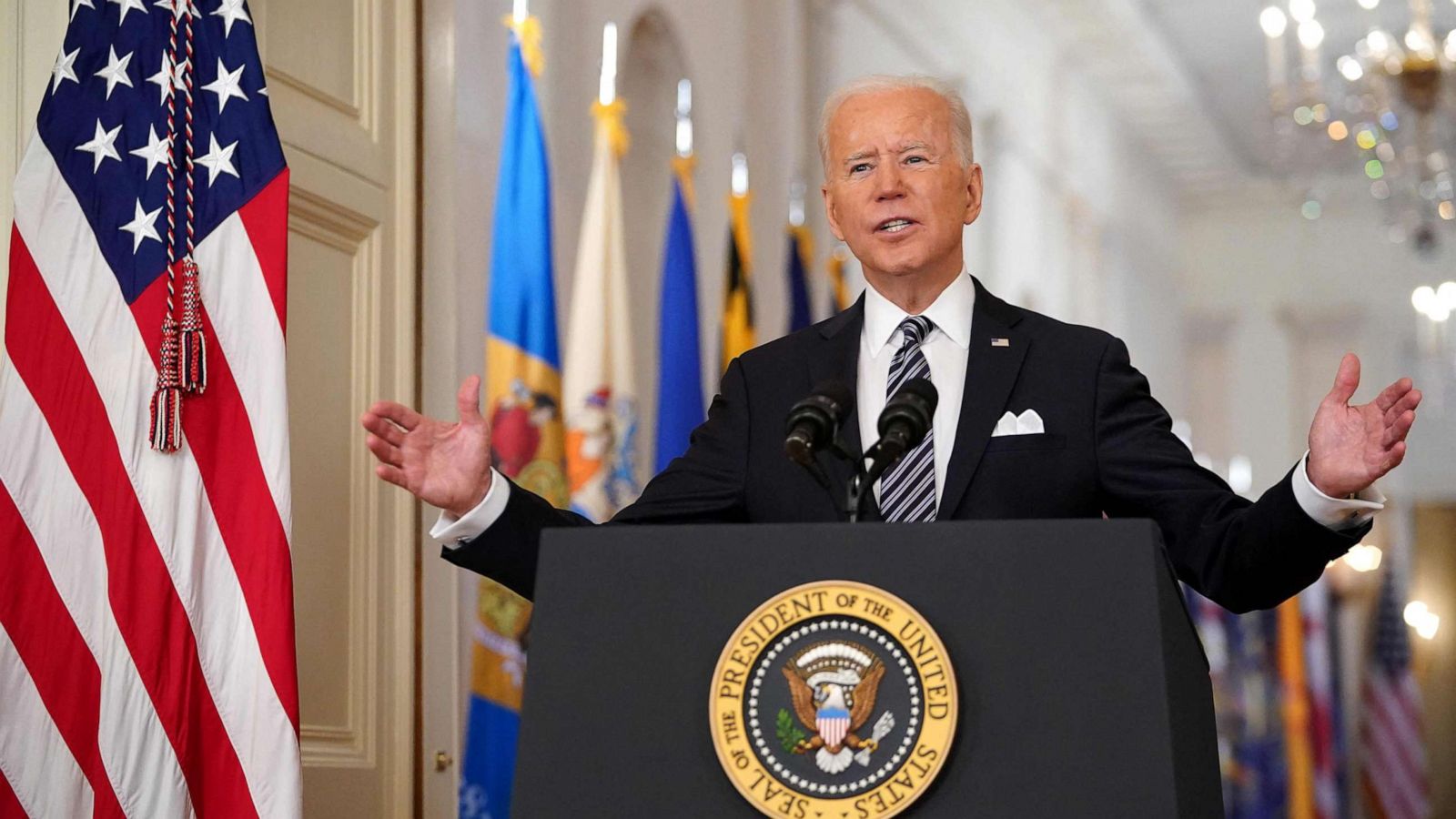
David Axelrod, a New York Times opinion writer, weighs in on President Biden’s first State of the Union address, scheduled for March 1. The article, “Mr. President, It’s Time for a Little Humility,” criticizes the president’s previous news conference in which he “energetically sold a litany of achievements” without acknowledging “grinding concerns that have soured the mood of the country.”
In addition to humility, which is defined at recognizing one’s own and others’ limitations, Alexrod is encouraging compassion—caring for yourself and others. He makes good arguments for being positive, while avoiding a “doom and gloom” speech like one of President Carter’s.
Getting the balance right will be difficult. The president needs to remind people of his successes to inspire reelection, while being honest about COVID deaths, the decline of mental health, and economic challenges. As Alexrod says, “Now, he needs to find that voice by telling the story of the ordeal so many Americans have shared, honoring their resilience and painting a credible, realistic picture of how we can all reclaim control of our lives.”
We’ll see how President Biden does. Multiple speech writers will wordsmith his address. But as business communicators know, how the speech is received depends on the president’s delivery as well as his words. I’m curious how much of the president’s genuine self we’ll see—his authenticity.