
TikTok Announces Security Officer Change

Following pressure from U.S. lawmakers to increase security, TikTok announced a new Global Chief Security Officer, although the company denies a connection between data concerns and the decision. The company statement is unusual in that it’s written by the outgoing officer, Roland Cloutier. It’s not until the penultimate paragraph of the statement, in a section labeled, “A Message from TikTok CEO Shou Zi Chew and ByteDance VP of Technology Dingkun Hong,” that Kim Albarella is announced as the interim head.
Cloutier will stay on in a “strategic advisory role,” and Albarella’s position is interim, but still, similar leader change announcements tend to have the main voice as the CEO or board chair with quotes from outgoing leaders. This approach could reflect TikTok’s organizational structure—being owned by ByteDance, a Chinese multinational company, which is causing particular alarm about data security.
The announcement is a public post from an internal message to employees, in which case, having Cloutier author the statement may make sense. Still, we read very little about Albarella, and I wonder why that is. Overall, the message focuses much more on past accomplishments than future plans, and Cloutier writes nothing about her at all.
New Uber Document Leaks

Internal Uber documents from 2013 - 2017 prove what many have thought about the company under the leadership of founder and former CEO Travis Kalanick. More than 124,000 illustrate how Uber, according to a Guardian article, “louted laws, duped police, exploited violence against drivers and secretly lobbied governments during its aggressive global expansion.” Company executives admitted to acting like “pirates.” One wrote, “We’re just f—ing illegal.”
In Building Leadership Character, I profiled Kalanick’s leadership as a example of failing humility. As a dimension of character, humility is being “rightsized”—believing you’re neither below nor above others. Bragging about skirting the law is an obvious illustration of a lack of humility.
A spokesperson for Kalanick responded to what is called the “Uber files.” The message itself demonstrates failing humility, including an inability to learn from mistakes. (Of course Kalanick may face legal in addition to image challenges.) Instead of taking responsibility, the spokesperson questions the authenticity of the documents and tries to distance Kalanick from them:
In pressing its false agenda that Mr Kalanick directed illegal or improper conduct, the ICIJ [International Consortium of Investigative Journalists] claims to have documents that Mr Kalanick was on or even authored, some of which are almost a decade old.
As a crisis communication strategy, distancing is often effective. Uber employs the same strategy in its statement, for example, “When we say Uber is a different company today, we mean it literally: 90 percent of current Uber employees joined after Dara became CEO.” The company admits mistakes and uses that fact as the impetus for change: “It’s also exactly why Uber hired a new CEO, Dara Khosrowshahi, who was tasked with transforming every aspect of how Uber operates.”
Business communication students can analyze both responses as crisis and persuasive communications. Which is more effective in restoring image?
Business Communication and Character Lessons from Jan. 6 Hearings
Not every faculty member will want to talk about the United States House Select Committee hearings about the January 6, 2021, attack on the capitol. At the time, some public school teachers were instructed not to “wade into” the events. But for faculty who are willing to take a degree of risk, the hearings serve as excellent illustrations of business communication principles and leadership character dimensions. Following are a few examples.
BUSINESS COMMUNICATION
Media Choice: The committee chooses different media for different purposes. Students can evaluate why they might have chosen text, interviews, scripts, live or recorded witness testimony, video, etc. and how effective each is for the purpose.

Delivery Style: Committee representatives and witnesses demonstrate a variety of delivery styles. Some are more natural/conversational or scripted than others. What is the impact of William Barr’s use of a profanity (“b—s—”)?
Claims and Evidence: The committee uses a variety of evidence to prove their claims about former President Trump’s role in trying to overturn the election. For example, the fourth hearing describes voting data in Georgia and Arizona. Students could evaluate, for any of the seven claims, which evidence was strongest and weakest. We also see examples of balancing emotional appeal (for example, Ruby Freeman’s and Shaye Moss’s testimony in the fourth hearing), logical arguments (for example, the testimony in the second hearing about laws and constitutional restrictions on former Vice President Pence’s ability to refuse to certify votes), and credibility (for example, the committee shows a link for viewers to see witness bios online). See a summary of evidence here.
Organization: The committee is trying to prove that former President Trump had a seven-part plan (listed below) to overturn the election. The points are written using message titles (or talking headings) and serve as the committee’s claims. At the beginning of each hearing, committee leaders preview the claim and evidence.
Q&A: Although some of the questions are clearly scripted, students can analyze types of questions asked and how witnesses respond. They may find notable differences between recorded and live testimony.
Email Privacy: Once again, we learn the lesson that emails, text messages, and voicemails may be made public during legal investigations; any communication is discoverable.
CHARACTER
Vulnerability: Several witnesses demonstrate vulnerability; they risk emotional exposure in addition to the targeting and harassment they already experienced.
Humility: We see former President Trump’s lack of humility in his unwillingness to accept failure or defeat.
Compassion: Committee members are compassionate when interacting with witnesses, although we see minimal emotion.
Integrity: The committee contrasts integrity of witnesses with that of former President Trump.
Courage: By participating on the committee, Republican members risk backlash from colleagues and constituents; witnesses demonstrate courage by contradicting former President Trump’s claims and, in some cases, his demands.
Accountability: Witnesses stand by their decisions, for example, in refusing to overturn election results.
Authenticity: Some witnesses and committee members come across as more “genuine” than others.
Here are the committee’s main claims:
Trump attempted to convince Americans that significant levels of fraud had stolen the election from him despite knowing that he had, in fact, lost the 2020 election:
1. Trump had knowledge that he lost the 2020 election, but spread misinformation to the American public and made false statements claiming significant voter fraud led to his defeat;
2. Trump planned to remove and replace the Attorney General and Justice Department officials in an effort to force the DOJ to support false allegations of election fraud;
3. Trump pressured Vice President Pence to refuse certified electoral votes in the official count on January 6th, in violation of the U.S. Constitution;
4. Trump pressured state lawmakers and election officials to alter election results in his favor;
5. Trump’s legal team and associates directed Republicans in seven states to produce and send fake "alternate" electoral slates to Congress and the National Archives;
6. Trump summoned and assembled a destructive mob in Washington and sent them to march on the U.S. Capitol; and
7. Trump ignored multiple requests to speak out in real-time against the mob violence, refused to instruct his supporters to disband and failed to take any immediate actions to halt attacks on the Capitol.
Elon Musk's Harsh Emails
Elon Musk wants employees to work in the office, and he doesn’t waste words in getting his message across. In two emails, below, to Tesla and SpaceX employees, Musk requires at least 40 hours of work in a company main office.
First email:
Subject: Remote work is no longer acceptble [sic]
Anyone who wishes to do remote work must be in the office for a minimum (and I mean *minimum*) of 40 hours per week or depart Tesla. This is less than we ask of factory workers.
If there are particularly exceptional contributors for whom this is impossible, I will review and approve those exceptions directly.
Moreover, the “office” must be a main Tesla office, not a remote branch office unrelated to the job duties, for example being responsible for Fremont factory human relations, but having your office be in another state.
Thanks,
Elon
Second email:
Subject: To be super clear
Everyone at Tesla is required to spend a minimum of 40 hours in the office per week. Moreover, the office must be where your actual colleagues are located, not some remote pseudo office. If you don’t show up, we will assume you have resigned.
The more senior you are, the more visible must be your presence. That is why I lived in the factory so much – so that those on the line could see me working alongside them. If I had not done that, Tesla would long ago have gone bankrupt.
There are of course companies that don’t require this, but when was the last time they shipped a great new product? It’s been a while.
Tesla has and will create and actually manufacture the most exciting and meaningful products of any company on Earth. This will not happen by phoning it in.
Thanks,
Elon///
In case it wasn’t clear, Musk tweeted consequences for employees who fail to follow his rules: “They should pretend to work somewhere else.” Musk is known for being demanding and direct. I refer to his emails as “harsh,” but not everyone will agree.
Musk has reasons for his decision, but he doesn’t include them. His strategy is coercion (implied, and then explicit in his tweet). He will get compliance, but I wonder how motivated and satisfied employees will be to work long hours in an office after having the flexibility to work from home.
Walmart Apologizes for Commercializing Juneteenth

Walmart is facing backlash for using the Juneteenth holiday to market its products. The new U.S. federal holiday on June 19 commemorates the emancipation of enslaved African-Americans. Walmart took the opportunity to promote clothing, books, and food.
A particularly painful example is a container of red-velvet ice cream showing the Pan-African flag with the text, “Share and celebrate African-American culture, emancipation, and enduring hope.” Twitter users point to a similar ice cream at the Black-owned company Creamalicious. As one Twitter user wrote, “Walmart could have used this opportunity to highlight this brand instead of making a cheap copycat for OUR Independence Day.”
Walmart published a statement to several news organizations:
"Juneteenth holiday marks a commemoration and celebration of freedom and independence. However, we received feedback that a few items caused concern for some of our customers and we sincerely apologize. We are reviewing our assortment and will remove items as appropriate."
Does the statement meet criteria for a “good” apology: express regret, explain what went wrong, acknowledge responsibility, declare repentance, offer reparation, and request forgiveness? I would say only minimally. It does use the word “apologize,” acknowledge what went wrong, and promise to take action, but the statement doesn’t identify why the promotion might “cause concern.” Notice a glaring logical leap between the first and second sentences. Leaders could demonstrate more humility and accountability by explaining how the decision fell short and what damage it caused.
What New Grads Want

A Wall Street Journal article raises questions about how employers communicate jobs and whether new grads are realistic. The survey results of this graduating class are not surprising, for example, that they want to move up quickly. For as long as I remember, young, new hires have expected to advance in an organization as they have advanced through their school years. This study revealed that “40% of respondents want to earn a promotion in their first year on the job,” and the author suggests ways for employers to sell promotion opportunities during the interview process and on its website. But that percentage of students will not advance as quickly as they hope: the organization chart narrows at the top.
Two other results are mildly interesting: that 80% of students want to work in the office, and that they want to feel that they belong at work—that they can be themselves. Both make sense considering that this group was isolated during the pandemic and spent some of their precious college time alone.
Career management offices may need to counsel students to prioritize what is most important to them. For example, they may need to sacrifice upward mobility for a supportive, inclusive work environment. This, too, is nothing new.
McKinsey Testifies About Role in Opioid Crisis
McKinsey’s managing partner testified about what the U.S. Oversight Committee considers a conflict of interest and issue of integrity: consultants worked for drug manufacturers like Purdue Pharma while working for the federal government. Several communication examples illustrate business communication principles:
The Committee’s full report, a 53-page analysis of the situation
The Committee’s press release about the hearing, which includes a summary of the report
Both persuasive communication examples use descriptive message titles throughout the report and provide evidence under each claim. The claims (main points) focus on McKinsey’s questionable actions, particularly how its private and public work may have influenced the other and how the company may have failed to disclose conflicts of interest.
Testimony during the hearing also illustrates persuasion communication. Here are two examples:
Jessica Tillipman, Assistant Dean for Government Procurement Law Studies, George Washington University Law School
Bob Sternfels, Global Managing Partner, McKinsey & Company
In addition to integrity, as Carolyn B. Maloney said in her opening, this situation is also about accountability and humility. Of course, compassion is a subcurrent throughout, with several impassioned comments about the toll of opioids, including Fentanyl.
Will Smith's Apology
The 2022 Academy Awards ceremony was eventful, with Chris Rock referencing Jada Smith’s appearance and her husband, Will Smith, hitting Rock on stage. Jada Smith has spoken openly about having alopecia, a hair loss condition. Rock’s joke clearly hit a nerve with her husband.
From the audience, Smith cursed at Rock, who continued with his presentation. Later, Smith gave a tearful acceptance speech for Best Actor in a Leading Role, comparing himself to the character he played, Serena and Venus Williams’ father: they both protected their family. He apologized to his fellow nominees and the Academy but not to Rock. The next day, he posted a fuller apology on Instagram, mentioning Rock first.
The Academy tweeted a pat response, “The Academy does not condone violence of any form. Tonight we are delighted to celebrate our 94th Academy Awards winners, who deserve this moment of recognition from their peers and movie lovers around the world.” I don’t see any response from Rock yet.
The rest of the ceremony was awkward, and host Amy Schumer made a joke, “Did I miss something? There's like, a different vibe in here....” Her idea was probably to call out what was obvious.
Everyone seems to have an opinion on the situation. Was Rock’s joke about “G.I. Jane 2” over the top? Was Smith’s response appropriate? Should he have been prevented from speaking after that point? Should the Academy do more?
The situation is complex and calls us to explore issues of character, for example, compassion, courage, authenticity, accountability, and vulnerability.
Confusing Airbnb Message


Informational messages should be straightforward, but Airbnb sent one that confused hosts and former hosts. I received this email about taxes with the subject, “Action required: Provide missing taxpayer info.” The tone is threatening, and I wasn’t sure whether this applied to my recent international booking or a remnant from my hosting days, although I stopped in 2018.
Apparently, I wasn’t alone. Within two days, I received the second message, “Clarification regarding taxpayer information request.”
My guess is that the message inadvertently went to people who are no longer hosting. The second message could have admitted the mistake but didn’t. Instead of demonstrating accountability and humility, the author wrote, “We wanted to clarify that this action is not required for everyone.”
Doodle Explains Outage

Doodle, the meeting scheduler, gives us a good example of a bad-news message. In this short email, CEO Renato Profico apologizes and explains a recent outage. Having Profico craft the message with an apology that doesn’t deflect blame demonstrates accountability.
I would suggest two changes to the message. I would have liked for Profico to acknowledge the impact on users—how it may have affected them. Also, I note a couple of grammatical errors and hope that business communication students can spot them.
Advice for Resignation Emails

A Wall Street Journal article suggests ways to resign from your job gracefully. With a wave of post-pandemic departures, we’re seeing all sorts of resignation messages, some more appropriate than others. The string of emails can be disheartening for people who decide to stay, and leavers should be mindful of burning bridges they may want to walk across in the future.
A law career coach advises that people “Let it rip. Let everything out”—in a document that you don’t send. Then, send an email that respects the workplace and the people you’ll leave behind:
“For the real deal, be gracious and express gratitude. Include up to three career highlights. (Any more and you risk being seen as a braggart.) And skip the passive-aggressive jabs.”
I hadn’t thought about including career highlights, and I wonder whether coworkers would appreciate reading them. Instead, I suggest observing what other resignation emails include and following suit. Every workplace has its own norms around these types of messages.
I do agree with this advice:
“By giving your notice, ‘the power dynamic has been leveled.’ Use that new sense of control and confidence to share more authentically about yourself, not torpedo your relationships on the way out the door.”
The coach is right: you made your decision and are burdening your manager and coworkers who will pick up the slack. Now’s the time to demonstrate humility instead of rubbing it in and causing more hurt feelings.
Peloton's New Ad Campaign

Peloton is trying for a comeback with a new ad campaign. After losing market share, market value, a CEO, a couple of fictional characters, and about 2,800 jobs, the company needs a boost, but the latest campaign feels, to me, defensive and, dare I say, desperate.
Ads quote negative views of the company and counter with positive quotes, presumably from people who have been converted. For persuasive communication, research supports acknowledging opposing sides, even hostile points of view, and then arguing against them. But the counter-quotes in these ads represent one person’s opinion and may not provide enough evidence to outweigh the introductory quote, which seems to represent many.
I also wonder whether Peloton—without providing more evidence—might inadvertently reinforce negative perceptions of the company and products. Introductory quotes refer to Peloton as a fad, a cult, elitist, a scam, an easy workout, and an overpriced coatrack. These are all good reasons for me to never buy a Peloton.
The ads seem to disregard real challenges. The quotes represent good feedback for company leaders who, in response, defend rather than try to change the brand.
Encouraging Humility
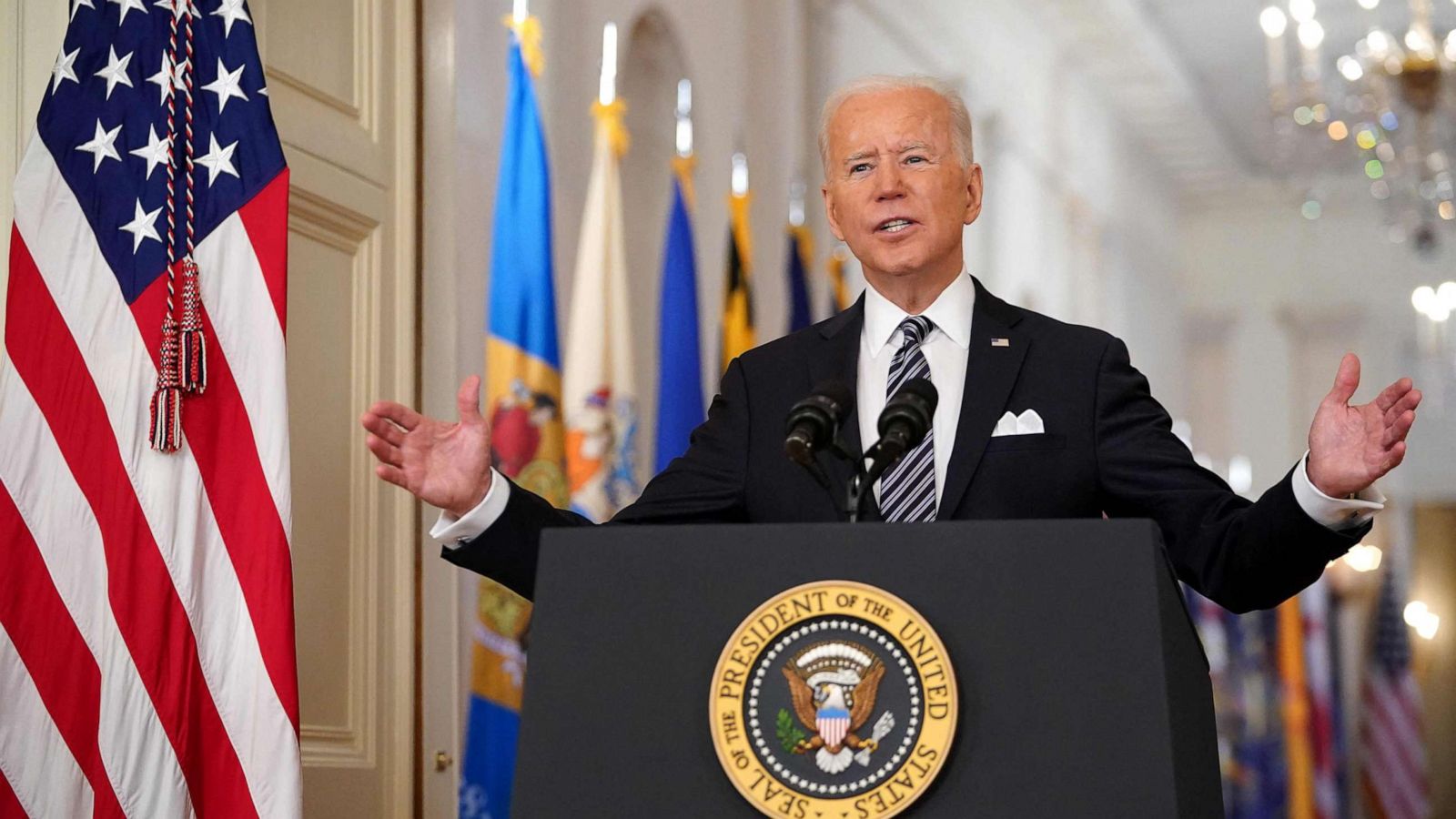
David Axelrod, a New York Times opinion writer, weighs in on President Biden’s first State of the Union address, scheduled for March 1. The article, “Mr. President, It’s Time for a Little Humility,” criticizes the president’s previous news conference in which he “energetically sold a litany of achievements” without acknowledging “grinding concerns that have soured the mood of the country.”
In addition to humility, which is defined at recognizing one’s own and others’ limitations, Alexrod is encouraging compassion—caring for yourself and others. He makes good arguments for being positive, while avoiding a “doom and gloom” speech like one of President Carter’s.
Getting the balance right will be difficult. The president needs to remind people of his successes to inspire reelection, while being honest about COVID deaths, the decline of mental health, and economic challenges. As Alexrod says, “Now, he needs to find that voice by telling the story of the ordeal so many Americans have shared, honoring their resilience and painting a credible, realistic picture of how we can all reclaim control of our lives.”
We’ll see how President Biden does. Multiple speech writers will wordsmith his address. But as business communicators know, how the speech is received depends on the president’s delivery as well as his words. I’m curious how much of the president’s genuine self we’ll see—his authenticity.
Zillow's Letter to Shareholders

Zillow ended its failed iBuying business, but is recovering well, as the latest letter to shareholders explains. A foray into the home-flipping business didn’t pan out for the company, resulting in losses and layoffs.
The company’s letter demonstrates accountability, humility, and vulnerability, yet express optimism, as the CEO and CFO write in the closing:
“We want to acknowledge the past few months have been challenging for us all — Zillow leadership, employees, and investors — but innovation is a bumpy road. Big swings are core to Zillow, and they are what make our company so unique. We are excited about the opportunity in front of us. Thank you for joining us on this journey.”
In addition to describing plans, the leaders want readers to take away that performance was “better than expected.” “Better” is used 13 times in the 20-page letter. The approach seemed to work. As a CNBC article summarizes, “Zillow soars on upbeat outlook and faster-than-expected selloff of homes in portfolio.” However, for perspective, the article reports that the stock increased 20% after the letter was published, yet “the stock has lost three-quarters of its value since reaching a record almost a year ago.” Zillow’s leaders have more work to do.
Announcements About Leader Departures
Company announcements about leader departures typically follow a standard format, but content and medium choices communicate history and context. Two recent examples illustrate these types of messages:

Meta, Facebook’s parent, announced that Peter Thiel, a long-time investor, will step down from the board. The company chose a press release for the news, also posted on the Meta website. As expected, the press release includes positive quotes from CEO Mark Zuckerberg and from Thiel. What’s not said is found in a Wall Street Journal article: Thiel is a supporter of former President Trump and two Senate candidates who have spread false claims about election fraud. Thiel has also resisted changes to Facebook to quell misinformation on the platform.
Peloton announced that John Foley, the company founder, will step down. Like Meta, the company chose a press release and posted it on the Peloton website. Although the statement names Foley as executive chair and includes a quote from him, we don’t see the typical complimentary quote about his leadership. A New York Times article titled, “Peloton’s Future Is Uncertain After a Swift Fall from Pandemic Stardom,” cites several problems at the company: “The chief executive stepped down as a glut of unsold machines, negative TV portrayals, activist investors, and a recall plagued the fitness company.” A personal message, below, from Foley to Peloton customers explains more of his perspective.
These messages are a type of bad news—and they are examples of persuasive communication. Foley’s email tries to convince “members” that the company will continue to thrive and that Barry McCarthy, as the new CEO and president, is the answer. Foley uses logical arguments, such as the number of current users, and credibility, such as McCarthy’s past success, to persuade. He also uses emotional appeals, complimenting customers and their stories. He reassures customers by describing what won’t change—a persuasive strategy Adam Grant talks about in his book Think Again.
Whether Foley remains with the company—and what the future of the company holds—is questionable. In his email, he demonstrates some humility by introducing McCarthy but little accountability for what has happened to a company that was only recently a major success story.
Fellow Members,
There’s been quite a bit of news about Peloton in recent weeks, and through it all, you have stood with us. Thank you for all your support and encouragement! This year marks Peloton’s 10 year anniversary. My co-founders and I brought to life the concept of recreating the energy and benefits of a studio fitness class in the home to make getting healthy and staying healthy more achievable for more people. And together with you, we have built this incredible community from five people to 6.6 Million people, of all stages, ages, and backgrounds, leading healthier, happier lives. I remain inspired by you and your stories. Our north star has always been and will always be improving the lives of our Members. Your experience is what matters most and this is why we are making some changes to position Peloton for continued success the next 10 years and beyond.
Effective today, I will be moving into a new role as Executive Chair, and Barry McCarthy will be joining Peloton as CEO & President to lead the company. Barry is an incredible leader with a proven track record of working with founders to scale world-class businesses like Spotify and Netflix. In addition to the senior executive roles he has held at some of the world’s most successful media and entertainment brands, Barry has served as an advisor and board member at public and private technology companies. This appointment is the culmination of a months-long succession plan that I’ve been working on with our Board of Directors, and we are thrilled to have found in Barry the perfect leader for the next chapter of Peloton.
I care deeply about Peloton – our community, our team, and our ability to continue to motivate and inspire you through our world-class instructors and deep library of classes across fitness disciplines. And, because operating with a Members-first approach is one of our core values, I want to assure you that the changes that we’re making at the company across our operations will not impact our instructor roster, number of classes produced, or range of class modalities.
I still believe as strongly in this brand and in connected fitness as I did on Day One. But in order for us to continue to deliver the best possible member experience and lead us into the future, I need to hand the day-to-day reins of running the business to a seasoned and gifted executive who has helped transform and grow some of the world’s best streaming media companies – first in video, then in music, now in connected fitness.
I’m so excited to partner with Barry and for you to see what he brings to this brand and community. Please join me in welcoming him to the Peloton team. And I hope to see you on the leaderboard soon!
John Foley
Arguments in the Joe Rogan, Spotify Situation
A few musicians and podcast creators are leaving Spotify over controversy about “The Joe Rogan Experience,” a popular show that has included misinformation about COVID-19 vaccinations. Comparing messages from different points of view is an interesting look at persuasive arguments and raises issues of character. Here are a few to explore:

Spotify’s stance is explained in this statement and may be summarized as follows from the chief executive and co-founder: “I think the important part here is that we don’t change our policies based on one creator nor do we change it based on any media cycle, or calls from anyone else.” Spotify also created a COVID information hub.
Neil Young removed his music, which had hundreds of millions of views, and explained his rationale in a letter (since removed from his website): “I am doing this because Spotify is spreading fake information about vaccines—potentially causing death to those who believe the disinformation being spread by them.”
Crosby, Stills, and Nash followed suit and posted their reason on Twitter: “We support Neil and agree with him that there is dangerous disinformation being aired on Spotify’s Joe Rogan podcast. While we always value alternate points of view, knowingly spreading disinformation during this global pandemic has deadly consequences. Until real action is taken to show that a concern for humanity must be balanced with commerce, we don’t want our music—or the music we made together—to be on the same platform.”
Roxane Gay explained her decision to remove “The Roxane Gay Agenda” in a New York Times opinion letter. In closing, she wrote, “I am not trying to impede anyone’s freedom to speak. Joe Rogan and others like him can continue to proudly encourage misinformation and bigotry to vast audiences. They will be well rewarded for their efforts. The platforms sharing these rewards can continue to look the other way. But today at least, I won’t.”
Bréne Brown “paused” her two podcasts and wrote that she is waiting for more information: “I’ve enjoyed the creative collaboration with Spotify, and I appreciate how the leadership has shown up in our meetings over the past week. Now that Spotify has published its misinformation policy, and the policy itself appears to address the majority of my concerns, I’m in the process of learning how the policy will be applied. I’m hopeful that the podcasts will be back next week.” As you might expect, Brown demonstrates vulnerability, including negative, personal comments she has received about the issue.
Joe Rogan apologized in a 10-minute Instagram video, promising to “balance out viewpoints with other people’s perspectives.”
UPDATE: A video compilation of Rogan using a racial slur has emerged, and he apologized—again.

Apology for Meatloaf Recipe

The folks at Weber Grill didn’t realize that singer Meat Loaf died on the day they published a meatloaf recipe. Had the company used the rock star’s death as a way to promote its products, that would have been in poor taste, but the email with a BBQ recipe was an unfortunate coincidence.
After some predicable backlash, the company quickly apologized for the mistake. Fortunately, just as the initial email made the rounds, so did the company’s apology.
The apology is simple and works well. The company didn’t need to apologize for insensitivity because the mistake was unintentional. In these situations, customers typically are more forgiving, and in this case, demonstrating compassion and humility was enough.

Peloton CEO Addresses Difficult Times
Peloton was hot during the pandemic, barely keeping up with demand for bikes and treads. But sales have tumbled as consumers became more price sensitive and competition increased. The Sex in the City HBO reboot, And Just Like That, and Billions Season 6 episode didn’t help when they killed off lead characters during or after a vigorous workout on a Peloton bike. Company shares tumbled 76% in 2021.
CNBC reported that Peloton is pausing production, but Co-Founder and CEO John Foley denies the claim. In a statement (posted on the website as a “note” sent internally), Foley criticizes an internal leak and subsequent “speculative articles.” His tone is firm when he writes about legal action against the “leaker,” a warning to other employees. Trying to get ahead of more bad news, Foley admits that layoffs are possible, while complimenting the team. He chooses positive data to present: the number of users, workouts, and churn rate. He doesn’t include negative data about revenue or stock price.
The note is part defense and part cheerleader, as Foley props up employees—and the company—against a turbulent time in the company’s history. He demonstrates some integrity, humility, and vulnerability, but his leadership will continue to be taxed in the weeks ahead.
Foley’s full message follows (with the giant logo as it appears on the website):

We have always done our best to share news with you all first, before sharing with the public. This week, we’ve experienced leaks containing confidential information that have led to a flurry of speculative articles in the press. The information the media has obtained is incomplete, out of context, and not reflective of Peloton’s strategy. It has saddened me to know you read these things without the clarity and context that you deserve. Before I go on, I want all of you to know that we have identified a leaker, and we are moving forward with the appropriate legal action. But moving forward, I want to take a moment to talk about some of the changes with you directly.
As a public company that is in a pre-earnings “Quiet Period”, we are limited in what information we can share. However, we issued a pre-earnings press release earlier this evening about our preliminary Q2 results, in order to offer an initial and more accurate picture of our business performance.
As you have heard me and other leaders say over the past few months, we are continuing to invest in our growth, but we also need to review our cost structure to ensure we set ourselves up for continued success, while never losing sight of the important role we play in helping our 6.2+ million Members lead healthier, happier lives.
What this means for our team right now
In the past, we’ve said layoffs would be the absolute last lever we would ever hope to pull. However, we now need to evaluate our organization structure and size of our team, with the utmost care and compassion. And we are still in the process of considering all options as part of our efforts to make our business more flexible.
This team is made up of some of the smartest, most passionate, hard-working and KIND people I have ever met. You have each painted your masterpiece at Peloton in your own way, and your contributions matter. They always have, and they always will.
I am SO proud of everything we have accomplished together, and it pains me we are faced with these tough decisions. I know this is difficult, and I want to thank you for your patience as we work through these times together.
Rumors that we are halting all production of bikes and Treads are false
Notably, we’ve found ourselves in the middle of a once-in-a-hundred year event with the COVID-19 pandemic, and what we anticipated would happen over the course of three years happened in months during 2020, and into 2021.
We worked quickly and diligently to meet the demand head-on at a time when the world really needed us, in large part thanks to how hard you worked every day. We feel good about right-sizing our production, and, as we evolve to more seasonal demand curves, we are resetting our production levels for sustainable growth.
Connected Fitness is here to stay
This past quarter, our churn rate was 0.79%. This means that our Members are sticking with us, again thanks to your brilliance and continued innovation. Connected fitness provides the convenience people need to stay active and centered and will continue to be a key part of the future of fitness. In fact, just a few days ago, we recorded our highest ever number of daily workouts -- over 2.9M workouts.
I want to acknowledge that this does not answer all of the questions I am sure many of you have right now. But, I did want to share what we could at this time.
I know there is a lot of noise and anxiety in our environment right now, which is why I wanted to take this moment to provide some additional context for you all as we navigate the next few weeks together.
John

British PM Responds to Criticism
During the height of 2020 COVID-19 lockdowns in England, Prime Minister Boris Johnson hosted a party. An email (below) from his private secretary invited more than 100 staff members to "bring your own booze!" to the lawn party held at Johnson’s residence. Between 30 and 40 people gathered, despite restrictions until a week and a half later, when only six people were allowed to gather. This wasn’t the only party: another was held in December during lockdowns.
A video of the House of Commons shows political leaders criticizing Johnson; some are calling for his resignation. Johnson says he considered the party a work event. The culture of this setting is so different from U.S. government meetings, where it would be inappropriate to respond to speeches.
Here is Johnson’s response to the criticism. He uses several persuasive tactics: apologizing (with a British “s”), empathizing, and taking responsibility. He tries to demonstrate several character dimensions: compassion, humility, and accountability, particularly. We’ll see what happens next.
I want to apologise. I know that millions of people across this country have made extraordinary sacrifices over the last 18 months.
I know the anguish they have been through—unable to mourn their relatives, unable to live their lives as they want or to do the things they love.
I know the rage they feel with me and with the government I lead when they think in Downing Street itself the rules are not being properly followed by the people who make the rules.
And though I cannot anticipate the conclusions of the current inquiry, I have learned enough to know there were things we simply did not get right and I must take responsibility.
No 10 is a big department with a garden as an extension of the office which has been in constant use because of the role of fresh air in stopping the virus.
When I went into that garden just after six on 20 May 2020, to thank groups of staff before going back into my office 25 minutes later to continue working, I believed implicitly that this was a work event.
With hindsight I should have sent everyone back inside. I should have found some other way to thank them.
I should have recognised that even if it could be said technically to fall within the guidance, there are millions and millions of people who simply would not see it that way, people who have suffered terribly, people who were forbidden from meeting loved ones at all inside or outside, and to them and to this house I offer my heartfelt apologies.
All I ask is that Sue Gray be allowed to complete her inquiry into that day and several others so that the full facts can be established.


Quotes from the Elizabeth Holmes Trial

A jury found Elizabeth Holmes guilty of four of 11 charges related to her start-up, Theranos. The jury was convinced that she defrauded several investors who bought into her blood-testing company, but they were not convinced that she defrauded patients.
A Wall Street Journal article, “The Elizabeth Holmes Trial: The 10 Most Quotable Moments,” reveals persuasive language used throughout the trial. Despite valiant arguments on both sides, jurors had a difficult time deciding this trial. They couldn’t agree on three of the 11 counts, causing the trial judge to instruct the group to try harder to reach agreement, but in the end, they did not.
A few of the quotes demonstrate Holmes’ persuasive communication skills. Jim Mattis, former U.S. defense secretary, Theranos board member, and four-star general, said, “There just came a point when I didn’t know what to believe about Theranos anymore.” The CEO of Safeway noted, “When she presented to our board, when she was talking, she owned the room.”
Holmes, however, didn’t own the courtroom. Two of her quotes are included in the list: “I wanted to convey the impact the company could make for people and for healthcare” and “He impacted everything about who I was, and I don’t fully understand that.” She tried to explain her passion for the company and the abuse she suffered from her former deputy and partner. She will get another chance to convince jurors when she likely appeals the decision.