

Company Statements About George Floyd's Murder

Business Insider has assembled a list of companies’ statements and promised actions following the killing of George Floyd and the public protests.
TikTok, General Motors, McDonald’s—many brands are jumping into the conversation and posting messages that are both placating and inspiring.
Discussion:
Read the list of statements and actions. Which sound most meaningful to you?
Should all brands post a message? Which should, and what is important to convey?

Atlanta Mayor Speaks to Protests
Atlanta Mayor Keisha Lance Bottoms delivered a speech from the heart and from her experience. Mayor Bottoms speaks from her experience as an African-American mother and implores people to protest peacefully.
Discussion:
Analyze the mayor’s speech: audience, communication objectives, organization, tone, delivery style, and so on. What works well, and what could be improved?
In what ways does this speech demonstrate authenticity? How does the mayor’s identity play a role in her message and her delivery?

New Zealand PM's Conversational Style
In business communication courses, many faculty encourage their students to use a natural, conversational style—to avoid reading from a script or memorizing a speech. A natural style allows speakers to connect with their audience and to demonstrate authenticity.
New Zealand PM Jacinda Ardern posted a video to “check in with everyone.” She is in a sweatshirt and says she just put her toddler to bed. Ardern discuss COVID-19 progress and asks people not to be “disheartened” by numbers, which may lag isolating behaviors.
In early April, PM Ardern declared that the tooth fairy and Easter bunny are considered essential workers.
Discussion:
Ardern uses fillers when she speaks—in other videos even more so than this one. Is that a problem? Why or why not?
How do you perceive her natural style: refreshing, inappropriate, or something else?
How would her style be perceived if she were the president of the U.S.?

A Leader Example in My Book Is Charged With Conspiracy
I was sad to see that Paul Kruse, former CEO of Blue Bell Creamery, has been charged with covering up the listeria breakout in 2015. In my book, Building Leadership Character, Kruse is a positive example of a leader who demonstrates vulnerability. His 2016 video announcing employee layoffs after the breakout was emotional and authentic.
Prosecutors say that Kruse delayed recalling tainted products, instructed employees to tell customers that product delays were caused by mechanical problems, and failed to take other appropriate action.
Blue Bell agreed to pay $19.5 million to the Department of Justice and posted a statement on its website, which focuses more on the future than on the past.
Discussion:
Can you reconcile both perspectives of Kruse as a leader? Could he be someone who covers up listeria and someone who gets emotional when talking about employee layoffs?
Assess the company’s statement. Who are the audiences, and what are the communication objectives?

Governor Cuomo's Leadership
A Wall Street Journal article analyzes NY Governor Cuomo’s leadership during the coronavirus pandemic. Crisis communication experts conclude that, although he’s not a naturally gifted orator, he is doing what the public needs now.
People appreciate the governor’s focus on facts and his direct style as well as his discussions of emotion and his brother’s illness, which “humanize” him.
The article sites Cuomo’s current popularity: “Gov. Andrew Cuomo’s job-performance rating soared in March to its highest level ever, according to a poll conducted by the Siena College Research Institute.”
Performer Randy Rainbow produced a funny video, “ANDY!” to the tune of “Sandy” from the musical Grease about his appreciation.
Discussion:
Read the article for other conclusions about the governor’s leadership style. With which ideas do you agree and disagree?
What other examples have you seen of people stepping up when the situation required them to be leaders? How did they do?

Message from Zoom CEO
People who never heard of Zoom are now relying on the company to provide flawless service, but of course we experience problems. In a blog post, CEO Eric Yuan describes how Zoom use has “ballooned overnight” and what the company has done to meet demand and improve the service.

Yuan also expresses gratitude to Zoom users at the end of the post, demonstrating business communication principles and leadership character:
Transparency has always been a core part of our culture. I am committed to being open and honest with you about areas where we are strengthening our platform and areas where users can take steps of their own to best use and protect themselves on the platform.
We welcome your continued questions and encourage you to provide us with feedback – our chief concern, now and always, is making users happy and ensuring that the safety, privacy, and security of our platform is worthy of the trust you all have put in us.
Together, let’s build something that can truly make the world a better place!
Discussion:
Analyze the blog post: audiences, communication objectives, organizational structure, writing style, etc.
What business communication principles does the blog post illustrate? What improvements would you suggest?
What leadership character dimensions are illustrated in this example?

FreshDirect Message

Dear FreshDirect Team Members, Suppliers, and Customers,
In the past few weeks, our community has come together in an extraordinary way as we navigate this ‘new normal’ of everyday life for the foreseeable future. Our team members, our suppliers, and our customers are all part of this evolving conversation so I thought it appropriate to address everyone together.
Thank you, first and foremost, to our remarkable FreshDirect employees who are receiving, preparing, packing and delivering food during this extremely challenging time, and working around the clock to serve even more customers. Your dedication and perseverance is inspiring, and I’m privileged and proud to be on your team. You are true heroes.
Thank you to all of our suppliers, particularly our food suppliers on farms, boats and ranches, who, even with their own challenges, tell us that they will stop at nothing to not let us down. Grocers are now being called heroes, but know that we consider all of you heroes as well – boots on the ground, ensuring that the quality food that you grow continues to roll.
Thank you to our loyal customers, for trusting us to serve you and your family during this unimaginable time, and for continually asking about our team members, sharing encouragement and appreciation for all they are doing to provide food. The shift of virtually all food consumption into the home has strained the entire food industry, and we are all working tirelessly to address the resulting shortage in time slots.
Together, as a community, we are going to be doing even more to help others.
In just the last 10 days, the FreshDirect customer community has donated over $75,000 to the NY Common Pantry, an organization that for years has been helping others and now needs a helping hand. The FreshDirect employee community continues to support them as well, by packing and delivering thousands of boxes every week.
And this week, we are launching a new public/private partnership with the five NYC Borough Presidents, which we’ve dubbed Operation 5 Borough Food Drive. Starting Tuesday, the FreshDirect team will be donating and packing 2,000 boxes of food staples each weekday. These boxes will be delivered at the direction of each Borough President to those in need, free of charge, thanks to the generosity of our suppliers.
Thank you, and stay healthy and strong.
David
Discussion:
Analyze the message: the audiences, communication objectives, and so on.
What works well, and what could be improved?
How do you assess the message, given criticism of the Fast Company article?
Panera Extends Social Media Listening
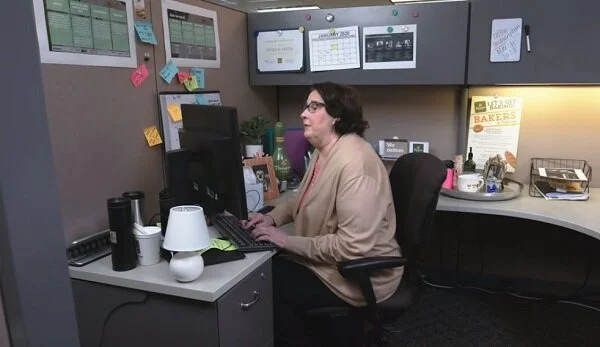
Panera responded to complaints about its Bistro French Onion soup with a clever approach: hiring the character Phyllis from “The Office” TV show.
The restaurant chain had promised that the soup would return, but it didn’t, and fans protested on social media. In addition to actively responding to customer complaints on social sites, Panera created a video showing a fake social media manager and Phyllis, as a social media coordinator.
The approach shows that Panera is listening and responding to customers, and it helps customers see the company’s point of view.
Discussion:
What’s your view of the video? How would you describe the potential impact in a few words?
More specifically, what are the communication objectives for this video message? Consider the audience and what the company hopes customers will do, think, and feel differently after watching the video.

Facebook Memo Goes Public

Facebook executive Andrew Bosworth wrote a 2,551-word memo about the company’s role in the upcoming election and more. Bosworth compliments President Trump’s use of Facebook ads and admits that the site impacted the 2016 U.S. election. A Vox article describes Boswell’s logic:
Bosworth’s memo has much more in there, which is getting plenty of deserved attention, including the assertion that Facebook did indeed help Donald Trump win the 2016 election — by giving him the tools to run “the single best digital ad campaign I’ve ever seen from any advertiser. Period.” And the memo also reveals that Bosworth, a self-described “committed liberal,” fantasizes about using Facebook to prevent Trump from winning in 2020, but won’t.
The memo is also attracting attention because Bosworth compares Facebook to sugar and places responsibility on the user: “At the end of the day we are forced to ask what responsibility individuals have for themselves."
Bosworth ends the memo with a question:
To bring this uncharacteristically long and winding essay full circle, I wanted to start a discussion about what lessons people are taking away from the press coverage. My takeaway is that we were late on data security, misinformation, and foreign interference. We need to get ahead of polarization and algorithmic transparency. What are the other big topics people are seeing and where are we on those?
Discussion:
Read the entire memo . What surprises you most?
How damaging is the memo to Facebook’s image, particularly with another election coming up? How does a memo like this—posted on an internal site—become public?
What business writing principles does Bosworth follow, and how could he improve the memo?

Boeing CEO Responds to Questions
This week, Boeing CEO Dennis Muilenburg answered lawmakers’ questions about the two Max 737 plane crashes in the past year. Facing families of deceased passengers, Muilenburg began his testimony with an apology:
“I’d like to begin by expressing my deepest sympathies to the families and loved ones of those who were lost in the Lion Air Flight 610 and Ethiopian Airlines Flight 302 accidents, including those who are here in the room today. I wanted to let you know, on behalf of myself and all of the men and women of Boeing, how deeply sorry I am. As we observe today the solemn anniversary of the loss of Lion Air Flight 610, please know that we carry the memory of these accidents, and of your loved ones, with us every day. They will never be forgotten, and these tragedies will continue to drive us to do everything we can to make our airplanes and our industry safer.”
One of the most tense moments was when Senator Ted Cruz questioned Muilenburg (see video). Muilenburg also faced criticism as he was leaving. The mother of a victim of the second crash responded to his invoking his Iowa farm background:
“Go back to Iowa. Do that.” She also said, “I don't feel like you understand. It's come to the point where you're not the person anymore to solve the situation."
Discussion:
Watch more of Muilenburg’s testimony. What are some examples of questions he addressed well, and how could he have done better?
How well does Muilenburg balance emotional appeals, logical arguments, and credibility in his testimony?
What leadership character dimensions are illustrated by this situation and by Muilenburg’s testimony?
Muilenburg’s interaction with the mother is a difficult situation for anyone to handle, and we can certainly understand her grief and anger. How would you have responded?
CNN reports:
“In response, Muilenburg said he respects her viewpoint. "But I want to tell you the way I was brought up. And I'm just being honest here about it. I learned from my father in Iowa ... when things happen on your watch you have to own them and you have to take responsibility for fixing them," he said.

LeBron James Enters the Tweet Debate
As the NBA struggles to recover after Houston Rockets General Manager Daryl Morey tweeted in support of Hong Kong protesters, LeBron James questioned Morey’s choice:
“Yes, we all do have freedom of speech. But, at times, there are ramifications for the negative that can happen when you’re not thinking about others, when you’re only thinking about yourself. . . . I believe he wasn’t educated on the situation at hand, and he spoke. And so many people could have been harmed, not only financially, but physically, emotionally, spiritually. So just be careful. . . .”
The Wall Street Journal reports that people were “stunned” by his comment because James is typically careful about his public comments.
Discussion:
What’s your view of James’ commenting on the situation? Should he have avoided commenting? Why or why not?
What’s your view of his comments? How well did he handle the situation?
What leadership character dimensions are illustrated by James’ comments?

NBA Tweetstorm
The NBA is thrust into a political quagmire after Houston Rockets general manager Daryl Morey tweeted in support of the Hong Kong protesters: '“Fight for Freedom. Stand with Hong Kong.” The tweet has since been deleted.
NBA Commissioner Adam Silver is dancing a line between protecting Morey’s free speech and staving off China’s backlash. Critics say the league is driven by profit instead of principle. He has tried to clarify his position:
“It is inevitable that people around the world — including from America and China — will have different viewpoints over different issues. It is not the role of the NBA to adjudicate those differences. However, the NBA will not put itself in a position of regulating what players, employees and team owners say or will not say on these issues. We simply could not operate that way.”
At this point, The Wall Street Journal reports better news:
“The situation appears to have de-escalated. After a week of blistering anti-NBA rhetoric in Chinese media, the government is signaling that it’s time to cool it, a message that includes the vitriol directed at the Rockets, according to one person familiar with the situation.”
But the Journal also acknowledges: “China’s love affair with the Rockets might not be the same again.”
Discussion:
Should Morey have avoided sending the tweet? Why or why not?
How do you assess the league’s response to the situation?
Analyze Silver’s news conference. What did he do well, and what could he have done differently?

British Airways Labor Dispute Arguments
On Thursday, British Airways pilots went on strike for the second time this week, grounding about 1,700 flights. Wanting a greater share of profits, pilots have turned down the company’s offer of 11.9% in pay increases over the next three years.

Typical in these situations, the union and company blamed each other. The union, the British Airlines Pilots Association (Balpa), claims that company management chose to cancel flights instead of negotiating with them in good faith:
“Balpa set a gap between the first and second periods of strike action to give BA time to work with us to settle this dispute with their pilots. We had today been exchanging new ideas to do that via [the arbitration service] Acas and so it irresponsible and inconsiderate to its customers that BA has pulled out and decided to start cancelling flights now, just to save money on compensation. BA did not respond to our latest proposals before cancelling these flights.
“Passengers who will be affected by these cancellations should know that we have given BA multiple opportunities to work with us so we could call off this action.”
The company blames pilots for walking out:
“It is now a month since we shook hands on a pay deal. We urge [Balpa] to call off their strike and return to negotiations.
“To give our customers as much certainty as possible, we are now contacting all those affected to offer them a full refund or a rebook on an alternative date, destination or airline. We are very sorry that Balpa’s actions will affect thousands more travel plans.”
Discussion:
How effectively does each side express its perspective in the above quotes?
Research both sides of this debate. What are Balpa’s strongest and weakest arguments? What are BA’s?
What persuasive strategies does each side use in its arguments: logic, emotional appeal, and credibility?
Howard Schultz Update

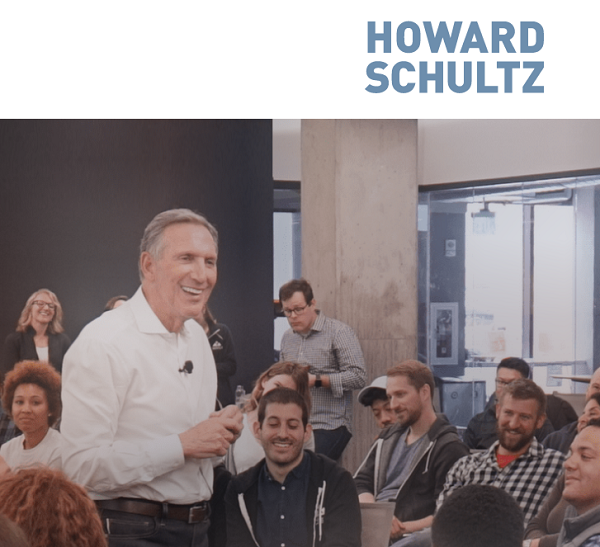
Former Starbucks CEO Howard Schultz has decided not to run for president, after all. He communicated the news in an email and on his website. In the email, fonts changed in the middle, but it looks better online. At right are the first few paragraphs.
The full message explains his reasons, which include the election process and his health.
Discussion:
Analyze the message. Consider the audience, communication objectives, writing style, organization, and reasoning. What works well, and what can be improved?
At what point does he announce the news?
What are his strongest and weakest arguments for not running for president?
What causes fonts to change in the middle of an email, and how can you avoid this in your own writing?
Creative Charts
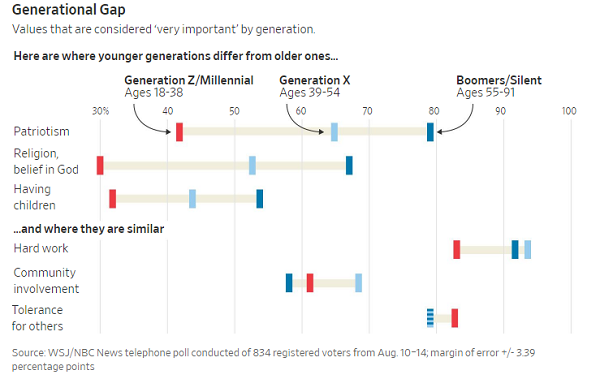
The Wall Street Journal created a chart to show what Americans value—and how those values have shifted over time. The graphic is a variation on a line chart with generations represented by color.
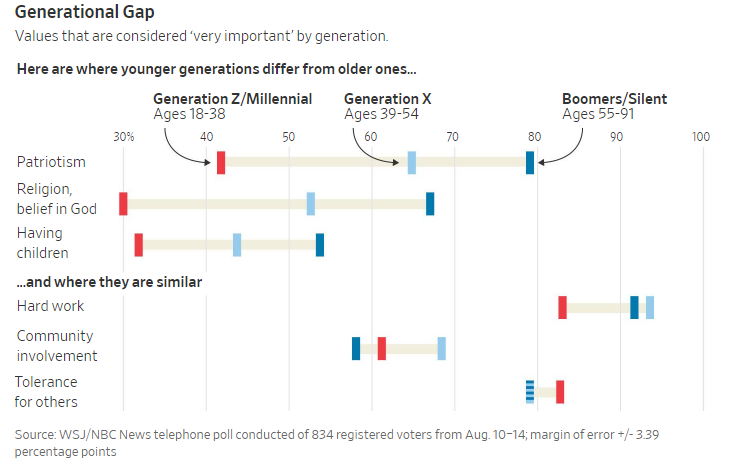
Understanding the chart may take a while. At first glance, the generation identifiers at the top look like headings, but they point to small bar colors.
The information is interesting, and some points probably aren’t surprising. Older Americans value patriotism, religion (which the poll describes as “belief in God”), and having children more highly than do younger Americans.
Discussion:
Assess the graphic design. How intuitive do you find the chart? What works well, and what could be improved?
What are your reactions to the data? What do you find surprising—and not?
What implications do you see for companies’ attempts to keep employees engaged at work?
HP CEO Resigns

HP CEO and President Dion Weisler will step down after about four years in the position. In a news release titled, “HP Announces CEO Successor, the company identified Enrique Lores as the next company executive.
The announcement has the typical quotes, from the incoming and outgoing executives and from the board chair. Weisler’s decision is positioned as “due to a family health matter” and notes that “he will be returning home to Australia.” Chip Bergh, the board chair, reinforces the message in his quote:
“On behalf of the board, we respect Dion’s decision to support the needs of his family. We thank him for leading HP post-separation, building a strong team and restoring the company to drive strong shareholder value creation over the last four years.”
In after-hours trading, HP shares dropped more than 6%, according to a Wall Street Journal article.
Discussion:
How does this company news release compare to others announcing CEO resignations, for example, Overstock?
What’s your view of mentioning Weisler’s personal situation in the announcement? Why would the company include this? From Weisler’s point of view, what are the reasons to include or exclude this information?

Research About Befriending Your Boss
A Wall Street Journal article describes the positive and negative effects of being friends with your boss. Research shows that managers do give preferential treatment to employees they consider friends.
However, a study published in the Journal of Experimental Social Psychology demonstrates that managers may favor others when decisions are public. To avoid perceptions of bias, Alex Shaw, an assistant professor of psychology at the University of Chicago, offers three solutions for managers:
Recuse yourself. I’m skeptical about this because a manager’s job is to make such decisions, but I see the point: if you can get out of being the final decision maker, that might be best in some situations.
Make the criteria public. This is a good practice, anyway, to ensure transparency in decisions, particularly those that are sensitive and affect people personally.
Ask for opinions. This could work, for example, when peer feedback may be as relevant—or more relevant—than the manager’s point of view.
Discussion:
Have you considered a boss a friend? How might the relationship have affected decisions?
What’s your view of the strategies suggested here? In what types of situations could each work or backfire?

Shirtless Video Calls
Child interruptions, toilets flushing, clinking ice—I’ve seen and heard it all on video and audio calls. The Wall Street Journal reports that more remote workers have brought more mishaps, like a coworker appearing shirtless, forgetting to turn off his camera. And who can forget the adorable kids who walked in on a BBC interview.
The article suggests signs outside a home office door to indicate when calls are in progress—”On Air” or “Do Not Disturb.” Double-checking your mute button is a good idea too.
I would also suggest being clear about whether a call will be video or audio. A job candidate was surprised to know that her interview was via video. The employer insisted that she turn on her video, and she wasn’t dressed for it.
Discussion:
What mishaps have you experienced on audio or video calls?
What other ideas do you have to prevent embarrassing situations?
How does this story relate to the concept of authenticity?

Why Political Campaign Emails Are Successful

With more than 20 democrats still in the 2020 presidential race, campaign emails are sounding more “desperate,” according to a Wall Street Journal article. The emails may be annoying, but they reap high rewards.
The number of candidate emails reached a high of 130 last weekend and are likely to continue. The article explains, “There is no such thing as too much. And the more cringeworthy the content, the more likely you are to click and give money.” Expect long subject lines, time-sensitive pleas, all-caps, contests, attempts at humor, and invitations to dinners and chats with candidates.
Candidates are trying to make themselves likeable and are practicing authenticity. Whether we know them any better from these emails is questionable, but the fundraising results are clear.
Discussion:
Have you received emails from candidates? What has been your reaction? Have you been inspired to donate to a campaign?
Assess President Trump’s email shown here. What principles of persuasion does his campaign use, and how effective do you find the message for fundraising?

VW's New Ad
Volkswagen is still trying to rebuild its image after the emissions scandal in 2015. A new advertising campaign tackles the issue directly, beginning with audio news reports from that time. But the focus, described on YouTube, is on the future: “Every negative has a positive. Learn more about our all-electric vehicles and our plans to help make a better tomorrow at vw.com #drivefortomorrow #vw.”
With an emphasis on innovation, the ad is set to Simon and Garfunkel’s classic song, “The Sound of Silence.” Viewers can imagine company engineers during the past few years creating a new line of electric cars— while VW executives said little about the controversy.
The senior VP of marketing for VW of America acknowledged that the ad is risky but explains the rationale:
“[w]ithout mentioning the past...we would never have the credibility or authenticity to move forward with the brand. Through the last three-and-a-half years or so we kind of operated as usual in the consumers [sic] eye. We kept a very consistent message in the marketplace but didn’t really have a powerful point-of-view as a brand.”
Discussion:
What’s your view of VW’s new ad campaign? Did the company make the right decision by invoking the scandal?
Other companies facing scandals, such as Uber and Wells Fargo, placed large apology ads, but VW didn’t take this approach. Why do you think that may be the case? Compare VW’s strategy to other recent recovery campaigns.