

Twitter Announces Ban of President Trump
Two days after the riots on the U.S. Capitol, Twitter announced a “permanent suspension” of President Trump’s account after a temporary suspension.
Comparing Twitter and Facebook’s message, on January 7, about a temporary suspension, is a lesson in writing structure. Whereas Mark Zuckerberg used the indirect organizational plan, Twitter’s message states the news right up front. Zuckerberg starts with the rationale and announces the decision at the very end. Twitter starts with the decision, and then provides explanatory text, including sample tweets and the company’s assessment.
Another difference between these messages is the writer. The Twitter post is unsigned, whereas Zuckerberg signed the Facebook message himself. Additional rationale for the decision is posted on the Facebook site. Both approaches could work, and analyzing the communication is (almost) as interesting as the decisions themselves.
Random note: “Permanent suspension” sounds odd to me. A suspension is something temporary.
Company
Permanent suspension of @realDonaldTrump
By Twitter Inc.Friday, 8 January 2021
After close review of recent Tweets from the @realDonaldTrump account and the context around them — specifically how they are being received and interpreted on and off Twitter — we have permanently suspended the account due to the risk of further incitement of violence.
In the context of horrific events this week, we made it clear on Wednesday that additional violations of the Twitter Rules would potentially result in this very course of action. Our public interest framework exists to enable the public to hear from elected officials and world leaders directly. It is built on a principle that the people have a right to hold power to account in the open.
However, we made it clear going back years that these accounts are not above our rules entirely and cannot use Twitter to incite violence, among other things. We will continue to be transparent around our policies and their enforcement.
The below is a comprehensive analysis of our policy enforcement approach in this case.
Overview
On January 8, 2021, President Donald J. Trump Tweeted:
“The 75,000,000 great American Patriots who voted for me, AMERICA FIRST, and MAKE AMERICA GREAT AGAIN, will have a GIANT VOICE long into the future. They will not be disrespected or treated unfairly in any way, shape or form!!!”
Shortly thereafter, the President Tweeted:
“To all of those who have asked, I will not be going to the Inauguration on January 20th.”
Due to the ongoing tensions in the United States, and an uptick in the global conversation in regards to the people who violently stormed the Capitol on January 6, 2021, these two Tweets must be read in the context of broader events in the country and the ways in which the President’s statements can be mobilized by different audiences, including to incite violence, as well as in the context of the pattern of behavior from this account in recent weeks. After assessing the language in these Tweets against our Glorification of Violence policy, we have determined that these Tweets are in violation of the Glorification of Violence Policy and the user @realDonaldTrump should be immediately permanently suspended from the service.
Assessment
We assessed the two Tweets referenced above under our Glorification of Violence policy, which aims to prevent the glorification of violence that could inspire others to replicate violent acts and determined that they were highly likely to encourage and inspire people to replicate the criminal acts that took place at the U.S. Capitol on January 6, 2021.
This determination is based on a number of factors, including:
President Trump’s statement that he will not be attending the Inauguration is being received by a number of his supporters as further confirmation that the election was not legitimate and is seen as him disavowing his previous claim made via two Tweets (1, 2) by his Deputy Chief of Staff, Dan Scavino, that there would be an “orderly transition” on January 20th.
The second Tweet may also serve as encouragement to those potentially considering violent acts that the Inauguration would be a “safe” target, as he will not be attending.
The use of the words “American Patriots” to describe some of his supporters is also being interpreted as support for those committing violent acts at the US Capitol.
The mention of his supporters having a “GIANT VOICE long into the future” and that “They will not be disrespected or treated unfairly in any way, shape or form!!!” is being interpreted as further indication that President Trump does not plan to facilitate an “orderly transition” and instead that he plans to continue to support, empower, and shield those who believe he won the election.
Plans for future armed protests have already begun proliferating on and off-Twitter, including a proposed secondary attack on the US Capitol and state capitol buildings on January 17, 2021.
As such, our determination is that the two Tweets above are likely to inspire others to replicate the violent acts that took place on January 6, 2021, and that there are multiple indicators that they are being received and understood as encouragement to do so.
Zuckerberg's Message About President Trump's Account
Facebook has decided that President Trump will no longer use its platform for his messages—at least for a while. The decision came after riots at the U.S. Capitol and after Twitter and Facebook suspended the president’s account. The tech companies said that the president violated its rules by inciting violence and/or making false claims about the election.

YouTube blocked a video of President Trump expressing sympathy for the protestors and calling them “special.” The tech platforms had tried labeling posts, but the president’s false claims were still believed.
Some call this time an “inflection point": “Hey Mark Zuckerberg, @jack, @SusanWojcicki and @sundarpichai -- Donald Trump just incited a violent attack on American democracy. Is that FINALLY enough for you to act?!" At this point, Twitter has not yet permanently banned the president from tweeting.
Zuckerberg uses the indirect style for his post, with the main point in the very last sentence. He makes his argument first, and then we read the decision. It’s an interesting choice, which might not convey the courage that people would like to see.
Additional analysis and rationale for the decision are posted on the Facebook site.

United Airlines’ Response to Passenger Death
United Airlines is doing damage control after a passenger flying from Orlando to Los Angeles was rushed to a hospital in New Orleans and died. The cause of death hasn’t yet been reported, but the airline confirmed that the passenger had Covid-19 symptoms.
Customer response is fierce, partly because the passenger’s wife told others that her husband had Covid, and partly because the airline continued to fly the plane with passengers. Like most airlines, United asks passengers about their symptoms before flying, but they do not verify.

Communications are scant. I see nothing on United’s home page but found a news release dated December 16, two days after the passenger death, titled, “United and CDC Work Together on Contact Tracing Initiative for All International and Domestic Flights.” Recent tweets mention nothing about the situation, although one conveys the same message as the news release: “comprehensive, voluntary contract tracing.”
Some might feel that this is the least the airline can do in the situation.

Zuckerberg Testifies About 2012 Emails

Mark Zuckerberg faced one particularly tense moment during the U.S. Congressional Antitrust Hearing. Rep. Jerry Nadler (D-NY) accused Facebook of antitrust activities in its acquisition of Instagram:
“Facebook, by its own admission ... saw Instagram as a threat that could potentially siphon business away from Facebook. So rather than compete with it, Facebook bought it. This is exactly the type of anti-competitive acquisition the antitrust laws were designed to prevent.”
Nadler’s conclusion is based on 2012 emails among Zuckerberg and his staff. In one email he wrote about Instagram:
“One way of looking at this is that what we’re really buying is time. Even if some new competitors springs up, buying Instagram, Path, Foursquare, etc now will give us a year or more to integrate their dynamics before anyone can get close to their scale again. Within that time, if we incorporate the social mechanics they were using, those new products won’t get much traction since we’ll already have their mechanics deployed at scale.”
Within an hour, Zuckerberg sent a second email, which some say proves his guilt:
“I didn’t mean to imply that we’d be buying them to prevent them from competing with us in any way.”
During the hearings, Zuckerberg defended the acquisition:
“I think the FTC had all of these documents ... and unanimously voted at the time not to challenge the acquisition. In hindsight, it probably looks obvious that Instagram would have reached the scale that it has today. But at the time, it was far from obvious.”
Discussion:
Research and describe relevant U.S. antitrust laws.
Read more about the 2012 emails and watch the hearings. How well did Zuckerberg defend the Instagram acquisition?
Did Zuckerberg’s follow-up email prove his guilt? Why or why not?

Tech CEOs Testify Before Congress
CEOs of four major tech companies—Google, Facebook, Apple, and Amazon—answered U.S. lawmakers’ questions about potential abuses of power. Themes from both Democrats and Republicans included relationships with third-parties, social media monitoring, advertising, search results, and other potential antitrust moves.
The CEOs joined by video and started with an opening statement. After that, no one was spared tough questions. Sundar Pichai was grilled about search engine results and Google’s business in China. Mark Zuckerberg defended its acquisition strategy. Jeff Bezos responded to accusations of using vendors’ data to build competitive products. And Tim Cook, who received the fewest questions, defended practices for developers, including fees charged through the App Store.
Discussion:
Watch the CEOs’ opening statements. Which were the strongest and weakest? On what criteria do you base your analysis?
Which leadership character dimensions do the CEOs exhibit or fail to exhibit.
Assess the CEOs’ delivery skills. What differences and similarities do you notice?
Now assess the technology set-up: lighting, background, camera angle, eye contact, and so on. What lessons do you learn for your own video meetings?

Should I Go Outside? A Visual
Researches created a visual to help people make informed decisions as communities re-open during the pandemic. The group has a consulting firm that helps organizations assess risk, and the visual is a representation of their work.
The COVID-19 Risk Index uses color coding to identify the likelihood that you’ll contract the virus during various activities, such as visiting the hospital, grocery shopping, or going to the dentist (which I did yesterday).

Discussion:
How effective do you find the visual for helping you assess risk? On what criteria do you base your analysis?
What, if anything, is missing from the index? How could you adapt the tool for local regions?

Facebook's Position on Twitter's Labeling
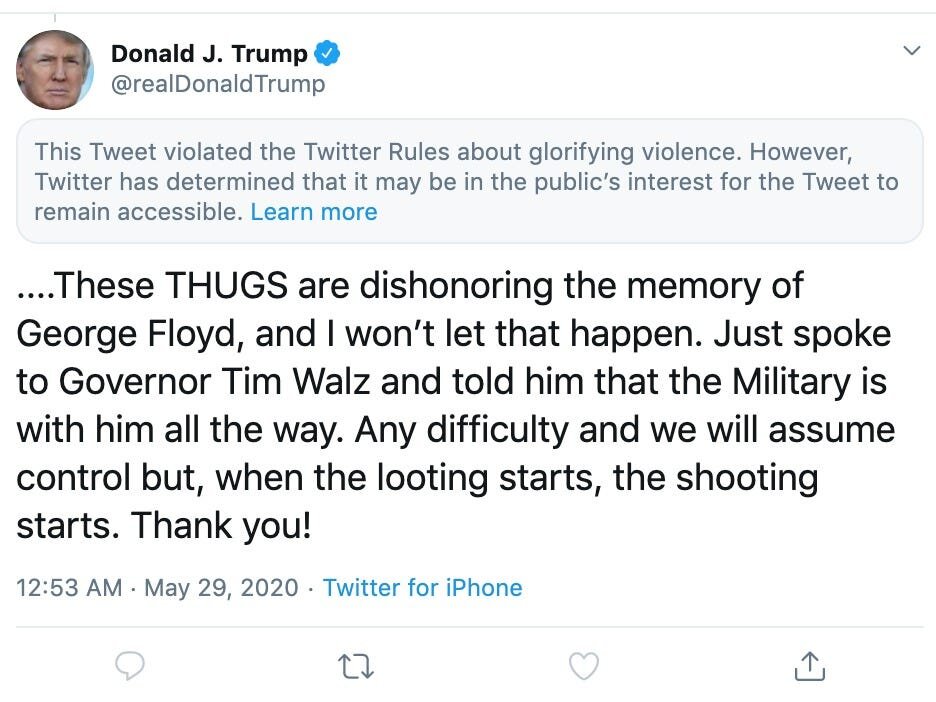
Facebook CEO Mark Zuckerberg weighed in on Twitter’s decision to fact-check and label some of President Trump’s tweets. In response to protests after the death of George Floyd, one tweet promised “when the looting starts, the shooting starts.” Twitter hid the tweet with a note that it “violated the Twitter Rules about glorifying violence.”
Another tweet claimed that “mail-in voting will lead to massive fraud and abuse,” and Twitter posted a warning to “get the facts.” Until now, Twitter had not enforced its policies for the president’s tweets.
Facebook is taking a different tack. CEO Mark Zuckerberg described the company’s position:
"I believe strongly that Facebook shouldn't be the arbiter of truth of everything that people say online. I think in general, private companies shouldn't be, especially these platform companies, shouldn't be in the position of doing that."
The Wall Street Journal editorial board defended Zuckerberg’s decision: “We wish Facebook would take a lighter touch when it comes to political speech overall.”
Discussion:
What’s your view of Twitter’s actions? Why do you think the company began labeling President Trump’s tweets now?
Should Facebook follow suit? How might each company’s mission play a role in its actions?

COVID-19 Crisis Communication for Reopening the U.S.

What comes after we “flatten the curve” of COVID cases? New York Times opinion writer Charlie Warzel warns that, without a clear communication strategy for what’s next, people will distrust leaders.
Warzel cites six communication guidelines from the report of a working group at The University of Minnesota, The Center for Infectious Disease Research and Policy (CIDRP).:
Don’t Over Reassure.
Proclaim Uncertainty
Validate Emotions—Your Audience’s and Your Own
Give People Things to Do
Admit and Apologize for Errors
Share Dilemma
Discussion:
How should U.S. officials communicate now? What do they need to accomplish, and how well are our current leaders meeting the challenge? In other words, do you agree with Warzel that our leaders are falling short?
Read the entire report. What other principles does the group recommend?
Analyze the report: the audiences, objectives, writing style, organization, and so on. What are the strengths, and how could it be improved?

Airbnb Layoff Message
Airbnb Co-Founder and CEO Brian Chesky wrote to employees to announce layoffs. Ask we see more and more, the company posted the message publicly on its blog, knowing it would likely go viral anyway.

In his message, Chesky announces the decision to lay off about 25% of the workforce as part of their more targeted business strategy. Airbnb is reducing investments in some services to focus on its core business.
Although he sends a mass email, Chesky tailors the last part to different groups:
To those of you staying,
One of the most important ways we can honor those who are leaving is for them to know that their contributions mattered, and that they will always be part of Airbnb’s story. I am confident their work will live on, just like this mission will live on.
To those leaving Airbnb,
I am truly sorry. Please know this is not your fault. The world will never stop seeking the qualities and talents that you brought to Airbnb…that helped make Airbnb. I want to thank you, from the bottom of my heart, for sharing them with us.
Brian
Discussion:
What’s your view of the message? Consider the audiences and objective.
It’s quite long. Is it too long or just right?
I wish that people who were staying in their current role could get a message too. It’s unclear whether that’s planned—only that they “will not receive a calendar invite.” Your thoughts?

United Airlines Message
The COVID-19 messages keep coming from airlines and other companies. Here’s one from United Airlines, encouraging us to fly by offering flexibility and promising cleanliness.
Dear Amy,
As we all adjust to this new normal, my thoughts are with you and your families and I hope you're staying safe and healthy. The last several weeks have been emotional and trying for all of us, but I continue to be inspired by the goodness in people and the genuine acts of kindness, large and small, that I see every day. These gestures of warmth, strength and caring give me the confidence that in time, we will emerge more United Together than ever before.
It's in that spirit that I wanted to share with you some good news about what the 100,000 family members of United Airlines have been doing for you as we tackle the biggest and most disruptive crisis we've faced in our 94‑year history.
Good news as you're making travel plans
Life is unpredictable in lots of ways right now. We know many of you started the year planning to fly with us to visit family, go to a game or concert, attend a trade show or just get away. And you might be feeling anxious about what to do about your upcoming travel plans. That's why we've waived the fees to change or cancel any trip with us through the end of 2020, including travel that was already planned as well as trips that you're hoping to take in the future. Every customer now has until May 31 to make changes to current reservations or book new flights that can be changed or canceled without a fee, and you'll be able to reschedule your trip for anytime in the next 12 months. So take the next few weeks and do what's best for you, your family and your work.
Good news for when you choose to fly
Safety has always been our top priority, and because of that, the social distancing and cleaning procedures that have become a way of life for all of us are now staples of the way we run our airline. When you're ready to fly, you'll see that a lot has changed at the airport and on board our aircraft. We're boarding fewer customers at a time and starting from the back of the plane to avoid crowding in the gate area, on the jet bridge and in the aisle. We're automatically blocking middle seats to give you enough space on board, requiring all our employees on board, including our flight attendants, to wear masks and, in early May, making masks available to our customers. Of course, these measures are in addition to our state‑of‑the‑art sanitization procedures like cleaning our aircraft with electrostatic sprayers, and extra precautions like taking our employees' temperatures before they start work to protect the well‑being of our customers and colleagues. Find a complete overview of what's changed at United to adapt to this new normal.
Good news for our communities
While we wait to welcome you back, we've been using our time and resources to do our part and support those on the frontlines of this crisis as well as the millions of families who have been affected by the most dramatic disruption of the labor market since the Great Depression. Leveraging the full power of our airline to do the right thing, we've flown more than 1,000 medical volunteers for free; donated 170,000 pounds of food; and used our fleet to get close to 20,000 stranded people home and medical supplies to the places that need them most. Here are just a few examples of how we're contributing in the fight against COVID‑19:
I'll end where I started: I hope you and your family continue to be well. This crisis has revealed a great deal about who we are as people and I'm moved by your continued resilience and resolve. We look forward to welcoming you the next time you take to the friendly skies.
Stay safe and be well,
Toby Enqvist
Chief Customer Officer
United Airlines
Discussion:
What principles of business communication does the United message follow? What could be improved?
How does this message compare to others you received recently?
After reading the Morning Consult report about messaging during COVID-19, what recommendations would you make to United?

Lysol Disputes Claims of Cure
During his press conference, President Trump questioned whether disinfectants could be used internally to fight the new coronavirus:
“I see the disinfectant that knocks it out in a minute, one minute. And is there a way we can do something like that by injection inside, or almost a cleaning? Because you see it gets inside the lungs and it does a tremendous number on the lungs, so it would be interesting to check that.”
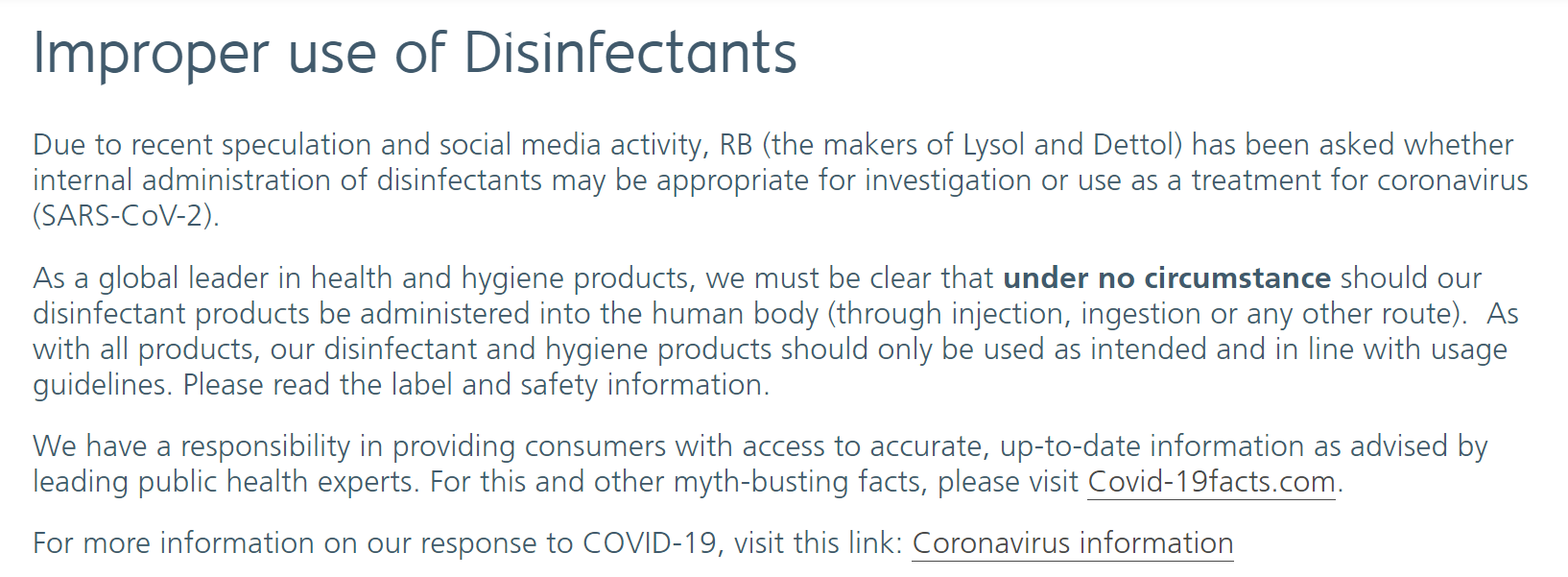
The president later said, “I was asking a question sarcastically to reporters like you just to see what would happen.” But Lysol executives are concerned that people may take the idea seriously and try to treat themselves. Reckitt Benckiser, which makes Lysol products, issued a statement, “Improper Use of Disinfectants.”
Discussion:
Watch the president’s comment during the press conference. What’s your view of his speculation?
Analyze the Lysol maker’s response. What works well, and what could be improved? What is appropriate or inappropriate for a brand’s parent to dispute the president’s claim in this way?

Message from Zoom CEO
People who never heard of Zoom are now relying on the company to provide flawless service, but of course we experience problems. In a blog post, CEO Eric Yuan describes how Zoom use has “ballooned overnight” and what the company has done to meet demand and improve the service.

Yuan also expresses gratitude to Zoom users at the end of the post, demonstrating business communication principles and leadership character:
Transparency has always been a core part of our culture. I am committed to being open and honest with you about areas where we are strengthening our platform and areas where users can take steps of their own to best use and protect themselves on the platform.
We welcome your continued questions and encourage you to provide us with feedback – our chief concern, now and always, is making users happy and ensuring that the safety, privacy, and security of our platform is worthy of the trust you all have put in us.
Together, let’s build something that can truly make the world a better place!
Discussion:
Analyze the blog post: audiences, communication objectives, organizational structure, writing style, etc.
What business communication principles does the blog post illustrate? What improvements would you suggest?
What leadership character dimensions are illustrated in this example?

Luckin COO Fabricated Sales Data

Luckin’ Coffee, China’s largest coffee chain, is suffering the consequences of publishing false sales numbers. Ernst & Young discovered the misconduct, which took place in 2019, during an audit, concluding that “management personnel engaged in fabricated transactions which led to the inflation of the Company’s income, costs and expenses.” An investigation blames the chief operating officer and others.
A report details “the fraud and the fundamentally broken business,” including “smoking gun” evidence and “red flags.” The anonymous authors compare video recordings of store foot traffic to reported sales.
In response to the news, Luckin’s stock declined between 75 and 80%. Starting in February, when the anonymous report was made public, the company has been posting notices about the situation on its website.
Discussion:
Analyze the anonymous report, including the audiences, objectives, organization, writing style, etc. What works well, and how would suggest that the writer improve the report?
How well did the company address concerns? Begin with the first response in February.
What leadership character dimensions does this situation illustrate?
WHO Official Bungles Interview
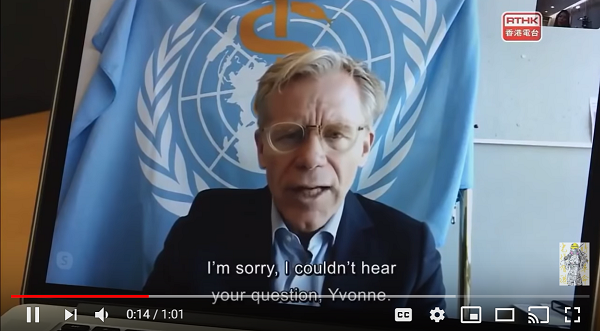
World Health Organization (WHO) senior adviser Bruce Alyward wanted to avoid a reporter’s question about Taiwan becoming a member of the organization. A video of the interview shows an awkward exchange, with Alyward remaining silent (but we still see him moving and hear sounds), saying “Sorry, I couldn’t hear your question,” asking the reporter to move onto another question, and then, finally, ending the call. During a follow-up call, Alyward refers to China and then abruptly ends the call.
Taiwan has had good success in controlling COVID-19, and the government claims to have warned the WHO back in December 2019 about the contagion.
As of today, Alyward’s name is removed from WHO’s website listing advisers to the organization.
Discussion:
What is a better way for Alyward to have handled the reporter’s question?
Why do you think the WHO ignored warnings from the Taiwanese government?
Starbucks Communication
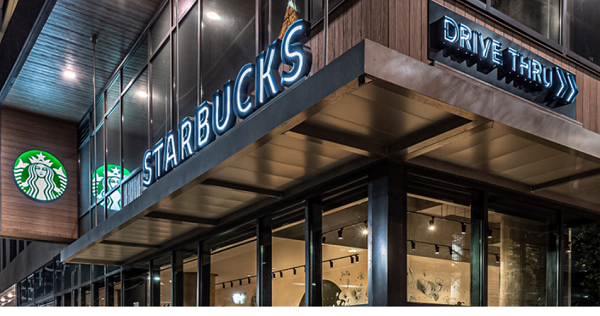
The Starbucks website has been updated regularly with news about the company’s response to COVID-19. Near the top of the page is a link to “At-a-glance: What customers need to know about Starbucks response to COVID-19.”

The big news is that stores will offer only drive-thru service for the next two weeks. In a letter to Starbucks partners (employees), the company promised 30 days of pay whether they work or not.
Discussion:
Analyze both the public website and the letter to partners. Describe the audiences and communication objectives of each.
What organizational structure is used for these bad-news messages?
What does Starbucks do well in its communications? How can communications be improved?
How well does the company balance emotional appeal and logical arguments?
In this post, you see “Starbucks response” on the company’s website and “Starbucks partners” in my text. Neither has an apostrophe. Is that correct?
Singapore PM Lee Hsien Loong
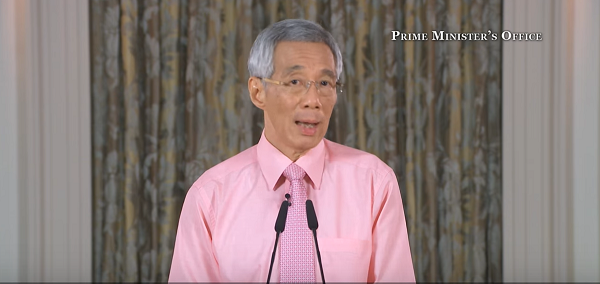
Two students sent me Singapore Prime Minister Lee Hsien Loong’s news conference as a positive example. I can see why: he gives a model speech, balancing emotional appeal and straight talk. He is proud of Singapore’s response, and yet he is honest about the challenges ahead. The PM also gives examples from other countries and the lessons learned.
Discussion:
What are the strengths of the Prime Minister’s speech?
Assess his delivery skills.
How have leaders in other countries followed this example—or how have they fell short?
Which leadership character dimensions does the PM demonstrate in his speech?

Comparing Airlines Messages About COVID-19

Transportation companies would like to see more people travel, yet people are wary of COVID-19. Compare these emails to travelers:
Discussion:
Analyze the messages: audience, communication objectives, organization, writing style, etc.
In what ways are the messages similar and different? How might the travel mode—airline or bus—affect the communication choices?
Which messages are most and least effective and why?
What’s your view of the American Airlines video? How does the media choice affect the message?

CDC Guidelines to Airlines About COVID-19
The Centers for Disease Control issued recommendations to airlines and their crews to try to address COVID-19. The web page begins with the purpose:
“This document provides interim recommendations for the commercial airline industry about the Coronavirus Disease 2019 (COVID-19) first identified in Wuhan, China. CDC reminds air carriers of the requirement under Title 42 Code of Federal Regulations (CFR) section 71.21 to report to CDC ill travelers who have certain signs and symptoms during flight, and all deaths onboard, before arrival in the United States. This document also contains recommendations for managing ill travelers onboard if COVID-19 infection is suspected.”
Next is a “Situation summary,” followed by guidelines for handling ill passengers aboard a flight and for cleaning a plane after a flight.
Other sections on the CDC website address “Reporting Death or Illness” and “Managing Ill Passengers/Crew.”
Discussion:
Who are the primary and secondary audiences for CDC’s website? What are the organization’s communication objectives during the COVID-19 outbreak?
Review the CDC website from the home page. How easy is it to find information? How clear is the information you do find? In summary, how well does the organization meet its communication objectives? What could be improved?

Report Criticizes Airline Safety and Oversight


A U.S. Department of Transportation report criticizes the Federal Aviation Association and Southwest Airlines for lax safety standards. A New York Times article summarizes the report findings:
“The report found that the Federal Aviation Administration had allowed Southwest to routinely provide inaccurate data to pilots and to operate more than 150,000 flights on planes whose airworthiness had not been confirmed.
“The agency also failed to investigate concerns raised by its own representatives ‘ranging from senior executives to local inspectors’ over Southwest’s safety culture.”
The DOT includes “Four SMS Components,” the FAA’s own description to fault safety culture in both organizations.
Discussion:
What business communication principles are illustrated in the report? Who are the primary and secondary audiences, and how well does the report meet its communication objectives?
The report does a particularly good job of using “message titles” (also called “talking headings”). What are some examples?
What else do you notice about the report? Consider the writing style, organization, and other features. What could be improved?
Apologies About the Iowa App
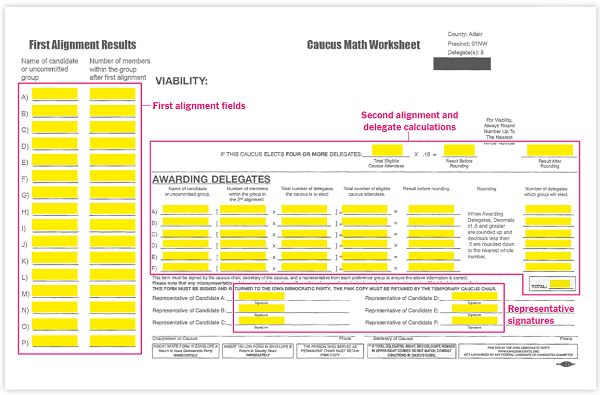
The New York Times published “everything that went wrong at the Iowa Caucases,” and it’s a long list about the app. The technology was untested and unfamiliar to volunteers, and connection problems prevented accurate data submission and reporting.
An opinion writer blamed “techno-utopianism and laziness” for the trouble: “The two fuel each other: The overarching belief that software will fix everything leads to slapdash engineering, procurement and deployment.”
Troy Price, the Iowa Democratic Party Chair, apologized for the “multiple reporting challenges.” He explains the decision to delay reporting to ensure “accuracy and integrity.”
The CEO of Shadow, the app company, also apologized:
“We sincerely regret the delay in the reporting of the results of last night's Iowa caucuses and the uncertainty it has caused to the candidates, their campaigns, and Democratic caucus-goers. As the Iowa Democratic Party has confirmed, the underlying data and collection process via Shadow's mobile caucus app was sound and accurate, but our process to transmit that caucus results data generated via the app to the IDP was not. Importantly, this issue did not affect the underlying caucus results data. We worked as quickly as possible overnight to resolve this issue, and the IDP has worked diligently to verify results. Shadow is an independent, for-profit technology company that contracted with the Iowa Democratic Party to build a caucus reporting mobile app, which was optional for local officials to use. The goal of the app was to ensure accuracy in a complex reporting process. We will apply the lessons learned in the future, and have already corrected the underlying technology issue. We take these issues very seriously, and are committed to improving and evolving to support the Democratic Party's goal of modernizing its election processes."
Discussion:
Analyze each of these apologies: the audiences, communication objectives, writing style, organization, delivery choice, etc. Each message has distinct purposes.
What works well in these statements, and what could be improved?