

McKinsey Pays Settlement for Work with Purdue Pharma
Management consulting company McKinsey will pay almost $600 million to settle several lawsuits over its role in the opioid crisis, including offering marketing advice to Purdue Pharma. The largest settlement is for $573 million, which Massachusetts Attorney General Maura Healey describes in a video.
Healey’s presentation and delivery are interesting because she represents families and is speaking for 47 attorneys general in several U.S. states. Her anger is evident, but her audience is small: only 53 views one week after it’s posted, and at least three of those are me. What are the communication objectives? This will make a good class discussion.
McKinsey’s response is also interesting for students studying business communication and character. In an email to staff, Global Managing Partner Kevin Sneader describes “setting a higher standard.” Whereas the governors consider McKinsey’s actions unlawful, Sneader does not agree:
“Indeed, while our past work with opioid manufacturers was lawful and never intended to do harm, we have always held ourselves to a higher bar. We fell short of that bar. We did not adequately acknowledge the epidemic unfolding in our communities or the terrible impact of opioid misuse and addiction, and for that I am deeply sorry.”
The Massachusetts court filing explains the legal argument.
At some point in 2019, two McKinsey executives debated in emails “eliminating all our documents and emails.” These executives have been terminated. (See McKinsey communications.)

Fauci: "Numbers Don't Lie"
Dr. Anthony Fauci, the lead infectious disease expert in the U.S., was asked whether the nation has the worst COVID outbreak, and he said, “Numbers don’t lie.”
CNN’s Dr. Sanjay Gupta interviewed the doctor at a Harvard School of Public Health forum. Dr. Gupta asked, “We're not quite 5% of the world's population, yet represent 20-25% of the world's infections ... I mean, that has to be the worst. Is it not the worst?"
Dr. Fauci responded, “Yeah, it is quantitatively if you look at it, it is. I mean the numbers don't lie.”
The doctors are looking at infections per capita. Of course, we could look at other measures. In this interview, President Trump considers the number of deaths as a percentage of those infected.
Discussion:
Do numbers lie? Can they? What about this book: How to Lie with Statistics?
Find evidence to both support and dispute the claim that the U.S. is the “worst.” What measures can you find? Which do you find more meaningful?

COVID-19 Crisis Communication for Reopening the U.S.

What comes after we “flatten the curve” of COVID cases? New York Times opinion writer Charlie Warzel warns that, without a clear communication strategy for what’s next, people will distrust leaders.
Warzel cites six communication guidelines from the report of a working group at The University of Minnesota, The Center for Infectious Disease Research and Policy (CIDRP).:
Don’t Over Reassure.
Proclaim Uncertainty
Validate Emotions—Your Audience’s and Your Own
Give People Things to Do
Admit and Apologize for Errors
Share Dilemma
Discussion:
How should U.S. officials communicate now? What do they need to accomplish, and how well are our current leaders meeting the challenge? In other words, do you agree with Warzel that our leaders are falling short?
Read the entire report. What other principles does the group recommend?
Analyze the report: the audiences, objectives, writing style, organization, and so on. What are the strengths, and how could it be improved?

Airlines CEOs Criticize Boeing CEO's Prediction

During an interview on the “Today” show, Savannah Guthrie asked Boeing CEO David Calhoun whether a major U.S. airline might not survive because of the pandemic. Calhoun said, “Well, I don’t want to get too predictive on that subject, but yes, most likely. Something will happen when September comes around.” He also said that “we believe we will return to a growth rate similar to the past, but it might take us three, five years to get there.”
The response angered major airline executives, who are currently negotiating for federal assistance.
Another Boeing executive defended Calhoun’s statement:
“Some weren’t keen on his sobering assessment of industry challenges ahead, but others appreciated him telling it like it is. It’s in his nature to be frank.”
Discussion:
What’s your view of Calhoun’s comment? One view is that, during a global pandemic, executives might need to be particularly sensitive. Another view is that this is a time for honest, direct talk.
What are the potential implications of his comment? Should he have avoided it?
What the entire interview. How did Calhoun do overall? What are his communication objectives and key messages?

United Airlines Message
The COVID-19 messages keep coming from airlines and other companies. Here’s one from United Airlines, encouraging us to fly by offering flexibility and promising cleanliness.
Dear Amy,
As we all adjust to this new normal, my thoughts are with you and your families and I hope you're staying safe and healthy. The last several weeks have been emotional and trying for all of us, but I continue to be inspired by the goodness in people and the genuine acts of kindness, large and small, that I see every day. These gestures of warmth, strength and caring give me the confidence that in time, we will emerge more United Together than ever before.
It's in that spirit that I wanted to share with you some good news about what the 100,000 family members of United Airlines have been doing for you as we tackle the biggest and most disruptive crisis we've faced in our 94‑year history.
Good news as you're making travel plans
Life is unpredictable in lots of ways right now. We know many of you started the year planning to fly with us to visit family, go to a game or concert, attend a trade show or just get away. And you might be feeling anxious about what to do about your upcoming travel plans. That's why we've waived the fees to change or cancel any trip with us through the end of 2020, including travel that was already planned as well as trips that you're hoping to take in the future. Every customer now has until May 31 to make changes to current reservations or book new flights that can be changed or canceled without a fee, and you'll be able to reschedule your trip for anytime in the next 12 months. So take the next few weeks and do what's best for you, your family and your work.
Good news for when you choose to fly
Safety has always been our top priority, and because of that, the social distancing and cleaning procedures that have become a way of life for all of us are now staples of the way we run our airline. When you're ready to fly, you'll see that a lot has changed at the airport and on board our aircraft. We're boarding fewer customers at a time and starting from the back of the plane to avoid crowding in the gate area, on the jet bridge and in the aisle. We're automatically blocking middle seats to give you enough space on board, requiring all our employees on board, including our flight attendants, to wear masks and, in early May, making masks available to our customers. Of course, these measures are in addition to our state‑of‑the‑art sanitization procedures like cleaning our aircraft with electrostatic sprayers, and extra precautions like taking our employees' temperatures before they start work to protect the well‑being of our customers and colleagues. Find a complete overview of what's changed at United to adapt to this new normal.
Good news for our communities
While we wait to welcome you back, we've been using our time and resources to do our part and support those on the frontlines of this crisis as well as the millions of families who have been affected by the most dramatic disruption of the labor market since the Great Depression. Leveraging the full power of our airline to do the right thing, we've flown more than 1,000 medical volunteers for free; donated 170,000 pounds of food; and used our fleet to get close to 20,000 stranded people home and medical supplies to the places that need them most. Here are just a few examples of how we're contributing in the fight against COVID‑19:
I'll end where I started: I hope you and your family continue to be well. This crisis has revealed a great deal about who we are as people and I'm moved by your continued resilience and resolve. We look forward to welcoming you the next time you take to the friendly skies.
Stay safe and be well,
Toby Enqvist
Chief Customer Officer
United Airlines
Discussion:
What principles of business communication does the United message follow? What could be improved?
How does this message compare to others you received recently?
After reading the Morning Consult report about messaging during COVID-19, what recommendations would you make to United?
Similar COVID-19 Ads
Are all COVID-19 ads the same? A digital marketer compiled excerpts from recent ads showing similar images, music, and phrases. He titled his video, “Every Covid-19 Commercial Is Exactly the Same.”
Sean Haney describes why so many ads are the same:

What's the deal? In reality, many companies have found themselves short on cash, almost overnight. They needed to get a message out - and quick. They asked their teams to throw something together. Since they can't film a new ad because of social distancing, they compiled old stock b-roll footage and found the most inoffensive royalty-free piano track they could find. This, combined with a decade of marketing trends dictated by focus groups and design-by-committee, released a tsunami of derivative, cliche ads all within a week of one another. It's not a conspiracy - but perhaps a sign that it's time for something new.
A Morning Consult report offers guidance for companies. From 2,200 Americans at the end of March, we learn how companies should communicate. For example, people say they are more likely to purchase from a company that provides “a public statement about support being given to laid-off employees” compared to other types of statements.
Discussion:
What’s your view of these company ads? How do you react when you see them? Do you react differently to different companies’ ads?
Read the report. Analyze the audience, objectives, tone, organization, visuals, and so on. What principles of business communication are followed?
What else do you learn from the report about how companies should communicate during COVID-19?
Does Persuasion by Scarcity Work?
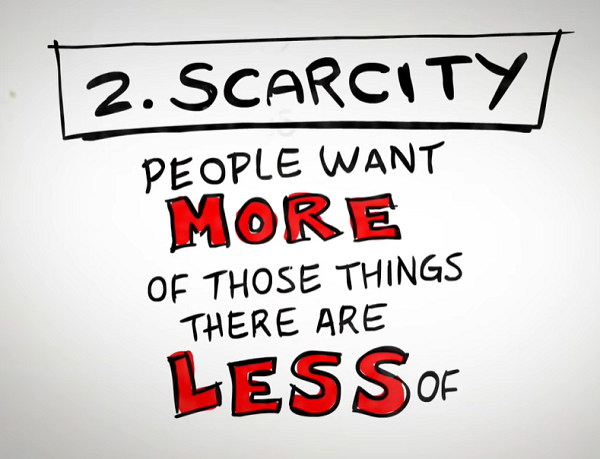
Business communication students may learn about Robert Cialdini’s Six Principles of Persuasion, including scarcity. For example, a online retailer indicates “Only two left!” or “Only one left at this price!”
In a Wall Street Journal article, a researcher questions whether the “quantity scarcity” strategy works under all conditions. Dr. Christopher Tang explains new research:
“…scarcity messages work best with time-sensitive and perishable products such as hotel rooms or plane tickets, as well as unique items like collectibles or limited editions.
“They are less effective with durable goods such as home-improvement products or kitchenware, in part because they can give shoppers the impression that the product is being pushed because it is undesirable, lower quality, obsolete or discontinued. And in the case of items typically bought in larger quantities, such as partyware, lightbulbs and batteries, we found that scarcity messages can actually hurt sales by making shoppers believe they won’t be able to buy as much of a product as they want.”
To use the scarcity principle effectively, Dr. Tang suggests that retailers highlight quality, promote urgency, and offer product bundles
Discussion:
When have you seen the quantity scarcity at work? Did it persuade you to purchase something?
Think of a specific product that you might buy. How would you recommend that retailers use this strategy effectively to move remaining products?
Tourism CEOs Meet with President Trump
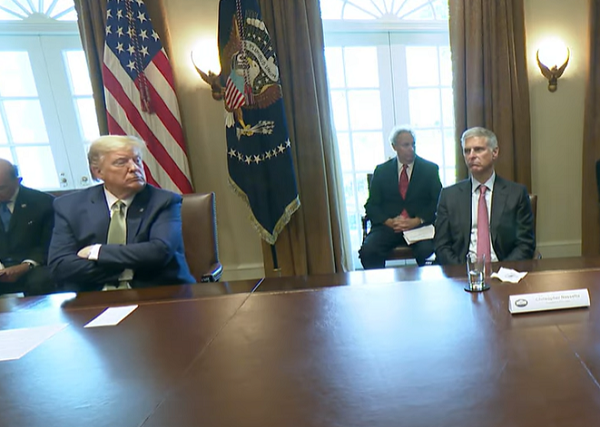
President Trump invited CEOs of major tourism companies to discuss the COVID-19 response.
Hilton CEO Christopher Nassetta began by highlighting issues in the industry:
“Hilton’s been around 100 years -- we’ve never closed a hotel that wasn’t going to be demolished or rebuilding, The bulk of our hotels in the major cities are closing as we speak.”
Nassetta was also complimentary to President Trump and Vice President Pence and said that he wanted to protect employees. The president reassured him that they’ll be up and running soon, although both said the situation is currently a “disaster” “all over the world.”
Discussion:
How would you describe the purpose of this gathering? What are President Trump’s objectives?
Assess each of the CEOs during the meeting. How well did they represent their brand?
Singapore PM Lee Hsien Loong
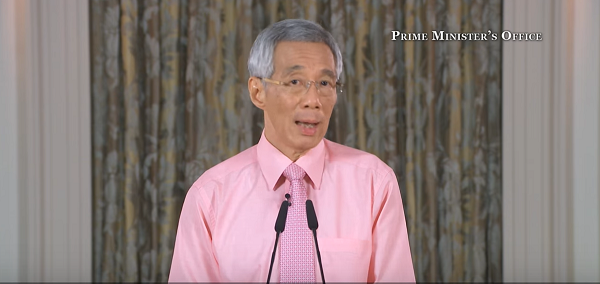
Two students sent me Singapore Prime Minister Lee Hsien Loong’s news conference as a positive example. I can see why: he gives a model speech, balancing emotional appeal and straight talk. He is proud of Singapore’s response, and yet he is honest about the challenges ahead. The PM also gives examples from other countries and the lessons learned.
Discussion:
What are the strengths of the Prime Minister’s speech?
Assess his delivery skills.
How have leaders in other countries followed this example—or how have they fell short?
Which leadership character dimensions does the PM demonstrate in his speech?

Governor Cuomo's Press Conference
In his second news conference about Coronavirus, New York Governor Andrew Cuomo announced new cases, provided resources, and answered questions.
Discussion:
Assess the news conference. What does Governor Cuomo do well, and what suggestions would you have for him to improve his communication?
What strategies for answering questions does the Governor demonstrate?

Comparing Airlines Messages About COVID-19

Transportation companies would like to see more people travel, yet people are wary of COVID-19. Compare these emails to travelers:
Discussion:
Analyze the messages: audience, communication objectives, organization, writing style, etc.
In what ways are the messages similar and different? How might the travel mode—airline or bus—affect the communication choices?
Which messages are most and least effective and why?
What’s your view of the American Airlines video? How does the media choice affect the message?

KFC and Crocs?

An unlikely pair, KFC and Crocs have partnered to create a shoe that looks and smells a lot like chicken. Thankfully, the KFC X Crocs Bucket Clog is a limited edition product.
Terence Reilly, Crocs SVP and CMO, explained the companies’ strategy in a news release:
"As Crocs continues to create new, unexpected brand collaborations, we're thrilled with this 'bucket list' partnership with Kentucky Fried Chicken that will bring fans an unbelievably fun and fashionable take on our classic clog. We're honored to feature this fashion-forward style between two iconic American brands at one of New York's biggest weeks in fashion that promises to surprise and delight consumers around the globe."
This isn’t the first time KFC created an unexpected product. In December, the company partnered with Enviro-Log to sell the 11 Herbs & Spices Firelog exclusively on Walmart.com. They sold out in just three hours. Sorry I missed that.
Discussion:
What persuasive strategies do these products illustrate? Consider Cialdini’s six principles and other models.
Am I the only one slightly repulsed by these products? Would you buy them?
Apologies About the Iowa App
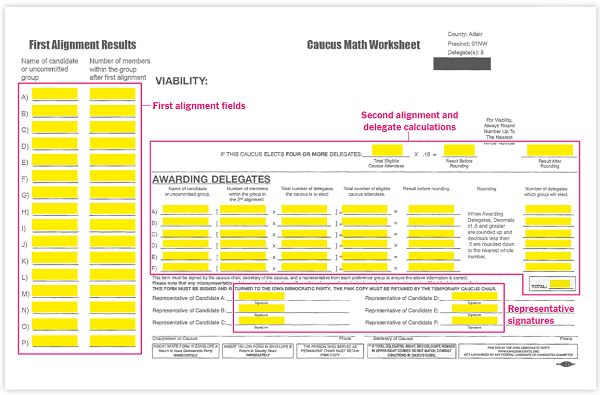
The New York Times published “everything that went wrong at the Iowa Caucases,” and it’s a long list about the app. The technology was untested and unfamiliar to volunteers, and connection problems prevented accurate data submission and reporting.
An opinion writer blamed “techno-utopianism and laziness” for the trouble: “The two fuel each other: The overarching belief that software will fix everything leads to slapdash engineering, procurement and deployment.”
Troy Price, the Iowa Democratic Party Chair, apologized for the “multiple reporting challenges.” He explains the decision to delay reporting to ensure “accuracy and integrity.”
The CEO of Shadow, the app company, also apologized:
“We sincerely regret the delay in the reporting of the results of last night's Iowa caucuses and the uncertainty it has caused to the candidates, their campaigns, and Democratic caucus-goers. As the Iowa Democratic Party has confirmed, the underlying data and collection process via Shadow's mobile caucus app was sound and accurate, but our process to transmit that caucus results data generated via the app to the IDP was not. Importantly, this issue did not affect the underlying caucus results data. We worked as quickly as possible overnight to resolve this issue, and the IDP has worked diligently to verify results. Shadow is an independent, for-profit technology company that contracted with the Iowa Democratic Party to build a caucus reporting mobile app, which was optional for local officials to use. The goal of the app was to ensure accuracy in a complex reporting process. We will apply the lessons learned in the future, and have already corrected the underlying technology issue. We take these issues very seriously, and are committed to improving and evolving to support the Democratic Party's goal of modernizing its election processes."
Discussion:
Analyze each of these apologies: the audiences, communication objectives, writing style, organization, delivery choice, etc. Each message has distinct purposes.
What works well in these statements, and what could be improved?
Wells Fargo Earnings Call

The Wells Fargo scandal of creating fake accounts became public in 2016, and the company is still suffering the repercussions. Profit is down 53%, and stock performance is lagging.
On an earnings call, Charles Scharf, who has been the CEO since October 2019, explained the bank’s current position:
I was honored to be chosen to lead Wells Fargo because I believe this is an extraordinary company that plays an important role in this country. We came out of the financial crisis as the most valuable and most respected bank in the US, but as you know, we made some terrible mistakes and have not effectively addressed our shortcomings. These circumstances have led to financial underperformance, but we have one of the most enviable financial services franchises in the world and employees that want to do what's necessary to again be one of the most respected and successful banks in the US.
Discussion:
Read the earnings call transcript. What’s your view of how Scharf and John R. Shrewsberry, EVP and CFO, addressed concerns?
How well has the bank recovered its image since 2016? What examples of their communications can you cite?
What could bank executives have done differently in the past four years?
How well does the line chart work to compare Wells to other leading banks? What could be improved?

WSJ Opinion About Boeing Emails

A Wall Street Journal writer argues that Boeing employee emails “explain nothing.” A previous WSJ article concluded that emails demonstrated a “cavalier attitude towards safety,” and a Reuters article concluded that employees “distrust the 737 MAX” and “mock regulators.”
The opinion writer, Holman Jenkins Jr., argues, “all of corporate America, not just Boeing, lives these days by employing creative, freethinking people who spout off acerbically, critically and colorfully in electronic messages.” Jenkins questions the reporting of these emails and what is omitted.
Jenkins also asks why these employees didn’t write about MCAS design flaws: “If the hypercritical people seen in these messages had known about MCAS’s design flaws, it never would have gotten through.” He also notes that the only emails referring to MCAS were from 2013, although system changes were made in 2016.
Discussion:
Read Jenkins’ article. What do you consider to be his strongest and weakest arguments?
Based on his argument and your own reading of media reports, what’s your opinion about the significance of the emails?
What issues of integrity does this situation raise?

Facebook Memo Goes Public

Facebook executive Andrew Bosworth wrote a 2,551-word memo about the company’s role in the upcoming election and more. Bosworth compliments President Trump’s use of Facebook ads and admits that the site impacted the 2016 U.S. election. A Vox article describes Boswell’s logic:
Bosworth’s memo has much more in there, which is getting plenty of deserved attention, including the assertion that Facebook did indeed help Donald Trump win the 2016 election — by giving him the tools to run “the single best digital ad campaign I’ve ever seen from any advertiser. Period.” And the memo also reveals that Bosworth, a self-described “committed liberal,” fantasizes about using Facebook to prevent Trump from winning in 2020, but won’t.
The memo is also attracting attention because Bosworth compares Facebook to sugar and places responsibility on the user: “At the end of the day we are forced to ask what responsibility individuals have for themselves."
Bosworth ends the memo with a question:
To bring this uncharacteristically long and winding essay full circle, I wanted to start a discussion about what lessons people are taking away from the press coverage. My takeaway is that we were late on data security, misinformation, and foreign interference. We need to get ahead of polarization and algorithmic transparency. What are the other big topics people are seeing and where are we on those?
Discussion:
Read the entire memo . What surprises you most?
How damaging is the memo to Facebook’s image, particularly with another election coming up? How does a memo like this—posted on an internal site—become public?
What business writing principles does Bosworth follow, and how could he improve the memo?
Boeing's Crisis Communication Plan

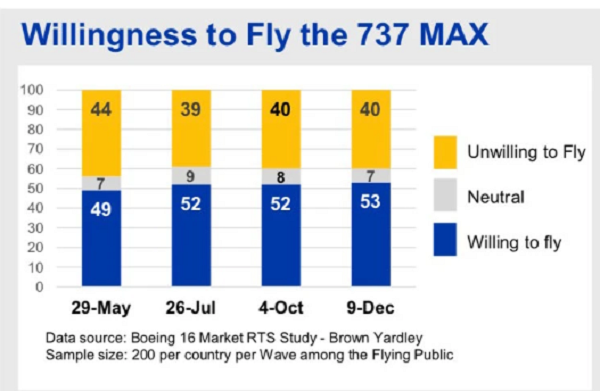
During the holiday break, several news items about Boeing were relevant to business communication and character. In one article, the New York Times revealed internal Boeing documents showing a company trying to rebuild its image after two MAX crashes within a year..
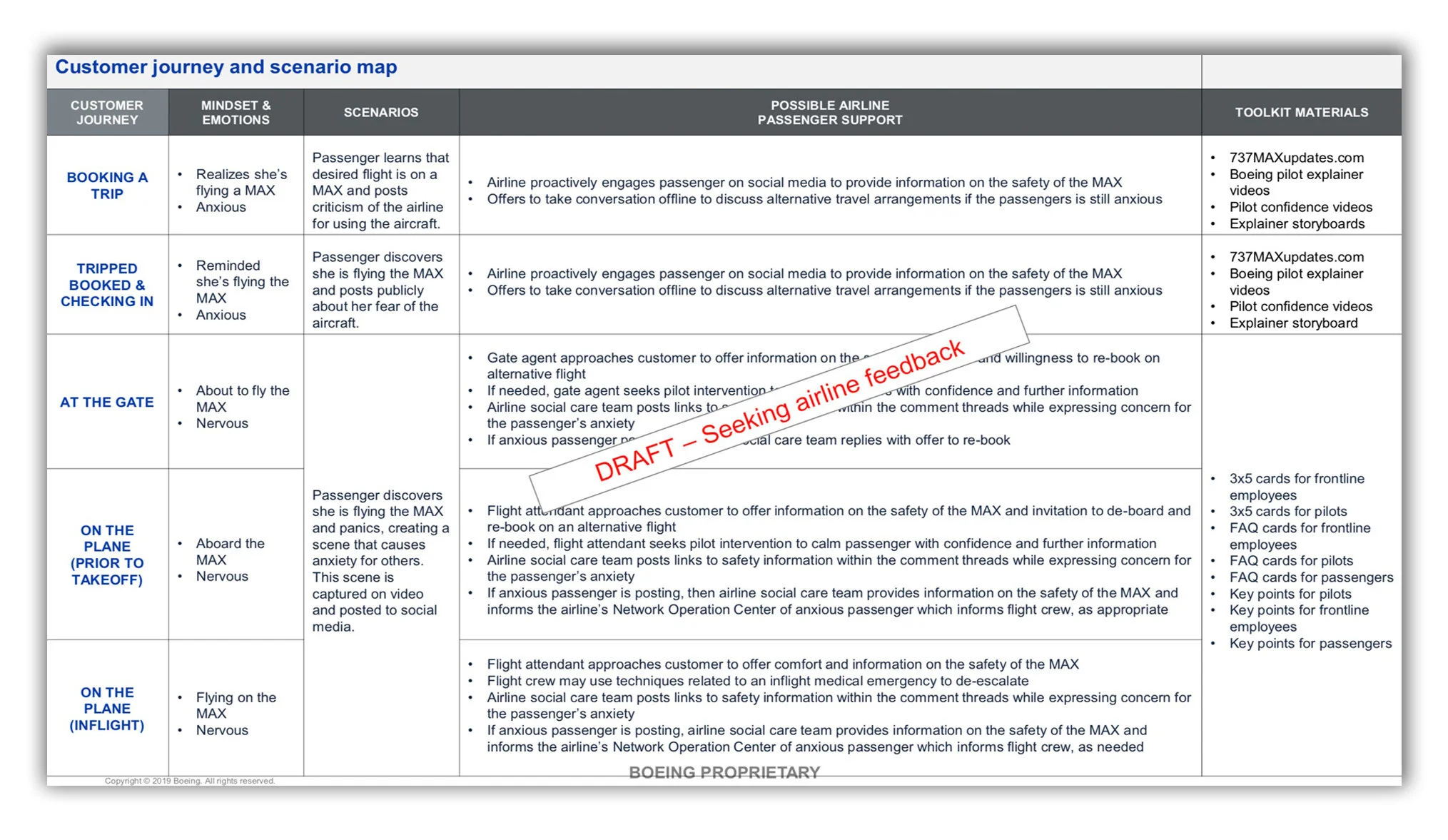
The documents give us an inside view of how the company plans to use persuasive strategies to win back customers. In one graphic, we see customers’ willingness to fly. In another, we see customer concerns and ways Boeing can address them, for example, with FAQ cards, “pilot confidence videos,” or personal connections (for example, “Flight attendant offers comfort and information on the safety of the MAX”).
Discussion:
What persuasive strategies does the company plan? Try to find examples of logical argument, emotional appeal, and credibility.
What are the consequences of this information becoming public? Does it likely endear the public to the company’s concerns, embarrass the company, or something else?

Should We Call Climate Change Something Else?

An AdAge writer wonders whether renaming climate change would change perceptions. Reframing is a common strategy for influencing behaviors, thoughts, and feelings. Already, climate change seems to be the evolution of global warming, a less convincing idea, in part, because sometimes it’s quite cold, as President Trump says.
A brand team pondered the following new names:
Global Meltdown, Global Melting
Climate Collapse, Climate Chaos
Boiling Point, Melting Point
Scorched Earth
Discussion:
The author identifies “parameters and guideposts” for the new name: audience, reach, and message. What is important for each of these categories?
What’s your view of the proposed new names? Which do you like best and least, and why?

T-Mobile's Full-Page Ad
In signature pink, T-Mobile ran a full-page ad in Sunday’s New York Times. The ad also feels like T-Mobile because we see “From the desk of John Legere,” the charismatic CEO and frequent tweeter with comments such as, “One of our best weapons is the ineptness of the competition. #sorrynotsorry.”
For a persuasive message, the ad is curious and a good example for business communication students to analyze.

Discussion:
Who are the primary and secondary audiences for this ad?
What are T-Mobile’s communication objectives, and how well does this message achieve them?
If you were advising the company, what suggestions would you have for revisions?
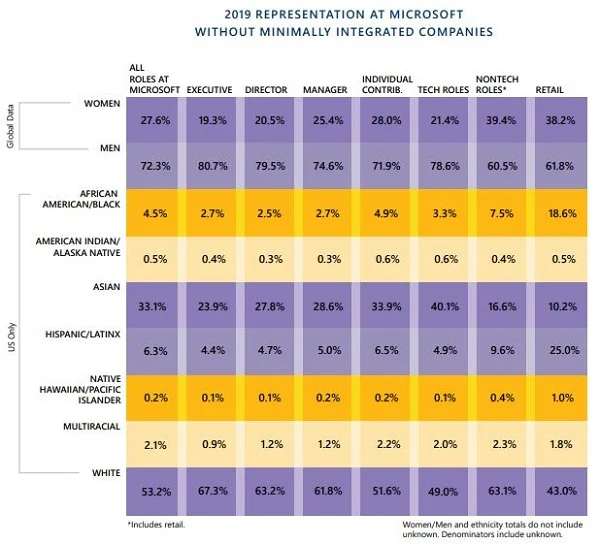
Microsoft's Diversity and Inclusion Report

Microsoft’s 2019 Diversity and Inclusion report is the company’s sixth since 2014.
In the introductory letter, we learn about positive changes in demographic data:
In technical roles alone, we have 49% more women, 48% more Hispanic/Latinx, and 67% more African American/Black employees than we did three years ago. And beyond population growth, this year’s snapshot shows diversity representation has risen in every demographic category we track.
The report includes a few dazzling graphics, such as the one shown here.
Discussion:
Read the entire report. What principles of business communication are followed?
What suggestions for improvement would you suggest to the report authors?
What’s your view of the graphic shown here? What is the main point? How else could the data be shown?
Although the report writers acknowledge that some of the diversity increase in technical roles is attributed to employee growth, what other questions might a skeptic ask?