

Measles: Evaluating Evidence
The news about a resurgence of measles raises interesting questions about how we evaluate evidence. About a dozen years ago, a small study alarmed parents and caregivers that the measles vaccine may cause autism. Since then, several large-scale studies have debunked that theory, and the article was retracted.
But the damage was done—and it lingers. A few hold-outs still believe the vaccine may be dangerous, and so they do not have their children vaccinated.
Recently, about 100 measles cases have emerged in the U.S., and once again, the evidence is up for evaluation. How are people convinced? What makes people change their minds?
In his book Factfulness, Hans Rosling offers this advice:
[I]f you are skeptical about the measles vaccination, I ask you to do two things. First, make sure you know what it looks like when a child dies from measles. Most children who catch measles recover, but there is still no cure and even with the best modern medicine, one or two in every thousand will die of it. Second, ask yourself, “What kind of evidence would convince me to change my mind?” If the answer is “no evidence could ever change my mind about vaccination,” then you are putting yourself outside evidence-based rationality, outside the very critical thinking that first brought you to this point. In that case, to be consistent in your skepticism about science, next time you have an operation, please ask your surgeon not to bother washing her hands.
Along these lines, a Medium article, The Falsification Mindset, suggests ways for us to change our opinions. The author encourages us to consider what evidence we would need in order to change our minds. This process is particularly useful because we more typically look for reasons to continue believing what we believe—confirmation bias.
Discussion:
What examples can you identify of when you have experienced confirmation bias. In retrospect, could you have avoided the bias to make a better decision or to have a more accurate view?
What’s your view of the measles vaccination? How did you form this opinion? How has it changed over time?
Identify a belief. What evidence would you need to think differently?
How is humility relevant to this situation?

Open Letter to Amazon
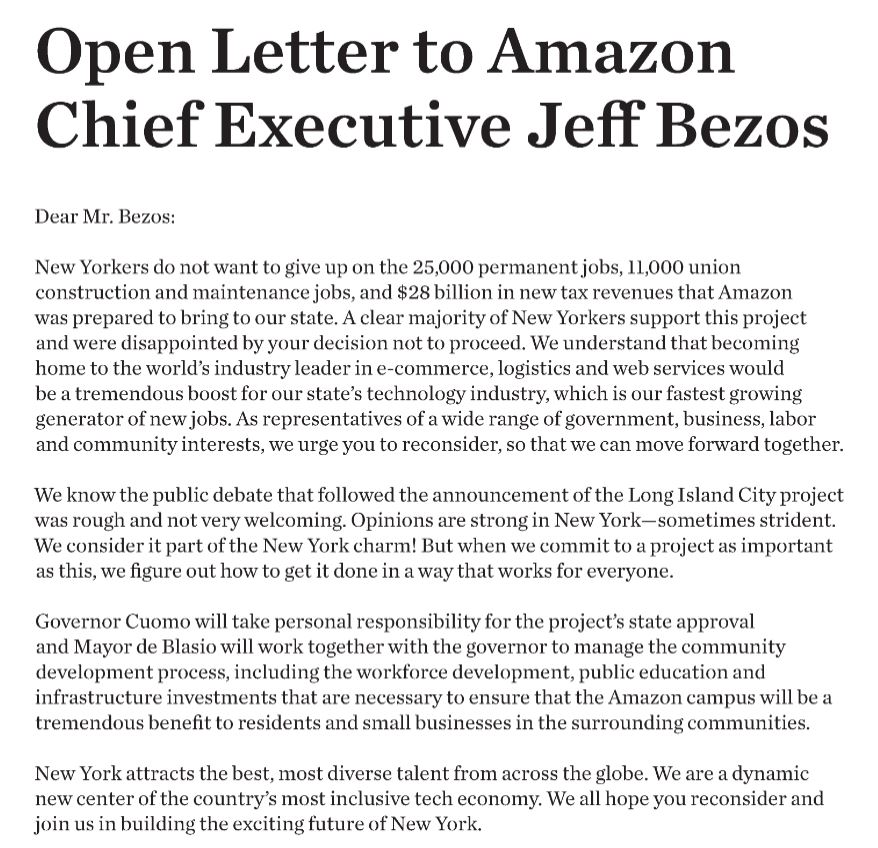
After Amazon’s failed move to Long Island City, Queens, local executives, lawmakers, and others signed an open letter asking Amazon to reconsider. The letter focuses on the benefits NYC would gain from having Amazon, particularly 25,000 new jobs.
Also appearing as a full-page ad in the New York Times, the letter includes some emotional appeal about New Yorkers’ “charm” and acknowledges difficulties in getting community support for the project. Not until the last paragraph do we see a shift from New York to Amazon and how the company would benefit from building in Long Island City.
Discussion:
What principles of persuasion does the letter illustrate?
How could the letter be improved?
What leadership dimensions are illustrated? Which may be lacking?

Interview with Delta CEO

In a LinkedIn interview, Delta CEO Ed Bastian discussed the decision to revoke the National Rifle Association (NRA) discount after the Parkland, FL, shootings, one year ago. The discount was for NRA members, and only 13 took advantage. But the real loss was in $40 million in tax benefits, which Georgia Governor Cagle fought to strike after the company’s decision.
Bastian admits that the loss was significant. But he concludes, “Our brand is worth so much more, and our values are not for sale.”
Bastian refers to the NRA’s “divisive rhetoric” and says that he didn’t want “to be seen as advocates” of the organization and its views. He also describes what we might call authentic or purpose-driven leadership:
"If you know who you are, you can make those decisions. And that you can make those decisions and sleep well at night.”
Discussion:
What leadership character dimensions are demonstrated by this situation?
Do you think Bastian did the right thing for Delta? Why or why not?
How well does Bastian address the interviewer’s question? Overall, how do you assess his delivery?

Jeff Bezos’s Medium Post

News is swirling about Amazon CEO Jeff Bezos’s long Medium post accusing the National Enquirer of “extortion and blackmail” for pictures of him and a woman other than his wife. Bezos claims that Chairman and CEO David Pecker acts of behalf of President Trump to discredit key people, and he cites an immunity deal between the Enquirer and the justice department for these actions. President Trump has openly criticized Amazon for not paying enough taxes.
A popular story about the piece is how Bezos used the word “complexifier”:
“My ownership of the Washington Post is a complexifier for me. It’s unavoidable that certain powerful people who experience Washington Post news coverage will wrongly conclude I am their enemy.”
A Slate article explores whether it’s a real word, and it is not in standard English. The “investigation” concludes that the word “appears most at home in the canon of self-help business gobbledygook.” As expected, memes, like the one here, are popular.
Bezos’s post is interesting from a business writing and character perspective if nothing more.
Discussion:
Analyze Bezos’s post: who are the primary and secondary audiences, and what are his communication objectives? How is it organized? What is the tone?
To what extent does Bezos meet his communication objectives?
Overall, what’s your view of his approach to address the situation with this post?
Which leadership character dimensions does Bezos demonstrate?

Law Firm Faces Backlash About Diversity

When a law firm announced its 2019 partners, they didn’t expect such a strong reaction. A photo shows the 12 members of the new group—all white and only one woman. Paul Weiss is an elite firm in midtown Manhattan and claims that this year is unusual.
The firm has since removed the photo from LinkedIn, where it drew attention. About 170 lawyers across the country wrote an open letter to express their wishes for a more diverse legal community.
Paul Weiss leaders took quick action to address the controversy and held a town hall meeting for employees. Firm leaders also say this group is unusually not diverse. In fact, the firm was recognized by a Microsoft initiative that offers bonuses to diverse law firms. In addition, 23% of the firm’s partners are women compared to about 18% of other law firms’ top leaders. The firm’s website boasts additional awards for diversity, including being ranked #16 in The American Lawyer’s 2018 Diversity Scorecard.
An email to Paul Weiss employees shows the words “diversity” and “associate professional satisfaction” in quotes, and a writer for the website Above the Law warns,
“…maybe there’s still some work to be done in mastering how to talk about these subjects. In general, don’t put anything in quotation marks that you wouldn’t be willing to sarcastically put air quotes around in conversation. That’s my advice.”
Discussion:
What’s your view of the photo and the reaction: should the firm have avoided the composite, did people overreact, or something else?
How do you assess the firm’s response? What else, if anything, should the firm leaders do to improve its image?
What persuasive strategies do the attorneys use in their open letter? Which are most and least effective for the situation?
Gillette Ad Gets Mixed Reviews
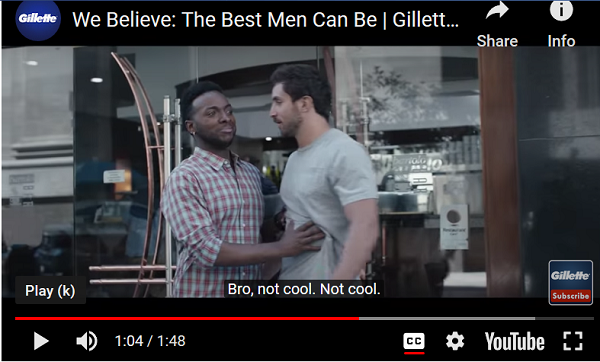
Gillette took a risk with its new ad campaign. Spinning its 30-year slogan, “The Best a Man Can Get,” the company introduced, “The Best a Man Can Be.” A new video references sexual harassment, challenges the expression “boys will be boys,” and encourages men to “hold other men accountable.”
Gillette explains the rationale in a press release. In addition, the URL thebestamancanbe.org redirects to https://gillette.com/en-us/the-best-men-can-be, where the company explains the campaign:
Thirty years ago, we launched our The Best A Man Can Get tagline.
Since then, it has been an aspirational statement, reflecting standards that many men strive to achieve.
But turn on the news today and it’s easy to believe that men are not at their best. Many find themselves at a crossroads, caught between the past and a new era of masculinity. While it is clear that changes are needed, where and how we can start to effect that change is less obvious for many. And when the changes needed seem so monumental, it can feel daunting to begin. So, let’s do it together.
It’s time we acknowledge that brands, like ours, play a role in influencing culture. And as a company that encourages men to be their best, we have a responsibility to make sure we are promoting positive, attainable, inclusive and healthy versions of what it means to be a man. With that in mind, we have spent the last few months taking a hard look at our past and coming communication and reflecting on the types of men and behaviors we want to celebrate. We’re inviting all men along this journey with us – to strive to be better, to make us better, and to help each other be better.
From today on, we pledge to actively challenge the stereotypes and expectations of what it means to be a man everywhere you see Gillette. In the ads we run, the images we publish to social media, the words we choose, and so much more.
As part of The Best Men Can Be campaign, Gillette is committing to donate $1 million per year for the next three years to non-profit organizations executing programs in the United States designed to inspire, educate and help men of all ages achieve their personal “best” and become role models for the next generation.
Our tagline needs to continue to inspire us all to be better every day, and to help create a new standard for boys to admire and for men to achieve… Because the boys of today are the men of tomorrow.
We’ve all got work to do. And it starts today.
Not everyone appreciates the new campaign. The YouTube video received 582,000 likes and 1 million dislikes. Some feel that the video unfairly accuses all men of not doing better.
A Gillette spokesperson said the campaign “is much more than a video—it is a commitment to spark and contribute to positive change through our voice as an advertiser and our actions as a brand and a company.” Analysts say the current boycotts probably won’t last long and will have little bottom-line effect on the company.
Discussion:
What’s your view of the video? Do you appreciate the message, find it offensive, or something else?
What else, if anything, should the company say in response to the controversy?
Which leadership character dimensions are illustrated by this story?

Lawsuit Charges Purdue Pharma Family with Instigating Opioid Crisis

In a 312-page complaint, Massachusetts lawyers detail how members of the Purdue Pharma family contributed to the opioid epidemic. The complaint shows the company’s aggressive marketing strategy, including how it convinced doctors to over-prescribe drugs.
One argument in the documentation shows how representatives were trained to encourage doctors to prescribe medication to what the company called “opioid-naive” patients:
Purdue also promoted its drugs for opioid-naive patients using the receptive term “first line opioid.” “First line” is a medical term for the preferred first step in treating a patient. Opioids are not an appropriate first line therapy. Nevertheless, Purdue’s internal documents and testimony from sales reps shows that Purdue repeatedly promoted OxyContin as “first line” — “the first thing they would take to treat pain.” (Sic: “first-time opioid” should include a hyphen.)
A 2001 email written by Richard Sackler, whose family owns OxyContin, blames victims:
“We have to hammer on abusers in every way possible. They are the culprits and the problem. They are reckless criminals.”
The lawsuit also charges the family with claiming that opioids are addictive to only one percent of the population, although they had no evidence for that claim.
This lawsuit follows others in Washington, Ohio, and Alabama. Last year, the company did stop promoting opioids.
Discussion:
Read more in the legal complaint. According to the documentation, how did the company wrongfully use persuasive communication?
In some of the documentation, we see ads and tactics that any company might use. Which do you find to be typical examples, and which cross an ethical line?

Starbucks CEO Draws His Own Path

Starbucks CEO Kevin Johnson is identifying his own vision for the company—apart from Howard Schultz’s plan. In an interview with the Wall Street Journal, Johnson said that the previous plan to open about 1,000 Reserve cafes will be piloted with just a few stores. Reserve stores deliver a higher-end experience, selling artisanal products and cocktails.
The change is one example of how Johnson is distinguishing himself from Schultz, who was the company CEO for about 30 years. According to the article, Johnson often started meetings with, “I’m not Howard. I’m Kevin.” A couple of weeks after Schultz left, Johnson said about the business strategy, “Certainly, I tend to bring a much more disciplined approach to picking the priorities.”
Starbucks Reserve image source.
Kevin Johnson image source.
Discussion:
Is it important for Johnson to distinguish himself from Schultz? Why or why not?
Read more about Johnson as the new CEO. How well is he handling the transition? What, if anything, should he do differently? He’s in a tough spot, wanting to create his own path but needing to be respectful to the previous leadership.

Marriott Breach Involved Passports

Although fewer people were affected by the Marriott data breach than originally expected, millions of passport numbers have been stolen. Marriott representatives have clarified that the breach happened at Starwood before the acquisition was completed. In its latest statement, Marriott confirmed that the following were stolen:
There were approximately 8.6 million unique payment card numbers, all of which were encrypted
There were approximately 5.25 million unique unencrypted passport numbers and approximately 20.3 million encrypted passport numbers.
Officials say it’s unlikely that someone could create a fake passport based on only a number. But the breach is worrying because passport numbers provide intelligence agencies with information about where people go, particularly when they cross borders. The U.S. hasn’t charged China with the breach, but experts say tactics are similar to those used in other breaches.
Marriott is offering new passports for guests whose documentation was used for fraudulent purposes.
Marriott image source. Passport image source.
Discussion:
Analyze Marriott’s communication so far: the audience, objectives, organization, tone, and so on. What works and what could be improved?
Compare the communication to how other companies handled a data breach.
Should Marriott offer new passports to all affected guests—not just those whose documentation was used for fraud? Why or why not?

Facebook Defends Sharing Information with Partners
Facebook is responding to new criticism about how it shares users’ information. A New York Times report identified a few examples of how Facebook allowed other technology companies to access private information:
Facebook allowed Microsoft’s Bing search engine to see the names of virtually all Facebook users’ friends without consent, the records show, and gave Netflix and Spotify the ability to read Facebook users’ private messages.
The social network permitted Amazon to obtain users’ names and contact information through their friends, and it let Yahoo view streams of friends’ posts as recently as this summer, despite public statements that it had stopped that type of sharing years earlier.
In a blog post, Facebook’s Director of Developer Platforms and Programs, Konstantinos Papamiltiadis, explained the reason for about 150 companies to have such access:
Today, we’re facing questions about whether Facebook gave large tech companies access to people’s information and, if so, why we did this.
To put it simply, this work was about helping people do two things. First, people could access their Facebook accounts or specific Facebook features on devices and platforms built by other companies like Apple, Amazon, Blackberry and Yahoo. These are known as integration partners. Second, people could have more social experiences—like seeing recommendations from their Facebook friends—on other popular apps and websites, like Netflix, The New York Times, Pandora and Spotify.
To be clear: none of these partnerships or features gave companies access to information without people’s permission, nor did they violate our 2012 settlement with the FTC.
The post goes on to explain the value to Facebook users of having their information shared.
Discussion:
Read the full blog post. How well does the company defend its practices? Analyze the audience, communication objectives, writing style, and so on.
How well does the company accept responsibility for sharing information?
What else, if anything, should Facebook do to rebuild its image? The company has faced increased criticism and regulatory interest in the past few months.

Report on Larry Nassar

A new report on the former Olympics coach and doctor, Larry Nassar, blames officials at Michigan State University, the U.S. Olympics Committee (USOC), and USA Gymnastics for allowing his abuse of hundreds of girls over decades. The investigators concluded, “Numerous institutions and individuals enabled his abuse and failed to stop him.”
In some cases when officials learned of an abuse allegation against Nassar, they waited weeks or months to report to; in other cases, officials reported claims but didn’t do enough to follow up. In still other cases, officials did nothing at all.
Nassar was finally convicted and sentenced to what will be life in prison. With the report results, some hope the USOC will now be investigated.
The report aligns with an NPR podcast, Believed, tracing claims against Nassar and his medical defense, which was accepted by too many for too long.
Discussion:
How do you think the abuse continued for so long? If you listen to the podcast Believed, you’ll hear Nassar’s defense during police interviews.
Analyze the report. What business communication principles are followed, and in what ways could the report be improved?
Deutsche Bank on the Defense

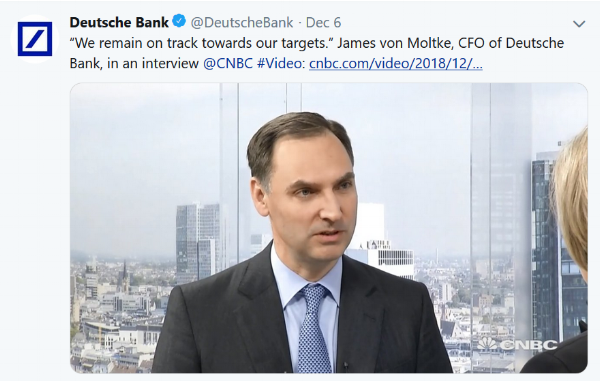
With stock at an all-time low and a German government raid last week, Deutsche Bank is trying to reassure customers and shareholders. Finance chief James von Moltke said on CNBC, “To date, we’re not aware of any wrongdoing on our part.” The investigation relates to the Panama Papers, which are documents made public in 2016 that revealed tax havens for individuals from more than 200 countries.
Throughout the CNBC interview, von Moltke tries to put the issue into perspective. He says the investigation involves a small, trust services business that the bank sold earlier this year. However, some of the money laundering accusations involve current managers. Still, von Moltke claims that new precautions are in place today.
Deutsche Bank stock fell further on the news, losing 51% of its value this year.
Discussion:
Assess the CFO’s video interview with CNBC. What persuasive communication strategies do you observe?
Which are his strongest and weakest arguments?
Also assess his delivery skills: tone, rapport, volume, pace, and so on.

Prep School Criticized for Abuse and False Apps

College prep school T.M. Landry has garnered national attention for helping Black students get into college, but all has not been well at the school. Students are speaking out about emotional and physical abuse as well as falsified college applications.
According to a New York Times report, examples of physical abuse include “forced to kneel on rice, rocks, or hot concrete for hours” and being “choked, yelled at, and berated.” Students report being told to lie on college applications about classes they took and the conditions under which they grew up, for example, exaggerating their poverty.
The Landrys, a married couple who run the school, defended their actions, saying they push kids to their limits. Mr Landry admits to physical contact, and he said, “Oh, I yell a lot.” Since a 2013 case against him that included probation, Landry says he no longer practices physical punishment. He also denied falsifying students’ applications.
College results have not been great. Students who spent more time at the prep school are more likely to withdraw or transfer to less demanding programs. The New York Times article describes an unaccredited school with little traditional programming, so students may not be academically prepared for the schools that admit them.
Discussion:
Assess the school website. The opening video features Mr. Landry, and the rest of the site boasts college acceptances. How convincing might families find the way the school is promoted? Other than admitting abuse, should the site say more to give parents and prospective students a more accurate picture of the school philosophy and practice?
How is this situation an example of failing integrity? Also consider intent versus impact. What could the founders' intent, and how is that different from the impact?

Hotel Cleaning Caught on Video
Housekeepers in 14 hotels in China were caught on video using a towel or sponge to clean multiple surfaces, including toilets, showers, and glassware. Hotels included W Hotel Beijing, Bulgari Hotel in Shanghai, InterContinental Beijing Sanlitun, Hilton Beijing, Beijing JW Marriott Hotel, Peninsula Beijing, and Shangri-La Hotel Beijing.
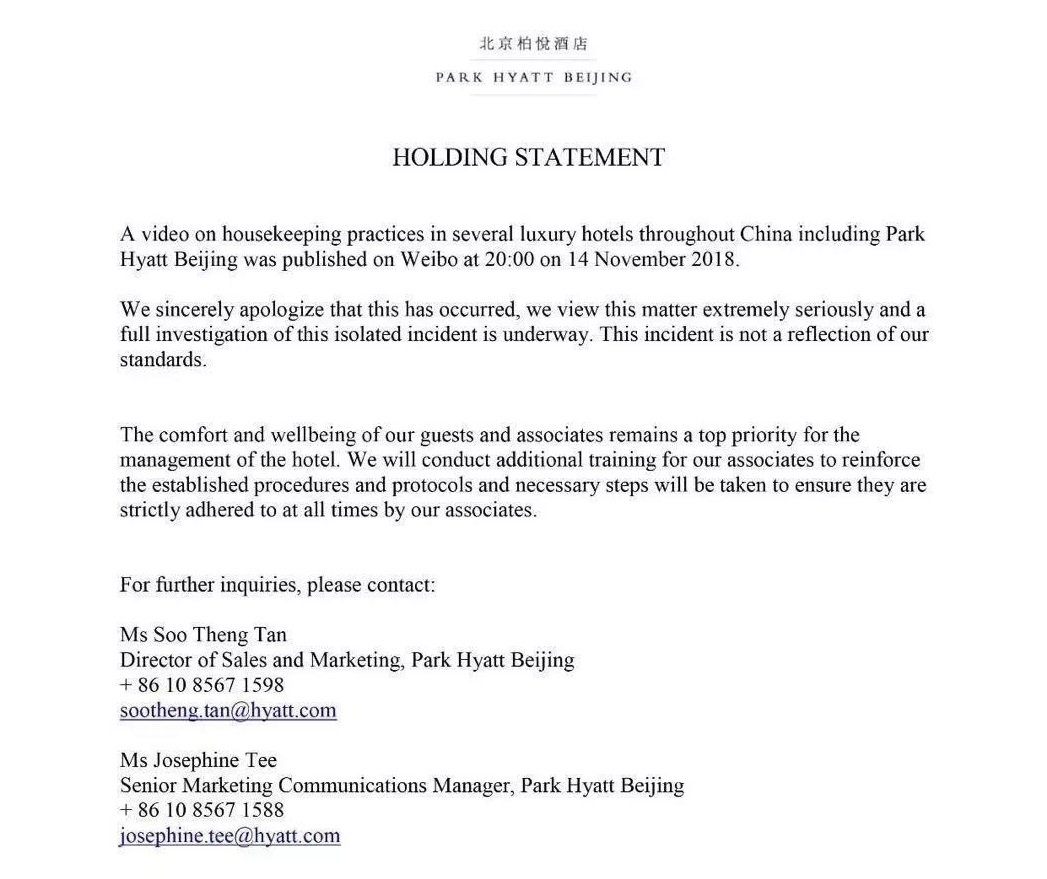
So far, five of the hotels have issued statements. The Peninsula wrote, “The hotel will still take measures to strengthen the implementation of the standard procedures for room service staff to ensure all aspects meet the established standards of the Peninsula.” Park Hyatt in Beijing referred to the situation as an isolated occurrence.
China's Ministry of Culture and Tourism ordered hotels to review their practices and called for an investigation.
Discussion:
What oversight should hotels have for room cleaning?
Analyze Park Hyatt's message: audience, communication objectives, writing style, and so on. How well does the company address the situation?
This isn’t the first time such as report has become public about luxury hotels. Do you think these cases are isolated, as the Park Hyatt claims, or systemic?

Nissan Chairman Is Arrested
Nissan’s chairman was arrested for financial misconduct, including under-reporting his income in securities fillings. Carlos Ghosn may have been engaging in improprieties for years.

The news came as a surprise to many. Ghosn is a popular business figure, credited with turning around Nissan, Renault, and Mitsubishi by forming an alliance and directing cost-cutting and layoffs. According to a Wall Street Journal article, the shock is felt particularly at Renault; a union leader described the reaction as “a feeling of stupefaction and a lot of anger.”
The French government has a 15% state in Renault, so President Emmanuel Macron also weighed in: “As a shareholder, the French state will remain extremely vigilant regarding the stability of the alliance.” At this point, officials are still trying to sort out the news and determine leadership going forward.
Nissan CEO Hiroto Saikawa delivered a news statement, translated in English on Bloomberg. The company also issued this matter-of-fact statement.
Nissan image source. Ghosn image source.
Discussion:
Why would a successful business executive engage in financial misconduct? What leadership character dimensions are lacking?
How does financial impropriety go on for years in a situation like this? Who should be accountable for the misconduct?
Assess Saikawa’s news statement. What works well to improve brand image, and what could be improved?

Controversy About Wildfires
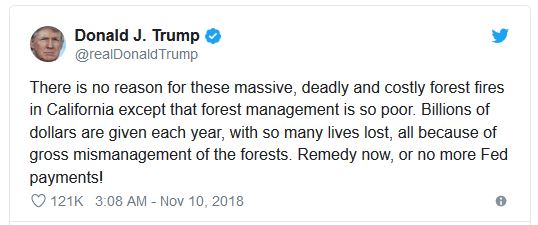
As wildfires rage in California, let’s look at controversy about the cause. So far, fires have taken 31 lives, and more than 200 people are missing. Governor Jerry Brown requested federal aid.
In a tweet, President Trump blamed California for poor forest management. This drew a harsh response from the California Professional Firefighters association, which called the statement “dangerously wrong.” In a statement, the group defended state actions, firefighters, and victims:
“The president’s message attacking California and threatening to withhold aid to the victims of the cataclysmic fires is Ill-informed, ill-timed and demeaning to those who are suffering as well as the men and women on the front lines.”
Later, the president tweeted a more compassionate message:
More than 4,000 are fighting the Camp and Woolsey Fires in California that have burned over 170,000 acres. Our hearts are with those fighting the fires, the 52,000 who have evacuated, and the families of the 11 who have died. The destruction is catastrophic. God Bless them all.
Discussion:
Analyze the California Professional Firefighters statement: audience, objectives, writing style, organization, etc. How well does the group defend its position?
How well does the statement illustrate principles of persuasion: logical argument, emotional appeal, and credibility?
Which leadership character dimensions does this situation illustrate?
Google Employees Protest Sexual Harassment
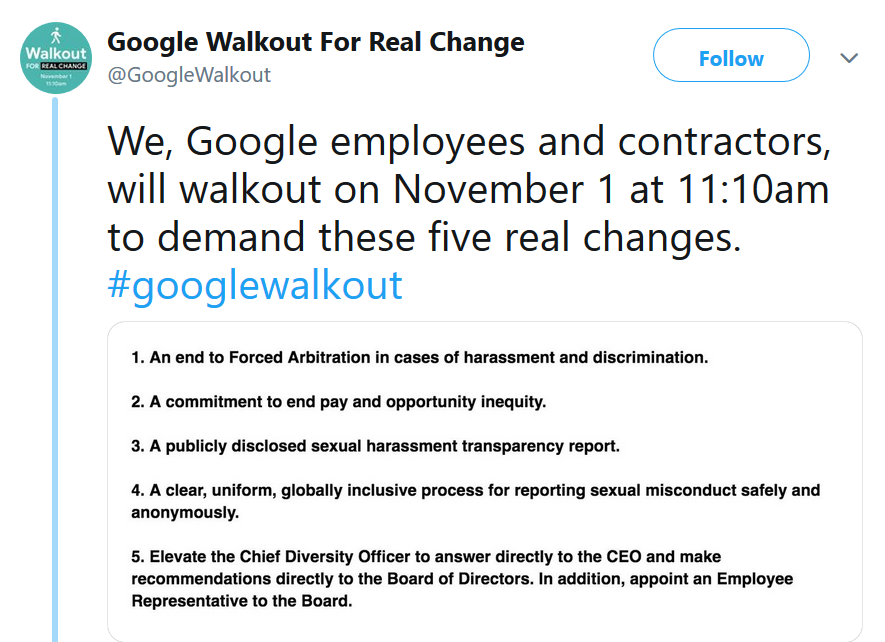
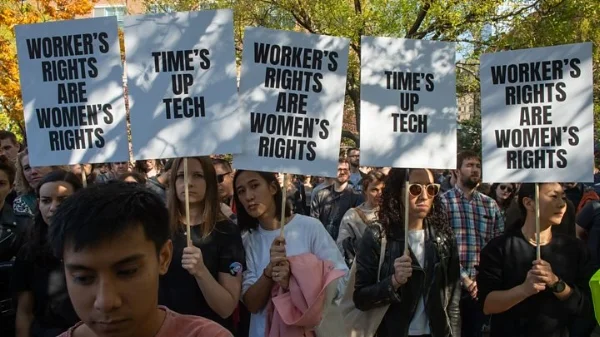
Thousands of employees walked out of more than 20 Google offices around the world on Thursday to protest how the company handled sexual harassment charges. Employees in California, Berlin, Dublin, London, Singapore, Tokyo, Zurich, and other locations organized under the group, “Google Walkout For Real Change.”
The reaction came after a New York Times article revealed several senior-level managers left the company, quietly, because of sexual harassment. Some were given large financial payouts.
In addition to a more transparent process, employees are asking for an end to pay equity and forced arbitration, which requires employees to settle cases within the company and denies them the right to sue.
In response to the walkouts, CEO Sundar Pichai said, “Employees have raised constructive ideas for how we can improve our policies and our processes going forward. We are taking in all their feedback so we can turn these ideas into action.”
Discussion:
How do you view the walkouts: a waste of time, overstepping, a productive way to protest, or something else? Respond to the same question for their list of demands.
What, if any, impact do you think the walkouts will have on company practices? Googlers did encourage the company’s decision to end an artificial intelligence contract with the Defense Department.
What leadership character dimensions are illustrated by the situation?
GM Offers Employee Buyouts
To cut costs, General Motors is offering voluntary severance packages to 18,000 employees. The company is taking this path before mandatory layoffs, which could happen if not enough people leave voluntarily.

To receive an offer, employees must have been with GM for at least 12 years and be on salary (not an hourly wage), which means more senior-level employees will be leaving. Typically, these employees are in managerial positions and are paid more highly, so the move means more savings.
The company is focusing on its most profitable regions and already cut salaried staff from about 90,000 to 77,000 after selling off its European divisions. At the same time, GM is staffing up technology functions to compete in the self-driving car market. Through its Cruise division, GM is planning to introduce a ride-sharing, autonomous vehicle in 2019.
Office image source. Cruise image source.
Discussion:
Why would a company choose a voluntary severance model instead of mandatory layoffs?
What factors should employees consider before deciding to take a package?
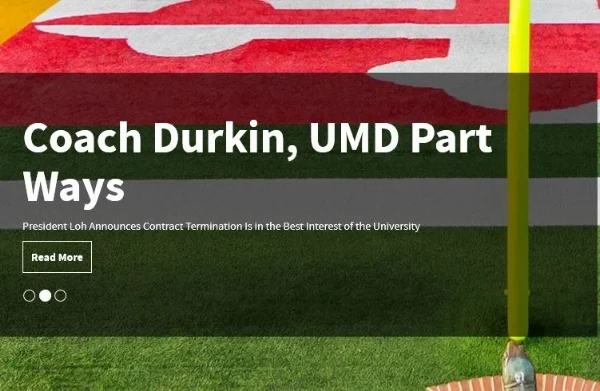
Reversal at Maryland

The University of Maryland has reversed its position on keeping football coach DJ Durkin. At first, Durkin was reinstated after a damning report about player abuse which resulted in the death of a student, Jordan McNair. Critics say the University’s Board of Regents overstepped in disallowing Loh to terminate the coach.
Now, pressure from students, players, the McNair family, and politicians left the University with no choice but to fire Coach Durkin. In a letter, President Loh explained the decision, including his previous concerns about Durkin’s return.
McNair’s father made a statement, including a message to President Loh when asked:
“The same thing I’ve always said to Dr. Loh. I’ve always commended Dr. Loh for having a level of integrity and doing the right thing even since he first initially came to the hospital, and secondly, when he came to us as a family to apologize and to take full moral and legal responsible for the tragic events that happened.”
In the meantime, Maryland players were involved in an altercation. It seems as though this situation has divided the team as well.
UPDATE: James T. Brady, chairman of the University System of Maryland’s Board of Regents, resigned last week, and President Loh is winning back his power. A Chronicle article notes that Loh won the “battle waged in the court of public opinion,” and whether he will leave the University as planned is now unclear. In a statement, Brady explained his decision and, using the word “proud” three times, cites board accomplishments during his tenure.
Discussion:
How is this situation an issue of integrity?
The regents had planned to terminate President Loh. Should they reverse this position too?
What should the University do now to repair its image?
We have heard nothing that I found from the regents (except their confidence in Coach Durkin). Should they communicate something now? What could they say that could help instead of hurt the situation?
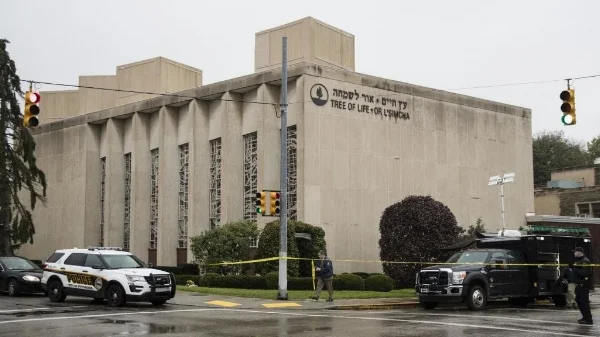
Emotions and Political Views After Synagogue Shooting
A shooter killed eleven people and wounded several others, including three police officers, in a Pittsburgh synagogue. Officials report that the act was motivated by hate, and the shooter is quoted saying, “I just want to kill Jews.” The Washington Post calls it, “The deadliest attack on Jews in the history of the United States.”
President Trump condemned the shootings: “This wicked act of mass murder is pure evil . . . . hard to believe and, frankly, something that is unimaginable.” The president also promoted the idea of armed guards: “If there were an armed guard inside the temple, they would have been able to stop them. Maybe there would have been nobody killed except for him, frankly.”
Pittsburgh Mayor Bill Peduto disputed this view: “The approach we need to be looking at is how we take the guns—the common denominator of every mass shooting in America—out of the hands of those looking to express hatred through murder.”
During a news conference, Pittsburgh Public Safety Director Wendell Hissrich gave an emotional statement, calling the crime scene “horrific.”
Discussion:
We see Hissrich’s emotions during the news conference. He demonstrates authenticity and vulnerability. How do you view his delivery?
President Trump’s comments during this time are controversial. What’s your view? How might your own feelings about gun advocacy or gun control affect your perspective?