
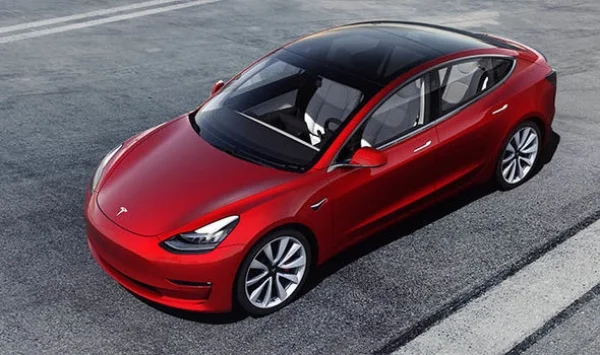
Tesla Investigated for Fraud
Tesla is facing a new challenge this week: a U.S. Federal Bureau of Investigation (FBI) criminal probe into whether the company misstated production data and therefore misled investors. The investigation will focus on Model 3 sedans.
A Wall Street Journal article explains part of the issue. CEO Elon Musk tweeted on July 2, 2017, “Looks like we can reach 20,000 Model 3 cars per month in Dec.“ But reports at the time showed a less optimistic picture. The result was only 2,700 cars produced for the entire year.
A spokesperson said the FBI document requests were voluntary and defended the company:
“When we started the Model 3 production ramp, we were transparent about how difficult it would be, openly explaining that we would only be able to go as fast as our least lucky or least successful supplier, and that we were entering ‘production hell.’ Ultimately, given difficulties that we did not foresee in this first-of-its-kind production ramp, it took us six months longer than we expected to meet our 5,000 unit per week guidance. Tesla’s philosophy has always been to set truthful targets –- not sandbagged targets that we would definitely exceed and not unrealistic targets that we could never meet. While Tesla gets criticized when it is delayed in reaching a goal, it should not be forgotten that Tesla has achieved many goals that were doubted by most. We are enormously proud of the efforts of the whole company in making it through this difficult ramp and getting us to volume production.”
Discussion:
What’s your view of Musk’s statement compared to the result: arrogance, entrepreneurial optimism, or something else?
How well does the Tesla spokesperson address the investigation? What else, if anything, should the company say at this point?
In what ways does the company demonstrate a lack of vulnerability in this situation?
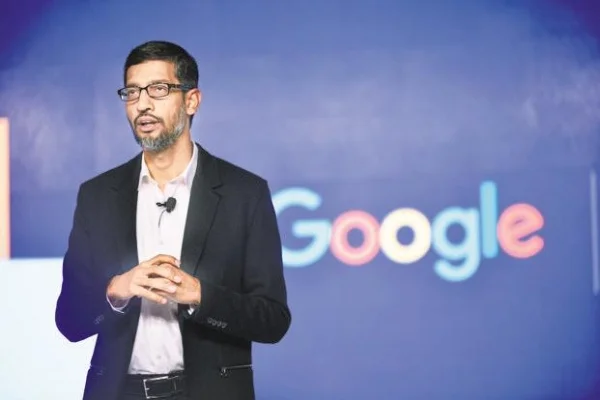
Google Admits Sexual Harassment Incidents
It’s been quiet until now, but Google has fired 48 employees for sexual harassment. A New York Times article exposed a number of high-profile departures dating back to 2014, including Andy Rubin, who developed the Android.
Rubin was paid $90 million when the company asked for his resignation, but executives never told the entire truth: that Rubin left because he was accused of sexual misconduct. Instead, then-CEO Larry Page, complimented him: “I want to wish Andy all the best with what’s next,” and “With Android, he created something truly remarkable—with a billion-plus happy users.” Rubin denies the claim and the circumstances of his termination.
In addition to this situation, the Times article cites a number of relationships between senior-level managers and employees. An email from CEO Sundar Pichai and the VP of people operations to staff acknowledges the 48 departures, including 13 “senior managers and above.”
Hi everyone,
Today's story in the New York Times was difficult to read.
We are dead serious about making sure we provide a safe and inclusive workplace. We want to assure you that we review every single complaint about sexual harassment or inappropriate conduct, we investigate and we take action.
In recent years, we've made a number of changes, including taking an increasingly hard line on inappropriate conduct by people in positions of authority: in the last two years, 48 people have been terminated for sexual harassment, including 13 who were senior managers and above. None of these individuals received an exit package.
In 2015, we launched Respect@ and our annual Internal Investigations Report to provide transparency about these types of investigations at Google. Because we know that reporting harassment can be traumatic, we provide confidential channels to share any inappropriate behavior you experience or see. We support and respect those who have spoken out. You can find many ways to do this at go/saysomething. You can make a report anonymously if you wish.
We've also updated our policy to require all VPs and SVPs to disclose any relationship with a co-worker regardless of reporting line or presence of conflict.
We are committed to ensuring that Google is a workplace where you can feel safe to do your best work, and where there are serious consequences for anyone who behaves inappropriately.
Sundar and Eileen
Discussion:
Should Google have been more transparent about the previous departures? Why or why not?
Should the executives say more in the email about the specific departures mentioned in the Times article? Why or why not?
Assess the email for audience analysis, objectives, tone, organization, and style. What works well, and what could be improved?
Which leadership character dimensions does Pichai demonstrate and fail to demonstrate?
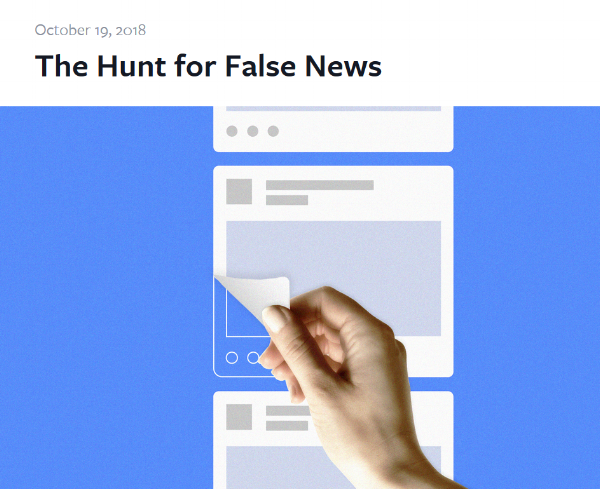
Facebook's War on "Fake News"
Facebook has taken several steps to banish incorrect information on the site. The company provides three examples of questionable news items and the action they took, including what they missed.
In some of these situations, stories were doctored with images from related situations. One image, with the caption, “Man from Saudi spits in the face of the poor receptionist at a Hospital in London then attacks other staff,” represents a situation that happened at a veterinary hospital. The post explains, “On Facebook, we’ve seen years-old images of violent acts, protests and war zones reposted and used to inflame current racial or ethnic tensions.”
Another story promised that NASA would pay people $100,000 “to stay in bed for 60 days.” Although this may sound appealing—and it did garner millions of Facebook views—again, this claim referred to an older article in which a journalist was paid $18,000 for staying in bed for 70 days. But the offer no longer stands.
A Standard study reports that Facebook’s efforts are working to reduce misinformation, although we don’t yet see the same effects on Twitter: “Interactions then fell sharply on Facebook while they continued to rise on Twitter.“ A Mashable report explains:
“Mark Zuckerberg and company may be on the right track when it comes to fighting fake news, but as you can see from those engagement numbers, it’s not a success story quite yet. Even with the downward trend over the past 2 years, Facebook is still responsible for much more of the spread of fake news than a social platform like Twitter.”
Discussion:
How do you interpret Facebook’s progress?
Assess the Facebook post. How well is the company taking responsibility and explaining what still needs to be done?

Facebook's Messaging Over Time
The Wall Street Journal reports how Facebook has repositioned itself since its founding in 2004.
In 2005, at Harvard, founder Mark Zuckerberg said Facebook’s purpose is to ”look people up” and for “connecting to people.” In 2008, Facebooke expands and messages focus on helping people “share information. . . and share parts of their identity with each other.” In 2010, Zuckerberg’s vision enlarged: “People can have instantly social and personalized experiences everywhere that they go.” Soon after, Zuckerberg focused on problem solving.
In 2012, Zuckerberg said, “Our mission isn’t to be a public company. Our mission is to make the world more open and connected.” By 2013, Zuckerberg was seeing Facebook’s role in selecting governments, getting healthcare access—improving people’s lives.
More recently, given concerns about privacy and misinformation, Zuckerberg’s messages focus on responsibility.
Discussion:
The WSJ video has a negative connotation about Facebook’s changing message, particularly in light of today’s news about shareholder proposals to split Zuckerberg’s roles. Do you agree with this assessment?
How well has Zuckerberg handled messages about the evolution of Facebook in the past 14 years? What, if anything, can he do differently now?
Do you agree with the proposal to split the CEO and chairman jobs? In other words, does Zuckerberg have too power? Does he need help at this point?
How is Facebook’s evolving messaging a potential matter of integrity?
Senators Send Harsh Letter to Google

The U.S. Committee on Commerce, Science, and Transportation sent a strongly worded letter to Google CEO Sundar Pichai. The senators question what the company has done to protect 500,00 users whose profile information was stolen in 2015. Their anger stems from knowledge of an internal memo, cited in a Wall Street Journal article, discouraging disclosure because of fear of “immediate regulatory interest” and the requirement for Pichai to testify before Congress.
In the letter, the senators compare Google’s response to Facebook’s in light of the Cambridge Analytica breach:
“At the same time that Facebook was learning the important lesson that tech firms must be forthright with the public about privacy issues, Google apparently elected to withhold information about a relevant vulnerability for fear of public scrutiny.”
The senators then list specific information about vulnerabilities for Google to provide by October 30.
Discussion:
Read the Wall Street Journal article for more background information. Did the senators respond appropriately? Why or why not?
What is Google’s accountability in this situation? What is the committee’s accountability?
In addition to responding to the senators’ requests, what, if anything, should Google communicate to the public at this point?
Google may have been avoiding its own vulnerability.
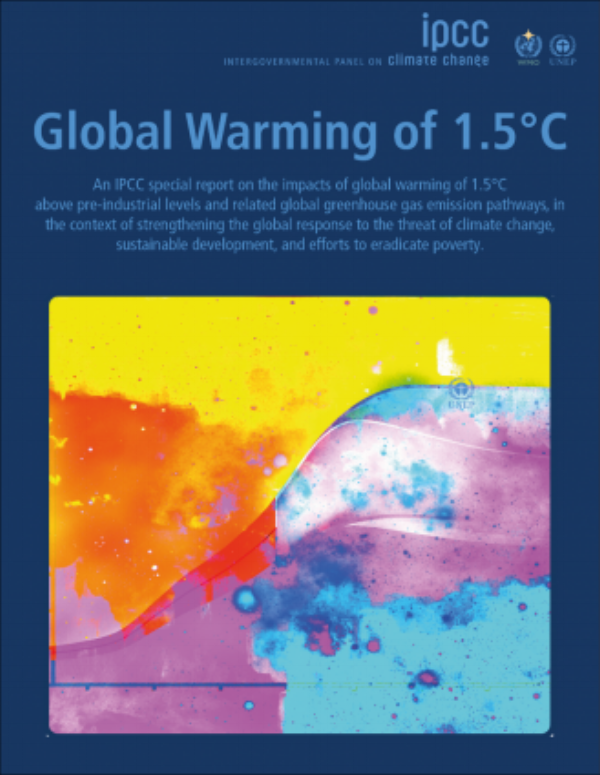
Climate Change Report

If you weren’t already concerned about climate change, a new UN report may change your thinking. The extraordinary report, written by dozens of scientists from 40 countries who reviewed more than 6,000 studies, reveals a bleak picture for the Earth’s future. The introduction, titled “Chapter 1: Framing and Context” is 61 pages, and the rest of the report is a long, deep dive into the data.
The most significant conclusion is that global warming must be limited quickly. The authors write with great urgency that the Earth’s temperature has already increased and that further increases will create heatwaves, eliminate ice in the Arctic Ocean, melt massive ice sheets, devastate coral reefs, and produce intense storms. Further, global warming will result in more poor people: "Climate change is projected to be a poverty multiplier, which means that its impacts make the poor poorer and increase the total number of people living in poverty.”
The authors suggest limiting the planet's warming to 1.5 degrees Celsius (2.7 degrees Fahrenheit) above pre-Industrial Revolution temperatures to avoid catastrophic results. They also warn that this requires "rapid, far-reaching, and unprecedented changes in all aspects of society."
A New York Times article, “Dire Climate Warning Lands With a Thud on Trump’s Desk,” describes President Trump’s disinterest in the report findings. Similarly, a text search on today’s Wall Street Journal home page finds an article about Exxon but nothing about the UN report.
Discussion:
Analyze the report audience, objectives, writing style, and organization. Which business writing principles are followed?
What improvements would you make to improve report readability?
What are your views about climate change? What evidence leads to your conclusions?

WhatsApp Message Causes Dramatic Infibeam Stock Price Drop

Infibeam, an India e-commerce company, lost more than 70% of its stock value after a WhatsApp message questioned the company’s governance. The message was reported to be sent by an analyst at Equirus Securities months ago, but it only recently surfaced and went viral. Equirus denies involvement.
An India Times article explains the message:
“The note said the company gave an interest-free and unsecured loan to a subsidiary with negative net assets to be repaid over eight years. The note also mentioned that the company has re-classified its co-founder, who continues to hold a large chunk of shares, as non-promoter.”
An Infibeam spokesperson responded to the controversy:
“The company has given interest-free unsecured loans to its wholly owned subsidiary NSI Infinium Global since inception. These loans are short-term loans which are repayable on demand and have been utilised by NSI solely for its business and operations. Further, there has been no change in the promoters from the list of promoters identified and disclosed by the company info in the offer documents for its IPO.”
Discussion:
How can people do a better job at distinguishing between real reports and rumors?
How well did Infibeam respond to the news? What effect do you expect on the company stock on Monday?
Facebook Breach Announced Today
Millions of Facebook users inadvertently gave hackers access to their accounts, and the company is trying to fix the problem. Hackers found a way in through the “View As” feature, which people use to see how their profile looks to others.

The company learned of the issue this week and today held a conference call with reporters. To the extent to which Facebook could manage the story, it’s the perfect day for such a report, when the country is focused on whether lawmakers will support Brett Kavanaugh’s nomination to the Supreme Court despite allegations of sexual assault.
On the conference call, CEO Mark Zuckerberg stressed that fighting hackers is an ongoing concern:
"This is a really serious security issue. This underscores there are just constant attacks from people who are trying to take over accounts and steal information from our community. This is going to be an ongoing effort."
Facebook’s VP of product development posted a “Security Update” statement on Facebook’s news site, including this reassurance:
“People’s privacy and security is incredibly important, and we’re sorry this happened. It’s why we’ve taken immediate action to secure these accounts and let users know what happened.”
Cover image source. Spotlight image source.
Discussion:
Do you agree that Facebook timed the announcement when a bigger story would likely overshadow the news? Or am I just cynical?
Assess the Security Update as a persuasive message. Describe the tone and organizational strategy. How well does the statement achieve its objectives?
How well does the company take responsibility for what happened?
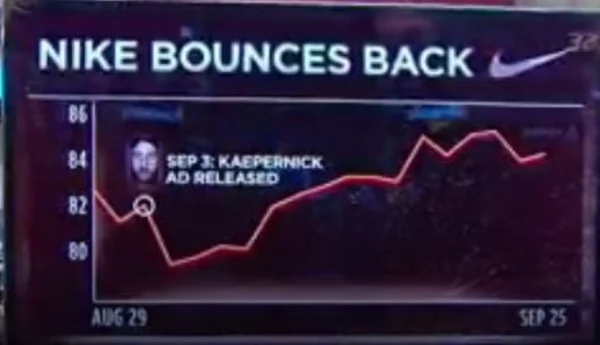
Nike Addresses Kaepernick on Earnings Call

On a quarterly earnings call, Nike CEO Mark Parker addressed head on the new ad campaign with former NFL player Colin Kaepernick. Following strong first-quarter earnings and revenue growth, Parker expressed confidence in Nike’s sponsorship agreement, particularly related to social media engagement:
“How we look at it is how do we connect and engage in a way that’s relevant and inspiring to the consumers that we’re here to serve. Our brand strength ... is a key dimension that contributes to the ongoing momentum that we’re building across the Nike portfolio.”
About an ad campaign that also features athletes Serena Williams and Lebron James, Parker said,
“These are actually very inspiring athletes, and again we feel like that campaign has delivered on that message in a way that’s really connected with people around the world.”
But the stock did fall in after-hours trading after the earnings report. Analysts say investors expected more than 10% revenue growth, and they note this is the first quarter since a sexual harassment scandal hit the company.
Discussion:
The company executives tout the campaign results on social media. How much do these results matter compared to the earnings report?
Maybe this is another example of how quarterly reports aren’t the best measure of company performance. Should we be looking longer term? Why or why not?

Uber Rebranding
In the past, Uber had been criticized for questionable business practices and ethics, and the company is still trying a turnaround. They hired Dara Khosrowshahi in August 2017 and distanced themselves from founder Travis Kalanick.
Now Uber has a new branding initiative. The marketing campaign, "Doors Are Always Opening,” is credited to 72andSunny, a Los Angeles firm.
A video shows significant events in people’s lives—giving birth, meeting your partner’s parents—and how people rely on Uber.
Paulie Dery, Uber's executive creative director, describes the objectives as follows:
"What we are really saying is opportunity happens everywhere if you are willing to move. You know what happens when you sit still? Nothing. And I think that is a great Uber story. We've always had a certain amount of hustle and belief that movement creates something better for everybody, and that's really at the center of the idea."
The company also has a new logo: simply the company name, which insiders hope will become a verb, like Google.
Discussion:
Uber’s previous campaign was called “Moving Forward” to distinguish the company’s controversial past with its future. How well do you think this new campaign will accomplish its objectives?
What’s your view of the new logo, simply the company name?

Changes at Riot Games
Following allegations of sexism, Riot Games has apologized and is making changes. A long report by Kotaku placed blame mostly on the fast company growth and sexist working environment.
Trying to shed its “bro-culture” stigma, leaders have acknowledged that the company could be more inclusive. In a long statement last month titled, “Our First Steps Forward,” the company starts by apologizing to “to all those we’ve let down.” The statement then lists steps the company will take around inclusion initiatives, staffing, training, and so on

In a more recent statement, the company announced hiring a “leadership and strategy expert,” Frances Frei, who had also worked with Uber. The statement includes this quotation from Frei:
“After spending time with Riot’s leadership and many others across the organization, it became clear that Riot is truly putting everything on the table and committing to evolving its culture. In my interactions with Rioters, I’ve seen extraordinary levels of engagement on these issues across the company. Every Rioter with whom I’ve met truly cares about inclusion, which means real change is possible. Riot isn’t interested simply in fixing problems on the surface, it has the ambition to be an industry leader and to provide a roadmap for others to follow. I share that ambition and am eager to help Riot navigate this process.”
Discussion:
Read Kotaku’s report. How credible do you find the investigation and reporting? What could increase the credibility?
Assess Riot Games’ statement. Who is the audience and what are the communication objectives? How do the organization, writing style, and tone affect your assessment?
Now assess the statement about Frei. What’s your view of including Frei’s statement? What else, if anything, should be included in the statement?
Overall, how well is Riot Games demonstrating accountability? What other leadership character dimensions are demonstrated?

Disneyland Employees Speak Out

Disney employees are on screen in a New York Times op-ed video, "I Work at the Happiest Place on Earth. Why Can’t I Pay My Rent?" A 30-year concierge and a cosmetologist are featured more prominently. One is currently living in her car, and another says, tearfully, that she has spent time in her car. Both say they love their jobs, but along with 75% of Disneyland employees, they can't afford to pay "basic expenses every month." Data comes from a questionnaire and report, "Working for the Mouse."
The argument is for Disney to pay a living wage, and the call is for citizens to vote for an Anaheim proposal that affects Disneyland employees and some local hotel workers. In the video, one claim is that real wages have declined because of inflation—what $15 per hour bought seven years ago isn't the same today.
Business leaders who are fighting the measure say that the increase would hurt jobs. One local Chamber of Commerce member argued, "We estimate 3-4,000 jobs lost over next year or two by companies having to absorb this new increased cost. They're going to reduce hours and reduce jobs."
Senator and former presidential candidate Bernie Sanders is also featured in the video. He is proposing a bill he calls "Stop BEZOS" to tax Amazon and other large companies for public assistance received by their employees. The idea is for companies with 500 or more employees to pay the government back for support paid to their employees who cannot survive on earned wages.
Discussion:
- How well does the video make the case for higher wages? Which are logical and which are emotional appeals? What evidence is presented?
- Assess the credibility of the questionnaire and report, "Working for the Mouse." From your assessment, what makes the report both credible and questionable? In what ways does the report reflect business communication standards, and in what ways does it fall short?
- Research the impact of raising wages on industry, for example, this Cornell report. What's your view of this argument? It's a complicated question because of different industries, locations, labor supply, rates, etc.
- In what ways do the employees featured in the video demonstrate courage? What risks did they take in appearing on screen?
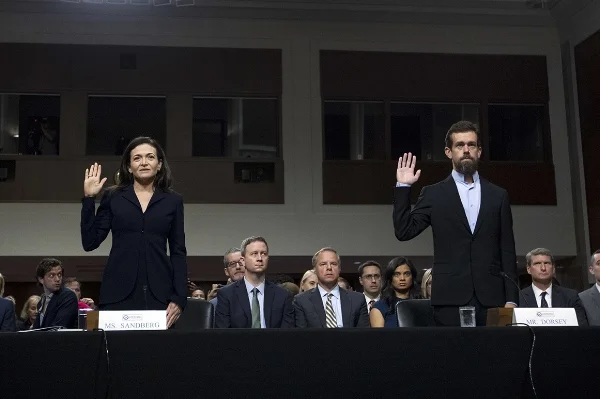
Twitter Denies Shadow Banning
"Shadow Banning" was a big topic at yesterday's Senate Intelligence Committee hearings with Facebook and Twitter. Twitter CEO Jack Dorsey denied the claim that tweets are suppressed based on political ideology. But he did admit that candidates' tweets were affected in search results.
In a blog post, Twitter executives explained the definition of shadow banning and denied the practice. The post also explains how search results are ranked:
- Tweets from people you’re interested in should be ranked highly
- Tweets that are popular are likely to be interesting and should be higher ranked
- Tweets from bad-faith actors who intend to manipulate or divide the conversation should be ranked lower
The executives confirm a technical issue that prevented Republican politicians tweets from showing up in searches, but they write, "some Democratic politicians were not properly showing up within search auto-suggestions as result of this issue." Like Dorsey, they don't specify numbers affected on each side.
Discussion:
- Assess Dorsey's response to Representative Joe Barton's questions. How well did he respond? How do you assess his delivery skills?
- How well does Twitter take responsibility in the blog post?
- How well does the blog post explain the situation and defend the search results?
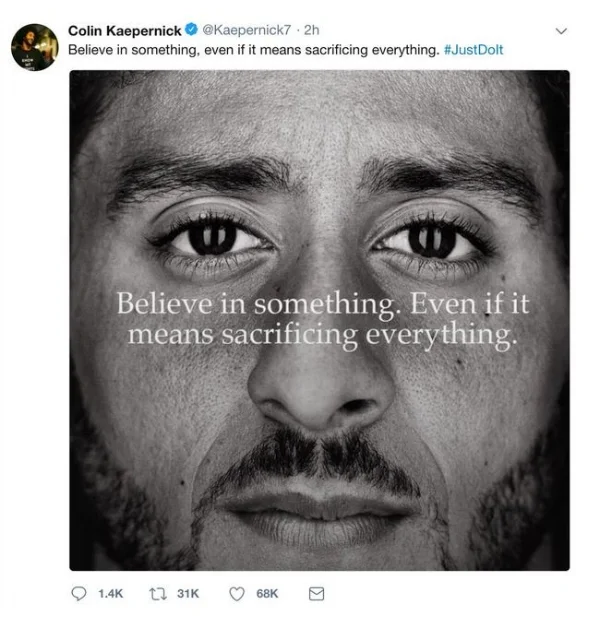
Nike Takes a Chance on Kaepernick
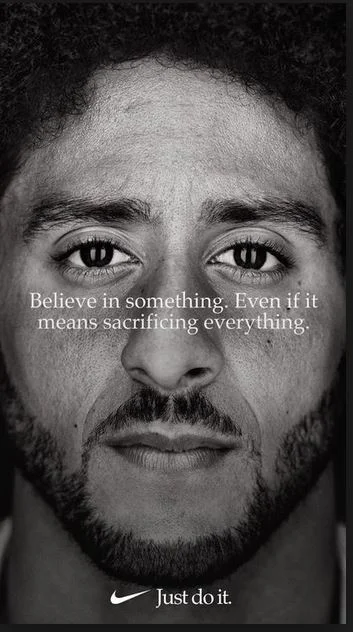
Former National Football League quarterback Colin Kaepernick will be the new celebrity face of Nike's "Just Do It" campaign. Kaepernick was the center of controversy when players were both complimented and criticized for "taking a knee" to protest racism and promote social justice.
Nike and Kaepernick already had a sponsorship deal, but this new contract extends it. The deal may be "awkward," to use The New York Times's phrase, because the NFL has not been able to stop player protests, to the dismay of President Trump and others.
Also, Kaepernick hasn't played in the league since 2016 and has an active grievance, accusing the league of conspiring to prevent him from playing.
But neither Nike nor Kaepernick are shying away from the message. The first ad shows Kaepernick with the caption, "Believe in something. Even if it means sacrificing everything."
As part of the deal, Nike will contribute to "Know Your Rights," Kaepernick's foundation to "fight oppression of all kinds globally, through education and social activism.
Discussion:
What risks is Nike taking with this contract? Do you believe the campaign will be well received, divisive, or something else?
Nike didn't respond to The New York Times for comment about the story. Should the company include a comment or make a statement? Why or why not?
What leadership character dimensions are illustrated by this story?
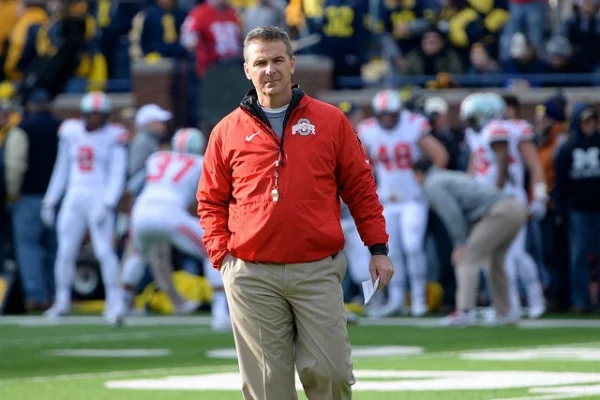
Ohio Football Coach: Another Case of Deleted Messages
Ohio State football coach Urban Meyer will forgo pay and the ability to coach three games because of his failure to appropriately handle a staff member's misconduct. A New York Times article chronicles issues with Zach Smith's behavior, including paying $600 at a strip club during a recruiting event, a domestic violence charge, and an affair with a staff member.
During a press conference, Meyer apologized, saying, "I should have done more, and I am sorry for that," and "I followed my heart and not my head."
The Times article also describes a conversation between Meyer and Smith about deleting text messages. I should count the number of stories on this blog since 2010 illustrating that deleting texts and emails fail to get the desired result. These messages are almost always recoverable, and the act of deletion makes the accused look even more guilty.
In addition, in this situation, Ohio State officials at first failed to produce messages requested by the school newspaper. Worse, several staff knew about the request, but no one even approached Coach Meyer to retrieve them.
Discussion:
- Once again, where are the many places deleted messages may be stored? How else can they be retrieved?
- What's your view of the strip club visits? Could Meyer reasonably argue that this is just part of the recruiting process? After all, no students were invited—only university and high school coaches.
- Assess the press conference. How well did university officials, including Meyer, respond to reporters' questions? Did the team appropriately take accountability?

What Is "Dehumanizing" Speech?
The New York Times reports Twitter's struggle to define what constitutes "dehumanizing" speech. Apparently, the only agreement among Twitter's team members is that the decision is "incredibly complex."

Categorization is critical, as the company has a reputation as a sometimes dark place of trolls and harassment. Yet this week, Apple, Facebook, YouTube have expunged content from Alex Jones's Infowars, which is known for spreading misinformation, including that the shooting at Sandy Hook was a hoax. You can imagine how this angered families of lost children.
In a tweet, CEO Jack Dorsey explained Twitter's decision to keep Infowars content, but employees, particularly, have not responded positively.
Twitter is in a difficult spot because, on the other hand, sites have been criticized for censoring conservative views. Del Harvey, the company's VP of Trust and Safety, wrote an email to employees further explaining the company's rationale.
Discussion:
- How would you define "dehumanizing" speech? What character dimensions are involved?
- What persuasive strategies does Harvey use in her email to employees? Which are most and least convincing and why?
- What is your view about Infowars content? Should Twitter remove it from the site as other social media companies have done? How might your own political views factor into your thinking?

Airline CEOs Defend Seat Size

American and Delta Airlines CEOs sit in small plane seats to explain the rationale and defend shrinking seat sizes. Doug Parker and Ed Bastian, both 6' 3" tall, agreed to talk to a WSJ writer, while United CEO Oscar Munoz declined.
Both CEOs say they fly coach for short trips. Bastian started a policy that Delta directors must fly coach when traveling less than three hours. Of course, as the article points out, suffering three hours in a small seat isn't quite the same as 24.
The executives say that flight amenities, such as WiFi, make up for any discomfort from smaller seats. American's Parker says that customers don't complain and that the airline hasn't "done anything that makes the main cabin product less desirable than it was before." The airlines are also focused on providing larger seats for higher fares.
Another WSJ article explains what airlines consider when making seats comfortable.
Discussion:
- How does this story illustrate character dimensions such as compassion, vulnerability, and humility?
- Did the CEOs do the right thing by agreeing to participate in the article? What are the risks and benefits?
- Why would United CEO Oscar Munoz decline? Was this the right decision for him and the airline?
- What persuasion tactics do the CEOs use to convince us that flying coach is not so bad?
- Do you agree with the CEOs' assessments about small seats? What has been your experience?

Cold Email Examples
The CEO of Mapistry, a start-up software company for storm water compliance, posted and analyzed her past emails to VCs, venture capitalists who could invest in her company. Allie Janoch disputes the claim that you need an introduction to a VC; she has had some success in sending cold emails.
Her first email, Janochs admits, says little about her company and undermines the message with self-deprecation.

She didn't get a response. Her second email, when her company had more traction, includes a specific subject, focuses on problem solving, uses bullets for important data points, and is personal.

Discussion:
- What do you consider the strength's of Janoch's second email?
- What improvements could she make?
- How does each email demonstrate humility? The first, as Janoch says, is self-deprecating. What's the potential problem with this approach? How does the second email demonstrate humility as well as confidence? How well does Janoch balance the two?
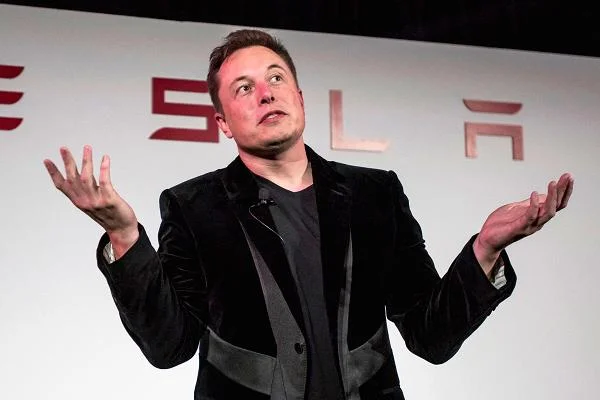
Tesla's Contentious Conference Call
Called "the most unusual call...in 20 years," "bizarre"—and "the best call I've heard in a long time," Tesla's earnings call is a popular news item. On balance, as one analyst said, “Needless to say, the call didn’t go well," and the evidence is in the stock price, which dropped 7.9% (5% within 20 minutes).
Here are a two highlights of CEO Elon Musk's responses to questions:
Sanford Bernstein's Toni Sacconaghi: "And so where specifically will you be in terms of capital requirements?"
Musk: "Excuse me. Next. Boring, bonehead questions are not cool. Next?"
RBC's Joseph Spak: "The first question is related to the Model 3 reservations, and I was just wondering if you gave us a gauge as maybe some of the impact that the news has had. Like, of the reservations that actually opened and made available to configure, can you let us know, like, what percentage have actually taken the step to configure?
Musk: "We're going to go to YouTube. Sorry. These questions are so dry. They're killing me."
At one point, Musk, frustrated by a question, said, "Please sell our stock and don't buy it." Candor is one thing, but I'm not sure a CEO wants to alienate investors.
CNBC host Jim Cramer is one of the opposing voices, who complimented Musk on his directness and telling the truth. He said that many CEOs are thinking what Musk said out loud. At the same time, Cramer acknowledged that this might be Musk's last call.
Discussion:
- What's your view of Musk's responses during the call? What factors into your assessment?
- Watch Cramer's analysis. To what extent do you agree with his assessment?
- What are the risks of Musk's approach (in addition to the short-term stock price drop), and what are the potential rewards?
- Some might say Musk is being authentic. How do you see it?
Narrative Alternatives to PPT at Amazon and Google
In his annual letter, Amazon CEO Jeff Bezos wrote that he has banned PPT:
"We don’t do PowerPoint (or any other slide-oriented) presentations at Amazon. Instead, we write narratively structured six-page memos. We silently read one at the beginning of each meeting in a kind of 'study hall.'"
Nancy Duarte describes the value of a narrative or storytelling approach: "storytelling in presentations is a powerful way to grab attention, hold attention, and to change beliefs." She gives examples from our favorite books and movies, which build suspense over time. Stories are also a good way to inspire empathy and other emotional reactions. This is difficult to achieve with traditional PowerPoint bullets.
A Harvard Business Review article, "Structure Your Presentation Like a Story," provides more guidance and summarizes the approach with a graphic:

For Bezos, the narrative style means that points are connected and organized in a logical sequence with some resolution, conclusion, or outcome. GeekWire created this six-page memo in Amazon's style as an example.
At Google, CEO Sundar Pichai also emphasizes storytelling with pictures:
"Since stories are best told with pictures, bullet points and text-heavy slides are increasingly avoided at Google."
Both executives are warning against the type of communication that is overly concise and missing context, connections, and cohesiveness. A ZDNet article summarizes some of the issues with PowerPoint and describes the now-infamous role of PPT in a U.S. disaster:
"'[B]ulletized' thinking contributed to the Challenger disaster, where 7 crew members died and a multi-billion dollar craft destroyed due to an O-ring failure. The big problem was that NASA management wasn't really listening to the engineers—and breaking issues up into bullets helped them do that."
Pichai's design approach aligns with PPT trends over the past few years. We're seeing much less text, fewer bullets, and more images, and this style follows the evolution of web design. On websites, we see many more background videos and photos and not much text, particularly on consumer websites.
Discussion:
- What are the advantages and downsides to the narrative memo? For what types of situations do you think this approach would work well? For what situations might PPT be a better choice?
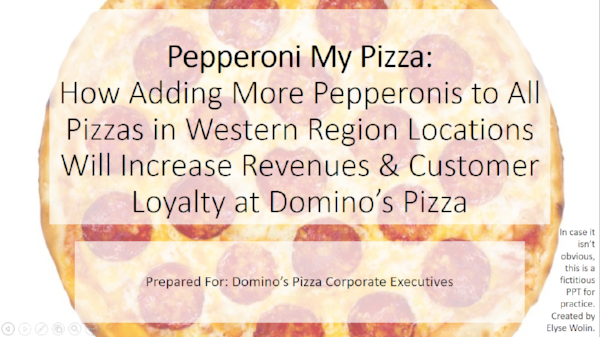
- For practice, try to convert this terrible PPT presentation to one with less text and more meaningful images. Clean up the design, add charts to help your audience visualize data, and of course, correct the grammar.