
Solyndra Legal Team Gets Into the Action

Solyndra executives had agreed to testify before the U.S. Oversight and Investigations Subcommittee, but their lawyers have since advised them to plead the Fifth Amendment. Solyndra, a solar-panel manufacturer that received $535 million in stimulus funding, has filed for bankruptcy and is now under criminal investigation. The executives maintain their innocence: "The company is not aware of any wrongdoing by Solyndra officers, directors, or employees in conjunction with the DOE [Department of Energy] loan guarantee or otherwise..."
Two letters from the legal team explain why executives Brian Harrison (CEO) and Bill Stover (CFO) will not answer questions that may incriminate them during Congressional hearings on Friday.
In response, U.S. committee members expressed their dissatisfaction:
"Who exactly are Solyndra's executives trying to protect, and what are they trying to hide?
"Despite repeated assurances that they would testify voluntarily and answer questions this Friday, today we received the news that these executives – who had plenty to say to federal officials when securing half a billion dollars in taxpayer funding for their venture – plan to invoke their Fifth Amendment right against self-incrimination and will not answer questions from Congress."

Discussion Starters:
- Compare the two legal letters for Solyndra executives. What minor differences do you see, and how do you account for these?
- How do you assess the U.S. committee chairmen's response to the news? What do you notice about the tone of their statement?
- Consider the politics involved in this situation. Who are the major players, and what is driving their actions?

Netflix CEO Apologizes and Announces Company Split
Netflix CEO Reed Hastings is trying to win back goodwill lost by the company's recent price hike. In an email to customers, Hastings admits "I messed up. I owe you an explanation." In a video, Hastings introduces his head of DVD operations to explain the latest change -- splitting Netflix into two companies: one that will handle streaming video (to retain the Netflix name), and another to manage DVDs by mail, called Quikster.
Critics say that the deal was hastily put together, citing, among other issues, the Twitter handle @Quikster, currently owned by an individual represented by an image of a pot-smoking Elmo (reported by TechCrunch).

The Netflix blog post amassed over 15,000 comments within a day, reminiscent of the outcry after the July price hike. Fans and former Netflix customers may remember the video parody about the public reaction.
Discussion Starters:
- Looking at the Netflix blog, how well do you think the company is currently handling comments? What recommendations do you have for the CEO to improve communication at this point?
- How successful do you find the video? What works well, and what, if anything, would you suggest that Hastings and Rendich change in their presentation?
- How justified do you consider the public reaction to the news? In what ways is this different from the anger expressed earlier from Netflix customers?
- Of Netflix's three main messages -- the email, the video, and the blog post -- which do you think is most effective and why?
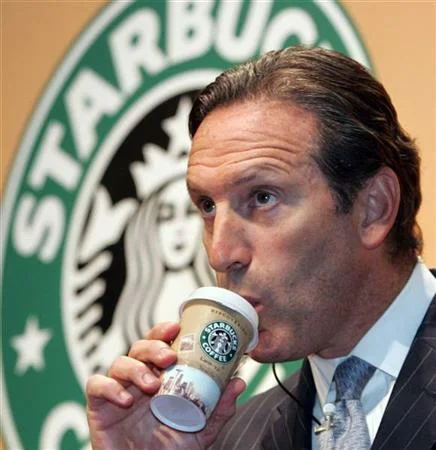
In Full-Page NYT Ad, Starbucks' Schultz Promises No Campaign Donations
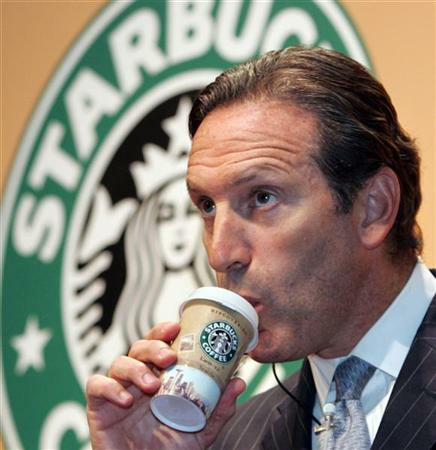 Howard Schultz, Starbucks CEO, has pledged to withhold campaign donations until Washington gets it together. As a full-page ad in Sunday's New York Times, Schultz communicated his frustration in an open letter. The pledge, which he says 100 business leaders have signed, includes two parts:
"First, to withhold political campaign contributions until a transparent, comprehensive, bipartisan debt-and-deficit package is reached that honestly, and fairly, sets America on a path to long-term financial health and security. Second, to do all we can to break the cycle of economic uncertainty that grips our country by committing to accelerate investment in jobs and hiring."
Discussion Starters:
- Read Schultz's entire letter. Which arguments do you consider strongest and weakest in his appeal?
- How does Schultz balance logical arguments, emotional appeal, and credibility in his letter? What examples do you see of each?
- From a branding perspective, what are the benefits and risks of a corporate CEO publicizing a message such as this?
Hyundai Commercial NSFW or the Netherlands
A car with three doors? The Hyundai Velostar looks like a coupe and boasts a "functional 3rd door," according to the website description. In an odd twist, a commercial promoting the Velostar emphasizes the door, yet was banned by Hyundai's head office for its explicit content. Critics say that the commercial was designed to be viral and that the ban is simply part of the marketing plan.
It is an interesting question: the third door is not listed among the Velostar's safety features, apparently the main point of the commercial.
Discussion Starters:
- Do you consider the commercial too explicit for American TV? Why or why not?
- Do you think that pulling the ad was a planned marketing ploy by Hyundai -- or a genuine reaction to the commercial?
- What ethics are involved in this situation? Is the commercial ethical? If Hyundai planned for the video to be banned and viral, is that ethical?

Cornell University President Wants to End Fraternity Pledging
In an opinion letter in The New York Times, Cornell University president David Skorton demands an end to pledging, which he calls a "guise" for hazing. According to Skorton, pledging is not, as some fraternities purport, a way for students to prepare for membership, but "is often the vehicle for demeaning activities that cause psychological harm and physical danger." The impetus for this action, says Skorton, is a student death in February believed to be the result of fraternity hazing. Skorton is calling on the Greek community to offer solutions:
"Yesterday, I directed student leaders of Cornell's Greek chapters to develop a system of member recruitment and initiation that does not involve 'pledging' - the performance of demeaning or dangerous acts as a condition of membership."
As for any sound, persuasive argument, Skorton address the skeptic's question:
"Why not ban fraternities and sororities altogether, as some universities have done? Over a quarter of Cornell undergraduates (3,822 of 13,935 students) are involved in fraternities or sororities. The Greek system is part of our university's history and culture, and we should maintain it because at its best, it can foster friendship, community service and leadership."

Discussion Starters:
- Do you agree with President Skorton that the line between hazing and pledging is blurred? Why or why not?
- What do you consider to be the most persuasive argument in his letter? Least?
- What would convince fraternities to abide by this request? In other words, what is the best way to persuade fraternities to change?

Madonna + Smirnoff Social Media Campaign
Smirnoff has turned to Madonna for its next big promotion. For its Nightlife Exchange Project, Smirnoff and Madonna are looking for "the world's best dancer." In a video advertisement, people are encouraged to "Represent your country on the world's stage."
Smirnoff's Facebook page is a flurry of activity, but at least one fan is looking for clearer communication:

Discussion Starters:
- How will Madonna and Smirnoff complement each other's brand? Consider the target market for each. What are the risks of this association to each brand? (Think Gilbert Gottfried for Aflac.)
- Given your experience and what you know about social media, do you think this campaign will be successful? Why or why not?
- What persuasive strategy (or strategies) is Smirnoff using by associating with Madonna?
Assignment Ideas:
- Rewrite the video script to promote the campaign. Include clearer instructions for fans like Victor.
- Explore Smirnoff's Facebook page for instructions about the dance contest. Identify three ways to make information more accessible to fans.
Secret's Anti-Bullying Messages Are a Hit
Procter & Gamble's Secret deodorant is encouraging an end to "girl-to-girl meanness" with its "Mean Stinks" campaign. The brand created a Facebook page that has accrued more than 230,000 "likes" and has partnered with Amber Riley (Mercedes on the TV show Glee) to create this video:
The anti-bullying campaign seems to resonate with people and correlates with increased sales for Secret.
Discussion Starters:
- To what do you attribute the success of this campaign? In other words, why do you think this was successful?
- Compare this campaign to Old Spice's social media blitz. What parallels do you see, and where do you think Secret fell short? (This Old Spice video garnered almost 35 million views.)
Strike at Verizon: A Look at the Data
Verizon is asking for concessions from the Communications Workers of America (CWA), and so far, management isn't getting any. The company claims that poor performance in its landline division makes costs unsustainable, but the unionized employees don't agree. To change the cost structure, Verizon wants to implement a pension freeze, reduce the number of sick days, and raise employee contributions to health care insurance.
Verizon CEO Lowell McAdam sent a letter (download) to all employees explaining the company's position.
In its statement, CWA says that Verizon's initial list of concessions hasn't budged since June 22, when union bargaining started. 45,000 employees are now on strike and cite the following "Verizon Financials" to support their case:
- 2011 annualized revenues are $108 billion and annualized net profits are $6 billion.
- Verizon Wireless just paid its parent company and Vodaphone a $10 billion dividend.
- Verizon's top five executives received compensation of $258 million over the past four years.
According to a New York Times article, management and the union disagree about benefits payouts to employees:
Union officials dispute the company's estimate that each employee receives $50,000 worth of benefits each year. In that number, the company includes $14,700 for medical and dental insurance, $10,900 for retiree health care and life insurance, $10,800 for pension and $7,500 for time off.
Union officials say total benefits average $25,000 a year. Mr. Kohl, the union official, disputed the $10,800 yearly figure for pensions, noting that Verizon's annual report said the company's 2010 contributions to the union's defined benefit plans "were not significant." Verizon officials said the $10,800 was an average annual amount.
Mr. Kohl also said the $10,900 retiree health care figure was greatly exaggerated, asserting that many retirees had worked years to pay for that care so the cost should not be attributed to current employees.
Mr. Kohl also quarreled with Verizon saying the value of time off - vacation, sick days and personal days - was $7,500. He dismissed that as double-counting because that number was already counted in wages.
Discussion Starters:
- Looking at the argument over employee benefits, whose version of the data do you accept?
- How convincing do you find the union's list of "Verizon Financials"? Do these numbers influence your thinking about whether the union should make concessions?
- The CWA refers to Verizon's annual report to defend its position that pensions should not be frozen. How do you interpret the note "were not significant" in the report? Is this a convincing argument?
- In CEO Lowell's letter to employees, what is his strongest argument? What is his weakest?
- What ethical issues do you see in this dispute? Do you side more with management or the employees in this case? Why?
Bloody Bandage Tests Pizza Hut's Response
In a classic case of apparent lack of company response, a customer went public with a distasteful story about Pizza Hut. The Wieczerza family ordered a pie from a NJ Pizza Hut and got a mouthful of bandage and gauze with droplets of blood. According to Mr. Wieczerza, after several attempts to have the company pay for a blood test, he decided to go public. Although the local store manager was apologetic, the couple said they tried to contact Pizza Hut's corporate offices more than 20 times and received no response. The company did, however, reply to a News 10 request with this generic statement:
"The safety of our customers is our top priority. We take these matters very seriously and are conducting a thorough investigation of the alleged incident. We apologize for the inconvenience this has caused our valued customer."
One of customer's frustrations is the company's response that the dough from the customer's pizza didn't match a dough that Pizza Hut uses. As the customer said, "We didn't show anybody from Pizza Hut the pizza or the bandage and they basically called us liars. . . .I finally said enough is enough."
Discussion Starters:
- How do you assess Pizza Hut's response to the situation? What might be a more appropriate response?
- How can Pizza Hut best balance an apology with accepting blame? What if the story is a hoax?
Assignment Ideas:
- Write an apology letter to the Wieczerzas about the situation.
- Write a public statement from Pizza Hut's spokesperson about the incident.
"Netflix Relief Fund" Video Parody
"Netflix has raised their prices. This is literally the worst thing that has ever happened to White people."
Jason Alexander stars in "Netflix Relief Fund," a video poking fun at customers' reactions to Netflix's recent price increase. (See story.) Comparing Netflix to Hitler, Alexander says that "tears are falling all over MacBook Pros and Pier One throw pillows all across this country today."
- How do you think this video came about? Who would have a stake in creating a parody like this?
- If you were Netflix's VP of corporate communication, what, if anything, would you do in response to this video? Before you answer, consider the heated customer reaction to the price increases over the past two weeks.
"Dear Netflix" Is Trending Because of a $6 Price Hike
Poor Netflix has been called a "manipulative greaseball pig" and worse. "Dear Netflix" is a popular topic on Twitter because of a substantial price hike -- from $10 to $16 for one DVD per month and unlimited streaming. Netflix has been overwhelmed with complaints, and at one point, could not handle the call volume (listen to the outgoing message). Apparently, Netflix is trying to kill its expensive DVD business.
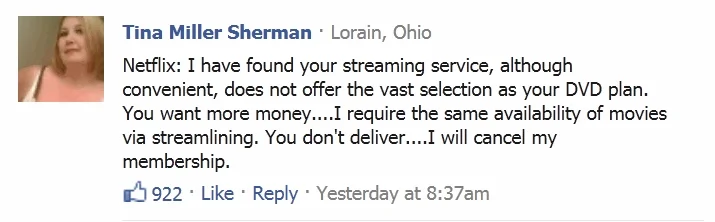
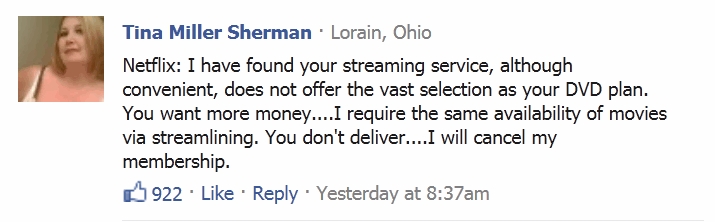
In response to Netflix's plan change announcement, more than 11,000 customers within two days have posted comments like this one, which received 922 "Likes."
Discussion Starters:
- What is your reaction to the news? Is a 60% price increase reasonable in this case?
- Could Netflix have handled the announcement differently? What, if anything, could the company have done to make the news more palatable?
- How could Netflix handle the commentary at this point? If you were Reed Hastings, Jr., the company's CEO, what would you do to try to manage the situation?

When Twitter Becomes Triage
On the heels of Business Insider's "Most Hated Companies" list, I am increasingly annoyed at companies that can't seem to fix core problems. Rather, they put their customer service staff on the front line to appease people through Twitter and other channels.
A look at DirectTV's recent tweets, for example, reveals a company in distress: "DM us," "Have you called," "I'm sorry," "We need to escalate." Too many apologies for one day of work. Social media will do just so much to resolve systemic company issues, as this customer says:

Discussion Starters:
- How do you assess DirectTV's approach? Compare DirectTV's tweets to similar companies'.
- What is your best experience with a company response to a complaint? When have you complained to a company and had good results?
Most Hated Companies
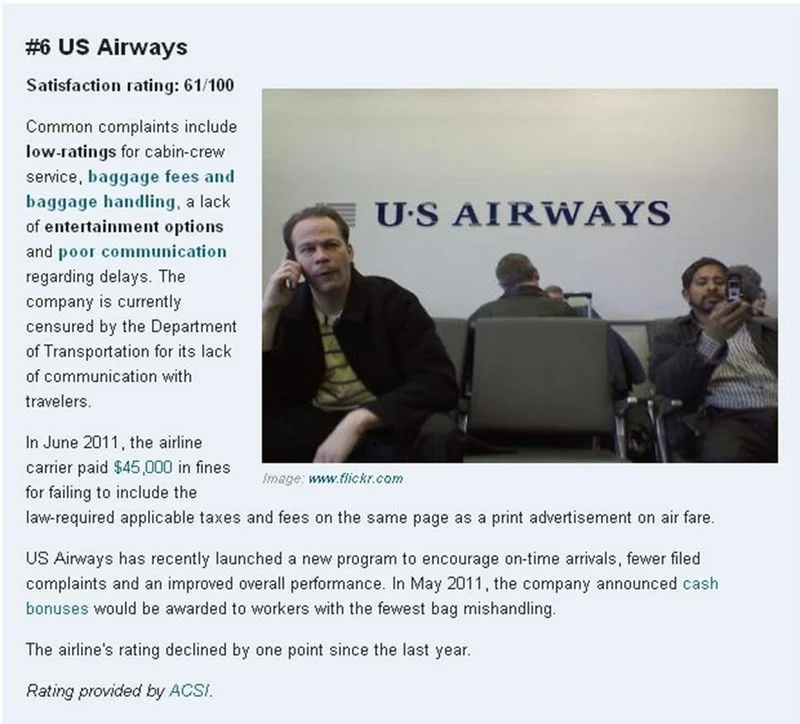
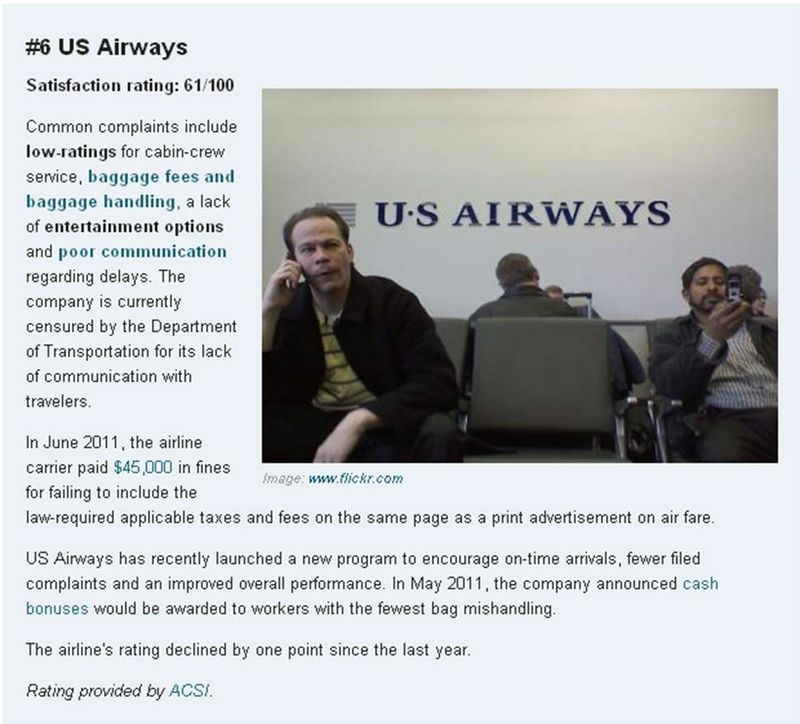
Business Insider has posted a list of the 19 most hated companies, based on the American Customer Satisfaction Index. Large banks, airlines, and power and telecom companies seem to be most hated according to thousands of customer satisfaction surveys. Weighing in at number 6, US Airways received 61/100 points from customers.
Discussion Starters:
- Does this list surprise you? Why or why not? Does the list reflect your own experience with these companies?
- According to one analyst at the American Consumer Satisfaction Index, large banks, airlines, and communication firms represent "not terribly competitive industries, as the switching barriers for most of them are quite high... In other industries, like the food or clothing sector, the competition is huge. They bend over backwards to make customers happy, because they have to." How does this rationale explain the customer service failures? Does it excuse them?
Santa Makes a Summer Appearance in Pepsi Commercial
Pepsi has launched a new commercial featuring Santa Clause at a summer party. In a direct hit to Coke, which Pepsi now trails in sales (including Diet Coke), the ad shows Santa rejecting bottles of Coca-Cola. Critics say that Pepsi had lost focus on its flagship product; does this commercial signal a new direction?
Discussion Starters:
- Had you associated Santa Clause with Coke? Does your knowledge or lack of knowledge change your perception of the commercial?
- How is Pepsi using logos, pathos, and ethos in this commercial to persuade viewers?
Nike "Get High" T-Shirts Anger Boston Mayor
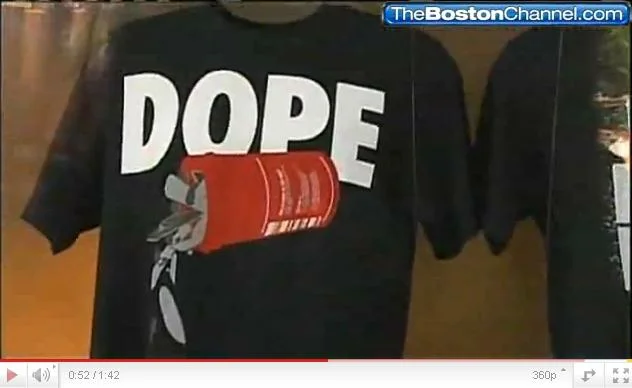
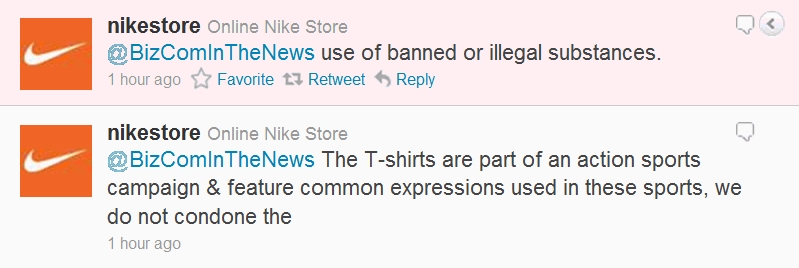
Mayor of Boston Thomas Menino doesn't like Nike's new T-shirts. He believes that messages such as "Get High" and "Dope" promote drug use. In a letter to the general manager of Niketown Boston, Menino urges the company to remove the T-shirts.

Nike has responded to my tweet about the situation:

Discussion Starters:
- What is your opinion of Nike's new T-shirts: dangerous or just clever marketing?
- Analyze the mayor's letter. What principles of persuasion does he use? Do you consider this an effective letter? Why or why not?
- How do you think Nike should respond to the mayor's letter? What are the consequences of the company removing -- or keeping -- the T-shirts?
- How do you assess Nike's tweets to BizCom in the News?
ABA Responds to Critics of High Calorie Sports Drinks
A new study found negative effects of high calorie sports drinks on children. Study authors say that children don't need the calories, caffeine, and other stimulants. This shouldn't come as a big surprise but has warranted this response from the American Beverage Association.
This isn't the first time that a study has put the American Beverage Association on the defense. A study on diet soda was highly criticized by the ABA on Good Morning America:
Source: Putting Health Before Headlines from American Beverage Association on Vimeo.
Discussion Starters:
- Considering the recent study about high calorie sports drinks, in what ways does the ABA's response meet criteria for persuasive communication? In what ways was their response effective and ineffective?
- Looking at the video above, how do you assess the ABA's approach about the diet soda controversy? Do you buy their argument and criticism of the study?
Assignment Idea:
- On the ABA's website, you'll find several articles defending beverage makers and explaining new initiatives that support health, for example, their "Clear on Calories" section. What parts of the ABA's messages do you find most convincing? Least?
Nokia CEO to Staff: We Are "Standing on a 'Burning Platform'"
The Story
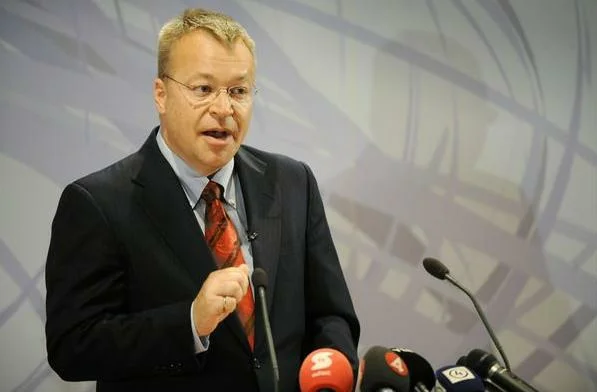
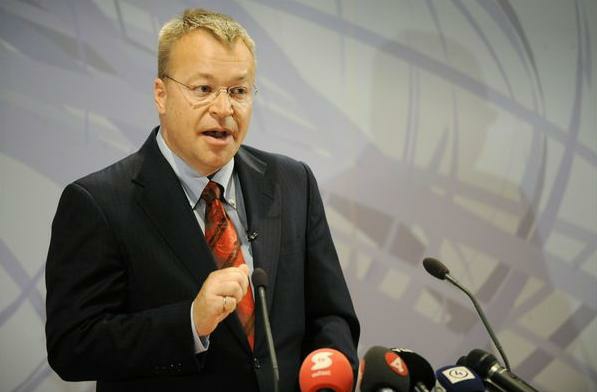
In a message to employees, Nokia CEO Stephen Elop compares the company's situation to that of a man on an oil platform in the North Sea. The man, like Nokia, needs to take the plunge into icy water in order to survive. Elop may be preparing employees for major changes expected to be announced on Friday. The speech (which became an intranet post) presents a grim picture of Nokia's position in the smartphone market: "We fell behind, we missed big trends, and we lost time." While the speech is fairly negative, Elop also encourages employees: "But, I believe that together, we can face the challenges ahead of us. Together, we can choose to define our future."
Discussion Starters
- Read Elop's message to employees. If you were a Nokia employee, how do you think you would react to this?
- What parts of Elop's message most inspired you? Did any parts depress you or cause you to doubt the company's future?
Assignment Ideas
- Analyze Elop's speech for persuasive techniques. How does Elop use principles discussed in Chapter 7? Write a memo to your instructor to illustrate your analysis.
- Try to write another version of Elop's speech. What analogy could you use that might work as well or better?
Where's the Beef, Taco Bell?
The Story
Taco Bell is under fire for misrepresenting its taco meat. A class action lawsuit claims that the company is falsely advertising their beef, which does not meet USDA standards and contains too many non-meat ingredients in their "meat mixture": "water, wheat oats, soy lecithin, maltodrextrin, anti-dusting agent and modified corn starch."
In response, the company says that their meat is FDA compliant and 88% beef, rather than the 35% that the suit claims.
Discussion Starter
- In his video message, how does Greg Creed use logical arguments, emotional appeals, and credibility described in Chapter 7?
Assignment Ideas
- Read the company's written statement in response to the lawsuit. In small groups, discuss what you think is most and least effective about this message.
- Write a memo to Greg Creed assessing Taco Bell's response to the lawsuit. Consider all company messages as well as the timing of each. Include your advice for handling bad news in the future.

Bob Dudley, New BP CEO: Good Speech or "Worst Person"?
The Story
Bob Dudley, British Petroleum's new CEO (the company's first American CEO), addressed business leaders in London in an attempt to rebuild his company's image. This was Dudley's first public speech since taking the role following the oil spill in the Gulf of Mexico.
Discussion Starters
- What persuasion strategies does Bob Dudley use in his speech?
- What do you think are the most successful parts of this speech? Which are the most convincing? Which are the least convincing?
Assignment Ideas
- Identify examples of logos, pathos, and ethos in Bob Dudley's speech. Which strategy does he use most?
- Bob Dudley earned a spot on Keith Olbermann's "Worst Person in the World" list (fast forward to 1:30). On his political commentary program, Olbermann criticized Dudley particularly for the last paragraph in his speech, where he noted the intense "political and media attention" generated by the oil spill. Read the "Conclusion" of Dudley's speech, and draw your own conclusion. Is Olbermann's criticism justified? Does Dudley have a point? Imagine that BP has a blog for public comments. Write your assessment of Dudley's comments. Be sure to justify your perspective.
Egg Recall Scares Some, Brings Opportunities to Others


The Story
Millions of eggs have been recalled since a salmonella outbreak sickened over 1,000 people. The egg industry is on the defensive, but some local farmers have seen increased interest in their eggs. Both groups can use communication to their advantage.
Discussion Starters
- What is the best approach for the industry to repair its image and rebuild consumer trust?
- What are the communication objectives of the egg industry during the recall?
- How should egg producers communicate their messages? What communication medium would be best in this situation?
- How can independent farmers capitalize on the situation to promote locally produced eggs? What could be some of their key messages?
Asssignment Ideas
- In small groups, discuss a press release about one of the recalls. What principles of persuasion and communicating bad news are used in the announcement?
- Imagine that you're the owner of Morning Fresh Farms, a local egg producer in Colorado. Write a letter to consumers promoting your eggs. Use the opportunity of current egg recalls to educate the public about your products. Assume that this letter will be published as a full-page ad in the local newspaper. Read this article for background information.
- In small groups, review the website http://www.eggsafety.org/. What are the group's most convincing and least convincing arguments? Why do these arguments work well or fail to work?