

School Board Apologizes for Mocking Parents and Resigns
The Board of an elementary school in California resigned over embarrassing comments on a video call. Board members didn’t realize that they were public when they made disparaging comments about parents wanting schools to reopen. They mentioned that parents miss teachers as “babysitters” and want to be able to use marijuana again.
In response, several board members resigned, and the school district wrote a statement. Within the larger statement is a message from the board members who resigned:
We deeply regret the comments that were made in the meeting of the Board of Education earlier this week. As trustees, we realize it is our responsibility to model the conduct that we expect of our students and staff and it is our obligation to build confidence in District leadership; our comments failed you in both regards, and for this we offer our sincerest apology.
We love our students, our teachers and our community, and we want to be part of the remedy to help the District move forward, returning its full focus to students' needs. To help facilitate the healing process, we will be resigning our positions as Trustees of the Oakley Union Elementary School District, effective immediately. The Superintendent will be working with the Contra Costa County Office of Education to address the vacancies on the Board of Education.
This was a difficult decision, but we hear the community's concerns, and we believe yielding to your request that we step down will allow the District to move forward. Please do not let our failure in judgment cast a shadow on the exceptional work that our teachers, administrators and hard-working employees are doing for the students of this District. They deserve and will need your support as you move forward.
Business communication students will find ways to improve this message. The authors use passive voice in the first statement and weak subjects twice in the first paragraph (“it is”). As an apology, the statement also could do better. Sincere apologies include more about the impact of the act—the damage done. I don’t see that recognition clearly.

GM CEO's Letters to Environmental Leaders
General Motors has changed its position on climate change. The company, led by CEO Mary Barra, had supported President Trump’s efforts to eliminate California’s ability to set its own strict environmental standards.
With a new incoming president, Barra communicated that the auto industry will likely support President Biden’s environmental policies. The news came in the form of a letter to environmental leaders and encouraged “customer adoption of electric vehicles.” Barra also touted GM’s ability to meet the demand. She ends on a positive note: “This effort is critical to addressing climate change, and we look forward to working together.”
A New York Times writer calls the move a “maneuvering” and “a public humiliation to Mr. Trump” since he was still in office at the time. A public policy professor noted, “This is about as bold as it gets. This huge pivot, so closely following an election result, particularly from a firm like General Motors, is a big, big deal.”

Twitter Announces Ban of President Trump
Two days after the riots on the U.S. Capitol, Twitter announced a “permanent suspension” of President Trump’s account after a temporary suspension.
Comparing Twitter and Facebook’s message, on January 7, about a temporary suspension, is a lesson in writing structure. Whereas Mark Zuckerberg used the indirect organizational plan, Twitter’s message states the news right up front. Zuckerberg starts with the rationale and announces the decision at the very end. Twitter starts with the decision, and then provides explanatory text, including sample tweets and the company’s assessment.
Another difference between these messages is the writer. The Twitter post is unsigned, whereas Zuckerberg signed the Facebook message himself. Additional rationale for the decision is posted on the Facebook site. Both approaches could work, and analyzing the communication is (almost) as interesting as the decisions themselves.
Random note: “Permanent suspension” sounds odd to me. A suspension is something temporary.
Company
Permanent suspension of @realDonaldTrump
By Twitter Inc.Friday, 8 January 2021
After close review of recent Tweets from the @realDonaldTrump account and the context around them — specifically how they are being received and interpreted on and off Twitter — we have permanently suspended the account due to the risk of further incitement of violence.
In the context of horrific events this week, we made it clear on Wednesday that additional violations of the Twitter Rules would potentially result in this very course of action. Our public interest framework exists to enable the public to hear from elected officials and world leaders directly. It is built on a principle that the people have a right to hold power to account in the open.
However, we made it clear going back years that these accounts are not above our rules entirely and cannot use Twitter to incite violence, among other things. We will continue to be transparent around our policies and their enforcement.
The below is a comprehensive analysis of our policy enforcement approach in this case.
Overview
On January 8, 2021, President Donald J. Trump Tweeted:
“The 75,000,000 great American Patriots who voted for me, AMERICA FIRST, and MAKE AMERICA GREAT AGAIN, will have a GIANT VOICE long into the future. They will not be disrespected or treated unfairly in any way, shape or form!!!”
Shortly thereafter, the President Tweeted:
“To all of those who have asked, I will not be going to the Inauguration on January 20th.”
Due to the ongoing tensions in the United States, and an uptick in the global conversation in regards to the people who violently stormed the Capitol on January 6, 2021, these two Tweets must be read in the context of broader events in the country and the ways in which the President’s statements can be mobilized by different audiences, including to incite violence, as well as in the context of the pattern of behavior from this account in recent weeks. After assessing the language in these Tweets against our Glorification of Violence policy, we have determined that these Tweets are in violation of the Glorification of Violence Policy and the user @realDonaldTrump should be immediately permanently suspended from the service.
Assessment
We assessed the two Tweets referenced above under our Glorification of Violence policy, which aims to prevent the glorification of violence that could inspire others to replicate violent acts and determined that they were highly likely to encourage and inspire people to replicate the criminal acts that took place at the U.S. Capitol on January 6, 2021.
This determination is based on a number of factors, including:
President Trump’s statement that he will not be attending the Inauguration is being received by a number of his supporters as further confirmation that the election was not legitimate and is seen as him disavowing his previous claim made via two Tweets (1, 2) by his Deputy Chief of Staff, Dan Scavino, that there would be an “orderly transition” on January 20th.
The second Tweet may also serve as encouragement to those potentially considering violent acts that the Inauguration would be a “safe” target, as he will not be attending.
The use of the words “American Patriots” to describe some of his supporters is also being interpreted as support for those committing violent acts at the US Capitol.
The mention of his supporters having a “GIANT VOICE long into the future” and that “They will not be disrespected or treated unfairly in any way, shape or form!!!” is being interpreted as further indication that President Trump does not plan to facilitate an “orderly transition” and instead that he plans to continue to support, empower, and shield those who believe he won the election.
Plans for future armed protests have already begun proliferating on and off-Twitter, including a proposed secondary attack on the US Capitol and state capitol buildings on January 17, 2021.
As such, our determination is that the two Tweets above are likely to inspire others to replicate the violent acts that took place on January 6, 2021, and that there are multiple indicators that they are being received and understood as encouragement to do so.
Zuckerberg's Message About President Trump's Account
Facebook has decided that President Trump will no longer use its platform for his messages—at least for a while. The decision came after riots at the U.S. Capitol and after Twitter and Facebook suspended the president’s account. The tech companies said that the president violated its rules by inciting violence and/or making false claims about the election.

YouTube blocked a video of President Trump expressing sympathy for the protestors and calling them “special.” The tech platforms had tried labeling posts, but the president’s false claims were still believed.
Some call this time an “inflection point": “Hey Mark Zuckerberg, @jack, @SusanWojcicki and @sundarpichai -- Donald Trump just incited a violent attack on American democracy. Is that FINALLY enough for you to act?!" At this point, Twitter has not yet permanently banned the president from tweeting.
Zuckerberg uses the indirect style for his post, with the main point in the very last sentence. He makes his argument first, and then we read the decision. It’s an interesting choice, which might not convey the courage that people would like to see.
Additional analysis and rationale for the decision are posted on the Facebook site.

Phrases of 2020
Research firm Sentieo scoured investor calls to identify increases in certain phrases. The following represents the number of transcripts in which the word or phrase was used—not the number of times they appeared.
“Unprecedented times” was the phrase that increased the most from the previous year: 2,218 this year compared to only 3 last year. The second highest increase was “work from home.” Others were “furlough,” “challenging,” “technical difficulties,” “new normal,” and of course, “you’re on mute.”
This study reminds me of a farcical YouTube video, “Every Covid-19 Commercial Is Exactly the Same.” Both are good lessons in overused words that quickly become tiresome to hear. Let’s try to be more original in 2021.

Zuckerberg Testifies About 2012 Emails

Mark Zuckerberg faced one particularly tense moment during the U.S. Congressional Antitrust Hearing. Rep. Jerry Nadler (D-NY) accused Facebook of antitrust activities in its acquisition of Instagram:
“Facebook, by its own admission ... saw Instagram as a threat that could potentially siphon business away from Facebook. So rather than compete with it, Facebook bought it. This is exactly the type of anti-competitive acquisition the antitrust laws were designed to prevent.”
Nadler’s conclusion is based on 2012 emails among Zuckerberg and his staff. In one email he wrote about Instagram:
“One way of looking at this is that what we’re really buying is time. Even if some new competitors springs up, buying Instagram, Path, Foursquare, etc now will give us a year or more to integrate their dynamics before anyone can get close to their scale again. Within that time, if we incorporate the social mechanics they were using, those new products won’t get much traction since we’ll already have their mechanics deployed at scale.”
Within an hour, Zuckerberg sent a second email, which some say proves his guilt:
“I didn’t mean to imply that we’d be buying them to prevent them from competing with us in any way.”
During the hearings, Zuckerberg defended the acquisition:
“I think the FTC had all of these documents ... and unanimously voted at the time not to challenge the acquisition. In hindsight, it probably looks obvious that Instagram would have reached the scale that it has today. But at the time, it was far from obvious.”
Discussion:
Research and describe relevant U.S. antitrust laws.
Read more about the 2012 emails and watch the hearings. How well did Zuckerberg defend the Instagram acquisition?
Did Zuckerberg’s follow-up email prove his guilt? Why or why not?

Company Statements About George Floyd's Murder

Business Insider has assembled a list of companies’ statements and promised actions following the killing of George Floyd and the public protests.
TikTok, General Motors, McDonald’s—many brands are jumping into the conversation and posting messages that are both placating and inspiring.
Discussion:
Read the list of statements and actions. Which sound most meaningful to you?
Should all brands post a message? Which should, and what is important to convey?

Facebook's Position on Twitter's Labeling
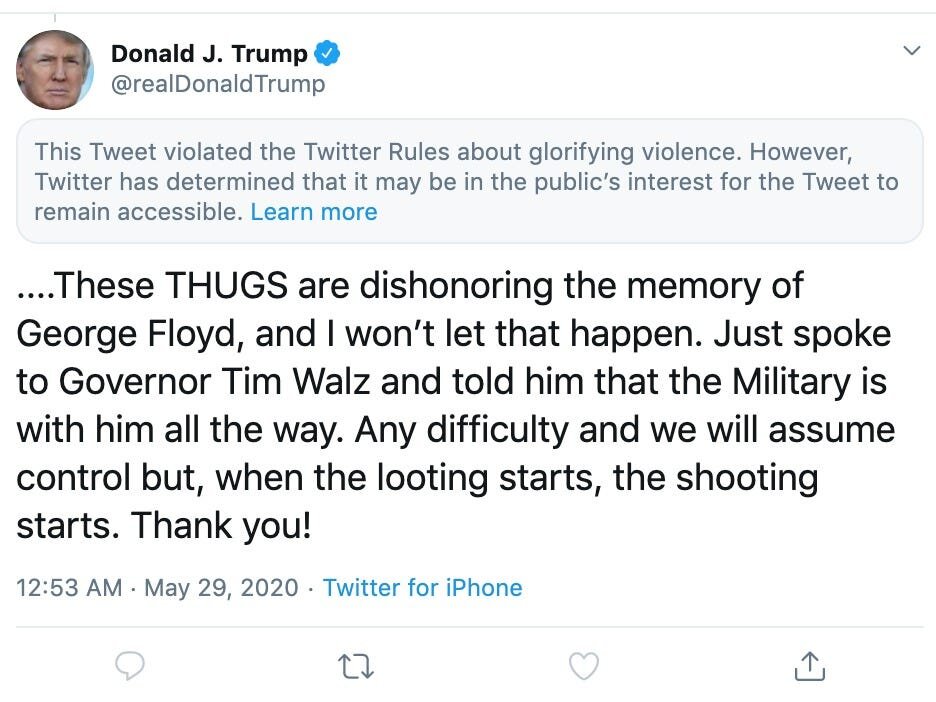
Facebook CEO Mark Zuckerberg weighed in on Twitter’s decision to fact-check and label some of President Trump’s tweets. In response to protests after the death of George Floyd, one tweet promised “when the looting starts, the shooting starts.” Twitter hid the tweet with a note that it “violated the Twitter Rules about glorifying violence.”
Another tweet claimed that “mail-in voting will lead to massive fraud and abuse,” and Twitter posted a warning to “get the facts.” Until now, Twitter had not enforced its policies for the president’s tweets.
Facebook is taking a different tack. CEO Mark Zuckerberg described the company’s position:
"I believe strongly that Facebook shouldn't be the arbiter of truth of everything that people say online. I think in general, private companies shouldn't be, especially these platform companies, shouldn't be in the position of doing that."
The Wall Street Journal editorial board defended Zuckerberg’s decision: “We wish Facebook would take a lighter touch when it comes to political speech overall.”
Discussion:
What’s your view of Twitter’s actions? Why do you think the company began labeling President Trump’s tweets now?
Should Facebook follow suit? How might each company’s mission play a role in its actions?

Amazon's Email Template

A Reddit poster claims that “Amazon accidentally sent out their email template and it’s hilarious,” but others say it’s fairly standard.
Using a music analogy, the template author encourages varied sentence structures and a strong call to action or CTA.
Discussion:
Do you believe this is an Amazon original that mistakenly went public? Why or why not?
What principles do you take away from this example?
What would you add? (Hint: Something about skim-value?)
Business Writing Advice

Dr. Sharon Cannon at UNC-Chapel Hill Kenan-Flagler (@smccannon) tweets great articles for business communication faculty and students. This week, she found one by Devon Delfino, “How to Improve Your Business Writing Style.”
Delfino offers nine principles:
Identify your primary goal in business communications
Focus on your readers’ needs and professional goals
Cut to the chase in business writing: Focus on clarity over quantity
Streamline structure and organization
Fine-tune your tone and business writing style
Use an active, human voice
Include clear calls to action
Aim for brand consistency in your business writing style
Do a final check
Discussion:
Read the entire article, which offers more good advice. Which principles most align with what you’re learning in your business communication class? Does the article offer something you haven’t learned?
I would add one point, particularly, which is to adjust your tone to that of your organization. Every department and company has its own style. What differences have you observed from your experience?
What advice would you add?

Google’s XYZ Resume Formula
A Ladders article offers good advice from Google for writing resumes. Some information is basic, such as tailoring resumes for each job and skipping the objective. The company also suggests the XYZ format for bullets to focus on accomplishments: “Accomplished [X] as measured by [Y], by doing [Z].”
The author provides this example:
OK: “Won second place in hackathon.”
Better: “Won second place out of 50 teams in hackathon.”
Best: “Won second place out of 50 teams in hackathon at NJ Tech by working with two colleagues to develop an app that synchronizes mobile calendars.
Discussion:
Does your resume follow this format? How can you improve the descriptions?
Check your resume bullets for the start of each. The first words next to the bullet will be read most often. Do they emphasize your main point? How can you reorder text within bullets?

Message from Zoom CEO
People who never heard of Zoom are now relying on the company to provide flawless service, but of course we experience problems. In a blog post, CEO Eric Yuan describes how Zoom use has “ballooned overnight” and what the company has done to meet demand and improve the service.

Yuan also expresses gratitude to Zoom users at the end of the post, demonstrating business communication principles and leadership character:
Transparency has always been a core part of our culture. I am committed to being open and honest with you about areas where we are strengthening our platform and areas where users can take steps of their own to best use and protect themselves on the platform.
We welcome your continued questions and encourage you to provide us with feedback – our chief concern, now and always, is making users happy and ensuring that the safety, privacy, and security of our platform is worthy of the trust you all have put in us.
Together, let’s build something that can truly make the world a better place!
Discussion:
Analyze the blog post: audiences, communication objectives, organizational structure, writing style, etc.
What business communication principles does the blog post illustrate? What improvements would you suggest?
What leadership character dimensions are illustrated in this example?

Too Many COVID-19 Emails?

A Fast Company article criticizes brands for sending emails without real connections to customers. Consumers are getting annoyed at seemingly random emails from companies that happen to have their email. The author offers this advice:
The best way that brands should be responding is if they actually have something to say or contribute. Our patience for marketing fluff is low at the best of times, but now it’s positively toxic.
Discussion:
Think about the emails you have received recently. Which were more useful or meaningful to you than others? Why is that the case?
What advice do you have for companies debating whether and what types of emails to send?
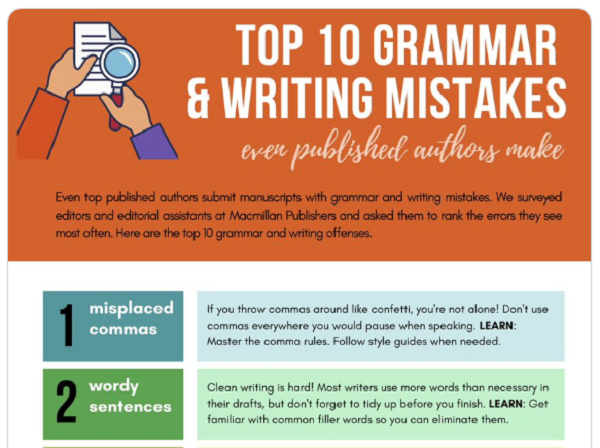
Common Writing Mistakes Infographic

An editor at Macmillan Publishing created an infographic to show the most common mistakes writers make. Misplaced commas, wordy sentences, and run-on sentences get top billing.
The list is interesting and helpful to alert writers to what they should focus on when they revise their work. I wouldn’t try to attack all of these issues on a rough draft.
Of course, some of these mistakes are more serious than others. Although they’re prioritized by frequency, other organizational strategies might be useful.
Advice at the bottom of the infographic is useful for anyone.
Discussion:
Which of these common mistakes are problems in your own writing? How have you been able to tackle them?
How else could this list be organized?
How useful do you find the advice at the bottom? What other advice would you offer writers?

Quantifying a Tweet
When someone in an organization goes rogue and sends a tweet, what’s the potential damage? The NBA found out the hard way that the financial impact could be significant.
In October 2019, Houston Rockets General Manager Daryl Morey supported Hong Kong protests in a tweet. As a result, Chinese advertisers pulled their ads and broadcasters wouldn’t air games. Now, NBA commissioner Adam Silver admits the loss will total “hundreds of millions” of dollars and “probably less than $400 million.” Silver expanded on the damage:

“It’s substantial. I don’t want to run from that. We were taken off the air in China for a period of time, and it caused our many business partners in China to feel it was therefore inappropriate to have ongoing relationships with us. But I don’t have any sense that there’s any permanent damage to our business there.”
Discussion:
Review the situation from October. What lessons can managers learn?
What’s your view of Silver admitting the loss? What are the arguments for and against his honesty?
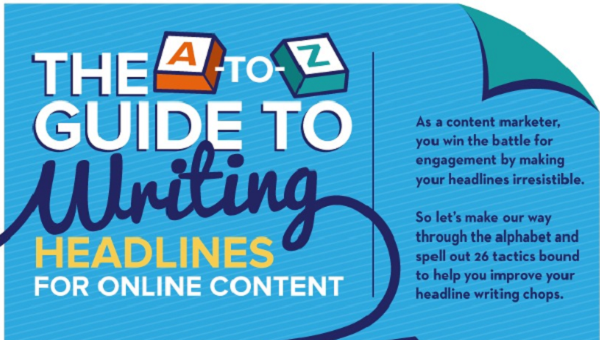
Tips for Writing Headlines

An infographic written by Feldman Creative and designed by Infobrandz offers tips for writing headlines, particularly for online content. The advice focuses on capturing attention, which makes sense in our cluttered online world: posing a question, focusing on the reader, using a colon or m-dash, and using visceral language.
Read the entire infographic on Ragan.com. Some of this advice is useful for email subject lines, which may inspire receivers to read or delete your email.
Discussion:
Read the past 50 or so subject lines of emails you have received. Which of these principles are followed? What differences do you notice in marketing and other emails?
What advice do you find useful from the infographic for online content? What about email subject lines that you write?

Emails Show USC's Potential Role in the Admissions Scandal

Actress Lori Loughlin and her fashion-designer husband Mossimo Giannulli have been charged with bribing University of Southern California athletic officials to get their daughter admitted. Now emails from USC show that the school was courting them by asking for donations and arranging for personalized campus tours. In one email, a university official wrote, “I’d also be happy to flag her application.”
A New York Times article summarizes how accused parents plan to defend themselves against charges:
Motions by several of the defendants suggest they will argue, essentially, that they could not have defrauded the university, as prosecutors say, because the university was actively seeking such donations and offering a leg-up in admissions in return.
In a statement, USC downplayed the special treatment:
“What was being offered to the Giannullis was neither special nor unique. Tours, classroom visits and meetings are routinely offered. The primary purpose of a flag is to be able to track the outcome of the admission review process. It is not a substitute for otherwise being qualified for admission to USC.”
Parents are expected to say that their donations were legitimate, but USC is expected to say that the bribery was specific to the crew team official, who “agreed to pass the couple’s two daughters off as coxswains.”
Discussion:
What’s your view of this situation? Do you agree more with the parents’ or with the school’s perspective?
What, if anything, do the school’s emails reveal? Consider this message to the parents: “Please let me know if I can be at all helpful in setting up a 1:1 opportunity for her, customized tour of campus for the family, and/or classroom visit?”

Boeing Internal Documents Don't Reflect Well on Safety

The lead article in today’s The Wall Street Journal is titled, “Internal Boeing Documents Show Cavalier Attitude to Safety.” In 150 pages of emails and other documentation, employees worry that they don’t have enough time to correct safety issues and refer to regulators as “morons” and “stupider.”
In February 2018, one employee wrote, “Would you put your family on a MAX simulator trained aircraft? I wouldn’t.” A pilot wrote, “I still haven’t been forgiven by god for the covering up I did last year. Can’t do it one more time. Pearly gates will be closed.” Still another employee wrote, “This airplane is designed by clowns, who in turn are supervised by monkeys.”
A defense attorney argues that employees were just “blowing off steam” in their emails.
In the past few months, Boeing’s culture has come to light—once lauded as a place where people felt proud to work but now a place where people feel stressed and remorseful. CEO Doug Muilenberg has since been terminated and replaced temporarily by CFO Doug Smith.
Discussion:
Read more about the internal communications. What lessons can employees and their managers take away from this story?
What’s your view of the emails? Do they indicate big problems at the company, or is the attorney right that employees are just venting to each other? How does the concept of “cherry picking” come into play?
What should Boeing do to manage this situation? Consider this news in light of the company’s crisis communication planning you read about in another post.

Facebook Memo Goes Public

Facebook executive Andrew Bosworth wrote a 2,551-word memo about the company’s role in the upcoming election and more. Bosworth compliments President Trump’s use of Facebook ads and admits that the site impacted the 2016 U.S. election. A Vox article describes Boswell’s logic:
Bosworth’s memo has much more in there, which is getting plenty of deserved attention, including the assertion that Facebook did indeed help Donald Trump win the 2016 election — by giving him the tools to run “the single best digital ad campaign I’ve ever seen from any advertiser. Period.” And the memo also reveals that Bosworth, a self-described “committed liberal,” fantasizes about using Facebook to prevent Trump from winning in 2020, but won’t.
The memo is also attracting attention because Bosworth compares Facebook to sugar and places responsibility on the user: “At the end of the day we are forced to ask what responsibility individuals have for themselves."
Bosworth ends the memo with a question:
To bring this uncharacteristically long and winding essay full circle, I wanted to start a discussion about what lessons people are taking away from the press coverage. My takeaway is that we were late on data security, misinformation, and foreign interference. We need to get ahead of polarization and algorithmic transparency. What are the other big topics people are seeing and where are we on those?
Discussion:
Read the entire memo . What surprises you most?
How damaging is the memo to Facebook’s image, particularly with another election coming up? How does a memo like this—posted on an internal site—become public?
What business writing principles does Bosworth follow, and how could he improve the memo?

Should We Call Climate Change Something Else?


An AdAge writer wonders whether renaming climate change would change perceptions. Reframing is a common strategy for influencing behaviors, thoughts, and feelings. Already, climate change seems to be the evolution of global warming, a less convincing idea, in part, because sometimes it’s quite cold, as President Trump says.
A brand team pondered the following new names:
Global Meltdown, Global Melting
Climate Collapse, Climate Chaos
Boiling Point, Melting Point
Scorched Earth
Discussion:
The author identifies “parameters and guideposts” for the new name: audience, reach, and message. What is important for each of these categories?
What’s your view of the proposed new names? Which do you like best and least, and why?