
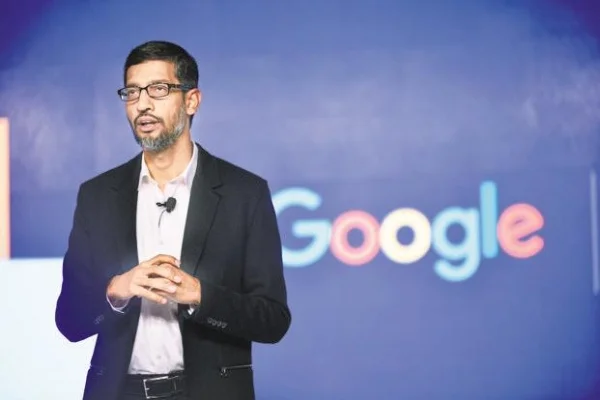
Google Admits Sexual Harassment Incidents
It’s been quiet until now, but Google has fired 48 employees for sexual harassment. A New York Times article exposed a number of high-profile departures dating back to 2014, including Andy Rubin, who developed the Android.
Rubin was paid $90 million when the company asked for his resignation, but executives never told the entire truth: that Rubin left because he was accused of sexual misconduct. Instead, then-CEO Larry Page, complimented him: “I want to wish Andy all the best with what’s next,” and “With Android, he created something truly remarkable—with a billion-plus happy users.” Rubin denies the claim and the circumstances of his termination.
In addition to this situation, the Times article cites a number of relationships between senior-level managers and employees. An email from CEO Sundar Pichai and the VP of people operations to staff acknowledges the 48 departures, including 13 “senior managers and above.”
Hi everyone,
Today's story in the New York Times was difficult to read.
We are dead serious about making sure we provide a safe and inclusive workplace. We want to assure you that we review every single complaint about sexual harassment or inappropriate conduct, we investigate and we take action.
In recent years, we've made a number of changes, including taking an increasingly hard line on inappropriate conduct by people in positions of authority: in the last two years, 48 people have been terminated for sexual harassment, including 13 who were senior managers and above. None of these individuals received an exit package.
In 2015, we launched Respect@ and our annual Internal Investigations Report to provide transparency about these types of investigations at Google. Because we know that reporting harassment can be traumatic, we provide confidential channels to share any inappropriate behavior you experience or see. We support and respect those who have spoken out. You can find many ways to do this at go/saysomething. You can make a report anonymously if you wish.
We've also updated our policy to require all VPs and SVPs to disclose any relationship with a co-worker regardless of reporting line or presence of conflict.
We are committed to ensuring that Google is a workplace where you can feel safe to do your best work, and where there are serious consequences for anyone who behaves inappropriately.
Sundar and Eileen
Discussion:
Should Google have been more transparent about the previous departures? Why or why not?
Should the executives say more in the email about the specific departures mentioned in the Times article? Why or why not?
Assess the email for audience analysis, objectives, tone, organization, and style. What works well, and what could be improved?
Which leadership character dimensions does Pichai demonstrate and fail to demonstrate?

Teacher Recommendation Letters Influence Harvard Decision

Details about Harvard’s admissions process are surfacing during the trial about how the university’s “race-conscious” decision policy may adversely affect Asian-Americans. The entire guidebook for admissions decisions in 2014 was entered into evidence.
This week, Harvard revealed that white students typically receive “somewhat stronger” recommendation letters from teachers and guidance counselors than Asian-American students, which affects each group’s “personal rating.” The personal ratings on based on characteristics such as kindness, courage, and leadership. When writing letters, reviewers are asked to assess “consistent testimony of an applicant’s unusual effervescence, charity, maturity, or strength of character.”
Back in 1990, the US Department of Education’s Office of Civil Rights criticized Harvard’s practice of using a personal rating and admissions officers’ stereotypical comments of Asian-American students. The same issue seems to be presented here, with comments from teachers and guidance counselors.
Discussion:
How valuable do you think teacher and guidance counselor letters of recommendation are in the admissions process? How much weight should they carry in the overall decision?
By definition, the personal rating includes subjective evaluations. Should universities try to avoid subjectivity in the admissions process? Why or why not?

Senators Send Harsh Letter to Google

The U.S. Committee on Commerce, Science, and Transportation sent a strongly worded letter to Google CEO Sundar Pichai. The senators question what the company has done to protect 500,00 users whose profile information was stolen in 2015. Their anger stems from knowledge of an internal memo, cited in a Wall Street Journal article, discouraging disclosure because of fear of “immediate regulatory interest” and the requirement for Pichai to testify before Congress.
In the letter, the senators compare Google’s response to Facebook’s in light of the Cambridge Analytica breach:
“At the same time that Facebook was learning the important lesson that tech firms must be forthright with the public about privacy issues, Google apparently elected to withhold information about a relevant vulnerability for fear of public scrutiny.”
The senators then list specific information about vulnerabilities for Google to provide by October 30.
Discussion:
Read the Wall Street Journal article for more background information. Did the senators respond appropriately? Why or why not?
What is Google’s accountability in this situation? What is the committee’s accountability?
In addition to responding to the senators’ requests, what, if anything, should Google communicate to the public at this point?
Google may have been avoiding its own vulnerability.

Crisis at Sloan Kettering
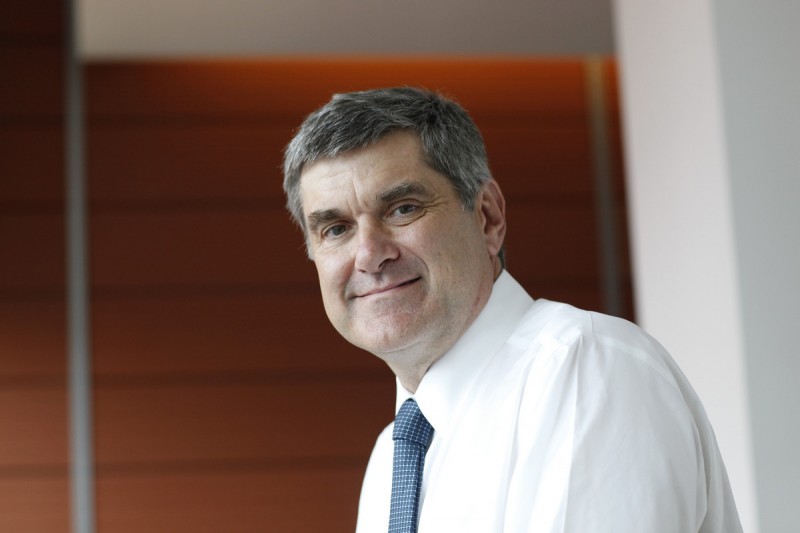
Memorial Sloan Kettering (MSK) Cancer Center’s chief executive, Craig Thompson, has resigned from two boards, Merck and Charles River Laboratories, following investigations of conflicts of interest. Thompson issued a statement about his decision to resign:
“I have taken feedback from our staff and faculty seriously and intend to lead by example. I believe this is the right decision for Memorial Sloan Kettering and will allow me to redouble my focus on MSK priorities: quality patient care, faculty, scientists and staff.”
Sloan Kettering’s chief medical officer, Jose Baselga, was accused of not reporting millions of dollars he received from pharmaceutical companies for his research articles. Baselga previously resigned from Memorial Sloan Kettering as well as Bristol-Myers Squibb, where he served on the board. As one former patient wrote, failing to disclose payments gives “the appearance of influence is troubling. It highlights ineffective oversight, with the potential to cast a shadow on the center’s other excellent doctors.”
When the story first broke, Memorial Sloan Kettering leadership wrote a letter stating, “MSK and our faculty need to do a better job.”
Discussion:
Analyze the MSK letter. Who is the audience, and what are the communication objectives? How do you assess the organization and writing style?
Should Thompson also resign his chief executive position at MSK? Why or why not?
How well does MSK leadership take responsibility for the problems? How is this an issue of integrity for MSK?

Facebook Breach Announced Today
Millions of Facebook users inadvertently gave hackers access to their accounts, and the company is trying to fix the problem. Hackers found a way in through the “View As” feature, which people use to see how their profile looks to others.

The company learned of the issue this week and today held a conference call with reporters. To the extent to which Facebook could manage the story, it’s the perfect day for such a report, when the country is focused on whether lawmakers will support Brett Kavanaugh’s nomination to the Supreme Court despite allegations of sexual assault.
On the conference call, CEO Mark Zuckerberg stressed that fighting hackers is an ongoing concern:
"This is a really serious security issue. This underscores there are just constant attacks from people who are trying to take over accounts and steal information from our community. This is going to be an ongoing effort."
Facebook’s VP of product development posted a “Security Update” statement on Facebook’s news site, including this reassurance:
“People’s privacy and security is incredibly important, and we’re sorry this happened. It’s why we’ve taken immediate action to secure these accounts and let users know what happened.”
Cover image source. Spotlight image source.
Discussion:
Do you agree that Facebook timed the announcement when a bigger story would likely overshadow the news? Or am I just cynical?
Assess the Security Update as a persuasive message. Describe the tone and organizational strategy. How well does the statement achieve its objectives?
How well does the company take responsibility for what happened?

Changes at Riot Games
Following allegations of sexism, Riot Games has apologized and is making changes. A long report by Kotaku placed blame mostly on the fast company growth and sexist working environment.
Trying to shed its “bro-culture” stigma, leaders have acknowledged that the company could be more inclusive. In a long statement last month titled, “Our First Steps Forward,” the company starts by apologizing to “to all those we’ve let down.” The statement then lists steps the company will take around inclusion initiatives, staffing, training, and so on

In a more recent statement, the company announced hiring a “leadership and strategy expert,” Frances Frei, who had also worked with Uber. The statement includes this quotation from Frei:
“After spending time with Riot’s leadership and many others across the organization, it became clear that Riot is truly putting everything on the table and committing to evolving its culture. In my interactions with Rioters, I’ve seen extraordinary levels of engagement on these issues across the company. Every Rioter with whom I’ve met truly cares about inclusion, which means real change is possible. Riot isn’t interested simply in fixing problems on the surface, it has the ambition to be an industry leader and to provide a roadmap for others to follow. I share that ambition and am eager to help Riot navigate this process.”
Discussion:
Read Kotaku’s report. How credible do you find the investigation and reporting? What could increase the credibility?
Assess Riot Games’ statement. Who is the audience and what are the communication objectives? How do the organization, writing style, and tone affect your assessment?
Now assess the statement about Frei. What’s your view of including Frei’s statement? What else, if anything, should be included in the statement?
Overall, how well is Riot Games demonstrating accountability? What other leadership character dimensions are demonstrated?

SodaStream Acquisition Communications
Pepsi will acquire SodaStream, which makes sense given declining sales of sugary drinks and bottled water, and increasing sales of sparkling water.

As we might expect, the press release focuses on Pepsi's "growing water portfolio" and its goal of "reducing the amount of waste generated." Incoming CEO and President Ramon Laguarta emphasized the strategic match between the two companies:
"SodaStream is highly complementary and incremental to our business, adding to our growing water portfolio, while catalyzing our ability to offer personalized in-home beverage solutions around the world. From breakthrough innovations like Drinkfinity to beverage dispensing technologies like Spire for foodservice and Aquafina water stations for workplaces and colleges, PepsiCo is finding new ways to reach consumers beyond the bottle, and today's announcement is fully in line with that strategy."
A Wall Street Journal article included a clear, simple column chart showing the dramatic increase in seltzer water.
Discussion:
- What is not said in the press release? What, if anything else, should be included?
- Pepsi's former CEO was Indra Nooyi, one of the few women running Fortune 500 companies, just announced her departure after 12 years. How, if at all, do you think the acquisition timing is relevant?
- What visual design principles are illustrated in the column chart?
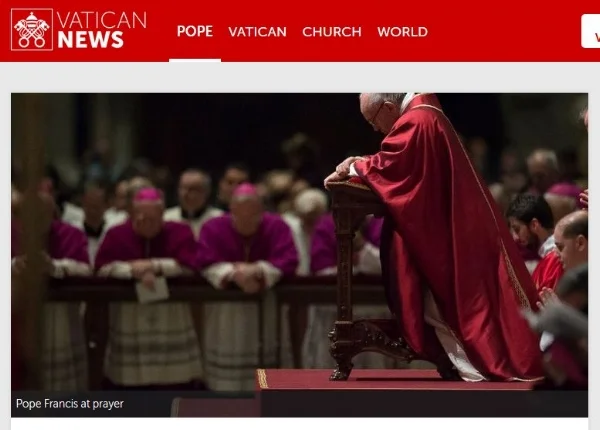
Pope Francis's Letter
Pope Francis has joined the conversation about sexual abuse in the Catholic church after 1,000 victims and 300 perpetrators were identified by a grand jury investigation report in Pennsylvania. The report also revealed how the church systematically covered up the abuse over a 70-year period.
In an open letter, which is posted on Vatican News, expresses empathy early and often, for example, in this passage:
In recent days, a report was made public which detailed the experiences of at least a thousand survivors, victims of sexual abuse, the abuse of power and of conscience at the hands of priests over a period of approximately seventy years. Even though it can be said that most of these cases belong to the past, nonetheless as time goes on we have come to know the pain of many of the victims. We have realized that these wounds never disappear and that they require us forcefully to condemn these atrocities and join forces in uprooting this culture of death; these wounds never go away. The heart-wrenching pain of these victims, which cries out to heaven, was long ignored, kept quiet or silenced.
Pope Francis's letter follows one by Pope Benedict XVI in 2010, when abuse in Ireland became widely known.
Discussion:
- Compare the two letters. In what ways are they similar and different? How might the circumstance and timing affect each approach?
- How is the letter organized? How would you describe the tone?
- Which character dimensions does Pope Francis demonstrate in his letter?

More Research Support for Gratitude
New research, once again, illustrates the value of writing thank-you letters. A recent study shows that senders underestimate the impact of sending a letter of gratitude, which prevents them from writing one. People also worry that letters will be scrutinized and that receivers will feel awkward, but none of these perceptions align with the reality.
In their study, Amit Kumar and Nicholas Epley, at the University of Chicago, compared how "expressers" felt about writing a letter with how people felt receiving them. Receivers felt more surprised about receiving the letters and about the content, more positive, and less awkward than the senders thought they would be. Most expressers spent less than five minutes writing a letter.
Understandably, writers in the study doubted their own competence. Participants answered questions such as, “To what extent were you able to express your gratitude using words that were just right?” and “After your recipient reads your letter, how articulate do you believe they will think your expression of gratitude is?” People who received messages rated senders as more competent than senders rated themselves.
This study builds on Kumar's earlier work showing that reflecting on experiences rather than on material goods makes people feel better and act more generously toward others.
Discussion:
- Have you sent a letter of gratitude in the past couple of years? What inspired you to send it? How was it received?
- Have you thought about sending a letter but did not? What stopped you? Do the findings in this study encourage you now? The authors hope so!

Tesla Employee Accused of Sabotage
A Tesla employee is accused of hacking into the computer system and changing code that affected the manufacturing process of the Model 3 car. The company believes this is the reason for the production delays.
CEO Elon Musk sent an email to employees, explaining the situation and asking them to report anything that looks "suspicious." He also writes, "This can be done in your name, which will be kept confidential, or completely anonymously." Musk blames an employment dispute:
"The full extent of his actions are not yet clear, but what he has admitted to so far is pretty bad. His stated motivation is that he wanted a promotion that he did not receive. In light of these actions, not promoting him was definitely the right move."
Musk gives other possible explanations for the deceit. He mentions short-sellers and members of the oil and gas industry who "don't love the idea of Tesla advancing the progress of solar power & electric cars."
The employee, Martin Tripp, disputes the claim, saying he was a "whistle blower." According to Tripp, he merely sent a query to a database to confirm waste and safety issues he saw at the company. Tripp has worked for Tesla since 2007.
Meanwhile, an email exchange between Musk and Tripp has become public:
Tripp: “Don’t worry, you have what’s coming to you for the lies you have told to the public and investors.”
Musk: “Threatening me only makes it worse for you”
Tripp: “I never made a threat. I simply told you that you have what’s coming. Thank you for this gift!!!!”
Musk: “You should ashamed of yourself for framing other people. You’re a horrible human being.”
Tripp: “I NEVER ‘framed’ anyone else or even insinuated anyone else as being involved in my production of documents of your MILLIONS OF DOLLARS OF WASTE, Safety concerns, lying to investors/the WORLD. Putting cars on the road with safety issues is being a horrible human being!”
Musk: “There are literally injuries[sic] with Model 3. It is by far the safest car in the world for any midsize vehicle. And of course a company with billions of dollars in product is going to have millions of dollars in scrap. This is not news.
“However, betraying your word of honor, breaking the deal you had when Tesla gave you a job and framing your colleagues are wrong and some come with legal penalties. So it goes. Be well.”
Discussion:
- I'm curious about the possibility of employees reporting anonymously when Musk gives an email address. How is this possible?
- Have you been in a situation where you were unhappy with how you were treated by management? What resources were available to you?
- Assess Musk's email to employees: the audience focus, organization, tone, and so forth. What works well, and what could be improved?
- What's your view of the dispute between the company and the employee? With whom do you side, and why?

Tesla Layoff Memo
Tesla will cut about 9% of its staff, according to a memo sent to employees. In the message, CEO Elon Musk is direct about the decision, which he claims addresses some overlapping roles. Musk also says that profits haven't been a priority but that the company must now focus on profitability to be successful.
In the last paragraph, Musk expresses his gratitude to those leaving the company:
"To those who are departing, thank you for everything you’ve done for Tesla and we wish you well in your future opportunities. To those remaining, I would like to thank you in advance for ult job that remains ahead. We are a small company in one of the toughest and most competitive industries on Earth, where just staying alive, let alone growing, is a form of victory (Tesla and Ford remain the only American car companies who haven’t gone bankrupt). Yet, despite our tiny size, Tesla has already played a major role in moving the auto industry towards sustainable electric transport and moving the energy industry towards sustainable power generation and storage. We must continue to drive that forward for the good of the world."
A Bloomberg article criticizes the memo for burying news that it will end its partnership with Home Depot. Musk does address the issue, particularly how employees are affected, in the fifth paragraph.
Discussion:
- How clearly does Musk's memo communicate the news the employees?
- What organizational approach does Musk use in the memo? How effective is this approach given the situation and audience?
- What's your view of Bloomberg's criticism about the Home Depot decision? How, if at all, could Musk have handled this differently?
- What leadership character dimensions are demonstrated in Musk's memo? Where, if at all, does he fall short?

Analyzing Communications Around the USC Crisis
After the University of Southern California's president resigned last month, crisis communication experts analyzed university messaging. When a gynecologist was accused of inappropriate exams and comments over decades working for the university, 200 faculty called for President C.L. Max Nikias's resignation. Faculty wrote that they believed Dr. Nikias "has lost the moral authority to lead the University.” Although the Administration denies any type of coverup, the gynecologist was allowed to continue in his job even after many allegations in 2016. Dr. Nikias did resign.
A Wall Street Journal article chronicles the following university communications:
A May 21 statement from university Provost Michael Quick denied university leadership knew of the doctor’s improper behavior, stating: “It is true that our system failed, but it is important that you know that this claim of a cover-up if patently false.” Prior to that, the university issued statements about the matter from Mr. Nikias on May 18 and May 15, and statements from other university officials on May 15 and May 16. University administrators also are contacting students.
Criticism of the communication includes sounding defensive, not completing the investigation quickly enough, and failing to report investigation results to those affected. One writer complimented the statement by the chair of the university's executive committee.
Discussion:
- How does this situation illustrate character dimensions such as vulnerability, accountability, and integrity?
- Read the executive committee chair's statement. In what ways does the statement illustrate authenticity? What other character dimensions are illustrated?
- Assess the university's other statements. What's your assessment of each?
- What should the university do at this point to rebuild trust?

Cold Email Examples
The CEO of Mapistry, a start-up software company for storm water compliance, posted and analyzed her past emails to VCs, venture capitalists who could invest in her company. Allie Janoch disputes the claim that you need an introduction to a VC; she has had some success in sending cold emails.
Her first email, Janochs admits, says little about her company and undermines the message with self-deprecation.

She didn't get a response. Her second email, when her company had more traction, includes a specific subject, focuses on problem solving, uses bullets for important data points, and is personal.

Discussion:
- What do you consider the strength's of Janoch's second email?
- What improvements could she make?
- How does each email demonstrate humility? The first, as Janoch says, is self-deprecating. What's the potential problem with this approach? How does the second email demonstrate humility as well as confidence? How well does Janoch balance the two?

Teacher Edits White House Letter

Yvonne Mason, a retired high school English teacher from Atlanta, marked up a letter she received from President Trump. She criticizes language choices, capitalization, and other issues, but some choices are by convention.
A New York Times article uncovered a federal government style guide, which is a whopping 465 pages. The guide suggests capitalizing some words, such as Nation and Federal when used to refer to the United States.
Then again, the style guide covers unusual topics, such as "Leaderwork":
14. Leaderwork
(See also Chapter 9 “Abbreviations and Letter Symbols” and Chapter 13 “Tabular Work”)
14 .1.
Leaderwork is a simple form of tabular work without boxheads or rules and is separated from text by 4 points of space above and below in solid matter or 6 points of space in leaded matter. It consists of a reading (stub) column and a figure column, leadered from the bottom line. It may also consist of two reading columns, aligning on the top line.
Mason skipped a more serious grammatical error: "I did not mention the dangling modifier. I focused mainly on mechanics.”
Discussion:
- On social media, people criticized Mason, with someone imagining her as "a lonely bitter hag with a lot of cats." Do you agree, or do you see Mason as doing an important service, or something else?
- What is the dangling modifier?
- Can you find a simpler way to explain leaderwork in the style guide? What is the value of such detail in a style guide, and what are the drawbacks?

"Can We Use 'I'?"
In an article, "The Soul-Crushing Student Essay," a writing instructor at The New School in New York City laments first-year students' writing. Every semester, he says, students ask, “Do you mean we can write with the word ‘I’?” He says, "Somewhere along the way, these young people were told by teachers that who they are in their writing ought to be divorced from who they are on their phones, or as the writer Grace Paley may have said, with their families and on their streets."
He encourages students to write about their own experience:
First, we need to value more the complete and complex lives of young people: where they come from, how they express themselves. They have already lived lives worthy of our attention and appreciation.
Second, we need to encourage young people to take seriously those lives they’ve lived, even as they come to understand—often through schooling and just as often not—that there’s a whole lot more we’ll expect of them. Through this, we can help them learn to expect more of themselves, too.
I'm sensitive to the topic because several students recently asked me this question about their final assignment—a self-reflection paper.
Discussion:
- Were you taught to avoid "I" in writing? What was the reason?
- What is the value of writing from your own experience?
- How does using "I" make your writing clearer and more concise?

MSU's Denial as a Cultural Issue
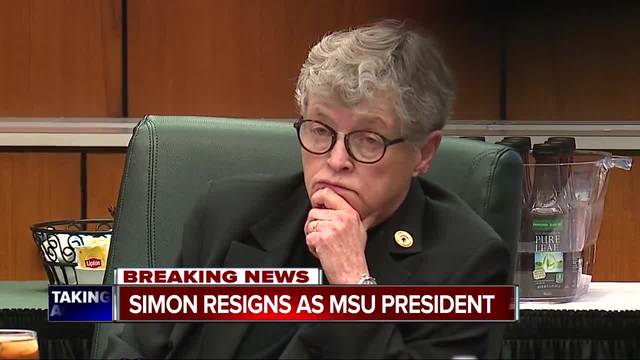
A Chronicle of Higher Ed article blames Michigan State University's ambitions and culture for their leaders' lack of response to years of sexual abuse on campus. More than 12 people knew of complaints against physician Larry Nassar, but the abuse continued for years.
Lou Anna K. Simon's leadership is questioned in the article. Although clearly a committed leader to the university, Simon is criticized for focusing so much on "two decades of status-climbing" that a culture of denying any wrongdoing evolved. One of the trustees summed up the issue in a letter and emphasized "We must embrace our obligation to apologize and offer justice."
Apologizing may be a sore subject for the trustees because Simon avoided it in the case of Larry Nassar's victims, according to the Chronicle article:
She talked about how “it is virtually impossible to stop a determined sexual predator and pedophile, that they will go to incomprehensible lengths to keep what they do in the shadows.” She often used “regret,” “sympathize,” and “acknowledge” in her written statements, but not “apologize.” She emphasized that sexual assault is a societal problem, not a Michigan State one. She highlighted all of the steps the university had taken to prevent sexual misconduct.
Discussion:
- Analyze the trustee's letter. What principles of business writing are followed? What are the strengths of the letter, and what could be improved?
- The trustee encourages MSU leadership to listen. What does he mean by this, and how would listening help the situation?
- What is the value of apologizing and admitting failure? What are the potential downsides, particularly for a university trying to improve its stature?
- This story illustrates several failings of leadership character. Which can you identify, and which do you think are most relevant here?
Supreme Court Justice's Writing Style

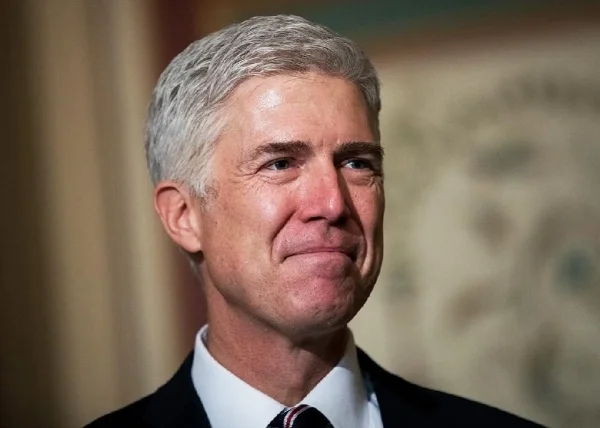
Supreme Court Justice Neil Gorsuch is getting so much attention for his writing that #GorsuchStyle is trending. Lauded before he joined the court, Gorsuch's writing is now criticized as a sidetrack "history lesson," "garbled," and "exhausting to read." Critics cite examples and wonder why a justice is spending time on alliteration:
“Disruptive dinnertime calls, downright deceit and more besides drew Congress’s eye to the debt collection industry.”
Another hallmark of his new style is making a pithy comment and then explaining its meaning as in this example:
"Chesterton reminds us not to clear away a fence just because we cannot see its point. Even if a fence doesn’t seem to have a reason, sometimes all that means is we need to look more carefully for the reason it was built in the first place."
A Yale student analyzed Gorsuch's court decisions. Compared to others' writing, he used more contractions (3.9 per 1,000 words compared to 0.8) and started sentences with words such as “and,” “but” and “so” more often (4.9 times out of every 1,000 words compared to 1.5). Analysts seem to agree that his style is getting less formal, but he also likes to draw attention to himself.
Discussion:
- What is the value of alliteration and other rhetorical devices? When are they best used, and when are they best avoided?
- Gorsuch's seeming desire to call attention to himself contradicts business writing and leadership character principles. Which ones?
- Why might Gorsuch's style change over time?
- What distinguishes your writing style? Can you identify a sentence structure, phrase, or structure that you use often—and maybe too often?
- Slate writer Mark Joseph Stern analyzed another passage and identified several examples of "fat." Try to improve conciseness in this paragraph. How many extraneous words can you omit?
The Court today clears away a fence that once marked a basic boundary between federal and state power. Maybe it wasn’t the most vital fence and maybe we’ve just simply forgotten why this particular fence was built in the first place. But maybe, too, we’ve forgotten because we’ve wandered so far from the idea of a federal government of limited and enumerated powers that we’ve begun to lose sight of what it looked like in the first place.
Narrative Alternatives to PPT at Amazon and Google
In his annual letter, Amazon CEO Jeff Bezos wrote that he has banned PPT:
"We don’t do PowerPoint (or any other slide-oriented) presentations at Amazon. Instead, we write narratively structured six-page memos. We silently read one at the beginning of each meeting in a kind of 'study hall.'"
Nancy Duarte describes the value of a narrative or storytelling approach: "storytelling in presentations is a powerful way to grab attention, hold attention, and to change beliefs." She gives examples from our favorite books and movies, which build suspense over time. Stories are also a good way to inspire empathy and other emotional reactions. This is difficult to achieve with traditional PowerPoint bullets.
A Harvard Business Review article, "Structure Your Presentation Like a Story," provides more guidance and summarizes the approach with a graphic:

For Bezos, the narrative style means that points are connected and organized in a logical sequence with some resolution, conclusion, or outcome. GeekWire created this six-page memo in Amazon's style as an example.
At Google, CEO Sundar Pichai also emphasizes storytelling with pictures:
"Since stories are best told with pictures, bullet points and text-heavy slides are increasingly avoided at Google."
Both executives are warning against the type of communication that is overly concise and missing context, connections, and cohesiveness. A ZDNet article summarizes some of the issues with PowerPoint and describes the now-infamous role of PPT in a U.S. disaster:
"'[B]ulletized' thinking contributed to the Challenger disaster, where 7 crew members died and a multi-billion dollar craft destroyed due to an O-ring failure. The big problem was that NASA management wasn't really listening to the engineers—and breaking issues up into bullets helped them do that."
Pichai's design approach aligns with PPT trends over the past few years. We're seeing much less text, fewer bullets, and more images, and this style follows the evolution of web design. On websites, we see many more background videos and photos and not much text, particularly on consumer websites.
Discussion:
- What are the advantages and downsides to the narrative memo? For what types of situations do you think this approach would work well? For what situations might PPT be a better choice?
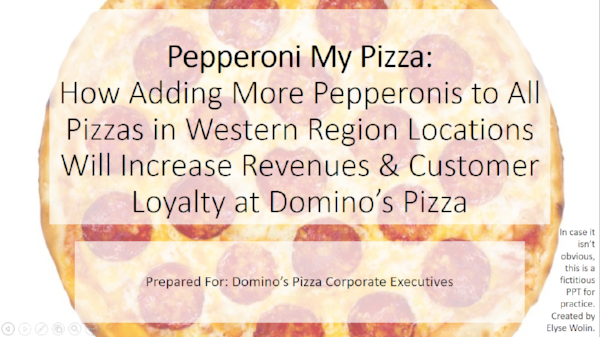
- For practice, try to convert this terrible PPT presentation to one with less text and more meaningful images. Clean up the design, add charts to help your audience visualize data, and of course, correct the grammar.

Chipotle CEO Generates Excitement

After a dismal three years of food-safety issues, Chipotle saw a strong first quarter, and CEO Brian Niccol is confident about the company's future. Since the outbreaks, part of Chipotle's turnaround plan was to introduce new menu items, but they did not prove successful.
In an interview, Niccol described new plans, which may include drive-thrus, longer hours, mobile ordering, or menu items that are more thoroughly tested. But Niccol resists offering deals and breakfast, despite what Bill Ackman, Chipotle's largest shareholder, advises:
“I’ve been very clear with him: Not now, Bill and I have had a couple of really good conversations. He may have some ideas that I don’t think are the right ones now.”
Here's the earnings call webcast. In the press release, Niccol further explained the company's plans:
"While the company made notable progress during the quarter, I firmly believe we can accelerate that progress in the future. We are in the process of forming a path to greater performance in sales, transactions, margins and new restaurants. This path to performance will be grounded in a strategy of executing the fundamentals while introducing consumer-meaningful innovation across the business. It will also require a structure and organization built for creativity, action and accountability. Finally, Chipotle will have a culture that is centered on running great restaurants, putting the customer first, innovating for today and tomorrow, supporting each other, and delivering on commitments. The future will be meaningful at Chipotle."
(Disclosure: I own a modest amount of Chipotle stock.) Image source.
Discussion:
- Assess the earnings call or press release. What business jargon do you identify? Is it too much, or is it appropriate for the situation and audience?
- Niccol is challenging Ackman's ideas, which is risky for a new CEO. How do you interpret his statement? Again, is what he says appropriate for the situation, or should he present his views differently?
- Would you say that Niccol is demonstrating courage in his statement about Ackman? Why or why not?
Tips for Navigating the New Gmail
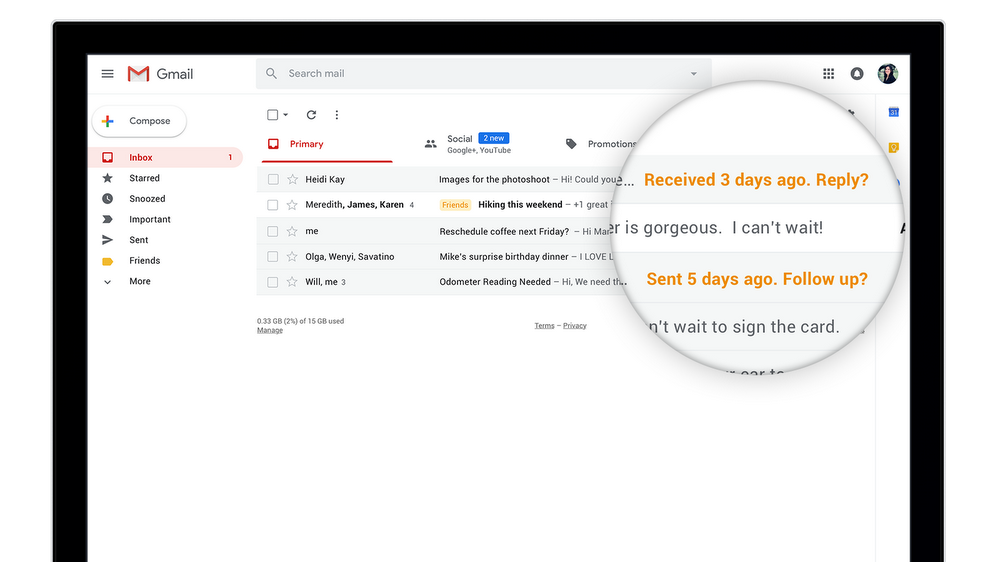
Will the new Gmail make email easier? I'm not so sure. In this WSJ video, David Pierce describes the new design as "busier," particularly if you have special folders. A new bar on the right side indicates, next to your list of email, your calendar and list of tasks, which is useful for an "at-a-glance" view.
Pierce suggests collapsing the left side bar and shrinking other parts down. He's a fan of the "confidential note," which will automatically delete messages after a period of time. You can also unsend a message now at any time, which is also a good addition.
Other features include snoozing a message and setting high priority notifications on your phone.
Some of these features seem helpful, but overall, I'm skeptical about whether they will make us more efficient. This is the first major upgrade since 2011, and if you don't want the new features, you can revert back to the old version.
Discussion:
- Identify a few features of your email program that you believe improve your efficiency. How do you use these?
- If you use Gmail, how do you assess these new features? Which do you find most and least useful?