
Spotify CEO's New Statement

Following new allegations against Joe Rogan, Spotify CEO Daniel Ek apologized to staff, yet reinforced his commitment to the podcast host. A video compilation of Rogan using a racial slur caused new criticism and calls for Spotify to take action. Rogan apologized, explaining that some recordings were from many years ago and were taken out of context.
Ek’s statement is addressed to Spotify employees, but of course, the secondary audience is intended to be the public. The message includes Rogan’s decision, apparently in consultation with the Spotify team, to remove 113 episodes. Although Ek writes that the choice was Rogan’s, we don’t know how much pressure he received.
Ek’s note is a good example of a persuasive communication that tries to balance the needs of many stakeholders. He demonstrates compassion to employees, vulnerabiiity in how the situation affects the company, and integrity in his $100 million commitment to artists and in holding firm to what he sees as a core value of the platform. We could see more personal vulnerabiity and authenticity. Unfortunately, leader will never satisfy all parties in this type of situation.
Spotify Team,
There are no words I can say to adequately convey how deeply sorry I am for the way The Joe Rogan Experience controversy continues to impact each of you. Not only are some of Joe Rogan’s comments incredibly hurtful – I want to make clear that they do not represent the values of this company. I know this situation leaves many of you feeling drained, frustrated and unheard.
I think it’s important you’re aware that we’ve had conversations with Joe and his team about some of the content in his show, including his history of using some racially insensitive language. Following these discussions and his own reflections, he chose to remove a number of episodes from Spotify. He also issued his own apology over the weekend.
While I strongly condemn what Joe has said and I agree with his decision to remove past episodes from our platform, I realize some will want more. And I want to make one point very clear – I do not believe that silencing Joe is the answer. We should have clear lines around content and take action when they are crossed, but canceling voices is a slippery slope. Looking at the issue more broadly, it’s critical thinking and open debate that powers real and necessary progress.
Another criticism that I continue to hear from many of you is that it’s not just about The Joe Rogan Experience on Spotify; it comes down to our direct relationship with him. In last week’s Town Hall, I outlined to you that we are not the publisher of JRE. But perception due to our exclusive license implies otherwise. So I’ve been wrestling with how this perception squares with our values.
If we believe in having an open platform as a core value of the company, then we must also believe in elevating all types of creators, including those from underrepresented communities and a diversity of backgrounds. We’ve been doing a great deal of work in this area already but I think we can do even more. So I am committing to an incremental investment of $100 million for the licensing, development, and marketing of music (artists and songwriters) and audio content from historically marginalized groups. This will dramatically increase our efforts in these areas. While some might want us to pursue a different path, I believe that more speech on more issues can be highly effective in improving the status quo and enhancing the conversation altogether.
I deeply regret that you are carrying so much of this burden. I also want to be transparent in setting the expectation that in order to achieve our goal of becoming the global audio platform, these kinds of disputes will be inevitable. For me, I come back to centering on our mission of unlocking the potential of human creativity and enabling more than a billion people to enjoy the work of what we think will be more than 50 million creators. That mission makes these clashes worth the effort.
I’ve told you several times over the last week, but I think it’s critical we listen carefully to one another and consider how we can and should do better. I’ve spent this time having lots of conversations with people inside and outside of Spotify – some have been supportive while others have been incredibly hard, but all of them have made me think.
One of the things I am thinking about is what additional steps we can take to further balance creator expression with user safety. I’ve asked our teams to expand the number of outside experts we consult with on these efforts and look forward to sharing more details.
Your passion for this company and our mission has made a difference in the lives of so many listeners and creators around the world. I hope you won’t lose sight of that. It’s that ability to focus and improve Spotify even on some of our toughest days that has helped us build the platform we have. We have a clear opportunity to learn and grow together from this challenge and I am ready to meet it head on.
I know it is difficult to have these conversations play out so publicly, and I continue to encourage you to reach out to your leaders, your HR partners or me directly if you need support or resources for yourself or your team.
Daniel
Arguments in the Joe Rogan, Spotify Situation
A few musicians and podcast creators are leaving Spotify over controversy about “The Joe Rogan Experience,” a popular show that has included misinformation about COVID-19 vaccinations. Comparing messages from different points of view is an interesting look at persuasive arguments and raises issues of character. Here are a few to explore:

Spotify’s stance is explained in this statement and may be summarized as follows from the chief executive and co-founder: “I think the important part here is that we don’t change our policies based on one creator nor do we change it based on any media cycle, or calls from anyone else.” Spotify also created a COVID information hub.
Neil Young removed his music, which had hundreds of millions of views, and explained his rationale in a letter (since removed from his website): “I am doing this because Spotify is spreading fake information about vaccines—potentially causing death to those who believe the disinformation being spread by them.”
Crosby, Stills, and Nash followed suit and posted their reason on Twitter: “We support Neil and agree with him that there is dangerous disinformation being aired on Spotify’s Joe Rogan podcast. While we always value alternate points of view, knowingly spreading disinformation during this global pandemic has deadly consequences. Until real action is taken to show that a concern for humanity must be balanced with commerce, we don’t want our music—or the music we made together—to be on the same platform.”
Roxane Gay explained her decision to remove “The Roxane Gay Agenda” in a New York Times opinion letter. In closing, she wrote, “I am not trying to impede anyone’s freedom to speak. Joe Rogan and others like him can continue to proudly encourage misinformation and bigotry to vast audiences. They will be well rewarded for their efforts. The platforms sharing these rewards can continue to look the other way. But today at least, I won’t.”
Bréne Brown “paused” her two podcasts and wrote that she is waiting for more information: “I’ve enjoyed the creative collaboration with Spotify, and I appreciate how the leadership has shown up in our meetings over the past week. Now that Spotify has published its misinformation policy, and the policy itself appears to address the majority of my concerns, I’m in the process of learning how the policy will be applied. I’m hopeful that the podcasts will be back next week.” As you might expect, Brown demonstrates vulnerability, including negative, personal comments she has received about the issue.
Joe Rogan apologized in a 10-minute Instagram video, promising to “balance out viewpoints with other people’s perspectives.”
UPDATE: A video compilation of Rogan using a racial slur has emerged, and he apologized—again.

Apology for Meatloaf Recipe

The folks at Weber Grill didn’t realize that singer Meat Loaf died on the day they published a meatloaf recipe. Had the company used the rock star’s death as a way to promote its products, that would have been in poor taste, but the email with a BBQ recipe was an unfortunate coincidence.
After some predicable backlash, the company quickly apologized for the mistake. Fortunately, just as the initial email made the rounds, so did the company’s apology.
The apology is simple and works well. The company didn’t need to apologize for insensitivity because the mistake was unintentional. In these situations, customers typically are more forgiving, and in this case, demonstrating compassion and humility was enough.

Misrepresenting COVID-19 Study Findings
A study about COVID testing in schools is criticized for its authors’ conclusions. Researchers at Duke, in collaboration with the North Carolina Department of Health and Human Services, studied the “test-to-stay” approach for schoolchildren. With this approach, if a child tests negative after being exposed to someone who tests positive, that child can go to school. Researchers found this strategy to be effective in getting kids back to school—without increasing COVID transmissions.

The trouble, described in a Wall Street Journal opinion piece, is that authors concluded, “in schools with universal masking, test-to-stay is an effective strategy.” The writers explain their thinking:
“That invites readers to assume that test-to-stay doesn’t work without forced masking. But since they studied no unmasked schools, this conclusion is baseless. An honest report would either have said so or not mentioned masking at all.”
The writers believe that study authors are pushing their own agenda for schools to require masking. This is a good example of a study interpretation that is technically correct but omits important information for a fair comparison. In such cases, researchers might hurt their own credibility. On the other hand, do people assume, as the writers say, that “test to stay” doesn’t work in schools without mask mandates?

Chris Noth and Peloton Respond to Sexual Assault Accusations
Peloton can’t seem to catch a break. Chris Noth, who played Mr. Big on the Sex in the City revival, first died on the show after using the bike, and then, after appearing in what seemed like a victorious response commercial, was accused by three women of sexual assault.
In a statement, Noth vehemently denied the claims:

"The accusations against me made by individuals I met years, even decades, ago are categorically false. These stories could've been from 30 years ago or 30 days ago—no always means no—that is a line I did not cross,” and
"The encounters were consensual. It's difficult not to question the timing of these stories coming out. I don't know for certain why they are surfacing now, but I do know this: I did not assault these women.”
Peloton removed the ad, and a spokesperson said, "Every single sexual assault accusation must be taken seriously. We were unaware of these allegations when we featured Chris Noth in our response to HBO's reboot. As we seek to learn more, we have stopped promoting this video and archived related social posts.”
I’m guessing that HBO is glad the writers killed off Noth’s character. For Peloton, the news is probably more attention than the company wants. It’s certainly more than Chris Noth wants.

Ask for Help in Rich Media Channels for Better Results

New research confirms what you might already think: you are most likely to get the results you want when you ask someone in person.
Experiments indicate that people are more compliant when communication takes place over richer media channels. Requests made face-to-face are most likely to be fulfilled. Second best is Zoom and then phone calls. Email and text requests are least effective. Survey participants thought richer channels would be more effective, but they underestimated the differences.
Cornell University researcher Vanessa Bohns sums up the results:
“We tend to think people will weigh the costs and benefits and make a measured decision about whether to agree to something, saying ‘yes’ only if they really want to. But in fact, people agree to all sorts of things, even things they’d rather not do, because they feel bad saying ‘no’ in the moment.”
Of course, this raises issues of integrity. Taking advantage of people who feel uncomfortable refusing a request will damage trust and credibility over time.

Company Responses to Tornado

An Amazon warehouse in Illinois and a candle factory in Kentucky seem to be the companies hardest hit by a devastating tornado. Although an easy target for critics, Amazon, and particularly CEO Jeff Bezos, probably could do more. Twitter comments called out his response as a “template” and “corporate line.” One wrote, “Literally a day late and a dollar short.” Further damaging his reputation as a compassionate leader, and by unfortunate coincidence, Blue Origin, Bezos’s company, launched six paying passengers into space on the day of the tornado.
Perhaps nothing Bezos said would have been right, or enough. In a news conference, Illinois Governor J. B. Pritzker said he “implored” Amazon “to stand up for this community to make sure that the families get whatever they need in this community, and they’ve offered to do so.” I have not found statements from Amazon about what that support might include.
The Kentucky factory, Mayfield Consumer Products, was “destroyed,” according to the website landing page. The CEO posted a brief statement, promising more information once known and promoting a victims’ fund. We see character and culture in both company responses.
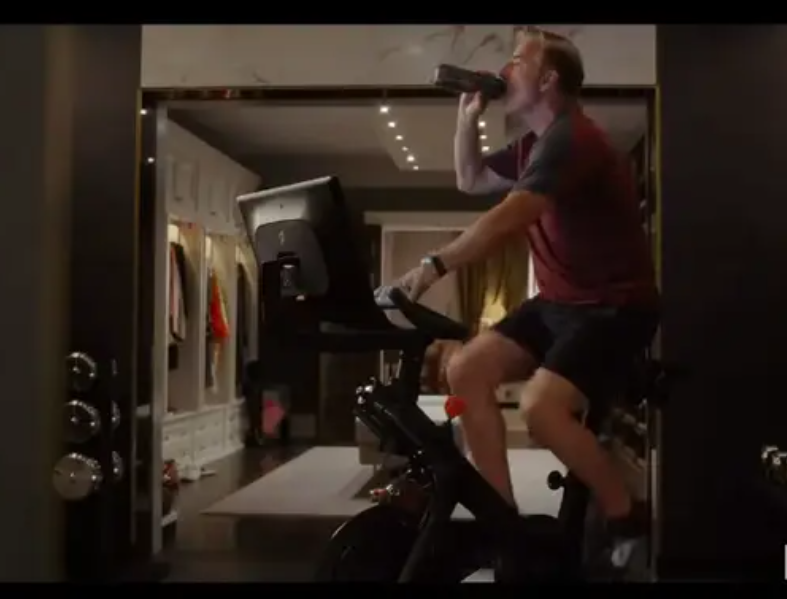
Peloton Addresses Death (Spoiler Alert)
Sex in the City spoiler alert: Mr. Big dies after a vigorous workout on a Peloton bike. The first episode of the HBO reunion show, “And Just Like That,” has Carrie Bradshaw’s husband sweating with “Allegra,” played by real-life Peloton instructor Jess King.
Company leaders were as surprised as viewers. A spokesperson said they approved King’s role and supplied a bike but had no idea how the scene ended. In a statement, an on-staff cardiologist blamed Mr. Big—a convenient, now deceased fictional character:
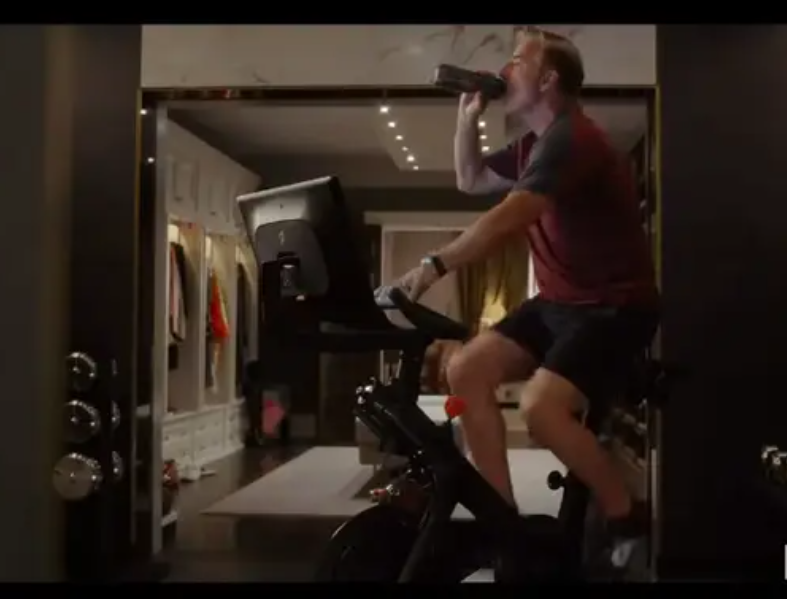
"I'm sure SATC fans, like me, are saddened by the news that Mr. Big dies of a heart attack. Mr. Big lived what many would call an extravagant lifestyle—including cocktails, cigars, and big steaks—and was at serious risk as he had a previous cardiac event in Season 6. These lifestyle choices and perhaps even his family history, which often is a significant factor, were the likely cause of his death. Riding his Peloton Bike may have even helped delay his cardiac event."
HBO declined to comment on the situation, and Peloton will be more careful about product placements in the future. Vulture called the episode “the worst Peloton ad ever.” After the episode aired, shares fell 11%, further challenging a company struggling with declining sales and product recalls.
Update: Although Peloton may have grounds for a lawsuit, so far, the company is taking a different approach. In a parody ad produced within just a few days, Peloton hired Mr. Big actor Chris Noth to play the character, alive and flirting with the instructor. A voiceover reminds viewers of the benefits of cycling.
Layoffs by Zoom Call + Updates
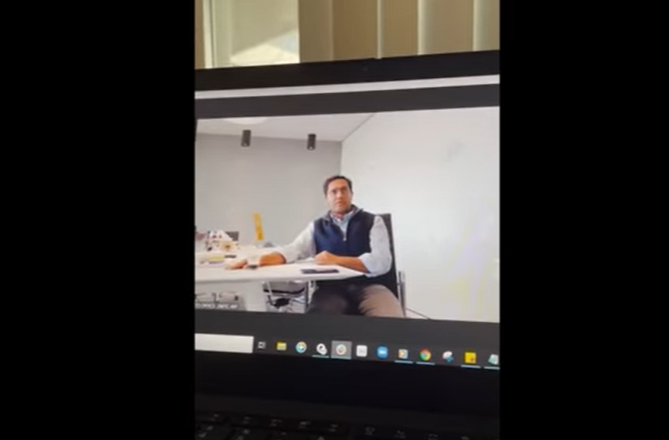
The CEO of U.S. mortgage company Better.com announced via Zoom that 900 employees, about 15% of the company, were being laid off. Vishal Garg invited people in the exiting group to the call and then dropped the news: “If you’re on this call, you are part of the unlucky group being laid off. Your employment is terminated effective immediately.” In a way, the Zoom call replaces an email typically sent to all employees before they meet individually with an HR representative.
The video is circulating on YouTube, and we hear one employee’s reaction as she watches: “You’ve gotta be kidding me. After all we did for the company! . . . I can’t believe this. This is not real.”
Certainly, this doesn’t reflect well on the company, particularly because it’s right before year-end holidays. News articles also question Garg’s management style and financial dealings. After the layoffs, he was quoted accusing employees of “stealing” from their coworkers by being unproductive. Reports also mention an email sent to staff, including, "You are TOO DAMN SLOW. You are a bunch of DUMB DOLPHINS... SO STOP IT. STOP IT. STOP IT RIGHT NOW. YOU ARE EMBARRASSING ME.” In addition, Garg faces lawsuits claiming fraudulent activity and misappropriation of funds.
History aside, CNN describes the Zoom call as “short and emotionless.” At times, Garg focuses more on himself than on employees. He said, “This is the second time in my career I'm doing this, and I do not want to do this. The last time I did it, I cried.”
I will give him credit for taking responsibility during the call, saying it was his decision. He also scheduled a call instead of, say, sending an email. He demonstrated accountability and some courage, but Garg lacked compassion. Overall, I’ve seen worse, for example, layoff by text message.
UPDATES: Garg wrote an apology about how he handled the situation. Although he uses the words “I apologize” and describes some of the impact on employees, the audience doesn’t seem quite right. He writes about the future, which includes employees who are staying but not the 900 who were on the Zoom call.
The Better.com board of directors announced that Garg will take some time off. Perhaps his worst crime is that the video went viral; he should have predicted that.

CVS Statement on Jury Decision
A jury found that Walmart, Walgreens, and CVS contributed to the opioid crisis and will have to pay damages to Ohio counties. Plaintiffs argued that, as a New York Times article explains, pharmacists are “gatekeepers who have a duty to question suspicious prescriptions.”
The drug stores will likely appeal, and CVS published a statement disputing the decision:
We strongly disagree with the decision. Pharmacists fill legal prescriptions written by DEA-licensed doctors who prescribe legal, FDA-approved substances to treat actual patients in need.
We’re proud of the substantial work we’ve done to support our pharmacists in detecting illegitimate prescribing. But the simple facts are that opioid prescriptions are written by doctors, not pharmacists; opioid medications are made and marketed by manufacturers, not pharmacists; and our health care system depends on pharmacists to fill legitimate prescriptions that doctors deem necessary for their patients. We look forward to the appeals court review of this case, including the misapplication of public nuisance law.
As plaintiffs’ own experts testified, many factors have contributed to the opioid abuse issue, and solving this problem will require involvement from all stakeholders in our health care system and all members of our community.
CVS uses a classic crisis-communication strategy to deflect blame: zoom out and look at the entire system. True, the opioid crisis is complex, but this jury found that pharmacists are part of the problem and should be held accountable.

Jack in the Box Statement: More Well Wishes
Restaurant workers across the country are demanding higher wages and better working conditions, and Jack in the Box is one targeted group. In California, unions are lobbying for The Fast Recovery Act, which would hold corporate offices accountable if franchisees don’t comply with regulations. Today, that responsibility lies with individual stores, making it more difficult for employees to get mandatory Covid 19 protections and sick pay.
A local Jack in the Box didn’t response to a PBS NewsHour request for comment, but the corporate office sent a statement. I see the message only on the video (at 4:33), so here’s a blurry image. Note the much-maligned “hope you are well”—two variations. The first, in slightly larger font, looks like part of a template that wasn’t deleted. In this case, both are superfluous and insincere—like announcing the author’s name, which is at the bottom of the note, and the rest of the statement, in my opinion.
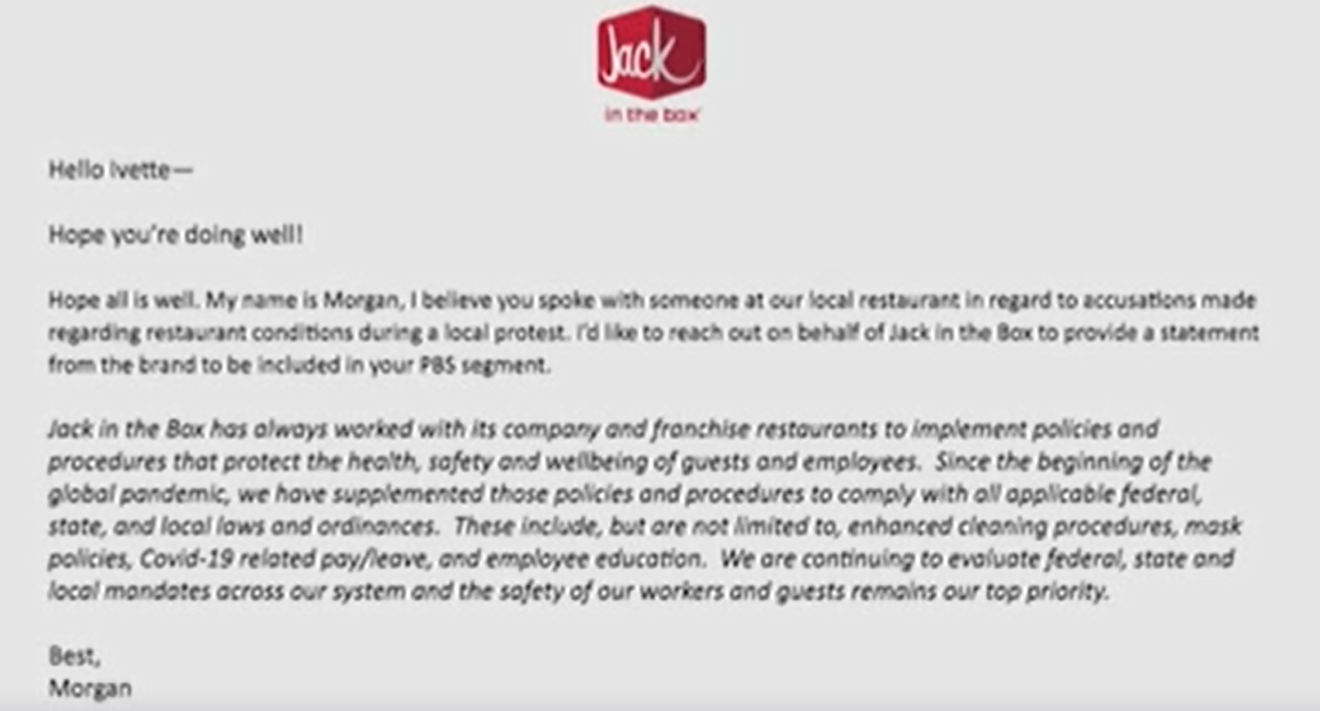
Nothing in the message acknowledges problems or provides plans to improve the situation. It’s defensive and does not inspire confidence in the brand. I see a lack of accountability and willingness to be vulnerable and learn from failure.
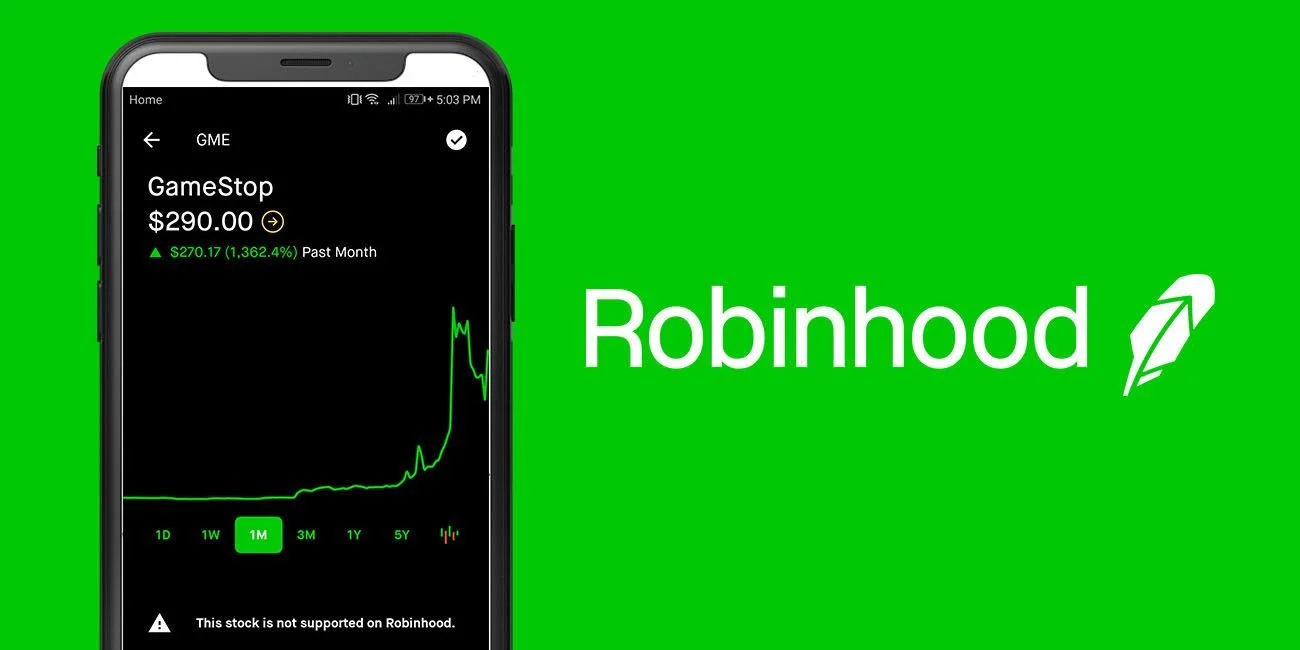
Robinhood's Breach Notice
In a blog post, Robinhood announced a “data security incident.” Business communication students will notice several examples of downplaying the situation, including giving numbers of people affected more significantly (310) but no numbers for the total.
Language seems intentionally complex, for example, “The unauthorized party socially engineered a customer support employee by phone and obtained access to certain customer support systems.” In other words, someone called a Robinhood employee and impersonated another employee. The employee fell for this deceit without seeking proof.
Robinhood seems to take no responsibility and identifies no plans for future action to prevent a similar “incident.” The chief security officer provides template text: “As a Safety First company, we owe it to our customers to be transparent and act with integrity. Following a diligent review, putting the entire Robinhood community on notice of this incident now is the right thing to do.”

Skewed Chart Example

Dopesick on Hulu includes a great example of a compressed chart scale. The show is about the opioid crisis and features the Sackler family and Purdue Pharma’s role in convincing doctors that OxyContin is not addictive. To prove the point, Purdue shared this graph, showing that the “time release” capsules don’t cause mood spikes (“fewer peaks and valleys”). The trouble, as business communication students can observe, is the Y axis.
In Episode 6 (around 21 minutes), we hear the explanation: “But see what Purdue did? They dramatically compressed the scale.” On the chart, we see that 30 looks to be the midpoint. They used a logarithmic instead of a linear scale to homogenize or “smooth out” the data. (Here’s a good explanation of logarithmic scales.)
In the show, an FDA official says they instructed Purdue Pharma not to use the chart, but the company did anyway. Of course, I’m not sure what happened, exactly, and I didn’t get the court filings to verify the chart.
The show offers many other examples of the company’s persuasive communications and the tragic effect on people’s lives. For more research about Purdue’s misleading communications, see this LA Times article. Also read a fascinating trove of Purdue emails here.

Failing Data Analysis in the Theranos Trial

The criminal trial against Theranos Founder and former CEO Elizabeth Holmes now focuses on testimony from Safeway, Walgreens, and Johns Hopkins University. Questions involve how these companies evaluated Theranos’ blood-testing technology and concluded that it was sound when, in fact, results was consistently false.
At this point in the trail, investors blame Holmes, whose defense is that the companies did due diligence and are responsible for their decisions. A Wall Street Journal article about the arguments highlights the companies’ and the university’s failings and over-reliance on Holmes’ claims.
As the relationship between Safeway and Theranos progressed, CEO Steve Burd wrote an email to Theranos with the subject, “Becoming Discouraged.” He testified, “I think whenever you start something new you’re going to have some rough spots, but we continued to have rough spots. We had samples that were lost. We had results that didn’t make any sense.”
We’ll see how the trial evolves, but clearly, experts needed to ask more questions up front. In some cases, they didn’t test the actual technology themselves. This story is a good example of failures in integrity and data analysis—perhaps for many involved.

Raiders Coach’s Language and Resignation

The New York Times described emails sent by Raiders Coach Jon Gruden that included racist, homophobic, and sexist language. In his statement, Gruden wrote a short statement on the Raiders’ Twitter account.
The statement isn’t exactly an apology, as we define it in business and corporate communication. Gruden doesn’t describe his behavior or the impact on others.
Raiders owner Mark Davis wrote an even shorter statement: “I have accepted Jon Gruden’s resignation as Head Coach of the Las Vegas Raiders.”
Critics of the decision evoke the “cancel culture,” while others believe Gruden’s comments were outlandish. In a business environment, his language would never be acceptable. The NY Times article quotes Gruden, which I’ll avoid here.

Opening Statements in the Theranos Trial

Elizabeth Holmes is facing a criminal trial for her role in the spectacular success—and spectacular failure—of Theranos, a startup that claimed to change how people give blood and get health results. The high-profile case involves board members like Henry Kissinger and Rupert Murdoch, who believed in the company and in Holmes.
Opening statements are a lesson in persuasive communication. The prosecution said, ”This is a case about fraud and about lying and cheating to get money.” They accuse Holmes of knowing that test results were invalid and continuing the business as usual. Pointing to the fame Holmes received, prosecutors paint a picture of a desperate, failing executive who would do anything to protect her business and reputation.
The defense team presents Holmes as a victim—a hardworking entrepreneur doing her best and challenged by mental abuse from Ramesh Balwani, the company COO and her former boyfriend.
Each side framed their positions, and now we’ll see what evidence they present to support their claims. Holmes could face 20 years in prison, which is unusual for a corporate CEO. The second day of the trial was cancelled because a juror was possibly exposed to COVID-19. The drama continues…

Robinhood's Strategy Faces Regulatory Questions

Robinhood is in the news again for its marketing tactics. I featured the investment app in the 11th edition of Business Communication and Character for its aggressive communication, including gaming graphics, to lure young, inexperienced investors into trading.
When users open a Robinhood account, they receive a free share to get started. This requires a proxy statement to be delivered to the user, which costs small companies a lot of money—for very few purchased shares. New regulations may prevent companies like Robinhood from seeking reimbursement.
Users don’t get any great bargain. As a Wall Street Journal writer explains, “Customers have a 98% chance of receiving a share priced between $2.50 and $10.”
Robinhood has maintained its defense as it faces increased scrutiny. A spokesperson said, “Customers love our free-stock program, and we think it fits squarely into our mission to democratize finance for all.”
This situation is another example of how the company’s strategy benefits some but negatively impacts others. For that reason, the communication becomes an issue of character—failing to consider the effect of one’s actions.
Apple Clarifies Policy

Apple software chief Craig Federighi spoke with a Wall Street Journal reporter about a misunderstood policy related to child pornography. The company had announced new reporting guidelines for illegal content. As part of the same message, they described new guidelines about photos sent to and from children. User backlash concerned how the company was monitoring their phones.
Federighi said, “I do believe the soundbite that got out early was, ‘Oh my God, Apple is scanning my phone for images.’ This is not what is happening.” He clarified that, using algorithms, they’re looking at photos stored on iCloud—not on people’s phones. The company is flagging only those photos that meet criteria of child pornography.
During the published interview with the WSJ reporter (what made the final cut on the website), Federighi didn’t emphasize the end goal: protecting children. The reporter provided this context, but the message was not at the forefront’s of Federighi’s main points. His focus was on clarifying the initial message: “I think our customers own their phones,” again, distinguishing what we choose to post on Apple’s server.
Federighi also demonstrated humility by admitting that the message was garbled and that AI technology does make mistakes. In hindsight, it sounds as though Federighi would have announced these guidelines in separate messages with more detail about the photo search process.

Millennials Talk Openly About Salaries

According to a Wall Street Journal article, millennials don’t carry the salary baggage of previous generations. Growing up in the open world of social media, this generation is used to sharing information about themselves that older people might consider taboo. In addition to salaries, millennials talk about credit card debt, savings, and other financials.
The transparency is helpful to other people their age. Employees can negotiate for fair salaries and, in some cases, not feel shame around money because they know that others are either in similar situations or have advantages that they don’t enjoy. The article also cites examples of people feeling better about their circumstances knowing that others carry a lot of debt, while they choose not to.
The article reminds me of the idea of “radical transparency” practiced at Bridgewater Associates and, to a lesser degree, some other companies. Being open about employees’ performance and compensation can cause hard feelings but may encourage a greater degree of fairness.
Clear Line Charts
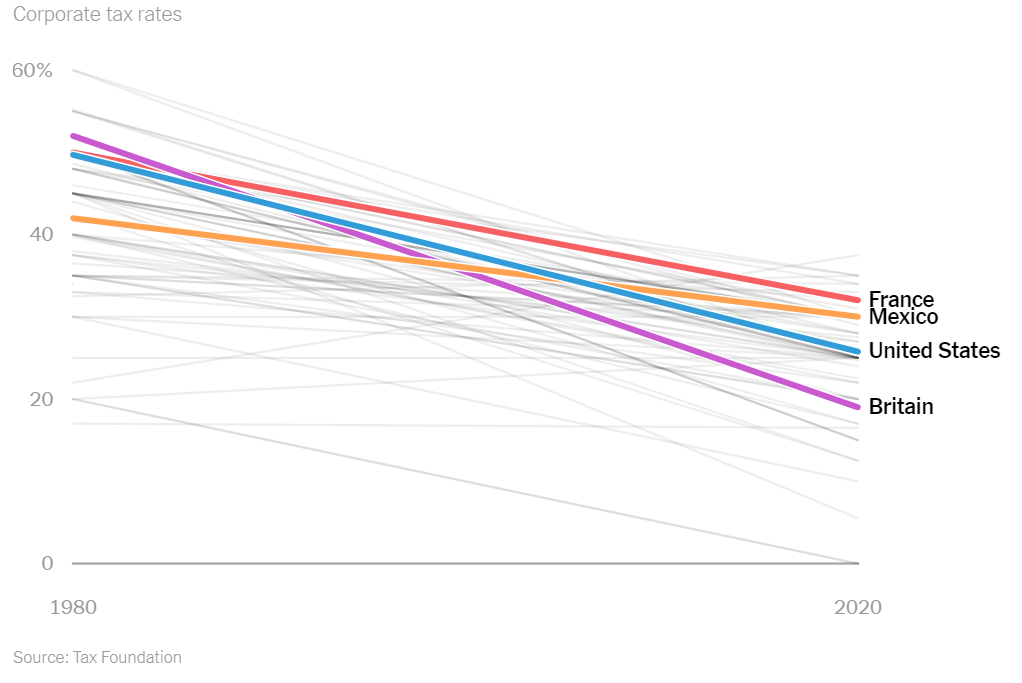
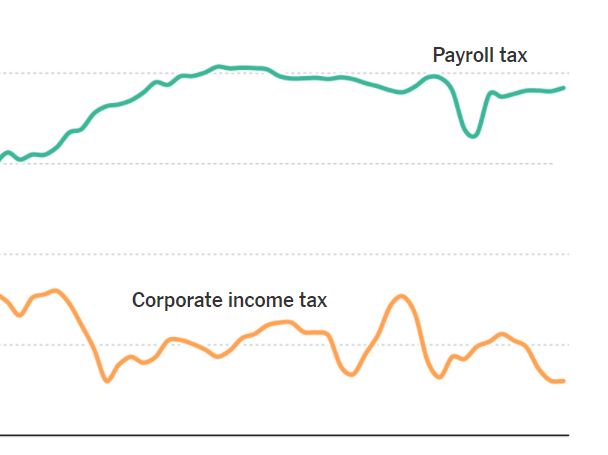
A New York Times opinion article illustrates the power of the line chart. With the title, “This Is Tax Evasion, Plain and Simple,” the author describes the U.S. corporate rate over time and compared to other countries.
The authors argue that countries have reduced corporate rates to compete for businesses, and over time, the rate has become too low. The chart at right compares the U.S. to other countries, while the chart below shows the change in U.S. wage and corporate taxes since 1950.


Additional charts show that companies have moved money to tax havens abroad, but economies and workers have not benefitted.
An economist and a writer and graphics editor paired up to produce the article. We see the influence of both—the data, plain language, and charts paint a vivid picture.