
Zuckerberg's Message About President Trump's Account
Facebook has decided that President Trump will no longer use its platform for his messages—at least for a while. The decision came after riots at the U.S. Capitol and after Twitter and Facebook suspended the president’s account. The tech companies said that the president violated its rules by inciting violence and/or making false claims about the election.

YouTube blocked a video of President Trump expressing sympathy for the protestors and calling them “special.” The tech platforms had tried labeling posts, but the president’s false claims were still believed.
Some call this time an “inflection point": “Hey Mark Zuckerberg, @jack, @SusanWojcicki and @sundarpichai -- Donald Trump just incited a violent attack on American democracy. Is that FINALLY enough for you to act?!" At this point, Twitter has not yet permanently banned the president from tweeting.
Zuckerberg uses the indirect style for his post, with the main point in the very last sentence. He makes his argument first, and then we read the decision. It’s an interesting choice, which might not convey the courage that people would like to see.
Additional analysis and rationale for the decision are posted on the Facebook site.

United Airlines’ Response to Passenger Death
United Airlines is doing damage control after a passenger flying from Orlando to Los Angeles was rushed to a hospital in New Orleans and died. The cause of death hasn’t yet been reported, but the airline confirmed that the passenger had Covid-19 symptoms.
Customer response is fierce, partly because the passenger’s wife told others that her husband had Covid, and partly because the airline continued to fly the plane with passengers. Like most airlines, United asks passengers about their symptoms before flying, but they do not verify.

Communications are scant. I see nothing on United’s home page but found a news release dated December 16, two days after the passenger death, titled, “United and CDC Work Together on Contact Tracing Initiative for All International and Domestic Flights.” Recent tweets mention nothing about the situation, although one conveys the same message as the news release: “comprehensive, voluntary contract tracing.”
Some might feel that this is the least the airline can do in the situation.

Robinhood's Misleading Communications

Investment app Robinhood will pay $65 million in fines for misleading customers. The 2013 start-up has grown rapidly, attracting younger, inexperienced investors with no-fee accounts and no minimums. But Robinhood generates revenue through “payment for order flow,” essentially a kickback from Wall Street firms and the same practice Bernie Madoff used to defraud investors.
Robinhood uses behavioral nudges and notifications to push users to invest in riskier stocks, resulting in higher trading volume, sometimes dramatic losses—and more revenue for the company. An NBC article describes the visuals:
When smartphone owners pull up Robinhood’s investment app, they’re greeted with a variety of dazzling touches: bursts of confetti to celebrate transactions, the price of bitcoin in neon pink and a list of popular stocks to trade.
Charles Schwab, meet Candy Crush.
A competitor compared the design to Las Vegas.
Of course, all is well when stocks go up, but when stocks decline, users have to make up the loss. For one 20-year-old man, his bill appeared to be $730,000, and he committed suicide.
Wishing Someone Well
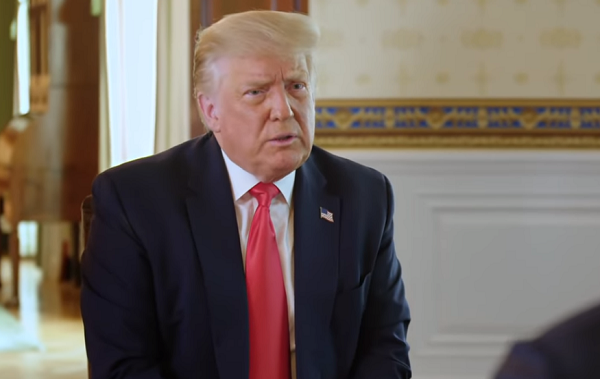
News outlets are reporting that President Trump wishes Ghislaine Maxwell “well.” An associate of Jeffrey Epstein, Maxwell is charged with child sex-trafficking and has pleaded not guilty.
President Trump knew Epstein and Maxwell and met them “numerous times over the years.” according to his interview with Axios. When an Axios interviewer questioned the president’s previous statement that he wishes her well, he explained what he meant:
"Her boyfriend died in jail, and people are still trying to figure out how did it happen. Was it suicide, was he killed? And I do wish her well.”
“I'm not looking for anything bad for her. I'm not looking bad [sic] for anybody.”
“I do. I wish her well.”
“I wish her well. I'd wish you well. I'd wish a lot of people well.”
Discussion:
What does it mean to “wish” someone “well”?
What's your view of President Trump’s comments? Appropriately empathic towards Maxwell, compassionate, insensitive towards victims of sexual abuse, polite, or something else?
The president defended his initial comments. Should he have done so or changed his approach? Why?

Zuckerberg Testifies About 2012 Emails

Mark Zuckerberg faced one particularly tense moment during the U.S. Congressional Antitrust Hearing. Rep. Jerry Nadler (D-NY) accused Facebook of antitrust activities in its acquisition of Instagram:
“Facebook, by its own admission ... saw Instagram as a threat that could potentially siphon business away from Facebook. So rather than compete with it, Facebook bought it. This is exactly the type of anti-competitive acquisition the antitrust laws were designed to prevent.”
Nadler’s conclusion is based on 2012 emails among Zuckerberg and his staff. In one email he wrote about Instagram:
“One way of looking at this is that what we’re really buying is time. Even if some new competitors springs up, buying Instagram, Path, Foursquare, etc now will give us a year or more to integrate their dynamics before anyone can get close to their scale again. Within that time, if we incorporate the social mechanics they were using, those new products won’t get much traction since we’ll already have their mechanics deployed at scale.”
Within an hour, Zuckerberg sent a second email, which some say proves his guilt:
“I didn’t mean to imply that we’d be buying them to prevent them from competing with us in any way.”
During the hearings, Zuckerberg defended the acquisition:
“I think the FTC had all of these documents ... and unanimously voted at the time not to challenge the acquisition. In hindsight, it probably looks obvious that Instagram would have reached the scale that it has today. But at the time, it was far from obvious.”
Discussion:
Research and describe relevant U.S. antitrust laws.
Read more about the 2012 emails and watch the hearings. How well did Zuckerberg defend the Instagram acquisition?
Did Zuckerberg’s follow-up email prove his guilt? Why or why not?

P&G Commercials Demonstrate Empathy
Two Proctor and Gamble ads illustrate the role of empathy in understanding aspects of being Black in America. The first ad here, “The Look,” shows how a Black man experiences others’ reactions to him throughout the day. The second ad allows the viewer to watch intimate conversations that Black families have about race.
Discussion:
How would you describe the role of empathy in addressing bias?
What are the objectives of these ads? How well do they meet those objectives?
What makes these ads effective—or not—in your opinion?

Company Statements About George Floyd's Murder

Business Insider has assembled a list of companies’ statements and promised actions following the killing of George Floyd and the public protests.
TikTok, General Motors, McDonald’s—many brands are jumping into the conversation and posting messages that are both placating and inspiring.
Discussion:
Read the list of statements and actions. Which sound most meaningful to you?
Should all brands post a message? Which should, and what is important to convey?

Facebook's Position on Twitter's Labeling
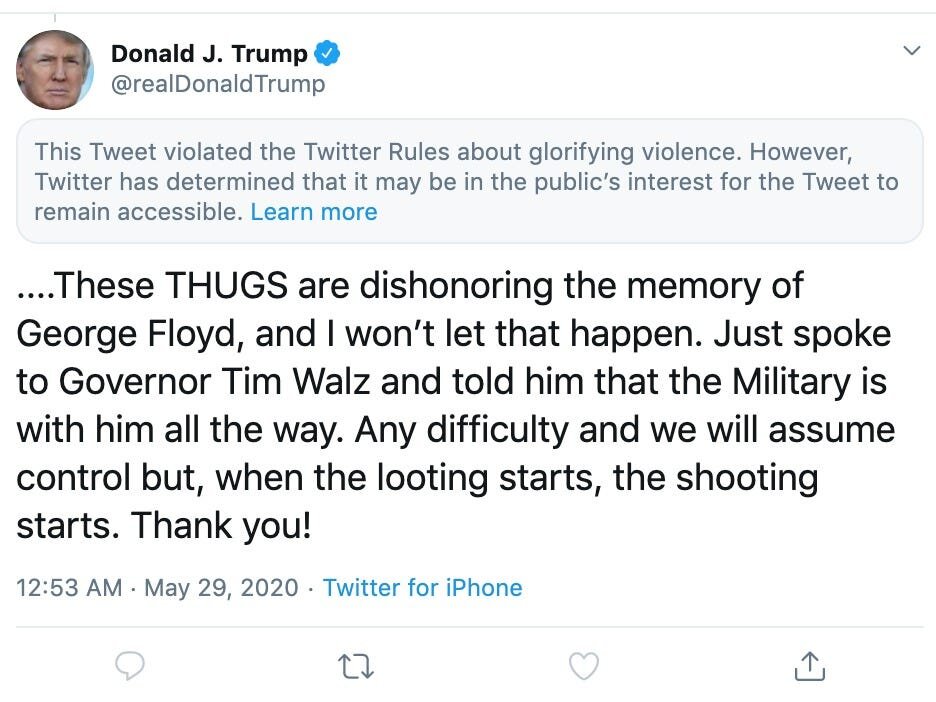
Facebook CEO Mark Zuckerberg weighed in on Twitter’s decision to fact-check and label some of President Trump’s tweets. In response to protests after the death of George Floyd, one tweet promised “when the looting starts, the shooting starts.” Twitter hid the tweet with a note that it “violated the Twitter Rules about glorifying violence.”
Another tweet claimed that “mail-in voting will lead to massive fraud and abuse,” and Twitter posted a warning to “get the facts.” Until now, Twitter had not enforced its policies for the president’s tweets.
Facebook is taking a different tack. CEO Mark Zuckerberg described the company’s position:
"I believe strongly that Facebook shouldn't be the arbiter of truth of everything that people say online. I think in general, private companies shouldn't be, especially these platform companies, shouldn't be in the position of doing that."
The Wall Street Journal editorial board defended Zuckerberg’s decision: “We wish Facebook would take a lighter touch when it comes to political speech overall.”
Discussion:
What’s your view of Twitter’s actions? Why do you think the company began labeling President Trump’s tweets now?
Should Facebook follow suit? How might each company’s mission play a role in its actions?

Jenner Pays for Frye Festival Post
The U.S. Federal Trade Commission (FTC) requires that paid endorsements are not misleading. Celebrities like Kendall Jenner cannot post support on social media for a product or organization without specifying that she is being paid to do so. The FTC publishes Endorsement Guides to clarify responsibilities.

Jenner promoted the 2017 failed Frye Festival, implying that Kanye West might perform. Although she was paid $275,000, she didn’t reveal the sponsorship. She has since been sued and will pay a $90,000 settlement, which may help some of the many associates of the festival who lost money in the venture.
To learn more about what happened to the Frye Festival—a major public relations and communication failing—see documentaries on Hulu and Netflix.
Discussion:
What are the ethical implications of celebrities endorsing products?
When a celebrity endorses a product, are you more likely to buy it?
If you’re familiar with the festival, describe what went wrong.

A Leader Example in My Book Is Charged With Conspiracy
I was sad to see that Paul Kruse, former CEO of Blue Bell Creamery, has been charged with covering up the listeria breakout in 2015. In my book, Building Leadership Character, Kruse is a positive example of a leader who demonstrates vulnerability. His 2016 video announcing employee layoffs after the breakout was emotional and authentic.
Prosecutors say that Kruse delayed recalling tainted products, instructed employees to tell customers that product delays were caused by mechanical problems, and failed to take other appropriate action.
Blue Bell agreed to pay $19.5 million to the Department of Justice and posted a statement on its website, which focuses more on the future than on the past.
Discussion:
Can you reconcile both perspectives of Kruse as a leader? Could he be someone who covers up listeria and someone who gets emotional when talking about employee layoffs?
Assess the company’s statement. Who are the audiences, and what are the communication objectives?

Companies That Returned Federal Funding

Controversy swirls as companies grapple with whether to keep or return federal funding for the COVID-19 crisis. Distributions from the Paycheck Protection Program (PPP) seem unfair as some small businesses—the intended recipients—can’t get forgivable loans, while some larger businesses received millions of dollars that, at least in some cases, isn’t needed as emergency funding.
As the first and most highly publicized company, Shake Shack returned $10 million. Forbes tallies several others, including Ruth’s Hospitality Group, Sweetgreen, and the Los Angeles Lakers.
Store image source. Food image source.
Discussion:
What’s your view of companies that returned money compared to those that didn’t?
How should a company decide whether to return the funding?
Shake Shack doesn’t include a press release on its website or a tweet about the decision. What’s your view of this approach? Should the company promote the decision more boldly? Why or why not?

Lysol Disputes Claims of Cure
During his press conference, President Trump questioned whether disinfectants could be used internally to fight the new coronavirus:
“I see the disinfectant that knocks it out in a minute, one minute. And is there a way we can do something like that by injection inside, or almost a cleaning? Because you see it gets inside the lungs and it does a tremendous number on the lungs, so it would be interesting to check that.”
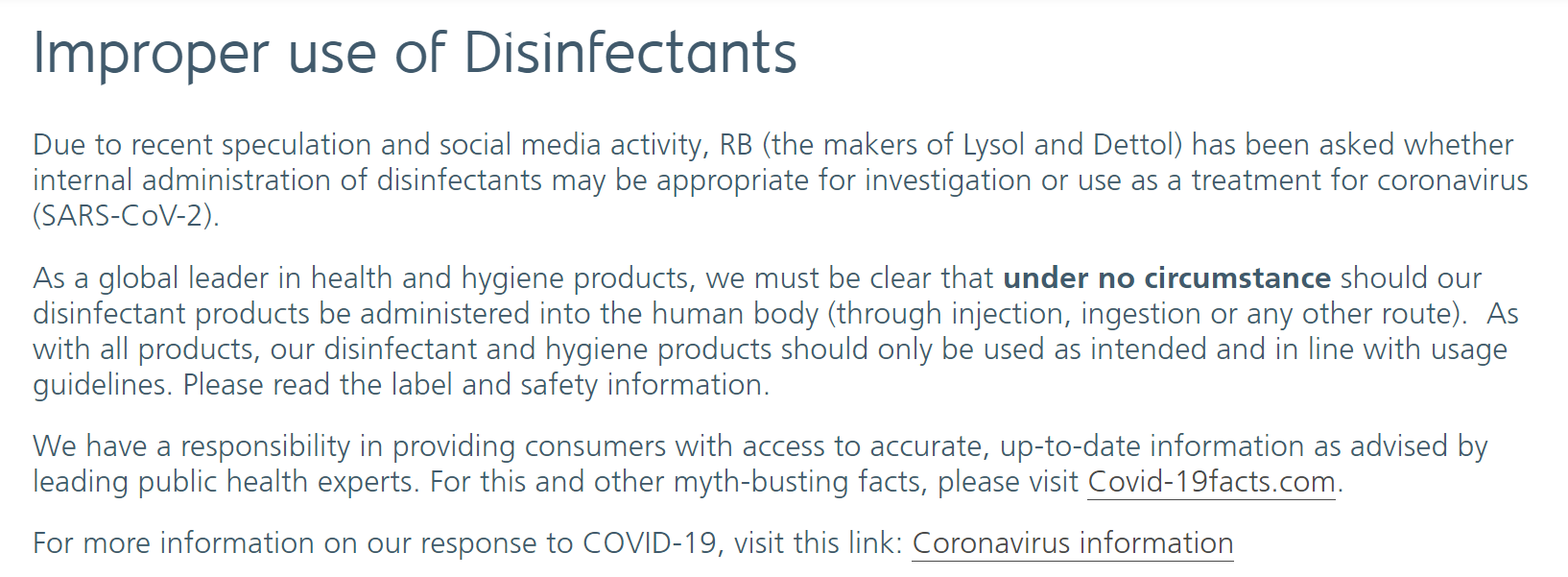
The president later said, “I was asking a question sarcastically to reporters like you just to see what would happen.” But Lysol executives are concerned that people may take the idea seriously and try to treat themselves. Reckitt Benckiser, which makes Lysol products, issued a statement, “Improper Use of Disinfectants.”
Discussion:
Watch the president’s comment during the press conference. What’s your view of his speculation?
Analyze the Lysol maker’s response. What works well, and what could be improved? What is appropriate or inappropriate for a brand’s parent to dispute the president’s claim in this way?
Improving Column Charts

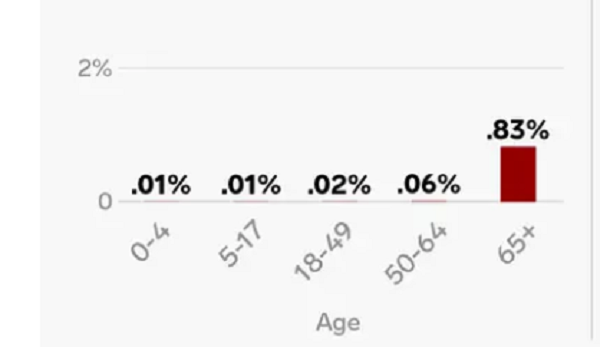
So many charts about COVID-19 could be improved. Here’s one from a Business Insider article, which compares death rates for the flu and COVID-19.
Discussion:
What issues do you see in the graphic? (Hint: Check the x axis, and describe what the percentage on the y axis represents.) How would you fix the problems?
What are the consequences of designing charts in this way?
Find another recent chart to analyze. In what ways does the graphic convey information accurately, and how does it fall short?
Luckin COO Fabricated Sales Data

Luckin’ Coffee, China’s largest coffee chain, is suffering the consequences of publishing false sales numbers. Ernst & Young discovered the misconduct, which took place in 2019, during an audit, concluding that “management personnel engaged in fabricated transactions which led to the inflation of the Company’s income, costs and expenses.” An investigation blames the chief operating officer and others.
A report details “the fraud and the fundamentally broken business,” including “smoking gun” evidence and “red flags.” The anonymous authors compare video recordings of store foot traffic to reported sales.
In response to the news, Luckin’s stock declined between 75 and 80%. Starting in February, when the anonymous report was made public, the company has been posting notices about the situation on its website.
Discussion:
Analyze the anonymous report, including the audiences, objectives, organization, writing style, etc. What works well, and how would suggest that the writer improve the report?
How well did the company address concerns? Begin with the first response in February.
What leadership character dimensions does this situation illustrate?
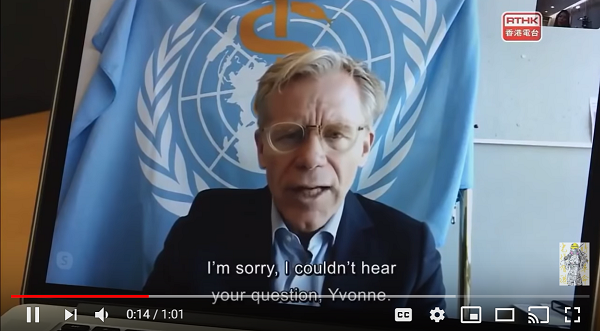
WHO Official Bungles Interview
World Health Organization (WHO) senior adviser Bruce Alyward wanted to avoid a reporter’s question about Taiwan becoming a member of the organization. A video of the interview shows an awkward exchange, with Alyward remaining silent (but we still see him moving and hear sounds), saying “Sorry, I couldn’t hear your question,” asking the reporter to move onto another question, and then, finally, ending the call. During a follow-up call, Alyward refers to China and then abruptly ends the call.
Taiwan has had good success in controlling COVID-19, and the government claims to have warned the WHO back in December 2019 about the contagion.
As of today, Alyward’s name is removed from WHO’s website listing advisers to the organization.
Discussion:
What is a better way for Alyward to have handled the reporter’s question?
Why do you think the WHO ignored warnings from the Taiwanese government?
Email Scammers
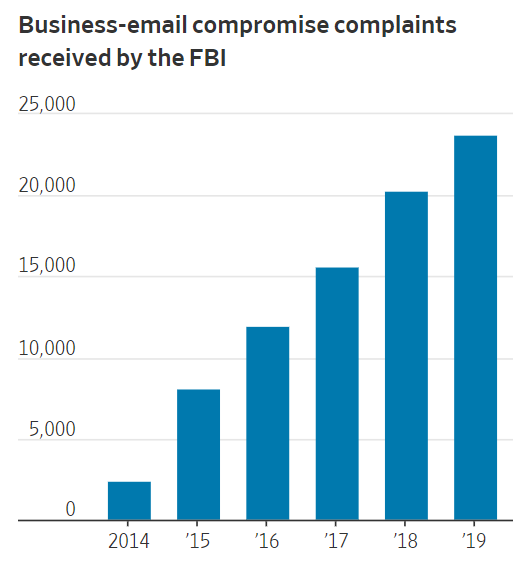
Remember those quaint email scams that were riddled with grammatical errors? A Wall Street Journal article describes new, sophisticated training for email scammers in Africa. A Nigerian is quoted: “You know how you guys play baseball when you are growing up? Here many of us learn fraud.”
Former scams involved people sending email asking for money for people in trouble or promising big returns on small funds. Today’s scams involve hacking into accounts and people learning about connections, for example, what vendors a company uses. A fake invoice to a known vendor is more likely to get paid. Using a grandson’s real name could lead a grandmother to Wal-Mart to send money to him, which happened to my friend’s mother.
About $1.7 billion was lost to email scams in 2019, and complaints are rising steadily. The article describes a “grooming” process “like organized crime.”
Discussion:
We hear a lot about victims’ vulnerability, but what creates a culture of scammers? What makes people vulnerable to commit this fraud? For more about this, watch The Weekly documentary about love scams on Facebook.
What’s your view of the bar chart in the WSJ article? How could it be improved? Would you prefer a more creative graphic, or does this work as is?
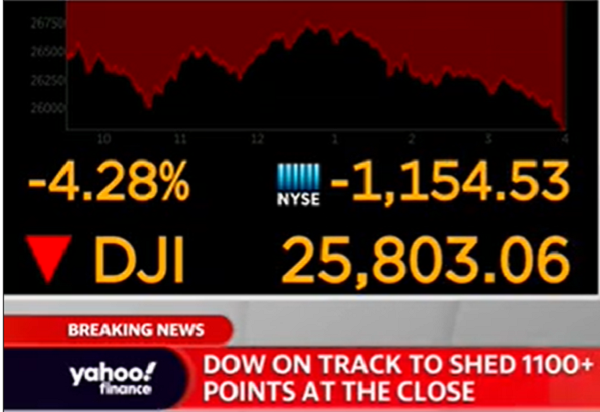
Comparing Headlines About the Market

How does the media describe the recent stock market decline? Let’s compare a few headlines:
Dow falls 1,191 points -- the most in history (CNN)
Coronavirus Drives Stocks Down for 6th Day and Into Correction (New York Times)
U.S. Stocks Slide Into a Correction as Virus Fears Show No Sign of Easing (Wall Street Journal)
Dow's point drop worst on record as stocks fall into correction (Fox News)
Dow drops 1190 points amid coronavirus fears, S&P 500 sees fastest correction in history (Yahoo Finance)
Of the five, Fox is the only one that didn’t place a headline about the market at the top of its web page.
Discussion:
What do you make of these headline choices, including placement? What might the wording indicate about the media group’s beliefs or audience?
In class after a previous decline, I took issue with headlines like CNN’s. Do you see an issue? (Hint: What does a raw number tell us?)

Wells Fargo Former CEO Banned

In what the Wall Street Journal calls “unprecedented” and “an extraordinary sanction for a top executive at a large bank,” former CEO John Stumpf has been barred from the banking industry. The decision—and a $17.5 million fine—were part of a settlement between Stumpf and the Office of the Comptroller of the Currency (OCC) for millions of fake bank accounts created at Wells Fargo.
The OCC concluded that Stumpf should have known of the systemic problems and that “there was a culture in the Community Bank that resulted in systemic violations of laws and regulations.” When the scandal became public, employees complained of extreme stress because of pressure to sell more bank products. This pressure led employees to create fake accounts for customers.
Other Wells Fargo executives have been fined and charged, but none have been banned from the industry.
Discussion:
Do you think the decision is fair? Why or why not?
This decision represents a shift from the 2008/2009 financial crisis, when banks paid significant fines but very few individuals were charged. What’s your view of the change?

Emails Show USC's Potential Role in the Admissions Scandal

Actress Lori Loughlin and her fashion-designer husband Mossimo Giannulli have been charged with bribing University of Southern California athletic officials to get their daughter admitted. Now emails from USC show that the school was courting them by asking for donations and arranging for personalized campus tours. In one email, a university official wrote, “I’d also be happy to flag her application.”
A New York Times article summarizes how accused parents plan to defend themselves against charges:
Motions by several of the defendants suggest they will argue, essentially, that they could not have defrauded the university, as prosecutors say, because the university was actively seeking such donations and offering a leg-up in admissions in return.
In a statement, USC downplayed the special treatment:
“What was being offered to the Giannullis was neither special nor unique. Tours, classroom visits and meetings are routinely offered. The primary purpose of a flag is to be able to track the outcome of the admission review process. It is not a substitute for otherwise being qualified for admission to USC.”
Parents are expected to say that their donations were legitimate, but USC is expected to say that the bribery was specific to the crew team official, who “agreed to pass the couple’s two daughters off as coxswains.”
Discussion:
What’s your view of this situation? Do you agree more with the parents’ or with the school’s perspective?
What, if anything, do the school’s emails reveal? Consider this message to the parents: “Please let me know if I can be at all helpful in setting up a 1:1 opportunity for her, customized tour of campus for the family, and/or classroom visit?”

WSJ Opinion About Boeing Emails

A Wall Street Journal writer argues that Boeing employee emails “explain nothing.” A previous WSJ article concluded that emails demonstrated a “cavalier attitude towards safety,” and a Reuters article concluded that employees “distrust the 737 MAX” and “mock regulators.”
The opinion writer, Holman Jenkins Jr., argues, “all of corporate America, not just Boeing, lives these days by employing creative, freethinking people who spout off acerbically, critically and colorfully in electronic messages.” Jenkins questions the reporting of these emails and what is omitted.
Jenkins also asks why these employees didn’t write about MCAS design flaws: “If the hypercritical people seen in these messages had known about MCAS’s design flaws, it never would have gotten through.” He also notes that the only emails referring to MCAS were from 2013, although system changes were made in 2016.
Discussion:
Read Jenkins’ article. What do you consider to be his strongest and weakest arguments?
Based on his argument and your own reading of media reports, what’s your opinion about the significance of the emails?
What issues of integrity does this situation raise?