
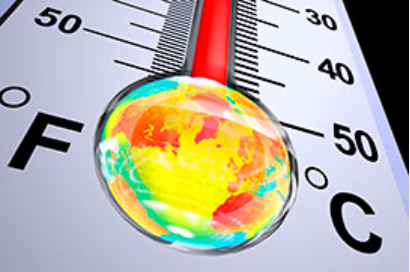
Medical Journals Urge Climate Response

The editors of 220 medical journals wrote to inspire climate change action. In an open letter, the authors cite “catastrophic” health results of a degrading environment, particularly affecting ”countries and communities that have contributed least to the problem and are least able to mitigate the harms.”
The letter, below, is a good example of persuasive writing. We see a mix of emotional appeals, logical arguments, and credibility to encourage world leaders to do more. However, the writing doesn’t meet standards for organizing business messages. Business communication students could restructure the writing to make the organization more explicit, improve readability, and surface main points.
The UN General Assembly in September, 2021, will bring countries together at a critical time for marshalling collective action to tackle the global environmental crisis. They will meet again at the biodiversity summit in Kunming, China, and the UN Climate Change Conference of the Parties (COP26) in Glasgow, UK. Ahead of these pivotal meetings, we—the editors of health journals worldwide—call for urgent action to keep average global temperature increases below 1·5°C, halt the destruction of nature, and protect health.
Health is already being harmed by global temperature increases and the destruction of the natural world, a state of affairs health professionals have been bringing attention to for decades.1 The science is unequivocal; a global increase of 1·5°C above the pre-industrial average and the continued loss of biodiversity risk catastrophic harm to health that will be impossible to reverse.2, 3 Despite the world's necessary preoccupation with COVID-19, we cannot wait for the pandemic to pass to rapidly reduce emissions.
Reflecting the severity of the moment, this Comment appears in health journals across the world. We are united in recognising that only fundamental and equitable changes to societies will reverse our current trajectory.
The risks to health of increases above 1·5°C are now well established.2 Indeed, no temperature rise is “safe”. In the past 20 years, heat-related mortality among people older than 65 years has increased by more than 50%.4 Higher temperatures have brought increased dehydration and renal function loss, dermatological malignancies, tropical infections, adverse mental health outcomes, pregnancy complications, allergies, and cardiovascular and pulmonary morbidity and mortality.5, 6 Harms disproportionately affect the most vulnerable, including children, older populations, ethnic minorities, poorer communities, and those with underlying health problems.2, 4
Global heating is also contributing to the decline in global yield potential for major crops, falling by 1·8–5·6% since 1981; this, together with the effects of extreme weather and soil depletion, is hampering efforts to reduce undernutrition.4 Thriving ecosystems are essential to human health, and the widespread destruction of nature, including habitats and species, is eroding water and food security and increasing the chance of pandemics.3, 7, 8
The consequences of the environmental crisis fall disproportionately on those countries and communities that have contributed least to the problem and are least able to mitigate the harms. Yet no country, no matter how wealthy, can shield itself from these impacts. Allowing the consequences to fall disproportionately on the most vulnerable will breed more conflict, food insecurity, forced displacement, and zoonotic disease—with severe implications for all countries and communities. As with the COVID-19 pandemic, we are globally as strong as our weakest member.
Rises above 1·5°C increase the chance of reaching tipping points in natural systems that could lock the world into an acutely unstable state. This would critically impair our ability to mitigate harms and to prevent catastrophic, runaway environmental change.9, 10
Encouragingly, many governments, financial institutions, and businesses are setting targets to reach net-zero emissions, including targets for 2030. The cost of renewable energy is dropping rapidly. Many countries are aiming to protect at least 30% of the world's land and oceans by 2030.11
These promises are not enough. Targets are easy to set and hard to achieve. They are yet to be matched with credible short-term and longer-term plans to accelerate cleaner technologies and transform societies. Emissions reduction plans do not adequately incorporate health considerations.12 Concern is growing that temperature rises above 1·5°C are beginning to be seen as inevitable, or even acceptable, to powerful members of the global community.13 Relatedly, current strategies for reducing emissions to net zero by the middle of the 21st century implausibly assume that the world will acquire great capabilities to remove greenhouse gases from the atmosphere.14, 15
This insufficient action means that temperature increases are likely to be well in excess of 2°C,16 a catastrophic outcome for health and environmental stability. Crucially, the destruction of nature does not have parity of esteem with the climate element of the crisis, and every single global target to restore biodiversity loss by 2020 was missed.17 This is an overall environmental crisis.18
Health professionals are united with environmental scientists, businesses, and many others in rejecting that this outcome is inevitable. More can and must be done now—in Glasgow and Kunming—and in the immediate years that follow. We join health professionals worldwide who have already supported calls for rapid action.1, 19
Equity must be at the centre of the global response. Contributing a fair share to the global effort means that reduction commitments must account for the cumulative, historical contribution each country has made to emissions, as well as its current emissions and capacity to respond. Wealthier countries will have to cut emissions more quickly, making reductions by 2030 beyond those currently proposed20, 21 and reaching net-zero emissions before 2050. Similar targets and emergency action are needed for biodiversity loss and the wider destruction of the natural world.
To achieve these targets, governments must make fundamental changes to how our societies and economies are organised and how we live. The current strategy of encouraging markets to swap dirty for cleaner technologies is not enough. Governments must intervene to support the redesign of transport systems, cities, production and distribution of food, markets for financial investments, health systems, and much more. Global coordination is needed to ensure that the rush for cleaner technologies does not come at the cost of more environmental destruction and human exploitation.
Many governments met the threat of the COVID-19 pandemic with unprecedented funding. The environmental crisis demands a similar emergency response. Huge investment will be needed, beyond what is being considered or delivered anywhere in the world. But such investments will produce huge positive health and economic outcomes. These include high quality jobs, reduced air pollution, increased physical activity, and improved housing and diet. Better air quality alone would realise health benefits that easily offset the global costs of emissions reductions.22
These measures will also improve the social and economic determinants of health, the poor state of which may have made populations more vulnerable to the COVID-19 pandemic.23 But the changes cannot be achieved through a return to damaging austerity policies or the continuation of the large inequalities of wealth and power within and between countries.
In particular, countries that have disproportionately created the environmental crisis must do more to support low-income and middle-income countries to build cleaner, healthier, and more resilient societies. High-income countries must meet and go beyond their outstanding commitment to provide US$100 billion a year, making up for any shortfall in 2020 and increasing contributions to and beyond 2025. Funding must be equally split between mitigation and adaptation, including improving the resilience of health systems.
Financing should be through grants rather than loans, building local capabilities and truly empowering communities, and should come alongside forgiving large debts, which constrain the agency of so many low-income countries. Additional funding must be marshalled to compensate for inevitable loss and damage caused by the consequences of the environmental crisis.
As health professionals, we must do all we can to aid the transition to a sustainable, fairer, resilient, and healthier world. Alongside acting to reduce the harm from the environmental crisis, we should proactively contribute to global prevention of further damage and action on the root causes of the crisis. We must hold global leaders to account and continue to educate others about the health risks of the crisis. We must join in the work to achieve environmentally sustainable health systems before 2040, recognising that this will mean changing clinical practice. Health institutions have already divested more than $42 billion of assets from fossil fuels; others should join them.4
The greatest threat to global public health is the continued failure of world leaders to keep the global temperature rise below 1·5°C and to restore nature. Urgent, society-wide changes must be made and will lead to a fairer and healthier world. We, as editors of health journals, call for governments and other leaders to act, marking 2021 as the year that the world finally changes course.
FG serves on the executive committee for the UK Health Alliance on Climate Change and is a Trustee of the Eden Project. RS is the Chair of Patients Know Best, has stock in UnitedHealth Group, has done consultancy work for Oxford Pharmagenesis, and is chair of the Lancet Commission of the Value of Death. The other authors declare no competing interests.
This Comment is being published simultaneously in multiple journals (appendix). This full list of journals, as well as a further list of supporting journals, can also be found on the BMJ website.

Peloton Announces Recalls

After resisting action despite consumer product warnings, Peloton has conceded and is recalling two models of its treadmills. One child died and more than 70 people were injured, so the Consumer Product Safety Commission (CPSC) recommended the recalls a month ago.
In the company statement, CEO John Foley admitted the mistake:
The decision to recall both products was the right thing to do for Peloton’s Members and their families. I want to be clear, Peloton made a mistake in our initial response to the Consumer Product Safety Commission’s request that we recall the Tread+. We should have engaged more productively with them from the outset. For that, I apologize. Today’s announcement reflects our recognition that, by working closely with the CPSC, we can increase safety awareness for our Members. We believe strongly in the future of at-home connected fitness and are committed to work with the CPSC to set new industry safety standards for treadmills. We have a desire and a responsibility to be an industry leader in product safety.
The CPSC said the decision came after “weeks of intense negotiation and effort.” Peloton will suffer financially: the company has stopped selling the treads and is offering a full refund of more than $4,000 for the products. But executives may have spared themselves and the brand some reputation damage if they had acted earlier.
FedEx Statement About Shooting
After a shooting at an Indianapolis facility, FedEx posted a statement on its website. At the top of the home page is a notice: “We are deeply shocked and saddened by the loss of our team members following the tragic shooting at our FedEx Ground facility in Indianapolis. Read more.”
The company posted two additional statements on its website under “Newsroom”:
“Honoring Our Team Members in Indianapolis” lists employees who were killed.
“Frederick W. Smith Message to Team Members on Indianapolis Tragedy” is a message from the Chairman and CEO.
Each message is heartfelt and opposes violence with such phrases as “Violence of any kind has no place in our society or our workplace” and “senseless act of violence.” But the company is avoiding any mention of guns and the two longer messages don’t mention that the victims were shot. The only reference is in the title and body of the first statement: “shooting” is used twice.
The cause of death is important to include, particularly so that FedEx deflects responsibility. This is also an opportunity for CEO activism, as we have seen from other CEOs recently. However, FedEx is not entering this highly charged political conversation at this time.
Lincoln Project Statement
Frank Bruni is right his article, ”When You Don’t Have Trump to Hide Behind: There’s now space for other scandals. Witness the Lincoln Project.” I’ve been missing hearing about improprieties with the shadow of Trump for the past four years. Now trouble at the Lincoln Project, a political group started in 2018 by Republicans to prevent the re-election of the former president, has come to light.
The issue raises questions of integrity. As the organization criticized the former president for his actions, 21 young men accused one founder of sexual harassment, while organization leaders knew of but did nothing about their complaints. In addition, questions linger about whether group leaders misused funds for personal gain.
The one leader accused of “grooming young men online” responded in a statement:
I am so disheartened and sad that I may have brought discomfort to anyone in what I thought at the time were mutually consensual discussions. In living a deeply closeted life, I allowed my pain to cause pain for others. For that I am truly sorry to these men and everyone and for letting so many people down.
The Lincoln Project also issued an official statement. One, dated January 30, isn’t available because of a broken link on the homepage. But another, dated February 14, is below:
The Lincoln Project has retained the law firm of Paul Hastings to investigate allegations of inappropriate behavior by John Weaver as part of a comprehensive review of our operations and culture. The review process is currently underway.
We are committed to creating a positive, diverse, and inclusive workplace environment at The Lincoln Project and inappropriate behavior by anyone associated with the organization will not be tolerated under any circumstances. We have already taken decisive action to address internal concerns. Additionally, we are releasing staff and former staff from the confidentiality provisions in their employment agreements to discuss their workplace environment. Based on the findings of this review we will take all necessary action to correct any issues or deficiencies that are identified.
Concurrently, we are also working with outside counsel and professional consultants to strengthen our corporate governance, finance and operational structure, human resources, and leadership to position The Lincoln Project to further maximize our impact and lean into our important mission advancing democracy.
The Lincoln Project was founded to combat political forces who seek to undermine our democracy. We revolutionized how political action committees operate and spent $81 million last cycle to create and place more than 300 advertisements, host national town halls, conduct voter outreach, and launch a podcast and streaming video network that engaged millions of voters. Eighty percent of our funds went to voter contact and content production. Our historic results speak for themselves.
Moving forward, we have important work ahead of us and we have created a nationwide movement of Americans who support our objectives.
In order to continue fulfilling our promise to our millions of supporters and contributors, we must address any and all internal organizational issues immediately and put in place a governance and diverse leadership structure that reflects our core values and ensures we will continue to attract the best talent available.
The Lincoln Project will continue producing and distributing our popular content and commentary while these reviews are being conducted and we are operating at full capacity.
The statement start is unfortunate and squirrely. Perhaps an apology might be more appropriate? As an apology, if this is the intent, the statement doesn’t work very well. Apologies admit specific wrongdoing, acknowledge the impact, and describe positive steps planning for the future. I don’t see that here.

Disneyland Announces "Sunsetting" of Annual Pass Program
With economic uncertainty during the COVID-19 pandemic, Disneyland remains closed, and the company announced the end of its annual pass program. The 40-year-old program offered unlimited park visits, exclusive discounts, and other benefits.
Disney’s statement explains the reasons and offers customers ways to get a refund for existing passes. In the segment below and another for Premier Passholders, the writers use “sunsetting” three times. The euphemism is a curious choice, and I wonder why “ending” isn’t used instead. Perhaps “cancelling” sounds too harsh?
“Sunsetting” indicates phasing out, and some passholders can enjoy discounts for a limited time. But the program is clearly ending. Dictionary.com refers to a “sunset clause,” and a tech site provides this definition: “Sunsetting, in a business context, is intentionally phasing something out or terminating it.” Both have legal undertones and, in my view, should be avoided for a consumer audience.


COVID-19 Crisis Communication for Reopening the U.S.

What comes after we “flatten the curve” of COVID cases? New York Times opinion writer Charlie Warzel warns that, without a clear communication strategy for what’s next, people will distrust leaders.
Warzel cites six communication guidelines from the report of a working group at The University of Minnesota, The Center for Infectious Disease Research and Policy (CIDRP).:
Don’t Over Reassure.
Proclaim Uncertainty
Validate Emotions—Your Audience’s and Your Own
Give People Things to Do
Admit and Apologize for Errors
Share Dilemma
Discussion:
How should U.S. officials communicate now? What do they need to accomplish, and how well are our current leaders meeting the challenge? In other words, do you agree with Warzel that our leaders are falling short?
Read the entire report. What other principles does the group recommend?
Analyze the report: the audiences, objectives, writing style, organization, and so on. What are the strengths, and how could it be improved?

Airlines CEOs Criticize Boeing CEO's Prediction

During an interview on the “Today” show, Savannah Guthrie asked Boeing CEO David Calhoun whether a major U.S. airline might not survive because of the pandemic. Calhoun said, “Well, I don’t want to get too predictive on that subject, but yes, most likely. Something will happen when September comes around.” He also said that “we believe we will return to a growth rate similar to the past, but it might take us three, five years to get there.”
The response angered major airline executives, who are currently negotiating for federal assistance.
Another Boeing executive defended Calhoun’s statement:
“Some weren’t keen on his sobering assessment of industry challenges ahead, but others appreciated him telling it like it is. It’s in his nature to be frank.”
Discussion:
What’s your view of Calhoun’s comment? One view is that, during a global pandemic, executives might need to be particularly sensitive. Another view is that this is a time for honest, direct talk.
What are the potential implications of his comment? Should he have avoided it?
What the entire interview. How did Calhoun do overall? What are his communication objectives and key messages?

Airbnb Layoff Message
Airbnb Co-Founder and CEO Brian Chesky wrote to employees to announce layoffs. Ask we see more and more, the company posted the message publicly on its blog, knowing it would likely go viral anyway.

In his message, Chesky announces the decision to lay off about 25% of the workforce as part of their more targeted business strategy. Airbnb is reducing investments in some services to focus on its core business.
Although he sends a mass email, Chesky tailors the last part to different groups:
To those of you staying,
One of the most important ways we can honor those who are leaving is for them to know that their contributions mattered, and that they will always be part of Airbnb’s story. I am confident their work will live on, just like this mission will live on.
To those leaving Airbnb,
I am truly sorry. Please know this is not your fault. The world will never stop seeking the qualities and talents that you brought to Airbnb…that helped make Airbnb. I want to thank you, from the bottom of my heart, for sharing them with us.
Brian
Discussion:
What’s your view of the message? Consider the audiences and objective.
It’s quite long. Is it too long or just right?
I wish that people who were staying in their current role could get a message too. It’s unclear whether that’s planned—only that they “will not receive a calendar invite.” Your thoughts?
Starbucks Communication
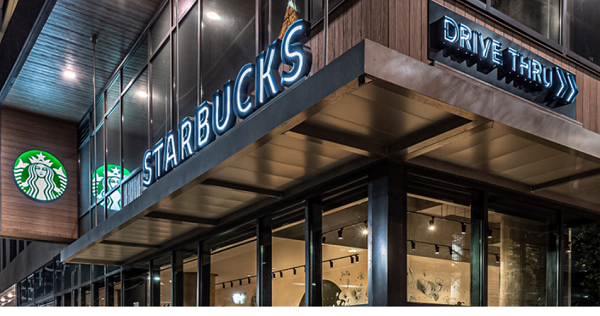
The Starbucks website has been updated regularly with news about the company’s response to COVID-19. Near the top of the page is a link to “At-a-glance: What customers need to know about Starbucks response to COVID-19.”

The big news is that stores will offer only drive-thru service for the next two weeks. In a letter to Starbucks partners (employees), the company promised 30 days of pay whether they work or not.
Discussion:
Analyze both the public website and the letter to partners. Describe the audiences and communication objectives of each.
What organizational structure is used for these bad-news messages?
What does Starbucks do well in its communications? How can communications be improved?
How well does the company balance emotional appeal and logical arguments?
In this post, you see “Starbucks response” on the company’s website and “Starbucks partners” in my text. Neither has an apostrophe. Is that correct?
Tourism CEOs Meet with President Trump
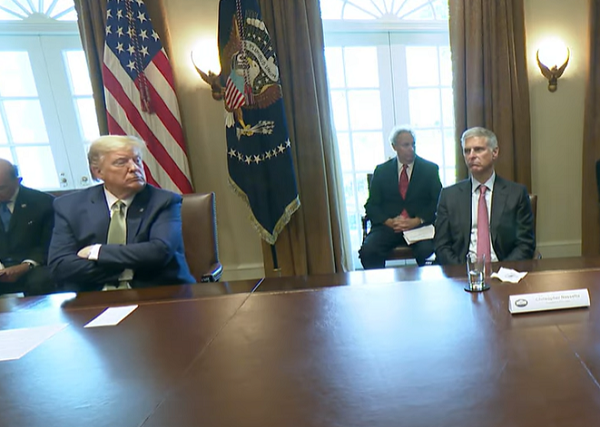
President Trump invited CEOs of major tourism companies to discuss the COVID-19 response.
Hilton CEO Christopher Nassetta began by highlighting issues in the industry:
“Hilton’s been around 100 years -- we’ve never closed a hotel that wasn’t going to be demolished or rebuilding, The bulk of our hotels in the major cities are closing as we speak.”
Nassetta was also complimentary to President Trump and Vice President Pence and said that he wanted to protect employees. The president reassured him that they’ll be up and running soon, although both said the situation is currently a “disaster” “all over the world.”
Discussion:
How would you describe the purpose of this gathering? What are President Trump’s objectives?
Assess each of the CEOs during the meeting. How well did they represent their brand?
Singapore PM Lee Hsien Loong
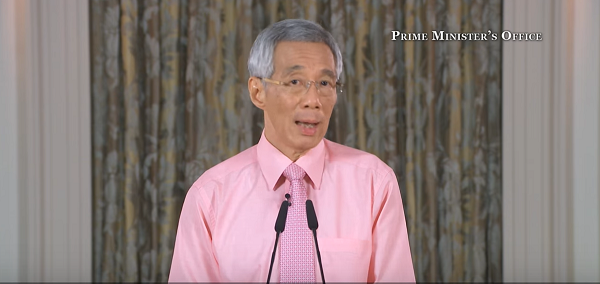
Two students sent me Singapore Prime Minister Lee Hsien Loong’s news conference as a positive example. I can see why: he gives a model speech, balancing emotional appeal and straight talk. He is proud of Singapore’s response, and yet he is honest about the challenges ahead. The PM also gives examples from other countries and the lessons learned.
Discussion:
What are the strengths of the Prime Minister’s speech?
Assess his delivery skills.
How have leaders in other countries followed this example—or how have they fell short?
Which leadership character dimensions does the PM demonstrate in his speech?

Comparing Airlines Messages About COVID-19

Transportation companies would like to see more people travel, yet people are wary of COVID-19. Compare these emails to travelers:
Discussion:
Analyze the messages: audience, communication objectives, organization, writing style, etc.
In what ways are the messages similar and different? How might the travel mode—airline or bus—affect the communication choices?
Which messages are most and least effective and why?
What’s your view of the American Airlines video? How does the media choice affect the message?

More Toyota Recalls

About a month after the last recall, Toyota announced another recall for a total of 1.8 million vehicles. The issue is a fuel pump that fails, causing the car to stall and possibly not restart.
In both statements, Toyota calls the recall “voluntary,” but the number of models is significant, dating back to 2013. Like most recall messages, Toyota’s is straightforward and focuses on affected vehicles and the remedy—in this case a new fuel pump for free.
Discussion:
Analyze the recall message. Who are the primary and secondary audiences, and what are the communication objectives?
Analyze Toyota’s website. How easy is it to find information about the recalls? What, if anything, could be improved?

Wells Fargo Former CEO Banned

In what the Wall Street Journal calls “unprecedented” and “an extraordinary sanction for a top executive at a large bank,” former CEO John Stumpf has been barred from the banking industry. The decision—and a $17.5 million fine—were part of a settlement between Stumpf and the Office of the Comptroller of the Currency (OCC) for millions of fake bank accounts created at Wells Fargo.
The OCC concluded that Stumpf should have known of the systemic problems and that “there was a culture in the Community Bank that resulted in systemic violations of laws and regulations.” When the scandal became public, employees complained of extreme stress because of pressure to sell more bank products. This pressure led employees to create fake accounts for customers.
Other Wells Fargo executives have been fined and charged, but none have been banned from the industry.
Discussion:
Do you think the decision is fair? Why or why not?
This decision represents a shift from the 2008/2009 financial crisis, when banks paid significant fines but very few individuals were charged. What’s your view of the change?

Communications About Kobe Bryant
NBA superstar Kobe Bryant, his daughter, and seven others died in a helicopter crash, and many are mourning the loss. At the Emmy’s, celebrities paid tribute to his life, and the NBA postponed a Lakers—Clippers game.
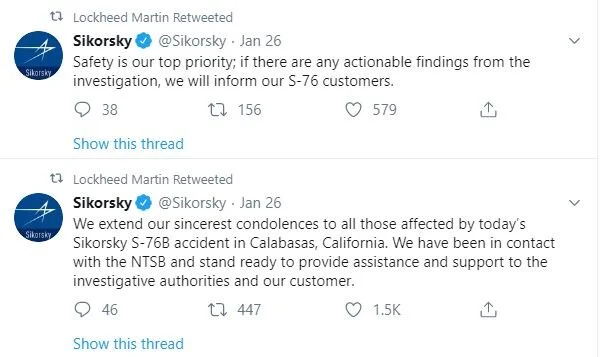
The helicopter company, Sikorsky, owned by Lockheed Martin, posted two tweets and a short statement on its website:
We extend our sincerest condolences to all those affected by the January 26th Sikorsky S-76B accident in Calabasas, California. We have been in contact with the NTSB and stand ready to provide assistance and support to the investigative authorities and our customer. Safety is our top priority; if there are any actionable findings from the investigation, we will inform our S-76 customers.
Discussion:
Analyze the Sikorsky messages. Who are their primary and secondary audiences? What are the communication objectives, and how well did the company achieve them?
Have you seen other communications from Sikorsky? Should the company do or say more? If so, what?
Wells Fargo Earnings Call

The Wells Fargo scandal of creating fake accounts became public in 2016, and the company is still suffering the repercussions. Profit is down 53%, and stock performance is lagging.
On an earnings call, Charles Scharf, who has been the CEO since October 2019, explained the bank’s current position:
I was honored to be chosen to lead Wells Fargo because I believe this is an extraordinary company that plays an important role in this country. We came out of the financial crisis as the most valuable and most respected bank in the US, but as you know, we made some terrible mistakes and have not effectively addressed our shortcomings. These circumstances have led to financial underperformance, but we have one of the most enviable financial services franchises in the world and employees that want to do what's necessary to again be one of the most respected and successful banks in the US.
Discussion:
Read the earnings call transcript. What’s your view of how Scharf and John R. Shrewsberry, EVP and CFO, addressed concerns?
How well has the bank recovered its image since 2016? What examples of their communications can you cite?
What could bank executives have done differently in the past four years?
How well does the line chart work to compare Wells to other leading banks? What could be improved?
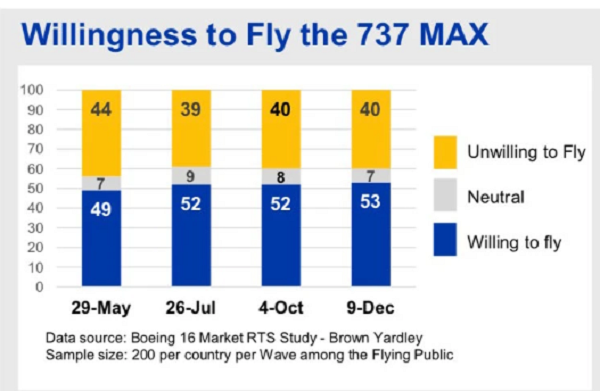
Boeing's Crisis Communication Plan

During the holiday break, several news items about Boeing were relevant to business communication and character. In one article, the New York Times revealed internal Boeing documents showing a company trying to rebuild its image after two MAX crashes within a year..
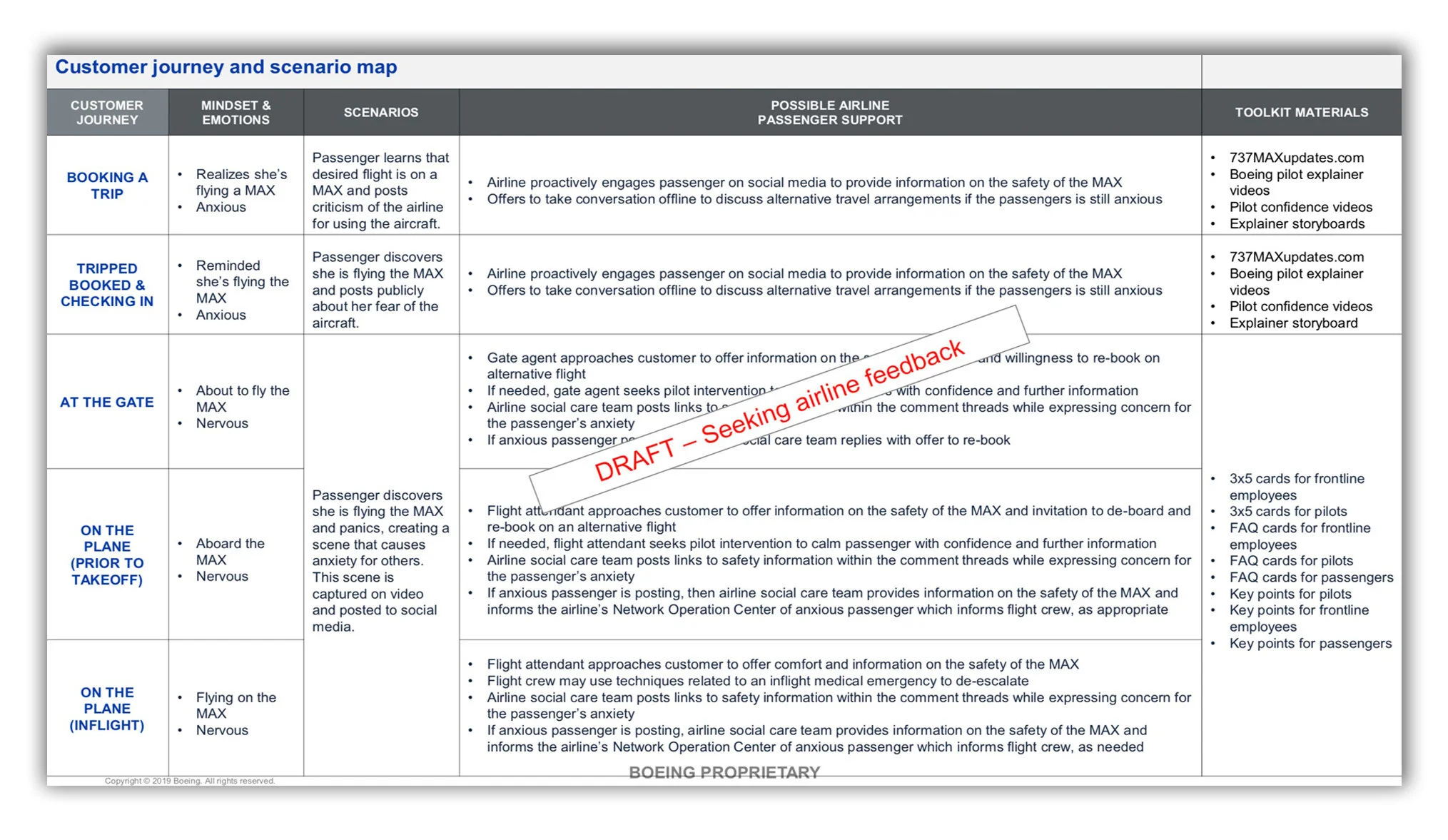
The documents give us an inside view of how the company plans to use persuasive strategies to win back customers. In one graphic, we see customers’ willingness to fly. In another, we see customer concerns and ways Boeing can address them, for example, with FAQ cards, “pilot confidence videos,” or personal connections (for example, “Flight attendant offers comfort and information on the safety of the MAX”).
Discussion:
What persuasive strategies does the company plan? Try to find examples of logical argument, emotional appeal, and credibility.
What are the consequences of this information becoming public? Does it likely endear the public to the company’s concerns, embarrass the company, or something else?

Forever 21 Files for Bankruptcy

Retailer Forever 21 has filed for bankruptcy, and employees are not happy. In its Letter to Customers, posted on the website, the company explains the process:
This does NOT mean that we are going out of business – on the contrary, filing for bankruptcy protection is a deliberate and decisive step to put us on a successful track for the future.
Hundreds of employees are planning to unionize with United for Respect, which also represented employees from Sears and Toys R Us during their bankruptcies.
The Washington Post reports employees’ reactions to the Forever 21 decision:
[S]everal employees cited past instances where Forever 21 swiftly closed stores with little warning or explanation, which prompted their concerns over how the company would treat employees amid bankruptcy.
Unions are seeing opportunities in retail employees. Private-section union membership has been shrinking in the U.S. and is now only 6.4%, compared to 33.9% of government workers. As retail employees get discouraged by their employers, union organizing activity has been increasing.
Discussion:
Analyze the Letter to Customers. Which principles of communicating bad news are followed? How could the message be improved?
Explain the ethics of a company filing for bankruptcy. Use an ethical decision-model, such as that in Chapter 1, to determine the effects.
What’s your view of retail employees unionizing? What are the benefits to employees and potential downsides of union activity and of forming a union?

Juul CEO Steps Down
With new reports about the dangers of vaping, Juul is replacing its CEO, Kevin Burns, with former Altria tobacco executive K.C. Crosthwaite.

Following several deaths and worrying data about increasing numbers of young people vaping, the company also announced a pause in all advertising. The decision comes after major media companies and networks banned e-cigarette advertising. Juul had already stopped marketing and selling its flavored products.
The company’s news statement is typical for a CEO announcement with confidence expressed about the departing CEO (Kevin Burns), the new leadership, and the direction of the company. Below is the Kevin Burns’ quote:
“Working at JUUL Labs has been an honor and I still believe the company’s mission of eliminating combustible cigarettes is vitally important. I am very proud of my team’s efforts to lead the industry toward much needed category-wide action to tackle underage usage of these products, which are intended for adult smokers only. Since joining JUUL Labs, I have worked non-stop, helping turn a small firm into a worldwide business, so a few weeks ago I decided that now was the right time for me to step down. I am grateful to be able to confidently hand the reins to someone with K.C.’s skill set, which is well-suited to the next phase of the company’s journey.”
Discussion:
What are the communication objectives of the news statement? How well does it meet those objectives?
Assess Burns’ quote. What are the objectives of his statement, and how well does it meet those?
Altria had bought a 35% stake in Juul, so the CEO decision makes sense, and Crosthwaite is an industry insider. How do you view the decision?
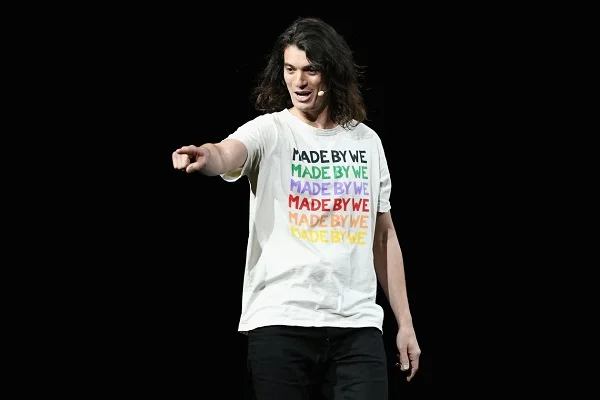
WeWork Co-Founder and CEO Steps Down


WeWork announced that Adam Neumann will leave his position after controversy about the company’s financial situation and the co-founder and CEO’s behavior. Within a week, the company went from preparing for an IPO to facing criticism that led to this ouster and a delayed public offering.
The company valuation has been reduced from about $47 to $15 billion based on governance issues and what the Wall Street Journal calls “ballooning losses.” The Journal also reported on Neumann’s “eccentric behavior,” including a heavy-party lifestyle that recently involved bring marijuana on a plane to Israel and saying that he might like to be the prime minister.
In its news release, WeWork provided scant information and a few quotations, including this from Neumann:
“As co-founder of WeWork, I am so proud of this team and the incredible company that we have built over the last decade. Our global platform now spans 111 cities in 29 countries, serving more than 527,000 members each day. While our business has never been stronger, in recent weeks, the scrutiny directed toward me has become a significant distraction, and I have decided that it is in the best interest of the company to step down as chief executive. Thank you to my colleagues, our members, our landlord partners, and our investors for continuing to believe in this great business.”
Discussion:
Compare the company’s news release to others announcing CEO departures. How does this one differ, and why would the company take this approach?
What are the communication objectives of Neumann’s statement? How well does his quote meet those objectives? What else, if anything, should Neumann say or do?