
Judge Rules that Tweets Are Public Speech
A judge has ruled that an Occupy Wall Street protester's tweets must be turned over. Judge Matthew A. Sciarrino Jr. said that tweets are not protected as private speech; rather, they are considered public comments. The judge wrote:
"The Constitution gives you the right to post, but as numerous people have learned, there are still consequences for your public posts. What you give to the public belongs to the public. What you keep to yourself belongs only to you."
The judge also wrote, "If you post a tweet, just like if you scream it out the window, there is no reasonable expectation of privacy."

The decision came out of a court case that subpoenaed the protestor's deleted tweets. Both the protestor and Twitter tried to block to subpoena. Twitter issued a statement about the decision, which included this excerpt:
"Twitter's terms of service have long made it absolutely clear that its users own their content. We continue to have a steadfast commitment to our users and their rights."
Twitter also published its first "Transparency Report," showing the number of government requests for user information and what percentage of those requests were fulfilled.
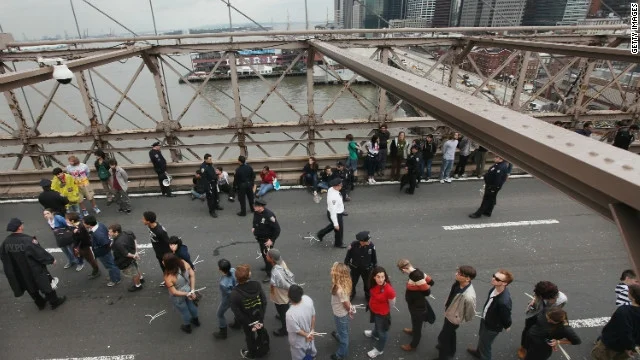
Image source. (Protestors arrested on the Brooklyn Bridge in October.)
Discussion Starters:
- Does the judge's decision surprise you? Why or why not?
- What are the implications of this decision to company communicators? To you personally?
NLRB Weighs in on Social Media Policies
What should companies include in their social media policies? The topic is still debatable; again, the National Labor Relations Board is taking issue with several restrictions identified in corporate policies and guidelines.
In a 24-page memo, the general counsel of the NLRB calls out General Motors, DISH Network, and Target as having policies that either too severely restrict employees' online activities or go so far as violate the National Labor Relations Act. The Act protects employees' right to collective bargaining and concerted activity to achieve their demands in the workplace.
The memo provides examples from GM's policy, which the NLRB believes are overly restrictive:
"If you engage in discussion related to [GM], in addition to disclosing that you work for [GM] and that your views are personal, you must also be sure that your posts are completely accurate and not misleading and that they do not reveal non-public company information on any public site."
The NLRB believes that "completely accurate and not misleading" is overly broad and may restrict employees' communication with each other. Similarly, GM's warning that employees should "[t]hink carefully about 'friending' co-workers" discourages employee communication.
DISH and Target have other problems in their policies, according to the NLRB, for example, restricting employees from speaking with reporters and bloggers, and "releas[ing] confidential guest, team member, or company information, respectively. These guidelines prevent employees from sharing information about their working conditions, a provision of the Act.
The memo highlights Walmart's social media guidelines as a lawful model. Walmart's guidelines broadly discourage "inappropriate postings that may include discriminatory remarks, harassment, and threats of violence or similar inappropriate or unlawful conduct."
Discussion Starters:
- Assess the NLRB memo. How well is it organized? Is the writing style effective? Is the content clear?
- If you were the head of corporate communication for GM, what, if any, changes would you make to the social media policy, which has been in place since 2007, according to GM spokesperson Mary Henige?
LinkedIn Responds to Password Hacking
It's time to change your LinkedIn password. A Russian forum user posted 6.5 million passwords from the site, and LinkedIn has confirmed their authenticity. The hacker also claims that he stole 1.5 million eHarmony passwords.
LinkedIn has responded to the incident with this post on its website:
We want to provide you with an update on this morning's reports of stolen passwords. We can confirm that some of the passwords that were compromised correspond to LinkedIn accounts. We are continuing to investigate this situation and here is what we are pursuing as far as next steps for the compromised accounts:
- Members that have accounts associated with the compromised passwords will notice that their LinkedIn account password is no longer valid.
- These members will also receive an email from LinkedIn with instructions on how to reset their passwords. There will not be any links in this email. Once you follow this step and request password assistance, then you will receive an email from LinkedIn with a password reset link.
- These affected members will receive a second email from our Customer Support team providing a bit more context on this situation and why they are being asked to change their passwords.
It is worth noting that the affected members who update their passwords and members whose passwords have not been compromised benefit from the enhanced security we just recently put in place, which includes hashing and salting of our current password databases.
We sincerely apologize for the inconvenience this has caused our members. We take the security of our members very seriously. If you haven't read it already it is worth checking out my earlier blog post today about updating your password and other account security best practices.
LinkedIn has been active on Twitter, with four tweets so far about the incident.
Discussion Starters:
- The company's communication process via email is a bit complex. Do you understand why the management team chose this process? Would you propose a better process?
- This paragraph could be written more clearly: "It is worth noting that the affected members who update their passwords and members whose passwords have not been compromised benefit from the enhanced security we just recently put in place, which includes hashing and salting of our current password databases." What changes would you suggest to the writer?
Twitter: Flat Percentage of Users, but Deeper Engagement
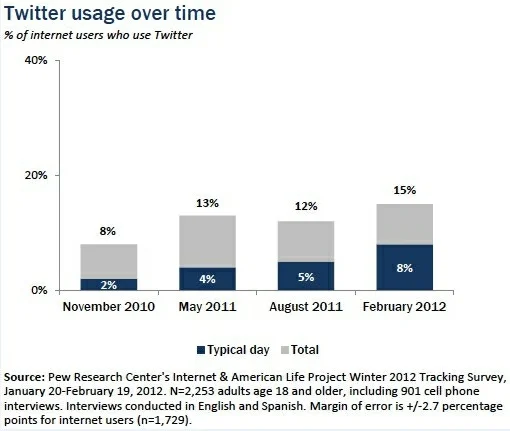
New research shows that only 15% of online adults use Twitter, and only 8% use the service every day. Although the percentage of users remains fairly stable and is fairly small, the number of daily users has doubled since May 2011 and quadrupled since late 2010. 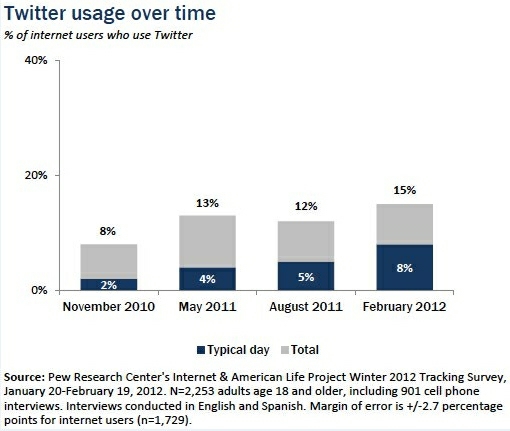
Authors of the February 2012 Pew Research Center's report credit smartphones with the increase in usage. According to Aaron Smith, Pew senior research specialist, "I do think it's notable that typical day Twitter usage is growing even as the overall usage stats have remained fairly consistent, [which] would imply that existing Twitter users are growing more engaged over time, with mobile being a big part of that story."
It took a while, but younger users are getting onboard with Twitter. Between November 2010 and February 2012, the percentage of Internet users between 18 and 24 on Twitter has increased from 16% to 31%. In addition, one in five in this age group uses Twitter.
Discussion Starters:
- Read the Pew report. What other conclusions can you draw from the study?
- What is your own use of Twitter? If you fit within the category of growing users, why has your usage increased?
- How is this new information relevant to corporate communicators?
U.S. Presidential Candidates Go Social
 President Obama and Republican contender Mitt Romney are using social networking to boast their campaigns. Today, the Obama campaign is releasing a new platform called "Dashboard." Katie Hogan, spokesperson for the campaign, described the purpose of Dashboard:
"Dashboard is our online field office - a hub for campaign volunteers and supporters to communicate with each other and become members of neighborhood teams. . . .
"Supporters can use the tool to set goals, communicate those goals, and see what other supporters are doing. Supporters who want to be engaged can go to Dashboard, message other supporters in their area, and have a conversation about how to get started. It provides a good volunteer experience online that is directly tied to our field operation goals."
Built into the system is a keen focus on setting goals and friendly competition among neighborhoods. With a Facebook-like interface, volunteers are expected to use the site easily.
Since the fall, Mitt Romney's campaign has used a different home-grown system, "MyMitt."

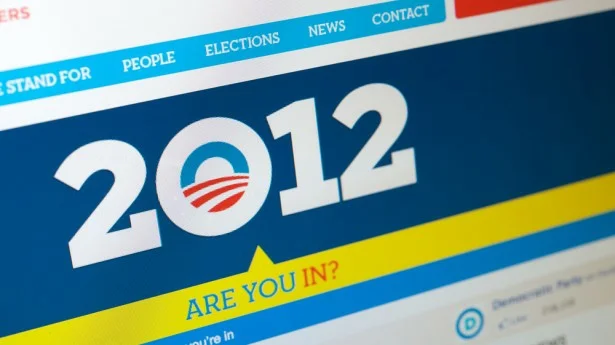
Images via Raw Story and Signal News.
Discussion Starters:
- If you supported one of the candidates, would you use his social network? Why or why not?
- Why would both campaigns create their own platform rather than use Facebook as their main tool for volunteers?
- Consider signing up for both sites. What differences do you notice? Which is more effective for what purposes?

Retailer CFO Loses Job Over Social Media Posts
Maybe this is why so few CFOs use social media. Women's clothing retailer Francesca's fired its CFO today for his tweets and Facebook posts that revealed too much about the company.
Francesca's issued a press release announcing the decision but didn't mention which posts, specifically, were of concern. However, the statement said that Gene Morphis had "improperly communicated Company information through social media." Below are two examples of Morphis's Facebook posts.


In another post, Morphis criticized co-sponsors of the Sarbanes–Oxley Act, a law that defines financial reporting standards:
"Audit committee. Damn you Paul Sarbanes! Damn you Michael Oxley!"
Discussion Starters:
- What should be the social media guidelines for corporate CFOs? Should they differ from guidelines for all employees?
- Was the Board right in terminating Morphis?
- What could have been done to prevent this situation?
JPMorgan Chase Loses More than $2B
JPMorgan Chase is trying to explain how the bank lost $2 billion and may lose another $1 billion as it settles a trade. In just six weeks, the bank's Chief Investment Office, a group that invests extra assets to hedge risks, lost this extraordinary amount of money.
In a conference call, Jamie Dimon, CEO of JPMorgan Chase, called the situation "self-inflicted":
"We're accountable, and what happened violates our own standards and principles about how we want to operate the company. This is not how we want to run a business."
Liz Rappaport, a Wall Street Journal reporter on PBS NewsHour questioned the terminology that Dimon used, specifically that the Chief Investment Office was intended as an "economic hedge." According to Rappaport, this was an "unclear thing to say": a hedge typically is used to protect against a specific investment, but "exactly...what this group actually hedges against is unclear, and the fact that this was such a large and outside position in one direction, and they got caught...flat footed with it, also doesn't sound like a hedge-it sounds like a bet." The distinction is important: did the investments hedge against risk or create more risk for the bank?
Rappaport also said that this wasn't really a "rouge trader" situation, as we saw at UBS in September 2011. Rather, at the center of the controversy is a London trader nicknamed the "London Whale" for his large investment positions. Unlike the UBS situation, the Chief Investment Office's trades were apparently "run up the flag pole," according to Rappaport.
Discussion Starters:
- What do you see as the distinction between a "hedge" and a "bet"?
- How do you assess Jamie Dimon's response to the situation?
Jimmy John's Will Rehire Employees Who Put Up Posters
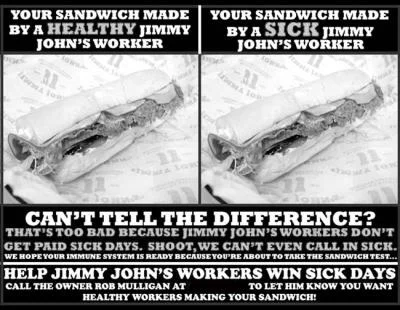
Sandwich restaurant Jimmy John's had disappointing news this week: a federal judge ordered the company to rehire and pay lost wages to six employees. The employees were fired after they posted 3,000 notices implying that sandwiches could be made by sick workers.
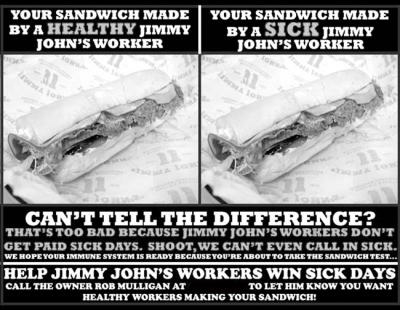
The employees claimed that if they called in sick but couldn't find a replacement, they feared being fired. In the court decision, the judge ruled that, by removing the posters, Jimmy John's violated workers' rights under the National Labor Relations Act. This decision was based on a labor dispute under way at Jimmy John's: a union held an election to organize workers and, although the union was narrowly rejected, it filed unfair labor practices, claiming that Jimmy John's interfered with the election process.
The union perspective is that the workers were terminated "for blowing the whistle on company policies that expose customers to sandwiches made by sick workers."
MikLin Enterprises, which owns Jimmy John's, will appeal the decision.
Discussion Starters:
- What is your perspective of the posters? What is the company's perspective?
- How does this case relate to comments in social networking sites, a hotly debated topic for the National Labor Relations Board?
GSA Overspending Scandal: "Aggrieved by the Gall"
The General Services Administration (GSA) is under investigation for spending $823,000 at a Las Vegas conference in 2010. The GSA is responsible for purchasing products, transportation, and office space for other government agencies, and ironically, is charged with developing cost-containment policies.
Martha Johnson, head of the GSA as of February 2010, has resigned amid the controversy. In her testimony to Congress, Johnson admitted that the Western region training conference "evolved into a raucous, extravagant, arrogant, self-congratulatory event that ultimately belittled federal workers and would stain the very work that other committed staff and I were preparing to do." She also said that "[T]he expensive planning for that conference was well under way when I entered GSA, and I was unaware of the scope" and that she was "extremely aggrieved by the gall of a handful of people to misuse federal tax dollars, twist contracting rules and defile the great name of the General Services Administration."
Johnson's strong statement was in sharp contrast to that of Jeffrey Neely, a GSA executive who evoked his Fifth amendment right not to answer any questions. As reported by CNN, Rep. Elijah Cummings of Maryland criticized Neely specifically:
"'In one e-mail...Mr. Neely invited personal friends to the conference, writing, and I quote -- and this is simply incredible -- quote: "We'll get you guys a room near us, and we'll pick up the room tab. Could be a blast." End of quote. He then went on and wrote this -- "I know I'm bad, but as Deb and I often say, why not enjoy it while we have it and while we can. Ain't gonna last forever." End of quote. Well, Mr. Neely, it stops now.'"
Included in the evidence of the overspending scandal is this video, showing a GSA employee's joke about perks and then an award given to that employee at a GSA dinner at the conference.
Discussion Starters:
- Review the steps for ethical decision making. Which would have helped these administrators re-think their choices?
- How do you assess the GSA employee's video and award? Is this incriminating, just office fun, or something else?
- Grammar Check: The section above about Rep. Cummings has a quote within a quote within a quote. Is it punctuated correctly?
Facebook Wants You to Use Its Email
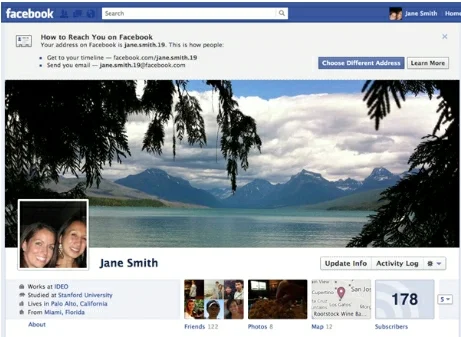
Facebook has a new program on the horizon: your timeline address will now be your email address. Unless you already have a @facebook.com email, you'll be assigned one.
Facebook describes the change for consistency:
"Starting today, we're updating addresses on Facebook to make them consistent across our site. Now, the address people use to get to your timeline and send you email on Facebook will be the same."

Clearly, Facebook is continuing to push its email application, previously called messaging. Speculation is that Facebook is trying to match the integration of Google+ with Gmail. Also, a recent study showed that people are more likely to use the Internet for email (85%) than for social networking (62%). Despite early reports of its demise, email remains a frequent tool for communication.
Discussion Starters:
- Do you use Facebook email? Would you if you were assigned an email address?
- What's the value of email to Facebook? How has the company's "messaging" strategy evolved?
Few CIOs Use Social Networks
Despite their companies' increasing use of social media, CIOs are not at all active on social networking sites. TechCrunch calls this group "a little anti-social" and describes the results of a study by harmon.ie:
"...only about 10 percent of CIOs in the top companies - Fortune 250 and and Global 250 - actively use public social networks. Within that group, only four CIOs write blogs, and more than one-third either do not have LinkedIn profiles, or have profiles with fewer than 100 connections."
We could explain the data by saying that CIOs hire people to manage the social networking for them or that they are active on intranets rather than on the public web. But Mark Fidelman, lead author of the study, explains the issue:
"These 250 CIOs are charged with transforming the world's largest enterprises, yet our analysis shows that most have relatively little experience using the kinds of tools that are needed to drive that change."
Fidelman also says, "If CIOs are charged with building a social business, shouldn't they have a social presence?" He also suggested to Information Week that "CIOs who don't get social might not be CIOs next year."
On a more positive note, harmon.ie identified the Top 25 Social CIOs in the Fortune 250. The top five include CIOs of technology companies (no surprise) SAP, Google, and Microsoft, but also includes CIOs of the Corporate Banking division of the Royal Bank of Scotland and Mexican petroleum company Pemex.
Discussion Starters:
- Do you find this news alarming? Why or why not?
- What advice would you give CIOs who want to be more active in social networks? Where should they concentrate their efforts? Would your advice vary by industry?
Emails in Facebook Dispute Revealed
Paul Ceglia, of StreetFax, is claiming a 50% stake in Facebook (reduced from 84%). The claim is partly based on email interactions between Ceglia and Mark Zuckerberg, who was contracted to work on Ceglia's StreetFax site in 2003.
Zuckerberg's attorneys take issue with the emails themselves, which are produced in Microsoft Word, rather than within a native-format email program. The attorney's motion to dismiss the case called the emails "an obvious indicator of fraud," stating that "Ceglia simply typed text into a Word document and declared it was the text of emails with Zuckerberg."
An email dated February 4, 2004, refers to the launch of Facebook: "The site looks great." But the time stamp is 10:30 a.m., before Facebook went live that afternoon. According to the Facebook team's motion, "This exchange is a historical impossibility."
The Wall Street Journal provides more information about the situation and doubts Ceglia's credibility:
A ThomsonReuters article analyzes the situation and also agrees with Zuckerberg's defense. In the piece, the writer provides six rules for "What not to do if you're suing a Facebook billionaire," including Rule 1: "Don't leave a version of the contract between you and the billionaire on your parents' computer unless that version matches what you've presented to the court."
Discussion Starters:
- Read the ThomsonReuters analysis. With which of the writer's claims do you agree?
- What other examples of emails becoming public have been in the news in the past year?
- In this situation, Zuckerberg's emails may help him defend the case. But in other situations, public email is embarrassing and damaging. How can you avoid this happening to you?
Political Campaigns to Your Email: Spam or Free Speech?

Brace yourself for email from the presidential candidates. Although the 2003 CAN-SPAM law (Controlling the Assault of Non-Solicited Pornography and Marketing) restricts how companies use email addresses, political candidates are exempt, according to a Fox News report:
"'Political communications are not spam. Political communications are a demonstration of free speech in America,' said Stuart Shapiro, president of iConstituent, a Washington, D.C.-based firm which uses state-generated email lists to send messages on behalf of clients on all sides of the political spectrum.
"'There is a tenet in government that is based on communicating with our constituents, and email is one of the most effective ways to do it,' Shapiro said. 'People look forward to it and want it.'"
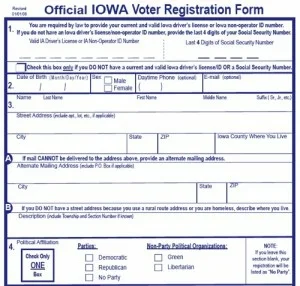
"People look forward to it and want it"? Shaun Dakin, president and CEO of The National Political Do Not Contact Registry, disagrees: "Politicians love the fact that their perceived freedom of speech is more important than voters' privacy." To be fair, voters offer their emails on voter registration cards, so perhaps they do want to be contacted. On the other hand, do people realize that providing an email address is optional? This is clear on some registration cards but not on others. Also, do people know that, in nine states, emails can be sold to political campaigns and organizing groups?
Discussion Starters:
- What's your assessment of this story? Do you believe it's wrong to sell voters' email addresses, or is this simply an example of politicians' free speech?
- Look at two or three voter registration form online. (Search images.google.com.) What advice would you give to the form designer who wants to make it clear that email addresses are optional? Would you also include an explanation of how email addresses are used (and that they could be sold)? Why or why not?
#McDStories Turns Ugly
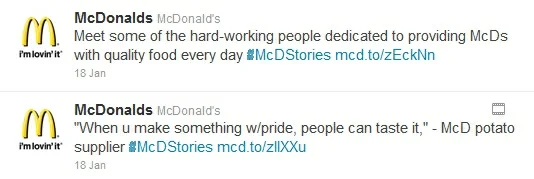
McDonald's started the Twitter hashtag #McDStories to encourage people to post their thoughts about the company. The campaign started well enough with @McDonald's initial tweets:

But the social media promotion quickly turned into a "hashtag horror show." The hashtag made it too tempting for people to tweet their worst views of the company, such as these:


Where did McDonald's go wrong? Rick Wion, the company's social media director, explained his perspective:
"Last Thursday, we planned to use two different hashtags during a promoted trend -- #meetthefarmers and #mcdstories.
"While #meetthefarmers was used for the majority of the day and successful in raising awareness of the Supplier Stories campaign, #mcdstories did not go as planned. We quickly pulled #mcdstories and it was promoted for less than two hours.
"Within an hour of pulling #McDStories the number of conversations about it fell off from a peak of 1600 to a few dozen. It is also important to keep those numbers in perspective. There were 72,788 mentions of McDonald's overall that day so the traction of #McDStories was a tiny percentage (2%) of that.
"With all social media campaigns, we include contingency plans should the conversation not go as planned. The ability to change midstream helped this small blip from becoming something larger."
Monitoring activity and recognizing failure are critical for social media campaigns. As Wion says, "As Twitter continues to evolve its platform and engagement opportunities, we're learning from our experiences." True enough: trending on Twitter can be a dangerous game.

QR Code Use Stuck at 5%
 They're fun and cute, but will people use them? Marketers have tried pushing QR codes but haven't had resounding success, according to Ad Age.
Some of the failed attempts are humorous. The barcodes are designed to be scanned by a mobile app to open a web page, but marketers have chosen a few odd uses. A MillersCoors QR code linked to a website where holiday partiers could easily get a cab, but as Ad Age reports, "The effort assumed that revelers still had enough dexterity to aim a phone and get a clear shot."
Other failed attempts include QR codes on places out of cellular reach: Red Bull's ad in a subway car and United Airline's ad in an in-flight magazine.
The most successful campaigns seem to provide more information, for example, Macy's codes on clothing led to video descriptions by designers, and Home Depot codes on plants led to more information about what items can be placed together.
This is a good lesson in how we can get carried away with technology that's new and inexpensive without having a strategy for how to best use the technology for communication. For now, marketers are still learning.
Discussion Starters:
- Have you used a QR code? For what purpose? How do you think they're best used?
- Imagine that you run an office supply store. How could you use codes to provide product information or offer better service for customers?
Letter to Former HP CEO Revealed
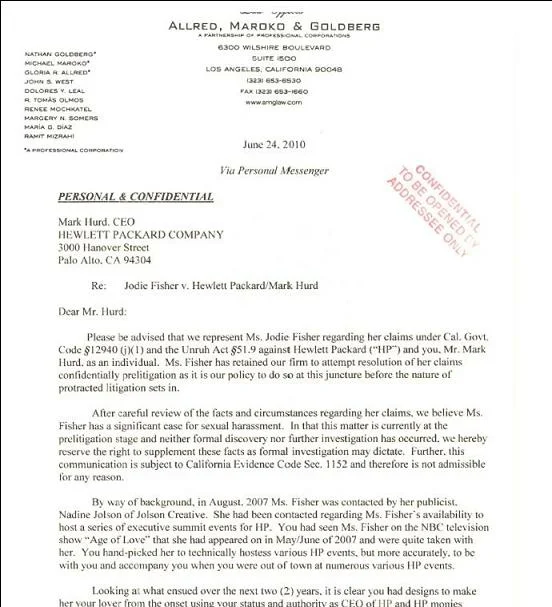
In June 2010, Mark Hurd, former CEO of Hewlett-Packard, received a letter claiming sexual harassment of a contract employee, Jodie Fisher. Hurd resigned from HP on August 6, 2010. As one article described the unveiling, "This Is The Letter That Got Mark Hurd Fired As CEO Of HP."
An HP shareholder requested that the letter be made public as part of a lawsuit to, according to The New York Times, "investigate corporate wrongdoing and waste associated with the relationship and Mr. Hurd's resignation." Now the president of Oracle, Hurd lost his court appeal to keep the letter confidential.
All Things D received the letter, which describes in eight pages of uncomfortable detail some of Hurd and Fisher's interactions. An attorney working for HP also compiled a timeline of emails that describe more of their communications. The publicity and detail are more than a little embarrassing for all involved. Read the full letter. Download the letter.

Discussion Starters:
- Imagine that you own HP stock. How might you feel about this letter becoming public?
- If you were on Oracle's Board of Directors, how would you respond to this news? What, if anything, would you say to Mark Hurd?
- This is a good time to remember that email is always discoverable. What can you do to protect yourself against your emails becoming public?

Apple's Anti-Leak Social Media Policy Gets Leaked
Although many social media policies are available online, until yesterday, Apple's was not. Last month, an Apple employee was fired ("sacked" to the British) for Facebook posts that the company claimed violated its social media policy. Now, that internal policy has mysteriously been leaked. 
One analysis of Apple's policy compliments the conclusion, which is sound advice for anyone:
In sum, use your best judgment. Remember there may be consequences to what you post or publish online including discipline if you engage in conduct that Apple deems inappropriate or violates any Apple policies. If you're about to post something and you are concerned whether you are following these guidelines or any Apple policy, please discuss it with your Leader or HR before posting.
But the attorney takes issue with what the National Labor Relations Board (NLRB) may call the right to concerted activity:
Respect the privacy of your coworkers. Blogs, wikis, social networks and other tools should not be used for internal communications among fellow employees. It is fine for Apple employees to disagree, but please don't use your external blog or other online social media to air your differences.
Recent cases brought by the NLRB have criticized employers for terminating employees who may be engaging in protected concerted activity (or the right to organize). Read about an NLRB case. Image source.
Discussion Starters:
- Compare Apple's policy to another available online. What differences do you notice, and how do you account for them?
- What was the policy where you worked recently? Did you find that people generally followed the policy or worked around it in some way?
FedEx's New Sustainability Ad
FedEx's new commercial conveys its "Sustainable Solutions" in an animated story of "how a shipping giant can befriend a forest." The spot was Advertising Age's Creativity Pick of the Day.
On its website, FedEx touts its sustainability initiatives in three areas: the environment, our people, and our community. In another funny commercial, FedEx executives suggest printing on the back of used paper, but this doesn't turn out to be such a good idea.
Clearly, FedEx is trying to improve its sustainability image. A 2006 report by Roberts Environmental Center gave the company a C- rating:
On its website, Federal Express provided only minimal environmental and social
data. While their efforts to improve fuel and delivery efficiency are
commendable, their environmental website lacked any performance indicators
that would increase transparency. The corporation's partnership with
Environmental Defense is notable, and the results of this collaboration are
promising. Despite Federal Express' positive reputation for corporate
responsibility, they did not provide the information necessary to score well in
this report. It seems as though Federal Express has the appropriate data, it
need only make it readily available to the public.
Discussion Starters:
- What are the key messages in the new ad? In what ways is the ad successful in conveying FedEx's sustainability initiatives? In what ways could the messages be clearer?
- Review FedEx's "Environment" web page today. In what ways has the company addressed criticism of the Robert's Environmental Center report? In what ways could the company still improve?
12 Recent Firings Because of Social Media Posts
As an early Christmas present, Sam Fiorella gives us 12 examples of employees fired because of posts to social media sites. The line-up includes these gems:
- Former Representative Anthony Weiner, who tweeted obscene pictures of himself, thinking he was sending a direct message to one person
- @ChryslerAutos, who tweeted the F-bomb to followers, thinking he was using his personal twitter account. Scott Bartosiewicz explains what happened in this video:
- An NBC staff member who posted a video of Bryant Gumbel looking foolish and asking questions such as "What is the Internet?" (Well, it was 1994.)
Discussion Starters:
- In these and the other situations, do you believe that the employee deserved to be fired? What are the arguments for and against termination in each case?
- Of these situations, which do you think is the most egregious? Why?
- How could some of these situations have been avoided?
Did You Check Work Email on Thanksgiving?
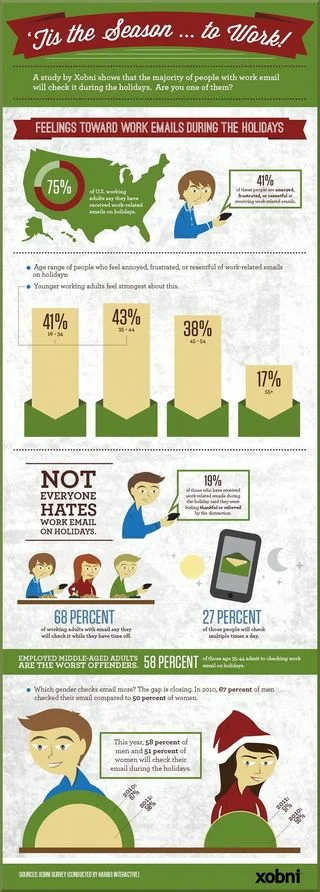
 Good to know that I'm in the unhealthy majority: 58% of men and 51% of women planned to check email during the holidays. According to a survey by Xobni, the gender gap has shrunk from 2010, when 67% of men and 50% of women checked email.
Of the 75% who receive work-related email during the holidays, 19% of us are "thankful or relieved by the distraction," while 41% are "annoyed, frustrated, or resentful."
The survey showed age differences among those who feel "annoyed, frustrated, or resentful." Between 41% and 43% of workers aged 18-44, but only 17% of the 55+ crowd feel this way. The difference could be because of work expectations, position within the company, job insecurity, family status, or a host of other reasons. (via PC World)
Discussion Starters:
- What are your views about checking email on holidays? What are the reasons people may want to check email?
- What organizational systems (e.g., culture, management practices, performance measures) may cause people to check email?
- How could an organization prevent people from checking email on holidays? Is this a good idea?