

Bad-News Message: Hasbro CEO
Toy company Hasbro announced the death of Chairman and CEO Brian Goldner. The press release is typical, quoting leaders and touting Goldner’s contributions to the company. Goldner was with Hasbro for more than 20 years and served as CEO for more than 13, so his death is significant.
Interestingly, the company statement doesn’t include a cause of death. A Wall Street Journal article mentions Goldner’s prostate cancer diagnosis in 2014 and his recent leave of absence.
Visionary CEO Transformed Hasbro into a Global Play & Entertainment Leader
PAWTUCKET, R.I.--(BUSINESS WIRE)--Oct. 12, 2021-- It is with deep and profound sadness that Hasbro announces the passing of beloved leader and longtime Chairman and CEO Brian D. Goldner.
This press release features multimedia. View the full release here: https://www.businesswire.com/news/home/20211012006149/en/
Brian D. Goldner (Photo: Business Wire)
Rich Stoddart, Interim CEO, said “Since joining the Company more than two decades ago, Brian has been the heart and soul of Hasbro. As a charismatic and passionate leader in both the play and entertainment industries, Brian’s work brought joy and laughter to children and families around the world. His visionary leadership, kindness, and generosity made him beloved by the Hasbro community and everyone he touched. On behalf of the Hasbro family, we extend our deepest, heartfelt condolences to his wife, daughter, and entire family.”
Mr. Goldner, 58, joined Hasbro in 2000 and was quickly recognized as a visionary in the industry. He was appointed CEO in 2008 and became Chairman of the Board in 2015. He was instrumental in transforming the Company into a global play and entertainment leader, architecting a strategic Brand Blueprint to create the world’s best play and storytelling experiences. Through his tireless work ethic and unwavering focus, he expanded the Company beyond toys and games into television, movies, digital gaming and beyond, to ensure Hasbro’s iconic brands reached every consumer. The culmination of his pioneering strategy was the 2019 acquisition of independent entertainment studio eOne. Mr. Goldner served on the Board of Directors of ViacomCBS and was the Chair of the Compensation Committee. Mr. Goldner and his wife Barbara were passionate advocates for improving systems of care for vulnerable members of society.
Edward M. Philip, Lead Independent Director of Hasbro’s Board of Directors, said “Brian’s passing is a tremendous loss for Hasbro and the world. Brian was universally admired and respected in the industry, and throughout his over twenty years at Hasbro, his inspiring leadership and exuberance left an indelible mark on everything and everyone he touched. A mentor and friend to so many, his passion and creativity took Hasbro to new heights. Our love and thoughts are with his wife, daughter, and family during this extraordinarily sad time.”
New Research About Remote Work
A new study identifies advantages and challenges of working from home (WFH). A New York Times article cites little research in the area, but a recent paper published in the Quarterly Journal of Economics provides insights for companies and employees considering WFH arrangements.
The study was at Ctrip, a Chinese travel agency. The abstract follows:
Call center employees who volunteered to WFH were randomly assigned either to work from home or in the office for nine months. Home working led to a 13% performance increase, of which 9% was from working more minutes per shift (fewer breaks and sick days) and 4% from more calls per minute (attributed to a quieter and more convenient working environment). Home workers also reported improved work satisfaction, and their attrition rate halved, but their promotion rate conditional on performance fell. Due to the success of the experiment, Ctrip rolled out the option to WFH to the whole firm and allowed the experimental employees to reselect between the home and office. Interestingly, over half of them switched, which led to the gains from WFH almost doubling to 22%. This highlights the benefits of learning and selection effects when adopting modern management practices like WFH.
Remote employees seem to suffer bias. A study author put it simply, “They can get forgotten.” Informal conversations and other face-to-face interactions increase belonging—they create “in groups” and “out groups.” As a result, some people are better known and trusted, particularly by senior leaders, who are more likely to be in the office. These relationships lead to more mentoring, sponsorship, and promotion opportunities. With more women wanting to WFH than men, this issue could increase gender inequality at work.
WFH employees should aim to increase their social presence—reducing the perceived physical distance. A Forbes writer offers good advice for building relationships from afar:

Share openly.
Assume goodwill of others.
Stay in close proximity.
Be predictable.
Be easy to read.
Support others.
Be selective about your relationships.
Hold others accountable.
Demonstrate integrity and tell the truth.
In the coming years, as more companies offer the option and more employees choose to WFH, we'll learn more about how to successfully WFH.

Report Details Governor Cuomo's Pattern of Sexual Harassment
The New York State attorney general published a 165-page report detailing how Governor Andrew Cuomo has sexually harassed women for years and how a culture of “fear and intimidation” allowed his behavior to continue.
In addition to the report, other communications about the situation are interesting examples, particularly of persuasion:
Governor Cuomo’s video response
NY Times opinion calling for his resignation
What makes each of these messages credible—or not—is a rich topic of discussion. The report and other messages use details and examples to prove their points. In his video message, the governor intersperses images of him hugging and kissing many people. His strategy is to “normalize” and de-sexualize his behavior. However, the report describes incidents that go beyond these displays and concludes that the governor violated federal and New York State sexual harassment law.
Update: Governor Cuomo resigns. In a video, he explains his decision, which seemed inevitable.

Free Speech Case

In an 8-to-1 vote, the U.S. Supreme Court ruled that a high school cheerleader could use F-bombs on social media. The student was suspended from the team after posting a video and disparaging the team and the school. But the court upheld her right to free speech.
The justices did say that the school has the right to take action when a student’s behavior in person—or online—is disruptive to the classroom, but they didn’t believe that this case warranted the school’s decision.
This was an important decision but left the door open to other cases. As one attorney said, the decision was “common sense,” but others might be greyer and more complex.

Resume Gaps
A Wall Street Journal columnist tells us, “Don’t Sweat Your Pandemic Résumé Gap.” High school students have gotten a reprieve from taking some standardized tests for college applications, and that generosity seems to have extended to prospective employees. People faced all sorts of challenges during the pandemic, and this reporter argues that employers will let it slide.

A survey of recruiters found that 49% believe a gap is now acceptable instead of a red flag. Recruiters say you don’t need to over-explain a gap, which could be due to family obligations. Instead, have a concise statement prepared such as, “I was glad to spend time with my family, and now I’m excited to get back to work.”
It will look good if you attended classes or earned a certificate during your time off, but that isn’t essential. At the same time, the optimistic article offers a warning: more than two years out of the workforce makes it difficult to re-enter.
I’m glad to see this article and hope the sentiment extends beyond pandemic times. I am a bit concerned about the survey response. If 49% of recruiters will make allowances for time off, what about the other 51%? Of course, the news affects women more than men because women were more likely to be home during the pandemic.

CEOs Speak Out
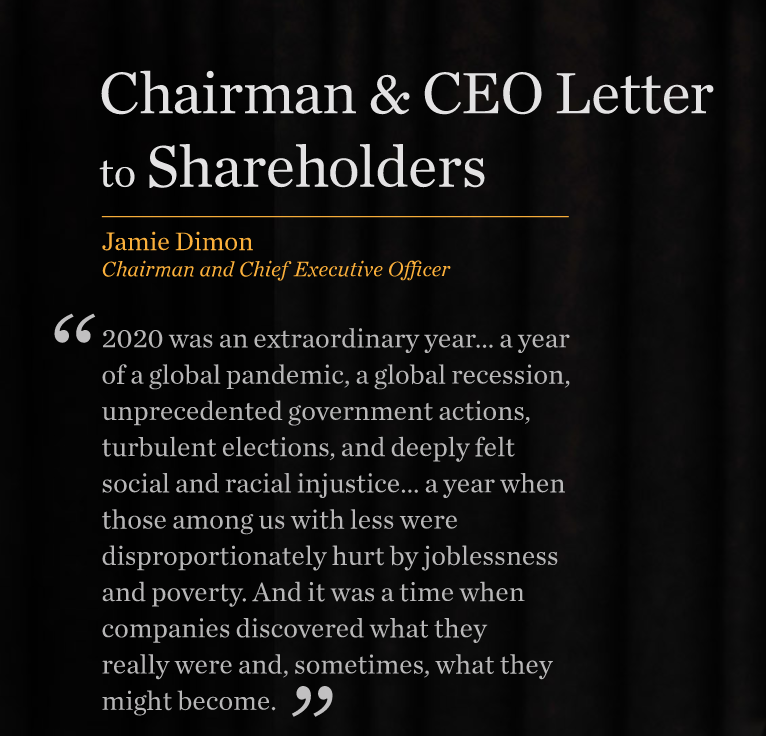
JPMorgan Chase published its Annual Report, leading with a letter from CEO Jamie Dimon. The introductory paragraph and corresponding callout quote reflect a leader’s and a company’s grappling with an extraordinary year.
Like many company leaders today, Dimon addresses societal issues directly. We’re seeing increasing employee and CEO activism, and this letter is a good example.
A Wall Street Journal opinion piece questions when leaders are even more direct about political events, such as Black leaders in Georgia speaking out against the election law decision. The law restricts voting rights, which doesn’t affect the companies directly. The WSJ editorial board writes, “To wit, they are pitting themselves against the interests of their own shareholders.”
The open letter appeared as a full-page ad in The New York Times, signed by Black CEOs, former CEOs, and others of major U.S. companies.
In my view, the CEOs demonstrate leadership character, particularly authenticity, courage, and integrity. By definition, demonstrating character carries some personal risk.

Royal Family Responds to Racism Allegations
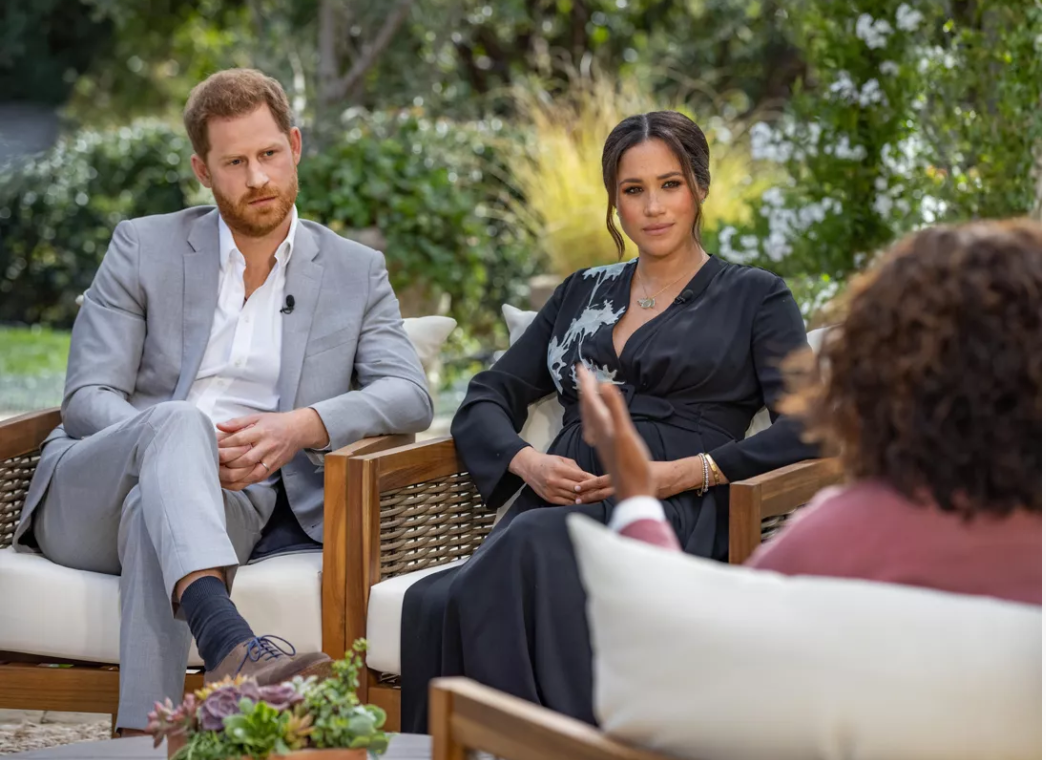
In an interview with Oprah, Prince Harry and Meghan Markle accused the British royal family of racism, and the fallout is severe. Markle talked about having suicidal thoughts and how she had been treated by the family, including plans for the couple’s baby. She said he wouldn’t have a title or security, and that the family had “concerns and conversations about how dark his skin might be when he was born.”
Prince Harry said that he a discussion with his grandmother and two with his father about the couple’s concerns until his father “stopped taking my calls.”
Victoria Murphy, a writer for Town & Country magazine, describes the family’s reaction:
So far, the royal family has remained tight-lipped. There have been no statements and, it seems, very little guidance offered. Perhaps they are retreating into a default “no comment” stance, or perhaps they are sensibly waiting to see what sticks before deciding whether to add fuel to the fire. In this war of words, there is a sense that we could go on and on.
Buckingham Palace did release a short statement, and the Queen took some time before signing off:
The whole family is saddened to learn the full extent of how challenging the last few years have been for Harry and Meghan.
The issues raised, particularly that of race, are concerning. While some recollections may vary, they are taken very seriously and will be addressed by the family privately.
Harry, Meghan and Archie will always be much loved family members.
Of course, the issue is that the royal family is a public organization, with several public figures, whether they wish to be or not.
Two days later, Prince William gave an interview and said, “We’re very much not a racist family.”
Murphy sums up the situation: “Make no mistake, this is an interview that will go down in history as having rocked the British royal family to its core.”

Robinhood CEO Defends Decision to Block Trading
It’s been a wild week of investing in GameStop, AMC, and other companies, with amateur investors driving up prices. Investment app Robinhood decided to halt trading and was highly criticized. Robinhood was accused of not having enough liquidity to cover trades, succumbing to pressure from hedge funds, and trying to protect investors, yet interfering with their trading decisions and opportunities to gain high returns.
In a CNBC interview with Andrew Ross Sorkin, CEO Vlad Tenev defends the company’s decision to block trading. He denies the accusations but does mention the liquidity and responsibility. How clear is his explanation?
His video is a good one to analyze for his delivery skills and appearance. His skin and wall colors are rather pink, and although he sounds confident, he could move his upper body more to seem relaxed. Fillers signal a conversational style, which is appropriate here, but he overuses “um,” and I find it distracting.

GM CEO's Letters to Environmental Leaders
General Motors has changed its position on climate change. The company, led by CEO Mary Barra, had supported President Trump’s efforts to eliminate California’s ability to set its own strict environmental standards.
With a new incoming president, Barra communicated that the auto industry will likely support President Biden’s environmental policies. The news came in the form of a letter to environmental leaders and encouraged “customer adoption of electric vehicles.” Barra also touted GM’s ability to meet the demand. She ends on a positive note: “This effort is critical to addressing climate change, and we look forward to working together.”
A New York Times writer calls the move a “maneuvering” and “a public humiliation to Mr. Trump” since he was still in office at the time. A public policy professor noted, “This is about as bold as it gets. This huge pivot, so closely following an election result, particularly from a firm like General Motors, is a big, big deal.”

Tech CEOs Testify Before Congress
CEOs of four major tech companies—Google, Facebook, Apple, and Amazon—answered U.S. lawmakers’ questions about potential abuses of power. Themes from both Democrats and Republicans included relationships with third-parties, social media monitoring, advertising, search results, and other potential antitrust moves.
The CEOs joined by video and started with an opening statement. After that, no one was spared tough questions. Sundar Pichai was grilled about search engine results and Google’s business in China. Mark Zuckerberg defended its acquisition strategy. Jeff Bezos responded to accusations of using vendors’ data to build competitive products. And Tim Cook, who received the fewest questions, defended practices for developers, including fees charged through the App Store.
Discussion:
Watch the CEOs’ opening statements. Which were the strongest and weakest? On what criteria do you base your analysis?
Which leadership character dimensions do the CEOs exhibit or fail to exhibit.
Assess the CEOs’ delivery skills. What differences and similarities do you notice?
Now assess the technology set-up: lighting, background, camera angle, eye contact, and so on. What lessons do you learn for your own video meetings?

Company Statements About George Floyd's Murder

Business Insider has assembled a list of companies’ statements and promised actions following the killing of George Floyd and the public protests.
TikTok, General Motors, McDonald’s—many brands are jumping into the conversation and posting messages that are both placating and inspiring.
Discussion:
Read the list of statements and actions. Which sound most meaningful to you?
Should all brands post a message? Which should, and what is important to convey?

Atlanta Mayor Speaks to Protests
Atlanta Mayor Keisha Lance Bottoms delivered a speech from the heart and from her experience. Mayor Bottoms speaks from her experience as an African-American mother and implores people to protest peacefully.
Discussion:
Analyze the mayor’s speech: audience, communication objectives, organization, tone, delivery style, and so on. What works well, and what could be improved?
In what ways does this speech demonstrate authenticity? How does the mayor’s identity play a role in her message and her delivery?

New Zealand PM's Conversational Style
In business communication courses, many faculty encourage their students to use a natural, conversational style—to avoid reading from a script or memorizing a speech. A natural style allows speakers to connect with their audience and to demonstrate authenticity.
New Zealand PM Jacinda Ardern posted a video to “check in with everyone.” She is in a sweatshirt and says she just put her toddler to bed. Ardern discuss COVID-19 progress and asks people not to be “disheartened” by numbers, which may lag isolating behaviors.
In early April, PM Ardern declared that the tooth fairy and Easter bunny are considered essential workers.
Discussion:
Ardern uses fillers when she speaks—in other videos even more so than this one. Is that a problem? Why or why not?
How do you perceive her natural style: refreshing, inappropriate, or something else?
How would her style be perceived if she were the president of the U.S.?

A Leader Example in My Book Is Charged With Conspiracy
I was sad to see that Paul Kruse, former CEO of Blue Bell Creamery, has been charged with covering up the listeria breakout in 2015. In my book, Building Leadership Character, Kruse is a positive example of a leader who demonstrates vulnerability. His 2016 video announcing employee layoffs after the breakout was emotional and authentic.
Prosecutors say that Kruse delayed recalling tainted products, instructed employees to tell customers that product delays were caused by mechanical problems, and failed to take other appropriate action.
Blue Bell agreed to pay $19.5 million to the Department of Justice and posted a statement on its website, which focuses more on the future than on the past.
Discussion:
Can you reconcile both perspectives of Kruse as a leader? Could he be someone who covers up listeria and someone who gets emotional when talking about employee layoffs?
Assess the company’s statement. Who are the audiences, and what are the communication objectives?

Governor Cuomo's Leadership
A Wall Street Journal article analyzes NY Governor Cuomo’s leadership during the coronavirus pandemic. Crisis communication experts conclude that, although he’s not a naturally gifted orator, he is doing what the public needs now.
People appreciate the governor’s focus on facts and his direct style as well as his discussions of emotion and his brother’s illness, which “humanize” him.
The article sites Cuomo’s current popularity: “Gov. Andrew Cuomo’s job-performance rating soared in March to its highest level ever, according to a poll conducted by the Siena College Research Institute.”
Performer Randy Rainbow produced a funny video, “ANDY!” to the tune of “Sandy” from the musical Grease about his appreciation.
Discussion:
Read the article for other conclusions about the governor’s leadership style. With which ideas do you agree and disagree?
What other examples have you seen of people stepping up when the situation required them to be leaders? How did they do?

Message from Zoom CEO
People who never heard of Zoom are now relying on the company to provide flawless service, but of course we experience problems. In a blog post, CEO Eric Yuan describes how Zoom use has “ballooned overnight” and what the company has done to meet demand and improve the service.

Yuan also expresses gratitude to Zoom users at the end of the post, demonstrating business communication principles and leadership character:
Transparency has always been a core part of our culture. I am committed to being open and honest with you about areas where we are strengthening our platform and areas where users can take steps of their own to best use and protect themselves on the platform.
We welcome your continued questions and encourage you to provide us with feedback – our chief concern, now and always, is making users happy and ensuring that the safety, privacy, and security of our platform is worthy of the trust you all have put in us.
Together, let’s build something that can truly make the world a better place!
Discussion:
Analyze the blog post: audiences, communication objectives, organizational structure, writing style, etc.
What business communication principles does the blog post illustrate? What improvements would you suggest?
What leadership character dimensions are illustrated in this example?

FreshDirect Message

Dear FreshDirect Team Members, Suppliers, and Customers,
In the past few weeks, our community has come together in an extraordinary way as we navigate this ‘new normal’ of everyday life for the foreseeable future. Our team members, our suppliers, and our customers are all part of this evolving conversation so I thought it appropriate to address everyone together.
Thank you, first and foremost, to our remarkable FreshDirect employees who are receiving, preparing, packing and delivering food during this extremely challenging time, and working around the clock to serve even more customers. Your dedication and perseverance is inspiring, and I’m privileged and proud to be on your team. You are true heroes.
Thank you to all of our suppliers, particularly our food suppliers on farms, boats and ranches, who, even with their own challenges, tell us that they will stop at nothing to not let us down. Grocers are now being called heroes, but know that we consider all of you heroes as well – boots on the ground, ensuring that the quality food that you grow continues to roll.
Thank you to our loyal customers, for trusting us to serve you and your family during this unimaginable time, and for continually asking about our team members, sharing encouragement and appreciation for all they are doing to provide food. The shift of virtually all food consumption into the home has strained the entire food industry, and we are all working tirelessly to address the resulting shortage in time slots.
Together, as a community, we are going to be doing even more to help others.
In just the last 10 days, the FreshDirect customer community has donated over $75,000 to the NY Common Pantry, an organization that for years has been helping others and now needs a helping hand. The FreshDirect employee community continues to support them as well, by packing and delivering thousands of boxes every week.
And this week, we are launching a new public/private partnership with the five NYC Borough Presidents, which we’ve dubbed Operation 5 Borough Food Drive. Starting Tuesday, the FreshDirect team will be donating and packing 2,000 boxes of food staples each weekday. These boxes will be delivered at the direction of each Borough President to those in need, free of charge, thanks to the generosity of our suppliers.
Thank you, and stay healthy and strong.
David
Discussion:
Analyze the message: the audiences, communication objectives, and so on.
What works well, and what could be improved?
How do you assess the message, given criticism of the Fast Company article?

Panera Extends Social Media Listening
Panera responded to complaints about its Bistro French Onion soup with a clever approach: hiring the character Phyllis from “The Office” TV show.
The restaurant chain had promised that the soup would return, but it didn’t, and fans protested on social media. In addition to actively responding to customer complaints on social sites, Panera created a video showing a fake social media manager and Phyllis, as a social media coordinator.
The approach shows that Panera is listening and responding to customers, and it helps customers see the company’s point of view.
Discussion:
What’s your view of the video? How would you describe the potential impact in a few words?
More specifically, what are the communication objectives for this video message? Consider the audience and what the company hopes customers will do, think, and feel differently after watching the video.

Facebook Memo Goes Public

Facebook executive Andrew Bosworth wrote a 2,551-word memo about the company’s role in the upcoming election and more. Bosworth compliments President Trump’s use of Facebook ads and admits that the site impacted the 2016 U.S. election. A Vox article describes Boswell’s logic:
Bosworth’s memo has much more in there, which is getting plenty of deserved attention, including the assertion that Facebook did indeed help Donald Trump win the 2016 election — by giving him the tools to run “the single best digital ad campaign I’ve ever seen from any advertiser. Period.” And the memo also reveals that Bosworth, a self-described “committed liberal,” fantasizes about using Facebook to prevent Trump from winning in 2020, but won’t.
The memo is also attracting attention because Bosworth compares Facebook to sugar and places responsibility on the user: “At the end of the day we are forced to ask what responsibility individuals have for themselves."
Bosworth ends the memo with a question:
To bring this uncharacteristically long and winding essay full circle, I wanted to start a discussion about what lessons people are taking away from the press coverage. My takeaway is that we were late on data security, misinformation, and foreign interference. We need to get ahead of polarization and algorithmic transparency. What are the other big topics people are seeing and where are we on those?
Discussion:
Read the entire memo . What surprises you most?
How damaging is the memo to Facebook’s image, particularly with another election coming up? How does a memo like this—posted on an internal site—become public?
What business writing principles does Bosworth follow, and how could he improve the memo?

Boeing CEO Responds to Questions
This week, Boeing CEO Dennis Muilenburg answered lawmakers’ questions about the two Max 737 plane crashes in the past year. Facing families of deceased passengers, Muilenburg began his testimony with an apology:
“I’d like to begin by expressing my deepest sympathies to the families and loved ones of those who were lost in the Lion Air Flight 610 and Ethiopian Airlines Flight 302 accidents, including those who are here in the room today. I wanted to let you know, on behalf of myself and all of the men and women of Boeing, how deeply sorry I am. As we observe today the solemn anniversary of the loss of Lion Air Flight 610, please know that we carry the memory of these accidents, and of your loved ones, with us every day. They will never be forgotten, and these tragedies will continue to drive us to do everything we can to make our airplanes and our industry safer.”
One of the most tense moments was when Senator Ted Cruz questioned Muilenburg (see video). Muilenburg also faced criticism as he was leaving. The mother of a victim of the second crash responded to his invoking his Iowa farm background:
“Go back to Iowa. Do that.” She also said, “I don't feel like you understand. It's come to the point where you're not the person anymore to solve the situation."
Discussion:
Watch more of Muilenburg’s testimony. What are some examples of questions he addressed well, and how could he have done better?
How well does Muilenburg balance emotional appeals, logical arguments, and credibility in his testimony?
What leadership character dimensions are illustrated by this situation and by Muilenburg’s testimony?
Muilenburg’s interaction with the mother is a difficult situation for anyone to handle, and we can certainly understand her grief and anger. How would you have responded?
CNN reports:
“In response, Muilenburg said he respects her viewpoint. "But I want to tell you the way I was brought up. And I'm just being honest here about it. I learned from my father in Iowa ... when things happen on your watch you have to own them and you have to take responsibility for fixing them," he said.