
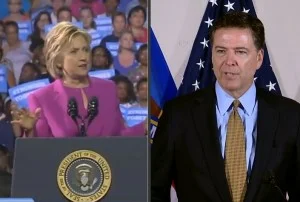
Does Comey Regret His Decision?
 FBI Director James B. Comey made headlines today for reporting new allegations against Hillary Clinton because of, you guessed it, her use of email. This time, new emails have been discovered in connection with Anthony Weiner, the former NY congressman who was caught "sexting." His ex-wife is Huma Abedin, a Clinton aide.
Comey apparently went public with the news, in the form of a letter to Congress, without any specifics, with no decision to bring charges, and despite warnings from the Department of Justice. Soon after Comey went public, he issued this email to FBI employees, perhaps indicating his ambivalence about the release.
To all:
This morning I sent a letter to Congress in connection with the Secretary Clinton email investigation. Yesterday, the investigative team briefed me on their recommendation with respect to seeking access to emails that have recently been found in an unrelated case. Because those emails appear to be pertinent to our investigation, I agreed that we should take appropriate steps to obtain and review them.
Of course, we don't ordinarily tell Congress about ongoing investigations, but here I feel an obligation to do so given that I testified repeatedly in recent months that our investigation was completed. I also think it would be misleading to the American people were we not to supplement the record. At the same time, however, given that we don't know the significance of this newly discovered collection of emails, I don't want to create a misleading impression. In trying to strike that balance, in a brief letter and in the middle of an election season, there is significant risk of being misunderstood, but I wanted you to hear directly from me about it.
Jim
Clinton's approach to the news is to go on the attack, criticizing Comey's decision as "unprecedented" and "deeply troubling."
Discussion Starters:
- Did Comey make the right decision? Why or why not? Is this just a distraction from the election, which is just 10 days away, or is this essential to Americans' decision?
- Will Hillary ever live down this issue? If she becomes president, what is the best way for her to handle the situation?
Layoffs at Twitter
Twitter is laying off about 9% of employees and closing Vine, the short video app it purchased in October 2012 before it launched. When Instagram offered video options, Vine immediately lost much of its user base. About 350 employees are affected.
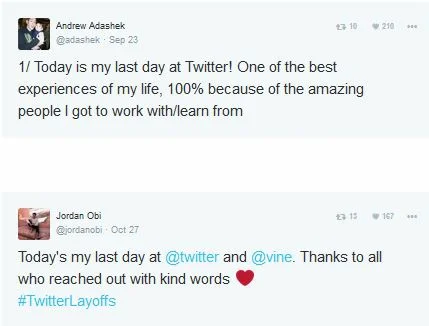
Layoffs are awkward for Twitter, a site sometimes used for "live tweeting" bad news. In this case, a former employee created a Twitter Moment, "Last Day at Twitter." Exiting employees also used the hashtag #TwitterLayoffs. This could be risky for a company, but the posts are positive. It could be that employees enjoyed their time at Twitter and understand the rationale for layoffs. It could also be that employees are in high demand from other companies, so they won't be out of work too long.

Discussion Starters:
- Why do you think employees tweeted nice messages on their last day? I offered two theories. Any other ideas?
- Should the company have created its own hashtag for the event to pre-empt something worse? Why or why not?
NFL's Image Problem
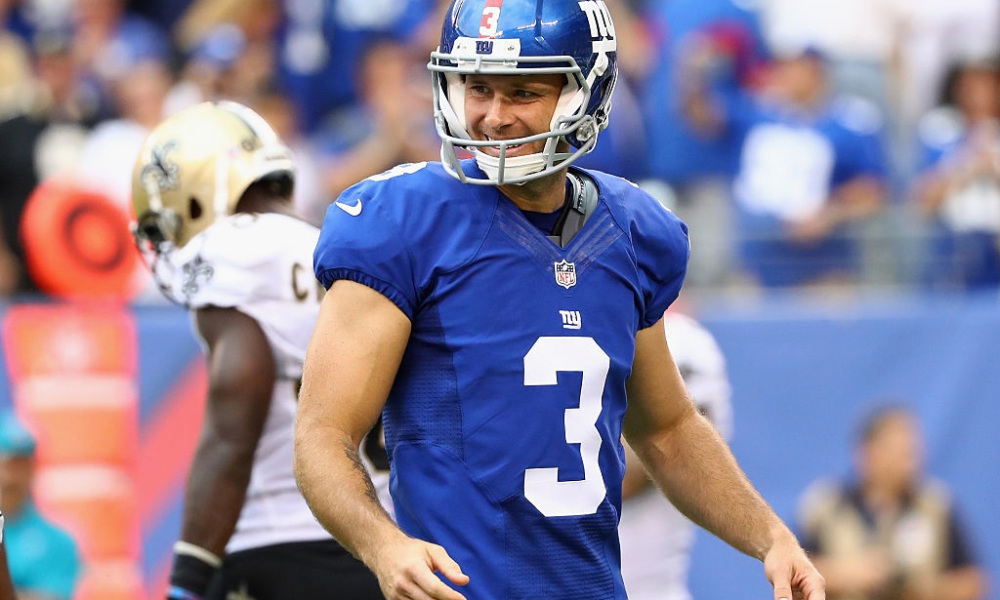 The NFL's image is further damaged by a New York Times article today titled, "N.F.L. Shows It Doesn't Really Care About Domestic Violence." The piece starts by highlighting declining viewership, for which the league blames the current election. Certainly, people are sensitized to sexual assault incidents, but the NFL isn't helping itself:
"Yet again, in the case of Giants kicker Josh Brown, the league has shown that it could not care less about women and really, really doesn't want to call out its players for doing bad things to them."
Tough words. But the Times explains that Brown "was charged with assaulting his wife" "more than two dozen times." After investigating the case for 10 months, the NFL decided to suspend Brown for only one game.
The Times also said the league blamed the victim: "Brown's wife had failed to cooperate, the league said, and that's why its investigators couldn't get to the bottom of what he had done."
People are voicing their dismay on Twitter, with the second tweet here retweeted almost 2,000 times.

Discussion Starters:
- What's your view of the Times' headline: overstated, unfair, spot-on, or something else?
- To what extent do you think these assault issues are causing declining viewership?
- What should the NFL do to restore its image?
Facebook Debates Trump's Posts as Hate Speech
Are some of Donald Trump's posts considered hate speech? That's what Facebook employees debated in December according to a Wall Street Journal article, and CEO Mark Zuckerberg decided against censorship. Some employees felt strongly-even threatening to quit-over Trump's posts proposing banning Muslims from entering the country. 
A spokesperson for Facebook said, "That context [of a post] can include the value of political discourse. Many people are voicing opinions about this particular content, and it has become an important part of the conversation around who the next U.S. president will be." Another management team member wrote, "In the weeks ahead, we're going to begin allowing more items that people find newsworthy, significant, or important to the public interest-even if they might otherwise violate our standards."
Facebook is in the spotlight partly because Americans increasingly use the site as a news source, and the company has been viewed as left-leaning. Clearly, Facebook is in a tough spot.
Discussion Starters:
- What is considered hate speech?
- Did Mark Zuckerberg make the right decision? Research Facebook's policy for context.
- Should Facebook adjust its policy? Or is this a decision relevant only to the current election?
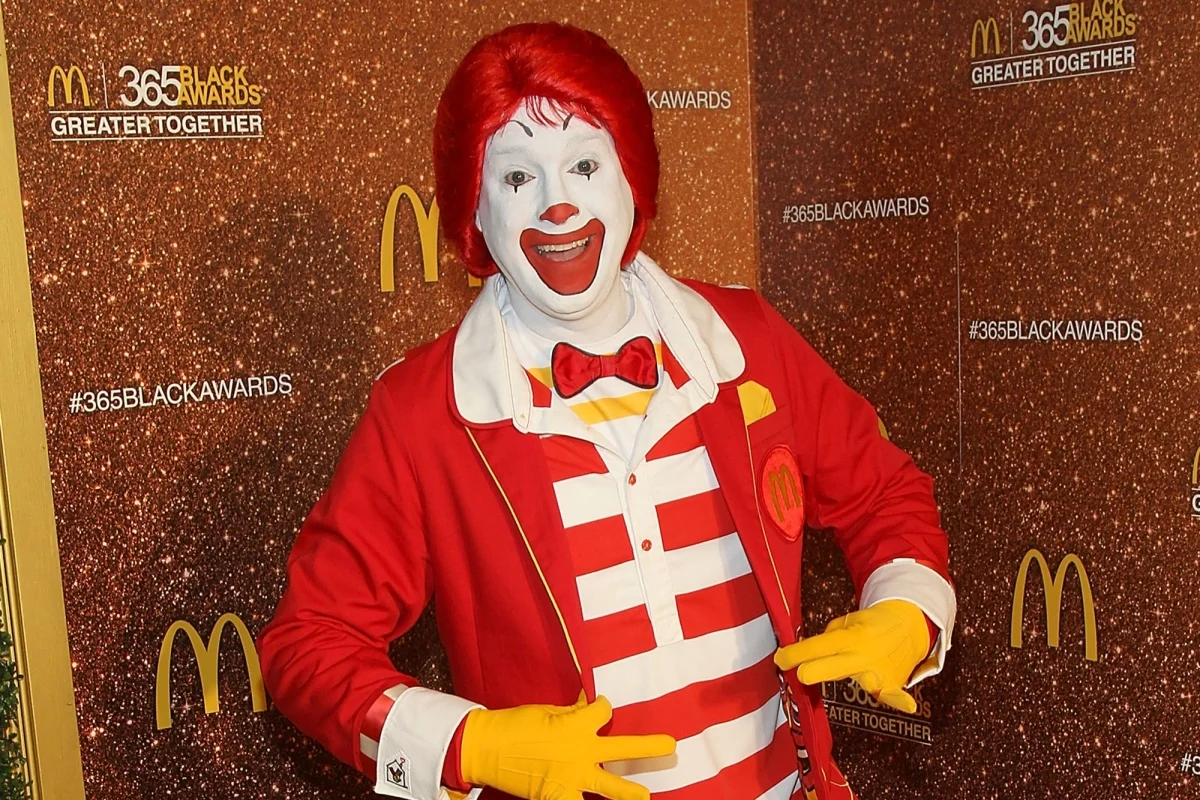
Ronald McDonald Sits Out Creepy Clown News
 McDonald's classic clown, Ronald McDonald, is taking a vacation amidst news of so-called "creepy clowns," which have been scaring and possibly harming children. A company representative said, "McDonald's and franchisees in the local markets are mindful of the current climate around clown sightings in communities and as such are being thoughtful in respect to Ronald McDonald's participation in community events for the time being."
The issue began with reports of clowns luring children into unsafe places in South Carolina. Since then, pranks across the country have scared kids and taken much of the fun out of clowning.
Discussion Starters:
- A look at several clown association sites reveals no statement about the issue. Should they have a statement? If so, what? If not, why not?
- Why do you think the associations don't yet have statements? Your response could be related to the previous question-or not.
- Did McDonald's make the right decision in benching Ronald for a while? What's your view of the short statement?
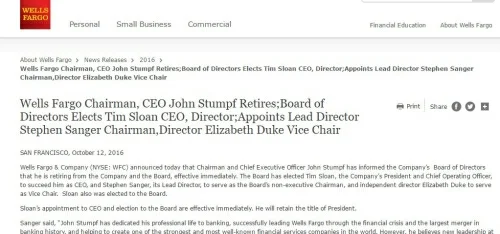
Wells Fargo CEO Steps Down
It was probably just a matter of time. Wells Fargo CEO John Stumpf announced his retirement in the wake of a bank scandal that brought the CEO in front of the federal government and brought the company millions of dollars in fines. Stumpf will walk away with about $134 million as his retirement package (although no additional severance pay). According to The Wall Street Journal, the board didn't try to convince Stumpf to continue on.

In a news release, the company included quotations from Stumpf and from the new executives. Stumpf quote read, "I am grateful for the opportunity to have led Wells Fargo. I am also very optimistic about its future, because of our talented and caring team members and the goodwill the stagecoach continues to enjoy with tens of millions of customers. While I have been deeply committed and focused on managing the Company through this period, I have decided it is best for the Company that I step aside. I know no better individual to lead this company forward than Tim Sloan."
A Slate writer called the news "a stunning fall for a banking leader who had helped guide Wells Fargo through the financial crisis and lead the company through its acquisition of Charlotte-based Wachovia." A New York Times writer called Stumpf's resignation "abrupt."
Discussion Starters:
- Do you agree with the reporters' language? Is this a "stunning fall" and an "abrupt departure"?
- Is Stumpf's retirement the right decision for the company at this time? Why or why not? What did the board of directors likely consider in encouraging-or at least accepting-his retirement?
Samsung Trying to Control the Damage
Samsung is dealing with a tough situation: batteries in the Galaxy Note7 have been causing fires. Warnings to turn off Samsung phones are heard on many flights, including mine to Denver this weekend. As the BBC reports, "that sends out a negative message about your products beyond even your own customers."
The company handled the initial reports well but lost favor when its replacements overheated or burned. The BBC article explains the growing issue for Samsung:
"The trouble is that even one phone which catches fire makes for startling pictures and a whole heap of consumer anxiety. Samsung may soon have to decide whether to cut its losses and abandon the Note 7 before it does more damage to its brand."
The New York Times also reported on Samsung's poor crisis communication:
"But for people to see those words, they had to click a link at the top of Samsung's home page with the not-so-urgent label 'Updated Consumer Guidance for the Galaxy Note 7.' As of Tuesday afternoon, the instructions had not been posted to Samsung's Facebook page or the company's Twitter account.
"For some who work in crisis management, it was a baffling and overly passive way for the South Korean electronics giant to deal with a prominent problem that has worsened in the last month."
On its website, Samsung posted this message:
Samsung Will Ask All Global Partners to Stop Sales and Exchanges of Galaxy Note7 While Further Investigation Takes Place
We are working with relevant regulatory bodies to investigate the recently reported cases involving the Galaxy Note7. Because consumers' safety remains our top priority, Samsung will ask all carrier and retail partners globally to stop sales and exchanges of the Galaxy Note7 while the investigation is taking place.
We remain committed to working diligently with appropriate regulatory authorities to take all necessary steps to resolve the situation. Consumers with either an original Galaxy Note7 or replacement Galaxy Note7 device should power down and stop using the device and take advantage of the remedies available.
Discussion Starters:
- Look at Samsung's recent news statements about this situation. How well has the company handled communication on its website?
- How, if at all, do you see this issue potentially reflecting poorly on the mobile industry? What should other phone manufacturers do?
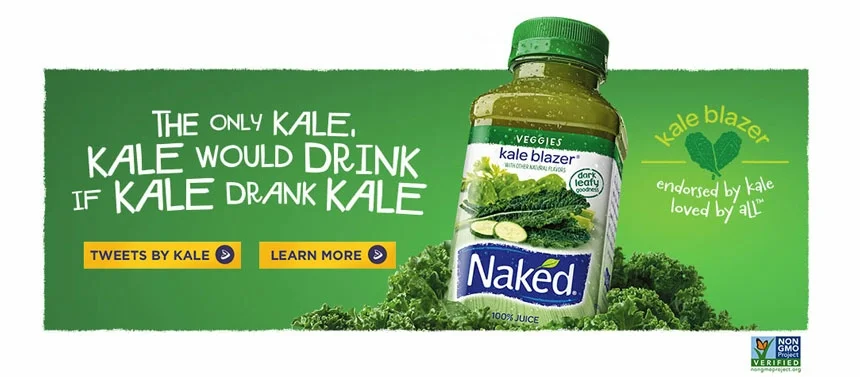
How Naked Is Naked Juice?
Is Naked juice really "healthy" and worth the money? A lawsuit filed by the Center for Science in the Public Interest says Pepsi is misleading consumers with some of its claims.
On the packaging, Pepsi promotes the juice as having "no added sugar" and repeats words like kale, when the truth tells a different story. A 15-ounce bottle of Naked contains eight teaspoons of sugar; compare that to a 16-ounce soda, which has about 12 teaspoons. The company's Kale Blazer certainly emphasizes kale on its label, but the primary ingredients are apple and orange juice, cheap products that don't justify the price consumers pay, according to the lawsuit.

In addition to these misleading statements, the CSPI is faulting Pepsi for not labeling the drinks, "not a low-calorie food," which is required by the FDA when consumers could think otherwise.
Pepsi has responded to the lawsuit:
"Any sugar present in Naked Juice products comes from the fruits and/or vegetables contained within and the sugar content is clearly reflected on label for all consumers to see. Every bottle of Naked Juice clearly identifies the fruit and vegetables that are within."
This isn't Naked's first challenge. In 2013, Pepsi paid $9 million for calling the product "all natural."
Discussion Starters:
- Do you agree more with the lawsuit or with Pepsi's response?
- What's the difference between sugar from fruit and added sugar? How much does this distinction matter?
- If the lawsuit is successful, how should Pepsi change the labels on its Naked products?

Recruiter Rejects Candidate for "Vulgar Comments"
 The Society for Human Resources Management (SHRM) tells the story of a recruiter who rejected a candidate because of comments found on the dating app OkCupid. The recruiter, Sam Oliver, explains his decision in an article and describes the post: "[H]e was calling her obscene names and threatening sexual assault."
Oliver also describes his process for screening candidates online:
"Like most recruiters, I use a variety of sources when evaluating candidates - LinkedIn, Facebook, Twitter, Instagram, AngelList, github, reddit, dribbble, the list goes on. Most people's social media is pretty benign: shared memes and jokes, vacation photos, interactions with friends and family. When looking at people's social media, I'm mostly looking to corroborate facts and timelines on their resume - where they live, previous jobs, alma mater, etc. If they've put enough information out there, I might also get an accurate glimpse of their personality, which is very helpful in hiring."
"Unfortunately for him, he had used his LinkedIn head shot as one of his OKCupid profile photos, and it was very easy for me to confirm his identity via a reverse Google image search. To any seasoned recruiter, I deduced his real identity using well-known tricks of the trade; people often do not realize how much information is public and readily accessible via social media."
Both the SHRM article and Oliver explain that the rejection is perfectly legal. You may be thinking that you can't discriminate against applicants, but that applies only to certain qualities, such as race, sex, and age. On the other hand, employers have a legal responsibility to maintain a harassment- and discrimination-free environment, and an employee who writes "threatening" messages online may put an organization at risk.
Although he had no obligation to, Oliver told the applicant why he wouldn't pass his resume along to his client, which gave the applicant a chance to deactivate some accounts and remove incriminating photos.
This situation is a good lesson for students seeking jobs. Assume everything you post can be retrieved and traced back to you.
Discussion Starters:
- Does the recruiter's decision surprise you? Why or why not? What are the downsides to rejecting a candidate based on social media posts?
- What advice from Chapter 12 would have helped this applicant?
- What about your own social media history may put your job search in jeopardy? Use Google and other sites to find as much information about yourself as you can.
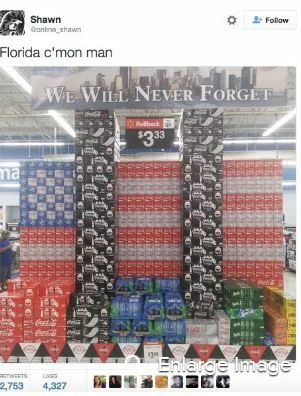
Offensive 9/11 Mattress Company Ad
What were they thinking? Miracle Mattress in San Antonio, TX, produced a commercial advertising twin mattress prices for 9/11. At the end of the ad, two employees fall into "towers" of mattresses, and the lead actor says, "We'll never forget."
Understandably, people were outraged. This reminds me of the golf club that used a similar promotion in 2013. Also, this year, Coca-Cola took down a display of soda cartons at a Florida Walmart.
The company owner posted an apology and announced the store's closing on Facebook. He said elsewhere that he was unaware of the ad created by his employees.

Discussion Starters:
- How are these promotions different from, for example, Memorial Day sales?
- Assess the owner's apology. What principles of persuasion does he use? What recommendations do you have for improving the message?
- In this post, the owner didn't mention that he was unaware of the ad, as he did in other sources. What's your view of this choice?

Wells Fargo Reaches Settlement Agreement
 Wells Fargo is taking action after the discovery that bank employees opened millions of fake checking and credit card accounts. Employees opened accounts in unsuspecting customers' names so they could earn credit for the sale. The bank benefited from fees people paid on accounts they never used.
In addition to paying a $100 million settlement fee to the Consumer Financial Protection Bureau, the bank has fired 5,300 employees over the past few years.
The company issued two major communications related to the situation:
In addition, Jim Cramer interviewed CEO John Stumpf on Mad Money:
Discussion Starters:
- Compare the two Wells Fargo statements. How well does the company tailor these messages to primary and secondary audiences?
- How can customers miss paying fees? What is their responsibility, and what is the company's? Consider visual displays of bank statements in your response.
- How well does Stumpf respond to Jim Cramer's questions? Which are his strongest and weakest arguments?
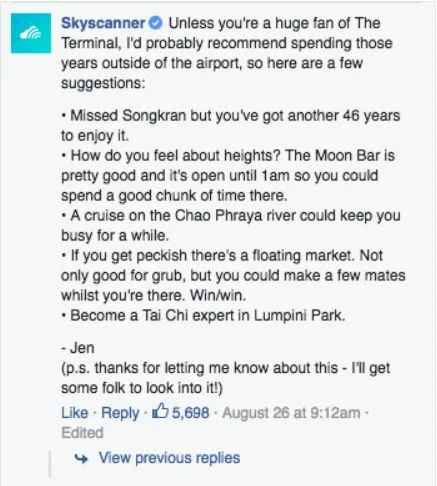
Conversational Customer Service Wins Big Points
 When Skyscanner travel app suggested a 47-year itinerary for a customer, he asked what he could do during the layover. Jen, the customer service rep didn't miss a beat: she's quick and fun, and includes her promise in the P.S.
The post went viral on Facebook, with people commenting on her spontaneity and lack of script. Customers are getting tired of the template response. The Houston Chronicle wrote, "We aren't sure who Jen is, but she totally just owned the Internet and we all loved it."
Social media responses have been getting friendlier. Perhaps companies (or their social media reps) are taking more risks. Sure, a negative post can cause all sorts of trouble, but this example and others prove that a positive, personal style by a human being can garner a lot of attention.
Discussion Starters:
- Look at recent social posts by your favorite company. Analyze the tone and approach. Have you noticed a change over time?
- Jen's strategy may not work for everyone. What are some risks of her casual style?
Sponsorships Getting Less Clear
 The Federal Trade Commission has guidelines for celebrities and bloggers to reveal their sponsorship ties, but they are not consistently followed, and some say the guidelines could be clearer. Companies shell out thousands of dollars for people with large numbers of followers to mention their brands on social media. But what's the difference between testimony and an ad?
Mary K. Engle, the FTC's associate director for advertising practices told The New York Times that, although an endorsement has to be clear, they are not "prescriptive" about what's included in a social mention. The FTC guidelines suggest starting a post with something like "#Ad." According to the Times, "For example, simply saying 'thank you' to a brand or adding '#sp' or '#spon' probably isn't clear enough, while saying a brand is a 'partner' probably is," Engle said.
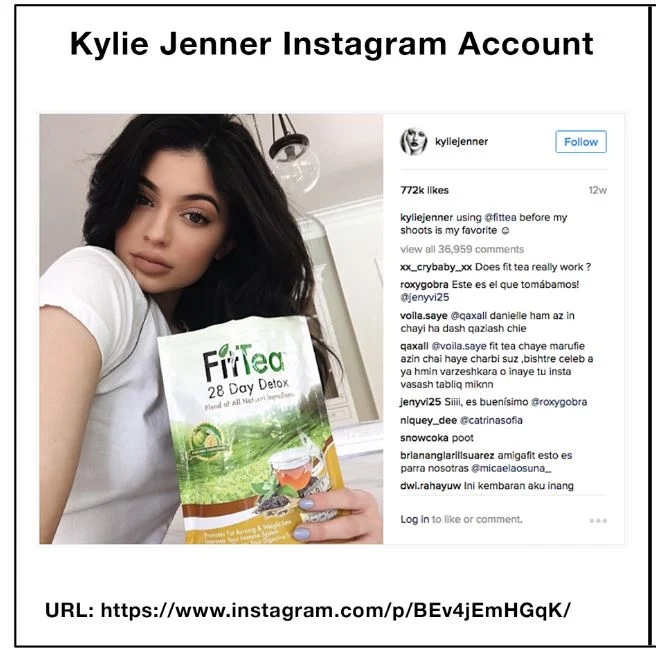
The organization Truth in Advertising wrote a letter to the Kardashian/Jenner family about recent posts they consider to be deceptive marketing. On her Instagram account, Kylie Jenner displays Fit Tea but fails to mention that this is a paid endorsement.
Discussion Starters:
- Should the FTC create more specific guidelines for what to include in social media posts? Or should celebrities know better?
- What's the value of disclosing that a celebrity is compensated by a brand? How, if it all, would a clearer marking affect your decision to buy a product?
Twitter's New Quality Filter
 Twitter is still trying to make the site a kinder place, with fewer trolls and less abuse. Twitter's user base has been declining, and several celebrities have signed off permanently. The company, led by Jack Dorsey, has responded to complaints: "We are going to continue our work on making Twitter a safer place."
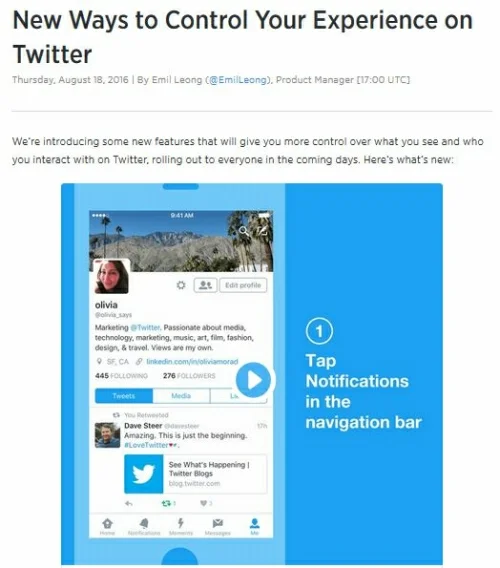
The latest attempt is a "quality filter," which Twitter explains on its blog:
"Turning it on filters lower-quality content, like duplicate Tweets or content that appears to be automated, from your notifications and other parts of your Twitter experience. It does not filter content from people you follow or accounts you've recently interacted with – and depending on your preferences, you can turn it on or off in your notifications settings."
Twitter frames the new features as ways to "Control Your Experience on Twitter." In addition to the filter, users can limit their notifications, for example, from only people they follow.
Discussion Starters:
- How well is Twitter addressing criticism of bullying and harassment on the site? To what extent will these features address concerns?
- How well did Twitter present the change on its blog?
Plagiarism by Trump Institute
In addition to Trump University, which is taking heat for defrauding students, Trump Institute is now criticized for plagiarism and other issues.
Donald Trump promoted the $2,000 institute in an infomercial to wannabe real estate investors, but his claims fell short. He said instructors were handpicked, but at least one person connected with the program said she responded to a Craigslist ad. And the Institute's organizers were Irene and Mike Milin, who The New York Times describes as "a couple who had been marketing get-rich-quick courses since the 1980s." In April, The Daily Beast wrote a long piece about the Milin's history of "legal entanglements," including promising government loans that no one received.
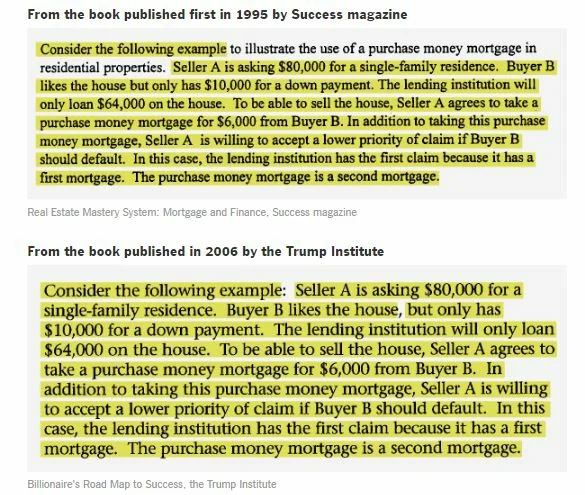
The Times offered this comparison between Trump's materials and a 1995 book published by Success magazine.

This example is part of the 20 pages that were copied from the original book.
Discussion Starters:
- What is Trump's ethical responsibility to check the organizers' past? What responsibility does Trump Institute have to prospective students? Finally, what responsibilities do prospective students have? How could people avoid being hoodwinked into paying $2,000 for a program that doesn't deliver?
- What plagiarism guidelines would you like to share with Donald Trump?
At Last, Email Help?
Email "triage" tools can help us organize and our messages and, maybe, make better decisions about our communications. Hiri seems to focus on how people use email rather than on the tool itself. After all, we're the problem, not email.
The company makes big claims: "Communication is the soul of your company. Hiri is an email app that helps you save time, organise your day, and improve communication." We'll see, but the app does have some nifty features:
- A weekly score of your clarity, brevity, and tone. (I'm curious about how this is rated.)
- A forced wait time of 30 minutes, to avoid checking email too often. This could be frustrating, but checking too often causes stress, according to some studies.
- Distinguishing emails that require action from FYIs. Tasks are created from emails that require a response or action. This could be useful to diminish attention to all those emails on which we're copied.
Discussion Starters:
- How could these features help people organize their time and improve communication?
- Which email triage tools have you used in the past, and how have you found them helpful?
Outrage Over Stanford Sexual Assault Case
 A Stanford student's light sentence and father's appeal have outraged thousands. Brock Turner was a Stanford University student who sexually assaulted an unconscious woman behind a dumpster and fought the case in court. Turner received a six-month sentence in county jail and probation, although the maximum allowable was 14 years.
The victim read a long letter to the judge, which has received almost 9 million views as of this writing. Her speech was impassioned and told her story: how she didn't know what happened to hear until she read it on the internet, how damaged she has been since the attack, and so on. It is an emotional, gripping speech that is difficult, but important to read.
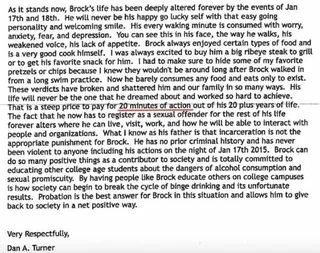
Turner's father didn't help his son or the public outrage with his defensive letter, including, "That is a steep price to pay for 20 minutes of action out of his 20 plus years of life." ThinkProgress calls the letter "impossibly offensive," and most people agree.
A letter to Brock's father challenges him to recognize:
I need you to understand something, and I say this as a father who dearly loves my son as much as you must love yours:
Brock is not the victim here.
His victim is the victim.
She is the wounded one.
He is the damager.
In a statement, Stanford assured the public that the university did everything within its power.
Discussion Starters:
- Optional: Read the victim's letter. What makes her statement so compelling?
- What's your view of the father's response? The public response?

Email Clouds Our Judgement
 Hasn't email ruined enough vacations, marriages, and careers? Will it now steal a chance at the presidency? Hillary Clinton's server issue is a symptom of a deeper problem: email causes us to make bad decisions. Several times, she admitted that she wished she had acted differently. We have all made mistakes on email: sent it to the wrong person, replied all, or sent a half-drunk, angry message in the middle of the night.
Millennials take blame for being constantly connected, but the Boomers are just as guilty, and we should know better. We know that email lives forever: on the sender's server, on the receiver's server, in print, posted on social media sites-in countless crevices. And double deleting doesn't save us from legal discovery software.
We assume a level of privacy because email has driven us to communicate quickly, often without any sense at all. We accept privacy policies without reading them, manage 122 emails a day, and "shoot" each other emails. As mobile use increases, email joins IM and texts, for which people expect an immediate response.
Advice and tools abound to reduce email dependence and volume. We should check email less often, use triage tools, and stop sending so damn many of them.
But these behavioral approaches miss the point: we love email. The immediacy and volume feed the micromanager's feelings of disconnection and lack of trust, making us dependent on email to function. We risk reputational and relational damage to maintain our addiction.
Clinton has experienced on a large scale what we have all come to realize about email: it owns us, and we are to blame.
Everyone needs a private cave like Fitzgerald Grant's on Scandal, and perhaps Clinton will get one. In the meantime, let's remember that no email message-nor any written communication that travels via the web or satellite-is truly private.
Too Much Social Media Sharing Affects Learning
 How much time do you spend each day giving feedback on social media posts? A study by researchers at Peking and Cornell Universities found that too much sharing on microblogging sites Twitter and Weibo causes cognitive issues.
Here are highlights of the findings:
- Reposting online messages interferes with online information comprehension.
- Reposting further compromises performance in a subsequent unrelated learning task.
- Cognitive overload mediates the negative effect of reposting.
A premise of the study is how few original posts are on each site:
At Weibo, for instance, 4.8% users contribute more than 80% of the original posts, whereas the majority users primarily comment on or repost others' messages (Fu & Chau, 2013). Similarly, more than half of Twitter users never post a message, whereas the top 10% most active users contribute to over 90% of all content (Kaplan & Haenlein, 2011).
From studying student-participants, the authors concluded that reposting items "interfered with participants' information comprehension both online and offline." The authors warn that people attend to functionality for feedback rather than content, and that more cluttered interfaces (um, Facebook's six new Reactions?) isn't helping. They also say that valuable time spent on cognitive functions, such as reflecting on and integrating information, is impaired, reducing our ability to process and comprehend information.
Discussion Starters:
- Intuitively, does this study make sense to you? Why or why not?
- How do you think this research may translate to other social media platforms or online activities?
- An article by The Independent was titled, "Why resharing on social media could be making you more stupid." Is this an overstatement? Why or why not?
Joe Paterno Back in the News
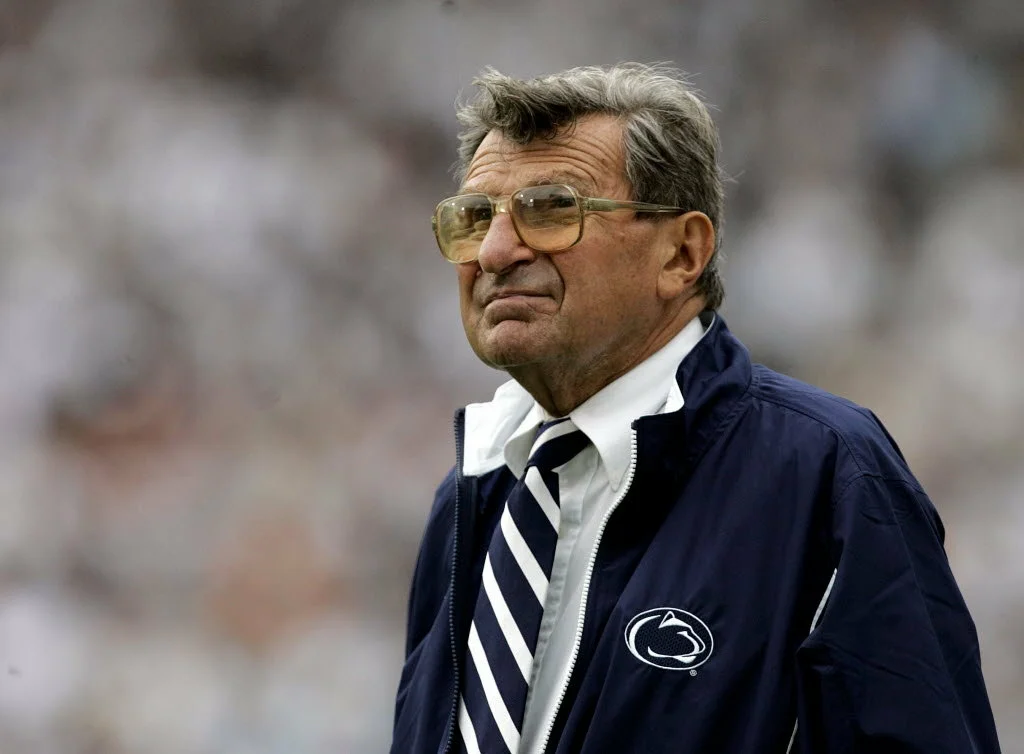
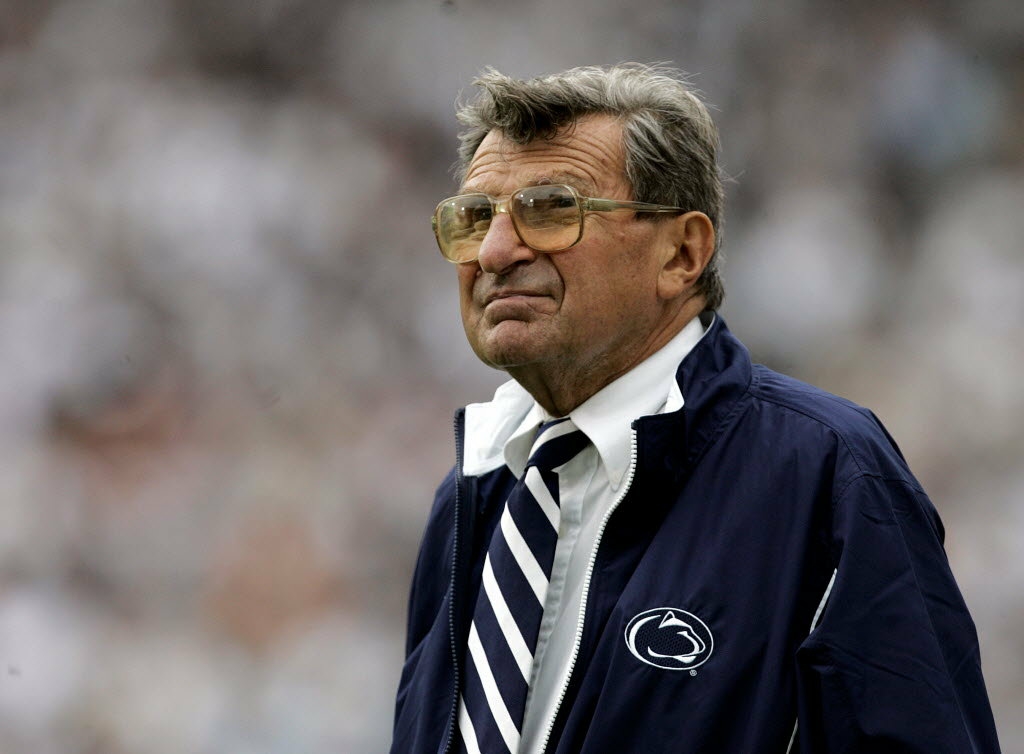 It's been a while since we heard about Penn State football coach Joe Paterno, who was in the news in 2011 because his assistant coach, Jerry Sandusky, had been sexually abusing young boys. Some questioned who knew and for how long, and recent court papers reveal Paterno's possible awareness since 1976.
The current dispute is over whether Penn State or its insurance company should pay the $60 million in damages sought by 26 people who Sandusky abused. According to the insurance company, one sentence in the case revealed an important piece of evidence: "in 1976, a child allegedly reported to PSU's Head Coach Joseph Paterno that he (the child) was sexually molested by Sandusky." In addition, the evidence shows other cases reported in the 1980s.
Joe Paterno died of lung cancer in 2012, only two months after he was suspended from Penn State and within a year of the story breaking. His family is denying the evidence and calling for a full review of the facts.
Sandusky was sentenced to between 30 and 60 years, but he's filing for a new trial. Three university leaders-the former president, athletic director, and a senior vice president-still face charges for failing to report incidents.
Discussion Starters:
- This is based on just one sentence in the report-and it's the insurance company's perspective, obviously to avoid claims. What do you think?
- Research the case in 2011. The university took a while to suspend Joe Paterno. Why? And was the suspension the right decision?