
Latest Email Stats
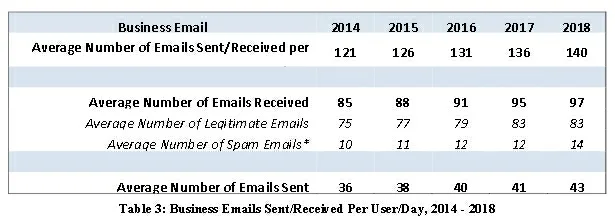
The Radicati Group has published its annual email statistics report. The executive summary highlights these survey findings:
- Email is still "the most pervasive form of communication in the business world." Social networking and mobile IM, particularly, are increasing, but "email remains the most ubiquitous form of business communication."
- Most email traffic is from business; consumer email is slowing.
- Business users send and receive an average of 121 emails per day, and this number is expected to increase through 2018.

Discussion Starters:
- What, if anything, about these figures surprise you?
- How can business users manage the number of emails they send and receive? What other tools are available to them?
Professor Bans Email
 Spring-Serenity Duvall, assistant professor of communications at Salem University, got tired of responding to students' emails:
"For years, student emails have been an assault on professors, sometimes with inappropriate informality, sometimes just simply not understanding that professors should not have to respond immediately. In a fit of self-preservation, I decided: no more. This is where I make my stand!"
With her department head's approval, Duvall banned all emails from students unless they are writing to schedule a meeting with her. In her course syllabus, she explains her rationale:
"E-mail: You should only use email as a tool to set up a one-on-one meeting with me if office hours conflict with your schedule. Use the subject line "'Meeting request.' Your message should include at least two times when you would like to meet and a brief (one-two sentence) description of the reason for the meeting. Emails sent for any other reason will not be considered or acknowledged. I strongly encourage you to ask questions about the syllabus and assignments during class time. For more in-depth discussions (such as guidance on assignments) please plan to meet in person or call my office. Our conversations should take place in person or over the phone rather than via email, thus allowing us to get to know each other better and fostering a more collegial learning atmosphere."
According to Duvall, the ban has been successful: She spends less time responding to minor emails and more time talking with students on the phone or in her office. She has made one exception to the policy and allows students to email course-related content.
Discussion Starters:
- What's your view of Duvall's new policy? How would you react as a student?
- The top comment on the story was, "95% of the emails you receive as a professor can be answered by ‘read the syllabus.'" Do you agree with this statement?
A Tribute to Kathy Berggren
My friend and colleague Kathy Berggren died suddenly last week, a terrible shock to the Ithaca community. Kathy taught courses in the communication department at Cornell for more than 20 years and recently moved to a management communication position at the Dyson School.
Although Kathy served in this role for only one semester, she already made her mark. She built the program from scratch, creating a practical course to develop students' personal and professional communication skills. From this semester and from her many in the communication department, it's hard to say how many students would call her "mentor."
Perhaps Kathy's greatest contribution was her work with teaching assistants. She mastered the large lecture, which many business and management communication faculty resist, by developing a cadre of students who could teach and coach other students. Her comprehensive guide for teaching assistants should help sustain the course now that she's gone.
One of the many modules Kathy taught exceptionally well was an "elevator pitch." I'm guessing that thousands of students can sell themselves within minutes because of Kathy's guidance.
As a frequent Facebook poster, Kathy might enjoy the outpouring of comments on her page. Friends and family are posting memories and photos for everyone to enjoy. I found out about her death from a mutual friend who texted me about some Facebook posts. And so goes our communication world today.
As a colleague, I'll miss Kathy's forwarded articles, including recommendations for BizCom in the News. I know she found this blog useful as a teaching tool, and I'm glad for that.
As a friend, I'll miss Kathy's direct communication. She set me straight on more than one personal issue I was whining about. I told her that I have many friends who will empathize with me but too few who will tell me what to do when it's clear what must be done.
I regret never seeing Kathy work with students directly. I imagine they benefited from her delicate balance of caring for people regardless of their ability and telling them what they needed to hear. I know I did.
Fake Facebook Accounts of MH17 Victims
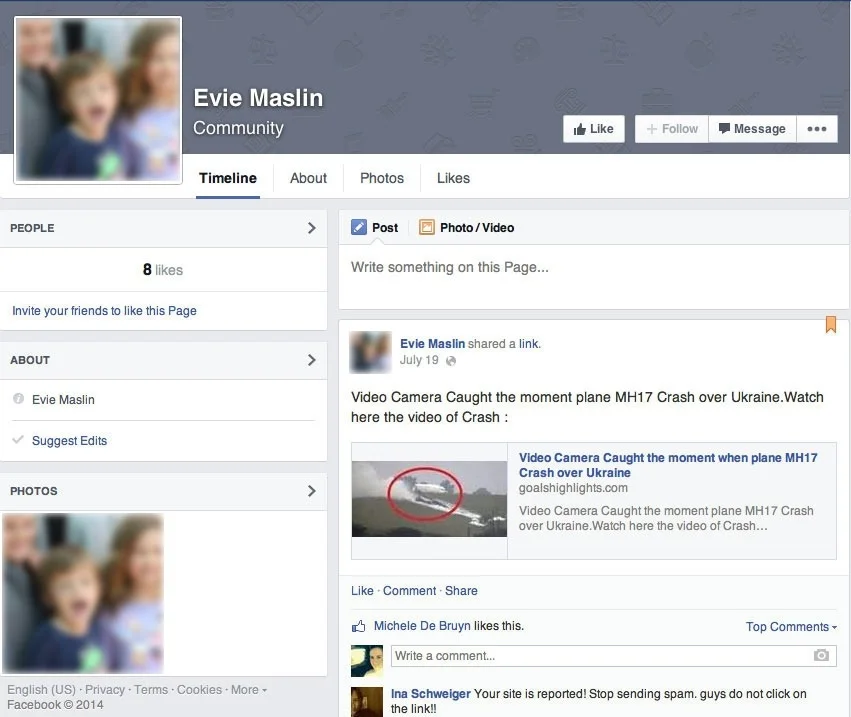
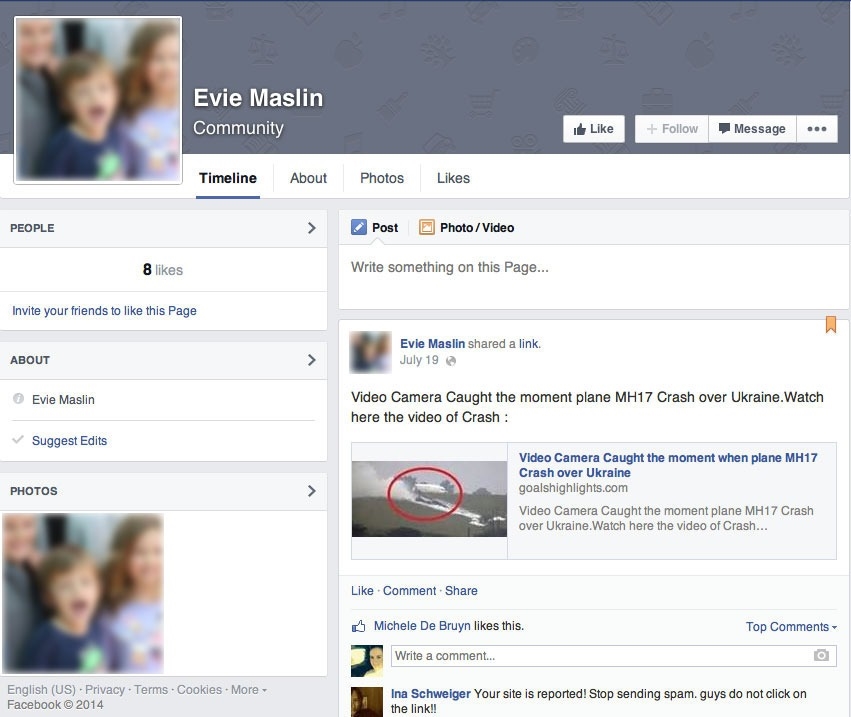 If the downing of Malaysia Airlines flight MH17 and the looting of victims' belongings at the crash site didn't depress you enough, here's more news. Several fake Facebook pages were set up in the names of Australian victims of the crash.
Among the accounts were three pages created in the names of children who died in the crash. When clicked, video images open external pop-up ads for gambling, sex, and counterfeit drug sites.
Although early reports said Facebook wasn't taking action and couldn't until the sites were proven illegal, the company has since taken them down. A Facebook spokesperson said, "We are disabling these profiles as soon as we are made aware of them. We encourage people to block those responsible and report suspicious behaviour to our team of experts via our reporting buttons so that we can quickly take the appropriate action."
Discussion Starters:
- What are the potential consequences of Facebook's decision to remove these pages? Why would the company not act immediately?
- If the creators of these pages were caught, what would be appropriate action against them?
NPR Tweets DO Reflect on the Organization
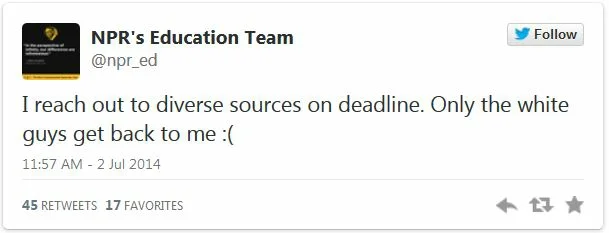
A National Public Radio employee got her hand slapped after tweeting from @npr_ed (NPR's Education Team):
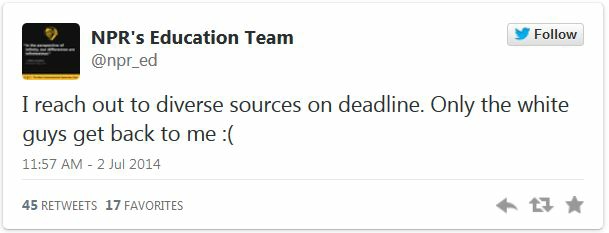
Anya Kamenetz apologized, saying that her tweets don't reflect on the public radio station. But NPR executives don't agree. In response, NPR Standards & Practices supervising editor sent this email to employees:
From: Mark Memmott
Sent: Tuesday, July 08, 2014 2:24 PM
To: News-All Staff
Subject: Reminder: There Is No Privacy On The Web, And ‘Personal' Pages Are Not Safe Zones
"If you wouldn't say it on the air, don't say it on the Web."
That's been the basic guidance for quite a few years.
In reality, Twitter and other social media sites allow us to show more of our personalities than we might on the air or in a blog post.
BUT, though the words may be on "personal" Twitter or Facebook accounts, what we say can reflect on NPR and raise questions about our ability to be objective.
Matt Thompson offers a test. Before posting something about your work or a news event or an issue, even if you're putting it on what you think of as a personal page, ask this question: "Is it helping my journalism, or is it hurting my journalism?"
Here's a bit more from the Ethics Handbook:
"We acknowledge that nothing on the Web is truly private. Even on purely recreational or cultural sites and even if what we're doing is personal and not identified as coming from someone at NPR, we understand that what we say and do could still reflect on NPR. So we do nothing that could undermine our credibility with the public, damage NPR's standing as an impartial source of news, or otherwise jeopardize NPR's reputation. In other words, we don't behave any differently than we would in any public setting or on an NPR broadcast."
Also, despite what many say, retweets should be viewed AS endorsements. Again, from the handbook:
"Tweet and retweet as if what you're saying or passing along is information that you would put on the air or in a ‘traditional' NPR.org news story. If it needs context, attribution, clarification or ‘knocking down,' provide it."
The email provides sound advice for people representing the organization, perhaps even when they're not representing the organization.
Discussion Starters:
- PR Daily asks readers good questions for business communication students: "Do tweets, even from personal accounts, reflect on employers? Do retweets equal endorsements?"
- @NPR is another Twitter handle, but there are no tweets about this incident. Should the account holder have written something? If so, what?
Google Intercepted a Goldman Email
A Goldman Sachs contractor accidentally sent a confidential email to a Gmail address instead of the "GS.com" domain. Unlike most of us who have mistyped an address (and who hasn't), the contractor, client, and company will suffer no humiliation.
Goldman asked Google to intercept the email. The appeal to Google was simply that it's an easy action for Google to take compared to the potential damage of the client's data being revealed. (I'm nosy: Who's the client, and just how much are we talking about?)
Google complied with the court order, and it's a happy ending, sort-of. Critics say Goldman's legal machine made this happen, and some wonder whether we could see a legal precedent, but this is unlikely because Google didn't fight the request, so there's no court decision to ponder.
Discussion Starters:
- Did Google do the right thing? What are the potential pros and cons of the company's decision to comply with Goldman's request?
- What are the potential implications of this situation?
Social Media's Small Influence
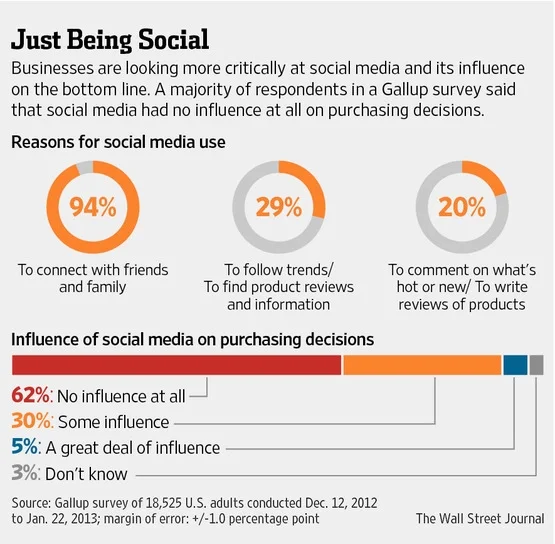
Sixty-two percent of respondents in a Gallup poll said that social media had no influence over purchasing decisions. This sounds like bad news for companies who have spent tremendous time and money seeking followers on Twitter and likes on Facebook.

But that doesn't mean social media isn't important. Rather, as a Wall Street Journal article says, companies are shifting their strategies to cultivate relationships online more than simply attract people to a page.
Gallup's report found that "consumers are much more likely to turn to friends, family members, and experts when seeking advice about companies, brands, products, or services. Company-sponsored Facebook pages and Twitter." The report advises companies to consider social media as just one touchpoint with consumers, who could have their first interaction in a physical store:
"Therefore, if companies want to acquire new customers, their best bet is to engage their existing customers and inspire them to advocate on their behalf. Customer engagement drives social engagement - the degree to which consumers will work for or against an organization within their social networks - not the other way around."
Gallup suggests that companies spend less time posting content and more time engaging their current constituencies to advocate for the brand. This requires companies to be authentic, responsive, and compelling.
PR Daily also questions the poll's methodology:
"This Gallup Poll was conducted using telephone and mail surveys and gathered responses from 18,525 U.S. adults ages 18 and older, all of whom speak English."
Discussion Starters:
- In what ways does this report surprise you-or not?
- Look at your favorite company's Facebook page and Twitter feed. How well is the company using Gallup's suggested strategy? What changes would you recommend in its online interactions?
- Consider PR Daily's criticism of the survey. What's wrong with the approach?
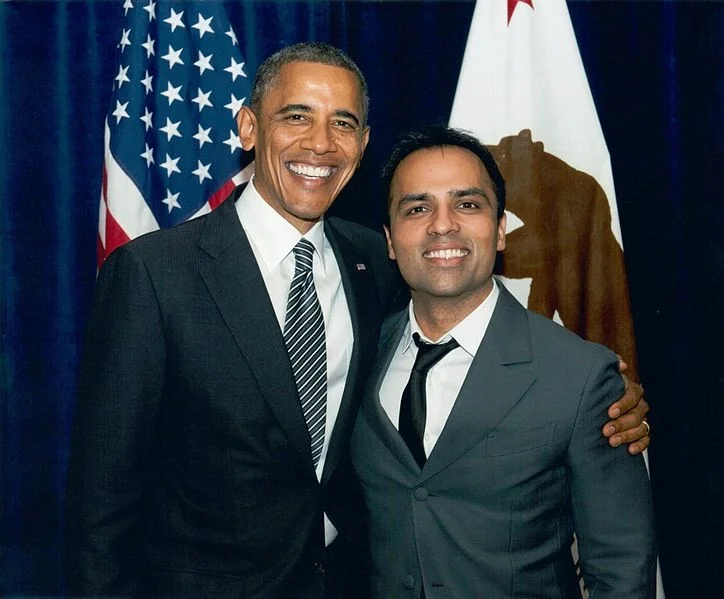
Board Terminates RadiumOne CEO After Felony Charges
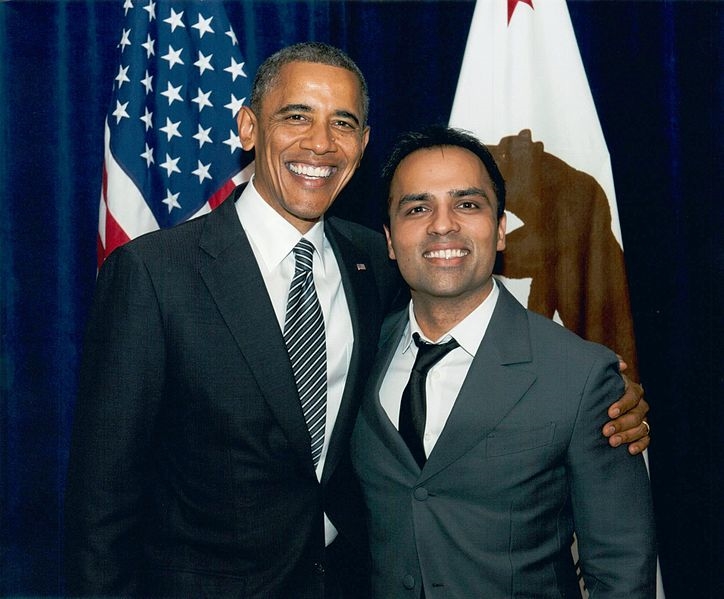 Former RadiumOne CEO and Founder Gurbaksh Chahal is disputing his termination. The board of directors may have supported Chahal as he was charged with assaulting his girlfriend and plead guilty to two misdemeanors. But after more reporting and social media activity, apparently, the board made its decision.
RadiumOne, an advertising platform, announced the termination in a short press statement on its website:
"At a board meeting yesterday evening, RadiumOne's board of directors voted to terminate the employment of Gurbaksh Chahal as CEO and Chairman of the company. Bill Lonergan, the company's COO, will take over as CEO of the Company immediately. Bill has an extraordinary professional background and has helped build BlueLithium and RadiumOne into industry leading brands. We are confident he will continue Radium One's impressive trajectory."
In a blog post, "Can You Handle the Truth?" Chahal admits to losing his temper but denies claims that he hit his girlfriend 117 times. He also protests the media attention and social media attacks. Chahal includes an email he says he received from one of his board members two days before he was terminated:
"Been thinking some more. Absolutely don't do anything. Let the haters hate ad move on. This will blow over very quickly and we focus on the IPO. Don't let them get to you. Don't respond. I know it sucks but i think this is the right way fwd. Stay strong amigo. I feel for you."
In the meantime, at least two reporters had called for the board to terminate Chahal: Kara Swisher and CNN Money writer Dan Primack.
Discussion Starters:
- Did the board make the right decision? Why or why not? What does one's personal life have to do with the business? Does his position as CEO and/or founder affect your view?
- How do you assess the email Chahal posted? If it's real, does it help his case?
- How, if at all, does the image of Chahal with President Obama affect your opinion of him?
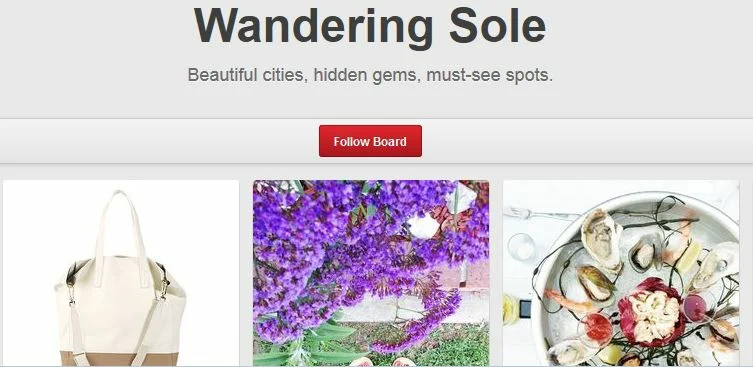
FTC Admonishes Cole Haan's Pinterest Promotion
Cole Haan devised a contest encouraging Pinterest users to create boards called "Wandering Sole." As a creative pun, people were instructed to pin five pictures of Cole Haan products and five places. It was a cute idea, but the Federal Trade Commission (FTC) expressed concern about people getting rewarded-$1,000 for winning the contest-without admitting the connection between their posts and the potential monetary award.

In a letter to Cole Haan, the FTC admonished Cole Haan:
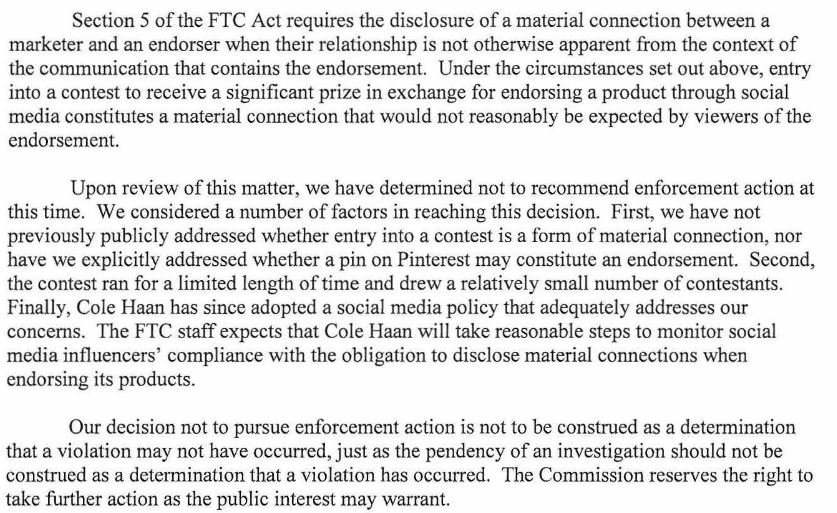
The FTC is concerned about deceptive social media practices. An easy solution, according to a MediaPost article, is for Cole Haan to have people indicate that their posts were part of a contest. An advertising lawyer suggests, "A hastag that included a word like 'sweeps,' or 'contest,' or 'giveaway,' would have satisfied the FTC's concerns."
Discussion Starters:
- What's the rationale for the FTC rule? What situations can you think of where this may be a significant issue? Or, do you think this rule is just silly?
- How, if at all, do you think adding the word "contest" would have affected this promotion?
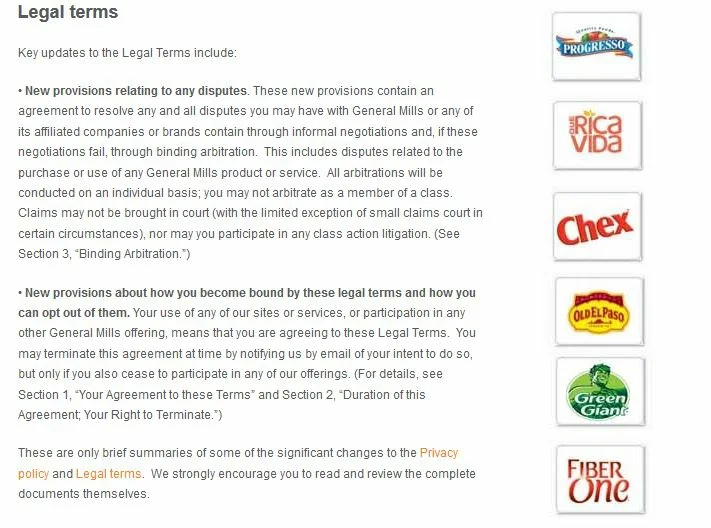
"Like" This Page and Give Up Your Right to Sue?
General Mills is the latest company to try to restrict customers' right to legal action based on their interaction with the company on social media. The company's new legal terms define these conditions broadly, including being "a subscriber to any of our emails, or a participant in any sweepstakes, contest..."

According to The New York Times, "anyone who has received anything that could be construed as a benefit and who then has a dispute with the company over its products will have to use informal negotiation via email or go through arbitration to seek relief, according to the new terms posted on its site."
Although the move may be understandable considering the increasing number of class-action lawsuits, the director of a trial attorneys' organization explains the potential consequence: '"It's essentially trying to protect the company from all accountability, even when it lies, or say, an employee deliberately adds broken glass to a product."
Could merely visiting General Mills' website prevent a lawsuit? One attorney say it's unclear, but "You can bet there will be some subpoenas for computer hard drives in the future."
This story reminds me of KlearGear, the company that charged a customer $3,500 for a bad review.
UPDATE: General Mills reverses its decision and apologizes.
Discussion Starters:
- What's your view of the ethics of General Mills' new legal restriction?
- How do you see the new restriction playing out? Consider one or two situations where this restriction might apply.
- Does this story affect how you might approach social media contact with General Mills in the future?
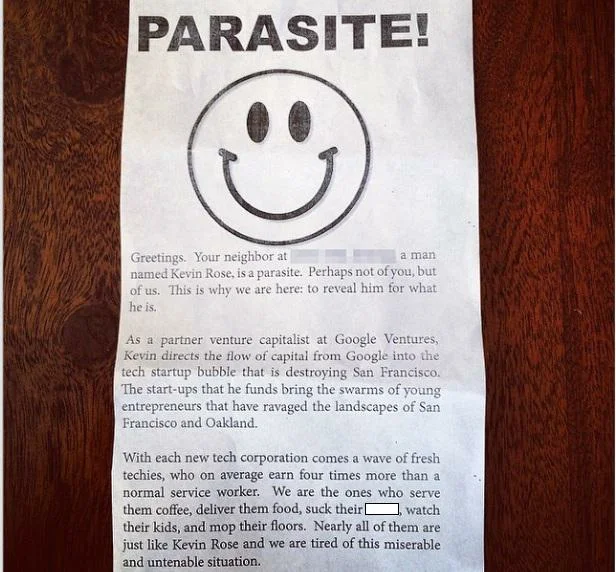
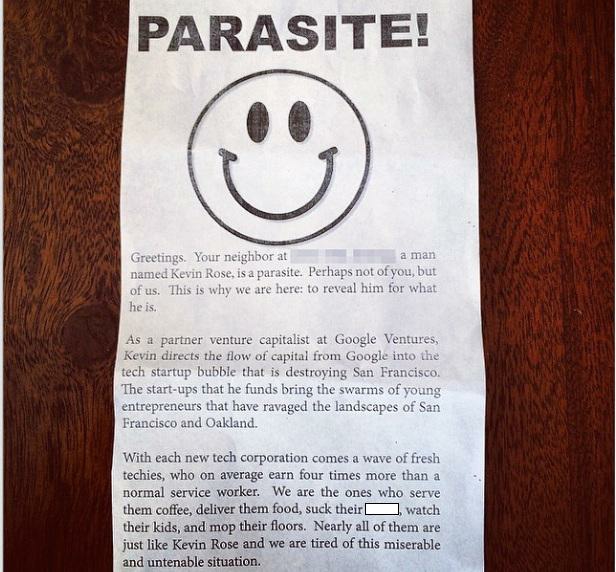
"Your Neighbor . . . Is a Parasite" Flyer
Kevin Rose's neighbors have posted flyers identifying him as a "parasite." The founder of Digg and a Google Ventures partner was outed as one who is "destroying San Francisco" by directing funds for start-up companies.
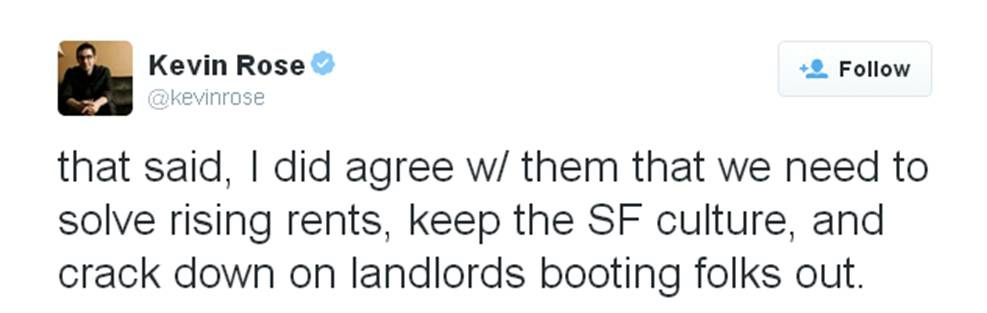
In a tweet, Rose did concede some points:
The protest is a continuation of those angry at the so-called "Google Bus," which shuttles people to work at technology companies. Activists claimed, "This is the opposite of school busing. We're busing wealthy, predominantly white adults into low-income neighborhoods, where they in turns displace low-income people. This is the reverse of affirmative action."
Discussion Starters:
- To what extent do you empathize with the protestors? What are their points?
- What's your assessment of this group's approach of posting flyers? When I first saw the headline, I thought Rose was a pedophile.
Tobacco Free New York Radio Ads
Last month, CVS announced the decision to stop selling tobacco products in its stores. In the past week, this ad has been running on Ithaca radio stations.
On the Tobacco Free New York website, we see communications for other campaigns since 2010:
Discussion Starters:
- Take a look at the video about how tobacco companies sponsor community events. Do you consider their approach ethical? Use the ethical decision-making guidelines in Chapter 1 to formulate your argument.
- The ad, above, mentions that some drugstores have stopped selling tobacco products, but it doesn't name CVS. Why?
- What's the punctuation error in "Tobacco Free New York"? Is this a good choice for the organization's name?
No More @GSElevator Book Deal
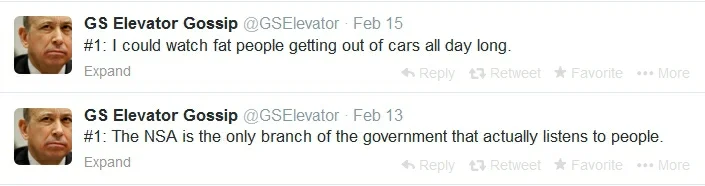
The publishing deal for @GSElevator tweets is off the table. With 652,000 followers, the author had garnered an impressive following by tweeting what could be said in the Goldman Sachs elevator. He never claimed that the tweets were actually said-or that he worked for Goldman. When the book deal was first announced, it was unclear whether either mattered to Touchstone, a division of Simon and Schuster. But now that John LeFevre's identify has been revealed, the offer has been withdrawn.
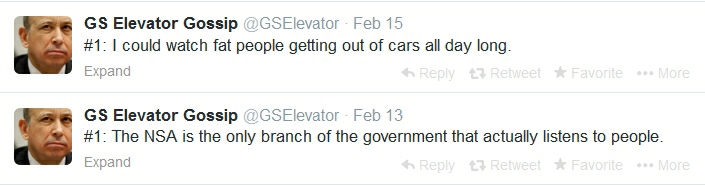
According to a Business Insider article, the decision surprised LeFevre:
"It's just a comical mystery to me. As of Friday afternoon, after all of the noise - during which Simon & Schuster prohibited me from responding and defending myself - they have continued to support me and stand by our project. Well, until today apparently."
Simon and Schuster gave this statement:
"In light of information that has recently come to our attention since acquiring John Lefevre's STRAIGHT TO HELL, Touchstone has decided to cancel its publication of this work."
LeFevre also wrote a piece in Business Insider explaining the history of @GSElevator and defending himself. Here are a few excerpts, and you can read the full version here:
"For the avoidance of any doubt, any person who actually thought my Twitter feed was literally about verbatim conversations overhead in the elevators of Goldman Sachs is an idiot.
"Newsflash: GSElevator has never been about elevators. And, it's never been specifically about Goldman Sachs; it's about illuminating Wall Street culture in a fun and entertaining way. Without highlighting the obvious evolution of the tweets into more generally-appealing observations, let's start with the simple fact that each of my tweets says 'Sent from Twitter for Mac,' hardly the work of someone pretending to be hiding in the walls of 200 West.
"Being called a 'fake' or a 'hoax' by the same people who embraced me as 'satire' is simply laughable – and it really speaks to the silly and opportunistic attempts at cheap headlines.
"I have been completely transparent in saying that my tweets are edited, curated, and crafted, in a way that I think will best resonate and still embody the soul and mentality of Wall Street. My focus has been to entertain and enlighten, without being completely devoid of substance and insight."
Email Still Preferred for Pitching Stories
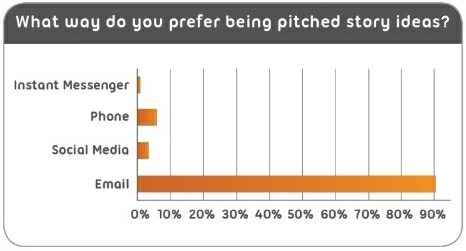
In a landslide vote, email won as the way media professionals want stories pitched. In a survey, Vocus: State of the Media 2014, 256 representatives from TV, newspapers, magazines, and online media chose email over social media, phone calls, and instant messaging.

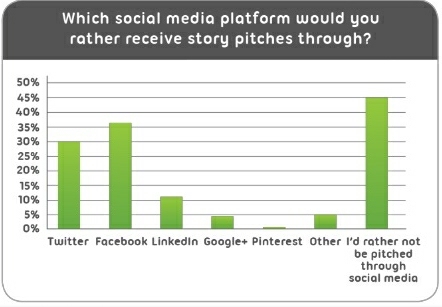
Slides summarizing the findings show that, although respondents rely on social media for their reporting, they prefer not to receive stories through social media.

Discussion Starters:
- In what ways, if at all, do the survey results surprise you?
- Why do you think media professionals prefer email?
- For those who do prefer social media for story ideas, why do you think they prefer Facebook and Twitter to LinkedIn and Google+?
Goldman Parody Turns Into a Book
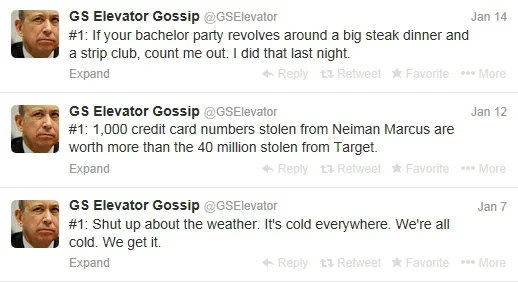
Here's the first parody Twitter feed turned into a book: @GSElevator, quips presumably heard on an elevator at Goldman Sachs.

Under the title "Straight to Hell: True Tales of Deviance and Excess in the World of Investment Banking," the anonymous author, according to the publisher, "will offer stories from his career in banking that capture the true character and nature of Wall Street culture today-a world far more abhorrent and way more entertaining than people can imagine."
In emails to the New York Times, the author ("Mr. Stone") described his interest in writing a book:
"These are stories that I have been collecting over the course of my experiences in banking-events that have been so outrageous and funny, that I thought that one day they might be worth sharing.
"Unlike other books that may be viewed similarly, this is not a whistle-blower scenario or an indictment or assault on a specific firm.
"My aim is to showcase and illuminate the true culture of Wall Street as I have experienced it, and write a book that is not only very funny and entertaining, but also, insightful and substantive."
Although the author has revealed his identify to his publisher, he has not identified himself publicly. People wonder whether he currently works at Goldman.
UPDATE: The author has been discovered. He's a bond trader in Texas who had a job offer from Goldman at some point but never worked for the company.
Discussion Starters:
- If the author does work at Goldman and this became known, how do you think his employer would react? Read more of his tweets to get a better idea of what he's writing. Should he be fired?
- Read about Greg Smith, who wrote an op-ed about his experience at Goldman. How are these situations similar-and different?
Are We More Social Today?
Studies of people in public spaces show that we may be more social today, despite hypotheses about technology pulling us apart. The Street Life Project in the 1960s and 70s photographed and filmed people in places, such as Bryant Park in New York City, to track how they sat, stood, and interacted with others. At the time, the goal was part of a city planning effort to improve public spaces.
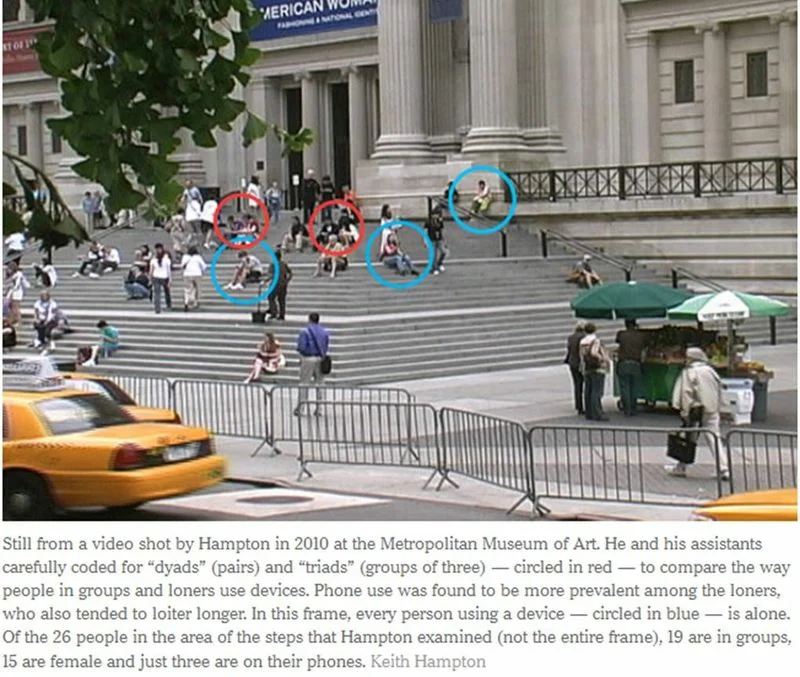
Between 2008 and 2010, a University of Pennsylvania research team continued this work by filming people outside the Metropolitan Museum of Art. They coded 38 hours of footage based on sex, group size, loitering behavior, and phone use. The team found only 3% of adults on cell phones. As lead researcher Keith Hampton says,
"In the busiest public spaces, where there are a lot of groups, like this kind of public space, it's like 3 percent. Three percent. I can't even see someone on a cellphone right now, but yet how many times have you seen a story that says,'People on cellphones in public spaces is rude, it's creating all sorts of problems, people are walking into traffic.' I mean, we really have a strong sense that it's everywhere."
Hampton's research also found that people weren't talking to avoid contact with people but rather to kill time waiting for someone; the people on phones were alone. Twenty-four percent of people were alone on the steps, compared to 32% in the 1970s studies of the same spot. These findings support Hampton's other work about whether technology has made us more alone.
A New York Times Magazine piece provides a still of the work:

Discussion Starters:
- What's your view of these findings? In what ways do they surprise you-or not?
- What are some possible limitations of the study in drawing conclusions about how technology has affected us?
- The research also found that women are out in public today more than they were 40 years ago. What could explain this shift?
- In what ways has technology made you either more social or more alone?
McDonald's: America's Most Hated Company?
 McDonald's, which didn't make last year's list, tops this year's list of the Most Hated Companies in America. 24WallStreet.com published the list, although it's unclear how the results are determined. The website theorizes that the company's popularity slipped because of the controversy over low-wage workers and the company's low revenue growth.
On the rest of the list, we see some other familiar names in the BizCom in the News repository:
1. McDonald's
2. Abercrombie & Fitch
3. Electronic Arts
4. Sears Holdings
5. Dish Network
6. Walmart
7. JPMorgan Chase
8. Lululemon
9. BlackBerry
10. JC Penney
We see few surprises here.
Discussion Starters:
- How do you assess the credibility of this list? What other sources may provide more reliable information?
- What should McDonald's do to improve its image at this point? How about Lululemon, which has suffered because of declining product quality and a few mistakes by the CEO?
Emails Plague NJ Governor Christie
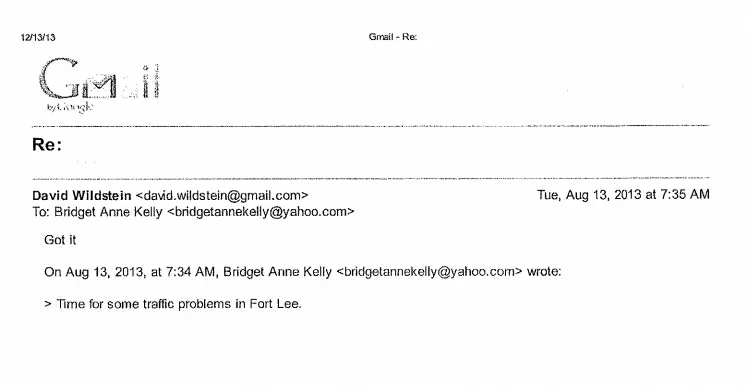
Emails obtained by The New York Times provide convincing evidence that the New Jersey Governor's office caused traffic problems as political retribution. One of Chris Christie's aides sent emails to David Wildstein, a high school friend of Christie who worked for the Port Authority that controls the George Washington Bridge.

The New York Times describes the political context and related messages:
"The mayor of Fort Lee, Mark Sokolich, is a Democrat and did not endorse Mr. Christie. In the emails and texts, Mr. Christie's staff and appointees appeared gleeful when the abrupt lane closings gridlocked the town for four days, beginning with the first day of school and including the anniversary of Sept. 11. Mr. Sokolich, who had not been informed of the closings, texted Bill Baroni, the governor's top appointee at the Port Authority, asking for 'help' because the lane closings were making children on buses late to school.
"'Is it wrong that I am smiling?' Mr. Wildstein texted Ms. Kelly.
"'No,' she texted back.
"I feel badly about the kids,' he texted.
"'They are the children of Buono voters,' she said, referring to Mr. Christie's Democratic opponent, Barbara Buono, who was trailing consistently in the polls and lost by a wide margin."
References to "the kids" relate to children who were late to school because buses were delayed on the bridge.
The emails and texts are making it difficult for the governor to continue denying his office's role in lane closings. Wildstein and another Port Authority official resigned in December.
UPDATE: In a news conference, Christie apologized and said he was "embarrassed" and "humiliated" about the situation. As in his speech at the Republican National Convention, he used a heavy dose of anaphora.
Discussion Starters:
- So far, Christie is not commenting on the emails and texts. How should he respond to the controversy?
- Christie's staff used personal Gmail accounts and text messages to communicate. Why weren't these safe from exposure?
New Twitter Terms
New York Magazine has published new terms that emerged on Twitter in 2013. I did my best to summarize them here:
- Canoe: a Twitter conversation involving more than three people
- Close that tab: advice to close a browser tab quickly because of something terrible
- Darth: a wizard with a lot of fans
- Day-of-the-week jokes: blaming a day on something bad or tweeting "TGIF" on another day
- #deblasionew york: blaming everything on NY's new mayor, even before he took office
- Doge: a meme that I don't understand at all (!)
- First-name-only replies: calling someone out on Twitter
- Florida man: attributing strange happenings to someone in Florida ("the weirdest state")
- Hatefave: favoriting a tweet to "ruffle the recipient's feathers"
- Hateread: encouraging people to read something distasteful
- @Horse_ebooks: a poetic thread made up of short contributions
- Scoop, if true: encouraging retweets/reporting without regard to truth
- Smarm: performance without substance
- Subtweet: directed at one tweeter (back-talking)
- Teach the homeless code: based on an experiment considered in poor taste
- Whoa: emphasizing another's tweet
- "You won't believe what happened next": a way to encourage clicks
And my two favorites of the bunch with examples:
-
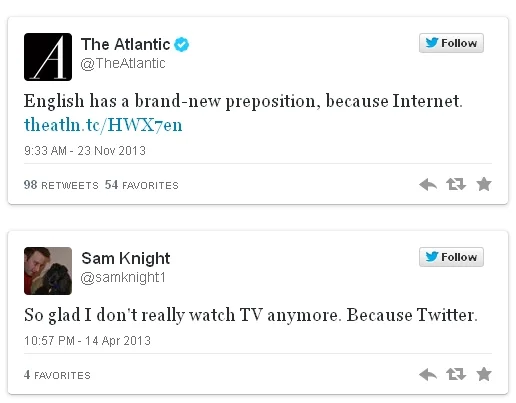
Because [noun/preposition]: "A new type of prepositional phrase, because character limits." Why waste words (I guess)?

- #Followateen: parents writing about their kids (until they discovered the hashtag and retaliated). Ouch. I wrote about "literally" recently.

Discussion Starters:
- Do you find these interesting or, as one comment on the story says, "Twitter is dumb."
- Another comment on the story reads, "This must be what's popping on #WhiteTwitter. Because #BlackTwitter tells a different story." What does this mean, and do you agree with the comment?
Facebook Further Declines Among UK Teens
 A new study shows that British teenagers find Facebook embarrassing. The Social Media Global Impact Study tells a dramatic story of teenagers moving away from Facebook.
A member of the research team and professor of anthropology in University College London, Daniel Miller describes the shift:
"Parents have worked out how to use the site and see it as a way for the family to remain connected. In response, the young are moving on to cooler things.
"What we've learned from working with 16-18 year olds in the UK is that Facebook is not just on the slide, it is basically dead and buried."
Miller also describes the impact on family dynamics:
"Where once parents worried about their children joining Facebook, the children now say it is their family that insists they stay there to post about their lives."
According to the study, UK teens are using Snapchat, Whatsapp, and Twitter rather than their parents' social network.
Discussion Starters:
- Do the study findings surprise you? Why or why not?
- What, if anything, can Facebook do to lure back teens? Respondents in this study admit that Facebook has better functionality than other sites, so that may not help.