
Australian Government’s Comms Banning Social Networks for Kids
Students can analyze the Australian government’s communications to ban social network accounts for kids under 16 years of age. In many ways, this is a classic change communication case study with strategic communication planning and individual messages.
The initiative is bold, and the tone is unapologetic. Clearly, the government has support from officials, parents, and educators to enact this dramatic change. Messaging to young people is trickier, obviously, because they are affected and less inclined to agree. But young people are not the primary audience, as they don’t get a vote in the process.
An enormous number and variety of messages chronicled on the eSafety Commissioner’s webpage comprise the communication campaign called, “For the good of their wellbeing.”
To study the communication strategy and plan, students might work backwards to identify elements of communication planning:
Audiences (segmented for tailored messages)
Communication objectives for each audience
Medium/Channel choice for each
Key points for each
Messenger for each
Timing for each
This communication planning template can be used for this activity or others. (See sample completed template.)
The campaign includes messages to segmented audiences:
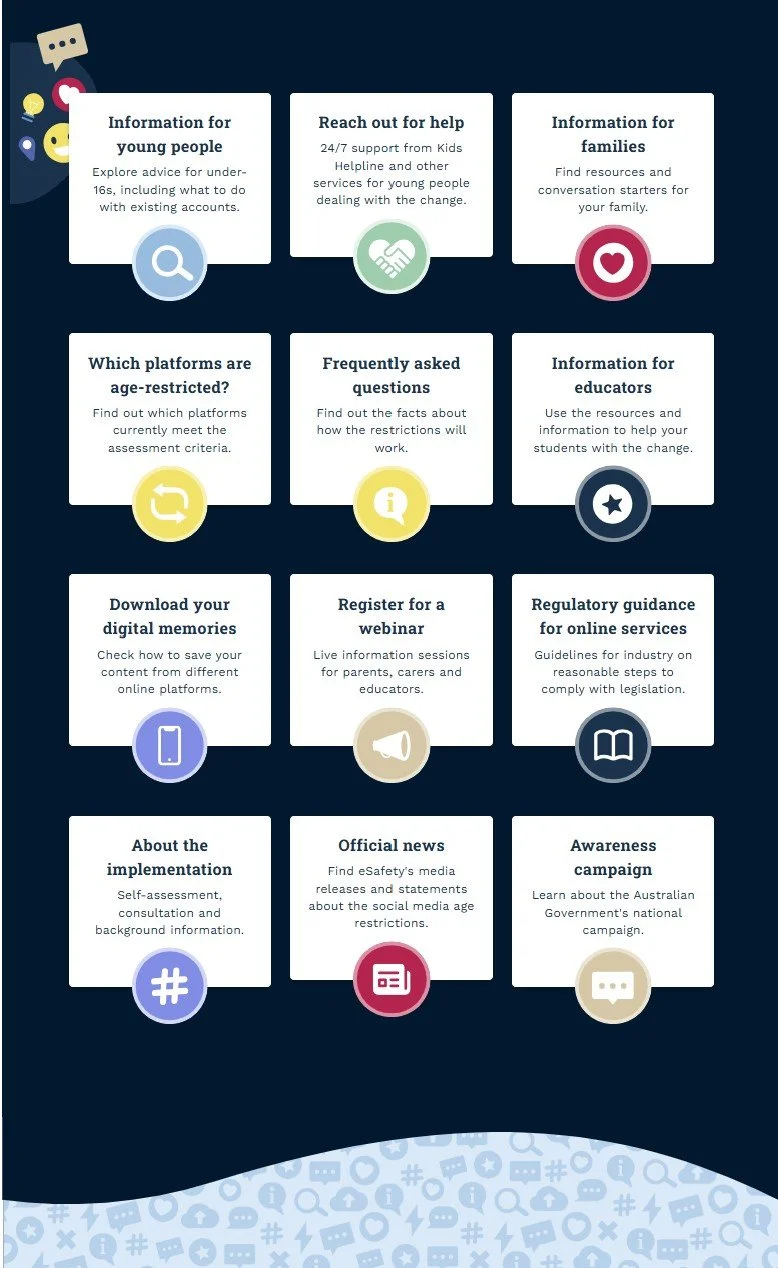
A “hub” of resources shown here
Videos for “parents and carers”
Radio/digital audio campaign materials for parents and carers, under 16s, and First Nations (worth discussing why this group is segmented)
Print materials
Community resources (e.g., emails, posters)
Digital toolkit
Research findings report
Additional resources for First Nations (e.g., parenting guide, workbook)
Some resources are translated into ten languages.
As the ban goes into effect, students may revisit the messaging to determine how other countries could communicate their own bans and adapt messaging for cultural differences.