
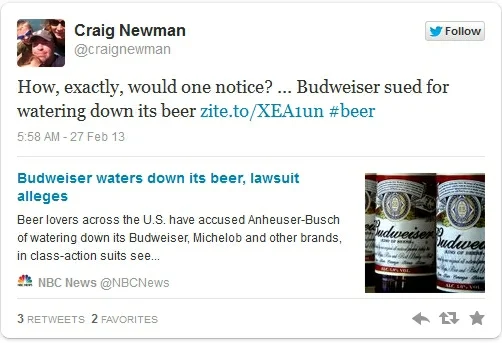
Anheuser-Busch Defends Its Beer
Anheuser-Busch is responding to lawsuits claiming that several brands are watered down and mislabeled. The company is accused of misrepresenting the alcohol content on Michelob, Michelob Ultra, Bud Ice, Bud Light Platinum,Hurricane High Gravity Lager, King Cobra, Busch Ice, Natural Ice and Bud Light Lime.
According to an article in the LA Times, former employees are siding with the plaintiffs, supporting the claim that the lead attorney on the case, Josh Boxer, calls "a matter of corporate practice" and "a simple cost-saving measure." Boxer says that water is added right before the bottling process, diluting alcohol content by 3 to 8 %.
In a statement, Peter Kraemer, Anheuser-Busch vice president of brewing and supply, denied the claims:
"Our beers are in full compliance with all alcohol labeling laws. We proudly adhere to the highest standards in brewing our beers, which have made them the best-selling in the U.S. and the world."
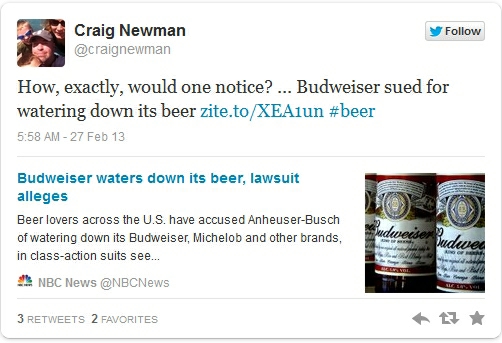
The news inspired fun on Twitter, such as this tweet by the managing editor for the Chicago Sun-Times:
Discussion Starters:
- Assess Anheuser-Busch's statement. In what ways is it effective and ineffective?
- How does this story relate to the recent news of Subway's 11-inch foot-long sandwich? In what ways are they different? Compare the companies' approaches, given the similarities and differences.
Ikea Responds to Horse Meat Scandal
Swedish furniture store Ikea is the latest to be implicated in the horse meat scandal that has shaken European consumers. Beginning in Ireland last month, horse meat was discovered in several beef products. Ready-to-eat meals in several countries have been recalled, such as frozen beef lasagna in Sweden, which consisted of between 60 and 100% horse meat.

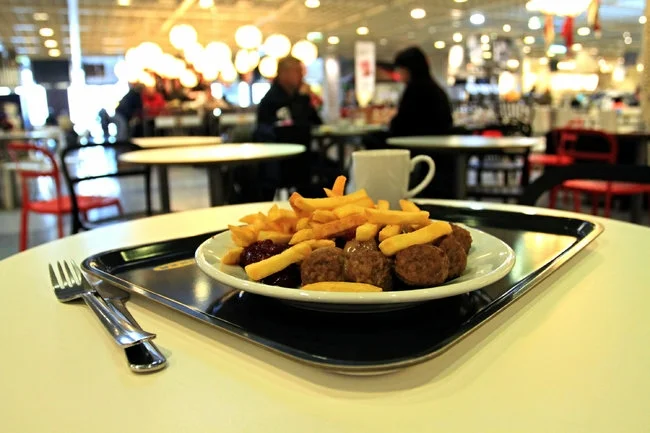
Horse meat was found in Ikea's popular meatballs, and stores have stopped selling them in the Czech Republic and 13 other European countries. Other locations, which have different meat suppliers, are continuing to sell the meatballs in the in-store cafeteria and as frozen food, packaged for purchase.
The world's largest furniture retailer posted a statement on its website to reassure U.S. customers:
IKEA US Meatball Content is Only Pork and Meat Products
IKEA is committed to serving and selling high quality food that is safe, healthy and produced with care for the environment and the people who produce it. We do not tolerate any other ingredients than the ones stipulated in our recipes or specifications, secured through set standards, certifications and product analysis by accredited laboratories.
In the "pink slime" scandal last year, which accused U.S. beef manufacturers of using an ammonia-infused additive, Beef Products Inc. was, similarly, on the defensive.
Discussion Starters:
- Ikea claims that its own tests revealed no horse DNA. Did the company do the right thing by pulling the meatballs?
- Assess Ikea's statement to U.S. customers. What is effective about this response, and what, if anything, could be improved?
- What does "[sic]" mean in the statement above? What is the issue?
U.S. Postal Service Rallies Support for Cutting Saturday Service
 The United States Postal Service is going all out to convince the public that eliminating Saturday delivery is a good move.
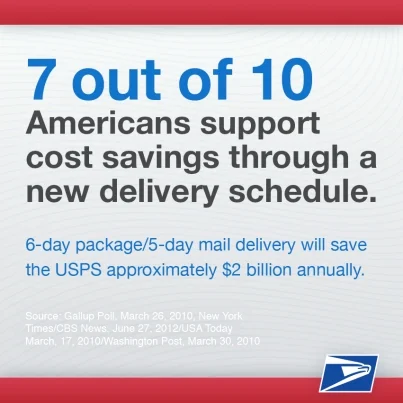
As the nation's second-largest employer, the USPS has been cutting locations and jobs for several years. After losing $16 billion last year, the organization has announced the service reduction as an essential decision, saving $2 billion a year.
In the press release, Postmaster General and CEO Patrick R. Donahoe emphasizes "financial realities" and customer input to the decision:
"The Postal Service is advancing an important new approach to delivery that reflects the strong growth of our package business and responds to the financial realities resulting from America's changing mailing habits. We developed this approach by working with our customers to understand their delivery needs and by identifying creative ways to generate significant cost savings."
On the USPS Facebook page, a key message is customer support: that 70% of Americans support the decision. This is reinforced in the press statement with a quotation by Donahoe:
"The American public understands the financial challenges of the Postal Service and supports these steps as a responsible and reasonable approach to improving our financial situation. The Postal Service has a responsibility to take the steps necessary to return to long-term financial stability and ensure the continued affordability of the U.S. Mail."
However, the USPS is facing opposition. Congress still may block the move; some consider the service cut illegal. The employee union-the National Association of Letter Carriers-and the greeting card industry both oppose the elimination of Saturday delivery. The union president referred to the decision as "a disastrous idea that would have a profoundly negative effect on the Postal Service and on millions of customers."
Staying ahead of the controversy, the USPS also posted a fact sheet about the new schedule. The sheet clarifies important information for customers, for example, that packages still will be delivered on Saturday
Discussion Starters:
- Read the USPS fact sheet. Which are the strongest and weakest arguments?
- What do you notice about the headings in the fact sheet? How can they be improved?
- In the press release, the CEO could use more natural language. Rewrite the quotations for a broader audience.
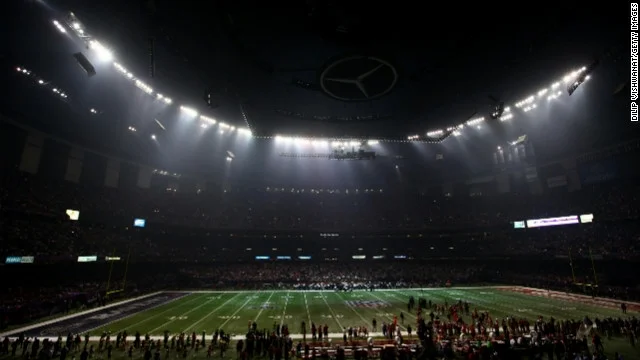
Responses to the Super Bowl Outage
Twitter users were active during the Super Bowl outage, and parties involved are responding to the blackout that delayed the game by 34 minutes.
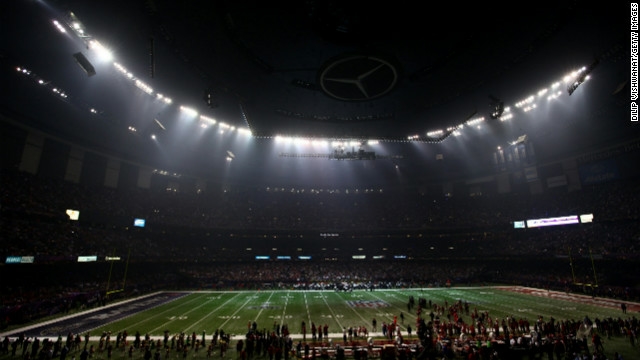
A joint statement by Entergy and Superdome manager SMG blames energy lines for the outage:
"A piece of equipment that is designed to monitor electrical load sensed an abnormality in the system. Once the issue was detected, the sensing equipment operated as designed and opened a breaker, causing power to be partially cut to the Superdome in order to isolate the issue. Backup generators kicked in immediately as designed.
"Entergy and SMG subsequently coordinated start-up procedures, ensuring that full power was safely restored to the Superdome. The fault-sensing equipment activated where the Superdome equipment intersects with Entergy's feed into the facility. There were no additional issues detected. Entergy and SMG will continue to investigate the root cause of the abnormality."
New Orleans Mayor Mitch Landrieu said the power outage was "an unfortunate moment in what has been an otherwise shining Super Bowl week for the city of New Orleans. . . . In the coming days, I expect a full after-action report from all parties involved." He may have reason to worry: critics say that the outage may affect whether New Orleans hosts future games.
During the outage, fans were active on Twitter, reporting what they saw and making jokes. And marketers took advantage of the downtime, quickly generating relevant ads:
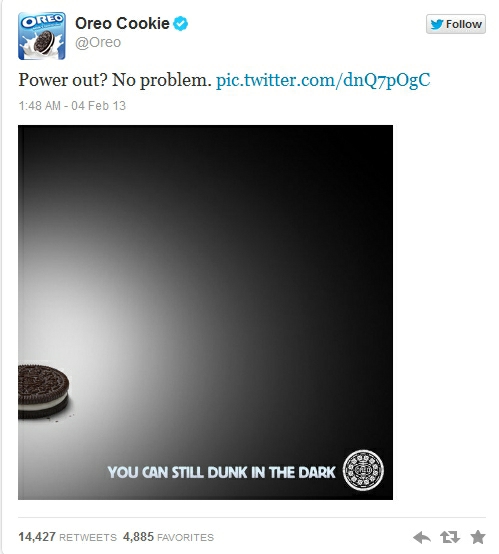
Other advertising tweets were timely:
- Walgreens: "We do carry candles" and "We also sell lights."
- Tide: "We can't get your # blackout, but we can get your stains out."
- Audi: "Sending some LEDs to the @ mbusa Superdome right now…" (This one is a dig on Mercedes-Benz' sponsorship of the stadium.)
Discussion Starters:
- If you watched the game, what did you do during the outage? Did you visit social media sites to post or see commentary? What did you expect, and what did you find?
- Read some of the tweets sent during the Super Bowl. What strikes you about these examples? How would you summarize the two or three ways that people used Twitter during the game?
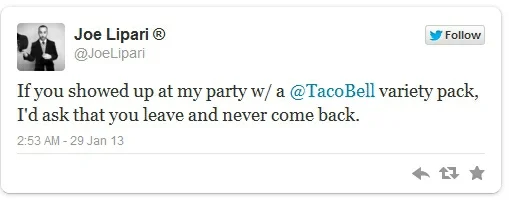
Taco Bell Pulls Anti-Veggies Ad
"Veggies on game day is like punting on fourth and one-it's a cop out." So says a Taco Bell commercial that the company has since pulled. According to the ad, people will hate you for bringing vegetables to their house for the Super Bowl.
Nutrition organizations took offense. The Center for Science in the Public Interest urged people to tweet complaints to Taco Bell.

The company responded quickly. The CSPI posted this statement on its website:
"It's bad enough that there aren't many ads on television for broccoli, kale, or carrots. The last thing healthy fruits and vegetables needed was to be the subject of attack ads. We are delighted that Taco Bell is pulling an ad that urged people not to bring veggie trays to their Super Bowl parties, but to instead bring 12-packs of Taco Bell's tacos. Thanks to Taco Bell for responding with record speed to address nutritionists' and consumers' concern over this ad campaign."
A spokesperson for Taco Bell explained the decision simply: "We didn't want anyone to misinterpret the intent of the ad."
Discussion Starters:
- Are people justified in their criticism of the ad, or are they just too sensitive? What's your view?
- Did Taco Bell make the right decision to pull the ad? What are the arguments for and against the decision?
H&R Block Responds to TurboTax Ads
TurboTax pokes fun at H&R Block in two recent ads, and H&R Block is fighting back.
The first ad shows a salesperson in a retail store helping a customer. When the customer realizes the woman did her taxes for her, she says, "I thought you were an expert with returns."
With a similar message, the second ad shows an H&R Block employee as a plumber.
TurboTax is differentiating its product by promising that users get advice only from CPAs, EAs, and tax attorneys-"real tax attorneys." In the commercial, TurboTax also claims that more Americans used the system than all H&R Block and other tax stores combined.
Bill Cobb, CEO, H&R Block called the ads "outrageous" and sent this email to reassure employees:
When we say we believe in our people, we mean it.
TurboTax has launched two new outrageous commercials that attempt to sell their tax advice resources as more prepared, more professional, and simply superior to ours. As you can see in the links to these ads below, TurboTax uses misleading data and statements to not only suggest that their advisors are better, but to also make fun of plumbers and retail sales clerks as not very smart.
We work in a competitive business that challenges us every day to live by and defend our values. So when a competitor takes a pot shot at our people – the tax professionals who deliver for our clients every day and in every season – we step up and say: no way – not on our watch.
We have a strong brand built on integrity and professionalism and anchored by our tax professionals. We are going to defend our tax professionals and our brand against this attack – and we will do it quickly, directly and aggressively.
New H&R Block TV commercials to fight this challenge are in development and will augment our current marketing campaign that is all about the tax pro. Legal considerations are being assessed and appropriate action will be taken quickly. And we will develop a way for each of you to have your voice heard in support of yourself and all our tax professionals – stay tuned for more specifics this week.
The season begins next January 30, and we are focused on executing our plan. Don't let these commercials be a distraction – we've got this covered. Instead, stay focused on your day-to-day efforts to deliver for our clients – this is our best response. And let every client or potential client who is a plumber, retail clerk, salesperson or other hardworking American know we are honored to serve them.
We believe in our people. I believe in our people – and I want the world to know I've got your back.
Discussion Starters:
- What strategies of persuasion does TurboTax use in its commercials?
- What strategies does Cobb use in his email to employees?
- Which do you find more convincing and why?

Let the (Commercial) Games Begin!
 A week before the Super Bowl, marketers are already capitalizing on a strong audience. Last year, ads that ran on YouTube received 600% more
views than those that waited until the big day (9 million compared to
1.3 million).
A week before the Super Bowl, marketers are already capitalizing on a strong audience. Last year, ads that ran on YouTube received 600% more
views than those that waited until the big day (9 million compared to
1.3 million).
Although some companies hold out for the "big reveal," Nielsen data shows that the early release didn't hurt last year's brands. Opting for short "teasers" on YouTube still is a popular strategy, but this may change. The YouTube audience for Super Bowl ads is 300 million, far more than the 111 million who watch the game on TV.
On the other hand, so far, the most talked about video is a teaser. A new Mercedes Benz video featuring model Kate Upton aims to reach a younger audience for the car manufacturer-people in their 30s and 40s rather than the current 50-year-olds who currently buy the cars. The company's compact sedan sells for under $30,000, which is part of their new strategy as well. In classic Super Bowl ad fashion, the commercial plays on Upton's sex appeal.
Discussion Starters:
- Why would some companies hold out for a "big reveal," rather than post videos online before the game? What are the trade-offs of each strategy?
- What is your view of the Mercedes commercial? How effective will it be in selling more cars?
- Compare the Mercedes commercial to Go Daddy ads from previous Super Bowls. Other than the obvious sex appeal, what similarities do you see?
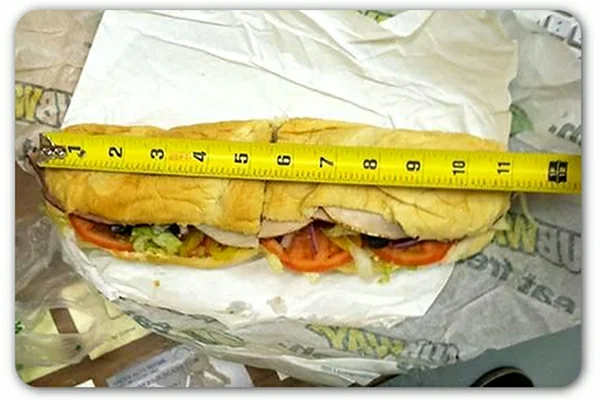
Subway Loses an Inch and Credibility
How many inches are in a foot? Eleven, according to a Subway customer in Australia and others who have posted similar photos of the "footlong" sandwich. The initial photo received more than 100,000 likes on Facebook, yet Subway was slow in responding.

It's unclear why Subway corporate didn't address comments on its Facebook page, but Subway Australia did post this response:

The company seemed to try a different approach in this statement to The Huffington Post:
"As you know, all of our sandwiches are made to order, and our bread is baked daily in every one of our more than 38,000 restaurants in 100 countries worldwide. We have policies and procedures in place to ensure that our products are consistent and have the same great taste no matter which Subway restaurant you visit.
"We have seen the photo you referenced of a Subway sandwich that looks like it doesn't meet our standards. We always strive for our customers to have the most positive experience possible, and we believe this was an isolated case in which the bread preparation procedures were unfortunately not followed."
Nice try, but this doesn't seem to address the many photos of 11-inch Subway sandwiches.
In a response to ABC News, Subway corporate reinforced the concept of the "footlong" not being a real measurement: "Most countries, such as Australia, follow the metric system so the term Footlong can only be used as part of a trademark." However, the spokesman did acknowledge, "Our global standard for a SUBWAY Footlong sandwich is 12 inches regardless of the restaurant's location."
The metric-system defense seems to contradict this 2008 commercial, clearly stating that a "footlong" is 12 inches.
The company probably want the whole issue to just go away. On its Twitter feed, Subway is promoting its role in The Biggest Loser and, still, the "footlong":

Discussion Starters:
- Some theorize that Subway's toasted bread shrinks, causing the final product to be only 11 inches. Do you buy this argument? If you think it has credibility, should Subway have incorporate this information into its statement? How could this have helped or hurt the company's position?
- What should Subway do on its Facebook page and Twitter feed to regain credibility?
- What if the company is skimping on its sandwiches? What would be an appropriate response in this case? What are the downsides of admitting this?
Coca-Cola's New Message: Helping to Fight Obesity
Since the summer, when Mayor Bloomberg limited surgery drinks sold in restaurants, at movies, and by street vendors in NYC to 16 ounces, Coca-Cola has been on the defense. Now, the company is positioning Coca-Cola products as part of an obesity solution.
In a press release titled, "The Coca-Cola Company Reinforces Its Commitment to Help America in the Fight Against Obesity," the company describes a new television commercial that aired on national cable news:
"A two-minute video, titled "Coming Together," debuts tonight on national cable news. The video encourages everyone to be mindful that all calories count in managing your weight, including those in Coca-Cola products and in all foods and beverages. Its purpose is to highlight some of the specifics behind the Company's ongoing commitment to deliver more beverage choices, including low- and no-calorie options, and to clearly communicate the calorie content of all its products."
In addition to the company's commitment to healthier products, the press release highlights programs and policies to encourage fitness and education about calories.
Another commercial, "Be OK," will air on American Idol. According to the press release, this ad "makes it perfectly clear right up front that a can of Coca-Cola has 140 calories. This spot also encourages people to have some fun burning those calories off."
When ABC News asked the company to comment, Coca-Cola referred the reporter to Russell Pate, a professor with Arnold School of Public Health at the University of South Carolina, who blamed the obesity problem on lack of exercise:
"I think we have millions of Americans trying to eat down to their level of inactivity, and it's not working well. I believe strongly we will have to increase the physical activity level of our population if we want to overcome the obesity epidemic that we are currently challenged by."
Related:
Coca-Cola's New Ad Campaign Desperately Downplays Its Role In The Obesity Epidemic
Discussion Starters:
- What's your view of Coca-Cola's new positioning? Do you buy the argument that the company is part of an obesity solution? Why or why not?
- Compare the two commercials. (Find "Be OK" on YouTube.) How do they differ? Why would one air on cable news and the other on network television? What messages is each conveying to what audiences?
- Review Professor Pate's CV. In what ways is he or isn't he a credible source for the ABC News story?
Samsung Tries Animal-Loving Ad
After an ad that drew the wrath of PETA, Samsung is trying a new approach.
In November, Samsung pulled an advertisement that compared old laptops to unwanted puppies-both presumably deserving to be shot. The commercial, "Don't Give up on Puppy Love," showed people attacking their computers, which had cartoon-faced puppies drawn over them. One of the commercial's creators at Viral Factory ad firm said, "We've made the decision to make the video private because it was clearly upsetting some people."
Samsung's new commercial features the EcoBubble Washing Machine. With its super green power (or something), the machine returns a brown bear into its polar bear roots.
I don't think it's very cute, but I guess it's better than shooting a puppy.
Discussion Starters:
- How do you think a company decides whether to pull an ad? What factors would contribute to such a difficult decision?
- Identify examples of logic, emotional appeal, and credibility in the new Samsung ad. Does the company achieve the right balance and persuade you to buy the washing machine?
Another Airline "Breaks Guitars"
How is it possible for another airline to mishandle a customer's guitar AND the situation? Remember "United Breaks Guitars," the hit YouTube video and song that garnered over 12 million views?
This time, Delta disappointed Dave Schneider, guitarist and singer with the band The LeeVees. Trapping his (according to Schneider) $10,000 guitar between an elevator and a service-dock railing, the airline caused $1,980 in damage. Schneider wanted to carry on his guitar but was told that he had to check it. He described the ordeal in a YouTube video and on his Facebook page.
Although Schneider was offered $1,000, he declined, not knowing how much the repairs would cost. He completed online forms but didn't hear back from the airline until his story became public on Yahoo and other news sources. Then, the airline quickly responded, offering to replace his Gibson guitar.
Not to be outdone-or to miss a publicity opportunity-Gibson offered to replace the guitar with an anniversary issue guitar free of charge. Schneider was impressed: "We all know Gibson guitars rock. But at this moment, the Gibson company is rocking even harder than Pete Townshend's Les Paul."
Schneider mostly was disappointed with Delta's response: "I received quite a few apologies from different folks at Delta, which seemed a bit forced. But I will say that the last email, which I pasted below, was refreshingly genuine."
Mr. Schneider,
I want to further add apologies on behalf of myself and the entire Delta Executive Leadership team for the inconvenience and stress this situation caused. We are reviewing the series of events in full to ensure appropriate steps are taken to prevent future occurrences. Again, my sincerest apologies--please feel free to contact me directly if you would like to discuss further.
Jon Litzenberger
Delta Air Lines
Discussion Starters:
- What should Delta have done differently in this situation? What should the airline have learned from the United experience?
- Research Taylor Guitars' response in the United situation. How does Gibson's response compare? Which is more likely to win customers' favor?
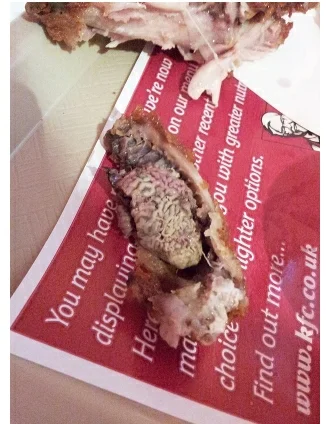
KFC: That's No Brain in Your Chicken; It's a Kidney
A 19-year-old musical theater student found what looked like a brain in his Kentucky Fried Chicken Gladiator meal. KFC assured him it was no brain-more likely a kidney.
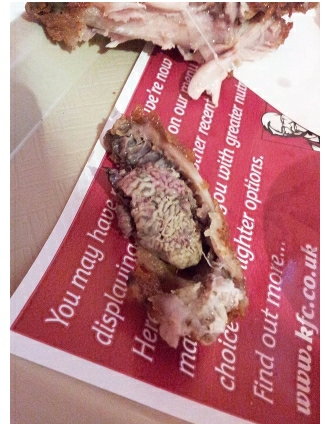 Ibrahim Langoo took a picture of what he thought was a "wrinkled brain" and reported the incident to KFC:
"I have a habit of picking the chicken off the bone with my fingers, and as I pulled the second piece apart, I saw this horrible wrinkled foreign body.
"I threw it down onto my tray immediately. It looked like a brain. I suddenly felt grim and really sick.
"I couldn't bring myself to pick the lump up, so I went to the serving counter to complain.
"It was about 1pm and pretty hectic in the restaurant and as it was so busy none of the staff helped me."
KFC apologized:
"We always try to ensure the highest standards in all of our restaurants.
"Although we haven't received the product, it appears from a photograph that unfortunately on this occasion a kidney, and not a brain as claimed, was not removed in the preparation process.
"We're very sorry about Mr Langoo's experience and while there was no health risk, we agree it was unsightly."
The company also offered Langoo vouchers for free food in the future. But he says he's done eating at KFC.
Discussion Starters:
- How do you assess KFC's response? Do you admire the company's honesty, fault its reference to a kidney, or some combination?
- What else, if anything, could the company have done to handle the situation?
Herbalife's Unskilled Response to Criticism
After strong criticism of Herbalife, a multi-level marketing company, the CEO's response is wanting.
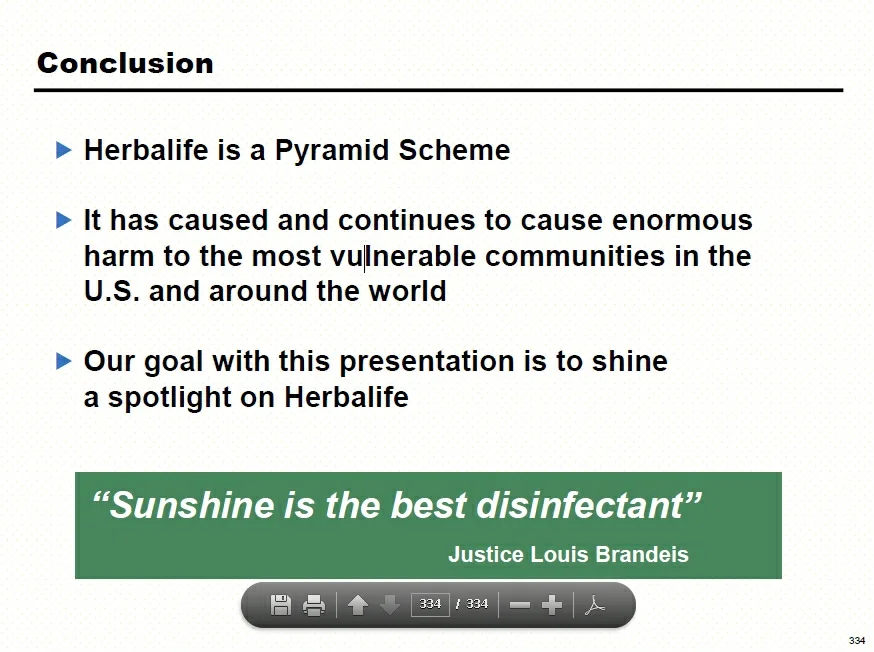
Bill Ackman, CEO of Pershing Square Capital Management, called the weight management and nutritional supplement company a "pyramid scheme." In a 334-slide presentation, Ackman explained why his hedge fund is shorting the stock, with a price of 0 and anticipation of the company's demise. Ackman said he felt so , "I don't want to make any money from this, 100% will go to the Pershing Square Foundation."

Calling a company a "pyramid scheme" is a harsh blow. Such companies prey on people who buy into a business with little hope that they'll make any money. More typically, investors who buy in late lose everything.
The LA Times published CEO Michael Johnson's description of the company's reaction to Ackman's presentation:
"About 15 company officials, including Johnson, sat at a conference table in company headquarters and watched Ackman's presentation, growing angrier as he made his case.
"'There were a lot of cat-calls. He's not up to speed on the Herbalife of today,'" Johnson said. "'It was so filled with inaccuracies I haven't got the time. Our distributors get compensated for selling the product, not for recruiting.'"
Although Johnson said that the company would investigate the claims and respond in January, no other explanations or counterclaims were offered.
Discussion Starters:
- Review Ackman's slide presentation. What principles for visuals for an oral presentation does it follow? What are Ackman's strongest and weakest arguments?
- How should Herbalife executives respond now?
NRA Press Conference Called a "Train Wreck"
Words like "shameful," "disaster," and "mean-spirited, cold, and misguided" have described the National Rifle Association's press conference in response to the Newtown, CT, school shooting that left 26 dead, including 20 children.
In a tone best left for a boardroom plea to fund a new product, NRA Executive Vice President Wayne LaPierre, as expected, defended guns. His focus, presented early in the conference, was how to "protect our children." The organization's ideas are to have "an active, national database of the mentally ill," armed guards in schools ("a police officer in every school"), and armed teachers and principals.
LaPierre blamed video games, the media's misrepresentation of guns, decreasing prosecutions of violent crime, and the "criminal class: killers, robbers, rapists, and gang members, who have spread like cancer." Using questionable logic, LaPierre warned that another hurricane or terrorist attack could bring about a "recipe for a national disaster." At one point, LaPierre seemed to blame the Sandy Hook teachers, who tried to intervene but couldn't without guns. He said, "The only thing that stops a bad guy with a gun is a good guy with a gun."
The speech was interrupted by protestors carrying signs and yelling, "The NRA has blood on its hands."
LaPierre said, "While some have tried to exploit tragedy for political gain, we have remained respectfully silent." The NRA had issued a statement to this effect. However, critics say the organization's silence on social media this week was a mistake and point out the contraction of President David Keene's closing line: "This is the beginning of a serious conversation, but we won't be taking questions today." In fairness, he also said that the group will answer questions next week.
Discussion Starters:
- Who was LaPierre's intended audience? To what extent would the press conference have appealed to that group?
- What do you think were the NRA's communication objectives for the conference?
- To avoid criticism, what could have been a better approach for the organization?
Cheerios' Facebook Campaign Fuels Controversy over GMOs
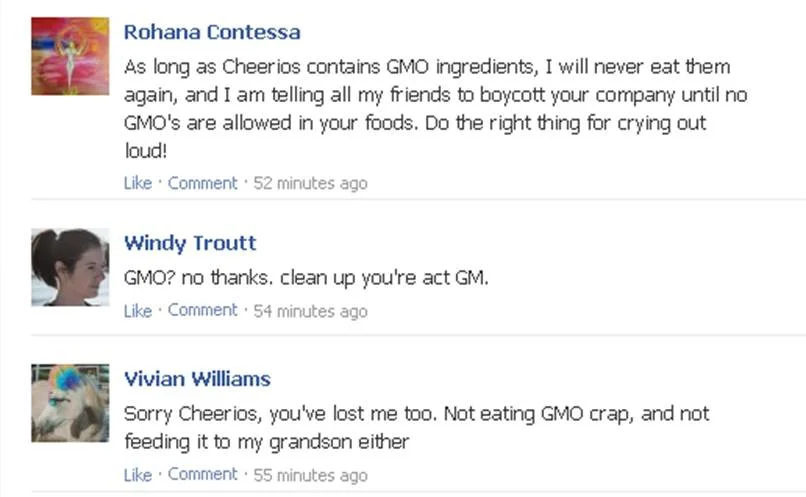
Another social media campaign gone awry: Cheerios' attempt for people to comment on what the cereal means to them turned into a free-for-all about the product. Thousands of posts criticized the use of GMOs (genetically modified organisms) in the cereal. The comments likely are the result of recently defeated Proposition 37, which would have required labeling of GMO products.
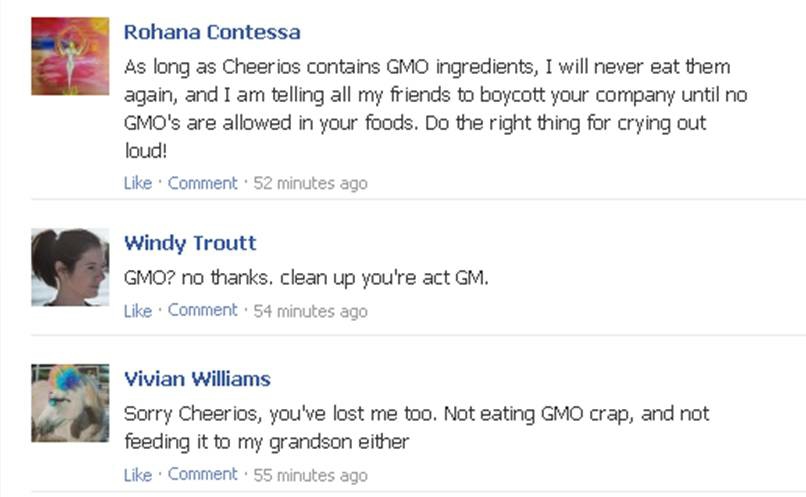
General Mills had been posting the comments, some via an app that displayed them in the Cheerios font. Since then the company has discontinued the app and stopped posting comments for some time. The company also removed anti-GMO photos from the Facebook page.
Todd Larsen, Green America Corporate Responsibility Programs Director, encourages consumers to understand the product and calls on the company to respond:
"At GMO Inside's Facebook page, people can see which ingredients in Cheerios and other products are likely to be genetically modified. Cheerios needs to label or remove the GMO ingredients. Consumers have a right to know."
The company's response has been minimal. Where the app was on the Facebook page is now this note:
"We consider your comments, and we listen to your point of view. Our community is passionate about food and about Cheerios. There are many varied opinions and they are often very strong. We've created this space to enable robust conversations, and we invite you to share your thoughts on things we're doing well and on areas we can improve. We ask only that you remain respectful and considerate of others as you're posting, in keeping with our community guidelines."
Critics say that General Mills should have known better: the opposition was clear, so the social media campaign was too risky, and the result is not surprising.
Discussion Starters:
- What's your view of GMO products? Do they concern you or not? What research are you relying on to shape your opinion?
- How else should General Mills respond to the controversy on its Facebook page or elsewhere?
FreshDirect Updates Customers on Storm Recovery
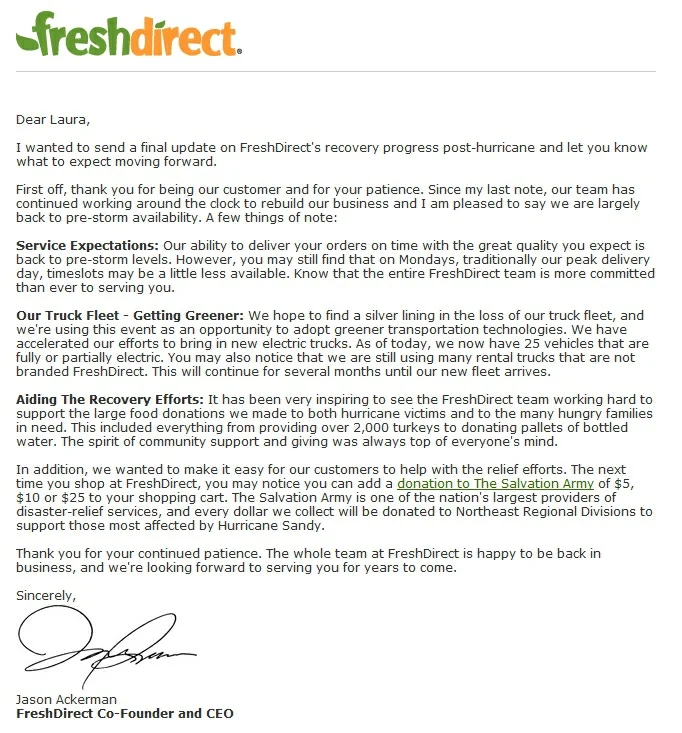
FreshDirect Co-Founder and CEO Jason Ackerman sent an email to update customers on the company's recovery since Hurricane Sandy. Located in Long Island City, Queens, FreshDirect was hit hard by the storm.
Early in the message, Ackerman writes that FreshDirect is "largely back to pre-storm availability." The main point is clear, but where is it placed, and is "largely" the best word choice?
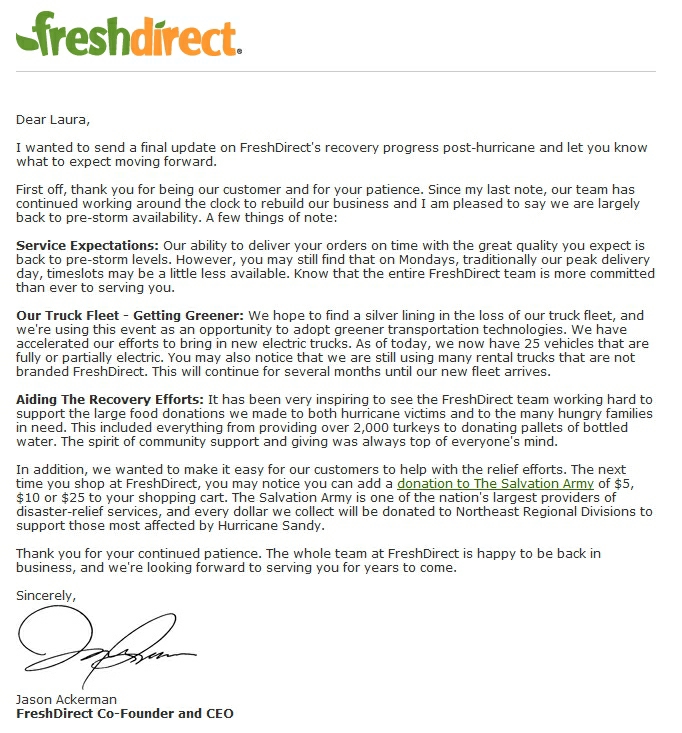
With easy-to-read bullets, Ackerman highlights other key messages for customers about meeting service expectations, replacing lost trucks with greener options, and contributing to relief efforts.
Discussion Starters:
- What are the other strengths of Ackerman's email, and what other suggestions would you make to improve the message?
- If you were a customer of FreshDirect, how do you think the email would make you feel? How would it affect your image of the company?
Guy Fieri Gets Mocked and Responds
The New York Times published a scathing review of Guy Fieri's new restaurant, Guy's American Kitchen & Bar in Times Square. Reviewer Pete Wells wrote just a series of questions including the following:
- Hey, did you try that blue drink, the one that glows like nuclear waste? The watermelon margarita? Any idea why it tastes like some combination of radiator fluid and formaldehyde?
- How did Louisiana's blackened, Cajun-spiced treatment turn into the ghostly nubs of unblackened, unspiced white meat in your Cajun Chicken Alfredo?
- What is going on at this new restaurant of yours, really?
- Does this make it sound as if everything at Guy's American Kitchen & Bar is inedible? I didn't say that, did I?
To respond to the review, Fieri appeared on The Today Show. When asked whether reading the review felt like a "punch in the gut," Fieri said he thought the review was "ridiculous" and "overboard." He took issue with the tone and question style, and implied that the reviewer might have had another agenda:
"It's a great way to make a name for yourself: go after a celebrity chef that's not a New Yorker that is doing big concept, and in the second month [fist punch into his hand]..."
The interviewer also pointed to less-than-stellar Yelp reviews, to which Fieri admitted that the food isn't perfect but noted that it's still early in the restaurant's tenure.
Saturday Night Live produced a skit about Fieri, although it didn't appear on air:
Discussion Starters:
- What's your assessment of the review? Is it probably fair, a personal attack, or something else?
- How effective is Guy Fieri's response on The Today Show? How could he have taken a different approach?
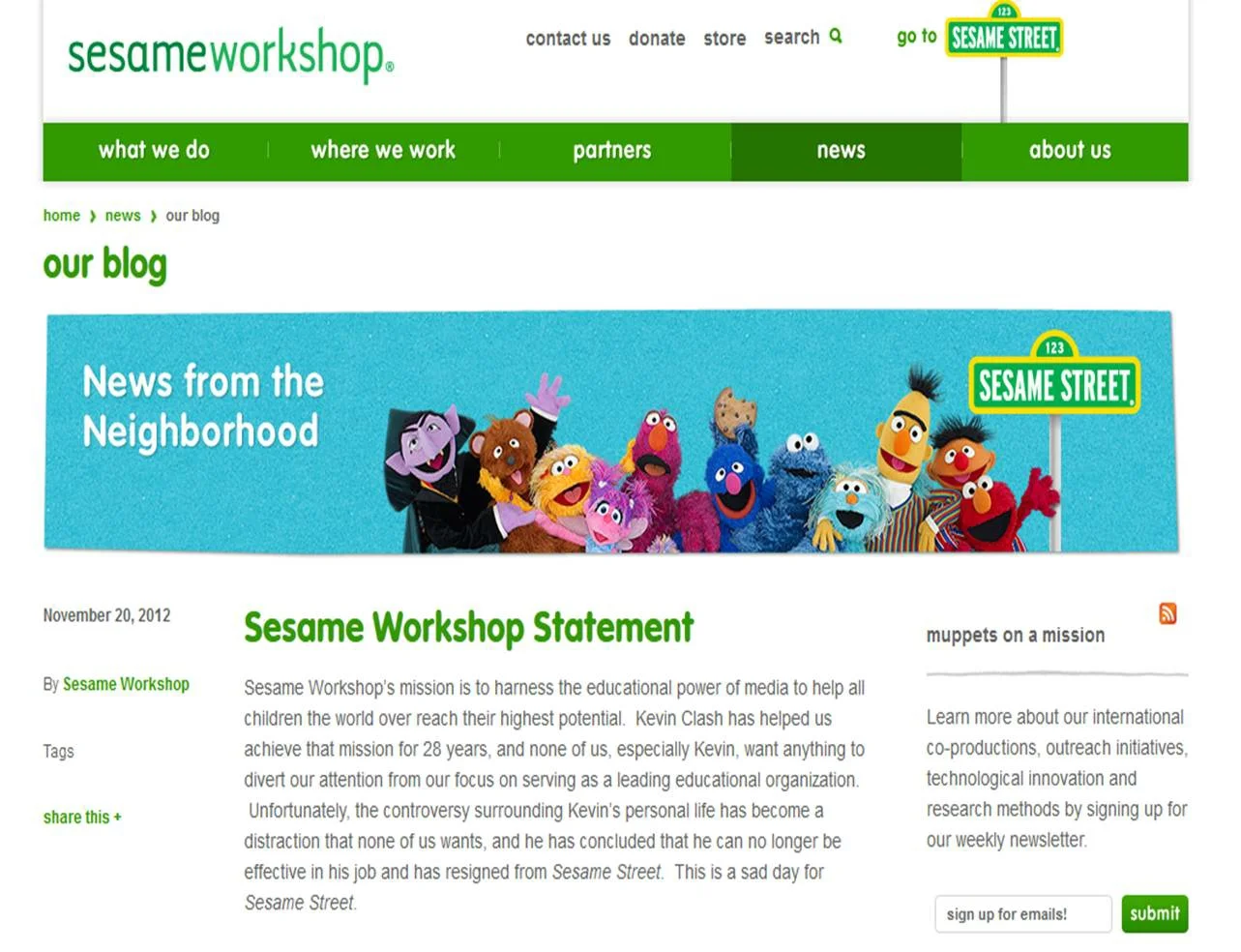
Statements About Elmo Puppeteer's Resignation
After 28 years as Elmo's puppeteer, Kevin Clash has resigned following accusations of underage sexual relations. Last year, Clash starred in a documentary, "Being Elmo: A Puppeteer's Journey."
On its website, Sesame Street posted this message:
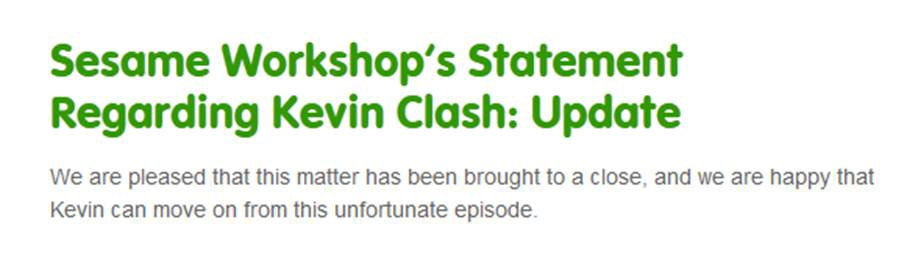
After Clash's resignation, the website was updated with another statement:
Further, in a statement to the press, Sesame Street noted, "None of us [at Sesame Workshop], especially Kevin, want anything to
divert our attention from our focus on serving as a leading educational
organization. . . . Unfortunately, the controversy
surrounding Kevin's personal life has become a distraction that none of
us want, and he has concluded that he can no longer be effective in his
job. . . .This is a sad day for ‘Sesame Street.' "
Kevin Clash provided his own statement about the situation:
"I am resigning from Sesame Workshop with a very heavy heart... I have loved every day of my 28 years working for this exceptional organization. Personal matters have diverted attention away from the important work ‘Sesame Street' is doing and I cannot allow it to go on any longer. I am deeply sorry to be leaving and am looking forward to resolving these personal matters privately."
Discussion Starters:
- Assess Sesame Street's statements. What is effective, and what could be improved?
- How, if at all, do you think Elmo's image will be affected?
- How can Sesame Street preserve the brand at this point?
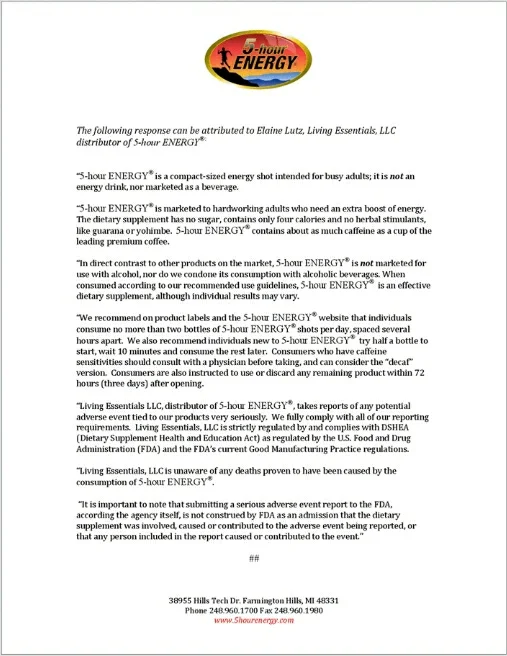
5-Hour Energy Drink Responds to Death Claims
According to the Food and Drug Administration, 13 deaths over four years may be linked to the caffeine-infused 5-Hour Energy drink. More than 90 filings with the FDA have cited the beverage as a possible cause of heart attacks and other physical problems.
Packaged not as a beverage but as a shot, 5-Hour Energy is marketed as a dietary supplement, which makes regulation challenging for the FDA.
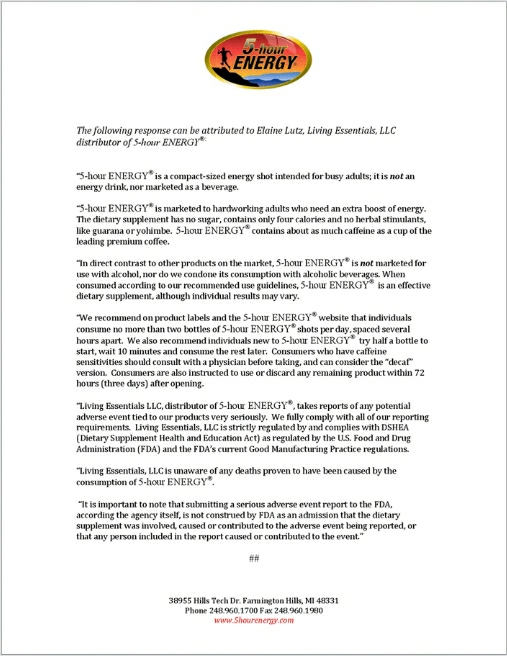
Manoj Bhargava, CEO of Living Essentials, the company that distributes the product, originally told The New York Times, "I am not interested in making any comment." However, the company has since issued a statement defending the product and its warnings to users.
Discussion Starters:
Yahoo's Server Crashes Before Fantasy Football Game
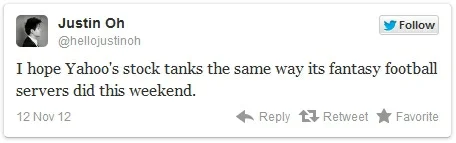
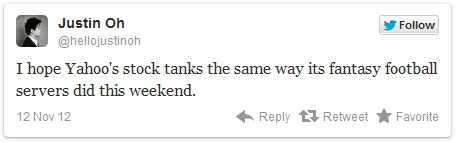
Yahoo learned a hard lesson when its server went down before kickoff on Sunday. Fantasy Football players turned to Twitter to vent their frustration.
Yahoo's site is one of the most popular for Fantasy Football game players. When users were able to log into the site, they saw this message:
"We apologize sincerely for the outage on Sunday. We are working on the fix-the site is stabilized-and will update everyone on next steps for how to handle week 10. Currently, data and scores can be viewed on our mobile apps but for now you cannot make transactions or change line-ups from the apps."
Head of Yahoo Sports Ken Fuchs also sent this email to Fantasy Football players:
Dear Yahoo! Fantasy Users,
I want to sincerely apologize to all of you about today's Yahoo! Sports Fantasy outage. As the head of Yahoo! Sports and as a Yahoo! Sports fantasy player myself, I am disappointed that we failed all of our fans today. Our first priority is having the best experience for our users, and today we fell short.
The outage started around Noon ET (awful timing we know) and while our team was on it immediately we are still working on various pieces. Our team is continuing to work on identifying and resolving the root cause. We have restored full functionality on the website, and we're working for a final fix for our mobile apps. Currently data and scores can be viewed but for now you cannot make transactions or change line-ups from the apps.
We will also use today as an opportunity to improve our set-up so that we hopefully never have an outage like this again. Our fantasy commissioners and players are our biggest priority - we pride ourselves in being able to offer our users with the best fantasy sports experience possible and we take our job to deliver that to you very seriously. Rest assured we will work hard to make sure we continue to deliver on that commitment.
Thanks for playing with us and your patience today,
Ken Fuchs
Head of Yahoo! Sports
Discussion Starters:
- What, if any, impact do you think the outage will have on Yahoo users next season?
- What's your opinion of Fuchs's email? What works well, and what could be improved?