
Coca-Cola President Argues Against Soda Limit
Last week, New York Mayor Michael Bloomberg proposed limiting sugary drinks to 16 ounces. This change would apply to sodas and other beverages sold in NY restaurants, at movies, and by street vendors.
USA Today interviewed Katie Bayne, Coca-Cola's president of sparkling beverages in North America. Bayne's response to the proposal focused on what people "need"-an interesting argument-and the lack of evidence to support the Mayor's proposal.
Here are excerpts from the interview:
Q: But critics call soft drinks "empty" calories.
A: A calorie is a calorie. What our drinks offer is hydration. That's essential to the human body. We offer great taste and benefits whether it's an uplift or carbohydrates or energy. We don't believe in empty calories. We believe in hydration.
The Mayo Clinic agrees that soda hydrates; however, nutritionists recommend water over soda.
Q: What do you say to those who believe that sugar - particularly in soft drinks - works on the brain like an addictive substance?
A: There is no scientific evidence.
Discussion Starters:
- Do your own research about whether sugar in soft drinks has addictive qualities. What do you find? Does it support or contradict Katie Bayne's response that there's no scientific evidence linking the two?
- Read the entire interview. Overall, how do assess Bayne's responses?
- Part of the Mayor Bloomberg's argument, in the video above, is that the size of drinks has increased. How do you assess this argument? Is this a convincing data point for his decision to cap the size of soft-drinks?
"I Love New York" Makeover
To increase tourism, Governor of New York Andrew Cuomo is spending $5 million to reinvent the classic logo, "I (Heart) New York." David Lubars, chairman of BBDO, the advertising firm working on the campaign, says that the logo needed to be revitalized because it's been "co-opted" by other countries:
"If you go to Russia, if you go to Spain, you see ‘I heart something,' and it's lost its New York cachet. My team's assignment was to bring new cachet back to that logo and make it mean something important."
As part of their summer campaign, The New York State Tourism website, http://www.iloveny.com/, encourages people to draw their own "heart." Drawings are varied and creative but perhaps a little boring.
In a press release, the Govenor's office explained the rationale for this approach:
"This is the first time in nearly 40 years, since the logo's inception, that New York State has officially asked the public for their interpretations of the 'I Love NY' and for the reasons they love New York."
New TV commercials will air for seven weeks during the summer. You see the logo prominently used during the commercials, which target tourists within 5 or 6 hours of driving distance to major NY cities.
Discussion Starters:
- At the end of the press release, the Governor's office cites several statistics about NY tourism and spending. What in this section are most and least convincing reasons to invest $5 million in this campaign?
- Offering the failed "New Coke" campaign as an example, Brian Sheehan, advertising professor at Syracuse University, warned, "You should mess with an icon at your own risk." What is your interpretation of Sheehan's view, and do you agree with him? What are the risks to NY in this campaign?
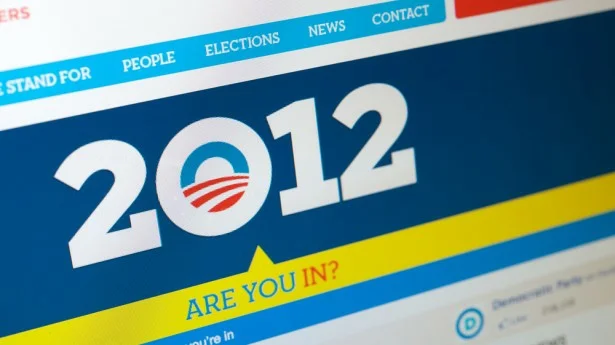
U.S. Presidential Candidates Go Social
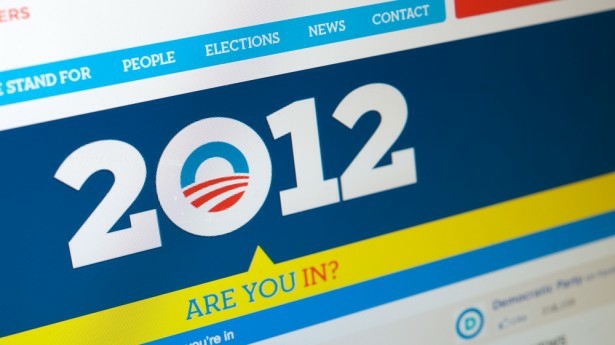 President Obama and Republican contender Mitt Romney are using social networking to boast their campaigns. Today, the Obama campaign is releasing a new platform called "Dashboard." Katie Hogan, spokesperson for the campaign, described the purpose of Dashboard:
"Dashboard is our online field office - a hub for campaign volunteers and supporters to communicate with each other and become members of neighborhood teams. . . .
"Supporters can use the tool to set goals, communicate those goals, and see what other supporters are doing. Supporters who want to be engaged can go to Dashboard, message other supporters in their area, and have a conversation about how to get started. It provides a good volunteer experience online that is directly tied to our field operation goals."
Built into the system is a keen focus on setting goals and friendly competition among neighborhoods. With a Facebook-like interface, volunteers are expected to use the site easily.
Since the fall, Mitt Romney's campaign has used a different home-grown system, "MyMitt."

Images via Raw Story and Signal News.
Discussion Starters:
- If you supported one of the candidates, would you use his social network? Why or why not?
- Why would both campaigns create their own platform rather than use Facebook as their main tool for volunteers?
- Consider signing up for both sites. What differences do you notice? Which is more effective for what purposes?
Facebook's IPO Video Focuses on Emotional Appeals
This is not your grandmother's IPO video. Facebook has taken a unique approach in luring investors to buy a stake in the company's initial public offering.
Staff members tell the Facebook story through a 30-minute video that the CFO says is consistent with their "focus on authentic, engaging communications." Mashable agrees that the video is a different approach to IPO communications:
"It's an interesting take on the normal business investment pitch video-instead of a heavy emphasis on dry finance numbers, Facebook plays to the heartstrings.
"Soft lighting, multiple interview angles and background music fit for sunrise in a nature show combine to make a clear emotional pitch to potential investors."
A theme throughout the video, as you might expect, is connecting people and "changing within a generation, the fabric" of how people communicate. In simple language, Facebook executives explain their platform and how their product functionality makes the web social. They compare Facebook to a game.
Section 3, Advertising, begins to cover financial information. The section profiles Ben & Jerry's, who claim that every dollar spent on Facebook returns $3 in incremental sales. Sheryl Sanberg, Facebook's COO, claims that online advertising will increase, in part because of Facebook's value proposition of "reach, relevance, engagement, and social context."
Section 4, Finance, starts 23 minutes into the 30-minute video. In this section, CFO David Ebersman reviews the number of users (including global penetration rates) revenue (advertising and payments), capital expenditures, operating margins, and future investment plans.
The video ends with Mark Zuckerberg claiming that almost every app will be connected to Facebook in some way.
Discussion Starters:
- Watch the entire video. Does it convince you to invest? Which are the most and least convincing arguments?
- What are the advantages and disadvantages of Facebook's approach compared to more traditional IPO communications?
Another Restaurant Serves Alcohol to a Child
Within the past year, at least three restaurants have mistakenly served alcohol to children. This time, an Olive Garden in Indianapolis gave a 10-year-old boy a rum drink. 
The boy drank half of what he thought was a non-alcoholic Wildberry Frullato drink before his family became concerned. After seeing his "increasingly strange behavior," he was taken to the hospital.
In a statement, Olive Garden said that the server had been fired:
"We find this situation completely unacceptable and we are extremely upset that this occurred. We have a zero-tolerance policy for any violation of our responsible alcohol service policy, and the employee who served the wrong drink has been terminated. We are thankful that the child is OK, and we will continue to work with the family to resolve this issue."
About a year ago, an Olive Garden in Orlando served sangria in a sippy cup to a two-year-old. This incident was just days after an Applebee's in Detroit accidentally spiked a 15-month-old boy's apple juice.
Discussion Starters:
- How do you assess Olive Garden's statement, particularly the part about their "zero-tolerance policy"?
- In your opinion, was the restaurant's termination of the server appropriate? Why or why not?
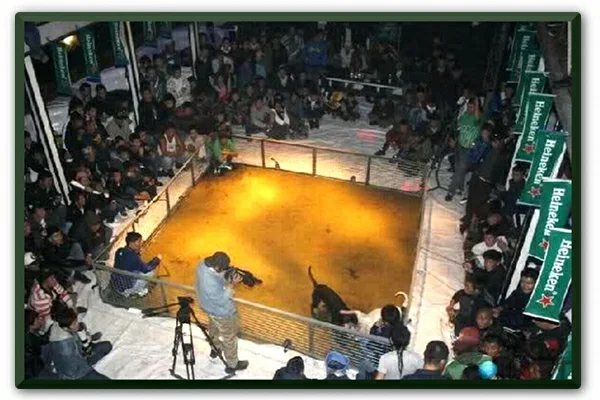
Heineken Responds to Dog Fighting Accusation
Bad timing for Heineken: banners were left up after a company event at a Mongolian nightclub. Unfortunately, next on the schedule was dog fighting. Outrage quickly ensued on Heineken's Facebook page and elsewhere.

Heineken responded quickly with this statement:
"Heineken is aware of a shocking photo of what appears to be a dogfighting match in a foreign country with Heineken branding visible in the background. We'd like to thank the community for bringing this issue to our attention.
"We are as appalled by this image as you are and have asked the Heineken Global Office to immediately investigate the circumstances of this event and whether Heineken was involved in any way.
"If you have any further information regarding this picture, such as the source, or the venue where it was taken, please let us know in this thread."
In a follow-up statement, Heineken denied association with the event and explained the situation:
"Images continue to circulate in social media channels showing a dog fight, with Heineken banners clearly visible in the background. This is very distressing and totally unacceptable. As a company and a brand owner, we do not and would never knowingly support any event, outlet or individual involved in this type of activity. It is against our company and brand rules and - more important - against our company values. . . ."
The statement goes on to explain that the banners were left from a previous event and that the company has "ceased" its relationship with the club.
The situation follows a July 2011 Heineken commercial that compares the beer to a snakeskin jacket: "It's not right for every occasion. Unless, of course, you find yourself attending a secret, offsite, charity snake-fighting event." Weird.
Discussion Starters:
- How do you assess the social media response? Were people right to question Heineken's involvement, or did they overreact?
- How do you assess Heineken's response to the criticism?
- What do you make of the snake commercial? Is it just me, or is it weird even if the dog-fighting controversy didn't happen?
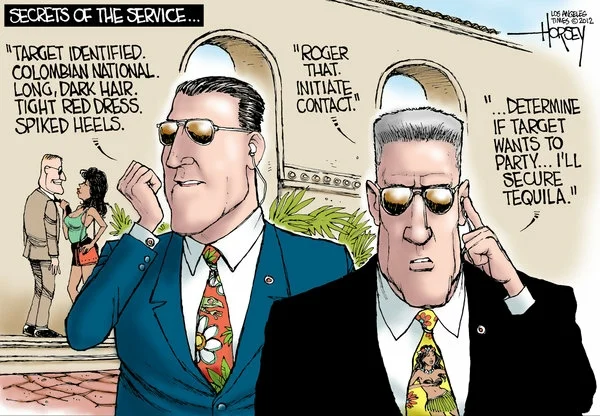
Secret Service Responds to Scandal
While in Columbia planning for President Obama's arrival, 11 U.S. Secret Service agents and 10 military personnel were involved in a scandal: 21 prostitutes were hired to entertain the fellas. A hotel manager learned of the situation when an argument over payment ensued between one of the prostitutes and an agent.

Although prostitution is legal in parts of Columbia, other issues help us determine whether this behavior was ethical. One issue is that hiring a prostitute was been banned for military personnel in 2006. This ruling was put in place during the Bush Administration, partly to address human trafficking, a practice in Columbia as well.
In addition, a writer of an Atlanta blog sums up potential risks and consequences of the situation:
"Most importantly, while there is no evidence that the security of the president of the United States was endangered in this incident, an agency with this kind of internal culture could be easily manipulated by those with reason to do so. At the very least, the scandal has created a significant embarrassment for the U.S. government and put at risk the generally good reputation of the Secret Service."
How has the Secret Service handled the response? One PR and marketing manager gave the Secret Service an A- for its response-not a bad grade for handling a difficult situation. Here's his analysis (a rubric, of sorts):
1. Communication. Following the breaking news of the scandal, the federal government appeared to work fast to alleviate concerns about a widespread issue. Many, however, feel this incident is possibly symbolic of a bigger cultural issue in the Secret Service. Grade: B+
2. Acknowledgement. When the story broke on April 13, Edwin Donovan, a Secret Service agency spokesman addressed the rumors by stating that an unspecified number of agents had been recalled and replaced by others. Army Gen. Martin Dempsey and White House Spokesman Jay Carney acknowledged the incident and have already voiced deep concern, plus several members of Congress have spoken out to defend the Secret Service vowing to launch a full investigation. Grade: A
4. Accountability. By all accounts, the military and Secret Service have appeared to take accountability. Although the story broke via a Washington Post reporter, the federal government has taken full responsibility for the agency's actions. Grade: B+
5. Timely updates. Following the news, the federal government steered the conversation to itself and became the irrefutable source of timely updates. Grade: A
6. Rectification. U.S. Secret Service agent Mark Sullivan swiftly announced that he is leading an investigation of the incident with support from Congressman Peter King, Chairman of the Homeland Security Committee, and Senator Susan Collins, the ranking Republican on the Homeland Security Committee. By all accounts, it appears that the Secret Service, military and Congress wish to assuage any concerns that this incident somehow compromised national security. Grade: A
Overall grade: A-
Discussion Starters:
- How do you assess the response to the scandal? Do you agree with the "A-" grade?
- What else does the Secret Service agency need to communicate at this point? How should its leaders provide updates to rebuild confidence?
KFC Apologizes to Thailand Earthquake Victims
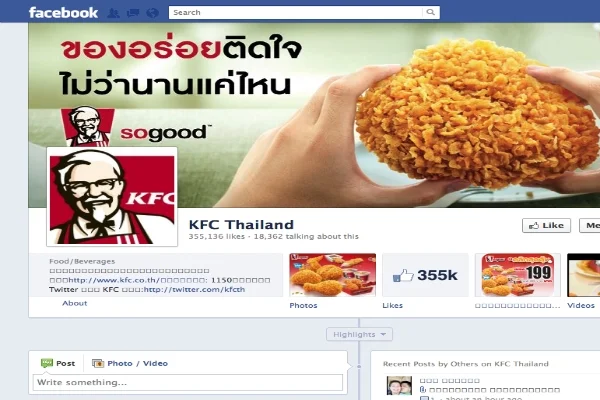
Connecting chicken to the earthquake in Thailand, KFC posted this on its Facebook wall as people were being evacuated from the beaches: "Let's hurry home and follow the earthquake news. And don't forget to order your favorite KFC menu."

People didn't respond well. Admitting its mistake, KFC removed the post within a day and replaced it with this statement:
"KFC Thailand expresses its sincere regret for the improper post on its Facebook page and apologizes for the insensitivity and timing of the message."
This isn't the first time a company used a tragic or emotionally charged event to promote its products (and it probably won't be the last). Kenneth Cole learned a tough lesson when he encouraged people to buy his "spring collection" clothing during the uprising in Cairo. And a blogger called Amy Winehouse's death a "wake-up call for small business owners."
Companies need to be smarter about how they use social media. Sure, they can take some risks, but mixing sales and disaster likely leads only to disaster.
Discussion Starters:
- Can you think of any time when using a tragedy to promote a company's products would be viewed positively, for example, after a certain period of time?
- Assess KFC's apology. Do you find it convincing? Should the company have done anything else to demonstrate its regret?
World's Longest Rejection Letter
How would you like to get a 3,000-word rejection letter with a "42-point plan to help job seekers"? If you were one of 900 applicants for a writing job at Salon.com, you may have received it.
Sean Gunther, the author of the rejection letter, thought he was being helpful, but the letter is long and confusing. For starters, it's unclear whether the receiver was rejected. It isn't until the end of the second paragraph that readers are told (sort-of) where they stand: "Those of you who are passed into the second round of consideration will be hearing from us soon, if you haven't been contacted by us already."
In an article, "Here's How to Condescend to 900 Job Applicants With a 3,000-Word Rejection Letter, " Gawker blasted the email as "arrogant" and called the writer worse names.
Gunther responsed to Gawker's criticism by saying that some applicants appreciated his advice. He quotes the following from one of the applicants:
"I read your email this morning, and to be honest, I was a little irritated at first. I didn't particularly want to know that there were 900+ applicants for the position. The email looked lengthy, and I wasn't sure where you were going to go with it. For sure, it didn't say that I was hired.
"I gradually realized that this is the sort of advice that every writer looking for work should read. I don't think I made many of the mistakes that it mentioned, but I do I wish I had read it years ago. It's also a rare thing that people applying for work should get anything out of it at all, especially something so useful."
Gunther defends his letter compared to other rejection letters:
'Applicants learn nothing about their approach when the only response they receive is 'Thanks for applying, but the position has been filled.'"
Discussion Starters:
- What do you think of Gunther's approach? How do you think you would feel if you received the letter?
- Read the entire letter, including his suggestions. Which are useful, and which are not?
- Considering that the letter caused some hard feelings, what could have been a better approach, if Gunther sincerely wanted to help job applicants?
AT&T Campaign: "Rethink Possible"
To refocus the AT&T brand, the company is venturing into a new marketing campaign. With themes such as "Here's to possibilities," the "Rethink possible" campaign features optimism.
Without a focus on any particular product, AT&T is embarking on image advertising-a new approach for the conglomerate that began in April 2010. The commercial, below, is one part of AT&T's messaging.
Esther Lee, senior vice president for brand marketing, advertising, and sponsorship at AT&T in Dallas explained the company's strategy to The New York Times:
"'We did a lot of insight research about how people live with technology,' which included 'ethnographies, shop-alongs and spending time in people's living rooms.'
"When the 'Rethink possible' campaign was developed, most consumers 'felt overwhelmed with technology,' Ms. Lee said, but only a short time later many have 'found ways to integrate it in their lives" - and some even 'talk about it with love.'
"'The real innovation that's happening is what people are doing, and how people are dealing, with technology,' she added, and 'the unique ways they use it to make their lives better.'
"That is the message that 'It's what you do with what we do' is intended to convey, Ms. Lee said, describing the phrase as 'a step-up line, a bridge line' that will now lead to the 'Rethink possible' theme."
Discussion Starters:
- What is the difference between corporate and product advertising? Why do you believe AT&T took this approach now?
- Do you believe AT&T's campaign will be successful? Why or why not?
- Which of the company's new advertisements do you find most effective? Why or why not?
Communications Around the "Pink Slime" Beef Additive
Parties on both sides of the "pink slime" debate are weighing in. For business communication students, perhaps the most interesting communications (so far) are around how the term became popular and how companies-both consumer companies and the manufacturer-are responding.
Blame Email
Oh, Email, you time-waster, career-destroyer, is there no end to the trouble you can start? In 2002, Gerald Zirnstein, a microbiologist at the U.S. Department of Agriculture, sent an email to colleagues saying "I do not consider the stuff to be ground beef, and I consider allowing it in ground beef to be a form of fraudulent labeling." Zirnstein is credited with coining the term "pink slime" in an email that he thought was private.
Today, Zirnstein is considered a "reluctant whistleblower":
"'The whole thing went viral ... Just blew the top off everything,' said Zirnstein. Zirnstein said he worried at first about being deemed a whistleblower, but now does not care. 'I am really an involuntary whistleblower,' he said. But he added, 'It looks like pink slime. That is what I said.' Asked if he and his family still eat hamburgers, Zirnstein sighed. 'The labels aren't clear, so we don't eat it. That's the thing,' he said. 'It isn't freaking labeled.'"
Supermarkets and Fast-Food Restaurants Act
Following Safeway and Supervalu, Kroger, the leading supermarket chain in the United States, announced on its Facebook page the decision to stop buying the product:
"We have listened to your concerns that the use of lean finely textured beef-while fully approved by the USDA for safety and quality-is something you do not want in ground beef. You are our top priority and for that reason we have decided to stop purchasing ground beef that contains lean finely textured beef."
In its "Statement on Lean, Finely Textured Beef," Walmart explains its decision to offer customers meat with and without the additive:
"As a result of customer and member feedback, Walmart and Sam's Club will begin offering fresh ground beef that does not contain lean finely textured beef (LFTB). We are working aggressively with our suppliers to have new offerings in our stores and clubs as quickly as possible. As these products become available, associates in our meat department and at our customer service desks will share updates with customers who inquire.
"While the USDA and experts agree that beef containing LFTB is safe and nutritious, we are committed to listening to our customers and providing the quality products they want at prices they can afford."
Wendy's took a different approach. The fast-food chain capitalized on the news and used a slogan from a 1980s campaign: "Where's The Pure Beef? At Wendy's, that's where!" Ads ran in USA Today, The Chicago Tribune, and other papers. Wendy's also used this image in rotation on its website home page.

Beef Products Inc. Defends Its Product
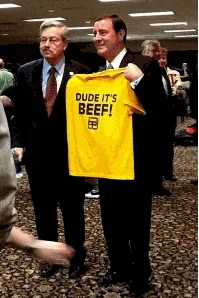
 Fighting back, Beef Products Inc., manufacturer of the additive, has launched an aggressive campaign. The company offered a tour of its facility to a few governors and reporters and handed out "Dude, It's Beef" T-shirts.
On a newly created website, "Beef Is Beef," the company dispels what it calls "The 8 Myths of 'Pink Slime.'" (The URL says "7 myths," and I'm curious which was added late.)
Beef Products Inc. also took out a full-page ad in The Wall Street Journal, including this letter from company founder Eldon Roth:
"Pink Slime" Libel to Cost This Country Jobs
Before last summer, we could not have imagined the personal, professional, financial and spiritual impact of the campaign of lies and deceit that have been waged against our company and the lean beef we produce. But over the last several weeks, that campaign has been joined by entertainment media, tabloid journalists, so-called national news - and all to what end? The clear goal expressed by the campaign organizer - put BPI out of business.
It is simply amazing how this mis-information campaign can take a company and product that has long been recognized for its quality and safety and turn the public perception so negative that it now may result in the loss of over 3,000 jobs (direct employment and companies that rely upon our business) and affected their families and communities.
Our record is unsurpassed. NEVER has a foodborne illness been associated with our lean beef over 30 years. In nearly 300,000,000,000 meals, we have been a recognized leader in food safety by groups such as the International Association for Food Protection. Look at the overwhelming support from food scientists, USDA officials, Consumer Advocate organizations academia and customers we have received reaffirming the wholesomeness, nutrition and safety of our lean beef.
As the founder of the company, I can personally guarantee that in our 30 year history, we have never produced 'pink slime.'
Eldon Roth
President & CEO
Beef Products Inc. also created this "Get the Facts" infographic to explain "lean beef trimmings."
Discussion Starters:
- After researching the "pink slime" topic further, with which of the arguments do you agree and disagree?
- Assess the communications from Beef Products Inc.: the Beef Is Beef website, the founder's letter, and the infographic. What is most and least effective in each of these communications?
JetBlue Responds to Incident with "Erratic" Captain
Just three weeks after an American Airlines flight attendant displayed irrational behavior before take-off, a JetBlue captain displayed what some called "erratic" behavior during a flight from New York to Las Vegas.
One passenger heard the captain yell, "They're going to take us down. They're taking us down. They're going to take us down. Say the Lord's prayer. Say the Lord's prayer." Others said he was yelling about Al Qaeda and a bomb on the plane.
JetBlue responded with a statement and updates on its blog:
"Flight 191 departed New York's JFK airport at 7:28 am ET (was scheduled to depart 6:55 am ET). At roughly 10 am CT/11 am ET, the pilot in command elected to divert to Amarillo, TX for a medical situation involving the Captain. Another Captain, traveling off duty, entered the flight deck prior to landing at Amarillo, and took over the duties of the ill crewmember. The aircraft arrived Amarillo at 10:11 am CT, and the crewmember was removed from the aircraft and taken to a local medical facility.
"Customers have safely deplaned and we're sending a new aircraft and crew to Amarillo to continue the flight to Las Vegas."
Read a more detailed timeline of events.
JetBlue faced another embarrassing incident recently, when one of its flight attendants exited the plane via the emergency chute. Maybe these airline jobs really are stressful!
Discussion Starters:
- Read American Airlines' statement and updates. How well do you think the company is responding to the situation?
- Imagine that you're head of HR for American Airlines. What, if any, communication would you initiate for employees? What medium would you use, and what would you say?
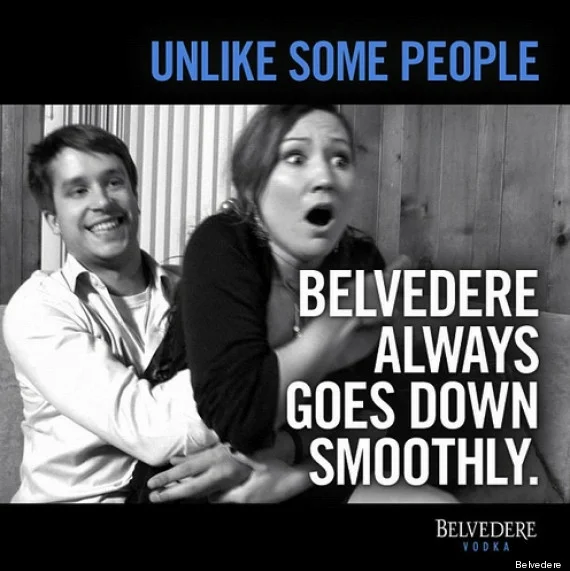
Belvedere Vodka Apologizes for Ad
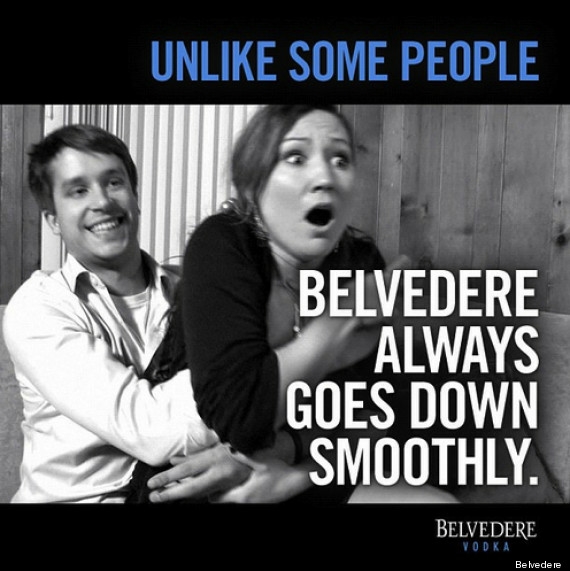 Belvedere Vodka apologized for an ad that many believe mocks sexual assault, but the apology also drew criticism.
As one of many who reacted negatively to the ad, @KateHarding tweeted about her feelings:
"The @belvederevodka rape joke ad disappeared just as I was about to share it on FB. Hope someone got a screenshot. Appalling."
Belvedere initially tweeted this short apology:

After more criticism, the company released a more formal statement:
"My name is Charles Gibb and I am the President of Belvedere Vodka. I would like to personally apologize for the offensive post that recently appeared on our Facebook page.
"It should never have happened. I am currently investigating the matter to determine how this happened and to be sure it never does so again. The content is contrary to our values and we deeply regret this lapse.
"As an expression of our regret over this matter we have made a donation to RAINN (America's largest anti-sexual violence organization. www.rainn.org)"
RAINN posted a note on its Facebook page:
"We got a call from Belvedere Vodka's president, who was profusely apologetic about an offensive Facebook post yesterday. He stressed how much it was contrary to his values and what Belvedere stands for, and that he feels awful about it. He offered to make a generous donation to RAINN to support our work to help victims of sexual violence and educate the public. Nice to see a company that not only undoes its mistake but looks for a way to do good afterwards."
Discussion Starters:
- Compare the two apologies. What are the main differences?
- What are components of a effective apology? Do you find the second apology effective? Why or why not?
Three Dead Horses, One Cancelled Show
HBO's "Luck" has run out. After three horses died, the HBO Show, starring Dustin Hoffman and Nick Nolte, has been cancelled.
In a statement, HBO explained the decision:
"Safety is always of paramount concern. We maintained the highest safety standards throughout production, higher in fact than any protocols existing in horseracing anywhere with many fewer incidents than occur in racing or than befall horses normally in barns at night or pastures. While we maintained the highest safety standards possible, accidents unfortunately happen, and it is impossible to guarantee they won't in the future. Accordingly, we have reached this difficult decision."
People for the Ethical Treatment of Animals (PETA) disagrees with this assessment, claiming that the organization suggested ways to protect the horses even before filming began. PETA also criticizes the use of former race horses, who were out of practice and out of shape and should never have been raced twice in one day.
In a letter to the Los Angeles district attorney, PETA encourages an investigation and outlines circumstances, as it sees them, around the first two deaths.
Discussion Starters:
- Did HBO make the right decision to cancel "Luck" because of the horses' deaths?
- How do you assess HBO's statement? Is this the best approach?
- In PETA's letter to the LA district attorney, which do you believe are the strongest and weakest arguments?
Resigning Employee Says Goldman Is "Just About Making Money"
In a stinging op-ed piece in The New York Times, a former Goldman Sachs manager calls the company's culture "toxic and destructive" and says the company has lost its focus on clients. Greg Smith, former head of Goldman's U.S. equity derivatives business in Europe, the Middle East, and Africa, resigned from the firm as of today-and went out with a bang.
In some ways, the letter confirms the negative image of Goldman as too focused on profits:
"What are three quick ways to become a leader? a) Execute on the firm's 'axes,' which is Goldman-speak for persuading your clients to invest in the stocks or other products that we are trying to get rid of because they are not seen as having a lot of potential profit. b) 'Hunt Elephants.' In English: get your clients - some of whom are sophisticated, and some of whom aren't - to trade whatever will bring the biggest profit to Goldman. Call me old-fashioned, but I don't like selling my clients a product that is wrong for them. c) Find yourself sitting in a seat where your job is to trade any illiquid, opaque product with a three-letter acronym."
Smith also tallies recent image-damaging transgressions, with helpful links from The New York Times to related stories:
"It makes me ill how callously people talk about ripping their clients off. Over the last 12 months I have seen five different managing directors refer to their own clients as "muppets," sometimes over internal e-mail. Even after the S.E.C., Fabulous Fab, Abacus, God's work, Carl Levin, Vampire Squids? No humility? I mean, come on. Integrity? It is eroding. I don't know of any illegal behavior, but will people push the envelope and pitch lucrative and complicated products to clients even if they are not the simplest investments or the ones most directly aligned with the client's goals? Absolutely. Every day, in fact."
Goldman was quick to respond to the letter:
"We disagree with the views expressed, which we don't think reflect the way we run our business. In our view, we will only be successful if our clients are successful. This fundamental truth lies at the heart of how we conduct ourselves."
CEO Lloyd Blankfein and COO Gary Cohn also responded in an open letter to employees:
"In a company of our size, it is not shocking that some people could feel disgruntled. But that does not and should not represent our firm of more than 30,000 people. Everyone is entitled to his or her opinion. But, it is unfortunate that an individual opinion about Goldman Sachs is amplified in a newspaper and speaks louder than the regular, detailed and intensive feedback you have provided the firm and independent, public surveys of workplace environments.
"While I expect you find the words you read today foreign from your own day-to-day experiences, we wanted to remind you what we, as a firm – individually and collectively – think about Goldman Sachs and our client-driven culture."
For another perspective, Jim Cramer, of MSNBC, says the letter is "devastating" and "shocking." (Forward to 1:10.)
Update: Goldman Sachs lost $2.15 billion in market value following Smith's letter; the stock dropped 3.4%, the third largest decline in the company's history, according to Bloomberg.
Discussion Starters:
- Read the entire op-ed letter by Greg Smith. What do you consider to be his strongest and weakest arguments?
- Read Goldman Sachs' response. Same question: What do you consider to be the company's strongest and weakest arguments?
- How, if at all, do you think the letter will affect Goldman's image?
- Do you think that Goldman Sachs will change its business practices as a result of this letter?
American Airlines Response About Flight Attendant
American Airlines passengers were alarmed when a flight attendant started screaming about 9/11 and a potential plane crash. The flight attendant was removed from the plane, and the Dallas-to-Chicago flight was delayed but eventually took off without any further trouble.
American Airlines issued this statement in response:
"This morning Flight 2332 had left the gate at DFW bound for Chicago, when an incident occurred involving some of the cabin crew. The aircraft returned to the gate, where it was met by Department of Public Safety officers. Two flight attendants were taken to local hospitals for treatment. We continue to investigate the details and circumstances and will have no further comment at this time. We will ensure that the affected flight attendants receive proper care, and we commend our other crew members for their assistance in quickly getting the aircraft back to the gate so that customers could be re-accommodated. Our customers were not in danger at any time. The cabin crew was replaced. The flight departed for Chicago at 9:46 a.m., and is scheduled to land around noon. We apologize for any inconvenience to our customers, and we appreciate their patience and understanding."
Discussion Starters:
- How do you assess American Airlines' response? What works well, and what could the company say differently?
- If you were American Airlines' head of customer relations, what, if anything, would you do for or communicate to the passengers of this flight?
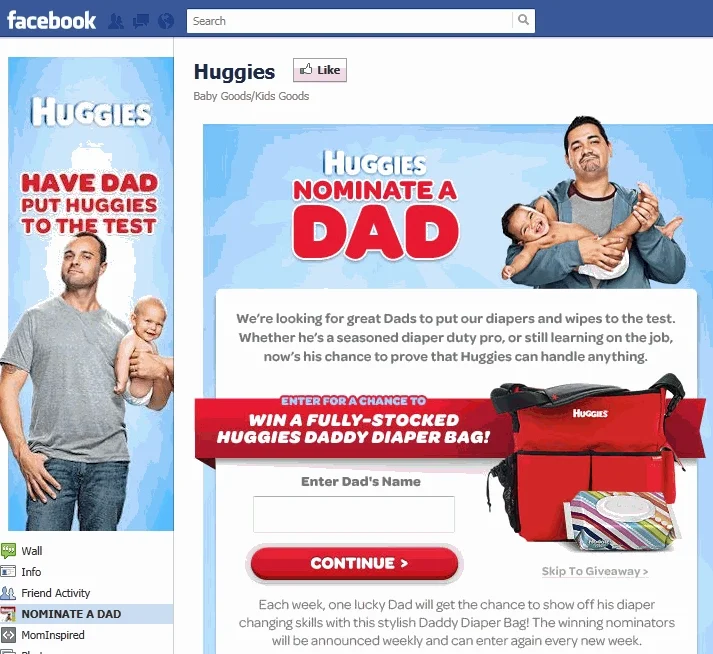
Huggies Revises Dad Ad
In what Advertising Age called a "poop-storm," Huggies ran a campaign called a "Dad Test." Described in the promotional video, Huggies promises "to prove Huggies diapers and wipes can withstand anything...put them to the toughest test imaginable: dads, alone with their babies in one house for five days, while we gave their moms some well-deserved time off."
Reactions to the campaign were mixed, with many feeling that the ad insults dads, 32% of whom are primary caregivers.
Huggies maker Kimberly-Clark responded to the controversy:
"We have heard the feedback from dads concerning our current 'real life' dad commercials. We recognize that we need to do a better job communicating the campaign's overall message. The singular goal with this campaign was to demonstrate the performance of our products in real-life situations because we know real life is what matters most to moms and dads. A fact of life is that dads care for their kids just as much as moms do and in some cases are the only caregivers.
"We intended to break out of stereotypes by showing that dads have an opinion on product performance just as much as moms do. That said, the Huggies brand is learning and listening, and, because of the responses we have received, are making changes to ensure that the true spirit of the campaign comes through in the strongest way possible.
"We have already replaced our initial TV ad with a new one that more clearly communicates our true intent and are in the process of revising the wording of the Huggies brand online communications."
Huggies has changed its approach and now encourages people to nominate great dads for a chance to win Huggies products.

Discussion Starters:
- Do you find the original Huggies ad offensive, funny, or something else? Do you understand the backlash, or do you think dads are over-reacting?
- How do you assess Kimberly-Clark's response? What are the most and least convincing arguments?
- How successful is the revised approach? Will this satisfy those who were offended by the original ad?
Will This Student's Video Get Her into Yale?
Jackie Milestone really wants to go to Yale, but she was deferred admission. To try to influence the admissions committee, she created a video, "White and Blue for You."
It's a catchy tune, but Jackie might take some lessons in persuasive communication.
Discussion Starters:
- How does Jackie balance emotional appeal, logical arguments, and credibility in her video?
- What suggestions do you have for Jackie to improve her video and possibly sway the admissions committee?
- If you were deciding Jackie's fate, would the video influence you? Why or why not?

Claire's Response to Jewelry Plagiarism Charges
 Tatty Devine's website shows several suspiciously close comparisons between its jewelry designs and those of Claire's, a 3000-store retailer of jewelry and accessories. Tatty Devine's jewelry is high-end; the "dinosaur" necklace shown on the left side is handmade from bones and costs £132, while Claire's version is rubber and costs £4.
While the lawsuit is under way, social media activity rages on, and Claire's isn't handling it too well. The company has been criticized for deleted and ignoring Facebook comments, such as those below:

Claire's also took two days before responding to the plagiarism charge, which had already received support on Tatty Devine's blog. Finally, Claire's posted this statement on its Facebook page:
"Claire's Stores, Inc. is a responsible company that employs designers, product developers and buyers, and works with many suppliers to provide innovative collections that bring customers all the latest fashion trends. As such, we take any allegations of wrong doing seriously. We are looking into the matters raised."
One blogger described the statement this way: "The response is a stiff corporate apology that appears to dismiss the concerns expressed by their consumers."
PR expert Scott Douglas suggests this as a better approach:
"The pictures show remarkable similarities, and clearly that's upset a lot of people. We understand those reactions. That's why we are determined to get to the bottom of what happened and launched an immediate investigation. We promise to keep you updated."
I wonder how Claire's lawyers would like that response.
Discussion Starters:
- Compare Claire's response and proposed response. What are the benefits-and the risks-of each?
- What principles should Claire's follow when addressing social media comments?
Microsoft Attacks Google Docs
Microsoft has created a campaign attacking Google Docs. In a video that has reached over 800,000 viewers, Microsoft mocks the "Googlighting Stranger"-set to the theme of the old TV show, "Moonlighting." The premise is, "What happens when the world's largest advertising business tries to sell productivity software on the side?"
Previously the brunt of jokes, such as Apple's highly successful "I'm a Mac; I'm a PC" campaign, Microsoft is now on the offensive. The video criticizes Google Docs for having fewer features and shifting capabilities, implying that programs can change and leave businesses in the lurch.
In a blog post, Microsoft's Tom Rizzo elaborates on the company's qualifications compared to Google's:
- Expertise
- Trust
- Flexibility
- Privacy
- Enabling Quality Work
Discussion Starters:
- How do you assess the video? Would it convince business people to stick with Microsoft products rather than switch to Google Docs?
- In Microsoft's blog post, what do you consider to be most and least convincing arguments?