
NYU Student's Emails
Upset with a class assignment to write an ethnography about the Occupy Wall Street protestors in Zuccotti Park, NYU senior Sara Ackerman wrote several emails to her professors and university administrators. The emails show frustration on both sides-a student wanting a different assignment and a college struggling with how to respond to complaints.Besides the drama and voyeuristic appeal of the situation, the story is rather sad. Ackerman follows through on her threat to publicize the controversy, but does she get what she needs? And university officials are embarrassed and can't satisfy the student.
Sara Ackerman Emails: "An Open Letter to John Sexton regarding Professor Caitlin Zaloom"
One of Ackerman's goals is to get her professor fired. She claims that she was offered an A in the course to be quiet about the situation, but university officials deny this. Instead, the VP of public affairs said, "We looked into the complaint and found the accusations were unwarranted."
A look at NYU's Student Email Policy is no help, of course, particularly with a 2003 "effective date," and the Guidelines for Student Email Use offers little guidance other than how to forward email and expectations for regular email-checking-another throw-back to 2003. The confidentiality statement is getting closer, but students needs more help to determine effective use of university email.
Then again, what would help in this situation?
Discussion Starters:
- What is the student trying to achieve with her emails? To what extent is she successful?
- What alternative communication channels and avenues might be helpful to a student in a similar situation?
- If you were the head of communications for NYU, what, if anything, would you say to the press?
Two More UBS Executives Resign
Not surprisingly, the two co-global heads of UBS's Equities division have resigned. These resignations follow a trading scandal that cost the Swiss bank $2.3 billion and the CEO's resignation on September 25.
An email to employees from interim CEO Sergio Ermotti uses a sharper tone than emails from the previous CEO:
"We have to be straight with ourselves. In no circumstances should something like this ever occur. The fact that it did is evidence of a failure to exercise appropriate controls. Our internal investigation indicates that risk and operational systems did detect unauthorized or unexplained activity but this was not sufficiently investigated nor was appropriate action taken to ensure existing controls were enforced."
Discussion Starters:
- Ermotti's email uses an indirect organizational plan. Do you think this is appropriate in this case? Why or why not?
- Compare Ermotti's email to that of Carsten Kengeter, the head of the UBS investment bank. What differences do you notice, and how would you explain them? Download UBS emails.
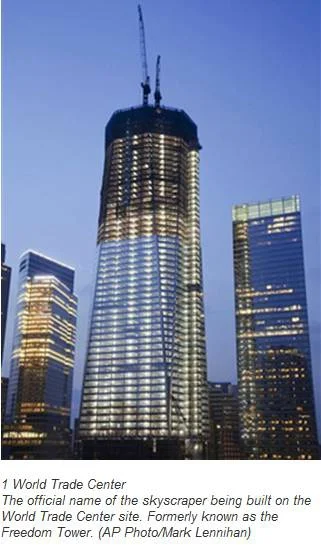
AP Issues Situational Style Guide for 9/11 Anniversary
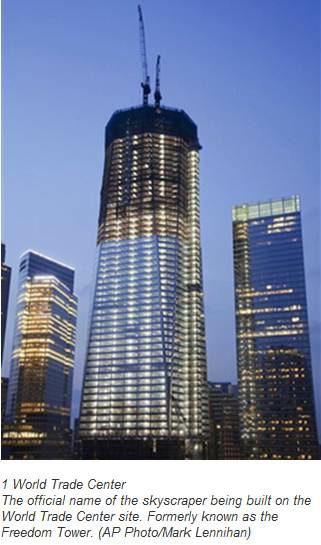 Associated Press is known for its style guide to help journalists decide between "smart phone" and "smartphone," but now the organization has created something new: a so-called "situational stylebook" in preparation for the 10th anniversary of the 9/11 attacks. The Sept. 11 Style and Reference Guide may ensure that journalists writing about the events conform to certain standards, for example, "twin towers" (lowercase) and al-Qaida (pronounced al-KY'-ee-duh).
In addition to promoting consistency in writing style, the guide will help journalists accurately report about 9/11-related events. The guide includes common sense advice such as this:
"Do not make up names, however. There is no Boston Airport, for example. The Boston airport (lowercase airport) would be acceptable if for some reason the proper name, Logan International Airport, were not used."
The guide's timeline of events is also helpful; after all, it has been a decade since the events, and memories fade.
Discussion Starters:
- Looking at the AP Sept. 11 Style and Reference Guide, which advice do you think will be most important for people reporting about the 9/11 anniversary?
- Does any of the advice surprise you? Why?
- For what other situations or events do you think a situational style guide might be useful?
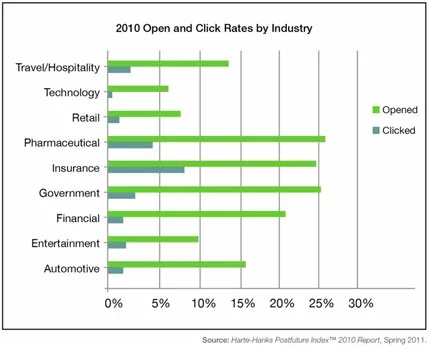
Are People Tired of Email?
Email open and click rates are on the decline, meaning people are less likely to open a marketing email. The latest study shows people opening marketing emails at a rate of 17% (compared to 26% in 2009).

This continues a trend since 2007.

Discussion Starters:
- Do these statistics surprise you? Why or why not?
- What influences whether you open an email?
- What can you learn from this for your own email messages -- both internal and external?
Assignment Ideas:
- Open your email inbox. Looking at the last 25 or so messages, which are you most likely to open and why? In small groups, discuss your reaction to the marketing emails. Did you open them initially?
- Now look at your sent box. Rewrite the subject lines of five emails to make them more enticing for the receiver to open.
Companies Send Email about Security Breach
The Story
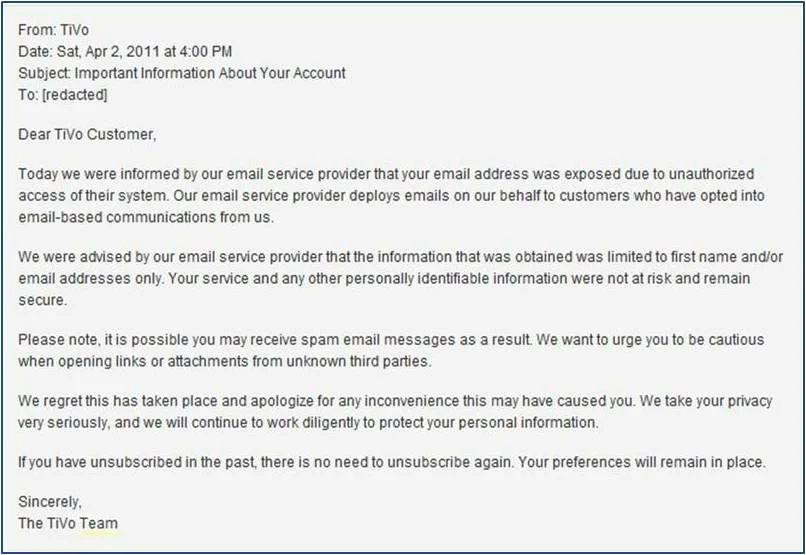
Did you receive an email about a security breach? Epsilon, an email marketing firm, has reported that their contact list has been stolen. Epsilon sends emails on behalf of several large companies. Companies are responding in force, contacting customers to disclose what happened and to allay fears. According to these messages and Epsilon's press release, the impact on consumers is minimal.
Here are several emails sent by affected companies:
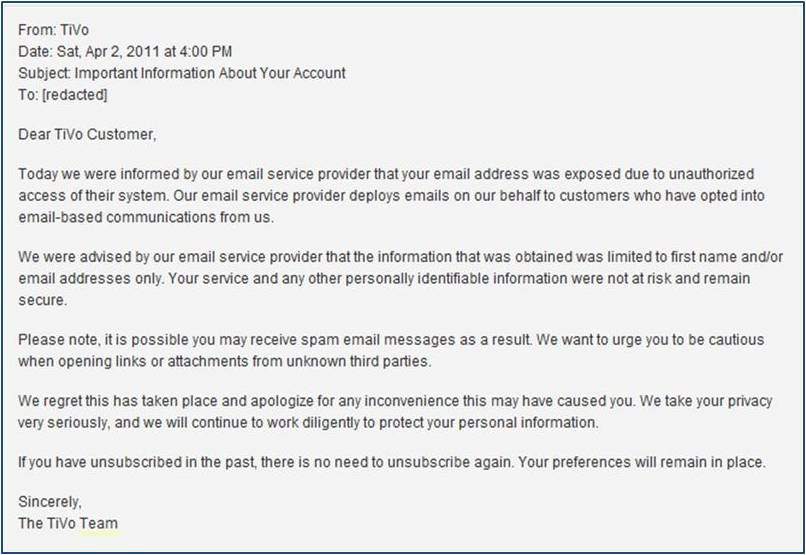
- What differences do you see among these emails, and why do you believe companies took these different approaches?
- Which version do you find most effective? Consider the type of company and its customer demographic as you decide which email works best; for example, what's the difference between Chase and JPMorgan Chase?
Assignment Ideas
- With a partner, choose two of these examples and compare them. Which do you think is most effective and why?
- Write your own version of an email for customers of a company. Choose a company and tailor the email to its customers.
- Research one of the companies that wrote an email. In a short written report, complete an audience analysis of the company's customer base. Given your analysis, recommend an approach for the company when communicating with these customers about the situation.
Bank of America Stops Foreclosure Sales
The Story
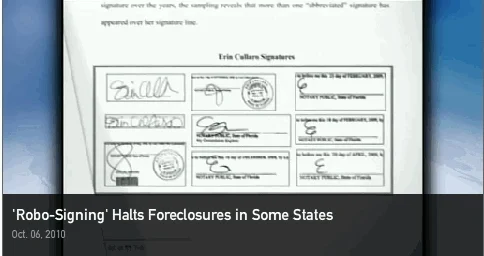
Bank of America has stopped foreclosure sales nationwide under criticism about documentation. Legislators and state prosecutors expressed concerns about "robo-signers," "employees who sign hundreds of documents a day, without carefully reviewing their contents, when foreclosing on homes," according to a Wall Street Journal report.

Read more and watch a video report from PBS here.
Discussion Starters
- What are the ethics of signing documents without reading them? What are the potential consequences for homeowners?
- Homeowners complain that loan officers assigned to their case are unresponsive. Why is this happening, and what is the responsibility of banks to communicate with homeowners in danger of foreclosing?
Assignment Ideas
- Review Bank of America's statement about halting foreclosure sales (below). Rewrite the statement to use clearer, simpler language.
"Bank of America has extended our review of foreclosure documents to all fifty states. We will stop foreclosure sales until our assessment has been satisfactorily completed. Our ongoing assessment shows the basis for our past foreclosure decisions is accurate. We continue to serve the interests of our customers, investors and communities. Providing solutions for distressed homeowners remains our primary focus." - Write a letter to homeowners explaining the situation. For many homeowners this is good news: they may have more time in their home before it's foreclosed. However, from the bank's perspective, this is not good news. Balance these messages in your letter.
Department of Defense Memo Tries to Fix "Lax," "Sloppy" Media Relations

The Story
Last week, Defense Secretary Gates issued a memo with new rules for how the military should deal with the media. Although Gates denies a connection between this memo and the recent Rolling Stone article that got General Stanley McChrystal fired, Gates says openly that the military has "become too lax, disorganized and in some cases flat-out sloppy in the way we engage with the press..."
Click on the image to download the PDF.
Discussion Starters
- Do you believe this memo is unrelated to the McChrystal situation? Why or why not?
- What impact might this memo have on the news media? How do you think the press might react to this?
- Why would Gates choose a memo instead of another medium for his message? Was this the best choice?
Assignment Ideas
- Analyze Gates' memo according to the principles in Chapters 4 and 5. To what extent does this memo measure up to business writing guidelines?
- Rewrite Gates' memo to reflect the business writing principles in Chapters 4 and 5. What improvements can you make?