
Analyzing Trump's Tone in Speeches
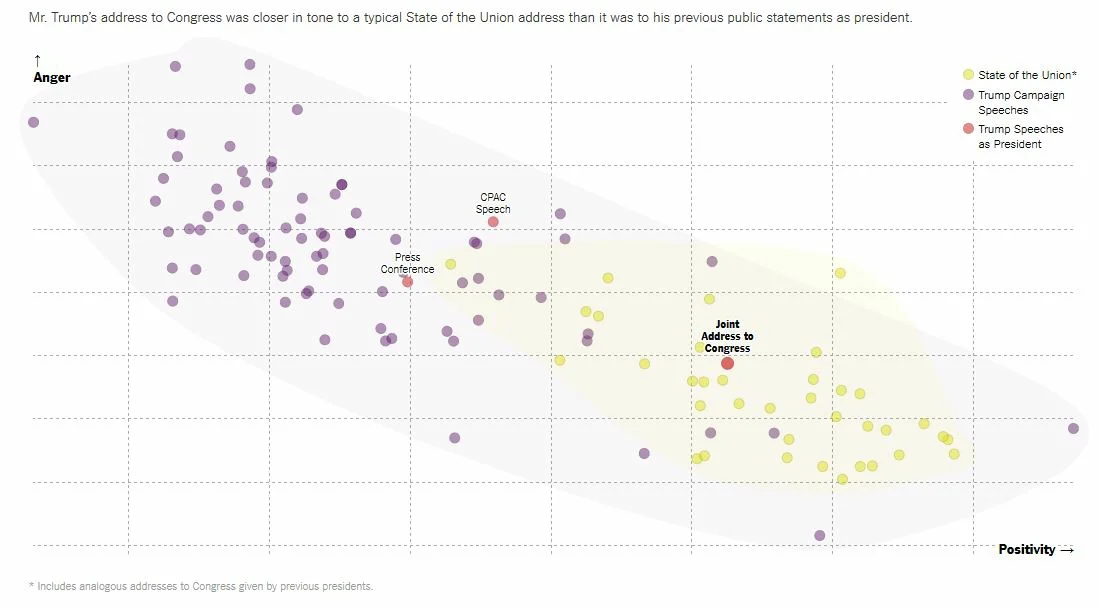
How would you describe Trump's tone in his speeches? A New York Times article explains how sentiment analysis was used to compare his speeches over time and to other State of the Union addresses:
"That's according to a sentiment analysis of past speeches, which categorizes words according to several dimensions. Mr. Trump's campaign speeches used a high proportion of words associated with "anger" - like fight, illegal or bad - and a relatively low proportion of words with positive associations - like build, freedom or peace."

Sentiment analysis aside, his tone changes are pretty obvious. The best way I can describe his State of the Union address is "measured." He also gestured less and read more from the teleprompter-perhaps acting more presidential than we have seen him in less formal settings.
The Washington Post compiled the address "in 3 minutes." Of course, the compilation and the "winners and losers" identified by the author/editor are based on his own thinking about Trump/s plans and communications.
Discussion:
- How would you describe President Trump's tone in his State of the Union address? What, if anything, surprised you about the speech?
- The president certainly is adjusting to the audience and purpose of his speeches. Compare audiences for his campaign speeches and his official speeches as president. What are his objectives for each?
- With which of The Washington Post's conclusions do you agree and disagree? The author also refers to the speech as "strong." What do you think he means by this, and do you agree or disagree?
Communication Failures at the Oscars
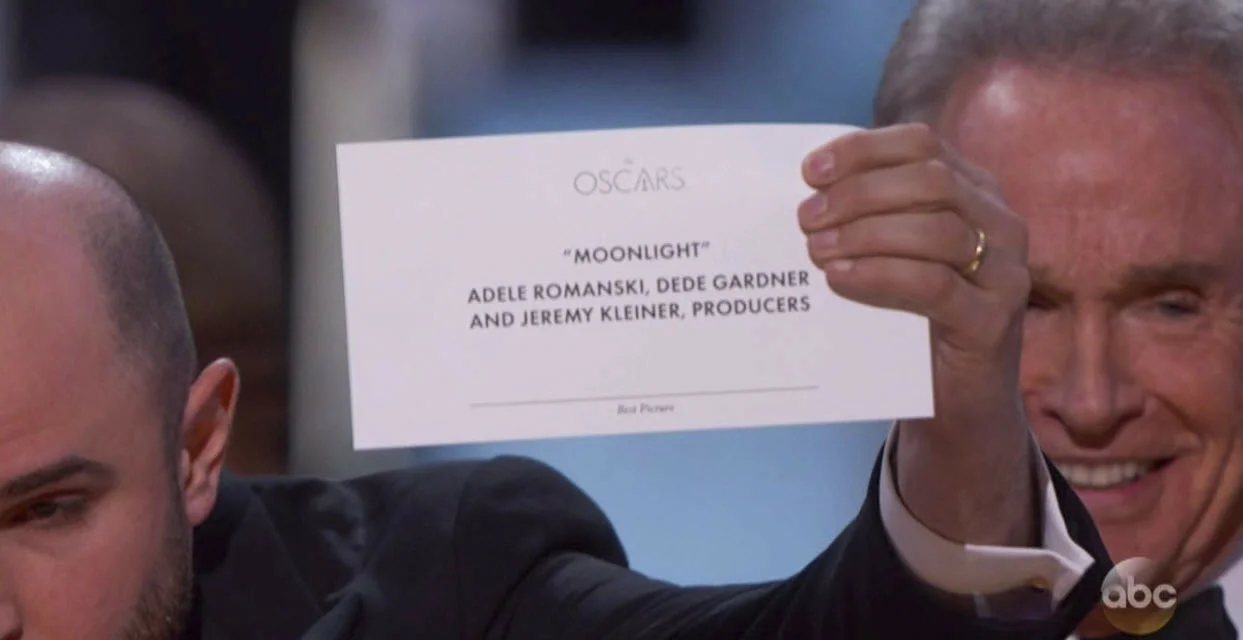
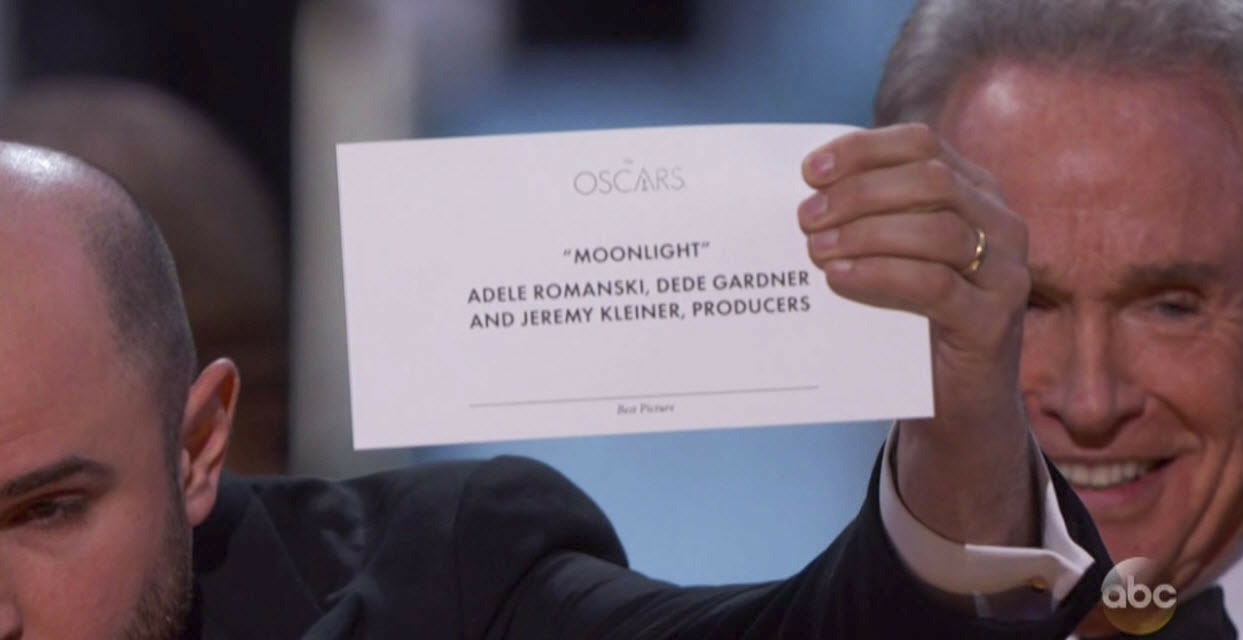 The RIGHT envelope, please! The Academy Awards suffered embarrassment at this year's event when the wrong winner was announced as Best Picture. Several communication failures caused the problem:
- The first and most critical error was PwC's responsibility: the wrong envelope was given to announcers Warren Beatty and Faye Dunaway.
- Beatty opened the card and saw "Emma Stone, La La Land." He hesitated and passed the card to Dunaway.
- Dunaway confidently announced the winner: "La La Land!" She didn't question it either.
- The La La Land folks came on stage and gave three acceptance speeches. They were stopped, but it took too long and could have saved further embarrassment.
- La La Land Producer Marc Platt said, "This is not a joke. They read the wrong thing." But this puts the blame entirely on the announcers, when the original error is the wrong envelope. Of course, Platt didn't know what happened, and he was trying to be gracious about the fiasco.
- PwC wrote a short statement, promising an "investigation," which is probably overstated: "We sincerely apologize to 'Moonlight,' 'La La Land,' Warren Beatty, Faye Dunaway, and Oscar viewers for the error that was made during the award announcement for Best Picture. The presenters had mistakenly been given the wrong category envelope and when discovered, was immediately corrected," the company said. "We are currently investigating how this could have happened, and deeply regret that this occurred."
Discussion:
- What could have been done differently during each step of this mistake?
- Should PwC say something different? The company has had the Oscars account for 83 years. Should the organization fire them? Why or why not?
More Ethical Questions for Uber
 Susan Fowler, a former Uber engineer, has blasted the company for what she describes as sexual harassment, a sexist environment, and HR's failure to respond. Fowler also reports that only 3% of engineers are women at Uber, which she claims has fallen over time.
When she reported sexual harassment, she was given a choice to move to another department or stay and likely receive a poor performance review. This is a basic "don't" in HR, from my experience: you don't move the victim and put him or her at a disadvantage. According to Fowler, no further action was taken in the case, although other women received similar treatment by the same manager.
At this point, Fowler's complaints are getting attention. CEO Travis Kalanick wrote that he would look into the situation:
"I have just read Susan Fowler's blog. What she describes is abhorrent and against everything Uber stands for and believes in. It's the first time this has come to my attention so I have instructed Liane Hornsey our new Chief Human Resources Officer to conduct an urgent investigation into these allegations. We seek to make Uber a just workplace and there can be absolutely no place for this kind of behavior at Uber -- and anyone who behaves this way or thinks this is OK will be fired."
Ariana Huffington, an Uber board member, jumped into the conversation on Twitter:

From interviews and messages from Uber employees, a New York Times article reports an "aggressive, unrestrained workplace culture." Kalanick further addressed the controversy in an email to employees that begins: "It's been a tough 24 hours. I know the company is hurting, and understand everyone has been waiting for more information on where things stand and what actions we are going to take."
Discussion:
- Read Fowler's blog post. What persuasive strategies does she use (logical arguments, emotional appeals, and credibility)? Which parts are most and least convincing?
- How should the company respond? An investigation is a good start: what should this include, how should it be carried out, and what result would you expect?
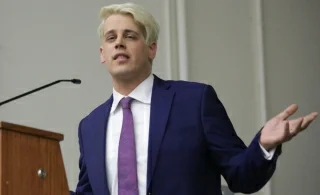
Milo Yiannopoulos Loses Speaking Engagement and Book Deal
 Milo Yiannopoulos has an active following for the very reason he lost a speaking engagement and book deal: he's out there. A New York Times article refers to him as "a polemical Breitbart editor and unapologetic defender of the alt-right," and he seems to say whatever he wants, which isn't a bad thing-until it is.
Earlier this month, a college tour at UC Berkeley was canceled when protests ended in violence, and today, he lost the chance to speak at the Conservative Political Action Conference. The latest controversy comes from a video in which Yiannopoulos seems to condone pedophilia. Yiannopoulos denies the allegations and "blamed 'British sarcasm' and 'deceptive editing,'" according to the Times.
Simon & Schuster canceled plans for his book, "Dangerous." In a statement, Yiannopoulos said, "The people whose views, concerns and fears I am articulating do not sip white wine and munch canapés in gilded salons. And they will not be defeated by the cocktail set running New York publishing. Nor will I."
According to the Times article, Yiannopoulos's position at Breitbart is under consideration:
Mr. Yiannopoulos, who has railed against Muslims, immigrants, transgender people and women's rights, is a marquee contributor to Breitbart News, where he serves as senior editor. He has amassed a fan base for his stunts and often-outrageous statements. But by Monday afternoon, his future at the website was being intensely debated by top management.
One Breitbart journalist, who requested anonymity to describe private deliberations, described divisions in the newsroom over whether Mr. Yiannopoulos could stay on. There was some consensus among staff members that his remarks were more extreme than his usual speech, the journalist said, and executives were discussing by telephone whether his apology was enough to preserve his position at the site.
[Update: Yiannopoulos resigned from his Breitbart position.]
I saw Yiannopoulos for the first time on "Real Time with Bill Maher." What struck me most was this statement: "Mean words on the internet don't hurt anyone." Really? Who gets to decide?
Discussion:
- Did the organizers of the Conservative Political Action Conference and Simon & Schuster make the right decision? Did UC Berkeley?
- What's your perspective on Yiannopoulos' comment, "Mean words on the internet don't hurt anyone"? Who does get to decide?
Former Starwood Exec Comments on the Acquisition
 Former head of global development at Starwood Hotels & Resorts Worldwide Simon Turner talks openly at The Americas Lodging Investment Summit (ALIS) conference. In an interview, Turner acknowledges that in any acquisition, like the Marriott's purchase of Starwood, not everyone is going to still have a job.
Turner discusses the uncertainly, particularly with the last-minute bid from Anband Insurance, and the value of overcommunicating to avoid confusion.
Turner also describes the process and his feelings of attachment towards the people in his organization, which helped him avoid feeling "woe is me." He also had perspective considering some people spent their entire career at Starwood compared to his nine years.
In talking about the hotel business, Turner says, although executives compete with each other, there is a sense of camaraderie and respect, which Turner calls "one of the great things about our business."
Discussion:
- What does Turner mean at the beginning when he jokes, "I'm a cost synergy"?
- What lessons can we learn from Turner's views on communication?
- What's your view of Turner's perspective on the hotel business? Do you think this is true of some industries more than others? Why or why not?
Fallacies in Recent Politics
 I'm teaching a module on fallacies on Monday and will present a few related to politics-wish me luck:
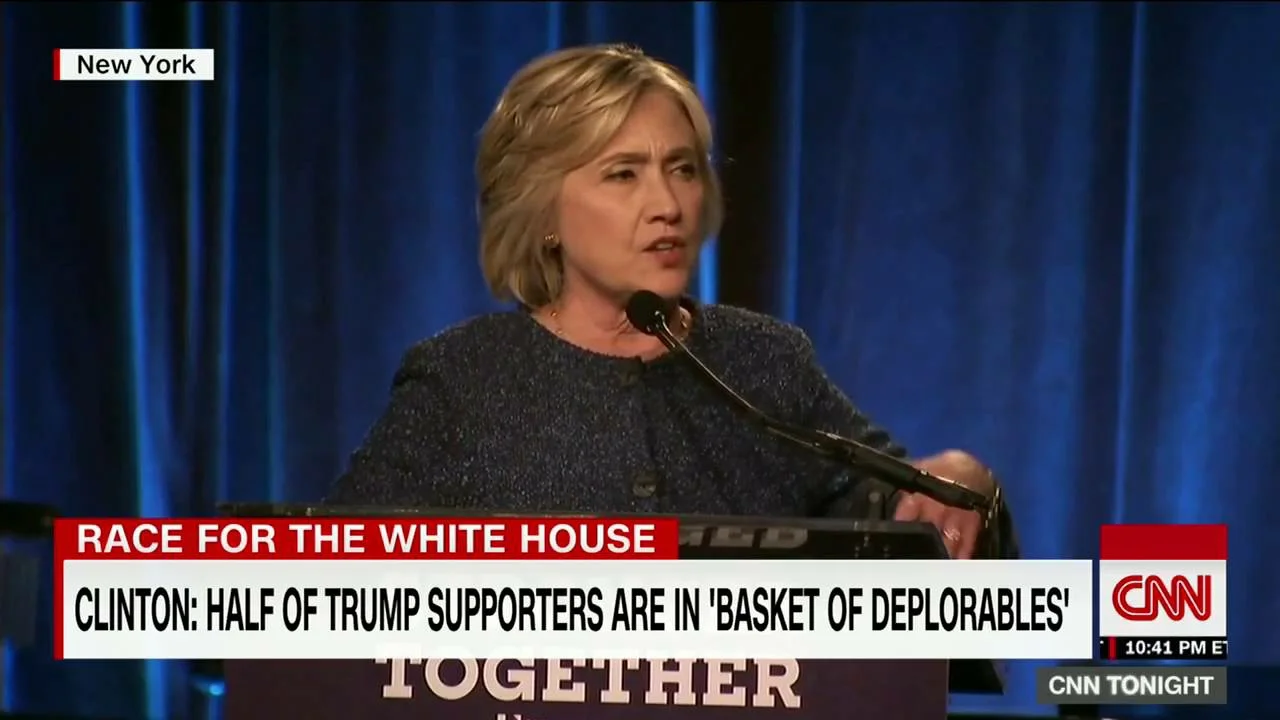
- Ad hominen: President Trump's tweets are an obvious example, but I'll use Hillary Clinton's "basket of deplorables" for this example. It's an attack without evidence.
If it's not too charged (and a bit complicated), I may talk about Senator Elizabeth Warren's reading of Coretta Scott King's 1986 letter about Jeff Sessions, the attorney general nominee. An LA Times opinion piece explains the ad hominen issue well:
"The original intent of the rule, if you will, was to preserve comity and focus the attention senators on substance rather than ad hominem arguments. But Warren was commenting on Sessions not as a colleague but as the nominee to a position in the executive branch; his character (as perceived by Mrs. King) was central to her argument."
- False analogy: This one will be a question to students. Nordstrom dropped Ivanka Trump's brand, and President Trump criticized the decision on Twitter (although The Wall Street Journal reports a 32% sales decline). This may have been an ethics violation itself, but the false analogy came in the reporting. Kellyanne Conway was charged with an ethics violation for, as a member of the White House staff, promoting Ivanka Trump's products on Fox & Friends:
"Go buy Ivanka's stuff, is what I was [saying] - I hate shopping and I'm going to go get some myself today."
"This is just...it's a wonderful line. I own some of it... I'm going to give a free commercial here. Go buy it today, everybody. You can find it online."
A Breitbart article agrees with the charges, but is this "wildly disproportionate"? The article discusses a SiriusXM interview and includes a few comparisons to democrats' promoting for-profit companies:
"Obama administration directly involved government in vastly larger business dealings, most dramatically by using the Internal Revenue Service to force Americans to buy products from preferred insurance companies under Obamacare."
"President Obama's pushing green energy technology and electric cars, such as the Chevy Volt."
"...Clintons' case...pushing the Clinton Foundation and using their government power to get people to donate to the Clinton Foundation as a form of quasi-bribery."
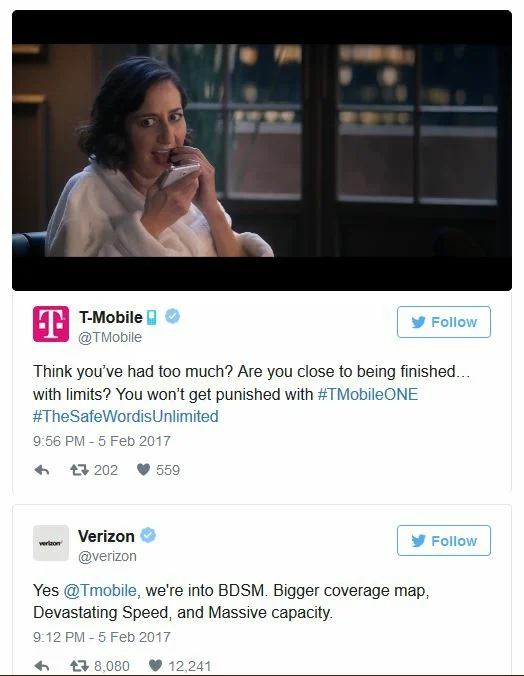
Are Verizon and T-Mobile Going Too Far on Twitter?
 T-Mobile's sex-themed commercial continued on Twitter with the company trading barbs with Verizon, the ad target. Actress Kristen Schaal stars in the ad and seemed to enjoy being "punished" by Verizon for going over her data plan.
Some thought the ad was cute, but the tweets seemed to get out of hand. A Mashable article sums it up well: "It was all pretty creepy coming from the marketing departments of two of America's biggest telecoms. And most Twitter users were not having it." Tweets encouraged the companies to end it:
- "K guys. This has OFFICIALLY gone too far."
- "50 Shades of Don't"
T-Mobile CEO John Legere is known for some outlandish behavior. A CNBC article this month calls his behavior "authentic," for example using the "f-bomb," and Legere explains why he is the way he is:
"The trick for me is, I really believe that I act, behave, and speak the same way my customers do. I say what they think on behalf of them. If you look, most of my colorful nature and antics is to drive change that benefits customers."
Discussion:
- Do you find the commercial itself funny?
- What's your view of the ongoing exchange between Verizon and T-Mobile? In this case, was it worth the risk of offending?

NFL Rejects GNC Ad
 GNC, the vitamin store company, is trying to improve its image, but the company won't get a spot in this year's Super Bowl. Although Fox News accepted the ad, the NFL pulled the plug.
According to AdAge, "Jeff Hennion, exec VP-chief marketing and e-commerce officer at GNC, said the NFL objected to its commercial because fewer than 3% of its products include two of the 162 substances banned by the league. According to Mr. Hennion, the NFL has approval rights over commercials in the big game." NFL also wanted GNC to change its logo, which has the name on a pill bottle. The company was working on that, but the commercial was still rejected.
Discussion:
- Why do you think the NFL rejected GNC's ad? Is it about the banned substances or something else? Related question: What's your view of the ad?
- I can't find a statement from the NFL. Should the company make a comment? What are the advantages and potential downsides?
- GNC makes an interesting argument with the 3% claim. Do you find it convincing? Consider principles from Chapter 9.
Users #DeleteUber
Uber users aren't happy with the company's surge pricing during a New York City taxi protest. NYC yellow cabbies delayed JFK airport pickups for an hour to protest President Trump's ban on travel from predominantly Muslim countries.
Trouble started for Uber when its pricing tool showed higher prices because of the shortage. Uber says it was automatic-not intended to take advantage of the taxi drivers' decision. The company also suspended the surge but not before #DeleteUber started trending.
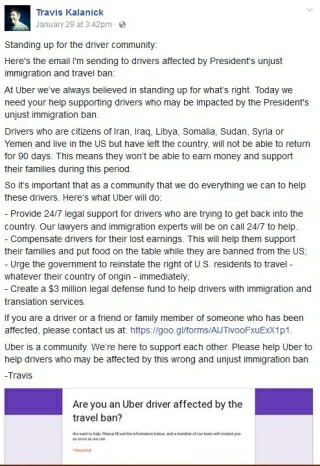
Meanwhile, Uber CEO Travis Kalanick posted a call for support for drivers affected by the ban on his Facebook page.
A Yahoo story, "The Day Lyft Was Bigger than Uber," explains that some users have been favoring Lyft since Kalanick joined Trump's advisory board, while others became fans when Lyft donated $1 million to the American Civil Liberties Union (ACLU), which has been at the forefront fighting the president's new policies. The uptick for Lyft was significant: "... data from third-party app tracking firm App Annie indicates Lyft surpassed Uber in the US on Sunday for most app downloads on iOS in the US in a single day - more than twice the number of times people downloaded Lyft just two weeks prior. Downloads for the Android version of Lyft's app in the Google Play store also saw a significant boost that day."
Discussion:
- Some say boycotting Uber isn't the best way to protest, particularly because the CEO is against the president's actions. What do you think?
- Assess Kalanick's statement on his Facebook page. What are his key messages?
- How do you feel about Uber? Do you buy the argument that the surge pricing wasn't capitalizing on the taxi protest?
CEOs Respond to Trump's Executive Order
 The New York Times reports "Frantic Phoning Among CEOs" about how they should address President Trump's ban on travel from Muslim-majority countries. Leaders want to oppose the ban but are concerned about "poking the bear," according to the article. The new president has taken tweet jabs at others, for example, the union leader involved in Carrier negotiations when he spoke out.
In a statement on the Starbucks website, Schultz opposed initiatives around DACA, building a wall, the Affordable Care Act, and immigration. He pledged to employ 10,000 refugees.
Mark Zuckerberg and Tim Cook also have come forward. Cook focused on Apple, of course: "In my conversations with officials here in Washington this week, I've made it clear that Apple believes deeply in the importance of immigration - both to our company and to our nation's future. Apple would not exist without immigration, let alone thrive and innovate the way we do." Other tech company leaders have weighed in their opposition: Airbnb, Uber, Lyft, Facebook, Google, Apple, Amazon, Expedia, and Microsoft.
The Times called financial firms' response more "moderate." For example, Lloyd Blanfein of Goldman Sachs said, "For us to be successful, our men and women must reflect the diversity of the communities and cultures in which we operate. That means we must attract, retain and motivate people from many backgrounds and perspectives. Being diverse is not optional; it is what we must be."
The article also noted energy and heavy industries' "mixed-bag" response, consumer and retail companies' resistance, and media and telecom's "no comment."
Discussion:
- What risks and rewards do CEOs face in addressing the travel ban?
- Why are industries responding differently? What does each have to lose or gain?
- Assess Howard Schultz's statement. While others are questioning how and whether to respond, he is on it. Why?
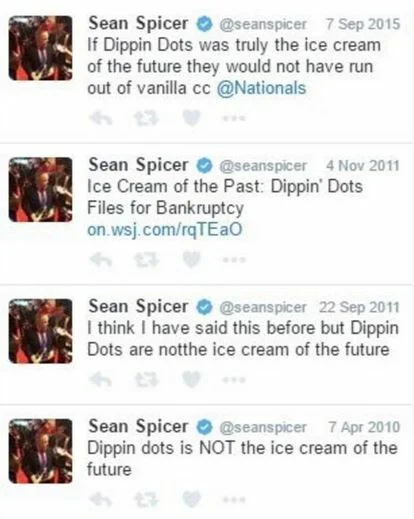
Dippin' Dots Responds to Spicer
 White House Press Secretary Sean Spicer has periodically blasted Dippin' Dots via tweets over the years. Now the company has responded in an open letter.
In an NPR interview, the CEO of the ad agency said they were concerned about getting in the political mix, but people were expecting the company to respond, so they had little choice. The company executives decided how to respond: "Scott Fischer, the CEO of Dippin' Dots, and his executive team wanted to openly address the issue in a way which was transparent and stayed true to their brand values – fun, community, and camaraderie."

Dippin' Dots offered to serve the White House and press, but Spicer suggested treating the military and first responders. It's not clear how this might happen.
Discussion:
- How well did Dippin' Dots handle the situation? What were the risks?
- It sounds as though Dippin' Dots responded because of the social outcry. Should the company have jumped into the conversation with Spicer earlier? How could they have done this?
Uber Pays $20M for Misleading Drivers
 Uber has been in the news several times for questionable business practices. Now, the company will pay $20 million to drivers because of a suit by the US Federal Trade Commission.
Ads on Craigslist and promotions on the Uber website boasted, "the potential income a driver on UberX can make in a year is more than $90,000 in New York and more than $74,000 in San Francisco." Boston drivers, Uber said, could make $25 per hour. But that is rarely the case: less than 10% of drivers in Boston earned that much, and drivers in NY and SF made, on average, $61,000 and $53,000.
Critics say Uber shifts risk and other expenses, such as car purchases, gas, and repairs to drivers, who don't reap the advertised benefits.
The company disputes how the FTC calculated income and responded to the settlement:
"We're pleased to have reached an agreement with the FTC
"We've made many improvements to the driver experience over the last year and will continue to focus on ensuring that Uber is the best option for anyone looking to earn money on their own schedule."
Discussion:
- What is your experience with Uber as a company? How does this news factor into your view of Uber?
- What could be the discrepancy between how Uber calculates income and how the FTC sees the situation? How credible do you find Uber's argument?
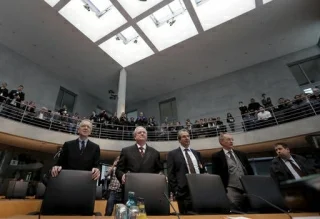
VW's Winterkorn Responds to Questions
 Martin Winterkorn, Volkswagen's former CEO, responded to what the The New York Times calls "polite grilling" by the German government about the emissions scandal.
Winterkorn has a tough time defending himself when the company already admitted using software to cheat emissions tests. Several executives were indicted, including many who reported directly to him. As the Times reports, "Volkswagen's plea agreement with the Justice Department in Washington last week left no doubt that the fraud was the work of dozens, if not hundreds, of employees, rather than the result of a handful of rogue engineers as the company had first claimed."
But Winterkorn said he didn't know about the "defeat device" and "never did I have the impression that anyone was afraid to speak an open word with me." The Times article further questions the likelihood that Winterkorn knew nothing:
There is some reason to doubt Mr. Winterkorn's assertion. Mr. Gottweis, a Volkswagen executive who specialized in solving technical emergencies around the world, warned in a memo in May 2014 that American regulators were likely to investigate "whether Volkswagen implemented a test detection system in the engine control unit software (so-called defeat device)."
The memo was included in a stack of weekend reading given to Mr. Winterkorn at the time, but Volkswagen has said it was not clear if Mr. Winterkorn had read it. Mr. Gottweis reported directly to Mr. Winterkorn, however, and it is deemed unlikely that a warning from an executive known internally as "the fireman" would have been ignored.
Discussion:
- Do you believe Winterkorn's stance? Why or why not?
- How does Winterkorn benefit from continuing to deny knowledge of the defeat device? If he is lying, what are the potential consequences to him personally and professionally of admitting the truth?
- Some see this testimony as a missed opportunity for Volkswagen. Can you explain this point of view?

APA Responds to Book Controversy
 Japanese Hotel Group APA placed copies of a book written by the company CEO in all hotel rooms. Sounds nice, but the book calls the 1937 Nanjing massacre of 300,000 Chinese troops and civilians by the Japanese a "fabrication."
APA Founder Toshio Motoya wrote under a pen name but admitted to writing the book and having them distributed throughout the group's 370 budget hotels. A hotel guest's video showing the book content went viral on Weibo with 95 million views, according to Skift. At least one Chinese travel company in Japan stopped booking guests in APA hotels.
A spokesperson for the Chinese Foreign Ministry, Hua Chunying, said, "This once again shows that some forces in Japan are still reluctant to look squarely at history, and even try to deny and distort history."
APA responded in a statement, translated here. In this excerpt and throughout the statement, the company makes no apologies:
Although we acknowledge that historic interpretation and education vary among nations, please clearly understand that the book is not aimed to criticize any specific state or nation, but for the purpose of letting readers learn the fact-based true interpretation of modern history. Therefore, we have no intention to withdraw this book from our guest rooms, no matter how many denounces may be made about it from whatever viewpoint. Japan constitutionally guarantees freedom of speech and no one-sided pressures could force any assertion made get repealed.
Discussion:
- Did the company make a mistake by placing the books in hotel rooms? What are the rationale and consequences?
- How do you assess the company's response? Consider principles of responding to customer complaints in Chapter 7.
- Would you stay at an APA hotel? How, if at all, does this situation influence your decision?

SeaWorld Responds to Tillikum's Death
 Featured in Chapter 7 of the 10th edition, SeaWorld has not responded well to controversy about keeping orcas in captivity. Tillikum, an orca with a starring role in the movie Blackfish, died on January 6. In response, SeaWorld updated its Tillikum page with news about his "life and care," which, of course, have been in question for the 25 years he lived and worked at the park. The company also produced a video, "In Memory of Tillikum."
In a statement on its website, the company does acknowledge Dawn Bradshaw's death. However, the recent approach seems to blame Tillikum, while previous communications blamed Bradshaw and her wayward ponytail.
While today is a difficult day for the SeaWorld family, it's important to remember that Tilikum lived a long and enriching life while at SeaWorld and inspired millions of people to care about this amazing species.
Tilikum's life will always be inextricably connected with the loss of our dear friend and colleague, Dawn Brancheau. While we all experienced profound sadness about that loss, we continued to offer Tilikum the best care possible, each and every day, from the country's leading experts in marine mammals.
In December, PETA named Tillikum its first "animal of the year." When he died, PETA president and founder Ingrid Newkirk wrote an opinion article for Time Inc. titled, "Tillikum Died for His Freedom."
Discussion:
- How well is SeaWorld handling communications around Tillikum's death? Should the company do something differently now?
- How well is PETA capitalizing on the chance to get its message out? What persuasive strategies does Newkirk use in her Time Inc. op-ed? Was a Time article a good choice? What other channels did PETA use?
Plagiarizing a Dissertation Puts Trump Pick in Question
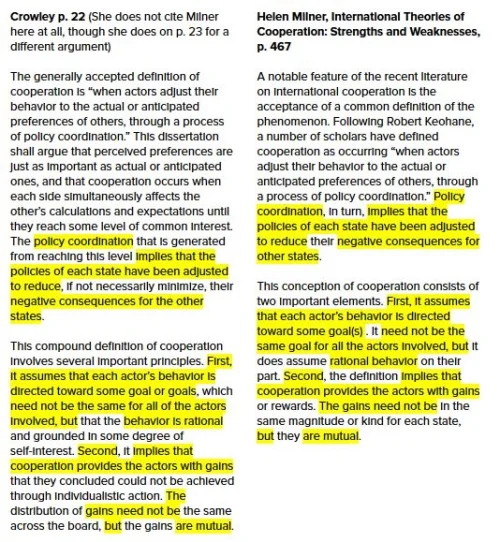
President-elect Trump's choice for the senior director of strategic communications for the National Security Council is Monica Crowley, a political commentator. Politico reviewed her dissertation in international relations from Columbia University and found multiple issues of using quotations with quotation marks, paraphrasing too closely, and missing citations.
The example shown here is one of twelve Politico questioned.
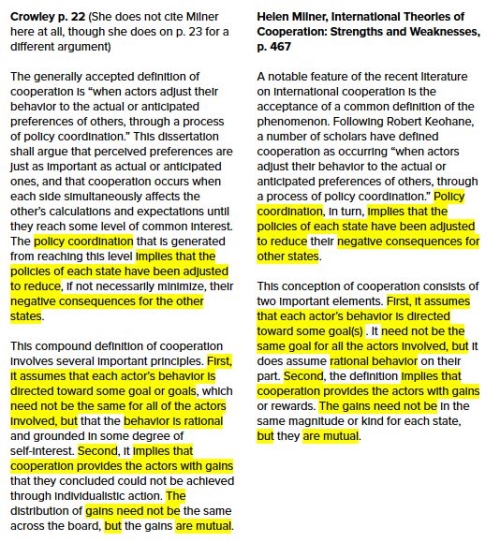
The Trump team is standing by their candidate: "Any attempt to discredit Monica is nothing more than a politically motivated attack that seeks to distract from the real issues facing this country." And Columbia University is trying to avoid the controversy, as a media representative told The Chronicle of Higher Ed:
"We have no comment on Monica Crowley's dissertation, which was submitted in 2000 and is publicly available. The university's process for addressing concerns raised about university research preserves the confidentiality of any review, and even the fact of a review's existence is confidential while it is underway. Columbia is committed to upholding the very highest standards of integrity and credibility in academic research."
CNN reports more than 50 instances of plagiarism in Crowley's 2012 book, What the (Bleep) Just Happened? In a statement, publisher HarperCollins said, "The book, which has reached the end of its natural sales cycle, will no longer be offered for purchase until such time as the author has the opportunity to source and revise the material."
Discussion:
- Review the examples presented by Politico and CNN. What principles of documenting sources described in Chapter 10 are missed?
- Is this a big deal, or is the media overblowing the situation, as the Trump team believes? Does her potential position as the senior director of strategic communications influence your opinion?
- What should happen now? How should Crowley and the Trump team handle her pending position?
Snap Inc. May Have Falsified Metrics
 As Snap Inc. plans for an IPO, a former employee says he was fired for trying to reveal falsified metrics. Anthony Pompliano claims he was terminated only three weeks into his tenure at Snap Inc. running the new user growth and engagement team. Pompliano also charges Snap Inc. with hiring him from Facebook to get proprietary information.
"We've reviewed the complaint. It has no merit. It is totally made up by a disgruntled former employee," said Mary Ritti, Snap's vice president of communications. The company also said Pompliano was fired because he was "incompetent" and "not adequately performing in his position."
Pompliano's attorney said, "Snapchat's leadership saw Mr. Pompliano as an impediment to their planned IPO because he refused to turn a blind eye to Snapchat's misrepresentations." (Snapchat is the former name of Snap Inc.) The claim also charges Snap Inc. with damaging the former employee's reputation and ability to find new work.
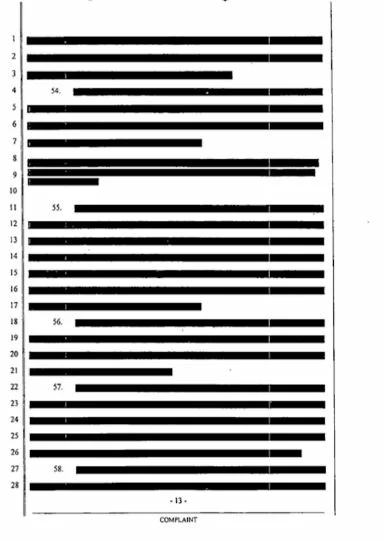
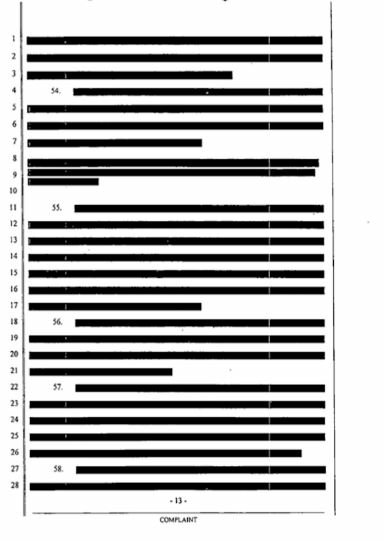
Business Insider posted the entire court filing, but several pages are heavily redacted, like the one shown here. These darken parts may represent proprietary Snap Inc. information.
This isn't the first time Snapchat's integrity has been questioned. In 2014, the company settled a claim with the Federal Trade Commission that it exaggerated how easily images sent through the app disappear. The news led to many doubting the safety of sending personal images.
Discussion:
- In what ways could Snap Inc. exaggerate metrics to potential investors? What do you think is the issue here?
- How credible do you find Pompliano's claim? How can a judge decide such a claim?

In France, Employees Can Disconnect
 France passed a new law allowing employees the "right to disconnect" from email after their regulated 35-hour work week. French unions blame technology for causing an "explosion of undeclared labor," and we know something about this in the United States. Rather than ban after-work email, which may be impossible to achieve, the ruling requires companies to give establish new guidelines for emailing after work.
Some question whether the strategy will hurt France competitively; the country already has generous vacation and other benefits. However, the United States is notoriously behind the times with some labor laws. For example, we are the only industrialized nation without paid parental leave.
Companies have taken other steps to encourage employees to talk with each other face-to-face and to have a life outside of work. Limiting the hours when employees are expected to respond to email, discouraging email during vacations, and sending fewer of them are some common practices.
Discussion:
- What's your view of the new French law? What could be some positive and negative results?
- Short of instituting a new federal law, what can managers do to curb email within their organizations? Consider a few strategies-starting with the top, of course
Japanese Ad Exec Resigns After Employee Suicide
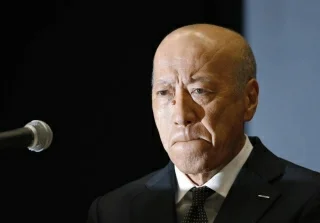
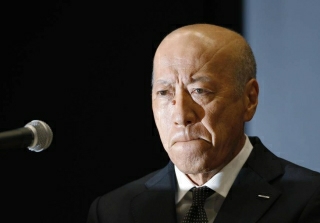 The president of Dentsu Inc., Japan's largest advertising agency, resigned because of an overworked employee's suicide last year. In a news conference, Tadashi Ishii said, "We deeply regret failing to prevent the overwork of our new recruit. I offer my sincere apology." He also said, "Although we took various countermeasures, the issue of overwork has not been improved. I will take full responsibility."
According to an executive at the firm, 24-year-old Matsuri Takahashi was forced to work long hours and underreport her time. She died by jumping from a high floor of the company's living quarters.
An employee who watched the news conference said, "His stepping down is a natural decision to prevent the company's image from deteriorating further." Resigning is common in these situations in Japan.
Discussion:
- Employees seem skeptical that the company will change, but they are turning out the lights at 10 pm to encourage people to stop working and go home. What else could they do to change the culture of overwork?
- Advertising firms in the United States have a similar reputation for long hours. Why do you think that's the case?
- Under what, if any, circumstances would you take a job that requires 100 hours of work each week?
Retailers Sued for Fake Sales
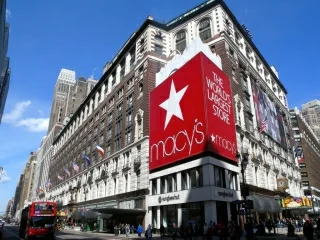
 When is a sale not really a sale? Macy's, Kohl's, JCPenney, and Sears are facing lawsuits for "false reference pricing"-showing prices as "regular," "list," or "original" when they never were. According to the Consumerist:
Under California law, retailers are prohibited from advertising an alleged former price of an item less the alleged former price was the prevailing market price within three months of the advertisement, or unless the date when the former price was in effect is clearly advertised.
To this end, the city [Los Angeles] claims that thousands of "sale" items were advertised at false reference prices.
In other words, items marked on sale were never sold at the so-called "original" price, and that's a misrepresentation.
The Los Angeles attorney who filed the suits said, "Customers have the right to be told the truth about the prices they're paying–and to know if a bargain is really a bargain. My office will fight to hold retailers responsible for their practices and to ensure consumers can make informed choices when spending their hard-earned money."
Checkbook.org brought a similar suit against some of these retailers in 2015. At that time, Sears made this statement:
"Sears disagrees with any suggestion that its pricing is misleading or deceptive. Sears is focused on providing its members with great prices on a wide variety of products and services," adding that it "complies with applicable pricing and advertising laws."
"... as a multi-channel, leading integrated retailer we are uniquely positioned to provide discounts to our members and customers in a number of different, legally compliant ways, including things like member pricing, store or online only promotions, clearance offers, and offers from third-party marketplace sellers," the statement said. "It is unfortunate that Checkbook.org did not appear to take these factors into account before making its assumptions."
Discussion Starters:
- How are you influenced by advertised "sales"?
- How believable do you find the two statements from 2015? What defense will the retailers bring to this suit?