

WikiLeaks: Is Big Business Next?
The Story
 After over 250,000 U.S. State Department documents became public by WikiLeaks, the organization's founder warns that big business may be next in line for a security breach. Companies have reason to worry. The WikiLeaks documents revealed embarrassing information, such as references to the prime minister of Italy as "feckless and vain" and to North Korea's leader as a "flabby old chap." If documents and internal communications of "a major American bank" are revealed, as Julian Assange promises, a company may suffer deep embarrassment.
Discussion Starters
- What are the ethical considerations of making companies' documents and internal communications public? What is the value to society? What are the potential risks?
- Does the possibility of your email or other documents becoming public concern you? Does this encourage you to rethink how you write messages? How?
- How can individual managers working for a company protect themselves from these attacks?
Assignment Ideas
- Look at emails you have sent over the past six months. Which would cause you embarrassment if they were published in the Wall Street Journal?
- Write an email to Julian Assange, the founder of WikiLeaks. Take a position: either convince Assange to continue his pursuit of business OR convince him to stop his pursuit. Be sure to explain and support your position.
Can Facebook Get You Fired?
The Story
Angry at her boss, an ambulance company employee posted negative comments about him on her Facebook page. Three weeks later, the employee was fired. The company claims that the employee was terminated for other reasons, but the National Labor Relations Board (NLRB) is suing for illegal discharge. The claim is based on the National Labor Relations Act, which protects employees' "concerted activity." The claim also challenges the company's social media policy, which tries to curb employees' online comments about their companies. This case will be an interesting one to watch!
Update (2/8/11): The case was settled, which doesn't change laws around Facebook posts but does put companies on notice.
Discussion Starters
- The employee, Dawnmarie Souza, used strong language about her supervisor. Legal or not, what's your view on whether this was a good idea?
- What situations have you encountered where employees' (or students') Facebook post have gotten them in trouble?
Assignment Ideas
- First, consider NLRB's news release about the case. In the third paragraph, the NLRB states that "the company's blogging and internet posting policy contained unlawful provisions, including one that prohibited employees from making disparaging remarks when discussing the company or supervisors and another that prohibited employees from depicting the company in any way over the internet without company permission." Next, review a company's social media policy. (You'll find many here.) Does the company's policy include language that restricts an employee's online activity? If so, write an email to the company's VP, social media, explaining the situation and warning him or her that the policy is in question (although nothing has been decided yet).
- Research other cases where employees have been terminated for online comments. Choose one situation to discuss with the rest of the class. Do you think the termination was appropriate in this case? Why or why not?
- Look at your Facebook page. Are there any posts that could be called into question by a past or potential future employer?
German Companies Block Social Networks
The Story
To reduce security threats and address concerns about productivity, several German companies are blocking employees' access to social networks.

Discussion Starters
- If you have worked in an office environment, how active were you on social networks like Facebook? Did this affect your productivity?
- Will this action stop employees from participating in social networks? Why or why not?
- The move addresses concerns about viruses and employees revealing trade secrets online. How will blocking access to social networks address these concerns? How will they fail to address these issues?
- What are the downsides of blocking employees' access? What are the benefits to companies of having employees contribute information about their brand on social networks?
Assignment Ideas
- Employees can speak positively on behalf on their companies, which could promote a brand. Contribute a positive comment about a company or brand on a social network.
- Review a Facebook fan page for your favorite brand or product. Analyze the comments: are most comments positive or negative? What can you conclude about this?
- How does this policy of German companies compare with common policies of U.S. companies? Review a few social media policies of U.S. companies and write a report to summarize your findings.
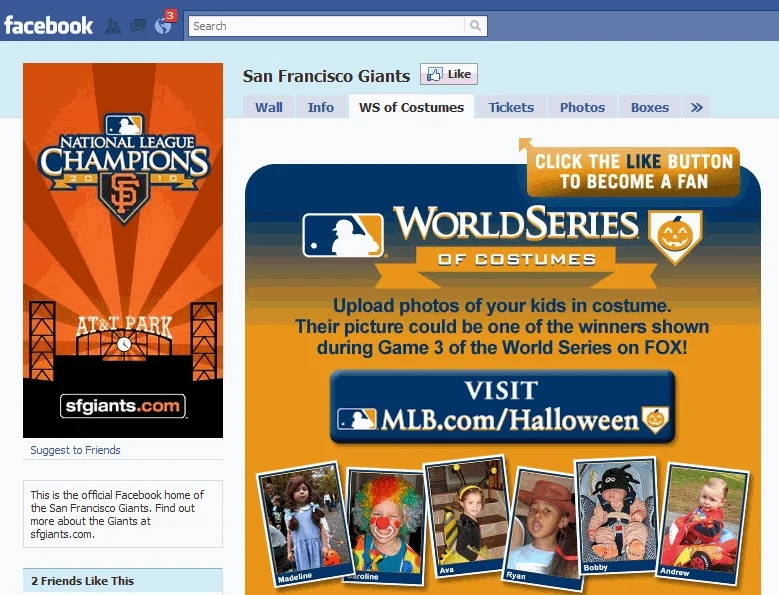
World Series Goes Social
The Story
Opening Day of the World Series brings new ways for fans to celebrate -- and commiserate -- with other fans.


Discussion Starters
- How would you expect social media tools to affect MLB fans' connection to the games and to each other?
- From the teams' owners' perspective, what are the challenges of managing social media? What are the benefits to the teams?
Activity Ideas
- Compare Facebook fan pages of the San Francisco Giants and the Texas Rangers. Which is more effective for engaging fans and why? Write an email to the creator of the weaker fan page with 3-4 suggestions for improvement.
- In small groups, search for news about the World Series on Twitter. What keywords work best for your search? What does your search reveal about how people are using Twitter?
University Blocks Access to Social Media

The Story
Could you live without Facebook for a week? Students at the Harrisburg University of Science and Technology couldn't. To encourage students, faculty, and staff to think about the role social media plays in their lives, the university blocked access to several social media sites from the campus network. University officials estimate about 10% of the students went "cold turkey." The rest used their smartphones or other wireless networks to stay connected.
Read more here. Image source: blog.theduffyagency.com.
Discussion Starters
- Why would the university block access to social media sites? Ideally, what was the administration hoping would happen?
- What are the downsides of the university's move? What were the possible repercussions for students, staff, faculty, and the university as a whole?
- Overall, do you think this was a good strategy for the university? How would you react if your school blocked access to sites for a week?
Assignment Ideas
- In small groups, discuss how you use social networking as a distraction. How does your online activity prevent you from doing your work and from participating in other types of communication?
- Give it a try! Take a break from Facebook and your other favorite social networking sites for a week (or how about a day?). After the break, write a brief memo to your instructor to discuss what you missed out on and what you gained from the experience.
Get Your Inbox in Order

The Story
Google just released a beta version of Priority Inbox, a tool to help you manage your Gmail. Priority Inbox categorizes messages, so you see the most important first. This may be a good way to manage some of your email overload.
Discussion Starters
- What are the effects of email overload? What challenges do you face in managing your own email?
- What alternatives to email are discussed in Chapter 1 and elsewhere in the book?
- In what ways do you think Gmail Priority Inbox might be useful for you? What new problems could it cause?
Assignment Ideas
- In small groups, discuss ways you manage email messages today (e.g., filters, rules, folders). On your own, try one or two of the ideas you heard from other students. See what works for you.
- If you use Gmail, install Priority Inbox and give it a try. If you haven't used Gmail, sign up for a free account and see how email is managed through conversations. Try it for a week to compare it to your current program.