
Analyzing an Opinion About Climate Disclosure
Students can analyze and debate an argument that Zillow should include climate risks on real estate listings. The situation raises questions about integrity—transparency in communication and consistency.
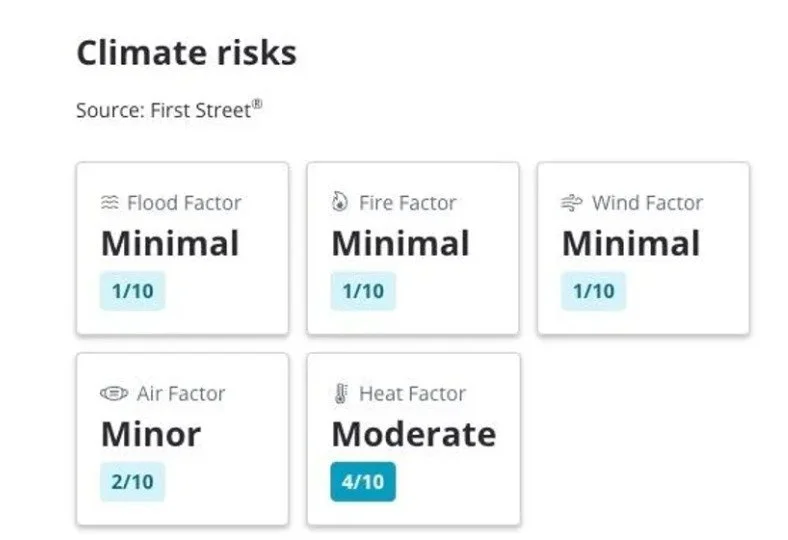
In an opinion letter, a nonprofit climate marketing executive argues that, despite pressure, Zillow should reinstate information about flood, wildfire, air-quality, and other home risks (shown here). Critics (mostly realtors and home sellers) argue that disclosures affect home prices.
This situation is ripe for student analysis and research. They might pursue questions such as the following:
Do home buyers want to know climate risks of homes for sale? What do they say are the reasons and how the information might affect home buying decisions?
Related to the first question: What is the reality? How does knowledge of climate risk affect home prices and home purchases? For example, how does location factor in, for example, whether people are looking locally or nationally?
Should home sellers be required to disclose climate risks? What are the ethical arguments of disclosure from the sellers’ perspective? How does this argument balance the consumer’s right to know?
Research mandated disclosures by U.S. state.
Zillow’s information, from the risk-modeling company First Street, has been questioned. How can we measure the quality of the data?
What are the strongest and weakest arguments in the opinion piece?
How does the opinion writer use logical arguments, emotional appeal, and credibility to persuade the reader?
To what extent does displaying or removing climate risk information align with or contradict Zillow’s mission? How is this a potential issue of integrity?
These assignments involve ethics, integrity, data, and persuasive communication. Students also might be interested in this topic for their own future—whether they buy or rent in an area vulnerable to climate events.