
Starbucks Communicates New Rewards
Starbucks changed its rewards program, reinstating tiers lost in 2019 and adding yet a higher status. The program encourages customer engagement, a good topic for business communication students in addition to analyzing the company’s language and graphic choices.
As always, customers earn “Stars” for buying stuff—more stars for more expensive stuff. But the company is moving away from everyone earns equally back to levels: Green and Gold, as in the past, and the new one, Reserve.
The word reserve deserves attention. I’m on the finance committee of a nonprofit organization, and we pushed back on our financial advisor for using “reserve” to describe our short-term investment fund. To some of us, the word would more appropriately describe our long-term fund: something stored away, not used unless necessary.
The Starbucks level follows this thinking. Reserve implies high social status, which is appropriate for Starbucks’ increased divisions. Wildlife and nature reserves are protected, exclusive areas. Only Reserve members receive a personalized card to flaunt while waiting for a latte. Of course, what isn’t stated is that those in the lowly Green and Gold categories receive rewards at lower rates, therefore devaluing rewards for most customers.
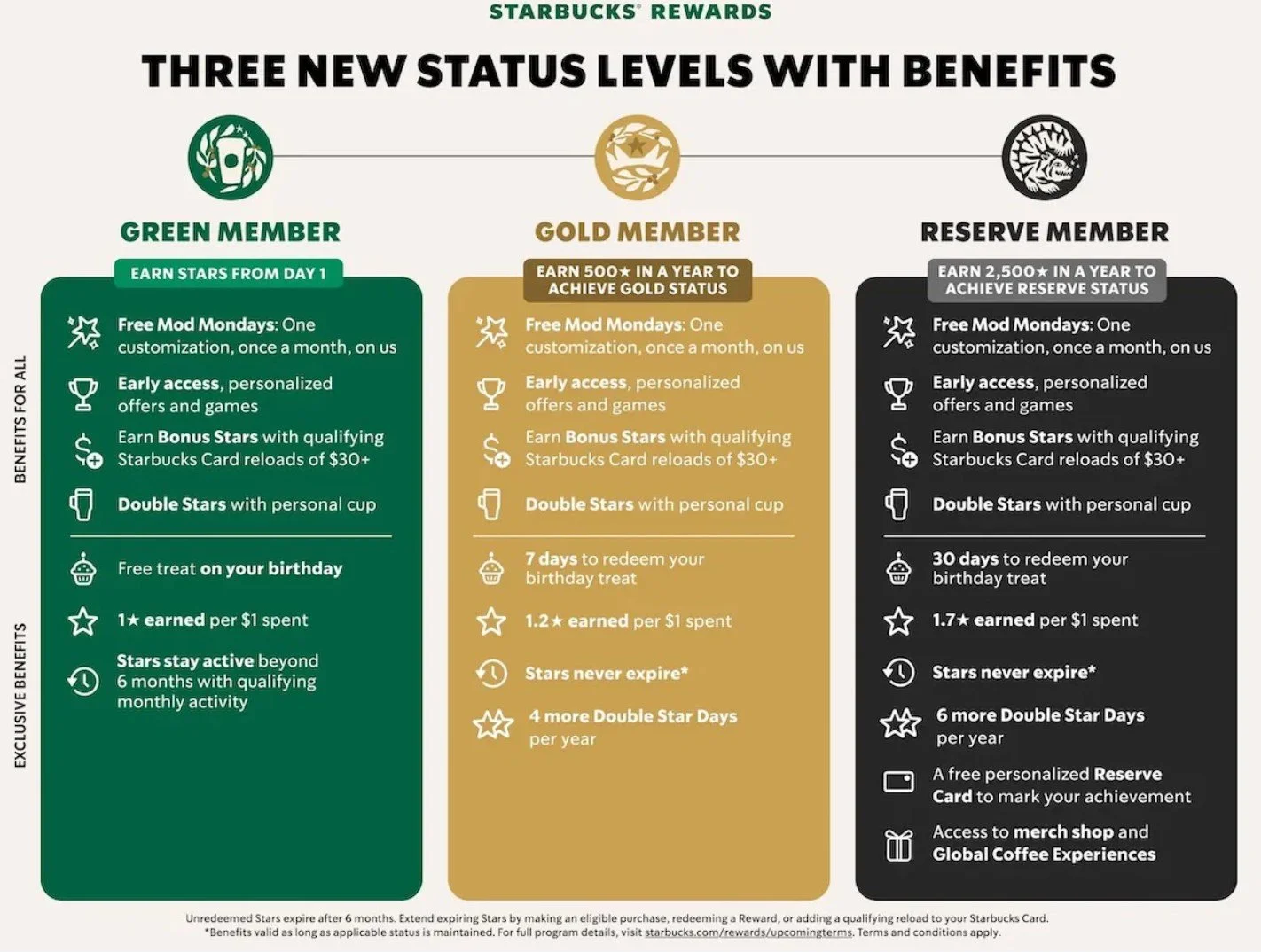
The three tiers are clearly explained in this graphic. Black indicating the highest level aligns with marketing we see in other industries, for example, “Black Label” Johnnie Walker and the American Express Centurion “Black Card.”
The global chief brand officer explained the focus on engagement:
We’re redefining the industry with customer-focused benefits that set a new standard and ignite fandom. Starbucks Rewards has always been about creating connection, and we’re evolving the program based on what our members told us matters most, offering faster, more meaningful benefits that make them feel appreciated. This evolution is a key milestone in our Back to Starbucks strategy and will reinvigorate what it means to be a Starbucks Rewards member.
Critics say, as the company encourages use of the app, customer data is collected with every click.