Land Acknowledgments Through an Audience Lens
New York Times columnist and Columbia University linguist John McWhorter argues in favor of land acknowledgments. Students may examine his perspective and others’ from a business communication lens, particularly to consider the objectives and audiences of such statements.
Land acknowledgments seem to be on the decline, partly as a reaction to the Trump administration’s attack on DEI policies and partly because critics say they are “performative.” But McWhorter says they are part of a broader strategy and that “some response is better than none.” He also provides an example that acknowledges original inhabitants and their ongoing relationship, which is a common criticism of more perfunctory statements:
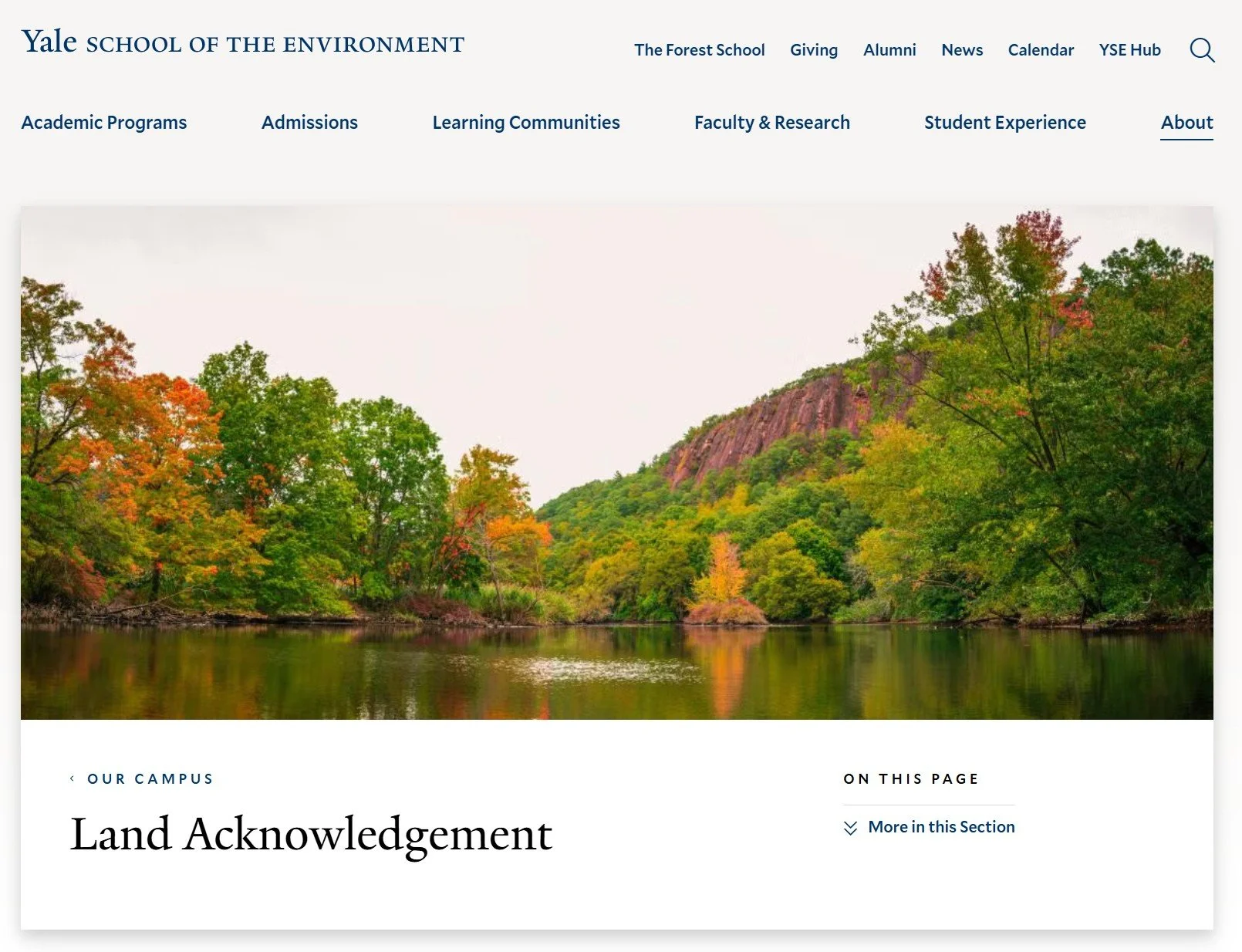
Yale University acknowledges that Indigenous peoples and nations, including Mohegan, Mashantucket Pequot, Eastern Pequot, Schaghticoke, Golden Hill Paugussett, Niantic, and the Quinnipiac and other Algonquian-speaking peoples, have stewarded through generations the lands and waterways of what is now the state of Connecticut. We honor and respect the enduring relationship that exists between these peoples and nations and this land.
What may be missing in the discussion of land acknowledgments is the audience. This video captures the awkwardness for an audience member at a theater production. After the land acknowledgment, she’s confused: “Should we go? . . . . If we’re on someone else’s land, shouldn’t we leave?”
As communicators, we consider our objectives: what do we want our audiences to think, feel, or do differently after hearing our message? Do we want them to feel sad? guilty? impressed? Do we want them to recognize the injustice to Indigenous people? Do we want them to donate? volunteer? engage with Indigenous communities?
Are land acknowledgments persuasive or informational messages? It’s not entirely clear. Is just hearing the message as a reminder enough?
How do students feel when they hear these statements? How do their own beliefs or identities affect their views?
McWhorter advocates for action in addition to statements and provides examples of Yale’s contributions to indigenous communities. The Association of Indigenous Anthropologists goes further, advocating for land acknowledgments to work toward reconciliation, reparation, and return of the land. Is that the purpose and the sincere effort of those making these statements? Without action, speakers risk an integrity problem: saying one thing but doing little to demonstrate their commitment.
Perhaps some combination of acknowledgment and action in the message is most appropriate. But that would make for a longer introduction than audience members at most events may tolerate.