
Customer Comm for Spirit Shutdown
Spirit Airlines has gone out of business, leaving passengers to scramble for refunds and other flights. Let’s look at the examples of bad-news messaging.
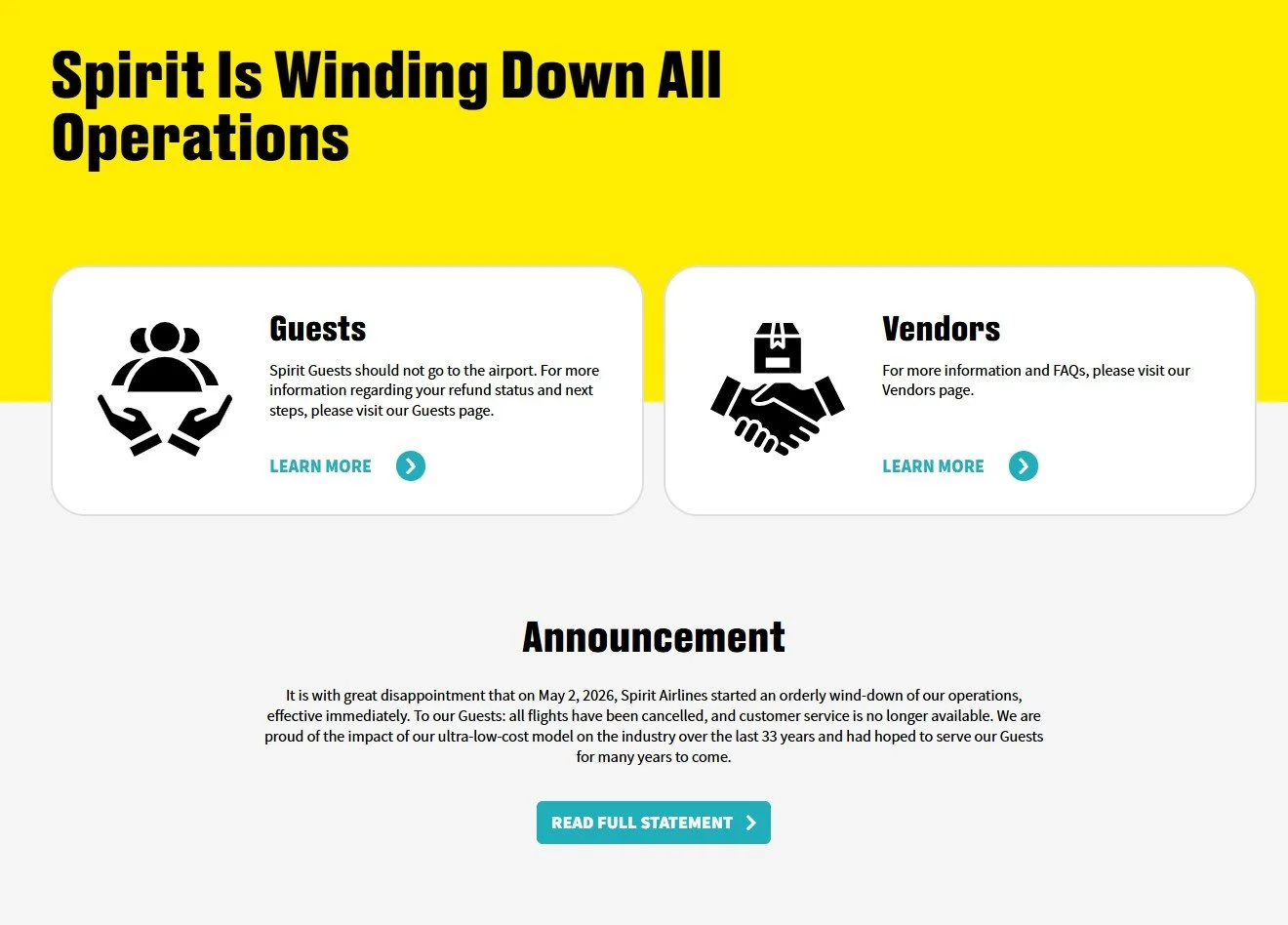
The website homepage(which redirects to spiritrestructuring.com) is clear enough with links for guests and vendors. The guest page says up front, “Spirit Guests Should Not Go to the Airport.” (Guests sounds quaint compared to other airlines’ customers or passengers.) Three links refer to what customers of a closing business might care about most: refunds, lost baggage, and lost found—items they hope to retrieve before it’s too late.
Refunds are guests’ primary concern, and the second section on that page addresses questions (some of which are about rebooking). FAQs further down also address rebooking, which includes no help from Spirit but links to other airlines. United, for example, has a banner notice:
Spirit customers who had tickets to fly between May 2 and May 16, 2026 can buy capped fares for most one-way flights to Spirit destinations. Visit united.com/specialfares.
Although customers might not know the term “capped fares,” they’ll probably get the point.
Articles like this one offer advice and contradict Spirit’s webpage, which doesn’t distinguish between credit and debit card payments—everyone gets a refund back to their card.
The full statement gives the bad news and, like the website, upfront discourages guests from going to the airport. The announcement explains part of the reasons for closing without directly blaming the Trump Administration, mentioning “no additional funding available to the Company” and the “the sudden and sustained rise in fuel prices in recent weeks.” Referring only to the “Administration,” the statement thanks Howard Lutnick and other agencies.
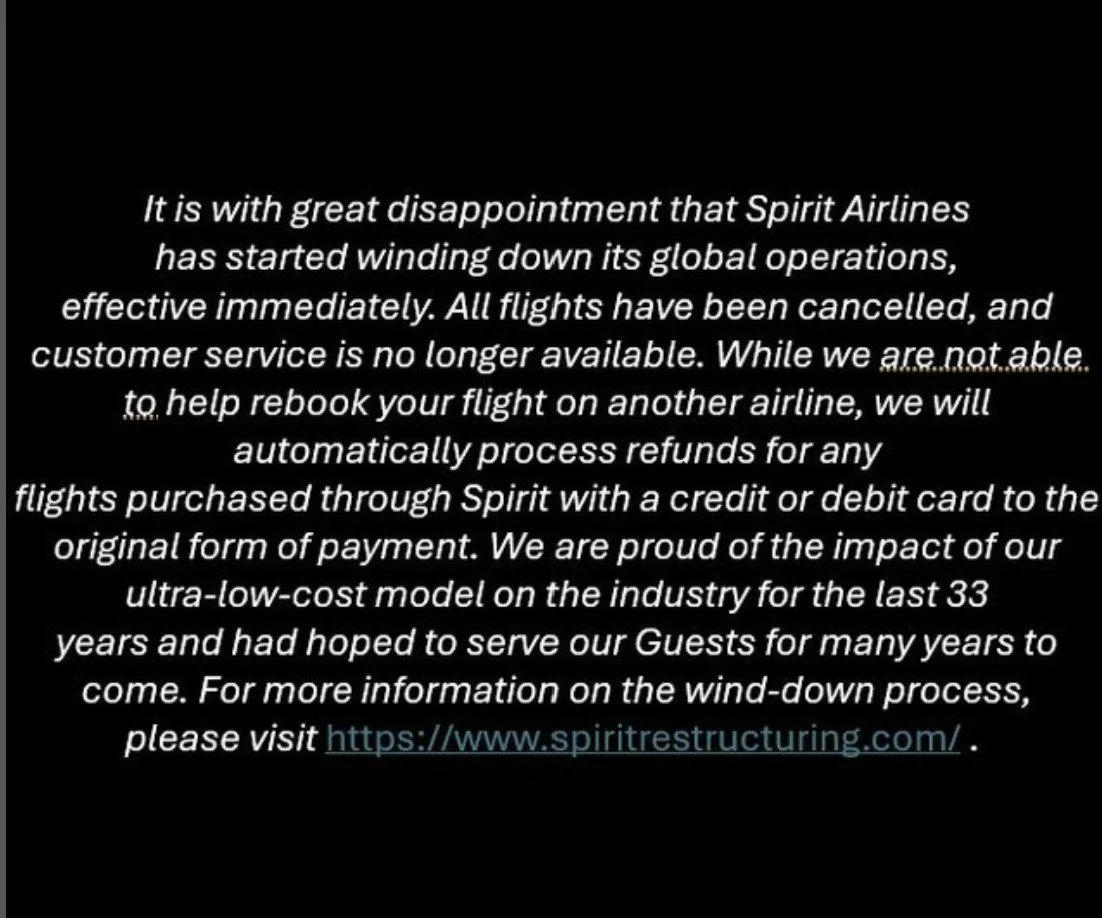
For “Spirit” Airlines, the statement is surprisingly dispirited—not that it should be upbeat, but it does ring flatter that we might expect. However, the statement is serving multiple audiences and perhaps doing the minimum for each, with guests as the primary audience. We would expect separate emails and meetings with staff.
The Instagram post (oddly, in reverse type on black) has a little more heart.
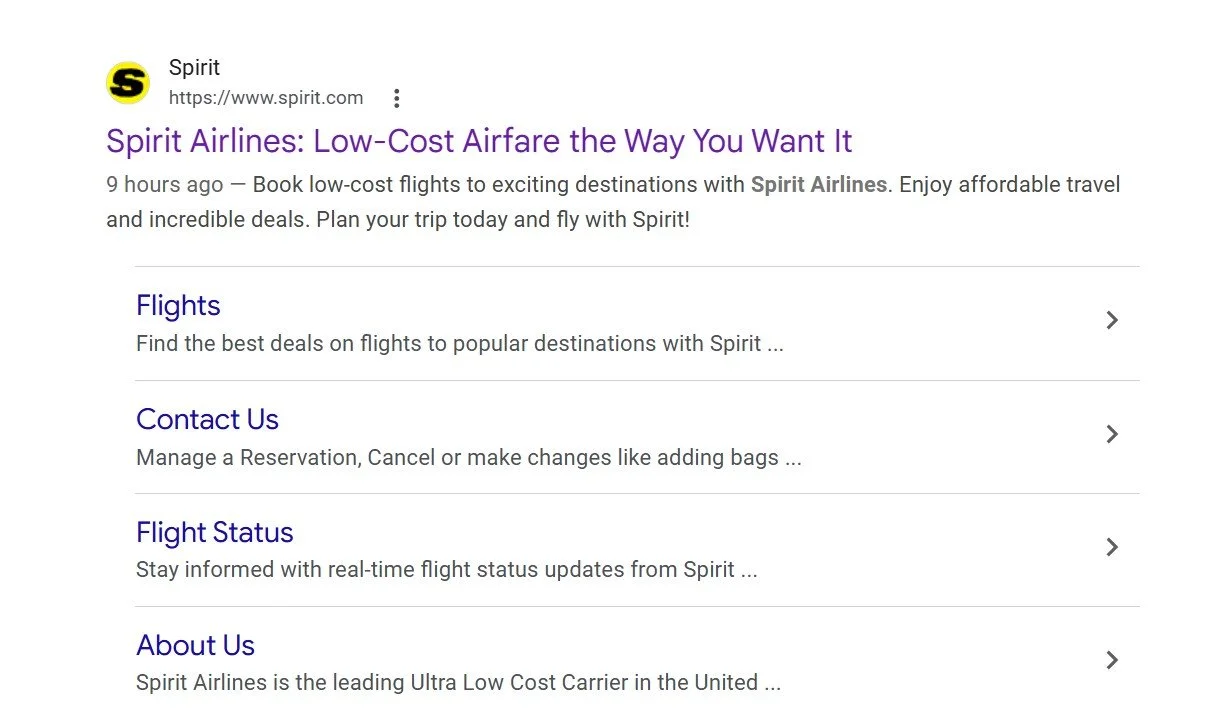
Google Search needs to be updated. That’s a tech step that was missed.
Overall, Spirit’s communications are clear for guests and others wondering what happened. We know the pressure low-costs airlines have been under, and recent world events was the final blow for this one.