
Communication Strategies to Oppose U.S. Forest Service Changes
In addition to companies’ own messaging that students may compare, a website, SaveUSFS, illustrates a communication campaign to mobilize opposition against changes to the US Forest Service.
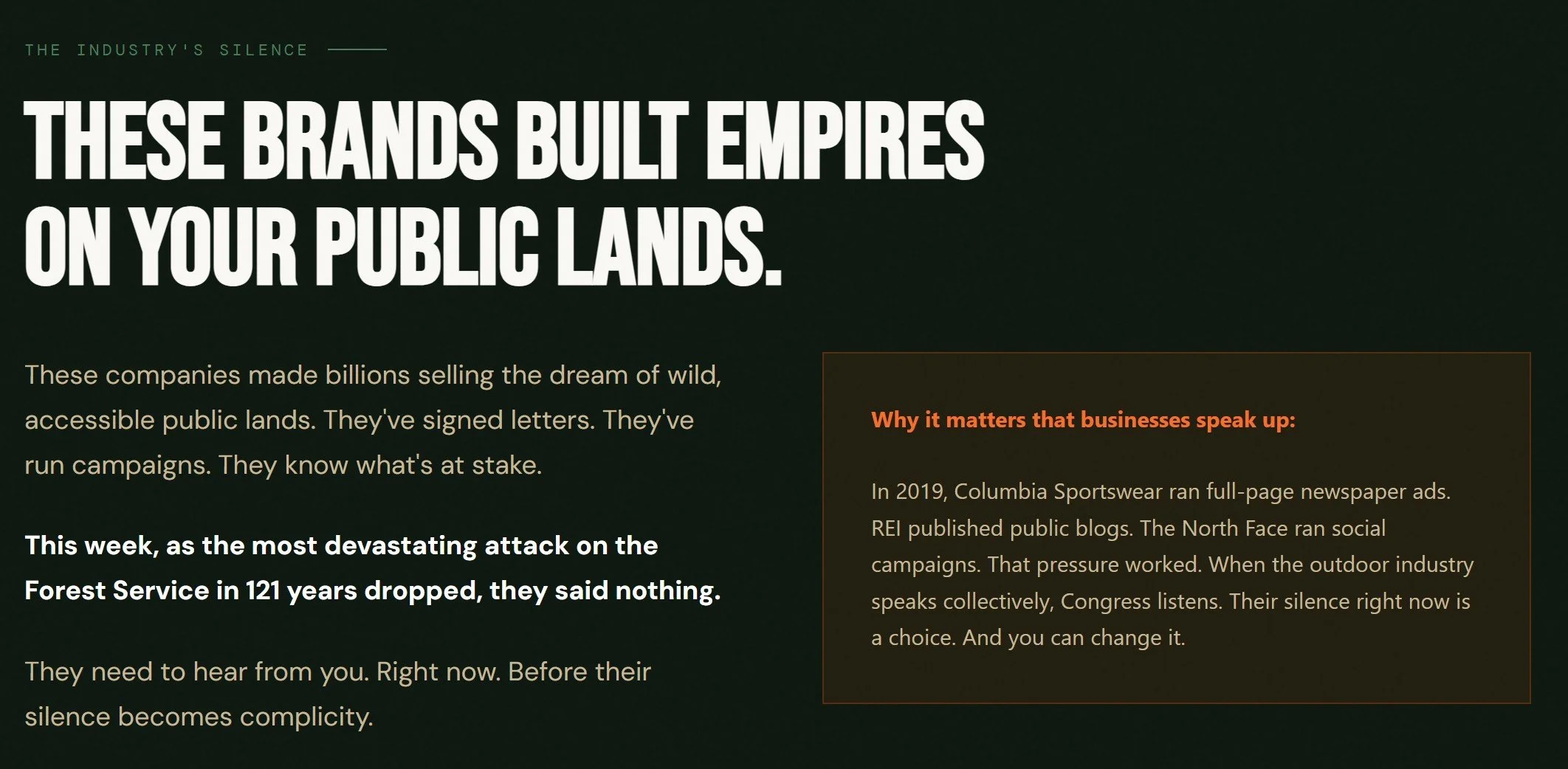
SaveUSFS: This website is a great example of a campaign with clear explanations, message examples, and calls to action. Students can identify the communication objective, which is primarily to get brands to speak out and pressure federal action. The site illustrates how to mobilize action by offering specific copy-and-paste language and ways to connect with brands. The clear organization and calls to action are most obvious in the site menu:
The Situation | The Stakes | The Brands | What To Say | Take Action
Patagonia: Not one to shy away from controversy, Patagonia published a statement with strong language:
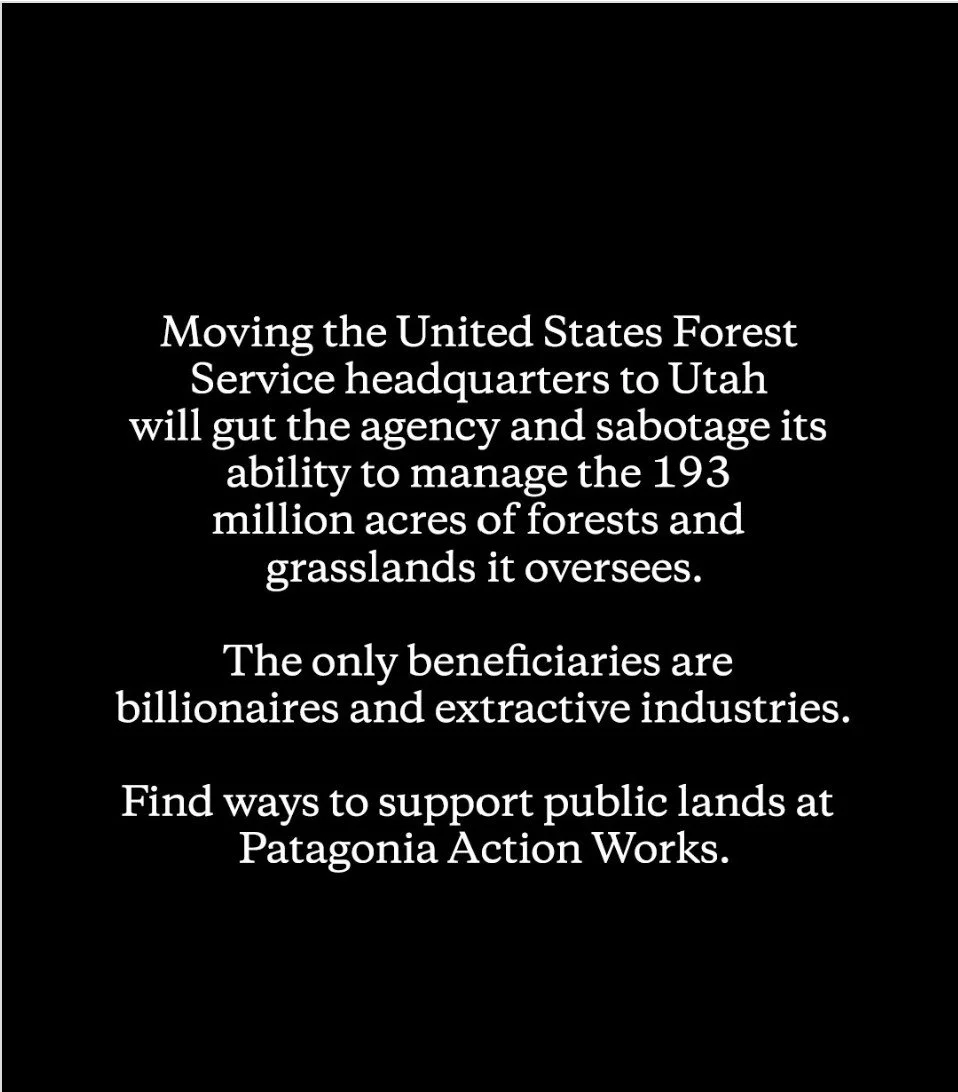
We commented about this last Wednesday after the news broke, but we want to be clear on our stance about the recent news of the United States Forest Service, because protecting public lands is core to our purpose: Moving the USFS to Utah will gut the agency. By shutting down its research stations, culling its staff, and moving the headquarters to Salt Lake City, it will be surprising if USFS can effectively manage anything at all.
The only beneficiaries of the move and other rollbacks to public land policy from this past year are billionaires and extractive industries.
Patagonia will continue working with our Tribal and nonprofit partners to protect public lands and advocate for more funding for USFS and the Bureau of Land Management.
Conservation Alliance: Consisting of 190 member companies, this group focuses on “protect[ing] lands and waters for future generations” and “business resilience.” Notably, only 77 companies are “signatories” to the group’s statement (below). We are left wondering why others didn’t sign on, and students might guess why, for example, wanting to frame their own messages, time limitations, or concerns about consumer or political backlash, particularly for smaller companies or those dependent on government funding.
As businesses that rely on well-managed, accessible public lands, we expect the U.S. Forest Service to adhere to its legally mandated mission: ‘to achieve quality land management under the sustainable multiple-use management concept to meet the diverse needs of people’. The recent announcement to relocate agency headquarters to Salt Lake City, Utah and close regional offices and research facilities raises concerns about the agency’s ability to properly manage its 193 million acres and maintain decades of research and scientific knowledge needed to support them. Recreation on Forest Service lands currently drives $23.3B in economic output annually but local communities, visitors, businesses, and the outdoor economy stand to suffer if the agency doesn’t receive the funding, resources, and staffing that it needs through this transition. We are committed to working alongside the Department of Agriculture and congressional leaders to provide clarity on the priorities of our community, advocate for robust public engagement, and safeguard the future of Forest Service lands.
The Alliance statement is much softer than others and likely illustrates what happens when we try to get multiple perspectives onto the same page: We get a watered-down result.
Additional Brands: SaveUSFS compiled a list of additional brand messages, mostly on Facebook, for students to compare.