
Companies' Green Claims Count More than Actions
 A recent study concludes that companies' messages about environmental actions have a more positive effect on market value than do positive actions themselves. Or, as one article put it, "...greenwashing is better than being green."
The study, "Do Actions Speak Louder than Words? The Case of Corporate Social Responsibility (CSR)," analyzed data from 2,261 firms in 43 countries from 2002 to 2008. Authors from Fuqua School of Business and the London Business School explored the conditions under which CSR (corporate social responsibility) affects financial performance. According to Environmental Leader, the study found the following:
"The authors found symbolic actions have a higher impact on market value than substantive actions, when the company has higher CSR-based assets. The study also concluded that a larger gap between symbolic and substantive actions has a higher positive impact on firm performance; and the more companies engage in both symbolic and substantive actions, the higher the value accumulates to the company."
The Environmental Leader further describes the distinction between "symbolic" and "substantive" actions:
"Symbolic actions include any ceremonial conformity or compliance: for example, a company announcing plans to form a sustainability or corporate ethics committee to provide the appearance of an action, without necessarily having any substance. Symbolic actions can be more generally described as 'window dressing' or greenwashing – essentially anything designed to give an appearance of an action while allowing business to proceed as usual.
"Substantive actions are the real actions taken by an organization to meet certain expectations and often require changes in core practices, long-term commitments and investments in corporate culture."
The paper is consistent with a Deloitte report that companies' communication about CSR practices impacts the bottom line.
Discussion Starters:
- What's your view of greenwashing for the purpose of improvement corporate financial performance? Is it ethical? Why or why not?
- If you were the CEO of a Fortune 500 company, how, if at all, would you use the results of this study?
Recent Twitter Fails
In the past few days, we've seen several apologies for tweets that were posted without thought-perhaps too quickly. Here are three examples.
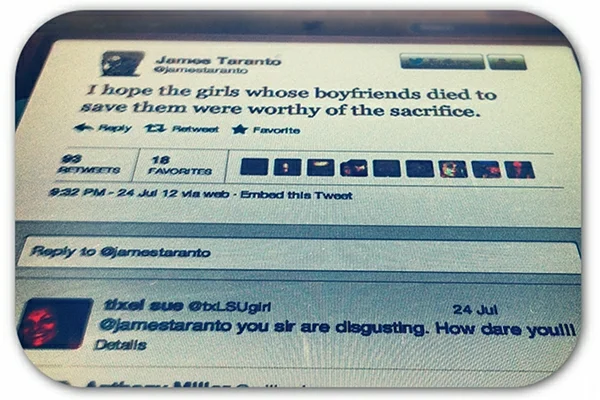
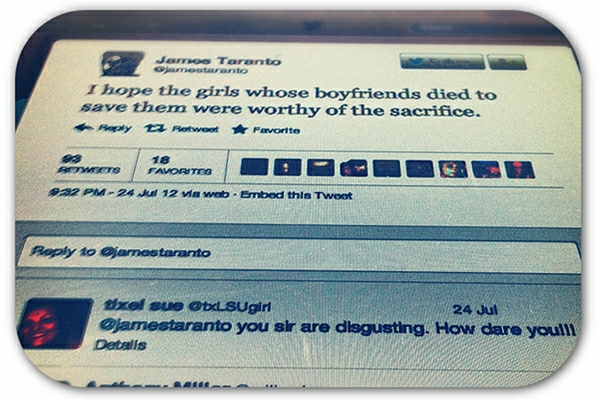
1) A Wall Street Journal editor jabbed women who died in the Aurora, CO, shooting. James Taranto explained his tweet in a longer post. (Image source.)
2. Celeb Boutique jumped on "#Aurora" on Twitter, not realizing the hashtag connection to the theater shootings. The company's explanation was that it outsources its Twitter account overseas.

3. Greek triple jumper Voula Papachristou was expelled from the London Olympics after a tweet some considered racist. The Greek Olympic Committee said that her tweet was "contrary to the values and ideas of the Olympic movement." Apparently, Papchristou has a history of neo-Nazi sympathy. She did respond with this apology: "I would like to express my heartfelt apologies for the unfortunate and tasteless joke I published on my personal Twitter account," she wrote. "I am very sorry and ashamed for the negative responses I triggered, since I never wanted to offend anyone, or to encroach on human rights." (Image source.)

Discussion Starters:
- How could these mistakes have been avoided?
- How do you assess each writer's explanation? Which do you find most and least acceptable?
Lacoste Responds to False Coupon Code
Apparently, Lacoste had trouble with a fake coupon cope that was circulated online. Here's the CEO's email to one customer. What do you think of the response?
Dear Jason,
On July 12th, we became aware that an incredible LACOSTE discount code
was making the rounds in social media - a discount code that was not
authorized by LACOSTE. The code was deactivated by the company that
manages our website and fulfills our orders since they determined that the
discount code was procured by fraud, and they decided to cancel all
unshipped orders. You may receive an email notification to that effect
today, and we want to make sure you understand why.
Regardless of whether or not the code was authorized, the cancellation
of your order was not what we wanted, and we're very frustrated with the
situation - though not as much as you probably are.
Although we cannot undo the cancelled orders in our partner's system,
LACOSTE has every intention of honoring the single order you placed with
us. As a result, we would like to offer you a new (and fully
authorized!) $50 discount valid on any single order over $50. Below,
you'll see a unique code that's valid at http://shop.lacoste.com/ between
now and August 31st. Note that it can only be used once, so please
safeguard it.
Your unique code is: [omitted]
Thank you for your understanding and patience, and we apologize for any
inconvenience this has caused you. If you have any further questions or
concerns, please contact me directly at steve@lacoste-usa.com.
Best regards,
Steve Birkhold, President and CEO
LACOSTE USA
Discussion Starters:
- What principles of communicating bad news does Steve Birkhold use in his email?
- What is your assessment of the email? If you were the customer who received this, how would you feel?
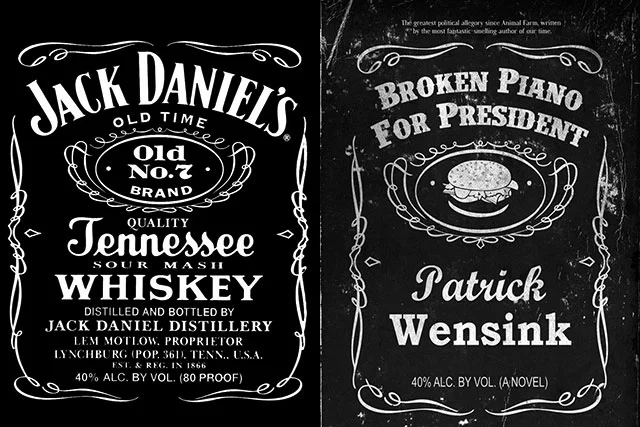
Jack Daniel's: Finally, a Nice Cease-and-Desist Letter
BizCom in the News readers may recall the U.S. Olympics Committee's recent cease-and-desist letter to knitters, which didn't go over too well. This time, we have a much more polite example of a legal attempt to stop a trademark violation.
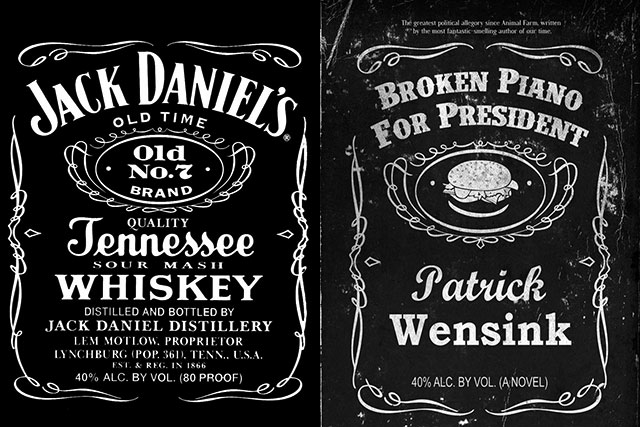
The Jack Daniel's letter addresses a violation of its whiskey label on this book cover. Comparing the two, we see obvious similarities in color, borders, and some of the text.
The full letter includes this excerpt:
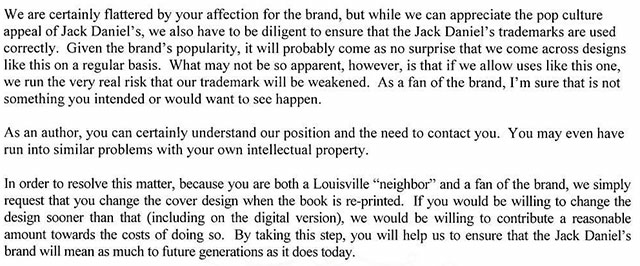
The book author acknowledged that the letter was nice:
"...perhaps, the most polite cease and desist ever written. If it wasn't signed by some lawyer, I'd imagine ol' Gentleman Jack penning it himself, twirling his bushy mustache."
However, he didn't take the company's offer to reprint the book:
"In case you're wondering, no, my publisher, Lazy Fascist Press, will not be taking them up on their offer. We're proudly independent and don't need any of that sweet corporate booze money to redo the cover."
Discussion Starters:
- What risks does a company such as Jack Daniel's take in writing a non-traditional legal letter?
- Can you find the modifier problem in the letter excerpt? How can you fix it?
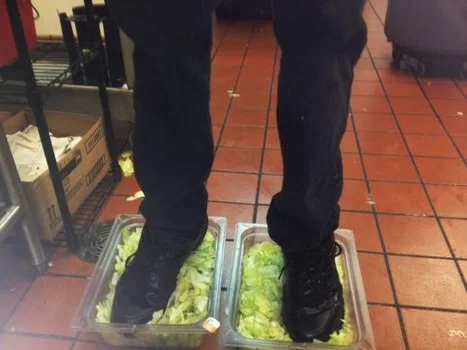
Burger King's Response to Posted Photo
Reminiscent of the Domino's Pizza incident back in 2009, a Burger King employee photographed himself standing in two bins of lettuce. The image, posted in 4Chan, made the news rounds, and the poster was tracked down. Finding the employee wasn't too hard-GPS data was attached to the image, which was traced to a northern Ohio suburb.
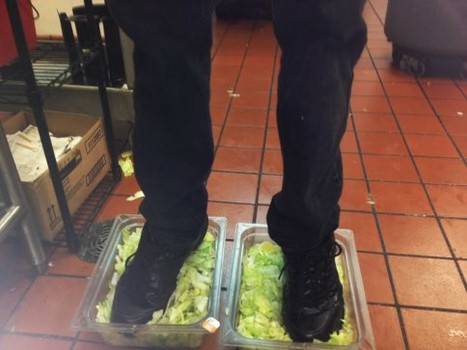
The Board of Health for the Mayfield Heights location confirmed that the restaurant "threw out all of the affected food on Saturday morning" and that the lettuce wasn't served to customers.
Burger King issued this statement in reponse:
"Burger King Corp. is aware of a photo that shows a BURGER KING® restaurant employee violating the company's stringent food handling procedures. Food safety is a top priority at all BURGER KING® restaurants and the company maintains a zero-tolerance policy against any violations such as the one in question.
"The restaurant where this photo was taken is independently-owned and operated by a BURGER KING® franchisee. The franchisee has taken swift action to investigate this matter and has terminated the three employees involved in the incident."
Discussion Starters:
- Burger King's statement could use editing. What are the two punctuation errors?
- What else could Burger King say to reassure customers?
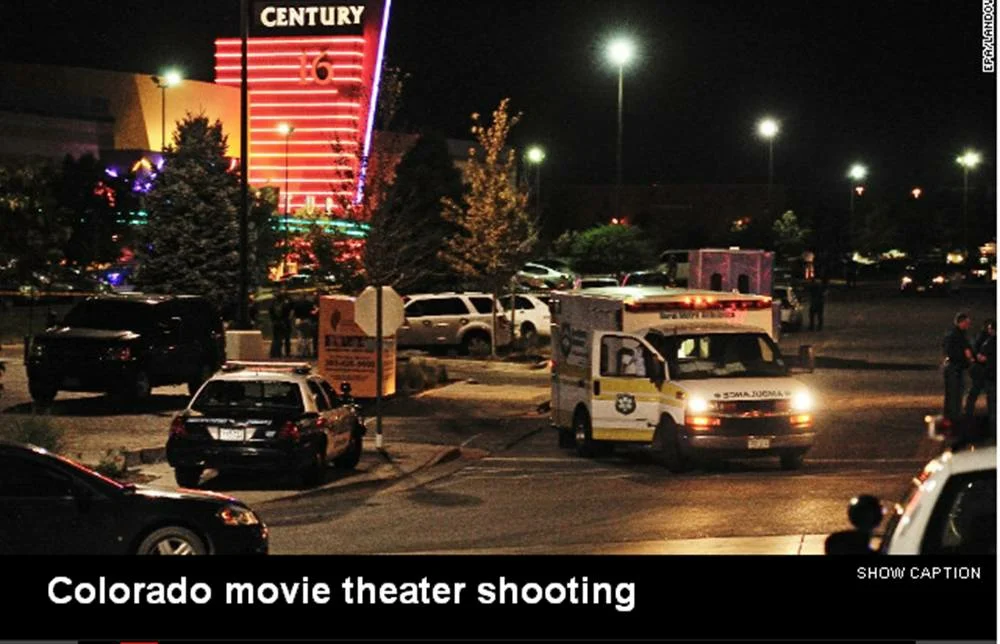
Theaters Respond to Colorado Shooting
After a terrible night at an Aurora, CO, movie house, theaters across the country are responding. Twelve people were killed and 59 were wounded during a midnight showing of "The Dark Knight Rises," the latest Batman movie. The gunman dressed in black and described himself as the Joker to police.

In response, Warner Bros. has cancelled the movie's planned premiere in Paris. The company also said, "Out of respect for the victims and their families, Warner Bros. Pictures will not be reporting box office numbers for 'The Dark Knight Rises' throughout the weekend. Box office numbers will be released on Monday."
AMC Theaters is banning masks and fake weapons in theaters. The company issued this statement:
"AMC Theatres is deeply saddened by the Aurora tragedy. Movie going is part of our social fabric and this senseless act shakes us to our core. We're reinforcing our security procedures with our theatre teams, which we cannot discuss in detail for obvious, safety reasons. Local law enforcement agencies, our landlords and their and our local security teams are stepping up nationwide to ensure we provide the safest environment possible for our guests. We couldn't be more grateful for their collective support. At this time, our show schedules circuit-wide will not change. We will not allow any guests into our theatres in costumes that make other guests feel uncomfortable and we will not permit face-covering masks or fake weapons inside our buildings. If guests wish to exchange or refund any tickets, we will honor our existing policy and do as our guests wish. We are taking necessary precautions to ensure our guests who wish to enjoy a movie this weekend can do so with as much peace of mind as possible in these circumstances."
Regal Cinema also issued a statement about the incident:
"We are profoundly saddened by the tragedy that occurred at a Denver area theatre and are concerned for the victims and their families. The security and safety of our guests and staff is always our number one priority. As is our custom, we will continue to monitor the situation and adjust our security needs as necessary. In the meantime, our thoughts and prayers go out to the victims and their families."
President Obama responded to the tragedy, cancelling a campaign stop in Orlando, FL:
"Michelle and I are shocked and saddened by the horrific and tragic shooting in Colorado. Federal and local law enforcement are still responding, and my Administration will do everything that we can to support the people of Aurora in this extraordinarily difficult time. We are committed to bringing whoever was responsible to justice, ensuring the safety of our people, and caring for those who have been wounded. As we do when confronted by moments of darkness and challenge, we must now come together as one American family. All of us must have the people of Aurora in our thoughts and prayers as they confront the loss of family, friends, and neighbors, and we must stand together with them in the challenging hours and days to come."
Discussion Starters:
- Read several additional statements following the shooting massacre. Which do you find most and least effective?
- Did President Obama do the right thing in canceling his campaign stop? Why or why not?
- What, if anything, should movie theaters change in their security policies? Should all theaters ban costumes?

Chick-fil-A Changes Its Tune on Gay Marriage
A social media storm has erupted in response to Chick-fil-A's anti-gay-marriage stance. When asked by the Baptist Press about the company's position, president Dan Cathy said, "Well, guilty as charged."
Cathy further explained the company's views:
"We are very much supportive of the family-the biblical definition of the family unit. We are a family-owned business, a family-led business, and we are married to our first wives. We give God thanks for that.
"We operate as a family business ... our restaurants are typically led by families; some are single. We want to do anything we possibly can to strengthen families. We are very much committed to that.
"We intend to stay the course. We know that it might not be popular with everyone, but thank the Lord, we live in a country where we can share our values and operate on biblical principles."
Although Chick-fil-A did find some support on Twitter and Facebook, many comments, such as this one, opposed the company's view:

Chef Hilah posted a video of how to make your own "Chick-fil-Gay" sandwich. As she says, "I love fried chicken sandwiches at Chick-fil-A. The problem is, I have a lot of gay friends, and I love them too." A CNN poll in May found that 54% of respondents support gay marriage, while 42% are opposed.
Within three days of the Baptist Press article, the company has taken a different approach:

Discussion Starters:
- What's your view on whether a company should take a position on an issue such as gay marriage?
- Does the president's view influence your decision to eat at the restaurant?
- How do you assess the company's response?
Yahoo Selects (Another) New CEO
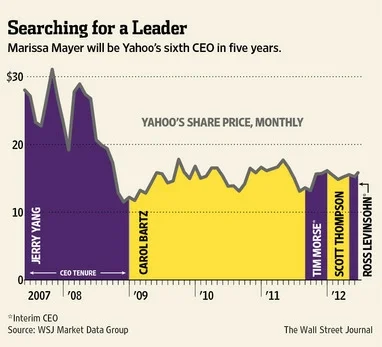
Let's hope this one sticks around. Marissa Mayer, former Google VP, will be Yahoo's sixth leader in just five years. Mayer follows Scott Thompson, fired for misleading academic information on his resume, and Carol-"I've-just-been-fired-over-the-phone"-Bartz (and two interim CEOs in between).
 At 37, Mayer is a relatively young CEO-and she's pregnant. Due to deliver a baby boy in October, Mayer said of the board's decision to hire her, "They showed their evolved thinking."
The company's press release emphasized Mayer's technology and product experience, which analysts say indicates Yahoo's "going back to its Silicon Valley Internet roots."

Discussion Starters:
- Read Yahoo's press release about Mayer. Considering the leadership history, did Yahoo do a good job in writing the release?
- What's your view of Yahoo's board hiring a pregnant woman?
Jamie Dimond Responds to More Questions
Following JPMorgan Chase's spectacular trading loss, CEO Jamie Dimon is still on the hot seat to explain what happened. Today, on the second-quarter investor conference call, analyst Mike Mayo asked particularly difficult questions.
Mayo asked "if the firm as a whole has reached some sort of tipping point in terms of bigness or complexity that makes it more difficult to manage than in the past." Dimon responded, "No." Mayo followed up by asking whether Dimon has "lost a step," and someone yelled, "Are you getting old?"
Dimon focused on the firm's successes through the recession and in assimiliating Bear Stearns and Washington Mutual. He claimed that the issue is a marketing problem.
However, Dimon did admit, as he had before, "We made the mistake," but also said, "I cannot prove a negative." To regain trust, Dimon emphasized the firm's current structure: "We believe we've got very good controls and very good people in place."
Dimon focused on the bank's results, and Mayo acknowledged the positive returns but said, "But we saw how the sausage is made, and it just makes me wonder if I'm going to get food poisoning in the future."
Discussion Starters:
- Listen to the exchange between Mayo and Dimon. What's your assessment of Mayo's interview strategy? What are his most and least effective questions?
- What are Dimon's most and least convincing arguments?
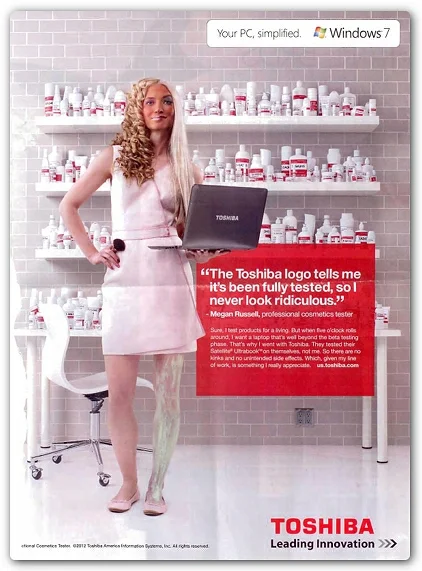
Toshiba Apologizes for "Test Monkey" Ads
A Toshiba ad for the Satellite Ultrabook computer pokes fun of people who participate in clinical trials. The ad claims that Toshiba, unlike other "tech companies," fully tests products and doesn't treat "paying customers like test monkeys." With a similar message, a print ad features a cosmetics tester.
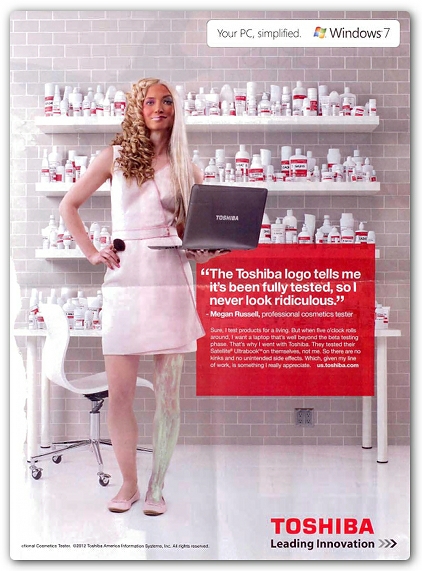 The ads riled clinical researchers, who struggle to find participants in medical trials. In fact, Toshiba's own medical systems group is currently looking for young people to participate in a trial.
A sokesperson for the Association of Clinical Research Organizations (ACRO) explained the group's concern: "It's dangerous. We don't need any more reasons to discourage people from research. We need to encourage people and not portray them as some kind of freak."
According to PR Daily, "The ad does seem to contradict parts of Toshiba's corporate social responsibility guidelines. According to its standards of conduct for advertising, Toshiba group directors and employees should 'not use advertising to cast third parities in a negative light, in an attempt to make Toshiba Group appear more favorable, or for any other negative purpose.'"
In response to ACRO's criticism, Toshiba's director of marketing communications sent this response:
"Dear Mr. Peddicord,
"Thank you so much for raising your concerns over one of Toshiba's new television commercials showing people in medical testing situations.
"Our intent was not to minimize the value of clinical research or insult people participating in clinical trials.
"We will absolutely take your objections into consideration as we develop future advertising."
So far, the company has not pulled the ads, which ACRO had requested.
Discussion Starters:
- What's your interpretation of ACRO's complaint? Is the group right, overreacting, or something in between?
- Looking at Toshiba's standards of conduct for advertising, do you believe the company violated its own standards?
- If you led Toshiba's marketing communications group, would you pull the ads? Why or why not?
AMD Reports Weak Revenue
As companies report their second-quarter earnings this week, chip maker Advanced Micro Devices (AMD) communicated its bad news: revenue is expected to drop by 11%. AMD's news release focuses on disappointing sales in China and Europe.
However, a writer for The Street criticizes AMD's analysis: "AMD blames its upcoming drop in revenue on just about everything out there, except its competition, Intel." While Dell and HP use AMD chips, Apple products switched to Intel a few years ago. AMD's news release is below:
"AMD (NYSE:AMD) today announced that revenue for the second quarter ended June 30, 2012 is expected to decrease approximately 11 percent sequentially. The company previously forecasted second quarter 2012 revenue to increase 3 percent, plus or minus 3 percent sequentially. The lower preliminary revenue results are primarily due to business conditions that materialized late in the second quarter, specifically softer-than-expected channel sales in China and Europe as well as a weaker consumer buying environment impacting the company's Original Equipment Manufacturer (OEM) business.
"The company expects second quarter gross margin to be approximately in line with prior guidance. Operating expenses for the second quarter are expected to improve and to be approximately 8 percent less than prior guidance of approximately $605 million, a result of tightly controlled expenses in the quarter.
"AMD will report second quarter 2012 results after market close on Thursday, July 19, 2012. AMD will hold a conference call for the financial community at 2:00 p.m. PT (5:00 p.m. ET) that day to discuss second quarter financial results and to provide information regarding expected third quarter results. AMD will provide a real-time audio broadcast of the teleconference on the Investor Relations page at http://www.amd.com. The webcast will be available for 10 days after the conference call."
Discussion Starters:
- Find two or three other sources that explain why AMD's earnings report is disappointing. What's your view of the reasons for declining revenue?
- If you agree with The Street's assessment, should AMD have been more forthcoming? What are the arguments for and against a more straightforward discussion of the Apple and Intel relationship?
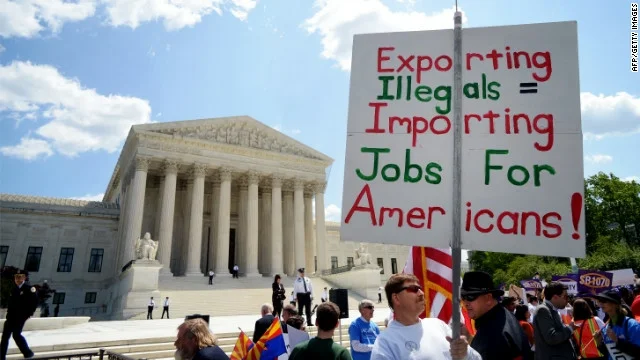
"Illegal Immigrant" Missing from Supreme Court Ruling
As the U.S. immigration debate rolls on, a CNN commentator notes the absence of the term "illegal immigrant" in the recent Supreme Court ruling. Charles Garcia further explains why the term-and perhaps worse, "illegals"- is dehumanizing and racist. 
According to Garcia, calling someone an "illegal immigrant" or "illegal alien" labels that person as being illegal, rather than identifying his or her behavior as illegal. He points out that no one else in this country is considered illegal just because he or she breaks a law. When we get a speeding ticket, our action was illegal, but we are not.
Garcia also argues that the term has racist underpinnings:
"The term 'illegal immigrant' was first used in 1939 as a slur by the British toward Jews who were fleeing the Nazis and entering Palestine without authorization. Holocaust survivor and Nobel Peace Prize winner Elie Wiesel aptly said that 'no human being is illegal.' "
Despite Garcia's argument, the term persists. The Associate Press, for example, still recommends the term in its Stylebook, which Deputy Standards Editor explains:
"Together, the terms describe a person who resides in a country unlawfully by residency or citizenship requirements … Alternatives like undocumented worker, illegal alien or illegals lack precision or may have negative connotations. Illegal immigrant, on the other hand, is accurate and neutral for news stories."
Colorlines, a racial justice organization, agrees with Garcia's assessment and offers different guidelines for journalists. The organization suggests these terms to describe a person's situation more accurately: undocumented immigrant, unauthorized immigrant, and immigrant without papers.
Discussion Starters:
- What's your view of the term "illegal immigrant"? Do you agree with Garcia?
- How do the recommended terms (undocumented immigrant, unauthorized immigrant, and immigrant without papers) fit with our discussion of "people-first" language?
Judge Rules that Tweets Are Public Speech
A judge has ruled that an Occupy Wall Street protester's tweets must be turned over. Judge Matthew A. Sciarrino Jr. said that tweets are not protected as private speech; rather, they are considered public comments. The judge wrote:
"The Constitution gives you the right to post, but as numerous people have learned, there are still consequences for your public posts. What you give to the public belongs to the public. What you keep to yourself belongs only to you."
The judge also wrote, "If you post a tweet, just like if you scream it out the window, there is no reasonable expectation of privacy."

The decision came out of a court case that subpoenaed the protestor's deleted tweets. Both the protestor and Twitter tried to block to subpoena. Twitter issued a statement about the decision, which included this excerpt:
"Twitter's terms of service have long made it absolutely clear that its users own their content. We continue to have a steadfast commitment to our users and their rights."
Twitter also published its first "Transparency Report," showing the number of government requests for user information and what percentage of those requests were fulfilled.
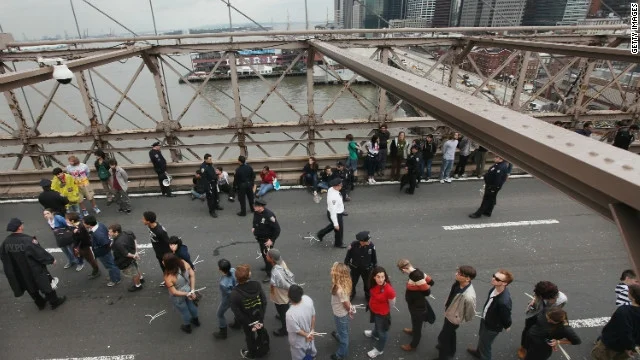
Image source. (Protestors arrested on the Brooklyn Bridge in October.)
Discussion Starters:
- Does the judge's decision surprise you? Why or why not?
- What are the implications of this decision to company communicators? To you personally?
Barclays Issues Statements About Resignations
Barclays CEO Bob Diamond has resigned under pressure admist an interest rate rigging scandal. Barclays will pay $453 million to settle a U.K. and U.S. investigation that revealed traders manipulated the Libor to prop up the bank's position and traders' wallets. Diamond said his decision to leave "was the right thing for the bank."
Other departures have already taken place or are expected to soon. Marcus Argius, chairman of Barclays, and Jerry del Missier, chief operating officer, also resigned.
Barclays issued three separate statements so far about the resignations:
- "Board Changes," July 2 (about Argius)
- "Board Changes," July 2 (about Diamond)
- "Management Changes," July 3 (about del Missier)
The statement about Diamond's resignation included this long quote from the outgoing CEO:
"I joined Barclays 16 years ago because I saw an opportunity to build a world class investment banking business. Since then, I have had the privilege of working with some of the most talented, client-focused and diligent people that I have ever come across. We built world class businesses together and added our own distinctive chapter to the long and proud history of Barclays. My motivation has always been to do what I believed to be in the best interests of Barclays. No decision over that period was as hard as the one that I make now to stand down as chief executive. The external pressure placed on Barclays has reached a level that risks damaging the franchise – I cannot let that happen.
"I am deeply disappointed that the impression created by the events announced last week about what Barclays and its people stand for could not be further from the truth. I know that each and every one of the people at Barclays works hard every day to serve our customers and clients. That is how we support economic growth and the communities in which we live and work. I look forward to fulfilling my obligation to contribute to the Treasury committee's enquiries related to the settlements that Barclays announced last week without my leadership in question.
"I leave behind an extraordinarily talented management team that I know is well placed to help the business emerge from this difficult period as one of the leaders in the global banking industry."
Discussion Starters
- Read the Board Changes statement about Diamond. What's the rationale for including the former CEO's long quote? How is this effective or ineffective in conveying the bank's message?
- Assess the three statements. How do you explain the bank's strategy of issuing these separately? Why did the board do this, and was it the best approach?
Science: It's a Girl Thing -- Demeaning or Clever?
To attract more female scientists, the European Commission created a video and other promotional videos. With an abundance of pink and a focus on cosmetics, the video has been criticized as demeaning to girls. Some even questioned whether the video was a joke, to which a spokesperson said that the European Commission, "doesn't really do irony."
As of today, the video on YouTube was viewed more than 626,000 times and received 974 likes and 6,432 dislikes.
In fairness, the EC has several videos as part of this campaign that don't focus on girls' high-heeled bodies or show girls blowing kisses. The Irish Times reported the EC's reaction from an interview with spokesperson Michael Jennings:
"'It is intended to catch the attention of the target audience – 13- to 17-year- old girls.'
"Mr. Jennings said that focus groups informed the commission that the video had to 'speak their language to get their attention' and that it was intended to be 'fun, catchy' and strike a chord with young people. 'I would encourage everyone to have a look at the wider campaign and the many videos already online of female researchers talking about their jobs and lives,' he said."
Discussion Starters:
- What's your view of the video? Do you find it demeaning, clever, or something else?
- The EC took down the video after the criticism. Was this the right decision?
Olympics Committee Responds to Knitters
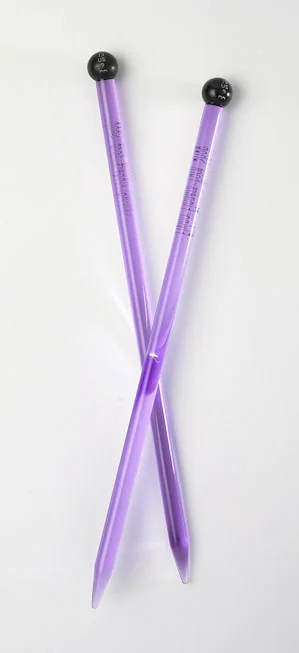
 The U.S. Olympics Committee managed to anger an unlikely group-knitters. To protect the "Olympics" trademark, the group sends hundreds of cease-and-desist letters when it believes the name has been misused. In this case, a group of knitters promoted a "Ravelympics" competition: While watching the Olympics, knitters participate in events such as "afghan marathon" and "scarf hockey."
Knitters were offended by the language in the cease-and-desist letter, which included the following:
"We believe using the name 'Ravelympics' for a competition that involves an afghan marathon, scarf hockey and sweater triathlon, among others, tends to denigrate the true nature of the Olympic Games. In a sense, it is disrespectful to our country's finest athletes and fails to recognize or appreciate their hard work."
The outcry from the knitting community was extraordinary, as one blogger wrote: "2 Million Knitters with Pointy Sticks are Angry at the US Olympic Committee."
USOC apologized, but botched the message. Here's an excerpt:
"We apologize for any insult and appreciate your support. We embrace hand-crafted American goods as we currently have the Annin Flagmakers of New Jersey stitching a custom-made American flag to accompany our team to the Olympic Games in London. To show our support of the Ravelry community, we would welcome any handmade items that you would like to create to travel with, and motivate, our team at the 2012 Games."
One person responded: "Thanks for the half-hearted attempt at a maybe apology that keeps you clear of any blame. Now, you want us to give you free stuff?"
In an interview with PR Daily, Patrick Sandusky, spokesperson for the USOC, admitted, "The letter itself that was sent to this group was definitely too strident in its tone." He also said, "We do believe they're in violation of the law Congress passed and how we'll protect our trademark, but we could have gone about it in a slightly more sensitive way."
To address the criticism, Sandusky used his personal Twitter account. He explains this decision:
"I'm a firm believer that people don't believe organizations as much as they believe individuals. And if somebody's going to put their name on it and be a voice of reason specifically as a person who works at an organization and not just hide behind a blanket generic Twitter account-which has its uses without a doubt. And we have far more people that follow that than follow me. But it was something to supplement the main Twitter feed and show that this wasn't just a generic corporate account speaking corporate speak but it was an actual person willing to answer questions. And I answered more than, I think, 500 people online who contacted me directly with their questions. All those answers aren't going to be sufficient for some people but at least they're getting a response and not just being pointed to a generic statement. We believe here that we're the people that are responsible for the organization and I don't have any problem putting my name on organizational decisions and responding directly."
Discussion Starters and Assignment Ideas:
- Read the cease-and-desist letter. Rewrite it to improve the style and tone.
- How do you assess the USOC's apology? Could the group have done a better job? Rewrite the statement to improve the message.
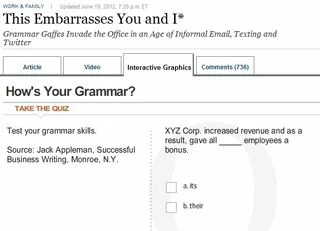
WSJ Article: "This Embarrasses You and I*"
A frontpage article in The Wall Street Journal discusses "rampant illiteracy" within the workplace:
"Managers are fighting an epidemic of grammar gaffes in the workplace. Many of them attribute slipping skills to the informality of email, texting and Twitter where slang and shortcuts are common. Such looseness with language can create bad impressions with clients, ruin marketing materials and cause communications errors, many managers say.
"There's no easy fix. Some bosses and co-workers step in to correct mistakes, while others consult business-grammar guides for help. In a survey conducted earlier this year, about 45% of 430 employers said they were increasing employee-training programs to improve employees' grammar and other skills, according to the Society for Human Resource Management and AARP."
An interactive quiz focuses on common errors in grammar and punctuation.

Students of business communication will recognize many of the errors highlighted in the article, for example, improper subject-verb agreement (e.g., "There's new people you should meet") and incorrect pronoun use (e.g., "...for John and I").

Participants in a Society for Human Resources Management-AARP study blame young people. A consultant interviewed for the article said it's not that young workers lack the skills but that they have "developed a new norm" for communicating, including less formal language.
Discussion Starters:
- Do you agree with the article's assessment that lack of proper grammar at work is a serious issue? Why or why not?
- Take the WSJ interactive quiz. How did you do?
Shell Regrets Social Media Campaign
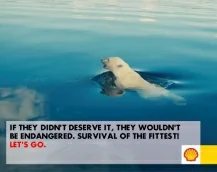
In a creative, but failed attempt to encourage public contribution to its marketing efforts, Shell asked people to submit their own memes. Shell was perhaps naive in thinking that people would support its positive thinking about the company's contribution to the environment.
The campaign around the "Let's Go" slogan brought a mockery of images with captions such as "Because there are still places we haven't f'ked. Let's Drill" and "Proudly plundering and destroying environments for almost 200 years."
 At least Shell hasn't hidden from the reaction. On its site, the company has posted the memes and made this statement:
"We at Shell are committed to providing consumers with clean and abundant Arctic energy. We're also committed to the open exchange of ideas and the wonder of human creativity which makes our job possible.
"It is in this spirit that we approached the exciting untapped resource of socialized media with our Let's Go! Arctic user-generated advertising technology. While we do realize that a very small portion of the user-generated content below does not accurately represent Shell's commitment to providing consumers with clean and abundant Arctic energy, this pioneering experiment in user-generated content does reflect our commitment to freedom.
"Shell remains proud of our commitment to freedom. The freedom to develop newly available and abundant Arctic energy reserves. And the freedom our consumers have to discount the work of a very small number of extremist individuals who remain determined to stand in the way of our quest to bring first class heritage technology to bear on the top of the world. We thank you for sharing in our commitment to freedom.
"And thank you for contributing to our Let's Go! Arctic campaign."
Discussion Starters:
- Should Shell have avoided the campaign entirely, knowing that this could be the result-or was this an unintended, unpredictable result?
- How do you assess Shell's reaction-its statement on the website? What else, if anything, should Shell say about the memes received?
NLRB Weighs in on Social Media Policies
What should companies include in their social media policies? The topic is still debatable; again, the National Labor Relations Board is taking issue with several restrictions identified in corporate policies and guidelines.
In a 24-page memo, the general counsel of the NLRB calls out General Motors, DISH Network, and Target as having policies that either too severely restrict employees' online activities or go so far as violate the National Labor Relations Act. The Act protects employees' right to collective bargaining and concerted activity to achieve their demands in the workplace.
The memo provides examples from GM's policy, which the NLRB believes are overly restrictive:
"If you engage in discussion related to [GM], in addition to disclosing that you work for [GM] and that your views are personal, you must also be sure that your posts are completely accurate and not misleading and that they do not reveal non-public company information on any public site."
The NLRB believes that "completely accurate and not misleading" is overly broad and may restrict employees' communication with each other. Similarly, GM's warning that employees should "[t]hink carefully about 'friending' co-workers" discourages employee communication.
DISH and Target have other problems in their policies, according to the NLRB, for example, restricting employees from speaking with reporters and bloggers, and "releas[ing] confidential guest, team member, or company information, respectively. These guidelines prevent employees from sharing information about their working conditions, a provision of the Act.
The memo highlights Walmart's social media guidelines as a lawful model. Walmart's guidelines broadly discourage "inappropriate postings that may include discriminatory remarks, harassment, and threats of violence or similar inappropriate or unlawful conduct."
Discussion Starters:
- Assess the NLRB memo. How well is it organized? Is the writing style effective? Is the content clear?
- If you were the head of corporate communication for GM, what, if any, changes would you make to the social media policy, which has been in place since 2007, according to GM spokesperson Mary Henige?
Adidas Responds to Controversy over "Shackled" Shoes
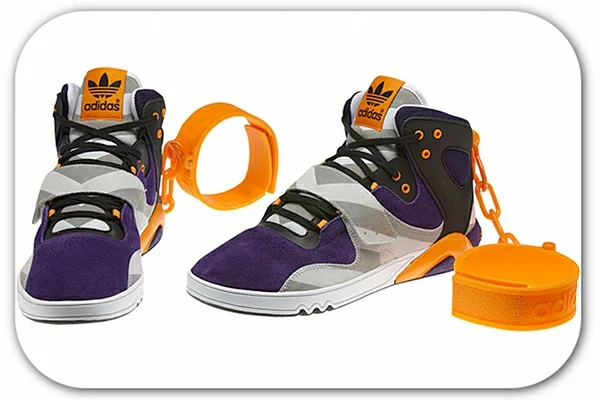
Adidas has apologized for an advertisement that some consider racist. The chains around the shoes are said to be reminiscent of slavery-and prisons, particularly because of the orange color. With the tag line, "a sneaker game so hot you lock your kicks to your ankles," the shoes cost $350. A Washington Post article sums up the "dangerous message" Adidas and other companies are sending: "We want your money, but we aren't concerned with being sensitive to your history, culture and socio-economic plight."

Outrage was rampant on Facebook, with comments such as this one, posted by Antonio Leche: "Slavery isn't a fashion example. Everyone involved in this show should be fired ASAP! This is the new reason I won't buy any Adidas anymore!"
In a statement, Reverend Jesse Jackson voiced his criticism:
"For Adidas to promote the athleticism and contributions of a variety of African-American sports legends -- especially Olympic heroes Wilma Rudolph and Jesse Owens and boxing great Muhammad Ali -- and then allow such a degrading symbol of African-American history to pass through its corporate channels and move toward actual production and advertisement, is insensitive and corporately irresponsible.
"These slave shoes are odious and we as a people should be called to resent and resist them. If put into production and placed on the market, protests and pickets signs will follow. Adidas cannot make a profit at the expense of commercialized human degradation."
Adidas did respond to the criticism, first with this statement:
"The JS Roundhouse Mid is part of the Fall/Winter 2012 design collaboration between Adidas Originals and Jeremy Scott. The design of the JS Roundhouse Mid is nothing more than the designer Jeremy Scott's outrageous and unique take on fashion and has nothing to do with slavery.
"Jeremy Scott is renowned as a designer whose style is quirky and lighthearted and his previous shoe designs for Adidas Originals have, for example, included panda heads and Mickey Mouse. Any suggestion that this is linked to slavery is untruthful."
Of course, this didn't resolve the controversy, so Adidas tried again-and cancelled the shoe release:
"Since the shoe debuted on our Facebook page ahead of its market release in August, Adidas has received both favorable and critical feedback. We apologize if people are offended by the design and we are withdrawing our plans to make them available in the marketplace."
Discussion Starters:
- What is your view of the Adidas ad? Do you see it as racist, harmless, or something else?
- How do you assess the company's response? What might have been a better response to the criticism?